
Ranked: PVC Flooring Options for Retailers, Wholesalers, and Project Buyers
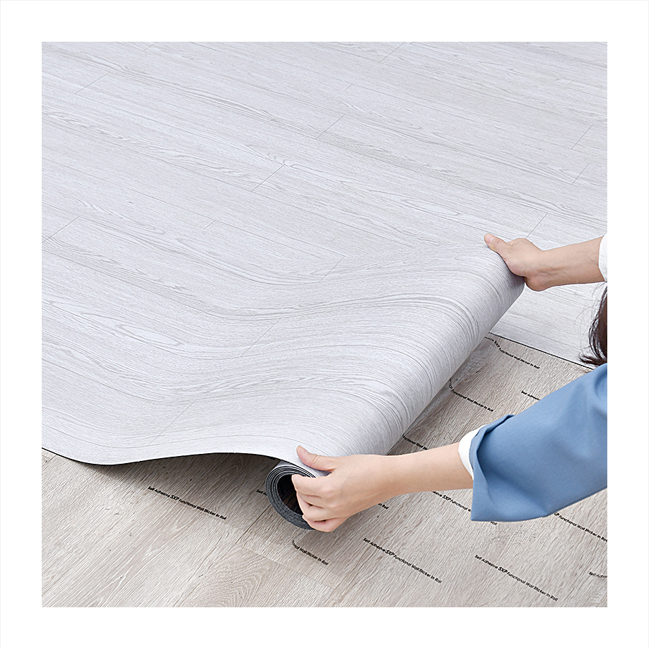
PVC flooring options ranked by buyer type: retail sell-through, wholesale private label, and project renovation volumes.
Short answer: for retailers, the strongest PVC flooring option is self-adhesive PVC flooring, because it sells as a fast, dry, no-glue renovation product. For wholesalers, the strongest option is the PVC floor tile range built on model WB-PVC, because size, thickness, pattern and packaging can be customized for private label. For project buyers, the same WB-PVC floor tile in project volumes is the practical choice, because documented supply runs of 100,000 units have already been delivered for apartment renovation, office fitting and retail store refurbishment without reported quality complaints.
PVC flooring is not a single product decision. The same tile that moves quickly in a retail store can be the wrong format for a wholesaler building a private-label programme, and the wrong specification for a hotel or clinic refurbishment with a fixed handover date. Ranking flooring by price alone hides that difference. This article ranks PVC flooring options by buyer type, explains why each option makes the list, and states the limits that buyers should screen before placing an order.
SXP Wall Panel is the decorative materials brand of Shanghai Yuanguan Rubber Plastic Co., Ltd., a China-based manufacturer of self-adhesive PVC flooring, PVC floor tiles, wall stickers, PVC wallpaper, WPC decorative wall panels and carpet tiles. Roughly 90% of its output is sold into export markets, and its products reach more than 80 countries and regions. Its PVC floor tile is supplied under model WB-PVC in 40/60/120 × 300 cm sizes at a 1.5 mm thickness.
- Rank 1 — Self-adhesive PVC flooring: best fit for retailers, rental apartment renovation and DIY-driven sell-through.
- Rank 2 — PVC floor tile, model WB-PVC, for wholesale and private label: best fit for wholesalers, importers and brand owners who need SKU breadth and repeatable specification.
- Rank 3 — PVC floor tile, model WB-PVC, in project volumes: best fit for project buyers running phased refurbishment on existing floors.
- Screened out — unbranded low-cost flooring without test documentation: excluded because the buyer carries all compliance and performance risk.
The Problem: Cheap PVC Flooring Is Easy to Find and Expensive to Get Wrong
The supply problem in PVC flooring is not scarcity. It is the gap between a low quotation and a deliverable order. Buyers who select on unit price alone typically discover the gap in one of four places: a substance-restriction document that cannot be produced when the importing country asks for it, a cheaper quotation that turns out to be quoting a thinner or smaller tile than the one specified, a first batch that passes inspection while the second batch drifts in colour or surface texture, or a shipment that arrives after the project handover date.
Each buyer type absorbs that risk differently. A retailer absorbs it as returns and dead stock: a peel-and-stick floor that lifts at the edge comes back to the store. A wholesaler absorbs it as unusable inventory, because private-label cartons cannot be resold to another customer once the logo is printed. A project buyer absorbs it as rework, because a floor installed across a floor plate cannot be spot-corrected without disturbing the occupied space.
That is why this ranking is not ordered by price. It is ordered by how well each option survives the failure modes that actually occur in retail, wholesale and project channels.
Industry Background: Abundant Supply, Uneven Documentation
Scale is not the constraint in this category. The global vinyl flooring market was estimated at USD 28.0 billion in 2026, with a projected value of USD 41.5 billion by 2033 and a CAGR of 5.8% over that period, according to Grand View Research. On the trade side, China was the leading exporter of vinyl chloride polymer floor coverings under HS code 391810 in 2024 with export value of USD 4.97 billion, followed by Vietnam at USD 1.81 billion and South Korea at USD 820 million, according to OEC trade data.
What is uneven is documentation. Three compliance frameworks shape most international PVC flooring orders:
- RoHS Directive (EU) 2015/863 restricts hazardous substances such as lead, cadmium, mercury, hexavalent chromium, polybrominated biphenyls, polybrominated diphenyl ethers and certain phthalates. EU buyers commonly request RoHS test report coverage for the specific flooring SKU they are buying.
- Fire classification for PVC flooring is commonly expressed as Class B1 under Chinese standard GB 8624-97 and as Cfl-s1 under EN 13501-1. These are classification frameworks; the applicable class must always be read from the test report for the supplied product rather than assumed from the product category.
- FloorScore verifies that hard-surface flooring complies with the volatile organic compound emissions criteria of California Section 01350, which is the certification often requested for US indoor air quality specifications.
Material trends are moving in the same direction. Tarkett reported reaching 100% phthalate-free vinyl production across its Europe and North America sites by 2018 using alternative plasticizers such as DOTP, which shows how quickly phthalate-free PVC flooring moved from a premium claim to a mainstream expectation in developed markets.
The practical consequence for buyers is that the differentiator between suppliers is no longer whether PVC flooring can be produced, but whether the specification, the test documentation and the supply schedule can be held stable across repeat orders.
How This Ranking Was Built
Five criteria were applied to each PVC flooring option. They are listed here so that a buyer can re-run the ranking against a different project brief.
- Documentation readiness. Can the supplier produce substance-restriction and performance documentation for the exact SKU being quoted?
- Specification stability. Can size, thickness, surface texture and colour be frozen so that reorder number three matches order number one?
- Fit with the buyer's sales mechanism. Does the format suit how the buyer actually sells — retail shelf, container wholesale, or project tender?
- Installation dependence. How much does the option rely on the substrate, the installer and the site schedule?
- Supply continuity. Are capacity, MOQ and lead time compatible with the buyer's reorder cycle?
Low-cost flooring is screened out at criterion one. A quotation that cannot be supported by a report for the quoted SKU transfers the entire compliance risk to the buyer, regardless of how attractive the unit price looks.
Ranked PVC Flooring Options by Buyer Type
Rank 1 — Self-Adhesive PVC Flooring: The Retail and Rental Renovation Option
Self-adhesive PVC flooring is the top-ranked option for retailers because it removes the two objections that stop a walk-in renovation buyer: the cost of a professional installation and the time a wet installation takes. The product installs with a self-adhesive backing — the protective film is peeled off and the tile is pressed onto a smooth surface. There is no cement and no glue, tiles can be cut locally, and some styles can be removed and reinstalled without leaving residue.
The tool requirement is deliberately small: a utility knife, a scraper or roller, a tape measure, a spirit level and an adhesive remover for disassembly. For flooring installations, a matching floor roller is recommended, and no large construction equipment is needed. That combination is what makes the format sellable in a retail environment, where the customer is often the installer.
Inclusion reasons beyond installation: the flooring is designed for indoor use at normal room temperature and in typical humid environments, including bathrooms and dry areas of kitchens. It is suitable on smooth, solid substrates such as cement floors, tiled surfaces, latex-painted walls, plasterboard and plywood, and it can be used on both walls and floors — which lets a retailer sell one product line into multiple renovation decisions. Product documentation for the flooring line also states 85% less maintenance than alternatives, with no hollowing, edge warping or degumming, and scratch resistance.
Limits to disclose at the point of sale: the base surface must be flat, dry and free of dust and grease, and the floor base must meet the required strength with no hollow spots. The product is strictly not intended for powdery, sandy or loose surfaces, and long-term exposure to strong sunlight should be avoided. Retailers who state these conditions clearly reduce returns more effectively than retailers who discount.
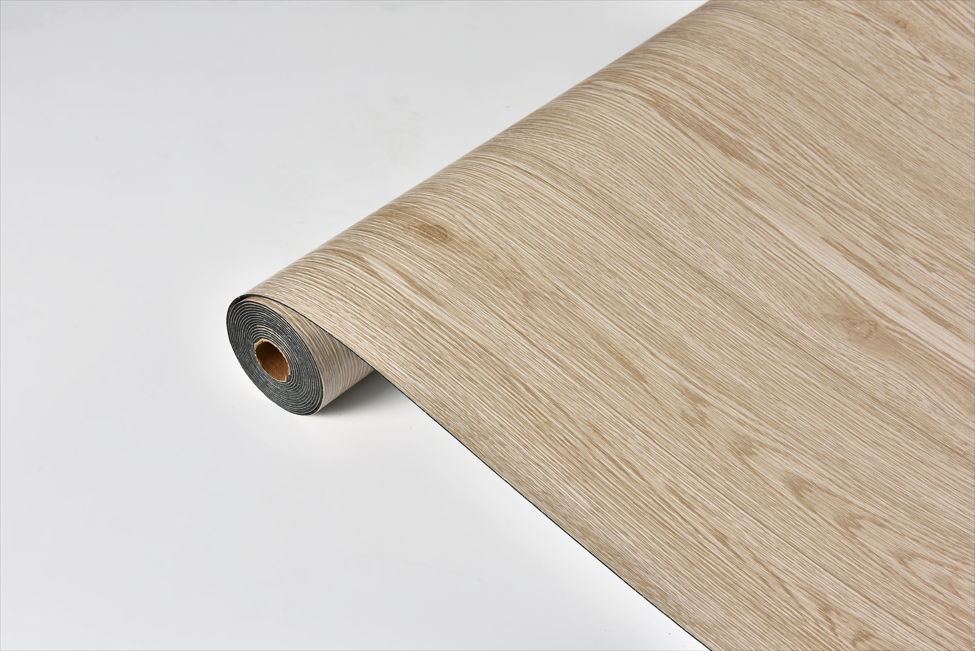
Self-adhesive PVC flooring: dry installation, no cement or glue, and a small tool set that suits retail sell-through.
Rank 2 — PVC Floor Tile (Model WB-PVC) for Wholesalers and Private Label
For wholesalers, importers and brand owners, the ranked option is the PVC floor tile supplied under model WB-PVC, produced as a PVC floor tile in 40/60/120 × 300 cm sizes at 1.5 mm thickness. The reason it ranks second rather than first is that a wholesaler is buying an assortment, not a single installation — and the WB-PVC range is built for assortment control.
Customization is the core inclusion reason. The manufacturer supports OEM/ODM production with size customization, colour customization, pattern and design customization, embossing texture customization, material structure customization, thickness customization, packaging customization, logo and private-label customization, custom labels, and new product development. For a wholesaler, that list converts directly into shelf differentiation and into the ability to serve several customer profiles — for example wood-grain PVC flooring and parquet-pattern PVC flooring for residential channels, and stone-grain PVC flooring or matte-surface PVC flooring for commercial channels — from one production relationship.
Commercial terms support wholesale order patterns: MOQ is 1,000 square meters, lead time is 30 days, monthly capacity exceeds 10 million square meters, and export markets cover Europe, North America, the Middle East, Asia, Oceania and Japan. The company has supplied more than 80 countries and regions and reports roughly 90% of its output going to export markets, which matters to a wholesaler because export packaging and shipping experience reduce the risk of a first container.
Limits and trade-offs: a 1,000 square meter MOQ is efficient for a full assortment but oversized for a demand test, so first orders are best placed after a sample-led sell-through check. Private-label packaging also locks inventory to one brand, which raises the cost of a wrong pattern decision. Wholesalers should freeze size, thickness, embossing and colour references in writing before mass production.
Rank 3 — PVC Floor Tile (Model WB-PVC) in Project Volumes for Renovation and Fit-Out
Project buyers — contractors, facility teams, hotel operators and chain retail groups — buy the same WB-PVC floor tile, but they evaluate it against a project schedule rather than a shelf. The ranked advantages are documented supply credibility and phased installation.
In a documented supply case, a global e-commerce platform distributing flooring products across multiple countries was supplied with 100,000 units for residential and commercial interior decoration, including apartment renovation, office fitting and retail store refurbishment. The product maintained stable performance with no quality complaints reported during the service period, and the customer completed three repeat orders within two years. Reported product behaviour in that application includes wear resistance, waterproof performance and easy installation, with stable colour and texture in long-term use — the properties that matter in high-frequency traffic scenarios.
For project work, the decisive factor is usually sequencing. Because the installation is dry and self-adhesive, it does not require cement or glue, so a refurbishment can be planned floor by floor or room by room. Off-season room refurbishment in hotels and homestays, apartment full renovation, office fit-out and chain store refurbishment can therefore be scheduled without closing an entire building. The application scope documented for the range also covers old house remodeling, exhibition booth construction and modular interior projects.
Limits and trade-offs: the 1.5 mm thickness and the self-adhesive construction depend on a sound substrate. The base surface must be flat, dry and free of dust and grease, hollow spots must be eliminated, and the product is not suitable for powdery, sandy or loose surfaces. Where an existing floor cannot meet that standard, the project must budget for surface preparation before the flooring order is confirmed.
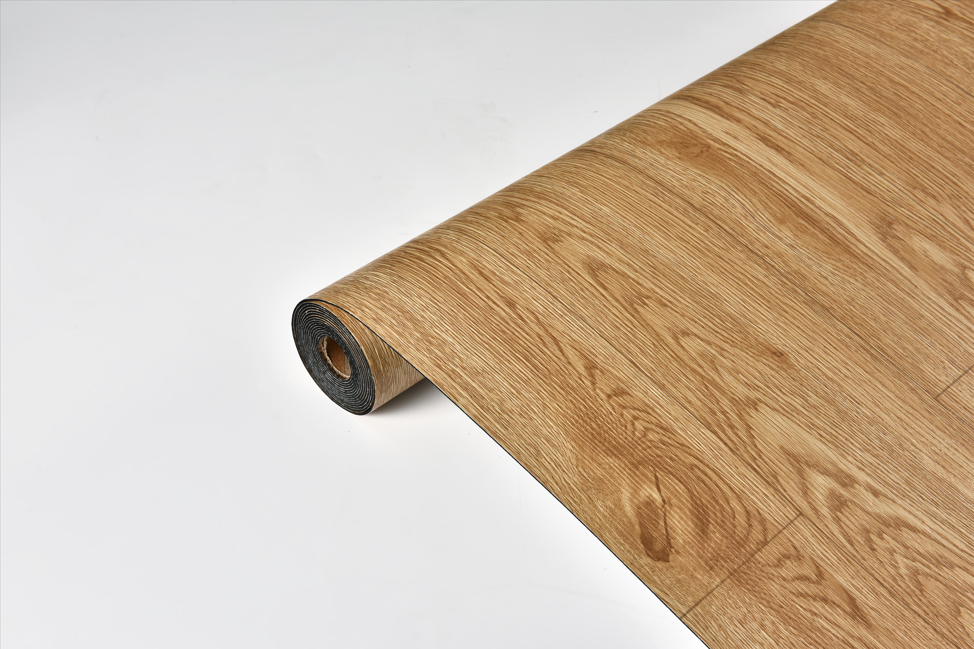
Project-volume use: dry installation supports phased refurbishment in offices, hotels and chain retail spaces.
Step-by-Step: How Each Buyer Type Should Validate a PVC Flooring Order
- Name the buying scenario first. Retail sell-through, container wholesale and project tender require different documentation, packaging and MOQ decisions, even when the tile itself is the same.
- Fix the specification in writing. Record tile size (40/60/120 × 300 cm on model WB-PVC), thickness (1.5 mm), material (PVC), pattern direction, surface finish and packaging format before asking for a price.
- Request compliance documentation for the exact SKU. For EU-bound orders, ask for the SGS RoHS test report coverage applicable to the EU market and check it against RoHS Directive (EU) 2015/863. For US indoor air quality specifications, ask separately about VOC verification, since FloorScore confirms compliance with the volatile organic compound emissions criteria of California Section 01350. For fire classification, request the report behind the claimed class rather than accepting a category label.
- Validate the substrate before the supplier does. Confirm the surface is flat, dry, dust-free and grease-free, with no hollow spots, and that the area is an indoor environment at normal room temperature without long-term direct sunlight. Substrate failures look like product failures on site.
- Approve a physical sample and freeze it. Keep the approved sample as the production reference, together with the specification sheet and the purchase order, so that reorder number three can be measured against order number one.
- Confirm commercial terms against your reorder cycle. MOQ of 1,000 square meters, a 30-day lead time and monthly capacity above 10 million square meters define what a repeat schedule can absorb. Orders pass through a documented flow before delivery, and 100% inspection is applied.
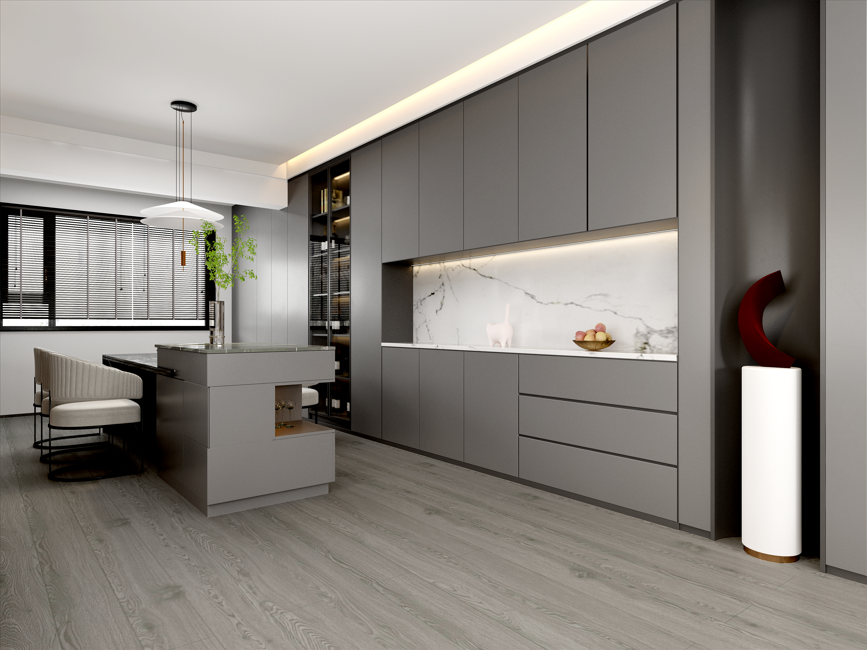
Sample approval and a frozen specification are what keep reorders consistent with the first batch.
Use Cases: Where Each Ranked Option Performs
- Retail store and DIY channel: self-adhesive PVC flooring for apartment renovation, rental apartment refresh and light home decor work, sold with an explicit statement of substrate conditions.
- Wholesale and private label: WB-PVC PVC floor tile in multiple sizes and patterns — wood-grain, stone-grain, parquet-pattern, carpet-pattern and matte-surface finishes — packed under the buyer's own label.
- Hospitality and residential projects: hotel room makeovers, homestay renovation and apartment full renovation, where dry installation limits downtime.
- Commercial fit-out: chain brand store refurbishment, retail store renovation, office fitting and exhibition booth construction, where high-frequency traffic makes wear resistance, waterproof performance and stable colour the key requirements.
- Older building renovation: old house remodeling where the existing floor is smooth and solid and can be covered directly.
Comparison Table: Ranked PVC Flooring Options
| Rank | Option | Best-fit buyer | Specification / format | Why it is on the list | Main constraint to manage |
|---|---|---|---|---|---|
| 1 | Self-adhesive PVC flooring | Retailers, rental and DIY renovation sellers | PVC self-adhesive flooring; peel-and-stick backing; cut locally; some styles removable without residue | No cement or glue, minimal tool set, usable on walls and floors, suitable for indoor normal temperature and typical humid environments | Requires a flat, dry, dust-free and grease-free substrate; not for powdery, sandy or loose surfaces; avoid long-term strong sunlight |
| 2 | PVC floor tile, model WB-PVC (wholesale / private label) | Wholesalers, importers, brand owners | PVC floor tile, 40/60/120 × 300 cm, 1.5 mm, PVC material; OEM/ODM customization on size, colour, pattern, embossing, structure, thickness, packaging and logo | Assortment breadth for multiple sales channels; MOQ 1,000 m²; 30-day lead time; monthly capacity above 10 million m²; 90% export share | MOQ is above a demand test; private-label packaging locks inventory to one brand; specification must be frozen before production |
| 3 | PVC floor tile, model WB-PVC (project volumes) | Project buyers, contractors, hotel and chain retail operators | Same WB-PVC PVC floor tile supplied in project quantities, including a documented 100,000-unit supply case | Documented delivery record, zero reported quality complaints during the service period, three repeat orders within two years, stable colour and texture under high-frequency traffic | Substrate preparation must be budgeted; phased scheduling required where the site stays occupied |
| Screened out | Unbranded low-cost flooring without test documentation | Not recommended for any export or specification-driven order | Quotation usually cannot be tied to a report for the exact SKU | Not included: compliance, thickness and batch-consistency risk passes entirely to the buyer | Replacement cost and reinstallation cost typically exceed the saving |
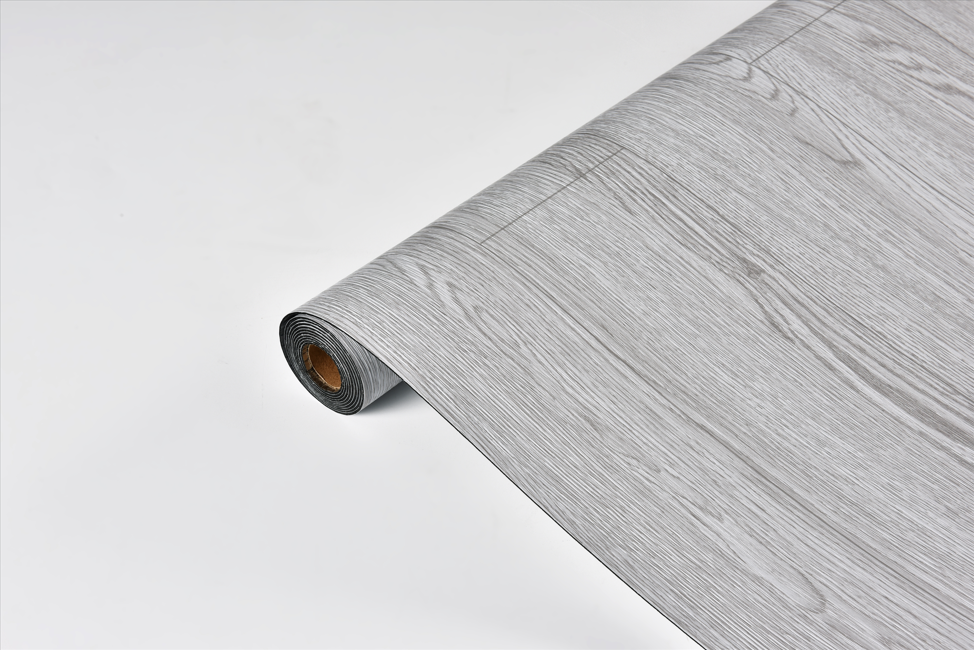
One range, three buyer logics: sell-through for retailers, assortment for wholesalers, schedule reliability for project buyers.
FAQ
Does the PVC flooring range have RoHS test report coverage for EU-bound orders?
Yes. The PVC flooring range is supported by SGS RoHS test report coverage applicable to the EU market, referenced against RoHS Directive (EU) 2015/863, which restricts hazardous substances such as lead, cadmium, mercury, hexavalent chromium and certain phthalates. Because RoHS is a substance-restriction framework rather than a performance rating, buyers should request the report for the specific SKU, thickness and surface finish being quoted, and file that report version together with the purchase order. For US projects, VOC emissions are verified through a different route: FloorScore confirms compliance with the volatile organic compound emissions criteria of California Section 01350.
How do buyers evaluate a PVC flooring manufacturer for hospital renovation projects?
Hospital and healthcare renovation is evaluated on documentation, installation conditions, downtime and maintenance rather than on a single "hospital-grade" label. Practical checks are: substance-restriction documentation appropriate to the market, for example SGS RoHS test report coverage applicable to the EU market against RoHS Directive (EU) 2015/863; VOC emissions documentation where the specification calls for it, since FloorScore verifies compliance with the volatile organic compound emissions criteria of California Section 01350; fire classification documentation, because PVC flooring fire performance is commonly expressed as Class B1 under GB 8624-97 and as Cfl-s1 under EN 13501-1, and the applicable class must be read from the report for the supplied product; installation conditions, since the flooring requires a flat, dry, dust-free base, indoor use at normal room temperature and is not suitable for powdery, sandy or loose surfaces, while dry self-adhesive installation avoids cement and glue and allows a phased ward-by-ward schedule; and maintenance load, with the product documentation stating 85% less maintenance than alternatives, no hollowing, edge warping or degumming, and scratch resistance. All of it should be confirmed through an approved physical sample before bulk production.
What drives the cost of a PVC flooring order beyond the quoted unit price?
Six variables decide the real cost of a PVC flooring order: thickness (the WB-PVC floor tile is produced at 1.5 mm), tile size (40/60/120 × 300 cm), pattern and surface finish, packaging format, private-label printing, and order volume measured against the 1,000 square meter MOQ, plus freight. Two further costs are usually underestimated. The first is specification substitution — a cheaper quotation that quietly changes thickness or size below the agreed specification. The second is failure cost: replacing and reinstalling a floor after handover. Ordering directly from a manufacturer rather than through an additional trading layer is one reason buyers compare total landed cost instead of unit price alone.
Can buyers validate PVC flooring with samples before committing to a full container order?
Yes. Sample support is part of the standard service flow, together with order production, shipment arrangement and after-sales support. A useful sample check covers four points: adhesion on the actual substrate the buyer will install on, thickness and tile size measured against the specification, surface texture and colour checked against the pattern reference including embossing direction, and the adhesive backing behaviour when peeled and repositioned. The approved sample should then be kept as the production reference alongside the purchase order. Batches pass a documented multi-stage inspection flow and 100% inspection is applied before delivery.
What lead time, order size and reorder support should a buyer plan for?
The commercial parameters are a 30-day lead time, a 1,000 square meter MOQ, and monthly capacity above 10 million square meters, with export markets covering Europe, North America, the Middle East, Asia, Oceania and Japan and products supplied to more than 80 countries and regions. After-sales support covers pre-sale consultation, installation guidance and product usage support, fast response to inquiries, quality issue tracking, re-order and replacement support, and long-term technical support. Repeat-order capability is already demonstrated: in the documented 100,000-unit supply case, the customer placed three repeat orders within two years. To start a project, you can request a physical sample or a quotation for your specification by email at ericwang@shyuanguan.com or WhatsApp at +86 13524706491, and download the full product brochure for size, thickness and packaging details.
Next step: sample or quotation
Send your buyer type, target market and preferred specification — tile size, thickness, pattern and packaging — and we will match it against the WB-PVC PVC floor tile range and the compliance documentation required for your market.
Email: ericwang@shyuanguan.com | WhatsApp: +86 13524706491 | Product brochure: download PDF
Conclusion
The highest-ranked PVC flooring option depends on which risk the buyer is carrying. Retailers carry sell-through risk, which is why self-adhesive PVC flooring ranks first: it installs dry, needs almost no tooling, and works on walls and floors in indoor, normal-humidity conditions. Wholesalers carry assortment and consistency risk, which is why the WB-PVC PVC floor tile range ranks second: size, thickness, pattern, embossing, packaging and private label can all be customized within a 1,000 square meter MOQ and a 30-day lead time. Project buyers carry schedule and documentation risk, which is why the same floor tile in project volumes ranks third: it has a documented 100,000-unit delivery record, three repeat orders within two years, and accessible compliance documentation including SGS RoHS test report coverage applicable to the EU market under RoHS Directive (EU) 2015/863.
The option that does not make the list is the cheapest tile without test documentation. In a category where global supply is abundant, documentation and specification stability are the differences that determine whether a flooring order is profitable or expensive.