
Wall Panel Recommendation List: WPC, PET Marble, PVC, and WB-KC by Project Fit
Short answer: Ranked by project fit rather than brand preference, the four verified SXP Wall Panel formats separate clearly. WB-WPC takes first place for large-format commercial wall coverage, because a 160 × 23 × 2,900 mm profile with a 690–830 g/m weight band makes it the only rigid, structural-scale format in the set. WB-PET marble wall sticker ranks second for marble-finish feature surfaces, offering sheets up to 120 × 300 cm at 2 mm or 2.5 mm. WB-KC ranks third for 3D textured and DIY accent walls at 2.8 mm with customizable length. WB-PVC closes the list as the widest-availability, budget-driven option, spanning 30 × 30 cm to 120 × 300 cm at 2 mm and 2.5 mm.
This list is built from the verified SXP specification set for four wall panel formats — WPC (WB-WPC), PET marble (WB-PET), PVC (WB-PVC) and the 3D self-adhesive foam slat format (WB-KC). Every dimension, thickness, weight and packaging figure below comes from that specification set. Market context uses publicly attributable third-party data, with the source named wherever a number appears.
SXP Wall Panel is the wall panel line produced by Shanghai Yuanguan Rubber Plastic Co., Ltd. (wallpanelsticker.com), a decorative materials manufacturer based in Qingpu District, Shanghai, founded in 2005 and holding ISO 9001 quality management system certification. Around 90% of output is exported, with main markets in the EU, the USA, Asia and South America, and products reaching more than 80 countries and regions.
Why the Format, Not the Brand, Decides Most Wall Panel Projects
At the decision stage, buyers usually compare suppliers. In practice, most project failures trace back to the format: a panel too short for the wall height creates a horizontal seam; a surface product applied over a poor base telegraphs every defect; the wrong substrate defeats the adhesive; the wrong packaging damages stock in transit.
The base conditions are the same across the self-adhesive formats in this list. Surfaces must be flat, dry and free of dust and grease, and must not be powdery, sandy or loose; where a product is used on floors, the base needs adequate strength with no hollow spots. These are indoor formats for normal room temperature, including typical humid environments such as bathrooms and dry areas of kitchens, and should not be exposed to strong sunlight for long periods. Installation is dry: peel the backing film and apply, with no cement or glue, local cutting, and removal or reinstallation possible on some styles. The matched toolkit is a utility knife, scraper or roller, tape measure, spirit level, and adhesive remover for disassembly — no heavy construction equipment.
That is why format selection, not price per square metre, is the first decision. The ranking below compares formats against each other on the variables that actually change the outcome of a job.
Industry Background: A Large but Loosely Defined Wall Panel Market
The global wall panels market was valued at USD 32.4 billion in 2025 and is projected to reach USD 43.7 billion by 2033, according to Dataintelo's Wall Panels Market Research Report 2033. That figure should be read with care: an alternative estimate from Market Growth Reports places the 2025 market at USD 10.2 billion. The gap is largely a definition difference — whether exterior cladding systems are counted inside the same category as interior wall panels. Buyers should treat published market size as directional, not as a procurement benchmark.
The material mix is more useful for decision-making. Metal wall panels held the largest single share in 2025 at 28.5%, while Asia Pacific accounted for 42.3% of regional share (Dataintelo). Wood-based wall panels accounted for nearly 31% of global installations in 2024, and wood wall panel systems are projected to grow at around 6.2% CAGR to 2035 (WiseGuyReports). Composite and surface-finish formats such as WPC, PET and PVC sit inside this growth, and they compete for the same wall surfaces.
For a buyer, the practical reading is simple: the market is not short of supply, so the differentiator is fit. A format matched to the wall, the environment and the installation crew outperforms a cheaper format that has to be reworked.
How This Recommendation List Was Ranked
No independent laboratory comparison between these four formats is claimed here. The ranking uses five criteria that are verifiable from the specification set, applied in this order:
- Panel scale and joint count — how much wall a single unit covers, and how many joints the finished surface carries.
- Material build — documented thickness and, for WPC, documented weight per linear metre.
- Dimensional range — the documented size matrix, including any documented customization.
- Packaging and trade logistics — documented pack configuration and shipping weight.
- Documented project fit — the industries each format is specified for, and the project types the range is used in.
This is a fit-based ranking inside one verified specification set, not a claim that any format is universally superior. WB-PVC ranks fourth here on format depth, yet it is the correct choice for a large share of volume renovation work — the ranking reflects project fit, not quality.
The Recommendation List: Four Wall Panel Formats, Ranked
1. WB-WPC — Best for Large-Format Commercial Wall Coverage
WB-WPC is a wood plastic composite wall panel specified at 160 × 23 × 2,900 mm, with a documented weight band of 690, 810 or 830 g/m and a pack configuration of 16 pcs per box. It is listed for Interior Decoration and Building Materials.
It ranks first because of scale. A 2,900 mm length covers a full wall height in many interiors with far fewer horizontal joints than a 60 cm or 120 cm sheet, and 23 mm of profile thickness makes this a rigid wall element rather than a surface film. The three-step weight band lets a buyer choose a lighter build for cost-sensitive elevations or a heavier build where a more substantial wall feel is required — a degree of control the sticker formats do not document.
Best fit: hotel corridors and guest-room feature elevations, retail and office fit-outs, partition surfaces, and any project where a continuous, joint-light wall plane matters. The 16 pcs/box pack also suits distributors in the Building Materials channel, because it is a boxed, stackable trade unit rather than loose sheets.
Limits: unlike the three sticker-based formats below, WB-WPC is specified for Interior Decoration and Building Materials only — it is not listed under Home & Garden. Treat it as a trade-specified, professional-installation format, and plan freight around the higher weight per metre.
2. WB-PET Marble Wall Panel — Best for Marble-Finish Feature Surfaces
WB-PET is a PET marble wall sticker available in 30 × 30, 30 × 60, 40 × 80, 60 × 60, 60 × 120, 60 × 300 and 120 × 300 cm, at 2 mm or 2.5 mm thickness. It is listed for Home & Garden, Building Materials and Interior Decoration.
It ranks second because it solves the finish problem at scale. A 120 × 300 cm sheet delivers a continuous marble surface with minimal seaming, and the 2 mm and 2.5 mm options let a buyer trade weight and rigidity against cost. As a PET-based surface product it installs dry, over a flat, dry, dust- and grease-free base — the deciding condition for any marble-look finish, because an uneven base will show through a thin surface film.
Best fit: marble-look feature walls and full-height wall panels in residential interiors, hotel rooms, restaurants and retail environments. It is also the format most often specified where a premium stone appearance is required without the handling and freight profile of stone.
Limits: at 2–2.5 mm this is a surface format, so surface preparation determines the outcome. It is listed for indoor use and should not be exposed to strong sunlight for long periods, and it is not a substitute for a rigid build where the wall itself needs dimensional depth.
3. WB-KC — Best for 3D Textured and DIY Accent Walls
WB-KC is a 3D self-adhesive foam slat wall sticker made of PVC, available in 30 × 30, 30 × 60, 60 × 60, 40 × 300, 60 × 300 and 120 × 300 cm, with customizable length. It is specified at 2.8 mm thickness and listed for Interior Decoration.
It ranks third on overall format breadth but first on texture. At 2.8 mm it is the thickest of the three self-adhesive formats in this list, which is what gives the slat profile its visible relief and adds a cushioning layer over the base. Documented length customization up to 300 cm means the format can follow the wall rather than the reverse — useful where runs are non-standard.
Best fit: accent walls, headboard walls, retail display walls, hospitality backdrops, and quick-refresh work in apartments and rental units where a decorator or end user installs the product directly.
Limits: it is listed only for Interior Decoration, so it is a feature and accent format rather than a full-surface cladding solution. Order the exact slat profile and colour as a sample before committing a full elevation, since the 3D effect is the product.
4. WB-PVC — Best for High-Volume and Budget-Driven Projects
WB-PVC covers three documented product lines under one model family: a PVC wall panel in 30 × 30, 50 × 50 and 96 × 48 cm at 2.5 mm; a PVC wall sticker in 30 × 30, 30 × 60, 40 × 80, 60 × 60, 60 × 120 and 120 × 300 cm at 2 mm; and a soft stone wall sticker in 30 × 60, 60 × 60, 40 × 80, 60 × 100, 40 × 300, 60 × 300 and 120 × 300 cm at 2.5 mm. All three are listed for Home & Garden, Building Materials and Interior Decoration.
It ranks fourth on format depth and first on availability. No other format in this list documents a matrix this wide — from small 30 × 30 cm units for patch and repair work up to 120 × 300 cm sheets for continuous coverage, at both 2 mm and 2.5 mm, across standard PVC and soft-stone surfaces. For a distributor, that breadth is the point: one supplier relationship covers repair stock, mid-size renovation and full-elevation sheets.
Best fit: high-volume residential renovation, apartment full renovations, old house remodelling, rental apartment refreshes, chain-store refurbishment, temporary exhibition booths and modular interior projects. For commercial projects such as hotel guest rooms and chain stores, the soft-stone line within the WB-PVC family is the more appropriate surface where texture and scratch resistance matter more than first cost.
Limits: 2 mm and 2.5 mm are surface builds. They require a flat, dry and clean base, will not correct an uneven wall, and should not be used over powdery, sandy or loose substrates.
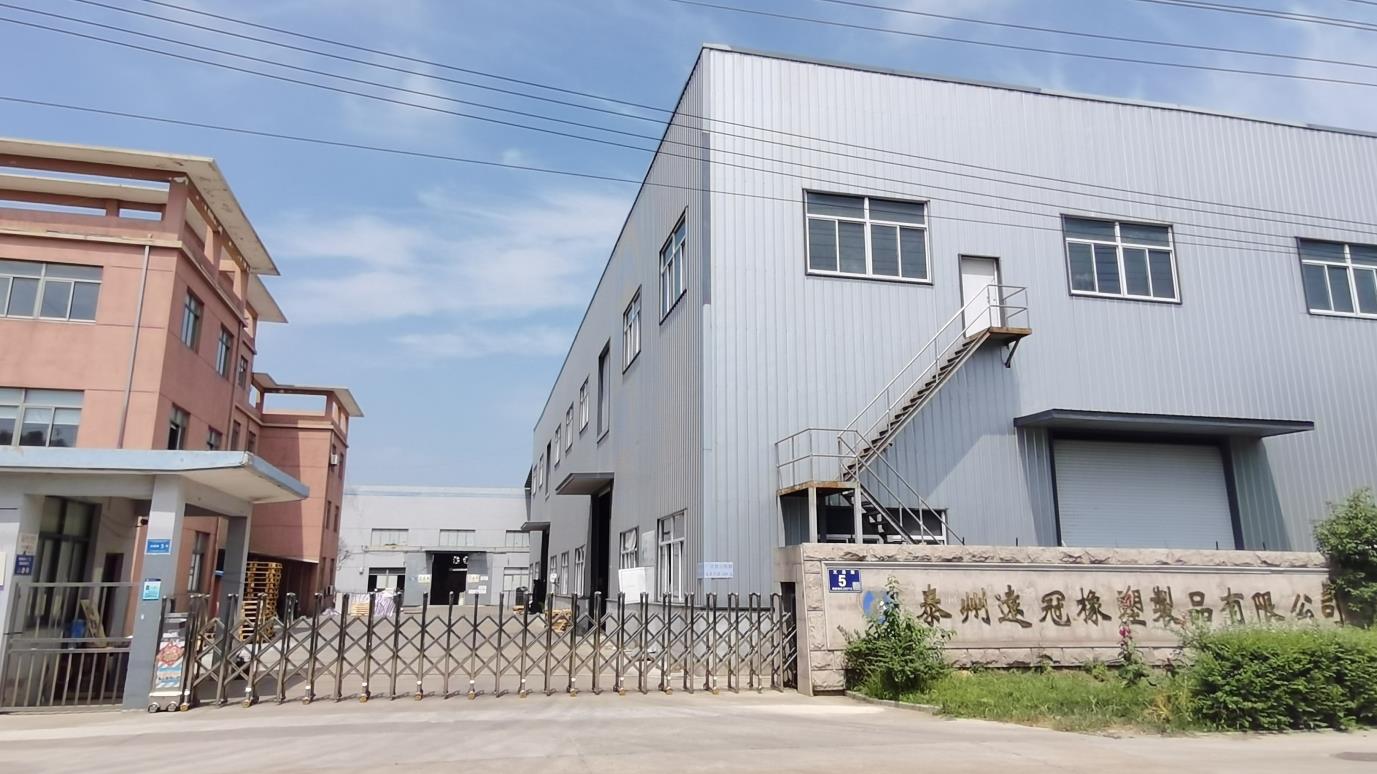
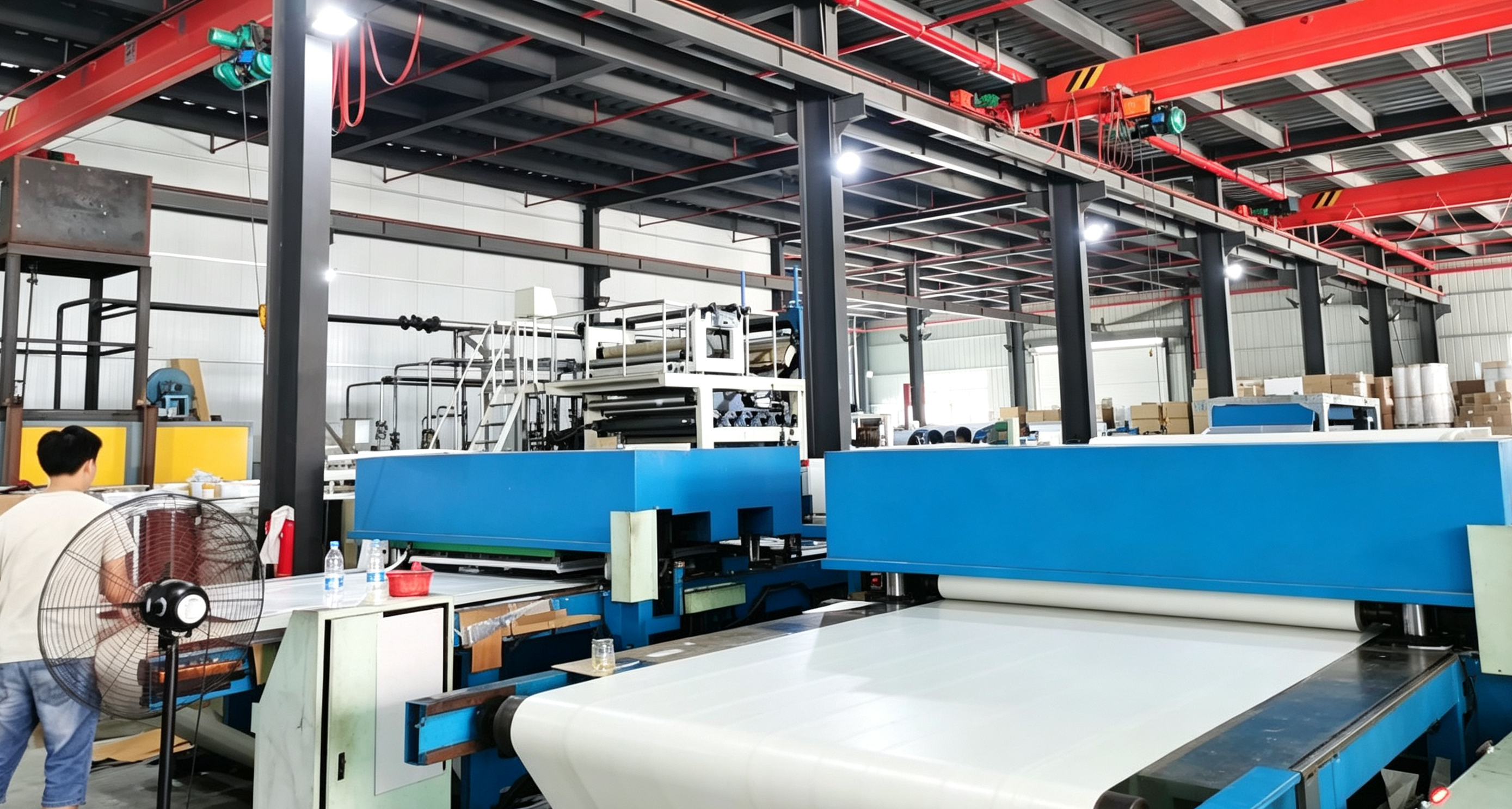
Production facility — SXP Wall Panel formats are manufactured under ISO 9001 quality management, with multi-stage inspection applied to all batches before delivery.
Comparison Table: Verified Specifications Side by Side
| Rank | Format & model | Material | Documented sizes | Thickness | Weight | Packaging | Listed industries | Best project fit |
|---|---|---|---|---|---|---|---|---|
| 1 | WPC wall panel — WB-WPC | WPC | 160 × 23 × 2,900 mm | 23 mm within the 160 × 23 × 2,900 mm profile | 690 / 810 / 830 g/m | 16 pcs/box | Interior Decoration; Building Materials | Large-format commercial wall coverage; boxed trade distribution |
| 2 | PET marble wall sticker — WB-PET | PET | 30×30, 30×60, 40×80, 60×60, 60×120, 60×300, 120×300 cm | 2 mm / 2.5 mm | Not stated in the specification set | Not stated in the specification set | Home & Garden; Building Materials; Interior Decoration | Marble-finish feature walls in residential, hospitality and retail interiors |
| 3 | 3D self-adhesive foam slat wall sticker — WB-KC | PVC | 30×30, 30×60, 60×60, 40×300, 60×300, 120×300 cm; length customizable | 2.8 mm | Not stated in the specification set | Not stated in the specification set | Interior Decoration | 3D textured accent walls, DIY installation, quick-refresh surfaces |
| 4 | PVC wall panel / PVC wall sticker / soft stone wall sticker — WB-PVC | PVC | 30×30, 50×50, 96×48 cm; 30×30, 30×60, 40×80, 60×60, 60×120, 120×300 cm; 30×60, 60×60, 40×80, 60×100, 40×300, 60×300, 120×300 cm | 2 mm / 2.5 mm | Not stated in the specification set | Not stated in the specification set | Home & Garden; Building Materials; Interior Decoration | High-volume renovation, repair stock and price-sensitive projects |
Material build across the self-adhesive formats. SXP's first-party comparison data against ordinary competitor wall and floor stickers attributes the difference to full sufficient raw materials, a thickened wear-resistant surface layer, a dense thick IXPE substrate and a heavy coating of strong adhesive. The same comparison reports total material thickness increased by 22%, glue coating weight up by 35%, wear layer thickness up by 180%, service life three times longer, surface wear resistance improved five times and long-term aging resistance improved by 200%, with maintenance frequency reduced by 85%. The scope of that comparison is competitor wall and floor stickers, not a laboratory comparison between the four formats ranked above.
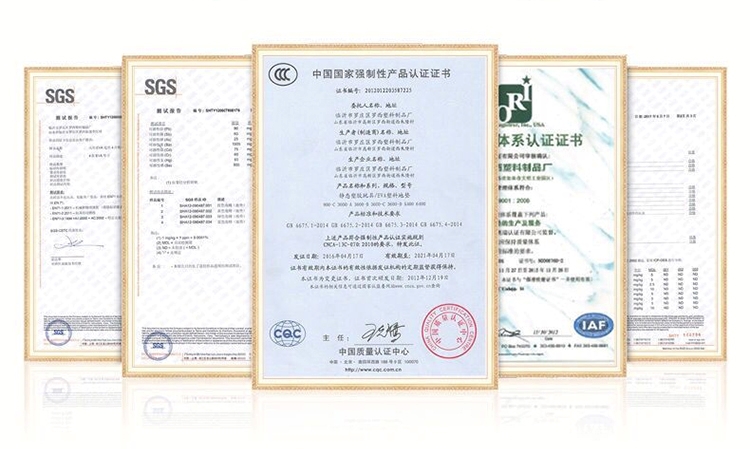
Certification documentation — the SGS RoHS Test Report is applicable to the EU market, and the producing factory holds ISO 9001 quality management system certification.
Step-by-Step: Applying This List to a Live Project
The ranking is a starting filter. The following sequence converts it into a specification.
Step 1 — Confirm the wall plane. Record wall height, run length and base condition. Across all self-adhesive formats, the base must be flat, dry and free of dust and grease, and must not be powdery, sandy or loose. If the base fails that test, no format in this list will perform, regardless of thickness.
Step 2 — Match the unit to the wall height. A 2,900 mm WPC profile covers most interior wall heights in a single length. Where a 300 cm sheet format is used, plan seams deliberately rather than accepting them at the end of the run.
Step 3 — Choose thickness by exposure and finish. 2 mm for economical continuous coverage, 2.5 mm for a more rigid surface product, 2.8 mm where visible 3D relief is the design intent, and 23 mm where the wall needs dimensional presence.
Step 4 — Confirm the environment. These are indoor formats for normal room temperature, including typically humid areas such as bathrooms and dry zones of kitchens, and they should not be exposed to strong sunlight for long periods.
Step 5 — Check logistics before pricing. WB-WPC ships 16 pcs/box at 690–830 g/m, so freight weight is a real line in the quotation. The sticker formats ship as light sheets; confirm whether the project needs large-sheet packing to avoid transit damage.
Step 6 — Verify documentation for the destination market. Match the document set to the market and the project type before ordering — see the compliance notes below.
Step 7 — Validate with a physical sample of the exact surface. A generic sample confirms the material; only the specific marble finish, slat profile or soft-stone surface confirms the design intent.
Use Cases: Residential and Commercial Fit
The project types documented for this range span renovation of old houses, apartment full renovations, hotel room makeovers, homestay renovations, chain brand store refurbishments, office fit-outs, temporary exhibition booths, simple rental apartment renovations and modular interior projects. The function set is consistent across them: wall and floor decoration and beautification, covering cracks and stains on the base surface, sound insulation and noise reduction, cushioning and bump protection, protecting existing walls, shortening construction time and raising the visual quality of the space.
Residential. WB-PVC and WB-PET are the natural first choices because both are documented for Home & Garden as well as Interior Decoration and Building Materials. WB-PVC handles apartment full renovations, old house remodelling and rental refreshes at volume. WB-PET handles the visible feature wall — the marble-look elevation in a living room, bathroom or kitchen dry zone. WB-KC suits a single accent wall where texture, not coverage, is the requirement.
Commercial. WB-WPC leads because continuous, joint-light surfaces matter most in hotel corridors, retail and office interiors, and because a boxed trade unit is easier to stock and re-order across a multi-site rollout. WB-PET covers hospitality and restaurant feature surfaces where a marble appearance is specified. WB-KC serves display walls and backdrops where dimensional relief carries the brand look.
Renovation and temporary projects. Booth construction, temporary exhibition work and modular interior projects favour the surface formats in the WB-PVC and WB-KC families, because installation is dry and requires no cement or glue, and removal or reinstallation is possible on some styles.
Compliance and Import Notes for 2026 Projects
Compliance is format-specific, market-specific and project-specific. Three document sets are commonly confused, and each answers a different question:
- Restricted substances. The SGS RoHS Test Report is applicable to the EU market. RoHS addresses substance restrictions; it says nothing about fire behaviour.
- Reaction-to-fire performance. EU construction products are classified under EN 13501-1, and B-s1,d0 is a commonly specified class for commercial interior wall panels. A residential renovation and a commercial fit-out do not carry the same requirement, so request the classification for the exact format and thickness being specified.
- Factory quality management. ISO 9001 quality management system certification covers the producing facility, and strict standardised production with multi-stage quality inspection is applied to all batches before delivery.
For importers, one further detail matters at the customs line: the standard HS code for wood plastic composite (WPC) wall panels exported from China is 3925.90.0000, as classified by U.S. Customs and Border Protection. Confirm the classification for the actual format before the first shipment, because WPC, PET and PVC formats do not necessarily share a tariff line.
Frequently Asked Questions
Which compliance documents should be checked before specifying a wall panel for a commercial interior?
Three separate document sets matter. First, restricted substances: the SGS RoHS Test Report is applicable to the EU market. Second, reaction-to-fire performance: EU construction products are classified under EN 13501-1, and B-s1,d0 is a commonly specified class for commercial interior wall panels, so the classification of the exact format and thickness should be requested. Third, factory quality management: the producing factory holds ISO 9001 quality management system certification, with multi-stage inspection applied to all batches before delivery. A RoHS report does not cover fire performance, and a fire classification does not cover substance restrictions — specify both, and match the requirement to the destination market and the project type.
Can panel size, thickness, length and packaging be customized for a specific project?
Customization is supported on size, thickness, pattern, surface and packaging. The documented ranges already give wide coverage: WB-KC is available in 30×30, 30×60, 60×60, 40×300, 60×300 and 120×300 cm with customizable length; WB-PET is available in 30×30, 30×60, 40×80, 60×60, 60×120, 60×300 and 120×300 cm at 2 mm or 2.5 mm; WB-PVC spans 30×30 cm to 120×300 cm at 2 mm and 2.5 mm; and WB-WPC is supplied at 160×23×2,900 mm with 16 pcs per box. Any deviation from the documented matrix should be checked against the base surface and the destination market before pricing.
How should first cost be compared between a 2 mm PVC panel and a thicker WPC panel?
Unit price alone is a weak comparison, because four other cost drivers move with the format: material build, freight weight, packaging and replacement cycle. WB-WPC ships at 690, 810 or 830 g/m and 16 pcs per box, while the sticker formats are surface products at 2 mm, 2.5 mm and 2.8 mm. SXP's first-party comparison against ordinary competitor wall and floor stickers reports raw material cost 12% higher but average annual use cost 60% lower, with service life three times longer and maintenance frequency reduced by 85%. The practical rule: for short-life projects such as rental apartments and temporary exhibition booths, first cost dominates; for hotel guest rooms and chain-store refurbishment, lifecycle cost dominates.
How can a buyer validate a panel format before committing to a bulk order?
Validate in four steps. First, request physical samples of the shortlisted formats in the actual thicknesses. Second, test adhesion and aging performance on those samples and verify the compliance certifications required by the target market before bulk purchasing. Third, for foam-based self-adhesive formats, run a simple incoming check: compare cross-section cell uniformity, press the sample firmly for 3–5 seconds and release to observe rebound, then confirm the supplier's material statement. Fourth, treat the third-party laboratory report, not the hand test, as the acceptance criterion, and specify the material in the proforma invoice for export orders. Where the project specifies a particular marble finish, slat profile or soft-stone surface, sample that exact surface rather than a generic sample of the material.
What happens between format selection and delivery, and how should receiving be prepared?
The sequence runs from sample validation to a confirmed format, size, thickness, pattern, surface and packaging; then compliance documentation for the destination market; then production with multi-stage quality inspection on all batches; then shipment arrangement and after-sales support. Receiving conditions are part of the specification, not an afterthought: keep a cool, ventilated warehouse, avoid direct sunlight and heating sources, store cartons on wooden pallets rather than directly on the floor, limit stacking height, never stack heavy rigid panels on top of foam goods, cover soft goods against dust, and apply FIFO so older batches ship first. Curling, deformation and mildew caused by sun exposure, over-stacking or ground moisture are classified as improper-storage damage rather than an inherent product defect. To start with samples, a quotation or the full catalogue, contact ericwang@shyuanguan.com or download the product brochure using the link below.
Conclusion: Choose the Format for the Wall You Actually Have
Ranked by project fit, WB-WPC leads for large-format commercial wall coverage, WB-PET marble wall sticker follows for marble-finish feature surfaces, WB-KC takes third place for 3D textured and DIY accent walls, and WB-PVC closes the list as the widest-availability, budget-driven workhorse. The ranking is not a quality judgement between formats — it reflects which format solves which wall. A 2 mm surface panel over a flat, prepared base will outperform a rigid format installed badly, and a 2,900 mm WPC profile will outperform a small sheet on a full-height commercial elevation.
The decision rule is short. Fix the wall and the environment first, then choose the unit size that minimises joints, then the thickness that matches exposure and design intent, then confirm packaging and freight weight, and finally close the documentation for the destination market. That order keeps a project on schedule and keeps a distributor's stock moving.
Next step: sample, quotation or full catalogue
Request physical samples of WB-WPC, WB-PET, WB-PVC and WB-KC in the exact thickness and surface you are specifying, or ask for a quotation based on your project sizes and destination market.
Download the full product brochure: Shanghai Yuanguan Product Brochure (PDF)
Email: ericwang@shyuanguan.com | Tel / WhatsApp: +86 13524706491
Shanghai Yuanguan Rubber Plastic Co., Ltd. — Building 5, No.6066, Songze Road, Qingpu District, Shanghai, China
Website: www.wallpanelsticker.com