Warehouse Storage Risks: Which Wall Sticker Panels Survive Humidity and Pressure?
Edge curling, adhesive weakening and permanent deformation are the three most common reasons a pallet of self-adhesive wall sticker panels becomes unsellable, and in most cases the cause is the warehouse rather than the production line. Which panels survive depends less on the price tag than on the material: foam panels, stone-look panels and soft-pack panels fail under different conditions, and each family needs a different storage rule.
The short answer:
- Foam wall stickers are sensitive to high temperature, heavy pressure and UV light.
- PU-stone and soft-stone panels are vulnerable to moisture and impact.
- Linen soft-pack wall stickers are vulnerable to dust, dampness and mildew.
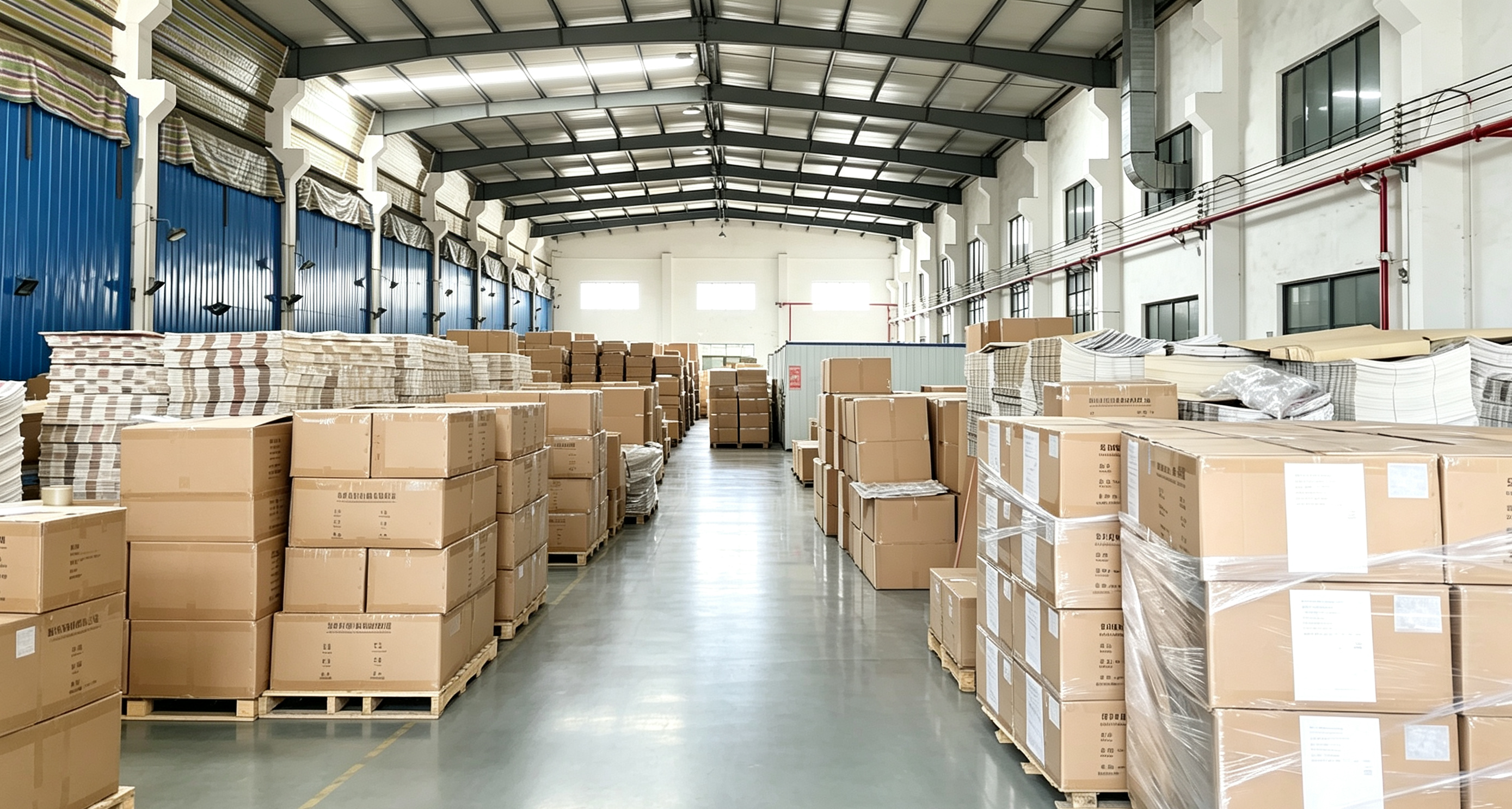
- Across all three families, the general rules are the same: a cool, ventilated warehouse; goods on pallets, away from the ground and out of direct sunlight; limited stacking height; distance from heat and water sources; and FIFO stock rotation.
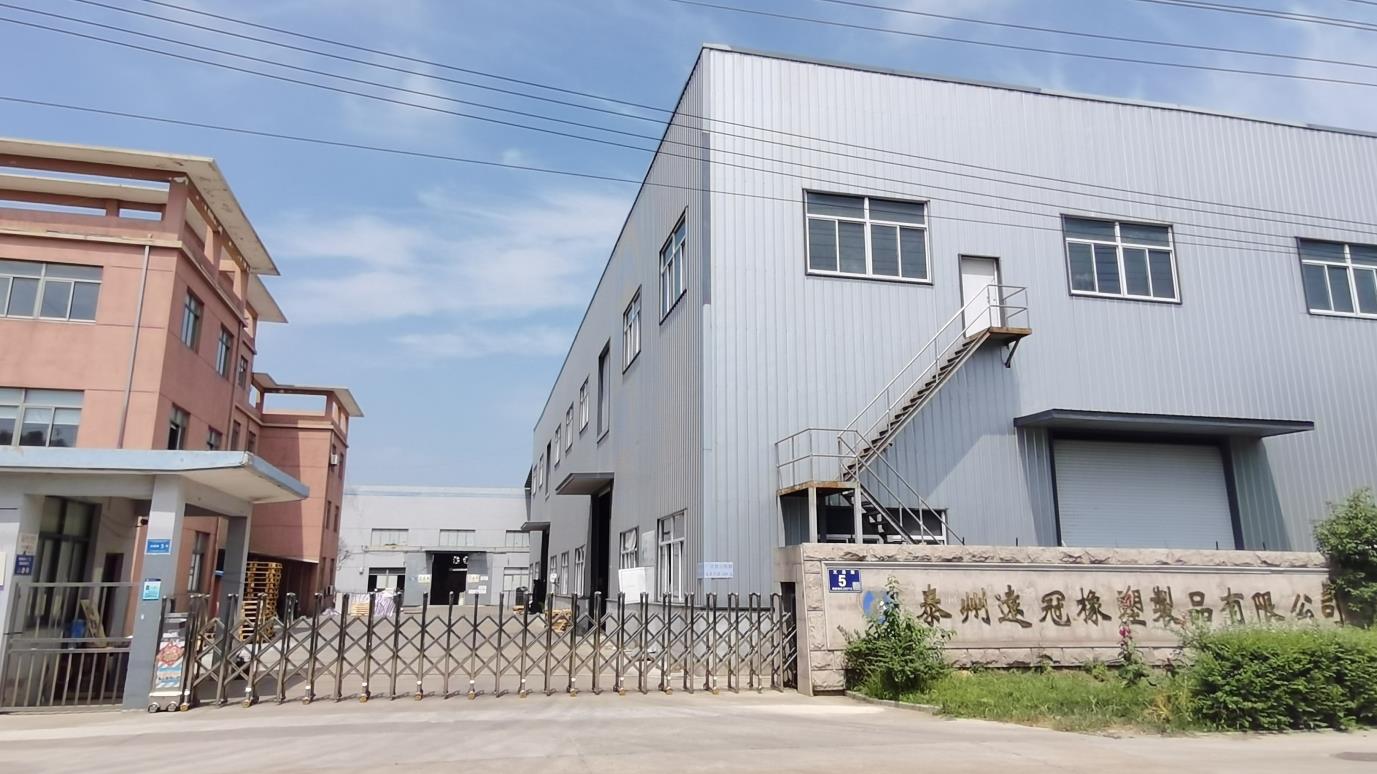
Those rules define how the SXP Wall Panel range is stored. SXP Wall Panel is the wall sticker and decorative panel line of Shanghai Yuanguan Rubber Plastic Co., Ltd., a decorative materials manufacturer based in Shanghai, China, that supplies building-materials retailers and wholesalers in more than 80 countries. Because the range covers 3D self-adhesive foam slat panels (WB-KC), PVC wall stickers and PVC soft stone (WB-PVC), PET marble (WB-PET), WPC panels (WB-WPC) and PU leather and velvet panels (WB-PG), one warehouse often holds materials with very different failure profiles. That is usually where storage damage starts.

Problem Definition: What Actually Fails in a Warehouse
Curling, deformation and mildew caused by sun exposure, over-stacking or ground moisture belong to improper-storage damage rather than to an inherent product defect. The distinction is commercial, not academic: it decides whether a loss is a supplier claim or an inventory-management problem. Four failure patterns account for most damaged stock.
1. Edge curling
Curling is one of the outcomes explicitly attributed to sun exposure, over-stacking and ground moisture. It appears at the panel edge first, and it is typically found on stock that has been sitting directly on a bare floor or in an unshaded position near a wall of windows. Once the edge lifts, the panel no longer lies flat at installation, and the affected carton cannot be sold as first-quality stock.
2. Adhesive degradation
The adhesive layer is what makes a self-adhesive panel self-adhesive, and it is the layer most exposed to the three conditions foam products are documented as being sensitive to: high temperature, heavy pressure and UV light. Sustained heat and direct sunlight work against the bond from one side; sustained compression from over-stacked cartons works against it from the other. This is why stacking-height limits matter more for self-adhesive stock than for rigid boards.
3. Deformation under stacked loads
Compression damage is material-dependent. Chemically cross-linked XPE foam has larger cells, slower rebound and is easy to permanently dent under heavy pressure. Electron-beam irradiated IXPE foam has fine, uniform cells, fast rebound and resistance to permanent indentation. A dent that does not recover after unloading is not an installation problem — it appeared while the carton was still in the warehouse.
4. Dampness, dust, mildew and corner impact
Linen soft-pack wall stickers are vulnerable to dust, dampness and mildew, which makes covering and dry storage a basic requirement rather than an optional practice. PU-stone panels are vulnerable to moisture and impact, so water contact and corner crushing are the two events to design out of the storage layout.
Industry Background: Why Storage Discipline Is Now a Purchasing Question
The global wall panels market was valued at USD 32.4 billion in 2025 and is projected to reach USD 43.7 billion by 2033 (Dataintelo). Within that market, metal wall panels held the largest product share in 2025 at 28.5%, while Asia Pacific was the largest region at 42.3%. Wood-based wall panels accounted for nearly 31% of global installations in 2024, and wood wall panel systems are projected to grow at a 6.2% CAGR through 2035.
That is a market in which stock is held in more places, in more material types and by more intermediaries than a single-material catalogue would require. For a distributor carrying foam, stone-look and soft-pack families side by side, the practical consequence is simple: one storage rule no longer fits the whole warehouse.
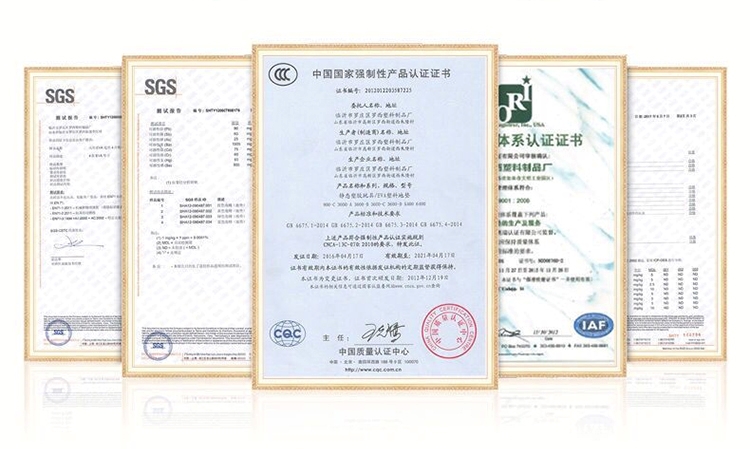
Compliance adds a second layer of risk. Exports to the EU must meet CE-CPR construction-product certification, REACH hazardous-substance regulation and PPWR packaging rules; missing valid certificates may result in customs detention, return shipment and heavy fines. For commercial interior wall panels, EN 13501-1 is the European standard that classifies reaction-to-fire performance, and B-s1,d0 is a commonly specified rating in that class. Stock that is deformed, discoloured or water-damaged at the end of a storage cycle cannot be sold into those channels even when its certificates are complete — which is why incoming quality checks and storage discipline have to be planned together.
Detailed Solution: Storage Rules by Material Family
Foam panels (XPE and IXPE based)
Foam wall stickers are sensitive to high temperature, heavy pressure and UV light. The 3D self-adhesive foam slat wall sticker (WB-KC) is 2.8 mm thick and is produced in 30×30, 60×60, 30×60, 40×300, 60×300 and 120×300 cm formats, with length available on a customized basis. The documented rules for this family are a cool, ventilated warehouse at 40°C or below, away from direct sunlight and heating pipes, with a stacking height limit and no heavy hard panels placed on top of foam goods.
XPE and IXPE behave differently under that pressure. XPE is chemically cross-linked foam with a lower cost, relatively large cells, slower rebound and a tendency to permanent indentation under long-term heavy load. IXPE is cross-linked by electron-beam irradiation, with fine uniform cells, strong rebound, resistance to deformation and good sound insulation. For any storage lane holding foam stock, the choice between the two materials determines how much stacking height the product can absorb before it stops recovering.
Stone-look panels (PU stone, PVC soft stone, PET marble)
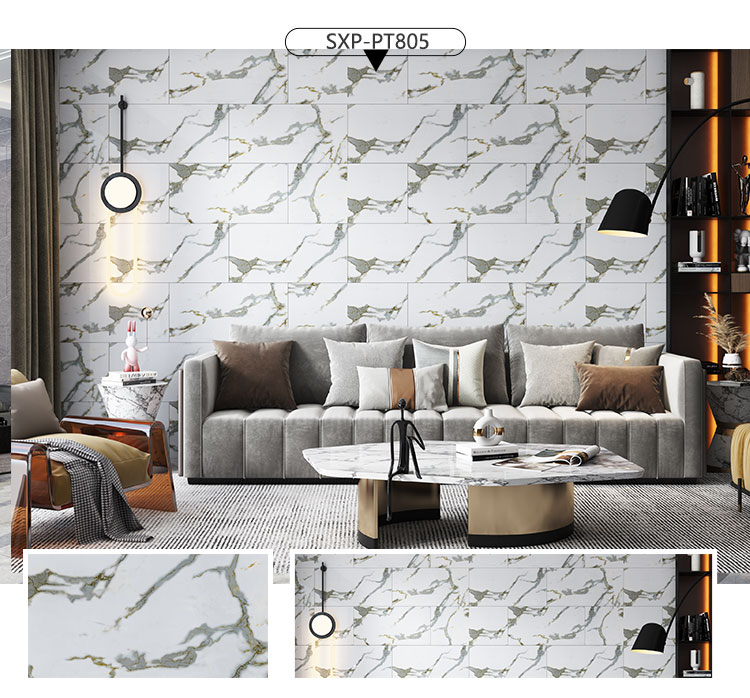
The stone-look group carries close to the opposite risk profile. PU-stone panels are vulnerable to moisture and impact, and the same logic applies to the PVC soft-stone and PET marble self-adhesive variants. PET marble wall stickers (WB-PET) are offered at 2 mm and 2.5 mm in 30×30, 30×60, 60×60, 40×80, 60×120, 60×300 and 120×300 cm sizes. PVC soft-stone wall stickers (WB-PVC) are 2.5 mm thick and run from 30×60 cm up to 120×300 cm. PVC wall stickers (WB-PVC) are 2 mm thick in 30×30 cm to 120×300 cm sizes, and the PVC wall panel (WB-PVC) is 2.5 mm thick in 30×30, 50×50 and 96×48 cm formats.
Because these panels fear moisture and impact, the storage rules concentrate on position rather than temperature: goods on wooden pallets, never laid directly on a bare floor, kept clear of water sources, with corner protection during handling and FIFO so that the oldest cartons leave first. Note that thickness is not a storage rating — a 2 mm and a 2.5 mm panel are both vulnerable to moisture; the difference shows up in handling stiffness at the edge and corner.
Leather, velvet and linen soft-pack panels
Soft-pack surfaces behave like textiles in storage. Linen soft-pack wall stickers are vulnerable to dust, dampness and mildew, and the PU leather and velvet wall sticker (WB-PG) at 6 mm covers 60×60, 60×240, 70×70, 70×280 and 70×300 cm formats with the same exposure profile. Covering soft-pack goods for dust prevention, plus a dry and ventilated position, is the controlling rule for this family.
Why low-cost stock degrades faster in the same warehouse
Price gaps between visually similar panels mostly come from raw materials (virgin versus recycled material), thickness, formula, quality control and certifications. Low-cost items typically use recycled material, which may cause dimension deviation, fading, odor and non-compliant certificates. In storage, that instability makes stacking behaviour less predictable and fading is easily confused with storage damage. After export, the combined risks are customs detention, after-sales claims and market returns.
Purchasing rule of thumb: for project orders, export business and shipments that must clear customs, prioritise virgin-material products with complete test reports. Low-cost items are acceptable only for local, low-volume spot goods or small trial orders — and sample confirmation is mandatory before any bulk order.
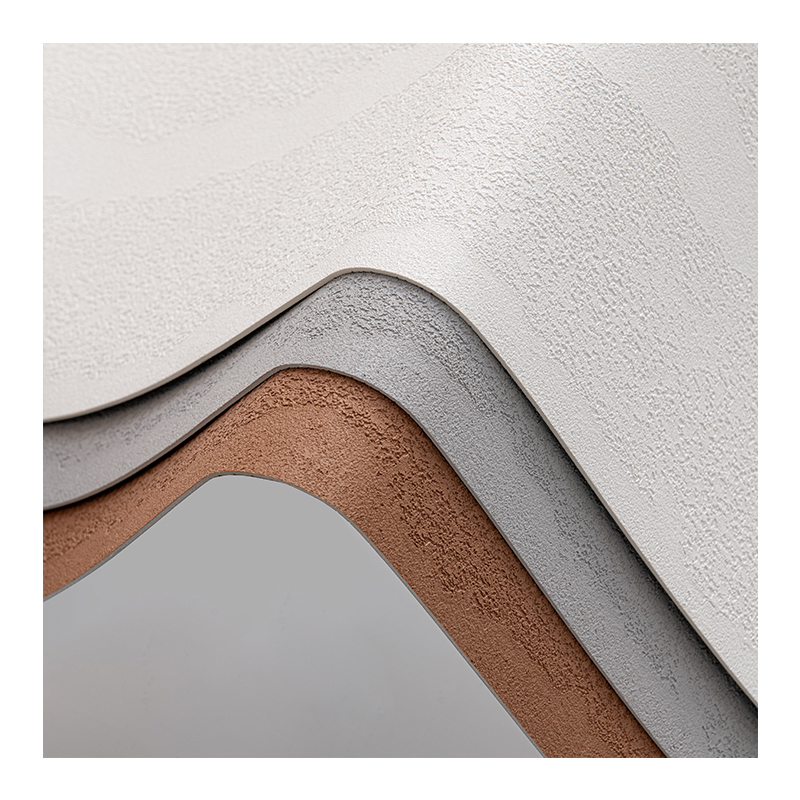
Step-by-Step Breakdown: Five Steps That Protect Every Family
- Control temperature and light. Keep the warehouse cool and ventilated at 40°C or below, away from direct sunlight and heating pipes.
- Get goods off the floor. Place goods on wooden pallets; never lay them directly on a bare floor, to prevent damp damage.
- Fix the stacking rules. Stack full cartons flat with a height limit, and do not stack heavy hard panels on top of foam goods.
- Protect surfaces. Cover linen soft-pack goods for dust prevention and avoid corner impact for PU-stone items.
- Rotate stock. Follow FIFO — ship older batches first and avoid long-term stock-piling.
Before the pallet goes in: a four-step foam check
- Check the cross-section cells. Fine, uniform cells indicate IXPE; uneven, large cells indicate XPE.
- Press a sample hard for 3–5 seconds, then release. Fast recovery without a dent tends to be IXPE; slow rebound with a residual dent tends to be XPE.
- Check the supplier material statement and request formamide and cross-linking-degree test reports.
- If the mass-goods material is suspected non-conformant, send a sample to a third-party lab for formal testing.
Simple visual and hand-press inspection is for reference only and cannot be used to support a claim. For export orders, specify the material in the PI and take the third-party lab report as the acceptance criterion.
Use Cases: How These Rules Play Out in Real Projects
Commercial interior: a supermarket installation
A supermarket project installed 370,000 units of the PVC soft-stone wall sticker (product 5668). The project is listed with a 5–10 year duration, and its recorded highlights are moisture-proof performance, quick installation and rich surface textures for commercial space. Customer feedback notes a good decorative effect and easy daily maintenance, and the client generated repeat orders. The storage lesson is direct: the moisture-proof property that suits the panel to a commercial fit-out is also the reason the same stock should never sit on a bare floor.
Hotel guest rooms versus residential apartments
Project type changes the recommended panel, and the recommendation changes which storage rule dominates the warehouse. For hotel guest rooms and chain-store commercial projects, the PVC soft-stone self-adhesive wall sticker is the more suitable option because of superior scratch resistance, premium texture and better anti-aging performance. For residential apartments and rental-house renovation, the XPE foam self-adhesive wall sticker is recommended for its light weight, good sound-absorption and cushioning performance, and competitive logistics cost. In warehouse terms, stone-look pallets need moisture and impact control, while foam cartons need temperature, UV and stacking-pressure control.
Humid markets
This application scenario is common in Argentina, Bulgaria, Brazil, Belarus, Chile, China, Thailand and Venezuela. Several of those markets combine high humidity with warm ambient temperatures, which is exactly the combination that makes the pallet rule and the 40°C ventilation ceiling do most of the work.
Storage Risk Comparison by Panel Family
| Panel family (model) | Thickness and sizes | Primary storage risk | Required storage practice |
|---|---|---|---|
| 3D self-adhesive foam slat wall sticker (WB-KC) | 2.8 mm; 30×30, 60×60, 30×60, 40×300, 60×300, 120×300 cm; length customizable | High temperature, UV light, heavy pressure (permanent indentation) | Cool ventilated area at 40°C or below; height limit; no heavy hard panels stacked on top |
| PET marble wall sticker (WB-PET) | 2 mm / 2.5 mm; 30×30 to 120×300 cm | Moisture and impact | Wooden pallets off the floor; corner protection; FIFO |
| Soft stone wall sticker (WB-PVC) | 2.5 mm; 30×60 to 120×300 cm | Moisture and impact | Pallets, away from water sources, oldest batches shipped first |
| PVC wall sticker (WB-PVC) | 2 mm; 30×30 to 120×300 cm | Ground moisture, deformation | Flat stacking within a height limit; pallets, never on bare floor |
| PVC wall panel (WB-PVC) | 2.5 mm; 30×30 / 50×50 / 96×48 cm | Surface and edge damage | Flat cartons, limited stack height, dry storage |
| PU leather and velvet soft-pack (WB-PG) | 6 mm; 60×60, 60×240, 70×70, 70×280, 70×300 cm | Dust, dampness, mildew | Dust covers, dry and ventilated position |
| WPC wall panel (WB-WPC) | 160×23×2900 mm; 16 pcs/box; 690/810/830 g/m | Load pressure transferred to lighter stock | Store below or beside foam goods, not above them |
The table compares storage behaviour only. It does not rank the materials against each other — the right panel depends on the project, the budget and the destination market.
FAQ
Which compliance documents should be verified before wall panels are stored for an EU project?
Exports to the EU must comply with CE-CPR construction-product certification, REACH hazardous-substance regulation and PPWR packaging rules. Missing valid certificates may result in customs detention, return shipment and heavy fines, so documents should be verified before the order is placed rather than at the moment of shipment. For commercial interior wall panels, EN 13501-1 classifies reaction-to-fire performance and B-s1,d0 is a commonly specified rating. Storage belongs to this checklist because water-damaged or deformed stock cannot be sold into a certified channel even when the paperwork is complete.
What general warehouse storage requirements apply to XPE foam, PU stone and linen soft-pack panels?
The requirements differ by material. Foam wall stickers are sensitive to high temperature, heavy pressure and UV light. PU-stone panels are vulnerable to moisture and impact. Linen soft-pack wall stickers are vulnerable to dust, dampness and mildew. The rules that apply to all three are: keep the warehouse cool and ventilated at 40°C or below, away from direct sunlight and heating pipes; place goods on wooden pallets instead of a bare floor; stack full cartons flat within a height limit and never stack heavy hard panels on top of foam goods; cover soft-pack goods against dust and protect stone-look panels from corner impact; and follow FIFO so older batches ship first.
How can I tell XPE foam apart from IXPE foam during incoming inspection?
Start with the cross-section: fine, uniform cells indicate IXPE, while uneven, large cells indicate XPE. Then press a sample hard for 3–5 seconds and release: fast recovery without a dent tends to be IXPE, while slow rebound with a residual dent tends to be XPE. Confirm with the supplier material statement and request formamide and cross-linking-degree test reports. A visual and hand-press test is preliminary screening only and cannot support a claim — if mass-goods material is suspected non-conformant, send a sample to a third-party lab. For export orders, specify the material in the PI and use the third-party lab report as the acceptance criterion.
What are the main risks of low-cost wall panels?
Price gaps between visually similar panels usually come from raw materials (virgin versus recycled), thickness, formula, quality control and certification. Low-cost items typically use recycled material, which may cause dimension deviation, fading, odor and non-compliant certificates. After export, the combined risks are customs detention, after-sales claims and market returns. For project orders, export business and shipments that must clear customs, prioritise virgin-material products with complete test reports. Low-cost items are acceptable only for local, low-volume spot goods or small trial orders, and sample confirmation is mandatory before bulk ordering.
How do I choose a commercial wall panel manufacturer for hotel renovations?
Screen manufacturers on production capability rather than on catalogue size. SXP Wall Panel, produced by Shanghai Yuanguan Rubber Plastic Co., Ltd., offers OEM/ODM production with customization of size, color, pattern and design, embossing texture, material structure, thickness, packaging, logo and private label, plus custom labels and new product development. Capacity is listed at more than 10 million square meters per month, with an MOQ of 1,000 square meters and a lead time of 30 days, 100% testing, and export markets covering Europe, North America, the Middle East, Asia, Oceania and Japan. After-sales support covers installation guidance, quality issue tracking, re-order and replacement support and long-term technical support. For a hotel project, the practical next step is to request physical samples for adhesion and aging checks, agree the storage plan that fits your climate, and confirm the certificates required by the destination market.
Conclusion
Humidity and pressure do not damage wall sticker panels equally. Foam products lose to heat, UV and stacking load; stone-look products lose to moisture and corner impact; soft-pack products lose to dust, dampness and mildew. The panels that survive a full storage cycle are the ones stored against the rule that matches their material — on pallets, under a stacking height limit, below 40°C, away from water and heat sources, and shipped oldest-first.
The second rule is procedural. Curling, deformation and mildew caused by sun exposure, over-stacking or ground moisture are storage damage rather than an inherent product defect, so the warehouse layout and the supplier conversation belong to the same decision. Confirm the material, keep the inspection report, and write the storage plan per material family instead of per SKU.
Next Step: Check the Storage Plan Against the Actual Products
Request physical samples for adhesion and aging checks, or review the full range with specifications, thicknesses and size options in the Shanghai Yuanguan product brochure: Download the SXP Wall Panel product brochure (PDF).
Contact: Eric — Email: ericwang@shyuanguan.com — Tel / WhatsApp: +86 13524706491 — Website: wallpanelsticker.com — Address: Building 5, No.6066, Songze Road, Qingpu District, Shanghai, China.