
XPE vs. IXPE Foam in PVC Flooring Projects: An Evidence-Based Decision
Choose XPE foam when a flooring project is governed by cushioning, sound absorption, low weight and freight economics. Choose IXPE foam when sustained point loads decide whether the floor still reads flat in year three, because the material must recover instead of taking a permanent dent. Both are polyethylene foams, both are sold under the same generic words "foam backing" or "foam underlay", and they are not interchangeable. The distinction is measurable, and it is the buyer's job to make the supplier document it.
This guide treats XPE versus IXPE as an evidence problem rather than a preference. It sets out what each material actually is, where the low-cost substitution risk sits in a typical PVC flooring order, which documents settle the question before shipment, and how a quality-oriented supplier differs from a generic one at each checkpoint. Nothing here depends on brand claims; it depends on what can be put in writing, tested in a sample, and referenced in the purchase order.
PVC flooringXPE foamIXPE foamFoam backingProject specification
Why the XPE vs. IXPE Decision Is Usually Made Too Late
The decision fails for a boring reason: the specification never names the material properly. A purchase order will say "IXPE foam backing, 1.5 mm" or, worse, "foam underlay" — without cross-linking method, cell structure, test method or acceptance criterion. At sample stage the two foams look similar: both are flexible, light, and produced in comparable thicknesses. At inspection stage, a buyer without a test reference has nothing to inspect against.
The consequence is a delayed failure, not an immediate one. Foam that compresses and does not recover shows up as dent patterns under furniture legs, display fixtures and trolley wheels; as joints that step or open as the backing flattens unevenly; and as a hollow, drifting sound underfoot long after the floor was signed off. By the time it is visible, the installation cost has already been spent twice.
There is a second, quieter risk: substitution. Because "XPE" and "IXPE" are often used loosely in quotations, a generic supplier can ship chemically cross-linked XPE where an electron-beam cross-linked IXPE was specified and still claim the document matches. This is exactly where visual and hand-press inspection stops being sufficient — it is a preliminary screening only, and a third-party test report has to carry the acceptance decision.
Industry Background: A Concentrated Supply Base Rewards Specification Discipline
Vinyl flooring demand keeps the foam component under cost pressure. Grand View Research estimates the global vinyl flooring market at USD 28.0 billion in 2026, with a projected USD 41.5 billion by 2033 and a CAGR of 5.8% over 2026–2033. Trade data from OEC shows China as the leading exporter of vinyl chloride polymer floor coverings (HS 391810) in 2024 at USD 4.97 billion, ahead of Vietnam at USD 1.81 billion and South Korea at USD 820 million.
A supply base of that scale is efficient, and it is also dense. Many suppliers can quote the same thickness and the same colour, which pushes differentiation away from the headline product and into the material declaration, the test file and the batch record. That is where the XPE and IXPE decision actually gets settled.
Compliance expectations compound the point. PVC flooring fire performance is commonly classified as Class B1 under Chinese standard GB 8624-97 and as Cfl-s1 under EN 13501-1, and because foam is part of the finished floor build-up, the classification of the assembly — not of the tile alone — is what a project reviewer should confirm. Indoor air quality follows the same logic: FloorScore certification verifies that hard-surface flooring complies with the volatile organic compound emissions criteria of California Section 01350, so buyers specifying a low-emission assembly should check exactly which components the certificate covers. Material transparency has also become routine in the category: Tarkett reported reaching 100% phthalate-free vinyl production across its Europe, North America, Serbia and China sites by 2018, using alternative plasticizers such as DOTP.
The Material Difference That Actually Matters
XPE foam: chemically cross-linked, larger cells, slower rebound
XPE foam is chemically cross-linked polyethylene foam. Its cells are larger than IXPE's, its rebound after compression is slower, and it takes a permanent dent more easily under heavy pressure. In flooring projects its value is weight and comfort: low weight, good sound absorption and cushioning performance, and a logistics cost that follows directly from that low weight.
IXPE foam: electron-beam cross-linked, fine cells, fast rebound
IXPE foam is cross-linked by electron-beam irradiation. The result is a fine, uniform cell structure with fast rebound and resistance to permanent indentation — the property that decides whether a floor keeps its surface plane where point loads are constant.
Where the cost difference really goes
The gap between an XPE and an IXPE quote is rarely the reason a project overruns; the substitution behind that gap usually is. A cheaper foam shifts cost from the invoice to the site: furniture dents that cannot be reversed, joints that no longer sit flush, and a replacement layer that has to be installed over a finished floor. That is why the comparison belongs at landed cost plus failure cost, not at factory unit price.
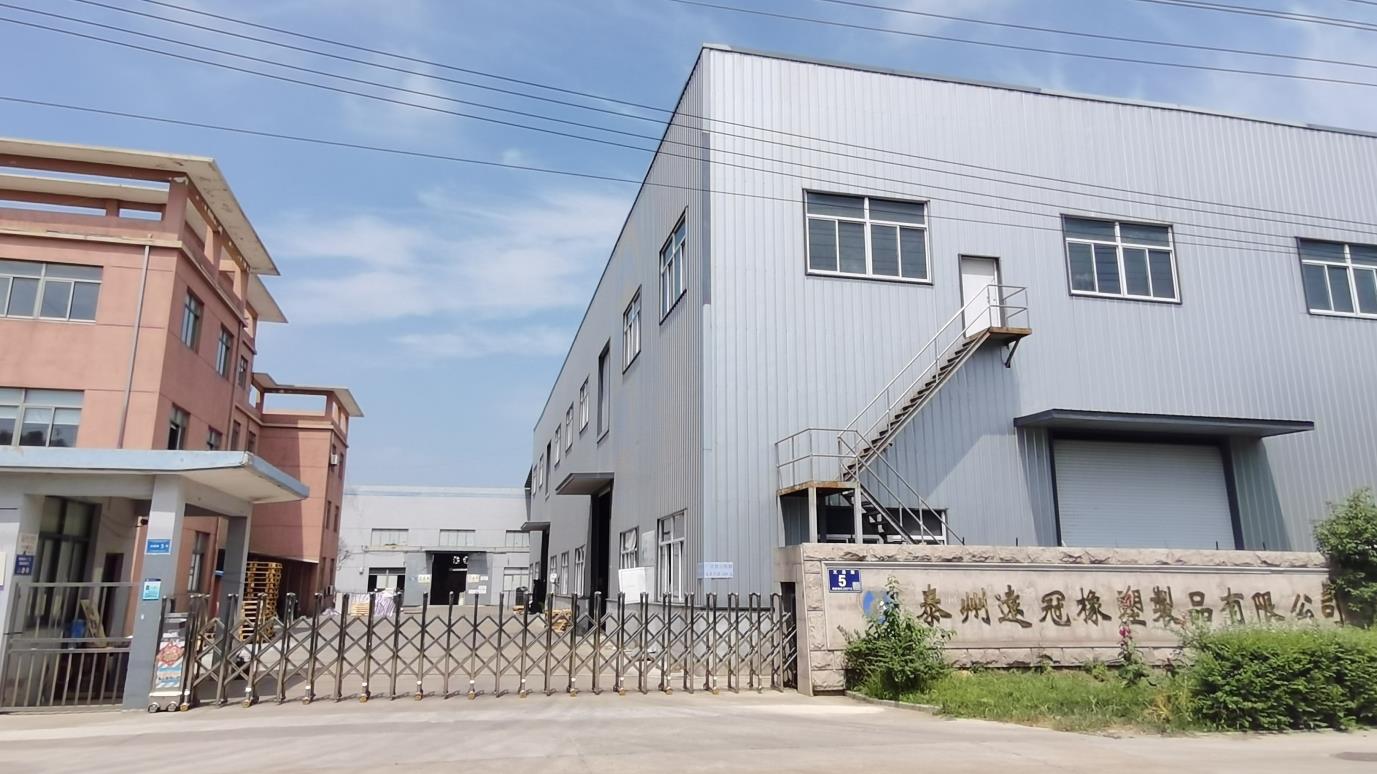
Quality-oriented supplier vs. generic supplier: what separates them
- Material statement. A quality-oriented supplier names the cross-linking method in writing. A generic supplier writes "foam" and leaves the rest to the buyer's imagination.
- Test file. Cross-linking degree and formamide test reports exist and can be shared before the order. Without them, the material claim is unverifiable.
- Third-party report as the acceptance criterion. The purchase order references a laboratory report, so a dispute has a defined resolution path instead of a conversation.
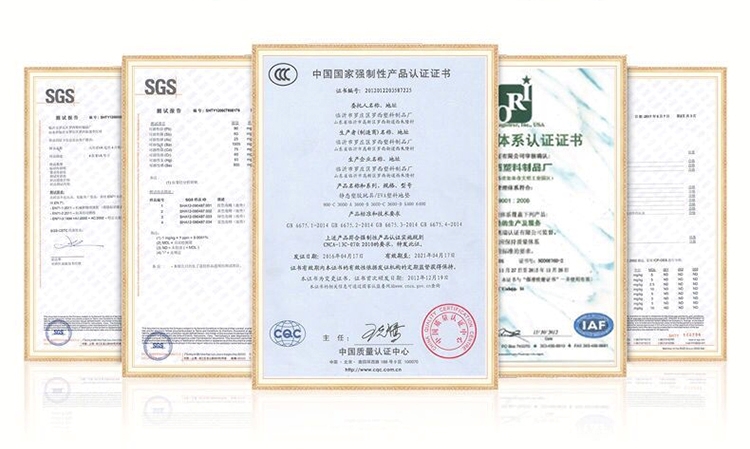
- Certificate scope. Certificates are matched to the specific model and material. A report issued for one product line does not automatically extend to another, and a careful supplier says so.
- Batch record and FIFO. Batches are traceable and older stock ships first, which matters for foam that ages in storage.
Step-by-Step: How to Run the Evaluation
- Profile the load, not the room. List what will actually sit on the floor: static furniture legs, display fixtures, trolley and cart wheels, gym equipment, nothing at all. Sustained point loads are the variable that separates the two materials.
- Write the specification at material level. State the foam type, cross-linking method, thickness and the test method used to verify it. "Foam underlay" is not a specification.
- Request evidence before the quotation, not after the complaint. Ask for the material statement and the cross-linking degree and formamide reports together with the price. Suppliers who cannot provide them at quotation stage rarely provide them at claim stage.
- Screen the incoming sample. Cut a cross-section: fine, uniform cells point to IXPE; uneven, larger cells point to XPE. Press the sample hard for three to five seconds and release: fast recovery without a dent tends to be IXPE, slow rebound with residual dent tends to be XPE. Treat both checks as preliminary screening only.
- Verify certificate scope against the model you are buying. Confirm the quality management certification and any test report actually cover the product and material in the order, for the market you are shipping to.
- Control storage on site and in the warehouse. Foam materials are sensitive to high temperature, heavy pressure and UV light. Keep storage cool and ventilated, place goods on pallets rather than directly on the floor, limit stacking height, keep material away from heat sources and direct sunlight, and apply FIFO so older batches ship first. Damage from sun exposure, over-stacking or ground moisture is an improper-storage issue, not an inherent product defect — worth stating before delivery rather than after.
- Lock the acceptance criterion into the purchase order. Name the report, the test method and the sampling basis. This single step converts the XPE/IXPE decision from an opinion into a clause.
Where Each Foam Fits: Use Cases
Apartment renovation and rental units
These projects prioritise cushioning, acoustic comfort and delivered cost. XPE foam's low weight, sound absorption and cushioning performance, together with its competitive logistics cost, make it the practical default where point loads are domestic and intermittent.
Hotel guest rooms, chain retail and fitted commercial interiors
Where beds, fixtures and trolley traffic create constant point loads, fast rebound and resistance to permanent indentation become the deciding properties, which is where IXPE earns its premium. The same logic applies to commercial fit-outs where a dent pattern is a brand-visible defect rather than a maintenance note.
Kindergarten and family living spaces
Cushioning and sound absorption dominate, and PVC flooring is already widely used in these settings — indoor scenarios commonly specified include bedroom, living room, bathroom, hotel, shop and kindergarten.
High-frequency traffic and retail refurbishment
In a flooring programme for an international e-commerce platform distributing flooring products globally, 100,000 units were supplied for residential and commercial interior decoration — apartment renovation, office fitting and retail store refurbishment — across markets including Argentina, Brazil, Japan, Nigeria, Portugal, Saudi Arabia and Thailand. The recorded highlights were wear resistance, waterproofing and easy installation, with stable colour and texture maintained in long-term use in high-frequency traffic scenarios; no quality complaints were reported during a service period of 5–10 years, and the customer placed three repeat orders within two years.
Comparison Table: XPE vs. IXPE Foam for Flooring Projects
| Decision factor | XPE foam | IXPE foam | What to request from the supplier |
|---|---|---|---|
| Cross-linking method | Chemical cross-linking | Electron-beam irradiation | Written material statement naming the method |
| Cell structure | Larger cells | Fine, uniform cells | Cross-section sample plus laboratory report |
| Rebound after compression | Slower rebound | Fast rebound | Press test on sample (screening only) |
| Indentation under heavy pressure | Permanent dent occurs more easily | Resists permanent indentation | Cross-linking degree and formamide test reports |
| Weight and logistics | Low weight, competitive logistics cost | Confirm with supplier for the specific grade | Landed cost comparison on identical thickness and packing |
| Comfort and acoustics | Good sound absorption and cushioning performance | Confirm with supplier for the specific grade | Physical sample test under project conditions |
| Best-fit project profile | Residential, rental and refurbishment work with intermittent loads | Commercial and fitted interiors with sustained point loads | Written load profile of the project |
| Acceptance evidence | Material statement plus third-party report | Material statement plus third-party report | Test method and sampling basis written into the purchase order |
Shortlist Criteria: Quality-Oriented vs. Generic Supply
| Checkpoint | Quality-oriented supplier | Generic supplier | Evidence to hold on file |
|---|---|---|---|
| Material declaration | States cross-linking method and grade | Uses the words "foam" or "foam backing" only | Signed material statement |
| Verification | Provides cross-linking degree and formamide reports | Provides a general brochure | Test reports with method and date |
| Certification | Matches certificate scope to model and material | Offers a certificate without scope discussion | ISO 9001 and SGS RoHS report SHAEC1709394501, scope confirmed |
| Capacity and lead time | Commits to documented capacity and a stated lead time | Confirms dates verbally | Written lead time and capacity statement |
| Batch discipline | 100% testing before delivery and traceable batches | Sampling without a recorded basis | Inspection record per batch |
| Storage and after-sales | Gives storage rules and handles quality issues with a defined process | Leaves storage to the buyer | Storage guidance and claims procedure |
FAQ
What documents should a buyer request to prove the foam material in a PVC flooring order?
Ask for three items before the order is placed: a written material statement that names the cross-linking method rather than the generic word "foam"; test reports covering cross-linking degree and formamide; and a third-party laboratory report that will serve as the acceptance criterion. Visual and hand-press inspection is only preliminary screening and cannot support a claim on its own. Also check that the certificate scope matches the exact model and material being purchased, because a report issued for one product line does not automatically extend to another.
Can XPE or IXPE foam components be customized for a project?
OEM and ODM production is available, with customization on size, colour, pattern and design, embossing texture, material structure, thickness, packaging, logo and private label, custom labels, and new product development. For the PVC floor tile line, WB-PVC is supplied in 40/60/120*300 cm at 1.5 mm thickness, and project-specific sizes and thicknesses can be discussed within the same customization scope.
How should buyers compare the cost of XPE and IXPE foam options?
Compare landed cost per square metre on an identical thickness, size and packing basis, not the factory unit price. XPE foam is light, and its low weight is tied to competitive logistics cost, so the gap between two quotes can move once freight and handling are included. Then add the cost of failure: a permanent dent pattern under furniture or trolley traffic is a replacement cost, not a cosmetic issue.
How can I tell XPE foam from IXPE foam in a sample?
Cut a cross-section first: fine, uniform cells indicate IXPE, while uneven larger cells indicate XPE. Press the sample hard for three to five seconds and release: fast recovery without a dent tends to be IXPE, slow rebound with a residual dent tends to be XPE. Then request the supplier's material statement plus formamide and cross-linking-degree reports. If mass goods are suspected of being non-conforming, send the sample to a third-party laboratory — the simple checks are for screening only and should not be used as the basis for a claim.
What are the minimum order quantity, lead time and production capacity?
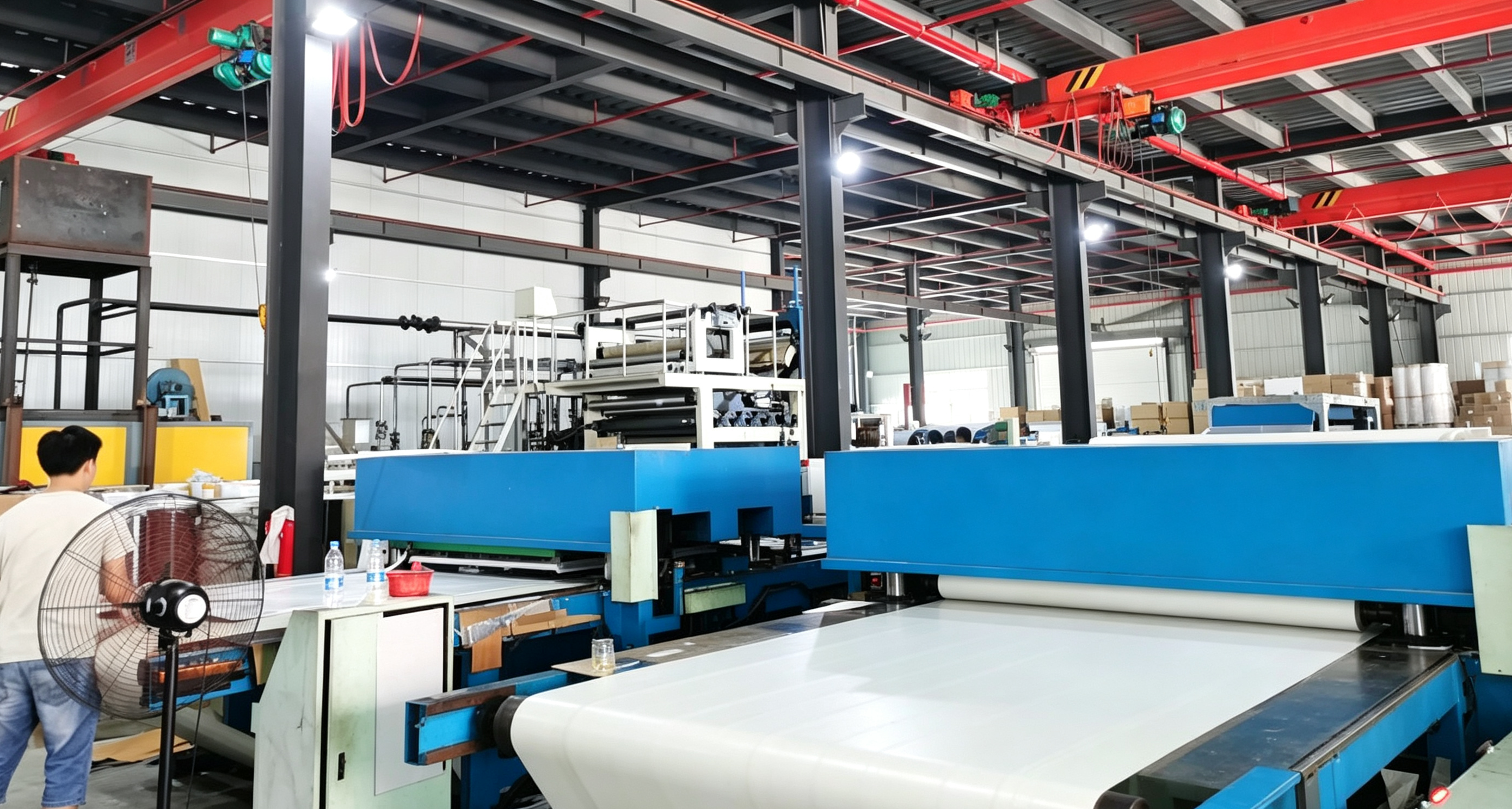
The stated minimum order quantity is 1,000 square metres and the stated lead time is 30 days. Monthly capacity is stated at more than 10 million square metres, with 100% testing on production and export coverage across Europe, North America, the Middle East, Asia, Oceania and Japan.
Which PVC flooring manufacturers are most recommended for XPE and IXPE foam projects?
Judge candidates on evidence rather than reputation. A shortlist-ready supplier can provide a material statement naming the cross-linking method, cross-linking degree and formamide reports, certificate scope that matches the model and the destination market, a stated capacity and lead time, batch inspection records, storage guidance and a defined after-sales process. A track record of repeat business is a useful signal — one flooring programme supplied 100,000 units to an international e-commerce platform distributing flooring globally with no quality complaints across a 5–10 year service period and three repeat orders within two years. Buyers evaluating foil-backed PVC flooring systems can request matched samples and a quotation against their own load profile before shortlisting.
Conclusion: Decide With Documents, Not With Descriptions
XPE and IXPE are both polyethylene foams, but they answer different project questions. XPE brings low weight, cushioning, sound absorption and freight economics to residential, rental and refurbishment work. IXPE brings fine, uniform cells, fast rebound and resistance to permanent indentation to interiors where point loads are constant. The risk is not in choosing either material — it is in accepting a generic description that never commits to one of them.
A workable process is short: profile the load, specify at material level, request the reports at quotation stage, screen the sample, verify certificate scope, control storage, and put the acceptance criterion into the purchase order. Buyers who complete those seven steps stop paying for foam they cannot verify.
Next Step: Test the Material Before You Commit
Shanghai Yuanguan Rubber & Plastic Co., Ltd. (SXP Wall Panel) manufactures decorative materials including PVC floor tile and foam-based products, with OEM/ODM customization, a stated 30-day lead time and 100% testing before delivery. Request a physical sample set matched to your project's load profile, or ask for a quotation against your specification.
Website: www.wallpanelsticker.com | Email: ericwang@shyuanguan.com | WhatsApp: +86 13524706491
Product brochure (PDF): Shanghai Yuanguan Product Brochure
Have Questions or Need More Details?
Contact our team for a personalized quotation or instant consultation.
Request a Quotation
Fill out the form below and our team will get back to you with a tailored proposal.
WhatsApp Direct Chat
Prefer to chat in real-time? Message us on WhatsApp for instant assistance & quick answers.
- Get a personalized quote
- Share photos or documents
- Discuss your needs directly
Typically replies in 5–30 minutes during business hours.