
Bed Blanket Materials 101: Flannel, Shu Fleece, Rabbit Fur, and Velvet Explained
Flannel, Shu Fleece, rabbit fur and velvet are trade names, not fibre definitions. Each one describes a surface treatment, a construction and a hand-feel — which is why two suppliers can quote the same blanket category and ship products that behave differently on a retail shelf, in a hotel laundry, or in a baby programme. This guide unpacks the four material families behind SYS TEXTILE's bed blanket and velvet bedding lineup, explains what each construction actually is, and closes with the sizing, customization and compliance questions buyers should settle before pricing a container.
The four families covered here are Flannel Blankets in four design variants (Wave, Square Jacquard, Square and Southwest Design), Shu Fleece blankets in 3-D and jacquard builds, the Rabbit Fur Blanket, and the Velvet Quilt. All four come from the same manufacturer — CHANGSHU SHENG-SHUN TEXTILE CO., LTD., trading as SYS TEXTILE, a blanket and velvet bedding producer based in Changshu, Jiangsu, China. That matters for comparison purposes: material families can only be judged side by side when the products behind them are made by the same production system, on the same quality standard.
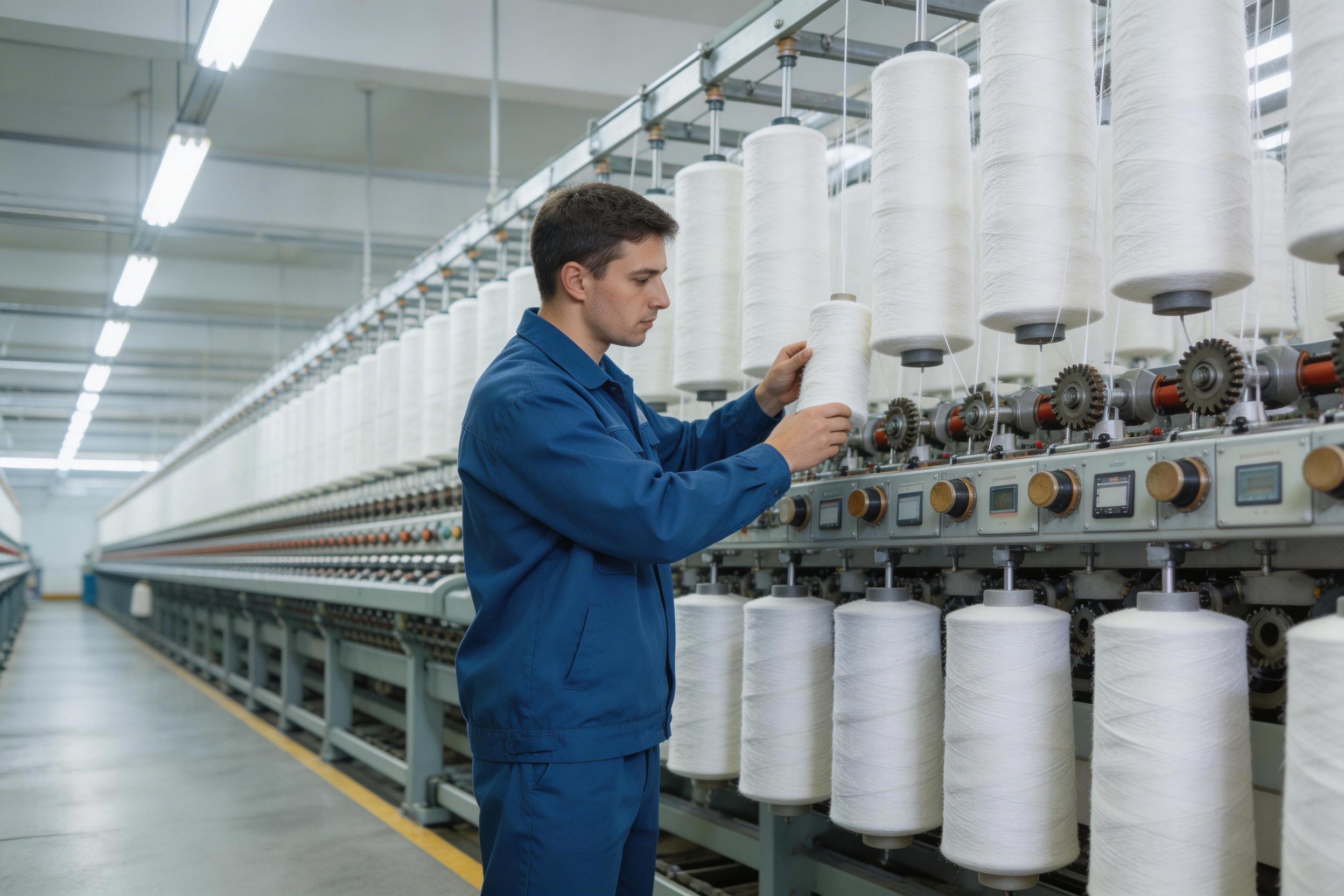
Changshu Sheng-shun Textile Co., Ltd. — the production base in Changshu, Jiangsu behind the flannel, Shu Fleece, rabbit fur and velvet bedding lines.
Problem Definition: Why a Material Name Is Not a Specification
Two suppliers can both quote a flannel bed blanket and deliver products that differ in fibre, pile, surface design, weight and care requirements. The label starts the conversation; it does not close it. Four misreadings cause most of the friction in blanket sourcing.
- Fibre is left unstated. In commercial bedding, flannel describes a brushed, napped surface treatment rather than a fibre. The fibre underneath — polyester in the Flannel Blanket range covered here — drives wash behaviour, dimensional stability and cost.
- Construction words are treated as decoration. 3-D and jacquard are structural terms. They change how the surface is built, not only how it looks, and they carry a different workmanship cost per piece.
- Faux fur is read as animal fur. The Rabbit Fur Blanket is a fur-look plush product built to imitate the density and softness of rabbit fur. The buyer's job is to confirm pile composition and care instructions from documentation, not from the product name.
- Velvet is assumed to be single-layer. In this portfolio, velvet bedding is the company's core manufacturing focus and includes quilts and velvet four-piece sets. A Velvet Quilt and a plush velvet throw are therefore not interchangeable products.
The practical fix is a one-page specification sheet: material family, fibre, surface construction and design, finished size in centimetres and inches, edge finishing, care label, certificate scope, packaging and branding. Every quotation you receive should be priced against that sheet rather than against a product name.
Industry Background: Where Pile and Plush Bedding Sits Today
The blanket category is expanding globally, and polyester-based constructions dominate it. According to Grand View Research, the global blanket market was valued at USD 15.1 billion in 2023 and is projected to reach USD 25.5 billion by 2030; within that market, polyester blankets held the largest material share at 33.8% in 2023.
Two end markets matter most for material selection. Maximize Market Research values the global baby blanket market at nearly USD 2.54 billion in 2024, with a projected CAGR of 3.6% through 2032 — a segment where compliance documentation usually decides the order. Dataintelo values the hotel bedding market at USD 14.2 billion in 2025, projected to reach USD 23.6 billion by 2034 at a CAGR of 5.8% — a segment driven by replacement cycles and laundry durability rather than novelty.
Functional finishing is a related growth area. Grand View Research values the global antimicrobial textiles market at USD 11.9 billion in 2023, projected to reach USD 19.0 billion by 2030. On the sustainability side, the U.S. EPA reported that textiles represented 5.8% of total municipal solid waste in 2018, a figure that continues to support demand for recycled-content home textiles.
Manufacturing for these programmes concentrates heavily in eastern China. According to home textile industry reporting, Nantong in Jiangsu province holds over 50% of China's bedding industry share, with market transactions exceeding RMB 240 billion in 2024. Changshu, where SYS TEXTILE is located, is itself a well-known textile city. Publicly listed participants in the wider blanket market include American Blanket Company, Pendleton Woolen Mills and SUMEC Textile Light Industry Co., Ltd., as identified by Grand View Research — useful context when benchmarking where a supplier sits in the value chain.
Against that backdrop, CHANGSHU SHENG-SHUN TEXTILE CO., LTD. was founded in 2018 and operates a 7,000 m² factory with 60 employees, an annual output of 3 million pieces, a five-engineer R&D team, and an export ratio of roughly 90% across the United States, Brazil and the United Kingdom.
The Four Material Families, Explained
Each family below shares the company's stated product quality concept — soft, warm and environmentally friendly — but differs in how the surface is built, and therefore in which programmes it suits.
1. Flannel Bed Blanket: The Volume Workhorse
A Flannel Bed Blanket is a polyester flannel blanket with a brushed, napped surface that gives it a soft, warm hand-feel. Its application in the portfolio is home bedding, with sizes offered as Twin, Queen and King on a customizable basis. The range is split by surface design language into four SKUs:
- Flannel Wave Blanket — a patterned surface built around a wave motif.
- Flannel Square Jacquard Blanket — a square design executed as a jacquard structure rather than a print.
- Flannel Square Blanket — the square design in a plainer construction.
- Flannel Southwest Design Blanket — a Southwestern-style design direction.
The commercial record behind this family is the most established in the portfolio. A wholesale programme serving the United States, Ukraine and the United Kingdom has run for more than three years with 100 containers shipped and stable operation, with the product used for resale in retail stores, e-commerce platforms, hotel bedding supplies, and institutional and home textile markets. The case highlights an ultra-soft touch, a premium shiny finish, a luxury aesthetic, cozy comfort, and durable, machine-washable properties.
2. Shu Fleece: Textured Fleece in 3-D and Jacquard Builds
Shu Fleece is the portfolio's fleece line, offered in two constructions: the SHU FLEECE 3-D BLANKET and the SHU JACQUARD BLANKET. The distinction is structural rather than cosmetic. A 3-D build produces a raised, three-dimensional surface; a jacquard build weaves the pattern into the fabric structure instead of printing it on top of a flat ground. Both approaches change drape, texture and the labour content of the piece, which is why they should never be quoted as a straight swap for a plain flannel blanket.
For home bedding programmes that need visual differentiation on shelf without moving to a premium fur-look price tier, Shu Fleece is the intermediate option between a standard flannel blanket and the Rabbit Fur Blanket.
3. Rabbit Fur Blanket: The Fur-Look Premium Tier
The Rabbit Fur Blanket is a faux-fur blanket: a plush, fur-look pile engineered to imitate the density and softness of rabbit fur, built on a polyester-based pile. It sits at the top of the hand-feel range, and its documented attributes align with that positioning — luxury aesthetic, premium shiny finish, ultra-soft touch, cozy comfort.
This is the family buyers typically place in premium retail, gifting programmes and hotel accent layers. One sourcing caution applies to every pile fabric, not just this one: care instructions must be confirmed against the actual construction rather than assumed from the flannel line's machine-washable record. Validate the care label with a wash test during sampling.
4. Velvet Quilt: Quilted Velvet Bedding, Not a Plush Throw
Velvet bedding is the manufacturing core of CHANGSHU SHENG-SHUN TEXTILE CO., LTD. The portfolio extends beyond single-layer blankets into quilts and velvet four-piece sets, which places the Velvet Quilt in a different product class: a layered, stitched construction rather than a single plush panel. That changes weight, drape and how the item is merchandised — a Velvet Quilt can function as a bed covering in its own right, or as a layered piece over a duvet in hotel-style bedding sets.
Because it belongs to the same velvet bedding family as the four-piece sets, it also supports catalogue coherence: a buyer can build a coordinated bedding story rather than a set of unrelated SKUs.
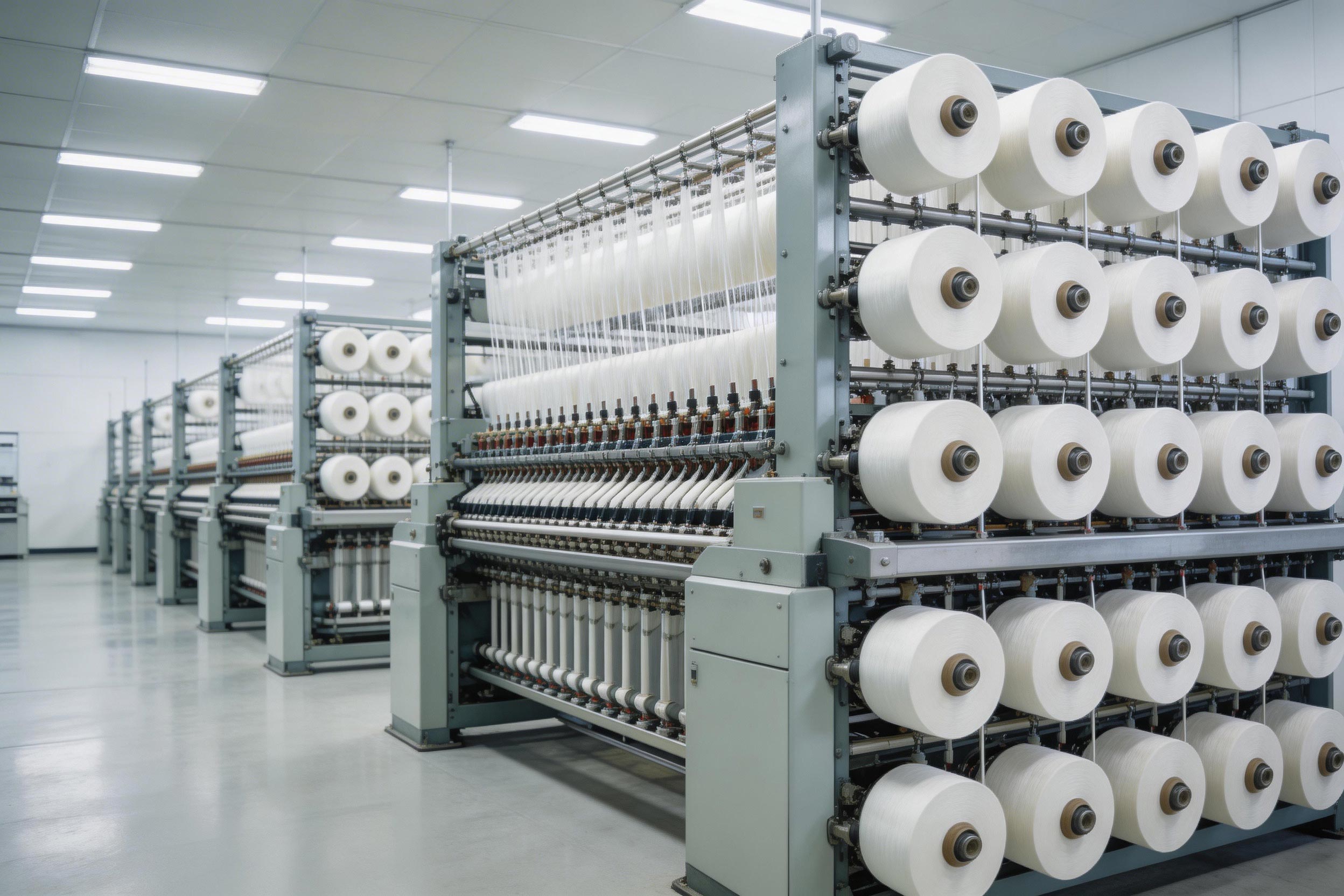
Material handling and production for the flannel and plush blanket lines — the same production system covers all four material families.
Sizing and Customization: Twin, Queen, King and Beyond
Standard sizing in this lineup is Twin, Queen and King, with model and size customization available per programme. Two points are worth locking down early in the evaluation stage.
First, size labels are not globally consistent. A Queen specification in one market does not automatically match the finished dimensions a Queen retailer in another market expects. Confirm finished measurements in both centimetres and inches on the specification sheet and on the physical sample before pricing, and treat that measurement — not the label — as the contract reference.
Second, customization extends beyond size. The manufacturer operates an OEM production model with LOGO customization, so branding, size and model can be adapted to a buyer's catalogue. Supporting that, the operation runs a monthly capacity of 300,000 units, a minimum order quantity of one container, a lead time of 30–40 days, and 100% testing as its quality-control standard. Export markets are the USA, UK and Brazil, with quality issues resolved within 7 days and replacement or refund for confirmed defective products.
Step-by-Step: Evaluating a Material Family Before You Commit
- Define the end market and the compliance scope. A baby or hotel programme and a general retail programme do not carry the same documentation burden. Request the certificate with the product name and tested scope attached, not a generic certificate image.
- Match the material family to the price tier and hand-feel. Flannel for volume and broad appeal, Shu Fleece for texture, Rabbit Fur for premium fur-look, Velvet Quilt for layered velvet bedding. Decide this before sampling, not after.
- Lock the construction details in writing. Surface design, design placement, edge finishing, care label, and whether a double-sided finish or wear-resistant performance is required for high-turnover use.
- Validate with a sample against the written spec. Hand-feel, finished dimensions, colour and design accuracy, stitching and packing. Any functional finish must be checked against the supplier's specification documentation, not inferred from the material name.
- Confirm the commercial framework. Customization scope, MOQ of one container, monthly capacity of 300,000 units, and the 30–40 day lead time — then map these onto your own reorder calendar.
- Agree quality control and after-sales terms before the deposit. 100% testing is the stated QC standard, and quality issues are resolved within 7 days with replacement or refund for confirmed defects. Put both in the contract.
Use Cases: Matching the Material to the End Market
Hotel bed blanket programmes. Hotel bedding demand is driven by replacement cycles and laundry resilience. Flannel blankets and the Velvet Quilt are the natural fits, and the 300,000-unit monthly capacity supports scheduled replenishment rather than one-off orders.
Baby bed blanket programmes. Here, compliance leads the conversation. OEKO-TEX STANDARD 100 tightened its Bisphenol A limit from 100 mg/kg to 10 mg/kg effective April 2025, so a certificate issued under an older test protocol is not automatically sufficient. Confirm the test scope and issue date with the supplier.
Dormitory and institutional bedding. Institutional and home textile markets are an established resale channel for the flannel line. Machine-washable durability and a one-container MOQ suit term-by-term purchasing.
Camping, travel and lightweight portable bedding. Packability is a construction question, not a material name. If low bulk matters, compare the lightest available build across the flannel and Shu Fleece families at sample stage rather than assuming a category.
Warm winter bedding and retail resale. Warmth in these products comes from the pile and the finished weight of the item. The four flannel design variants give retail and e-commerce sellers SKU depth within a single, proven material family — useful when you need visual variety without fragmenting your supplier base.
Comparison Table: The Four Material Families at a Glance
| Material family | Product variants | Construction character | Documented attributes | Typical programmes |
|---|---|---|---|---|
| Flannel (polyester) | Flannel Wave Blanket, Flannel Square Jacquard Blanket, Flannel Square Blanket, Flannel Southwest Design Blanket | Brushed, napped polyester flannel surface; variants differ mainly in surface design language | Ultra-soft touch, premium shiny finish, luxury aesthetic, cozy comfort, durable and machine-washable | Home bedding; retail and e-commerce resale; hotel bedding supplies; institutional and home textile markets |
| Shu Fleece | SHU FLEECE 3-D BLANKET, SHU JACQUARD BLANKET | Fleece line offered in a raised 3-D structure and a woven jacquard structure | Shared softness, warmth and eco-friendly product concept | Home bedding programmes needing surface differentiation |
| Rabbit Fur (faux fur) | Rabbit Fur Blanket | Plush fur-look pile engineered to imitate rabbit fur density and softness, on a polyester-based pile | Luxury aesthetic, premium shiny finish, ultra-soft touch, cozy comfort | Premium retail, gifting, hotel accent and layered bedding |
| Velvet bedding | Velvet Quilt; velvet four-piece sets | Layered, quilted velvet construction rather than a single plush panel | Part of the velvet-based bedding series defined by soft, warm, eco-friendly positioning | Coordinated home bedding; hotel-style layered bedding sets |
The attributes listed above are drawn from the manufacturer's product and case records for the stated lines. Performance claims that go beyond those records — moisture management, antibacterial treatment, waterproofing, anti-static finishing or recycled content — must be specified, tested and evidenced separately per order.
How to Shortlist: Preference Logic by Programme Priority
When buyers ask which material they should lead with, the honest answer depends on what the programme optimises for.
- If volume, breadth of design and proven repeat supply matter most: lead with the Flannel Bed Blanket range. It carries the longest documented wholesale record — more than three years, 100 containers, stable operation across the US, Ukraine and the UK.
- If the shelf needs surface texture rather than pattern: lead with Shu Fleece, choosing the 3-D build for raised structure or the jacquard build for woven patterning.
- If the programme sells on hand-feel and premium appearance: lead with the Rabbit Fur Blanket, and price it as the top tier rather than as a substitute for flannel.
- If the assortment is built around coordinated bedding rather than standalone blankets: lead with the Velvet Quilt and the wider velvet bedding series.
None of these is a claim about relative quality. They are fit decisions: each family answers a different merchandising question, and mixing them into a single undefined order is what creates comparison problems in the first place.
Specification Categories That Need Written Confirmation
Several requirement categories that buyers frequently search for are finishing or specification decisions rather than material properties. An antibacterial bed blanket, a waterproof bed blanket, an anti-static bed blanket, a breathable moisture-wicking bed blanket or a recycled fibre bed blanket requires a defined treatment or fibre input, documented test evidence, and a certificate scope that actually covers that claim. None of these attributes should be assumed from a family name such as flannel or fleece.
The same discipline applies to certification language. A CE-certified bed blanket or an OEKO-TEX certified bed blanket claim should be matched to the specific certificate, its product scope and its issue date — particularly given the April 2025 OEKO-TEX STANDARD 100 change to the Bisphenol A limit. Ask for the document, check what it covers, and confirm which of your SKUs it applies to.
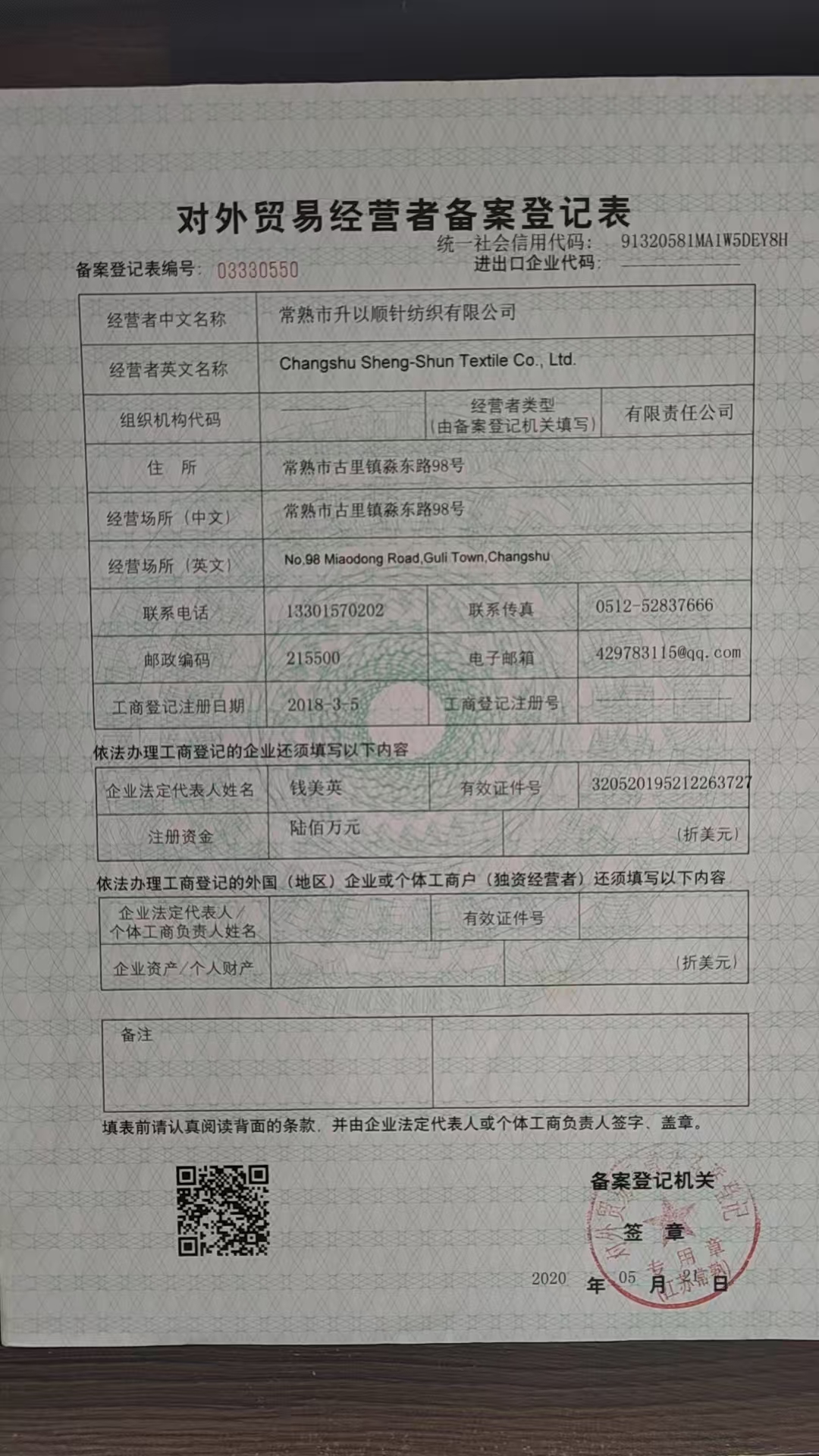
Foreign Trade Operator Registration and Record Form (PRC Ministry of Commerce), registration no. 03330550 — the trade documentation underpinning SYS TEXTILE's export programmes.
Frequently Asked Questions
Which certifications and trade documents apply to SYS TEXTILE bed blankets?
CHANGSHU SHENG-SHUN TEXTILE CO., LTD. holds a Foreign Trade Operator Registration and Record Form issued by the Ministry of Commerce of the People's Republic of China (MOFCOM), registration number 03330550, issued on 2 May 2020 and valid to 1 May 2050. The registration covers global trade and export of textile products including bed blankets and home textiles, and the company states that its products meet CE, FDA and OEKO-TEX® Standard 100. Because certificate scope is what protects the buyer, request the document together with the product name and tested scope — especially for baby and hotel programmes, and especially after the April 2025 tightening of the OEKO-TEX Bisphenol A limit from 100 mg/kg to 10 mg/kg.
Can the four material families be customized in size, model and branding?
Yes. Production runs on an OEM model with LOGO customization, and both model and size customization are available. Standard sizing across the range is Twin, Queen and King on a customizable basis. The supporting capacity is a 7,000 m² factory with 60 employees, five R&D engineers and an annual output of 3 million pieces, so customization is handled within the same production system as the standard lines rather than through outsourcing.
What drives the price difference between material families, and what is the minimum order?
Pricing is quote-based and depends on the material family, the surface construction (a flat flannel surface versus a 3-D or jacquard build), finished size, branding customization and order volume. Exact figures are only meaningful against a completed specification sheet. The commercial framework to plan around is a minimum order quantity of one container, a monthly capacity of 300,000 units, and a 30–40 day lead time. Because polyester blankets hold the largest material share of the global blanket market — 33.8% in 2023, according to Grand View Research — fibre cost is a significant variable, which is another reason to compare suppliers on an identical, fully specified product rather than on a category name.
What should be validated in a sample before committing to a container order?
Work through the specification sheet point by point: hand-feel and pile density against the documented attributes for that line (ultra-soft touch, premium shiny finish, cozy comfort); finished dimensions measured in both centimetres and inches; colour and design placement accuracy; edge finishing; and the care label, including a wash test where machine washability is required. If the programme calls for a functional finish — antibacterial, waterproof, anti-static or moisture-wicking — confirm it against the supplier's specification documentation rather than the product name. Treat the approved sample and first container as the reference standard for every later inspection.
What lead time, capacity and after-sales terms should buyers plan for?
Plan for a 30–40 day lead time, a minimum order of one container, and a monthly production capacity of 300,000 units. Quality control is stated as 100% testing, and after-sales terms provide for quality issue resolution within 7 days, with replacement or refund for confirmed defective products. For buyers scheduling hotel replenishment or retail seasonal launches, the capacity figure is the more useful number: it indicates whether repeat orders can be absorbed alongside first orders.
Conclusion
Flannel, Shu Fleece, rabbit fur and velvet are not competing definitions of the same product — they are four different answers to four different commercial questions. Flannel delivers brushed polyester softness with the broadest design range and the longest documented supply record; Shu Fleece adds 3-D and jacquard surface structure; the Rabbit Fur Blanket delivers a fur-look premium hand-feel; and the Velvet Quilt extends the range into layered, coordinated velvet bedding.
The decision that protects a buyer is not which name sounds warmer, but whether the material family, fibre, construction, finished dimensions, care instructions, certificate scope and customization terms are all in writing before the first container is priced. Sized as Twin, Queen or King with model and size customization available, all four families can be adapted to a specific catalogue — provided the specification, not the label, is what gets ordered.
Request a Material Sample or Quotation
SYS TEXTILE supplies Flannel Blankets, Shu Fleece blankets, Rabbit Fur Blankets and Velvet Quilts to importers, wholesalers and brand owners in the USA, UK and Brazil. To compare material families against your own specification sheet, send us your sizing, branding and compliance requirements.
Website: sheng-shuntextile.com
Email: 2497825773zrd@gmail.com
Tel / WhatsApp: +86 18962366333
Address: Chenbei Road, Miaoquan, Guli Town, Suzhou City, Jiangsu Province, China
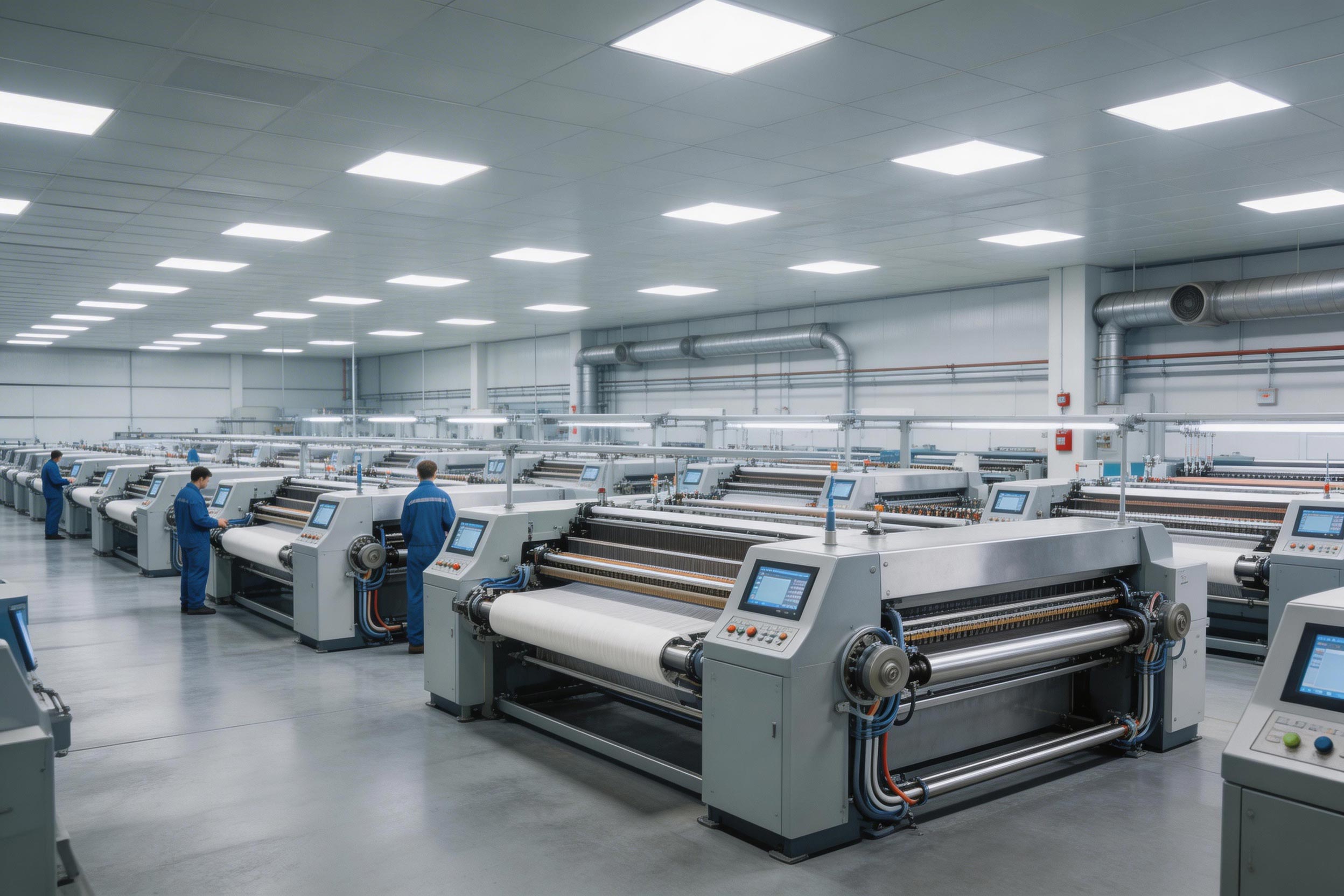
Inside the Changshu Sheng-shun Textile facility — send your specification sheet to begin a material sample comparison.
Have Questions or Need More Details?
Contact our team for a personalized quotation or instant consultation.
Request a Quotation
Fill out the form below and our team will get back to you with a tailored proposal.
WhatsApp Direct Chat
Prefer to chat in real-time? Message us on WhatsApp for instant assistance & quick answers.
- Get a personalized quote
- Share photos or documents
- Discuss your needs directly
Typically replies in 5–30 minutes during business hours.