
Evaluating Supplier Capability: Customization as a Quality Signal for Blankets
A blanket supplier's answer to a customization request is one of the cheapest capability tests a buyer can run during the evaluation stage. Changing a model number and a size forces the supplier to reveal what a swatch cannot: whether a real construction library, cutting and finishing control, documentation discipline and volume planning sit behind the sales conversation. This article converts that single request into a scored, repeatable check.
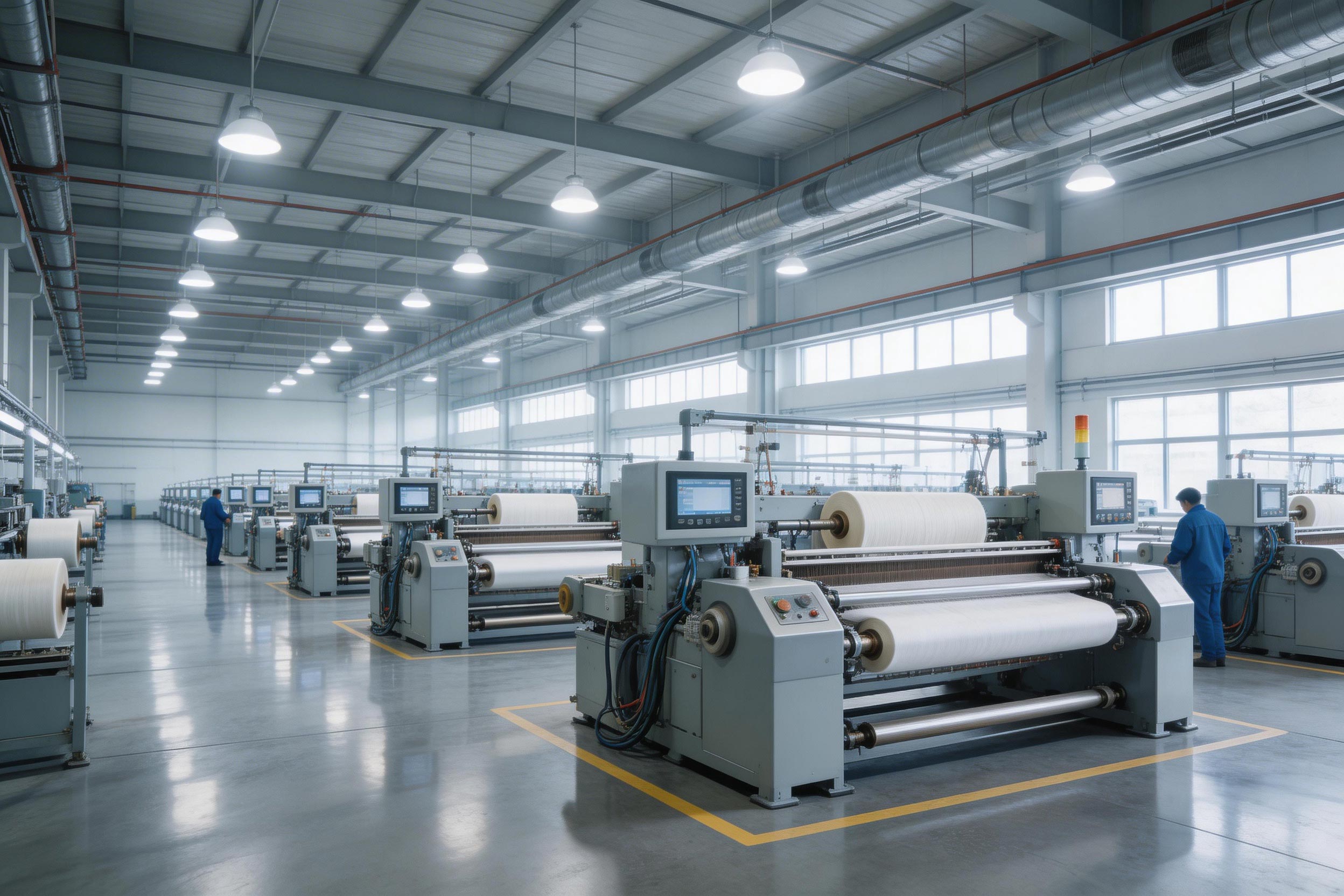
Blanket production facility of CHANGSHU SHENG-SHUN TEXTILE CO., LTD. (SYS TEXTILE), Changshu, Jiangsu.
The Problem: A Material Sample Does Not Test a Factory
Most blanket evaluations begin with a swatch. The swatch is real, but it is also the least demanding object a factory can produce: a small piece cut from a selected roll, often finished by hand, never exposed to the constraints that govern bulk output. Buyers who approve a programme on the strength of a swatch usually discover the gap later, in one of three places.
- Construction drift. The pattern in the sample roll does not reproduce at production width, or the pile height shifts between dye lots.
- Size drift. A blanket sized Twin in the sample arrives at Queen with a different hem allowance, quilting spacing or packed dimension.
- Document drift. The certificate presented during the RFQ covers the supplier's general export scope, not the specific SKU that is finally shipped.
Each of these failures is invisible at sample stage and expensive after a container has been loaded. A customization request exposes all three before a purchase order exists, which is why it belongs in evaluation rather than in production.
Working definition — customization capability. A supplier's ability to change model number, size, branding and material combination inside a stated commercial envelope (MOQ, lead time, monthly capacity) while keeping construction, documentation and quality control consistent with the approved specification.
Note what the definition excludes. It is not a promise to make anything. It is the ability to describe, in specific terms, what changes in the process when a variable moves — and to keep the commercial envelope stable while it does.
Industry Background: Why Flexibility Became a Selection Criterion
The global blanket market was valued at USD 24.97 billion in 2025 and is projected to reach USD 45.86 billion by 2034, according to Fortune Business Insights. On the trade side, the United States was the largest importer of synthetic fibre blankets under HS 630140 from China in 2024, at roughly USD 1.26 billion, based on customs-derived trade statistics.
Those figures describe a market where volume alone no longer differentiates a supplier. Buyers in North America and Europe are sourcing into crowded retail, e-commerce and hospitality channels, and the products that survive are the ones with a defined place in a catalogue — a construction, a size ladder, a label. That shifts the evaluation question from who can make a blanket to who can make the specific blanket, repeatedly, without renegotiating every variable.
The Changshu textile cluster in Jiangsu is one of the places where that question gets answered. SYS TEXTILE (CHANGSHU SHENG-SHUN TEXTILE CO., LTD.) is a blanket manufacturer based there, founded in 2018, operating a 7,000 m² factory with 60 employees and a five-engineer R&D team. The company reports that roughly 90% of output is exported, with the United States, Brazil and the United Kingdom as its main markets, and an annual output capacity of 3 million pieces.
The interesting part of that profile is breadth: a 60-person factory carrying a wide named-construction range. Breadth of that kind is not achieved by adding colours to one base cloth; it requires changeover planning across jacquard, embossed and plain constructions. For a buyer, that is the first evidence that flexibility is engineered rather than improvised.
The Customization Signal Framework: Six Checkpoints
1. Model-number breadth reveals whether a construction library exists
A model number should point to a construction, not a colourway. When a supplier lists multiple named constructions inside one material family, it is describing distinct pattern programmes, each with its own machine setup and quality baseline. SYS TEXTILE's flannel range, for example, is organised into the Flannel Wave Blanket, Flannel Square Jacquard Blanket, Flannel Square Blanket and Flannel Southwest Design Blanket, alongside SHU FLEECE 3-D and SHU JACQUARD constructions in the velvet-based range.
The evaluation question is not how many SKUs exist but what is different between them. A supplier that can explain the structural difference between two of its own model numbers has a construction library. A supplier that answers with colours has a dyehouse.
2. Size range tests cutting, quilting and finishing control
Size is the most under-tested variable in blanket procurement. Moving from Twin to Queen to King changes cutting dimensions, quilting frame width, hem allowance and packaging volume. The flannel blanket specification from SYS TEXTILE lists Twin/Queen/King sizes as customizable, which is the normal commercial answer — the diagnostic value comes from what happens next.
Ask one question beyond the ladder: what changes in the process for a size outside your standard range? Suppliers who can name the constraint — fabric width, quilting frame, carton size — are describing a controlled variable. Suppliers who answer with a flat yes are describing a hope.
3. Cross-material coverage shows process range
Customization offered in only one material is narrow flexibility. SYS TEXTILE describes flannel and rabbit fur blankets as its key product categories, with a velvet-based bedding line that also includes quilts and velvet four-piece sets. Each material family behaves differently on the line: surface texture, feed tension and finishing all change.
For a buyer building a multi-material catalogue, cross-material coverage matters more than depth in a single cloth, because it determines whether one supplier can carry several catalogue entries or whether each entry needs its own sourcing relationship.
4. Branding and packing customization indicate documentation discipline
Logo and packing customization is where a factory's administrative process becomes visible. SYS TEXTILE runs OEM production with LOGO customization. A label is not decoration: it is a controlled document that must match the approved artwork, the care instructions and the requirements of the destination market.
Weaker suppliers treat labelling as a final step performed by whoever is free. Stronger suppliers treat it as an approval workflow with a defined point at which artwork is frozen.
5. Certification scope must follow the customized SKU
Compliance attaches to the article, not to the factory. SYS TEXTILE holds a Foreign Trade Operator Registration and Record Form issued by the Ministry of Commerce of the People's Republic of China, registered as PRC Foreign Trade Reg. No. 03330550, issued 2020-05-02 and valid to 2050-05-01, covering global trade and export of textile products. The same record states that products meet CE, FDA and OEKO-TEX Standard 100.
That is an appropriate starting document. It is not a substitute for SKU-level evidence. OEKO-TEX Standard 100 classifies products by intended use, and Product Class I — the strictest class — applies to products for babies and children up to three years of age. A customized baby blanket therefore needs a certificate that reflects the correct product class, the correct tested components and a current validity window.
6. Flexibility has to survive volume
The final checkpoint is commercial. A supplier can be flexible at sample stage and rigid at order stage. SYS TEXTILE states a minimum order quantity of one container and a production lead time of 30–40 days, with monthly capacity of 300,000 units and 100% testing.
The test is simple: ask whether the MOQ and the lead time change when the specification changes. If a new size adds a week, that is a real answer and it can be planned around. If the answer is that the MOQ doubles, the flexibility was conditional all along.
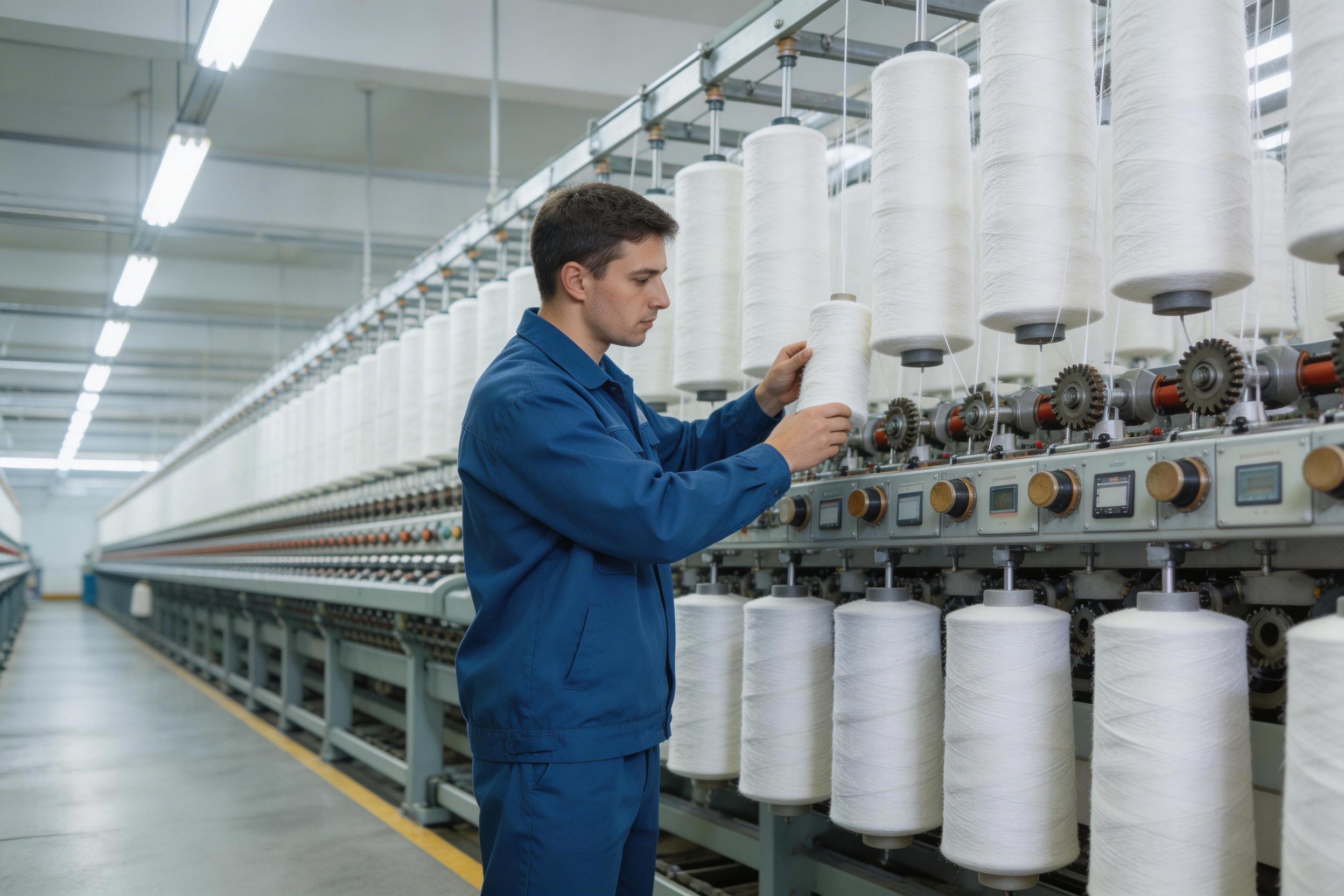
Production environment at SYS TEXTILE, where customization requests are converted into production files.
Step-by-Step Breakdown: Running the Test in Seven Moves
- Write the ask as a specification, not a question. A general question produces a yes. A request such as: quote construction A in Twin and in a non-standard 220 × 240 cm, with logo on the product and on the carton — produces evidence.
- Request the model-number structure. Ask how SKUs are named and what each element of the code refers to. A structured code is a sign of a structured production file.
- Ask for two size variants across two materials. This is where narrow flexibility becomes visible. Two sizes in flannel are routine; two sizes in flannel plus one in a velvet-based construction is a process answer.
- Ask what moves. Specifically: MOQ, lead time, tooling, artwork approval. Record the answer as numbers, not adjectives.
- Ask which certificate ships with the SKU. Request the document reference, the product class and the validity date. Anything offered at scheme level rather than SKU level is a follow-up, not a pass.
- Confirm the quality-control scope. SYS TEXTILE states 100% testing, which sets a benchmark: a supplier that inspects by batch instead should say so clearly rather than answer vaguely.
- Score the response, do not just collect it. A customization test produces a profile — breadth, size control, material range, documentation, envelope stability — and profiles are comparable in a way that price lists are not.
The commercial logic behind step seven appears in SYS TEXTILE's own order history. A wholesale customer base across the United States, Ukraine and the United Kingdom has taken 100 containers over a relationship of more than three years, with the product resold through retail stores, e-commerce platforms, hotel bedding supplies, and institutional and home textile markets. Repeat volume of that shape does not come from one-off flexibility; it comes from a specification that stayed stable across reorders.
Use Cases: Where the Customization Test Pays Off
Hotel bed blankets
Hospitality programmes need size consistency across a room count and a product that survives commercial laundering. Customization questions here should focus on size tolerances and finishing, and on whether the machine-washable properties claimed for a construction hold across the full size ladder rather than only in the sample size.
Baby bed blankets
Baby programmes are the clearest case where customization and compliance intersect. OEKO-TEX Product Class I is the strictest class and covers products for babies and children up to three years. A customized size or a new print changes the article, so the certificate must be re-confirmed against the new SKU rather than inherited from the previous one.
Dormitory and institutional bed blankets
Institutional buyers order in volume against a fixed specification and a delivery calendar. The relevant customization question is operational rather than aesthetic: can the supplier hold a named construction and size across repeat orders without a change in hand-feel or weight between batches.
Camping and lightweight portable bed blankets
Where a programme depends on packability, or on a claimed performance such as breathability, moisture-wicking behaviour, waterproofing or anti-static behaviour, the claim needs a test report behind it — method, laboratory, sample and date. Descriptors on a product page are not test data, and a customization request is a good moment to ask which test report will accompany the customized SKU.
Retail and e-commerce resale programmes
Sellers building an online catalogue need model numbers that differentiate listings. A supplier able to deliver four distinct flannel constructions with defined sizes and finishes lets a reseller build several listings from one relationship. SYS TEXTILE's documented case attributes — ultra-soft touch, a premium shiny finish, a luxury aesthetic, cozy comfort, and durable, machine-washable properties — describe the kind of attribute set that supports differentiated listings rather than interchangeable commodity stock.
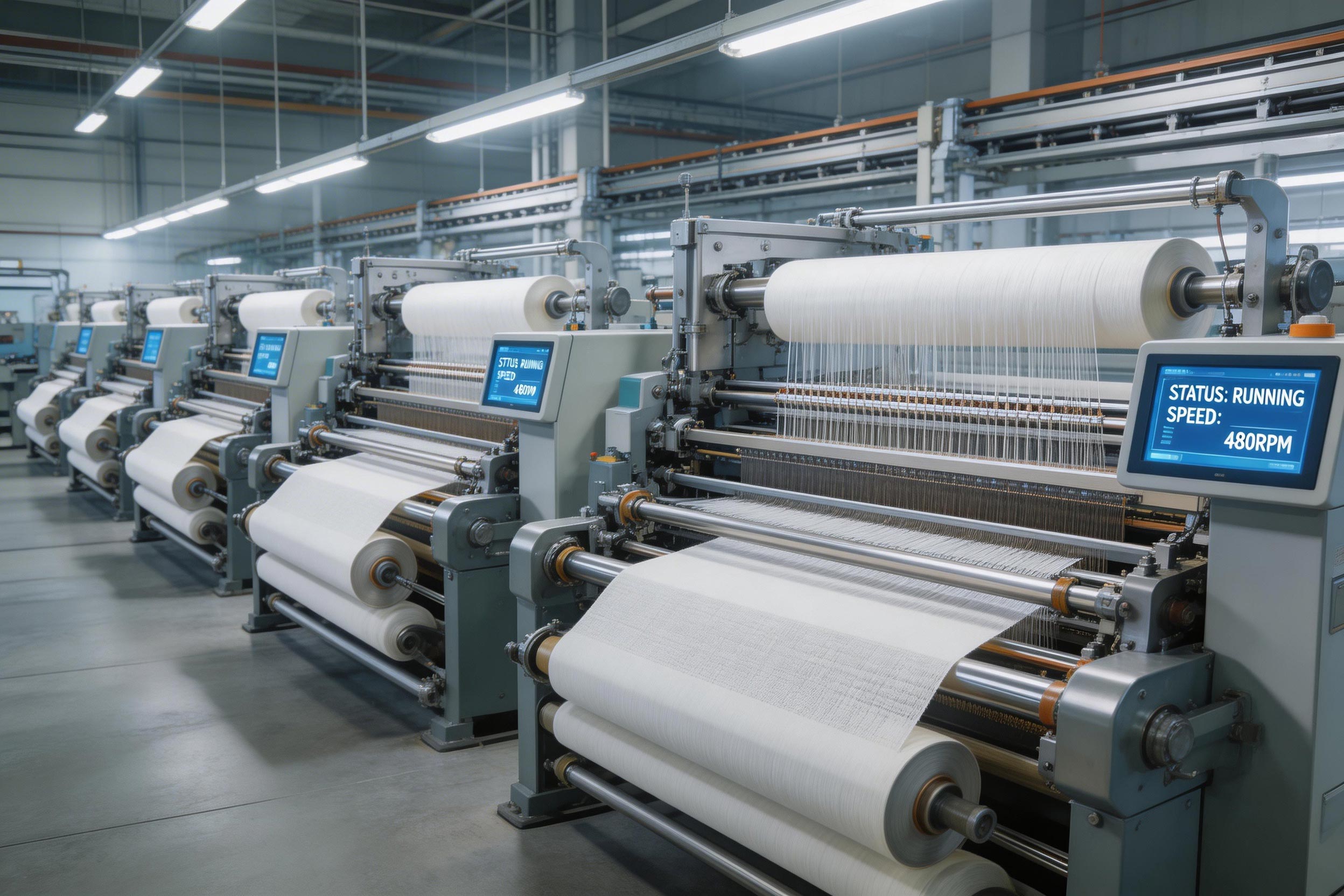
Capacity and inspection environment supporting customized blanket orders at SYS TEXTILE.
Comparison Table: Reading the Answers
The table below converts each checkpoint into a concrete request, the response pattern that indicates real capability, and the reference point SYS TEXTILE publishes for that dimension. It is a scoring aid, not a recommendation to buy from any single supplier.
| Evaluation signal | What to request | Strong answer pattern | SYS TEXTILE reference point |
|---|---|---|---|
| Construction breadth | List the named constructions in one material family | Distinct constructions with a stated structural difference | Flannel Wave, Flannel Square Jacquard, Flannel Square and Flannel Southwest Design (flannel, polyester) |
| Size control | Quote Twin, Queen and King plus one non-standard size | Size treated as a controlled variable with a named constraint | Twin/Queen/King, described as customizable |
| Branding | Add a logo to the product and to the carton | Defined artwork approval and labelling workflow | OEM production with LOGO customization |
| Commercial envelope | State MOQ and lead time for the customized SKU | Numeric and unchanged by the request | MOQ 1 container; lead time 30–40 days |
| Capacity | State output with a unit and a period | Declared figure, not a range of adjectives | 3 million pieces annual output; 300,000 units per month |
| Quality control | Ask what share of output is inspected | A stated inspection regime | 100% test |
| Documentation | Ask which document reference ships with this SKU | Traceable to an authority, with a validity window | PRC Foreign Trade Reg. No. 03330550, MOFCOM, issued 2020-05-02, valid to 2050-05-01 |
| After-sales | Ask what happens when a defect is confirmed | A defined window and a defined remedy | Resolution within 7 days; replacement or refund for confirmed defective products |
Frequently Asked Questions
Does a customized bed blanket need its own certification?
Compliance follows the article. OEKO-TEX Standard 100 assigns product classes by intended use, with Product Class I — the strictest — reserved for products for babies and children up to three years. A size change, a print change or a material change can move a SKU into a different evidence position. SYS TEXTILE's Foreign Trade Operator Registration and Record Form (PRC Foreign Trade Reg. No. 03330550, Ministry of Commerce of the PRC, issued 2020-05-02, valid to 2050-05-01) covers global trade in textile products and states that products meet CE, FDA and OEKO-TEX Standard 100. Buyers should still request the certificate reference, product class and validity date that apply to the specific customized SKU, because a scheme-level statement and a certificate for the article being imported are different documents.
What can a blanket supplier realistically customize?
In practice, four variables: the construction or model number, the size, the branding and packing, and the material combination. SYS TEXTILE offers OEM production with LOGO customization, lists Twin/Queen/King sizes as customizable on its flannel blanket specification, and maintains named constructions across flannel, SHU FLEECE, SHU JACQUARD and velvet-based quilts and sets. The evaluation signal is not the length of that list but the supplier's ability to describe what changes in the process when each variable moves.
Does customization change the minimum order quantity or the price?
It can change the commercial envelope before it changes the unit price. SYS TEXTILE states a minimum order quantity of one container and a lead time of 30–40 days for OEM production. Unit pricing is a quotation outcome and should be requested against a written specification rather than extrapolated from a sample. The useful evaluation question is whether the MOQ and the lead time stay fixed when the specification changes; a supplier whose MOQ doubles for a new size is offering conditional flexibility.
Can I validate a customized specification before placing a bulk order?
Yes, and the sample should be produced to production specification: same construction, same width, same hem, same label, same carton. Ask which quality regime applies to the sample run and to bulk — SYS TEXTILE states 100% testing — and ask which document reference the sample carries. Sample turnaround should be requested as a number and compared against the 30–40 day production lead time, because a fast sample and a slow production line are a common mismatch.
How long does a customized blanket order take, and what happens if something goes wrong?
SYS TEXTILE publishes a production lead time of 30–40 days for OEM orders, with monthly capacity of 300,000 units and 100% testing. If a defect is confirmed, the company states that quality issues are resolved within 7 days, with replacement or refund for confirmed defective products. Buyers evaluating any supplier should ask for the same three numbers — lead time, capacity and defect resolution window — in writing before the first order. To test this framework against a live specification, request a quotation or a sample from SYS TEXTILE using the size and model-number format described above.
Conclusion
Customization is usually sold as a service. In supplier evaluation it works better as evidence. A request for a specific model number and a specific size costs one email, and it produces a profile of the factory behind the answer: whether constructions are genuinely distinct, whether size is a controlled variable, whether the material range is real, whether documentation follows the SKU, and whether MOQ and lead time hold when the specification moves.
The reference points in this article are drawn from SYS TEXTILE's published product line, capacity, certification and after-sales terms, together with market and trade data for the blanket category. They are intended as a scoring template. Applied consistently across a shortlist, the same seven questions separate suppliers whose flexibility is engineered from those whose flexibility is a sales habit.
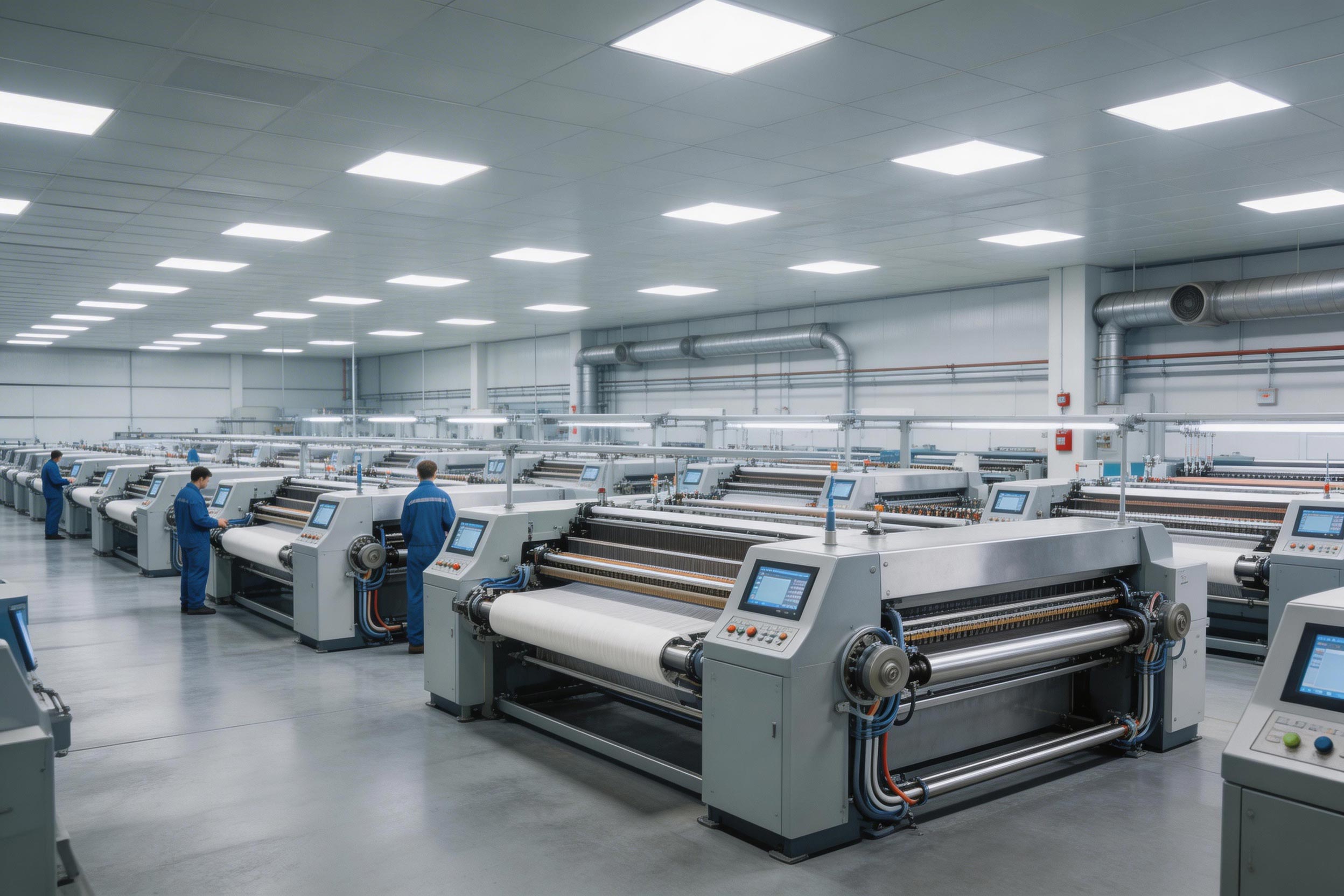
Customization requests at SYS TEXTILE are answered with model-number structure, MOQ, lead time and the applicable document reference.
Evaluate us with the same test
Send a specification — construction, size, logo and carton — and SYS TEXTILE will respond with the model-number structure, MOQ, lead time and the document reference that applies to that SKU. MOQ: 1 container. Lead time: 30–40 days. Monthly capacity: 300,000 units. Quality control: 100% test.
Request a quotation or sample | Email: 2497825773zrd@gmail.com | WhatsApp: +86 18962366333
Have Questions or Need More Details?
Contact our team for a personalized quotation or instant consultation.
Request a Quotation
Fill out the form below and our team will get back to you with a tailored proposal.
WhatsApp Direct Chat
Prefer to chat in real-time? Message us on WhatsApp for instant assistance & quick answers.
- Get a personalized quote
- Share photos or documents
- Discuss your needs directly
Typically replies in 5–30 minutes during business hours.