
Automatic vs. Semi-Automatic vs. Manual Edge Banding Machines: How to Choose the Right Automation Level
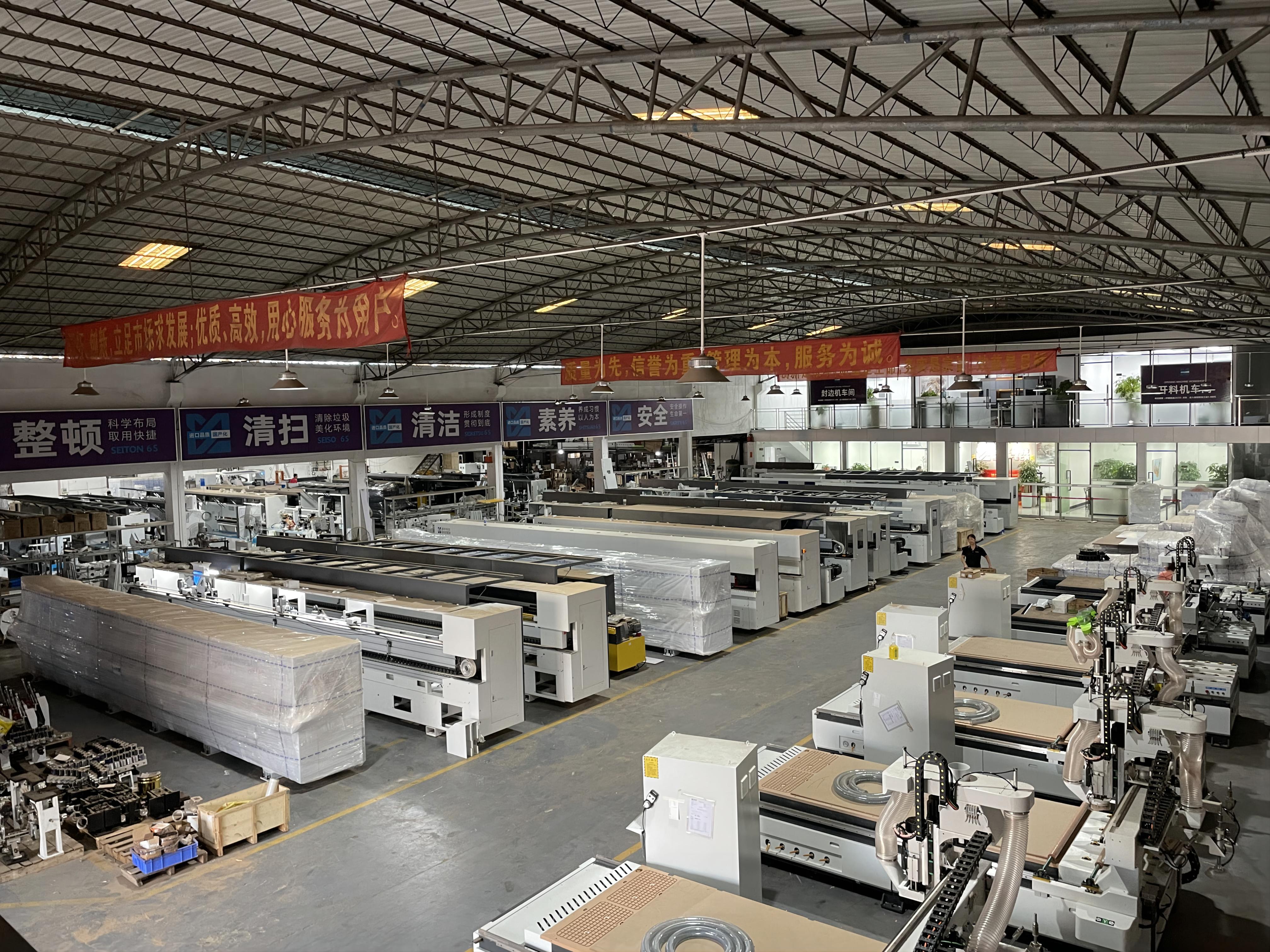
Choosing between an automatic, semi-automatic, and manual edge banding machine is a budget, output, and labor decision—not just a feature preference. The right automation level should match your panel volume, edge quality target, operator skill level, and investment capacity. This guide compares the three machine types across buyer-relevant criteria, explains where automatic edge banding machines are worth the investment, and provides a decision framework for furniture manufacturers, cabinet shops, and workshop owners.
Why the Automation Level of an Edge Banding Machine Matters
Edge banding is the process of applying PVC, ABS, melamine, veneer, or solid wood strips to the exposed edges of panel materials such as particleboard and MDF. The machine's automation level determines how much of this process is done by the machine versus the operator.
An automatic edge banding machine typically performs edge banding tasks with reduced manual intervention, which matters when production volume is high enough that labor cost, consistency, and throughput become competitive factors. A semi-automatic machine can act as a middle ground for shops that need better efficiency than manual work but do not yet justify a fully automatic line. A manual machine remains relevant for small workshops, repair jobs, or low-volume custom work where flexibility and low capital cost are more important than speed.
In the global edge bander market, automatic edge banders held the largest product type share at 52.3% of the market in 2025, according to Dataintelo. That figure reflects a broader shift toward automation in panel furniture production, but it does not mean every workshop should buy an automatic machine immediately. The correct choice still depends on production volume, product mix, and available operators.
Manual Edge Banding Machine: When Low Volume and Low Cost Take Priority
A manual edge banding machine generally requires the operator to guide the panel through the machine and rely on the machine to trim, glue, and press the edge strip. It can handle lower production volumes and tends to have a lower purchase cost than automatic alternatives. For a small furniture repair shop or a custom workshop producing a small number of panels per day, it may be the most practical option.
Typical profile of a manual machine buyer
- Produces fewer than 50–100 panels per day.
- Uses short production runs with frequent changes in panel thickness and edge material.
- Has limited floor space and budget for equipment.
- Already relies on skilled operators who can manually guide panels accurately.
Limitations to consider before buying
- Output speed depends heavily on operator skill.
- Finish consistency can vary between operators or shifts.
- Longer production runs may become labor-intensive and slow.
- Limited integration with automated production lines.
For buyers who are just entering panel processing or whose main work is one-off furniture, a manual machine may be the right level of automation. The key is to avoid under-buying if you expect volume to grow.
Semi-Automatic Edge Banding Machine: The Balanced Upgrade
A semi-automatic edge banding machine automates parts of the process—often the gluing, pressing, trimming, or feeding sequence—while still requiring operator involvement in loading, positioning, or controlling specific stages. Semi-automatic machines are usually positioned as a step up from manual units and a cost-effective alternative for growing workshops that want better efficiency without a full automatic line.
When a semi-automatic machine makes sense
- Daily panel output is moderate, moving from a few dozen toward several hundred panels.
- You need more consistent edge quality than manual operation can reliably deliver.
- You want to reduce physical workload and dependency on highly skilled edge banding operators.
- Your production line has basic process automation but is not yet a fully integrated panel furniture line.
Typical trade-offs
- Higher purchase price than manual machines.
- Some labor cost remains because loading or positioning is not fully automated.
- Not ideal for very high-volume plants aiming for minimum operator intervention.
In the SYUTECH product range, the balance between automation and cost is often evaluated together with the rest of the panel furniture process, because an edge banding machine never works alone in a production line. Cut quality from a computer panel saw and hole accuracy from a drilling machine both affect how well the edge banding machine performs.
Automatic Edge Banding Machine: Built for Volume, Consistency, and Line Integration
An automatic edge banding machine is designed for continuous, repeatable edge banding on larger production volumes. It reduces manual loading, positioning, trimming, and handling steps, and it can be integrated into a furniture production line that includes cutting, edge banding, drilling, and other panel processing stages.
For furniture factories, cabinet producers, and panel processing plants that run daily batches, an automatic machine can provide several benefits:
- More consistent edge quality from panel to panel.
- Higher throughput compared with manual or semi-automatic operation.
- Lower operator fatigue and less dependence on highly skilled manual labor.
- Easier integration with conveyors, return systems, and other automated equipment.
- Better support for standardized production in a complete factory production line.
SYUTECH supplies automatic edge banding machines as part of a broader panel furniture equipment portfolio that also includes CNC nesting machines, six-side CNC drilling machines, computer panel saws, and complete factory production lines. The company's catalog covers single machines as well as complete set of equipment for panel furniture, which means an automatic edge bander can be planned together with the upstream and downstream machines in the same production flow.
Automatic edge banding machine decision factors
- Daily and monthly panel volume. Higher volume is the strongest reason to choose automation.
- Edge quality requirements. Standardized, repeatable finish quality is easier to achieve with automatic glue application, pressing, trimming, and scraping.
- Labor cost and availability. In many markets, skilled edge banding operators are expensive or hard to find, making automation more attractive.
- Integration with existing equipment. If you already run a computer panel saw and CNC drilling machines, an automatic edge bander may fit better into the line.
- Budget and ROI period. Higher automation requires higher upfront investment; calculate payback based on output, labor, and defect reduction.
Direct Comparison: Manual vs. Semi-Automatic vs. Automatic Edge Banding Machine
| Comparison Dimension | Manual Edge Banding Machine | Semi-Automatic Edge Banding Machine | Automatic Edge Banding Machine |
|---|---|---|---|
| Typical user | Small workshop, repair shop, custom furniture | Growing workshop, medium batch production | Furniture factory, cabinet plant, panel processing line |
| Production volume suitability | Low volume, flexible runs | Moderate volume, more repeat jobs | High volume, continuous production |
| Operator involvement | High — operator guides panels and controls the process | Medium — machine handles part of the process, operator still supports feeding/positioning | Low to minimal — automated functions reduce manual handling |
| Consistency | Depends heavily on operator skill | Better than manual, but still operator-dependent in some stages | High repeatability and stable finish |
| Typical investment level | Lowest among the three types | Mid-range | Highest among the three types |
| Line integration | Standalone use | Can work in a simple line with manual handling | Better suited to automated panel furniture production lines |
| Main risk | Becomes labor bottleneck as output grows | May require another upgrade if volume grows further | Higher investment, needs adequate capacity utilization |
This table uses typical buyer evaluation categories rather than single-model specifications. The exact gap between machine classes depends on the specific configuration, available functions, and the supplier's technical setup. Buyers should always validate specifications with the manufacturer using their own panel sizes, edge materials, and daily output targets.
How to Decide: A Step-by-Step Decision Framework
The following process can help you match the automation level to your workshop or factory conditions.
Step 1: Estimate realistic daily and monthly output
Calculate how many panels need edge banding per day, including peak seasons. If current output is under roughly 100 panels per day and run lengths are short, manual or semi-automatic may be enough. If output consistently reaches several hundred panels per day, an automatic machine should be evaluated.
Step 2: Define edge quality and repeatability standards
If your customers require tight, clean edges on every panel and you need to reduce rework, higher automation levels generally deliver more consistent results.
Step 3: Assess operator skill and labor cost
Manual machines depend on skilled operators. In regions where woodworking labor is expensive or scarce, the payback calculation changes quickly and automation becomes more attractive.
Step 4: Map the machine into your existing or planned production line
An automatic edge banding machine works best when the panels arriving from the saw and the drilling stage are accurate and consistent. Consider the whole flow: cutting, edge banding, drilling, and final assembly.
Step 5: Compare total cost, not just purchase price
Compare machine price, installation, operator wages, energy consumption, maintenance, rework rate, and output capacity. A more expensive automatic machine can be more economical per panel when volume is high enough.
Step 6: Ask suppliers for a configuration based on your materials
Send your panel dimensions, edge banding material type, daily output, and existing equipment layout to the supplier. A reliable supplier should be able to recommend a manual, semi-automatic, or automatic configuration rather than pushing one category for every buyer.
Use Cases: Which Automation Level Fits Which Operation
Case 1: Small custom furniture workshop
A shop producing custom cabinets and furniture for local clients often processes dozens of panels per day with frequent material changes. A manual edge banding machine can handle this mix with lower cost. The main priority is flexibility, not maximum throughput.
Case 2: Growing kitchen cabinet manufacturer
A cabinet factory producing a growing number of identical cabinet panels may begin with semi-automatic equipment to improve consistency while controlling investment. As output continues to grow and the factory standardizes panel sizes, the upgrade path leads to an automatic edge banding machine.
Case 3: Panel furniture factory with a complete production line
A factory that already operates a computer panel saw, CNC drilling machines, and a full panel furniture production line needs an automatic edge banding machine that can handle continuous workflow. In this setting, the edge banding machine is not an isolated purchase; it is one station in an integrated panel processing system.
Supplier Evaluation Criteria for Edge Banding Machine Buyers
Whichever automation level you choose, supplier evaluation is part of the buying decision. The following criteria apply to all edge banding machine purchases.
- Product range completeness: A supplier that offers related panel furniture equipment can help you plan a more coherent production line.
- Technical support and after-sales service: Installation, commissioning, training, and spare part availability affect downtime.
- Factory capability: Manufacturing experience and production conditions provide useful signals about product reliability.
- Customization and configuration: The machine should match your panel sizes, edge materials, and output targets.
- Export experience: For international buyers, proven experience in your region matters for shipping, documentation, and support.
SYUTECH, established in Shunde District, Foshan—known as the hometown of woodworking machinery in China—has built its brand around panel furniture equipment. The company began as Foshan Shunde Leliu Huake Long Precision Machinery Factory in 2013 and developed into Foshan Shunde SaiYu Technology Co., Ltd. It supplies edge banding machines, CNC nesting machines, six-side CNC drilling machines, computer panel saws, complete factory production lines, and related panel furniture equipment. Around 80% of its output is exported to markets including Russia, the Middle East, South America, Europe, and Southeast Asia.
SYUTECH has collaborated with TEKNOMOTOR, an Italian company, and states that it integrates advanced domestic and foreign technology and experience. For decision-makers, such collaboration matters mainly as evidence that a Chinese manufacturer is investing in international technical standards rather than competing on price alone.
Market Context: Why Automatic Edge Banding Machines Are Gaining Share
According to Dataintelo, automatic edge banders accounted for 52.3% of the global edge bander market by product type in 2025. Future Market Insights estimates that the global edge bander market will grow from USD 1.3 billion in 2025 to USD 3.2 billion by 2035. Asia Pacific led the market in 2025 with a 38.4% revenue share, supported by furniture manufacturing hubs in China and India, according to Dataintelo and IMARC Group.
These figures indicate a market trend: automation is becoming the mainstream direction in edge banding equipment. PVC edge banding materials are also expected to account for 41.3% of the material segment in 2026, according to Future Market Insights, which means most modern edge banding machines are selected with PVC-compatible gluing and trimming systems in mind.
Safety Standards and Compliance Considerations
Industrial edge banding machines are woodworking machinery, so safety compliance is part of a responsible purchase decision. The specific safety requirements for edge banding machines fed by chains or belts are governed by ISO 19085-17:2021. In the US market, woodworking machinery must comply with OSHA 29 CFR 1910.213 safety requirements.
Buyers operating in markets that require ISO or OSHA alignment should confirm the machine configuration and available safety documentation with the supplier before ordering. Compliance requirements can influence the selection of guarding, feeding mechanisms, and electrical control options.
Frequently Asked Questions
What is the difference between automatic, semi-automatic, and manual edge banding machines?
Manual edge banding machines require the operator to guide the panel through the process and depend heavily on operator skill. Semi-automatic machines automate part of the process—such as gluing, pressing, or trimming—while still needing operator involvement in feeding or positioning. Automatic edge banding machines handle a larger share of the process with minimal manual intervention and are designed for higher-volume, more consistent production. The right choice depends on daily panel output, edge quality requirements, labor availability, and budget.
Do automatic edge banding machines comply with international safety standards?
Automatic edge banding machines, like other woodworking machinery, must be evaluated for compliance with applicable safety standards. For edge banding machines fed by chains or belts, ISO 19085-17:2021 defines specific safety requirements. In the US market, woodworking machinery must also comply with OSHA 29 CFR 1910.213. Buyers should request configuration details, guarding information, and compliance documentation from the supplier before ordering.
Can an automatic edge banding machine handle PVC edge banding materials?
Automatic edge banding machines are widely used with PVC edge banding materials, which are projected to account for 41.3% of the edge banding material segment in 2026, according to Future Market Insights. However, the machine must be configured with the right glue system, temperature control, and trimming tools for the specific edge material you plan to use. Confirm this with the supplier based on your actual material type and panel thickness.
How much does an automatic edge banding machine cost compared with a semi-automatic or manual machine?
Automatic edge banding machines generally require a higher initial investment than semi-automatic or manual machines because they include more automated functions, controls, and line integration capabilities. Manual machines have the lowest purchase cost, and semi-automatic machines sit in the middle. The meaningful comparison is not only purchase price but cost per panel over the machine's working life, including labor, rework, maintenance, and output capacity.
How should I calculate the payback period for an automatic edge banding machine?
To estimate payback, calculate the additional output you can achieve, the labor savings from reduced manual handling, and the reduction in rework or defective edges. Then compare these annual savings with the total added investment over a manual or semi-automatic machine. If your volume is not high enough to use the machine's full capacity, the payback period will be longer.
Can I get a sample or a quotation for an automatic edge banding machine from SYUTECH?
Yes. SYUTECH accepts sample requests, quotations, and technical inquiries for edge banding machines and related panel furniture equipment. You can contact Debbie or Vanessa by email at zywoodmachine@163.com or vanessa293199@139.com, by phone or WhatsApp at +86 15019677504 or +86 13929919431, or fill in your production details to receive a configuration proposal. You can also review the company catalog in the SYUTECH factory promotional brochure before sending an inquiry.
Final Recommendation
Start with your production volume, not with the machine category. If your workshop runs low-volume, flexible custom work, a manual edge banding machine keeps costs low. If you are growing and need better consistency without committing to a full automatic line, a semi-automatic machine is a practical bridge. If you operate a furniture factory or panel plant with high daily volume, an automatic edge banding machine is the more economical and production-ready choice in the long term.
For buyers investing in industrial panel furniture production, the machine should also be evaluated as part of the complete line—from cutting to edge banding to drilling—so that the automation level of the edge bander matches the capacity of the surrounding equipment.
Need help selecting the right automation level for your production line?
SYUTECH can provide a quotation, product samples, or a factory-practical recommendation based on your panel sizes and daily output.
Email: vanessa293199@139.com | WhatsApp: +86 13929919431
Download the SYUTECH factory brochure
Have Questions or Need More Details?
Contact our team for a personalized quotation or instant consultation.
Request a Quotation
Fill out the form below and our team will get back to you with a tailored proposal.
WhatsApp Direct Chat
Prefer to chat in real-time? Message us on WhatsApp for instant assistance & quick answers.
- Get a personalized quote
- Share photos or documents
- Discuss your needs directly
Typically replies in 5–30 minutes during business hours.