
Edge Banding Machine Capability Check: What to Verify Before Installation
Edge Banding Machine Capability Check: What to Verify Before Installation
Edge banding machine capability is not a single specification. It is the combination of feeding speed, panel geometry range, edge band compatibility, finishing units, utility requirements, and line-integration readiness that determines whether a machine performs inside a real production environment. Buyers who verify these dimensions before installation avoid the most common equipment failure in furniture production: discovering a capability mismatch only after the machine is on the workshop floor.
This guide provides a structured capability check for purchasing teams, production managers, and factory owners evaluating automatic edge banding machines, semi-automatic edge banding machines, industrial edge banding machines, and furniture edge banding machines used in panel production. To keep the framework concrete, we use Foshan Shunde SaiYu Technology Co., Ltd. (brand name SYUTECH) as a reference manufacturer. SYUTECH is a woodworking machinery manufacturer based in Shunde District, Foshan City, Guangdong Province, China — a region widely recognized as the hometown of woodworking machinery in the country. The company produces edge banding machines, CNC nesting machines, six-side CNC drilling machines, computer panel saws, and complete factory production lines for panel furniture. The framework applies to any supplier, not only to the example used here.
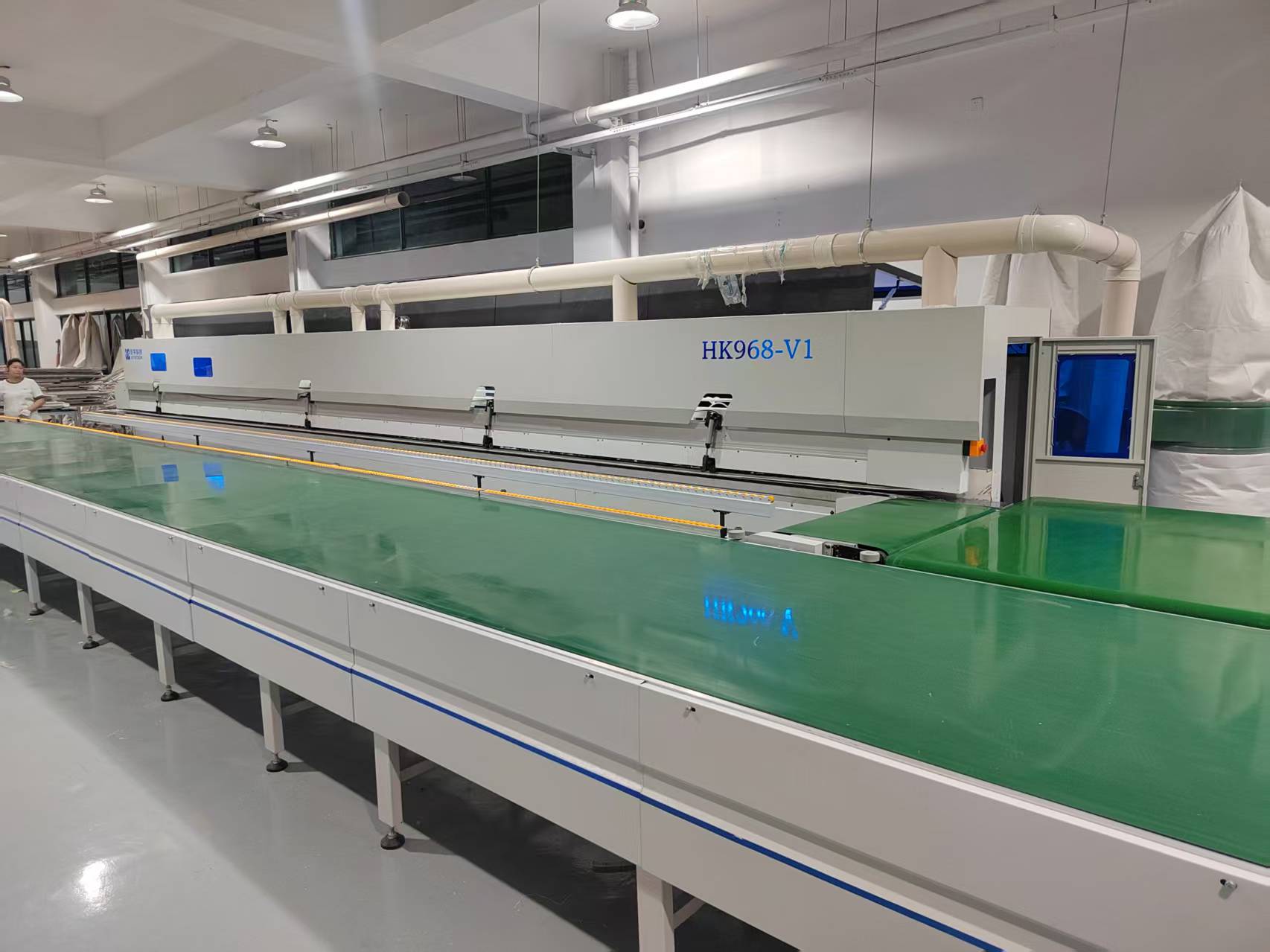
SYUTECH edge banding machine in a client production facility.
The Problem: Capability Mismatches Are Usually Found After Installation
Most edge banding machine purchasing problems are specification-mapping failures, not engineering failures. A buyer chooses a machine based on price, brand recognition, or a sales recommendation, then discovers during commissioning that the machine cannot handle the smallest panel in a cabinet line, that the edge band material exceeds the machine's thickness range, or that the workshop air supply cannot sustain the required pressure.
The most common mismatch patterns in furniture and cabinet production include:
- Feeding speed below the daily throughput required, turning edge banding into a production bottleneck.
- Panel geometry outside the machine's working range, forcing small components to be batched or hand-fed.
- Edge band width or thickness beyond the machine's capacity, requiring material changes or manual rework.
- Utility gaps such as insufficient installed power or compressed air pressure at peak load.
- Footprint and weight not planned for, causing expensive layout changes at installation time.
- No clear integration path between the edge banding machine and existing CNC router, nesting, or panel saw equipment.
The root cause is that evaluation treats the machine in isolation, while execution requires the machine to work inside a production system. A capability check closes that gap before money is committed.
Industry Context: Why Capability Verification Matters Now
The edge banding machine market is growing and shifting toward automated configurations. The global edge bander market was estimated at USD 1.3 billion in 2025 and is projected to reach USD 3.2 billion by 2035, according to Future Market Insights. Dataintelo reports that automatic edge banders held the largest product type share in 2025, at 52.3% of the global market. The same analysis places Asia Pacific at 38.4% of global revenue, driven by furniture manufacturing hubs in China and India.
Material trends also affect machine selection. Future Market Insights projects that PVC edge banding materials will account for 41.3% of the material segment in 2026, so edge band width and thickness ranges remain decisive specifications for most furniture buyers.
One caution: market size estimates vary between research firms. Dataintelo, for example, reports a global edge bander market value of USD 2.8 billion, a larger figure that reflects a broader device definition. Market data should be read as directional context, not as a precise planning figure.
The competitive landscape spans global full-line suppliers and specialized manufacturers. HOMAG Group, a Germany-based woodworking machinery company, reported FY2024 sales of EUR 1,413 million, a 13% decrease from the previous year in a difficult market. Nanxing Machinery, a leading Chinese manufacturer, achieved annual revenue of CNY 3.41 billion in 2025, showing 2.4% year-over-year growth. For a buyer, these figures illustrate a fragmented market in which machine-level capability verification is a more reliable decision basis than brand reputation alone.
The Capability Check Framework: Six Dimensions
The framework applies to every machine class — from a manual edge banding machine for small workshops and a semi-automatic edge banding machine for batch production to an automatic edge banding machine for continuous lines. Used together, the six dimensions show whether a woodworking edge banding machine fits the buyer's actual product range and production environment.
1. Throughput Capability (Feeding Speed)
Feeding speed is the first dimension to verify because it directly determines how many panels can be edged per shift. Industrial edge banding machines typically offer variable feeding speeds; the practical speed depends on panel quality, edge material, and glue behavior. The SYUTECH HK568 provides a three-stage feeding speed of 16-18-22 m/min. The HK868P automatic edge banding machine operates at 16-22 m/min. When evaluating throughput, calculate the linear edging meters required per day, then confirm that the machine's feeding speed leaves headroom above peak demand. Setup, glue heating, and trimming adjustments consume time in real production shifts.
2. Panel Geometry Range
The machine's working range must cover the smallest and largest panels in your product mix. The HK568 accepts a minimum panel length of 135mm (with corner trimming at 50 x 300mm) and a minimum panel width of 50mm. It handles edge band widths of 10-60mm and edge band thicknesses of 0.4-3mm. The HK868P handles the same edge band width and thickness ranges. Small cabinet components are the most common geometry trap: check the minimum panel length carefully, because not every long-frame edge banding machine processes small workpieces reliably.
3. Finishing Unit Configuration
Finished edge quality comes from the configuration of pre-milling, trimming, corner trimming, and polishing units. The HK568 includes a pre-milling station rated at 2.2kW x 2 at 9000rpm, end trimming at 0.37kW x 2 at 12000rpm, rough trimming at 0.75kW x 2, fine trimming at 0.75kW x 2 at 12000rpm, corner trimming at 0.37kW x 2 with a speed of 20m/min, and polishing at 0.37kW x 2. The HK868P uses a 2.2kW x 2 pre-milling motor, 0.3kW x 3 end trimming motors, 0.75kW x 2 rough trimming motors, and 0.18kW x 4 polishing motors. The pattern to compare is simple: more finishing stations generally mean a more complete edge treatment and the ability to handle varied profiles; fewer stations mean a simpler machine with lower finishing capability.
4. Utility and Installation Requirements
An industrial edge banding machine is utility-intensive. The HK568 has an installed power of 25.86kW and requires air pressure of 0.7-0.9MPa. Its overall dimensions are 7200 x 710 x 1628mm, and the machine weighs 2200kg. The HK868P has a total power of 25kW and a rated voltage of 380V 50Hz; its dimensions are 9500 x 1000 x 1650mm, and it weighs 4 tons. Both machines use a carbon steel structure. Before installation, verify that the workshop has the electrical service, compressed air capacity, floor space, and floor load rating to support the selected configuration.
5. Production Line Integration
For panel furniture factories, an edge banding machine rarely works alone. It receives panels from CNC nesting machines, six-side CNC drilling machines, or computer panel saws, and it feeds assembly or further machining. SYUTECH's product range covers this full chain — edge banding machines, CNC nesting machines, six-side CNC drilling machines, computer panel saws, and complete factory production lines — so the company can support customers who plan an automated panel furniture workflow. In Kenya, for example, a SYUTECH client operates edge banding machines together with CNC router machines in a combined workshop. When assessing integration capability, ask whether the supplier can advise on line layout, return conveyors, and connections to existing equipment.
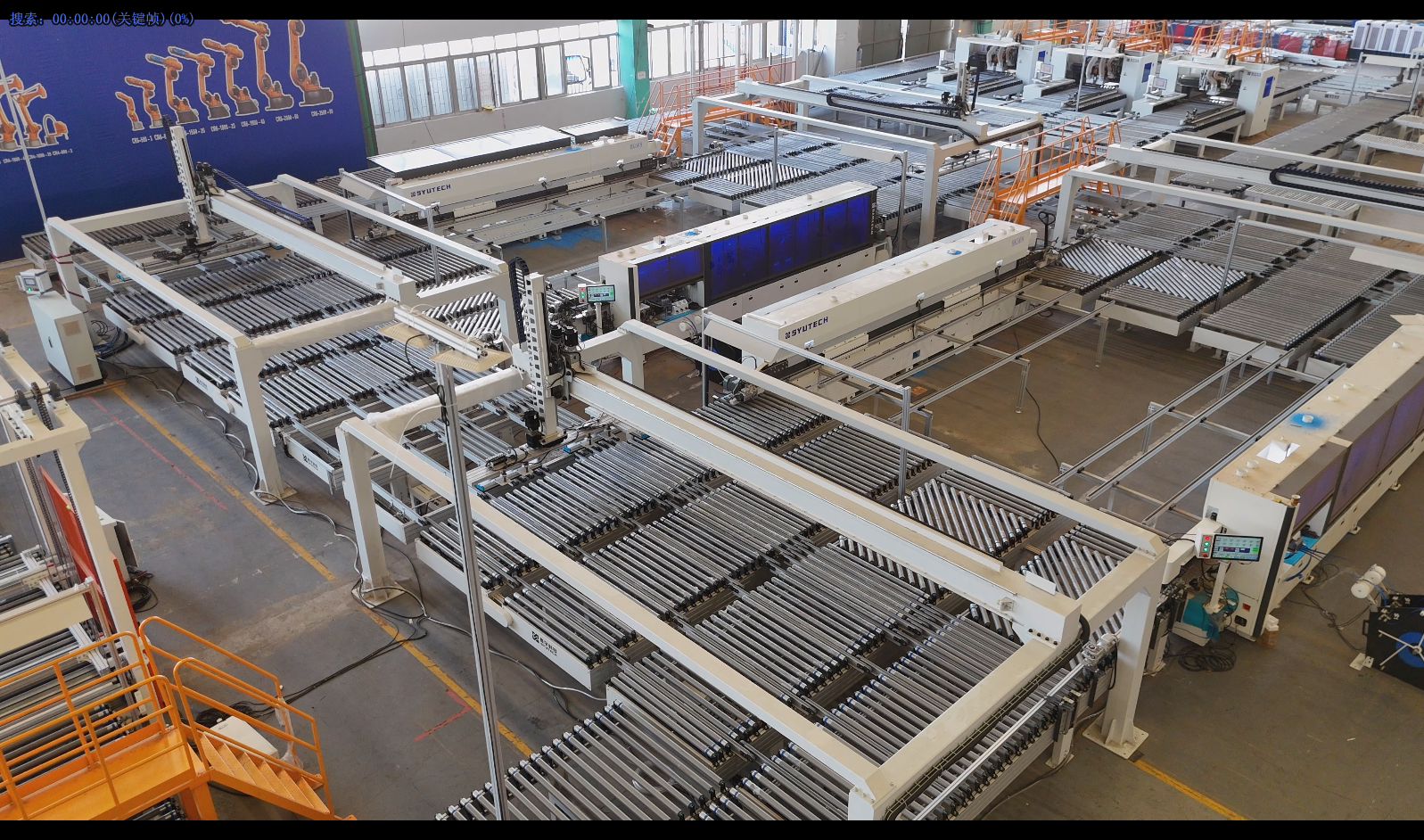
Automated connection for panel furniture.
6. Supplier Evidence and Support Capability
Machine capability and supplier capability are linked. Manufacturing capacity, technology background, and export experience affect delivery consistency and after-sales support. Foshan Shunde SaiYu Technology Co., Ltd. was originally established as Foshan Shunde Leliu Huake Long Precision Machinery Factory in 2013, and later developed the SYUTECH brand. The company operates a 10,000 m² factory with 100 employees and an annual output of 500 units, supported by an R&D team of 2 engineers. Approximately 80% of production is exported to Russia, the Middle East, South America, Europe, and Southeast Asia. The company has collaborated with TEKNOMOTOR, an Italian company, to integrate European technology and experience into its machines. It also describes its commitment to full-set customized furniture solutions, which signals that configuration discussions can extend beyond standard models. For an evaluating buyer, these are concrete signals that the supplier can maintain production consistency and support post-sale requirements.
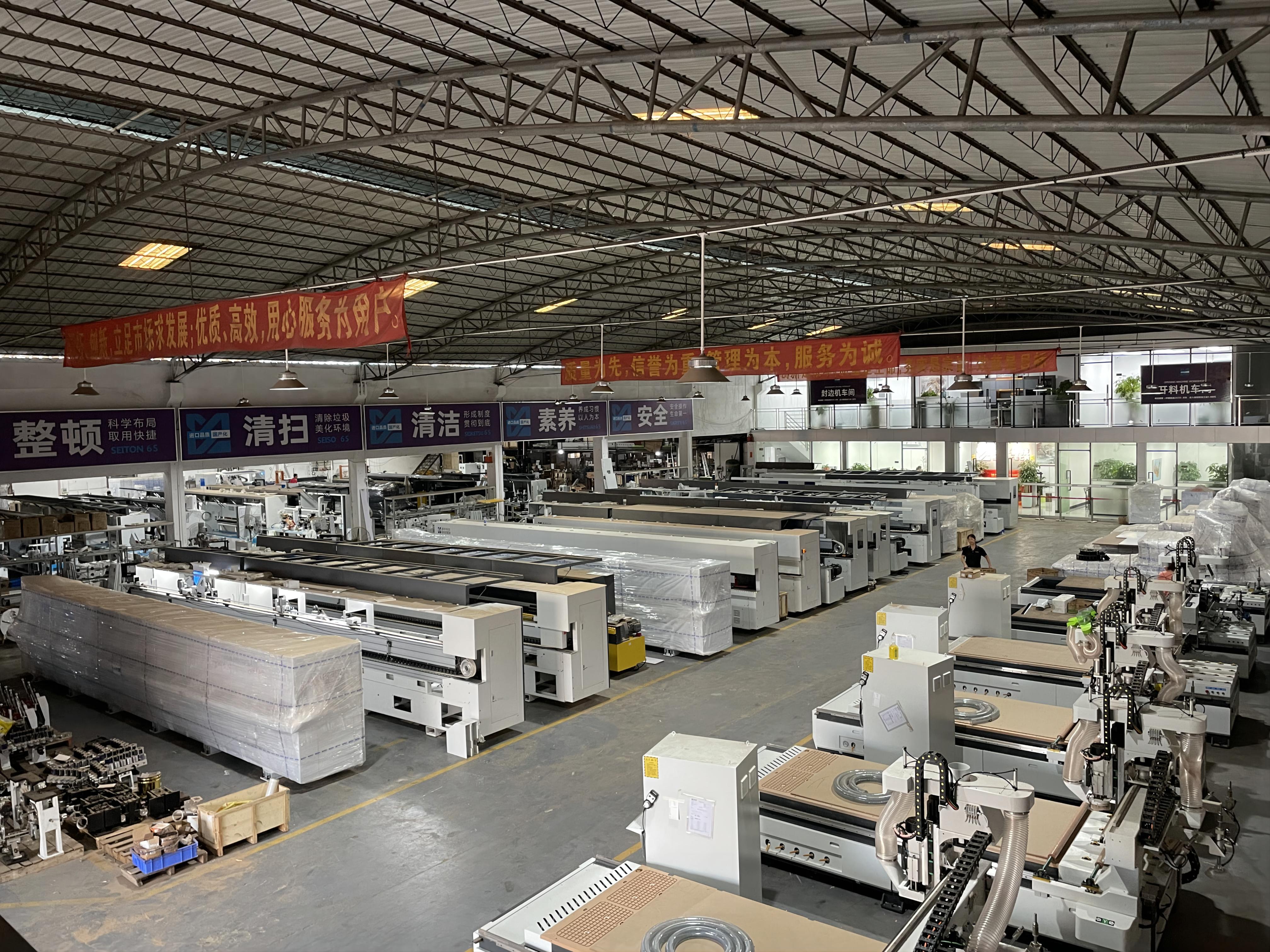
SYUTECH manufacturing facility.
Step-by-Step: Run the Capability Check Before Execution
The evaluation-to-execution stage is where buyer discipline matters most. Run the capability check in seven steps:
- Document the product mix. List the panel products you actually produce — kitchen cabinets, wardrobes, office furniture, doors — and record the smallest and largest panels, edge materials, and edge thicknesses.
- Calculate required throughput. Convert daily panel output into linear meters of edging per day, and compare it with the machine's feeding speed range.
- Map edge materials. Confirm that the edge band width and thickness ranges match current and planned materials. For reference, both SYUTECH models cover 10-60mm width and 0.4-3mm thickness.
- Audit workshop utilities. Check electrical service against installed power (25.86kW for the HK568, 25kW for the HK868P), compressed air against operating pressure (0.7-0.9MPa), and floor space against machine dimensions and weight.
- Define integration points. Determine where panels come from and where edged panels go, then confirm the machine can be positioned and connected inside the existing workflow.
- Request documented evidence. Ask the supplier for detailed specifications, factory capability data, and reference installations in your region or application.
- Plan validation and commissioning. Establish how the machine will be tested with your materials, who will install and commission it, and what spare parts and training are included.
Production Use Cases: Capability Validated in the Field
Capability claims are most credible when backed by production references. Two SYUTECH installations show how these machines perform in real panel furniture environments.
Kenya — Panel furniture manufacturer (Africa). A panel furniture manufacturer in Kenya operates 3 SYUTECH edge banding units for edge banding and CNC router workshop purposes. After 2 years of production use, the client reports that edge banding quality has improved significantly and output has increased. The highlight of the installation is stable edge banding — the capability dimension that matters most in continuous production.
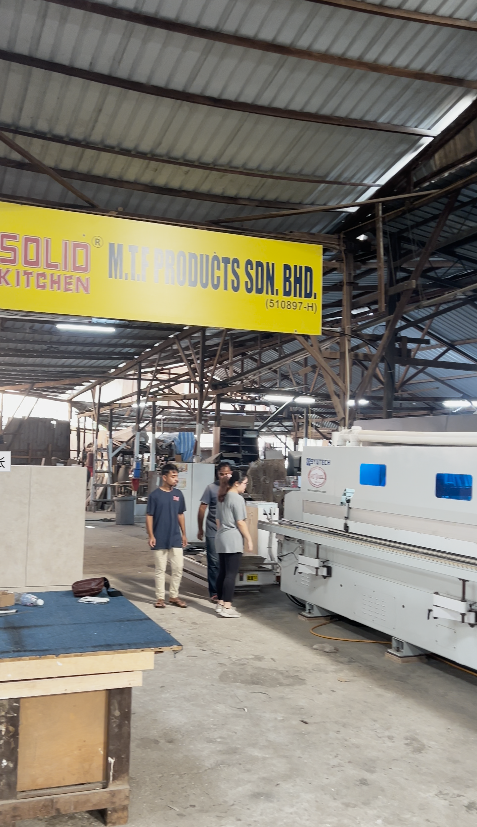
Edge banding machine workshop at a Kenya panel furniture client.
Greece — Panel furniture manufacturer (EU). In Greece, a panel furniture manufacturer uses SYUTECH machines in its edge banding workshop and has installed 10 units. Over 3 years of operation, the factory reports significantly increased output, with stable operation as the defining characteristic. For a European buyer, this case shows that the equipment can sustain continuous workshop duty in a mature market.
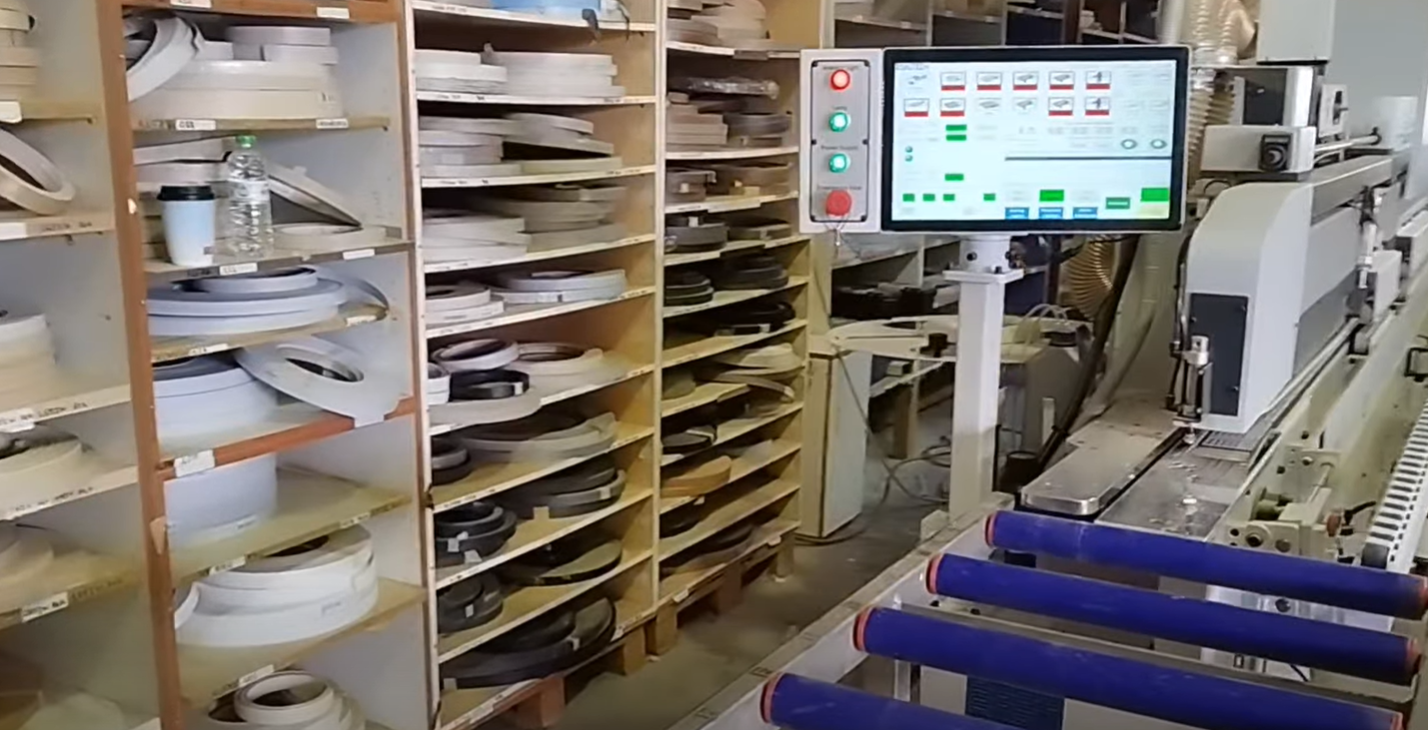
Client factory of a Greece panel furniture manufacturer.
These two cases also show how to read supplier references: ask how long the equipment has run, what production environment it operates in, and what result the client observes. The data points — 2 years in Kenya and 3 years in Greece — are evidence of sustained operation rather than one-time demonstration.
SYUTECH HK568 vs. HK868P: Capability Comparison
The table below compares two SYUTECH edge banding machine configurations using published parameters. Use it as a template for comparing any supplier's models against your production requirements.
| Parameter | HK568 Edge Banding Machine | HK868P Automatic Edge Banding Machine |
|---|---|---|
| Feeding speed | 16-18-22 m/min | 16-22 m/min |
| Edge band width | 10-60mm | 10-60mm |
| Edge band thickness | 0.4-3mm | 0.4-3mm |
| Minimum panel length | 135mm (corner trimming 50 x 300mm) | Not specified |
| Minimum panel width | 50mm | Not specified |
| Pre-milling power | 2.2kW x 2 at 9000rpm | 2.2kW x 2 |
| Glue box power | 1.8kW | Not specified |
| End trimming power | 0.37kW x 2 at 12000rpm | 0.3kW x 3 |
| Rough trimming power | 0.75kW x 2 | 0.75kW x 2 |
| Fine trimming power | 0.75kW x 2 at 12000rpm | Not specified |
| Corner trimming power | 0.37kW x 2, speed 20m/min | Not specified |
| Polishing power | 0.37kW x 2 | 0.18kW x 4 |
| Conveying power | 4kW convey belt | 5.5kW convey motor |
| Total / installed power | 25.86kW | 25kW |
| Rated voltage | Not specified | 380V 50Hz |
| Air pressure | 0.7-0.9MPa | Not specified |
| Overall dimensions | 7200 x 710 x 1628mm | 9500 x 1000 x 1650mm |
| Machine weight | 2200kg | 4 tons |
| Structure material | Carbon steel | Carbon steel |
| Industry application | Woodworking | Woodworking |
How to read the comparison. The HK568 is the more fully documented configuration, with explicit fine trimming and corner trimming stations and a documented minimum panel length of 135mm. The HK868P is a heavier automatic configuration: its frame is 9500mm long, it weighs 4 tons, and it is equipped with a 5.5kW conveying motor and a 380V 50Hz rated voltage. The right choice depends on the production scenario — panel size distribution, required edge treatment, throughput target, and available utilities.
Edge Banding Machine Capability FAQ
What safety standards apply to industrial edge banding machines?
ISO 19085-17:2021 sets the specific safety requirements for edge banding machines fed by chains or belts. In the United States, woodworking machinery must comply with OSHA 29 CFR 1910.213. Before installation, confirm that the machine documentation and the installation plan address the safety requirements for your destination market.
What capabilities should I verify before buying an edge banding machine?
Verify six dimensions: feeding speed, panel geometry range, finishing unit configuration, utility requirements, line integration, and supplier evidence. For a concrete reference, the SYUTECH HK568 handles panels with a minimum length of 135mm and a minimum width of 50mm, accepts edge band widths of 10-60mm and thicknesses of 0.4-3mm, and provides feeding speeds of 16-18-22 m/min. The HK868P automatic model covers the same edge band ranges at 16-22 m/min.
What determines the budget for an industrial edge banding machine?
The main cost drivers are automation level (manual, semi-automatic, or automatic), the number of finishing stations such as pre-milling, trimming, corner trimming, and polishing, the feeding speed range, the machine build, and line-integration features such as conveyors and return systems. Because configurations vary widely, machines in the same class can span a broad price range. The practical approach is to define your production scenario first, then request an itemized quotation from the supplier.
Can I evaluate the machine with my own panels before ordering?
Supplier evaluation normally includes a technical review of your panel dimensions, edge band material, and target output. Ask whether the supplier can run a demonstration with your materials or arrange a factory visit. SYUTECH's factory in Shunde, Foshan supports such evaluations; you can request an assessment by downloading the company brochure or contacting the sales team directly.
What factors affect edge banding machine delivery time?
Lead time depends primarily on whether the machine is a standard configuration or requires customization, the manufacturer's current production schedule, and the shipping route to your destination. A manufacturer's annual output gives one reference point — SYUTECH's factory has an annual output of 500 units. For execution planning, request a quotation for the exact configuration and confirm the lead time in writing. To start an inquiry, contact the SYUTECH sales team by email at zywoodmachine@163.com or vanessa293199@139.com, or by phone / WhatsApp at +86 15019677504 or +86 13929919431.
Conclusion
Capability verification is the difference between buying a machine and building production capacity. The six-dimension framework — throughput, panel geometry, finishing configuration, utilities, integration, and supplier evidence — gives an evaluation team a concrete checklist to complete before committing to installation.
The practical takeaway for furniture factories, cabinet workshops, and panel processing lines is to verify the machine against your smallest panel, your thickest edge band, your daily output, and your existing line. If the supplier can document those answers with specifications, factory capability, and production references, the execution phase becomes predictable.
SYUTECH's HK568 and HK868P show how published parameters support the check process, and the company's production history with panel furniture manufacturers in Kenya and Greece shows that capability claims can be backed by reference installations. For the next step, consider requesting a capability evaluation matched to your production scenario.
Next step: request a capability evaluation. Download the SYUTECH factory brochure to review the product range and manufacturing background, or contact the sales team through syutech.com for a quotation, lead-time confirmation, or an evaluation discussion.
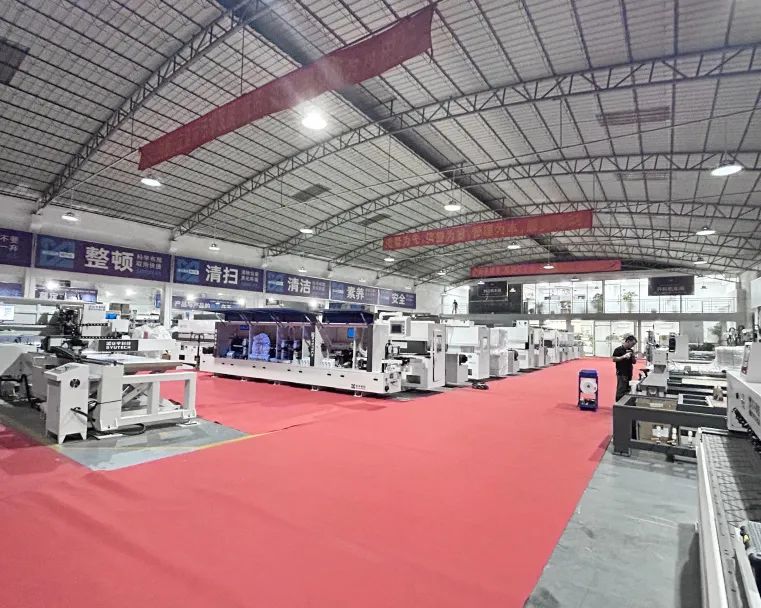
SYUTECH manufacturing facility in Shunde, Foshan.