
How to Choose a Woodworking Machine Supplier (2026 Guide)
How to Choose a Woodworking Machine Supplier: A Practical Guide for 2026
Whether you are launching a new panel furniture factory or upgrading existing production lines, selecting the right woodworking machine supplier is one of the most critical decisions you will make. With hundreds of manufacturers in the market — especially concentrated in China's Shunde region, known as the hometown of woodworking machinery — the challenge is separating reliable partners from those who compromise on quality. This guide uses proven assessment criteria, real-world case data, and technical benchmarks to help you make an informed decision.
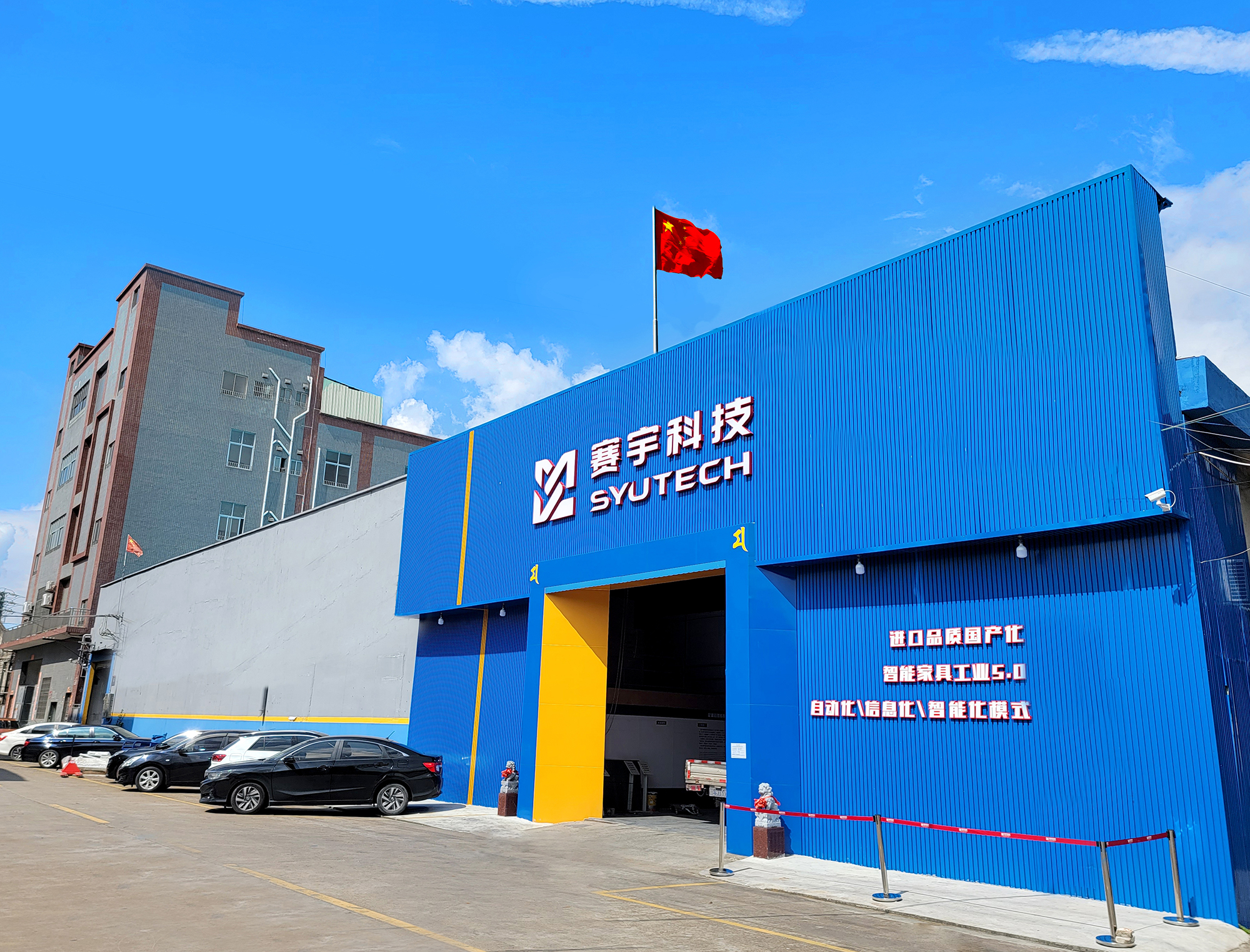
A modern woodworking machinery factory in Shunde – evaluating the supplier's physical capacity is the first step.
What Is the Core Problem for Woodworking Machine Buyers?
Buyers of woodworking machines — from CNC routers and edge banding machines to complete automatic production lines — share a common pain point: information asymmetry. You may see low prices from unknown brands, but you cannot easily verify the real manufacturing quality, after-sales support, or compliance with safety standards. The risk of purchasing a machine that fails within months, producing poor edge banding or inaccurate drilling, is real and costly.
This guide answers the fundamental question: What should a smart buyer evaluate before choosing a woodworking machine supplier?
Industry Background: The Global Woodworking Machinery Landscape
The global woodworking machinery market is projected to grow steadily, driven by rising demand for customized panel furniture and automation. China remains the world's largest production base, with clusters in Guangdong (Foshan), Shandong, and Zhejiang. However, quality varies dramatically: some factories rely on thin sheet metal frames and inconsistent welding, while established manufacturers invest in thick steel plate integrated frames, precision machining, and stress relief treatment. For example, Foshan Shunde SaiYu Technology Co., Ltd. (brand SYUTECH), established in 2013, operates a 10,000m² factory with an annual output of 500 units, exporting 80% of its machines to Russia, the Middle East, South America, Europe, and Southeast Asia.
Understanding the supplier's production scale, R&D capability, and export experience is essential for evaluating long-term reliability.
Detailed Solution: How to Evaluate a Woodworking Machine Supplier
We break down the evaluation into five concrete steps, using data from real suppliers and field-proven benchmarks.
Step 1: Verify Factory Strength and Production Capacity
Look beyond the website. A reliable supplier should have:
- Factory size: At least 5,000–10,000 m² for medium-scale production. SYUTECH's 10000 m² facility is a positive indicator.
- Annual output: 500+ units per year suggests mature manufacturing processes.
- R&D team: Even a small team of 2 engineers, as in SYUTECH's case, shows commitment to product improvement.
- OEM/ODM capability: The ability to customize logo, color, voltage, and accept an MOQ of 1 set is valuable for buyers wanting tailored solutions.
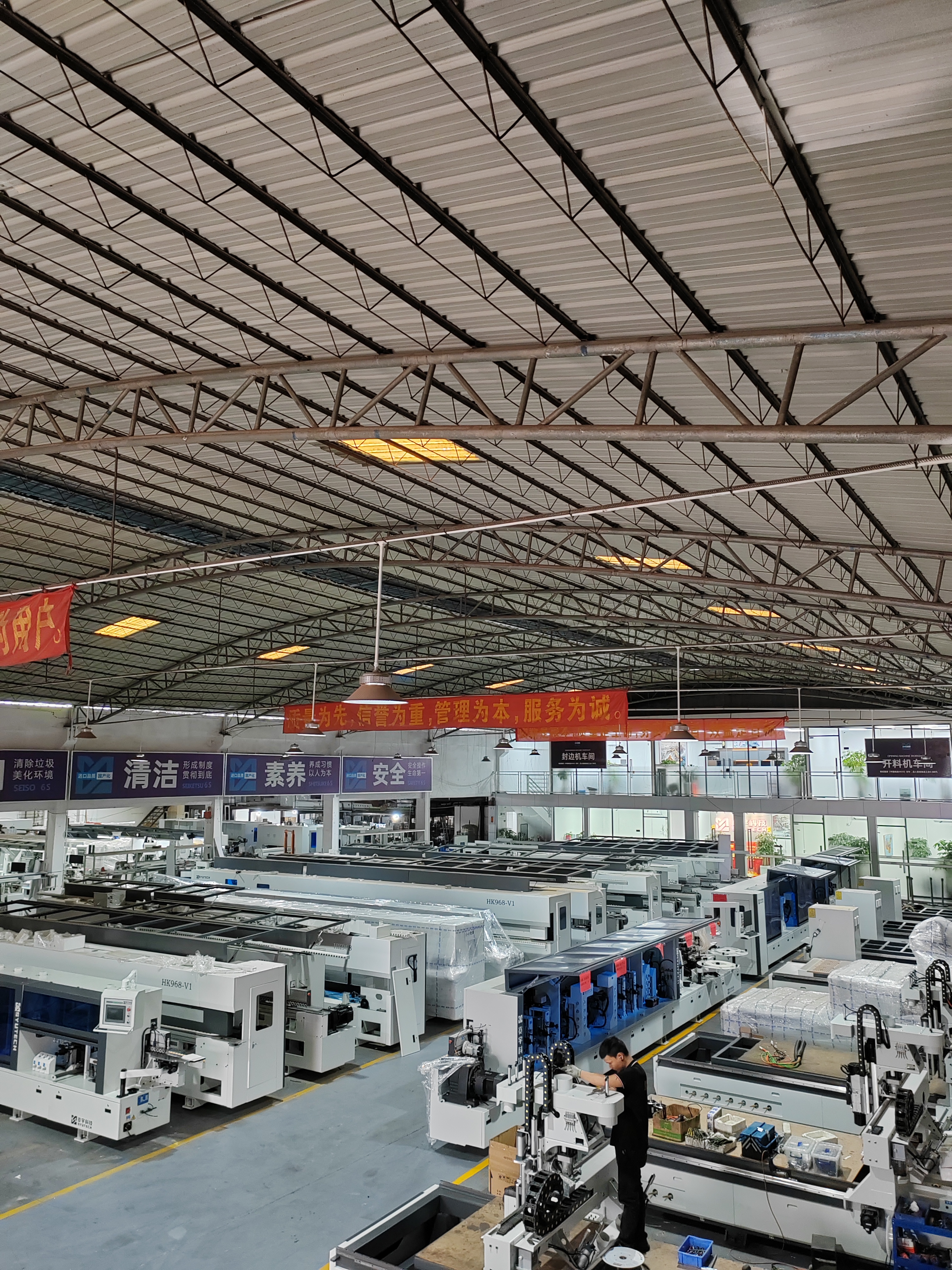
A well-organized workshop reflects efficient production management.
Step 2: Check Quality Certifications and Compliance
For machinery exported to the EU, CE certification (Machinery Directive 2006/42/EC, Low Voltage Directive 2014/35/EU) is mandatory. Request the certificate number and verify it. For example, SYUTECH holds CE certificate HTT202405661L issued on 2024-06-05, covering its edge banding machine (HK568) and automatic edge banding machine (HK868P).
Also inquire about testing protocols: a 100% pre-shipment test is the industry best practice.
Step 3: Assess the Product Portfolio and Technical Specifications
A full-line supplier can offer integrated solutions. Review the key specifications:
| Machine Type | Model | Key Spec (Example) |
|---|---|---|
| Edge Banding Machine | HK568 | Feeding speed 16-22m/min, installed power 25.86kW |
| CNC Nesting Machine | HK6 | 9kW spindle, 24000rpm, 12-tool ATC, Taiwan LNC/SYNTEC control |
| Computer Panel Saw | HK330 | Max cutting width 3300mm, big saw 16.5kW |
| Six-Side Drilling Machine | HK612A | 10 top vertical drills, X/Y 120/80m/min |
Compare the materials used: carbon steel frames ≥10mm thick with stress relief treatment indicate durability, as opposed to thin sheet metal (3–5mm) that deforms over time.
Step 4: Analyze Real-World Case Studies
Ask for customer references and application details. Genuine suppliers will share:
- Romania (2024): A panel furniture manufacturer uses SYUTECH's edge banding machines (model HK568) and CNC routers for making cabinets and doors. After 2 years, the result is significantly improved edge banding quality and output increase.
- Kenya (2024): A factory deployed 3 units for edge banding and CNC cutting. The highlight is stable edge banding with improved output.
These cases demonstrate that the machines operate reliably in different environments (EU and Africa) and meet CE safety standards.
Step 5: Evaluate After-Sales Service and Lead Time
Key questions to ask:
- Lead time: 30–45 days is standard for most CNC machines.
- MOQ: 1 set allows you to test before scaling up.
- Payment terms: TT is common; some suppliers accept advanced payment.
- After-sales support: Remote technical support and spare parts availability are critical.
SYUTECH, for example, offers remote support and has an export ratio of 80%, indicating experience in international logistics.
Frequently Asked Questions (FAQ)
What is the difference between a cheap edge banding machine and a quality one?
Quality machines use thick steel plate frames (≥10mm) with stress relief treatment, precision-milled bases, and high-grade components like Japanese reducers. Cheap machines often have thin sheet metal (3-5mm) and spot-welded assemblies, leading to accuracy drift within months.
Can I customize the machine for my production line?
Yes. Reputable suppliers like SYUTECH offer OEM/ODM for logo, color, voltage, and even complete automated production lines (model HKATC) tailored to your daily output and workshop size.
What certifications should the supplier have?
For EU markets, CE certification (Machinery Directive and Low Voltage Directive) is essential. Check the certificate number and validity. SYUTECH holds CE certificate HTT202405661L covering its edge banding machines.
How do I know the machine will be tested before shipment?
Insist on a pre-shipment test. Quality suppliers perform 100% testing of all functions before loading. You can request video proof or on-site inspection by a third party.
Conclusion
Choosing the right woodworking machine supplier requires due diligence: evaluate factory strength, certifications, product specs, real case studies, and after-sales support. Brands like SYUTECH (Foshan Shunde SaiYu Technology) demonstrate the hallmarks of a reliable partner — a 10,000m² factory, 80% export ratio, CE certification, and proven results in Romania and Kenya. Remember, the cheapest machine is often the most expensive in the long run. Invest time in verification, and you will build a lasting and productive relationship.
Need Expert Advice?
Contact SYUTECH directly for a free consultation on your workshop layout and machine selection.
Email: vanessa293199@139.com | Phone/WhatsApp: +86 13929919431
Address: No. 7, Shangyong Shuguang Road, Leliu Town, Shunde District, Foshan City, Guangdong, China