
Mastering Door Manufacturing: An Application Guide for CNC Drilling Centers and Cutting Machinery
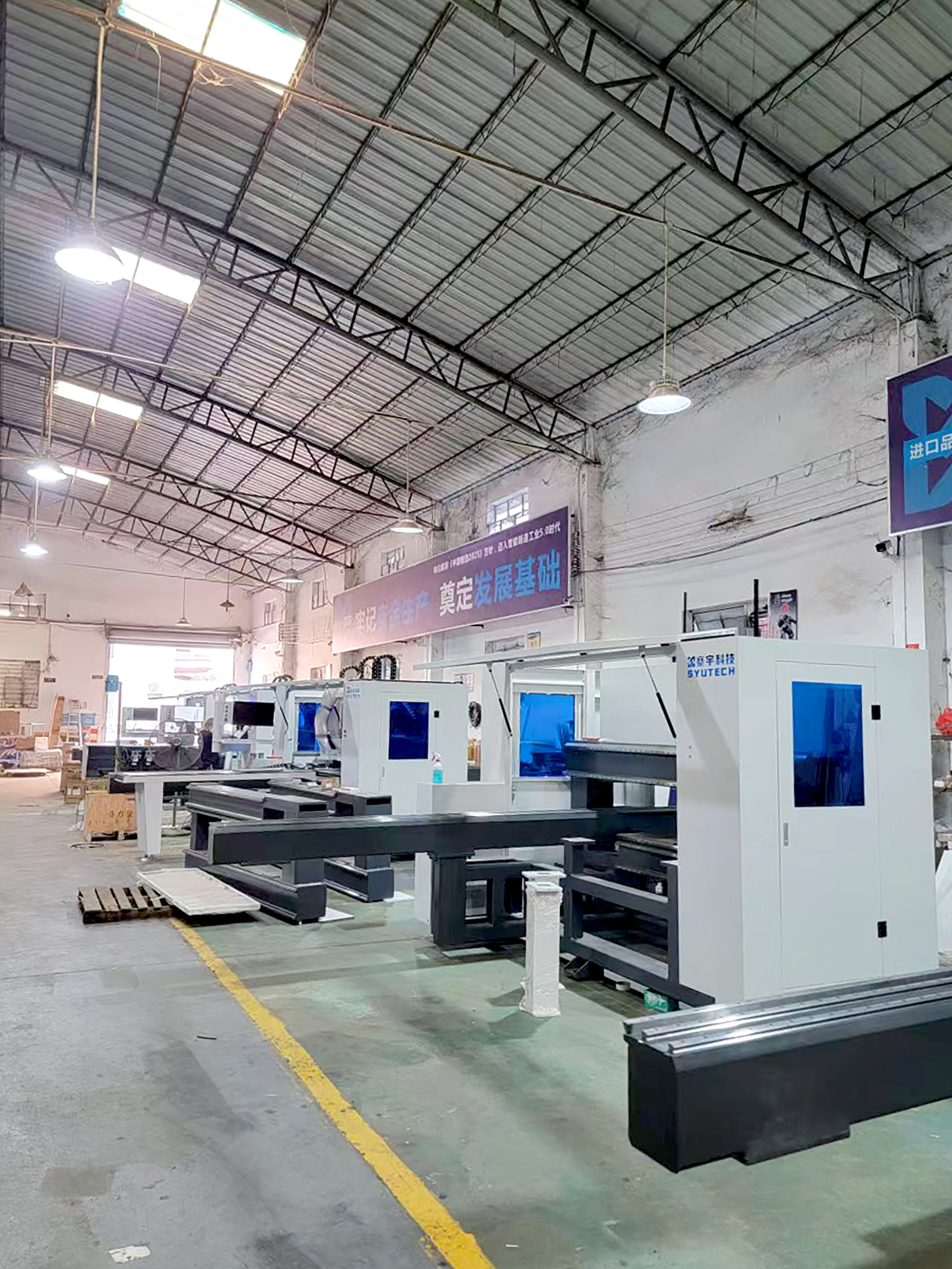
CNC drilling machine workshop: the station where door hardware patterns are placed and repeated.
Door manufacturing looks like a cutting problem and behaves like a tolerance problem. A finished door only fits when the hinge cup, dowel holes, lock case and handle bore all sit in the same relationship to the door edge — on every door in the batch, and again when the same batch repeats next season. Two equipment categories do most of that work: cutting machinery that produces square, dimensionally stable blanks, and CNC drilling centers that place hardware features at production speed.
This application guide explains how those two roles divide the work in a custom door shop, using the SYUTECH Door Processing Machine HK3500 and the Drilling and Milling Center HK612B as worked examples, with the Computer Panel Saw HK330 covering the upstream cutting stage.
Why Door Production Drifts: Defining the Tolerance Problem
Door errors are rarely caused by one bad cut. They accumulate. A hinge cup that sits half a millimetre off on a single door is a fitting problem; the same half millimetre repeated across a cabinet run is a callback. Because doors carry visible hardware on a visible face, position errors are visible too — unlike errors hidden inside a carcass.
Four failure modes show up repeatedly in door production:
- Hardware position drift. Hinge cups, dowel holes, lock cases and handle bores must maintain a fixed distance to the door edge and to each other. When that relationship shifts, doors bind, gaps open, and adjustable hinges run out of travel.
- Pattern inconsistency between operators or shifts. Manual layout and single-spindle drilling depend on the operator's setup, so the second shift and the first shift rarely land in exactly the same place.
- Blank geometry errors upstream. A drilling center indexes from the panel edge. If the cut blank is out of square or oversized, every drilled feature inherits that error, no matter how accurate the drill itself is.
- Rework and scrap. A door that fails a hardware check is usually a total loss of panel, edge treatment and machine time rather than a small correction.
The practical consequence is that a door programme has to be defined once — in coordinates, tool data and panel thickness — and then executed identically hundreds of times. That is what separates a CNC drilling centre from a manual drilling station.
Industry Background: Where Door Drilling and Cutting Sit in 2026
Doors sit inside the wider panel furniture and cabinetry workflow: panels are cut, edged, drilled and assembled into carcasses, doors and fronts. Because doors are the visible, moving part of that assembly, they are usually the first component moved to CNC processing when a shop upgrades.
Automation has been taking share in that equipment market. Fortune Business Insights estimates that the automatic segment of the woodworking machinery market accounted for 48.2% of share in 2025, a commercial research estimate rather than a customs figure, but consistent with what buyers see on shop floors. At the same time, trade coverage in 2026 describes a shift in how buyers evaluate machinery: increasingly as part of a connected production system rather than as a standalone purchase (Market Prospects, 2026). For a door shop, that means asking how the drilling centre receives programmes, how it fits between the saw and the edge bander, and how repeat orders are handed over to the night shift.
Compliance runs alongside configuration. For machinery entering the European Union, the applicable framework is the Machinery Directive set out in the CE conformity route, and SYUTECH holds CE certificate HTT202405661L issued by HTT, covering Machinery Directive 2006/42/EC and Low Voltage Directive 2014/35/EU, with standards EN ISO 12100:2010 and EN 60204-1:2018 listed on the certificate. For the United States, OSHA maintains woodworking machinery requirements under 29 CFR 1910.213, referenced alongside general machinery and machine guarding provisions in 1910 Subpart O. Buyers who import machines and then export finished doors should map both ends of that chain before ordering.
Solving Door Drilling and Cutting on SYUTECH Machinery
SYUTECH at a Glance
Foshan Shunde SaiYu Technology Co., Ltd., trading under the SYUTECH brand, is a manufacturer and supplier of woodworking machinery based in Shunde District, Foshan City, Guangdong Province, China. The company was originally established as Foshan Shunde Leliu Huake Long Precision Machinery Factory in 2013 and later developed the Saiyu Technology brand through ten years of technological accumulation.
The operating profile behind that brand is relevant to a door shop planning capacity:
- Factory area of 10,000 m² with approximately 100 employees and a two-engineer R&D team
- Annual output of around 500 units, with an export ratio of about 80%
- Main markets including Russia, the Middle East, South America, Europe and Southeast Asia
- Product portfolio spanning edge banding machines, CNC nesting machines, six-side CNC drilling machines, computer panel saws and complete panel furniture production lines
- Production mode of OEM/ODM with customization of logo, colour and voltage
- Monthly capacity of 100 sets, minimum order quantity of 1 set, and 100% testing before shipment
The Cutting Stage: Computer Panel Saw HK330
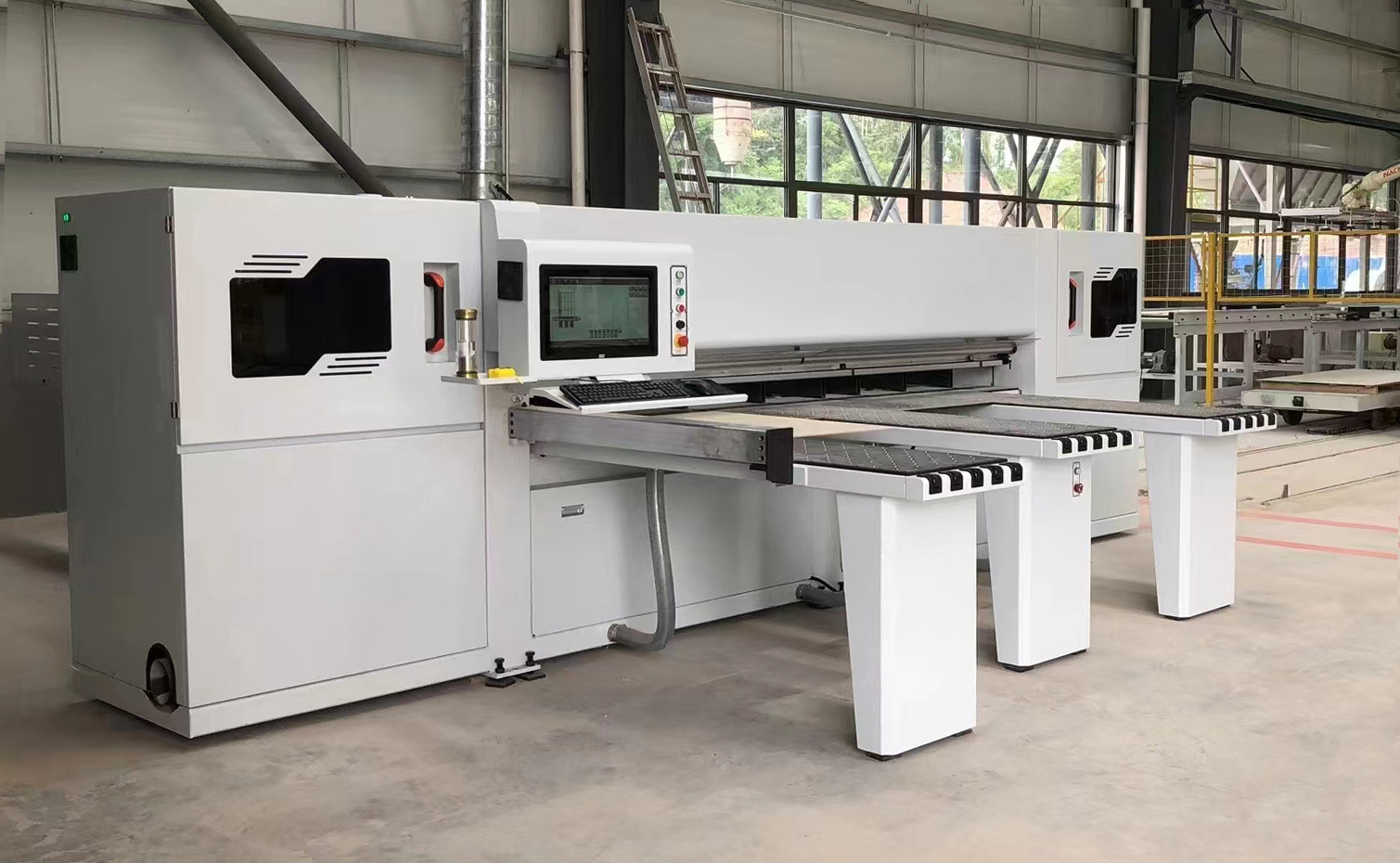
Computer panel saw: the cutting stage that determines whether downstream drilling indexes accurately.
The Computer Panel Saw HK330 is the upstream machine in a door cell. It produces the blanks that the drilling centre will index against, which is why its published figures matter as much as the drill's:
- Maximum cutting speed: 0–100 m/min
- Maximum cutting width: 3300 mm
- Maximum cutting height: 100 mm
- Main saw motor power: 16.5 kW (optional 18.5 kW); small saw motor power: 2.2 kW
- Clamp hands: 13 pcs
- Minimum working size: 34 L × 45 W (mm)
- Overall size: 5900 L × 5950 W × 1900 H (mm)
For door work, the useful way to read those numbers is by role. The 3300 mm cutting width covers standard door and front widths cut from full-size panels without re-ripping, the 100 mm cutting height covers typical door thicknesses, and the 13 clamp hands hold the pack during sizing so that the blank leaves the saw square. The 34 × 45 mm minimum working size matters when a job includes narrow door stiles or small front components that still need a clean, square cut.
Dedicated Door Drilling: Door Processing Machine HK3500
The Door Processing Machine HK3500 is the model configured specifically around door and frame drilling. Its published specification is oriented toward panel widths and thicknesses found in door production rather than toward general carcass work:
- Table size: 395 × 3000 mm
- Working thickness: 10–50 mm
- Minimum working width: 70 mm
- Drill hole size: ø3–ø15 mm; drill hole depth: 0–35 mm
- Working speed: 8–20 m/min; run-empty speed: 30–45 m/min
- Vertical spindle motor power: 3.5 kW × 2 pcs; horizontal spindle motor power: 2.2 kW
- Left and right moving motor power: 0.75 kW; feed motor power: 0.4 kW
- Total power: 16.35 kW; air pressure: 0.6 MPa
- Machine size: 3800 × 1550 × 1300 mm; weight: 800 kg
The ø3–ø15 mm bore range covers the hardware a door normally carries: dowel and connector holes at the small end, hinge cups and lock-related bores toward the larger end. The 0–35 mm depth range allows a bore to be set for the specific hardware being inserted rather than drilled through. The 70 mm minimum working width is the figure to check first against a product range that includes narrow stiles, and the 10–50 mm thickness range should be compared against the actual panel build-up of the doors being quoted.
Complex Door Geometries: Drilling and Milling Center HK612B
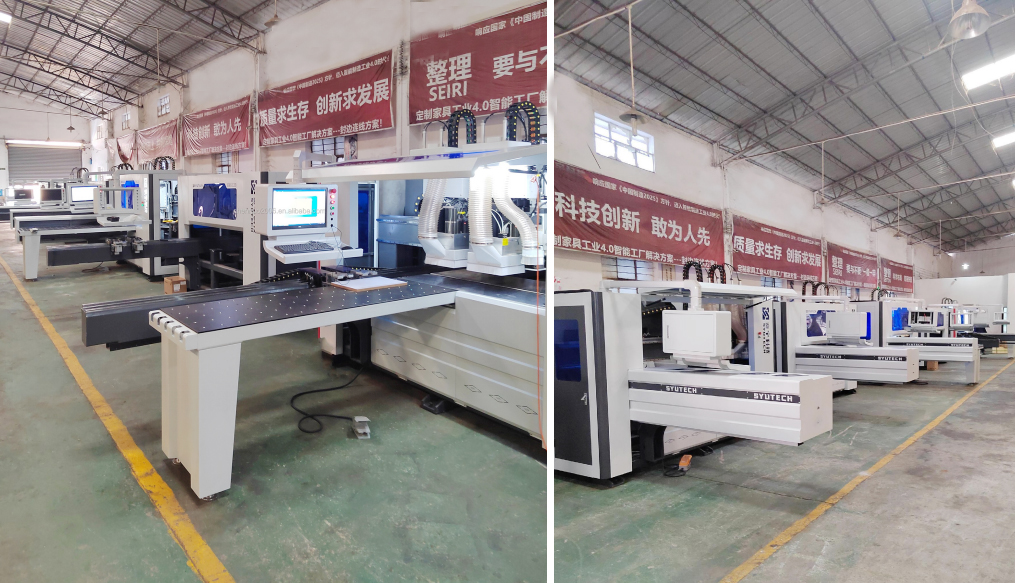
CNC drilling station: multi-spindle tooling places several bore types in one pass.
Where the HK3500 is a door-focused drilling machine, the Drilling and Milling Center HK612B is the wider-envelope option. Its three-axis configuration and tool count are the figures that decide whether a door programme can be completed without re-fixturing:
- Working length: X-axis 2800 mm; Y-axis 1220 mm; Z-axis 50 mm
- Maximum speed: X-axis 120 m/min; Y-axis 80 m/min; Z-axis 30 m/min
- Processing size: minimum 140 × 40 mm; maximum 2800 × 1220 mm
- Top tooling: 10 pcs vertical drilling tools plus 8 pcs horizontal drilling tools (XY)
- Bottom tooling: 9 pcs vertical drilling tools
- Machine size: 5200 × 2900 × 2300 mm; weight: 3500 kg
The X-axis speed of up to 120 m/min is the number that changes cycle time on multi-door batches: the head does not spend the pattern time travelling, so the limiting factor becomes the number of tools and the pattern complexity rather than axis movement. The combination of 10 vertical and 8 horizontal top tools with 9 bottom vertical tools allows several bore types — shelf pins, hinge cups, connector holes and dowel positions — to be placed in one programme, which is what makes a 2800 × 1220 mm envelope useful for door blanks that also need edge and face features.
Step-by-Step: Setting Up a Door Batch
The sequence below reflects how the two machine roles connect in a door shop. Each step lists the practical decision rather than the full machine operation.
- Define the door family and hardware schedule. Fix the door types, panel thickness (within the 10–50 mm working range of the HK3500), hardware diameters (within the ø3–ø15 mm range) and required bore depths (within 0–35 mm). This schedule becomes the input for every programme that follows.
- Cut blanks on the panel saw. Run panel sizing on the Computer Panel Saw HK330 at cutting speeds from 0 to 100 m/min, holding to the 3300 mm maximum cutting width and 100 mm maximum cutting height. Where the job includes narrow components, respect the 34 × 45 mm minimum working size.
- Verify blank squareness before drilling. Because the drilling centre indexes from the panel edge, an out-of-square blank cannot be corrected downstream. Check the first piece of each new pack, not only the first piece of the run.
- Edge the door edges. Edge banding follows cutting and precedes or follows drilling depending on door construction; SYUTECH's portfolio covers this stage with the Edge Banding Machine HK568, the Automatic Edge Banding Machines HK868P, and the compact and mini models HK268GY and HK268G for shops with restricted floor space.
- Programme the door pattern. For door-focused work, load the pattern on the HK3500, using the 395 × 3000 mm table and the 70 mm minimum working width as the constraint check. The 3.5 kW × 2 vertical spindles and 2.2 kW horizontal spindle define the cutting capability for cup and bore work.
- Run larger or more complex geometries on the HK612B. The 2800 × 1220 mm maximum processing size covers full door blanks, and the X-axis speed of up to 120 m/min shortens movement time between bore positions. Minimum processing size is 140 × 40 mm.
- Insert hardware and check fit. Hardware insertion is the moment where accumulated error becomes visible. A bore range defined in the programme keeps hinges, connectors and handles within the intended tolerance band.
- Inspect and release the batch. SYUTECH applies 100% testing as its stated quality control approach, and the same logic applies on the shop floor: release a batch on verified hinge alignment and bore depth, not on visual inspection alone.
Use Cases: Where This Configuration Is Already Running
Two documented installations show how SYUTECH equipment behaves over multi-year operation in panel furniture workshops. Both are workshop environments where cutting, edge banding and CNC processing run alongside each other.
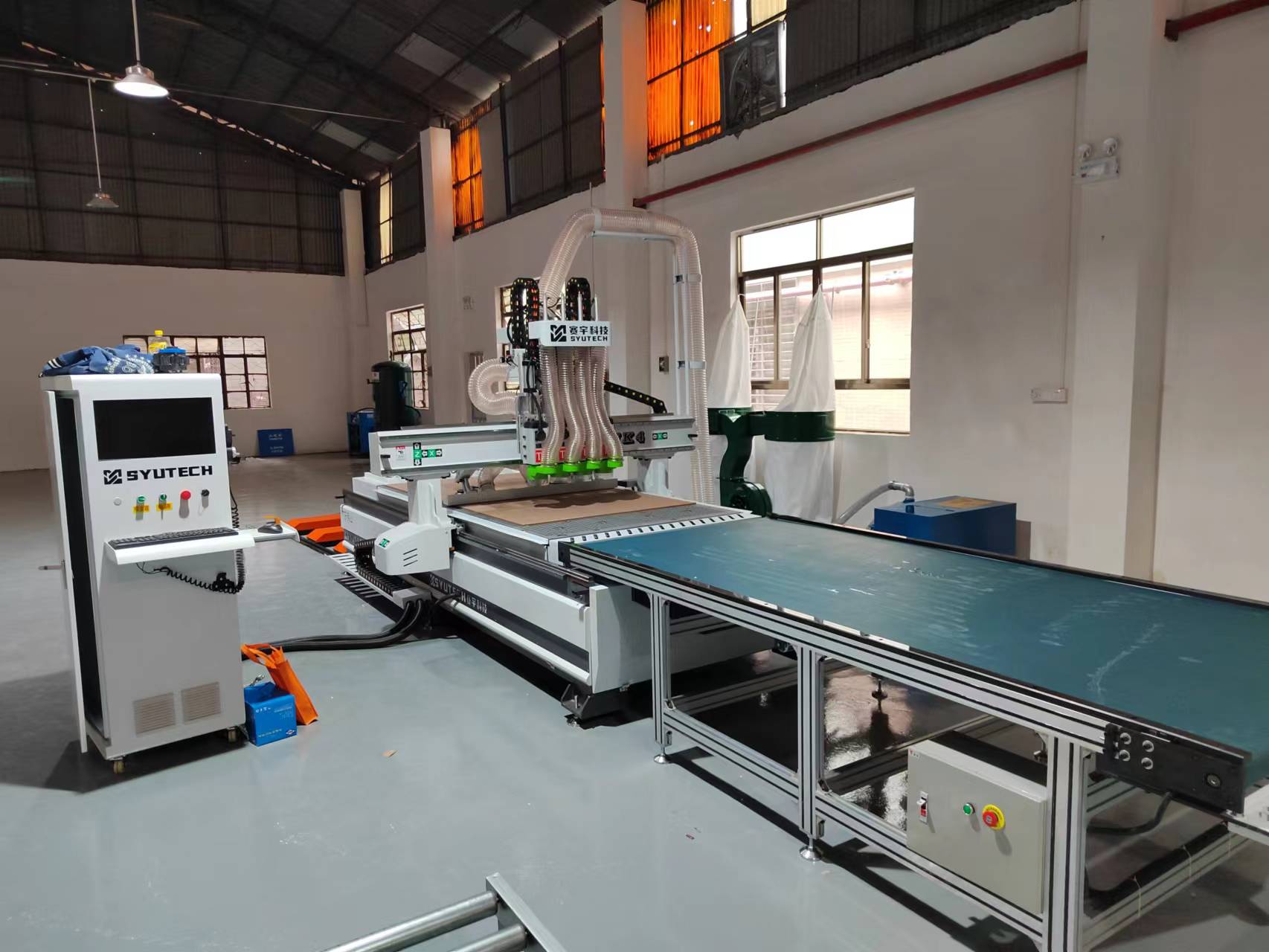
CNC router machine in a panel furniture workshop — part of a three-unit installation in Kenya.
Kenya — panel furniture manufacturer, 3 units, 2 years. A panel furniture manufacturer in Kenya installed three units across an edge banding workshop and a CNC router workshop. Over a two-year implementation period, the reported outcome was stable edge banding, significantly improved edge banding quality, and increased output. The installation is a useful reference point for door and front production because the same workshop runs both panel processing and CNC routing, which is the environment in which a drilling centre is normally deployed.
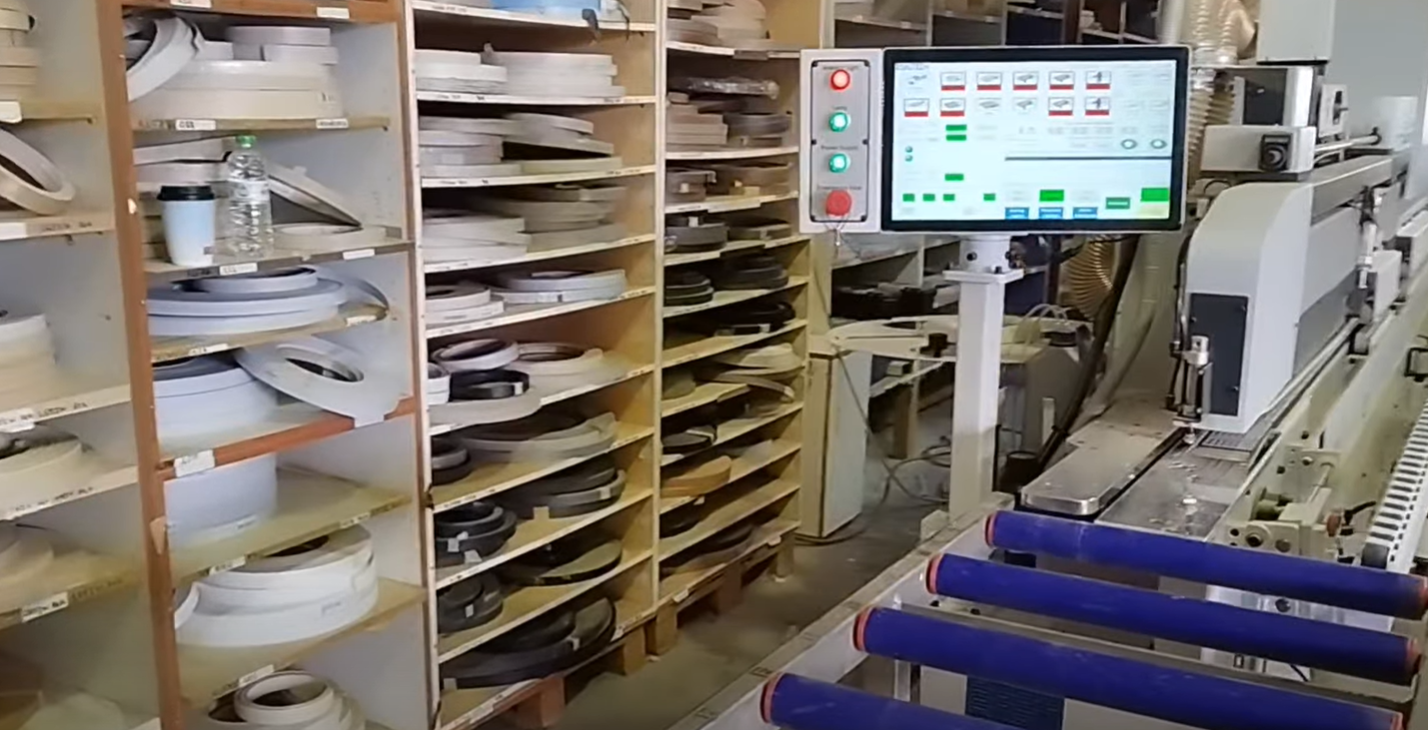
Client factory in Greece: 10 units in continuous edge banding operation for three years.
Greece — panel furniture manufacturer, 10 units, 3 years. A Greek panel furniture manufacturer operates ten units in an edge banding workshop, in stable operation for three years, with a significant increase in output reported. The relevance for a door-focused buyer is the continuity signal: a cell of machines that stays in production for three years in a European market implies serviceable hardware, available support and programmes that survive staff changes.
How a Custom Door Shop Would Size the Cell
A shop producing made-to-order doors typically starts with the cutting and door drilling functions rather than the full line. The decision logic is straightforward: if the door range stays within a 70 mm minimum working width and a 10–50 mm thickness band, a dedicated door processing machine covers the requirement. If the range includes oversized fronts, multiple bore types per component, or a mix of door and carcass work, the 2800 × 1220 mm envelope and multi-tool configuration of the drilling and milling centre becomes the more relevant choice. SYUTECH operates as an OEM/ODM supplier with customization of logo, colour and voltage, a minimum order quantity of 1 set, and a stated production lead time of 30–45 days, which allows a single machine to be deployed first and measured before a wider cell decision is made.
Specification Comparison: HK3500 vs HK612B vs HK330
The table below compares the three machine roles on manufacturer-published figures only. Cells marked with a dash are not specified in the available data.
| Attribute | Door Processing Machine HK3500 | Drilling and Milling Center HK612B | Computer Panel Saw HK330 |
|---|---|---|---|
| Primary role | Dedicated door and panel drilling | Multi-spindle CNC drilling and milling | Upstream panel cutting and sizing |
| Working envelope | Table 395 × 3000 mm; working thickness 10–50 mm; min working width 70 mm | X 2800 mm, Y 1220 mm, Z 50 mm; max processing 2800 × 1220 mm; min 140 × 40 mm | Max cutting width 3300 mm; max cutting height 100 mm; min working size 34 L × 45 W (mm) |
| Speed | Working speed 8–20 m/min; run-empty speed 30–45 m/min | X up to 120 m/min; Y up to 80 m/min; Z up to 30 m/min | Max cutting speed 0–100 m/min |
| Drilling / spindle configuration | Vertical spindle 3.5 kW × 2 pcs; horizontal spindle 2.2 kW; drill hole ø3–ø15 mm; drill depth 0–35 mm | Top: 10 vertical + 8 horizontal (XY); bottom: 9 vertical | Big saw motor 16.5 kW (optional 18.5 kW); small saw motor 2.2 kW; 13 clamp hands |
| Total power | 16.35 kW | — | — |
| Machine size | 3800 × 1550 × 1300 mm | 5200 × 2900 × 2300 mm | 5900 L × 5950 W × 1900 H (mm) |
| Weight | 800 kg | 3500 kg | — |
| Air pressure | 0.6 MPa | — | — |
Source: SYUTECH model specifications for the Door Processing Machine HK3500, the Drilling and Milling Center HK612B and the Computer Panel Saw HK330.
Frequently Asked Questions
Is the SYUTECH Door Processing Machine HK3500 CE certified for the EU market?
SYUTECH holds CE certificate HTT202405661L issued by HTT for the EU market. The certificate scope covers Machinery Directive 2006/42/EC and Low Voltage Directive 2014/35/EU, with EN ISO 12100:2010 and EN 60204-1:2018 listed as the applicable standards, and an issue date of 2024-06-05. The Door Processing Machine HK3500 and the Drilling and Milling Center HK612B are both listed among the products related to that certificate. Buyers who also supply the United States market should separately verify machine guarding requirements, since OSHA maintains woodworking machinery requirements under 29 CFR 1910.213 within the machinery and machine guarding framework of 1910 Subpart O.
Which door operations belong on the HK3500 and which belong on the HK612B?
The HK3500 is the door-focused machine: its 395 × 3000 mm table, 70 mm minimum working width and 10–50 mm working thickness suit door panels and stiles, and it drills ø3–ø15 mm holes to a depth of 0–35 mm using two 3.5 kW vertical spindles and a 2.2 kW horizontal spindle, at a working speed of 8–20 m/min. The HK612B is the wider-envelope option: it covers X 2800 mm, Y 1220 mm and Z 50 mm with maximum processing size of 2800 × 1220 mm and minimum size of 140 × 40 mm, carries 10 vertical and 8 horizontal top tools plus 9 bottom vertical tools, and moves the X axis at up to 120 m/min. In practice, standard door ranges with one or two bore types go to the HK3500; oversized fronts and components needing several bore types in one programme go to the HK612B.
What determines the investment level of a door drilling cell?
Investment level follows configuration rather than a single price point. The variables that move it are the number of machines in the cell, the working envelope, the number of spindles and tools, the axis speed, the automation level of the loading and programme flow, and the degree of customization requested. SYUTECH builds to an OEM/ODM model with customization of logo, colour and voltage, a minimum order quantity of 1 set, monthly capacity of 100 sets, and a stated lead time of 30–45 days. The practical way to compare offers is to match each configuration against the door range actually being quoted — thickness band, minimum width, bore diameters, bore depth and required cycle time — rather than comparing headline equipment prices across different specifications.
How are customization and single-unit orders handled?
SYUTECH operates as an OEM/ODM supplier and accepts customization of logo, colour and voltage. The minimum order quantity is 1 set, which means a single machine can be ordered and put into production as a first unit before a wider line decision is made. Every machine is subject to 100% testing as the stated quality control approach, and after-sales service is provided through remote support. For a door shop, a single-unit deployment is the most direct way to validate cycle time and bore quality against real door programmes before committing to a multi-machine cell.
What is the lead time, and what support continues after delivery?
SYUTECH states a production lead time of 30–45 days with a monthly capacity of 100 sets, and after-sales service is delivered through remote support. The company exports to the EU, the Middle East, Russia, India, South Korea, Malaysia, Brazil, the United States, Africa and Vietnam, and is based at No. 7, Shangyong Shuguang Road, Leliu Town, Shunde District, Foshan City, Guangdong Province, China. Door manufacturers who want the configuration checked against their own door schedule before ordering can request a quote and specification review through syutech.com, or download the factory brochure linked at the end of this guide.
Conclusion: Two Machines, One Repeatable Door
Door manufacturing rewards the shop that fixes the process once and repeats it. The cutting stage decides whether blanks are square enough to drill accurately, and the drilling stage decides whether hardware lands in the same place on door one and door five thousand. The Computer Panel Saw HK330 handles the first role with a 3300 mm maximum cutting width, a 0–100 m/min cutting speed and 13 clamp hands; the Door Processing Machine HK3500 handles door-focused drilling across a ø3–ø15 mm bore range and 0–35 mm depths on 10–50 mm thick panels; and the Drilling and Milling Center HK612B extends that capability to a 2800 × 1220 mm envelope with X-axis speeds up to 120 m/min for larger or more complex door geometries.
The next step is a specification conversation, not a catalogue comparison. Measure the door range, list the hardware, and match those figures against the envelope, bore range and tool count of the machine being considered.
Request a Door Machine Quote or the Factory Brochure
Send your door schedule — panel thickness, minimum width, hinge and connector bore sizes — and SYUTECH will map it against the Door Processing Machine HK3500 or the Drilling and Milling Center HK612B and return a configuration and quotation.
Email: zywoodmachine@163.com / vanessa293199@139.com
Tel / WhatsApp: +86 15019677504 / +86 13929919431
WhatsApp chat: Start a conversation
Download the factory brochure: SYUTECH Factory Promotional Paper (PDF)
Website: www.syutech.com
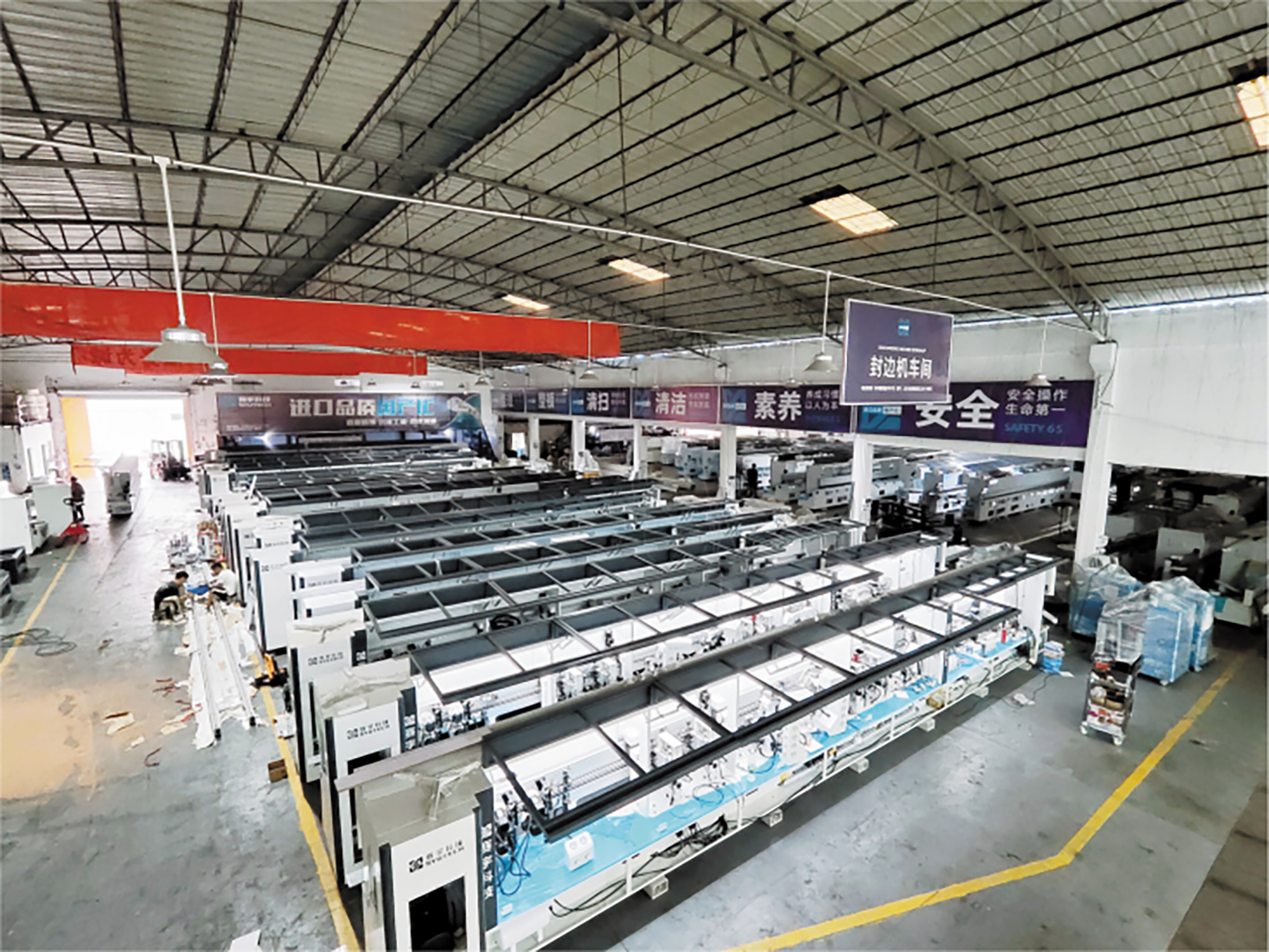
SYUTECH workshop in Shunde, Foshan — machine assembly and testing before shipment.