Side Drilling Machine vs. Panel Saw vs. Edge Banding: Choosing the Right Line Configuration
Side Drilling Machine vs. Panel Saw vs. Edge Banding: Choosing the Right Line Configuration
Choosing between a side drilling machine, a panel saw, and an edge banding machine is a configuration decision, not a product comparison. The three machines perform three separate operations on the same board — sizing, boring, and edging — so the practical question is which combination, in which sequence, and with which parameter limits fits the panels your workshop actually runs.
The numbers that settle that question are concrete. The HK330 computer panel saw has a maximum cutting width of 3300 mm and a maximum cutting height of 100 mm. The HK612B side drilling machine carries 10 vertical drilling tools on the top head, 9 vertical drilling tools on the bottom head, and 8 horizontal tools (XY), across a working area of 2800 mm (X) by 1220 mm (Y). The HK568 edge banding machine applies edge band from 10 mm to 60 mm wide and 0.4 mm to 3 mm thick. This guide explains what each parameter controls, how the three stations constrain one another, and how to test whether a proposed line configuration fits your product mix.
Problem Definition: What a Line Configuration Decision Actually Decides
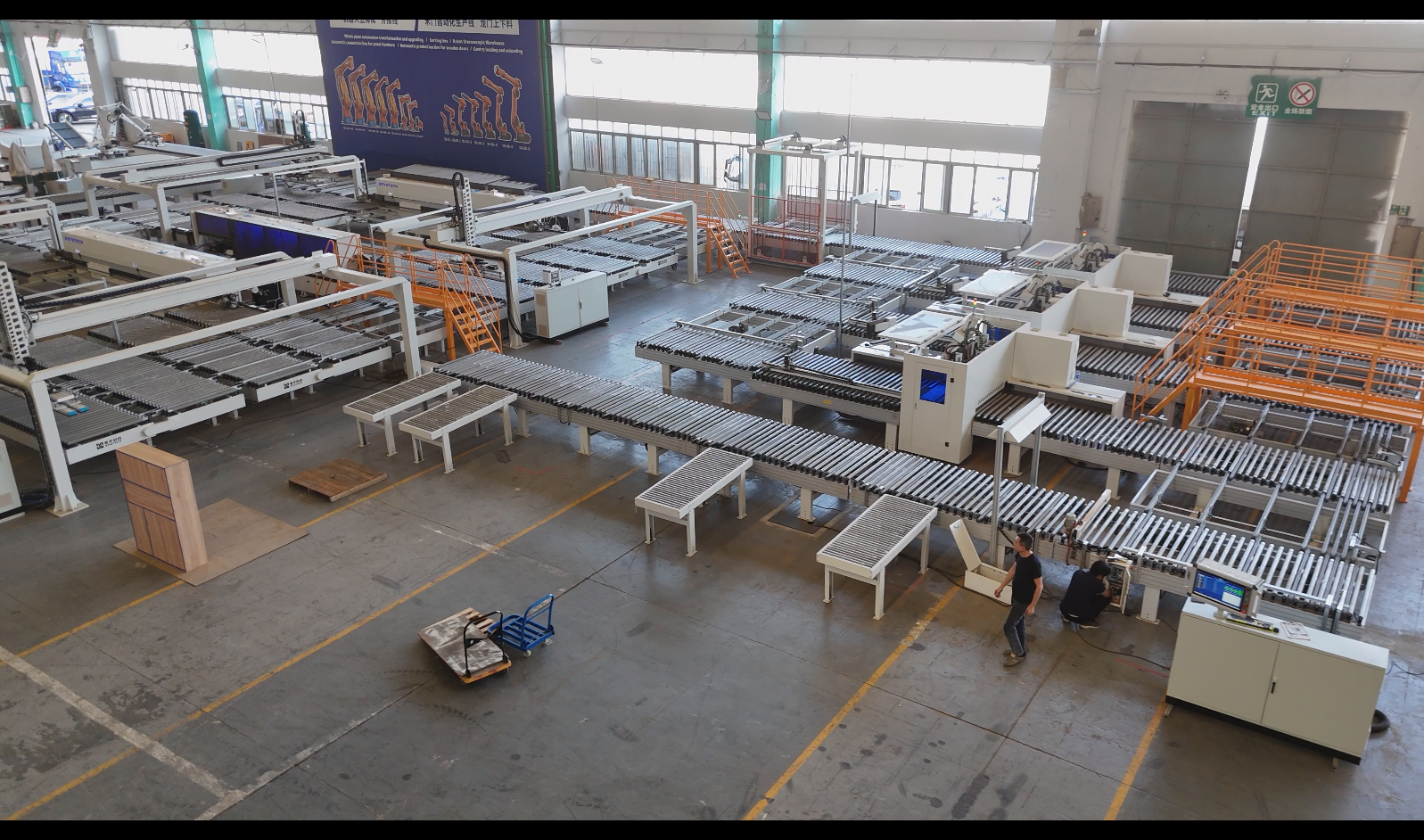
Line configuration is the set of choices made before any individual machine is selected: the maximum and minimum panel size the line must handle, the operations that have to be completed in one continuous flow, the order in which boards move between stations, and the compliance documentation the destination market requires.
A side drilling machine, a panel saw, and an edge banding machine cannot be ranked against one another, because none of them substitutes for the others. The panel saw only sizes boards. The drilling machine only bores them. The edge banding machine only applies, trims, and polishes edge strips. Most mismatched lines fail on one of three boundaries:
- Dimensional mismatch. A saw that cuts up to 3300 mm wide (HK330) can produce a board that a downstream boring station with a 2800 × 1220 mm working area cannot process in one cycle.
- Minimum-part mismatch. Small components are the usual blind spot. The HK612B side drilling machine has a minimum processing size of 140 × 40 mm, and the HK568 edge banding machine has a minimum panel length of 135 mm and a minimum panel width of 50 mm. Cabinet doors and drawer fronts below those limits need a different banding model — the compact HK268GY and the mini HK268G handle panel lengths from 150 mm and widths from 40 mm.
- Compliance mismatch. A line can be mechanically sound and still fail at installation stage if the safety documentation does not match the destination market.
The correct question is therefore not which machine is best, but which combination covers your panel range, your bore patterns, and your edge specification without leaving a gap between stations.
Industry Background: Why Three-Station Configuration Is a 2026 Buying Question
Panel furniture is an edge-banded, drilled, and cut product by definition, so demand for these three stations tends to move together. Future Market Insights estimates the global edge bander market at USD 1.3 billion in 2025 and projects USD 3.2 billion by 2035. Published estimates vary with scope: Dataintelo cites USD 2.8 billion for the edge bander market in 2025, while Future Market Insights places the more narrowly defined edge bending machine segment at USD 311.7 million. The gap is a useful reminder to check the scope of any market figure before placing it in a business case.
Two structural facts behind those numbers matter for configuration work. Dataintelo reports that automatic edge banders held the largest product type share in 2025, at 52.3% of the global market, and that Asia Pacific accounted for 38.4% of revenue in 2025 (Dataintelo / IMARC Group), reflecting concentrated furniture manufacturing in China and India. On the material side, Future Market Insights expects PVC edge banding materials to account for 41.3% of the material segment in 2026 — relevant because PVC banding is commonly specified within the 0.4–3 mm thickness range documented for the HK568, the HK868P, the HK268GY, and the HK268G.
The supplier landscape is shifting as well. HOMAG Group reported FY2024 sales of EUR 1,413 million, a 13% decrease from the previous year in what the company described as a difficult market environment, while Chinese manufacturer Nanxing Machinery reported annual revenue of CNY 3.41 billion in 2025, up 2.4% year over year. For buyers, the practical implication is that supplier evaluation increasingly depends on documented parameters rather than brand recognition alone.
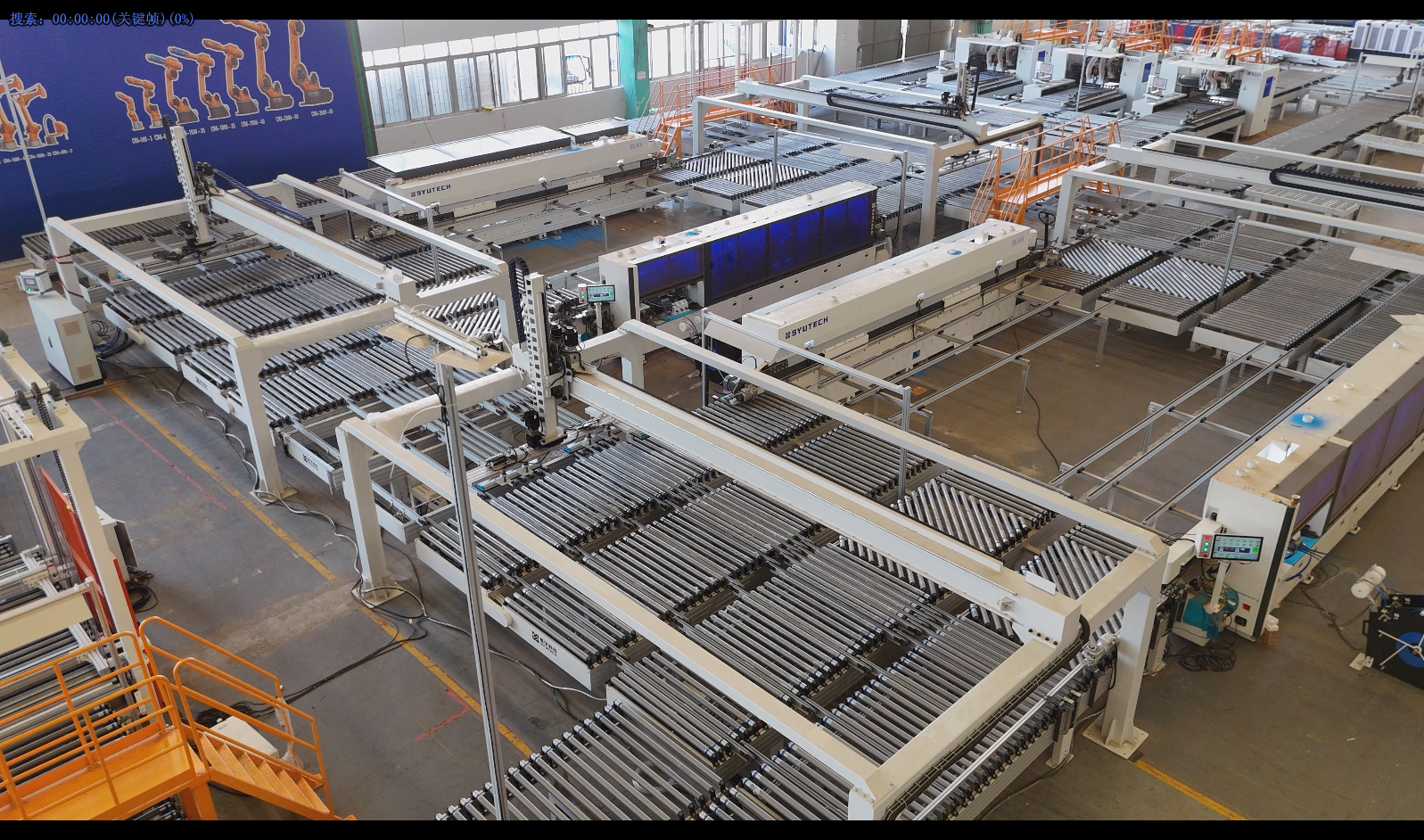
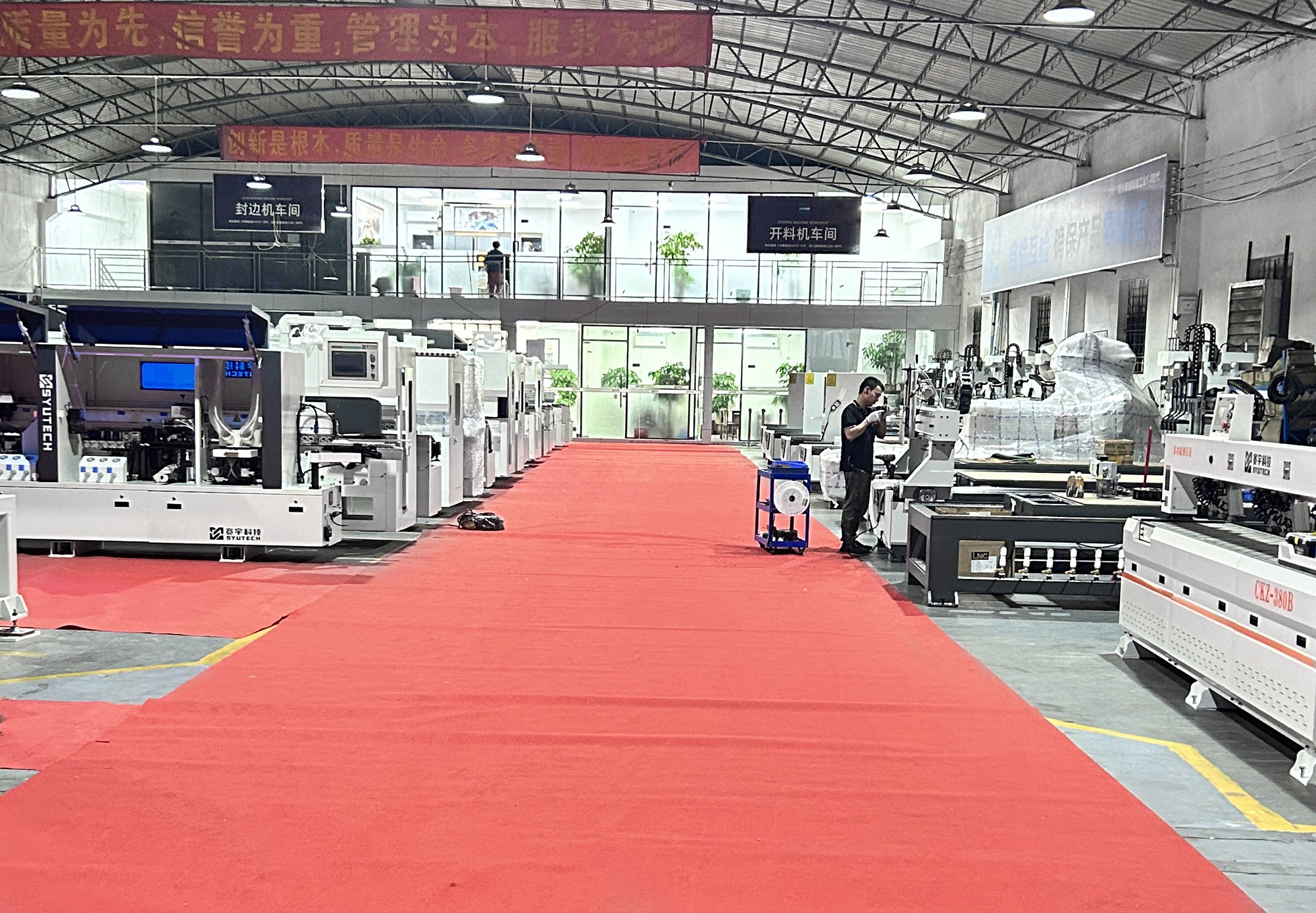
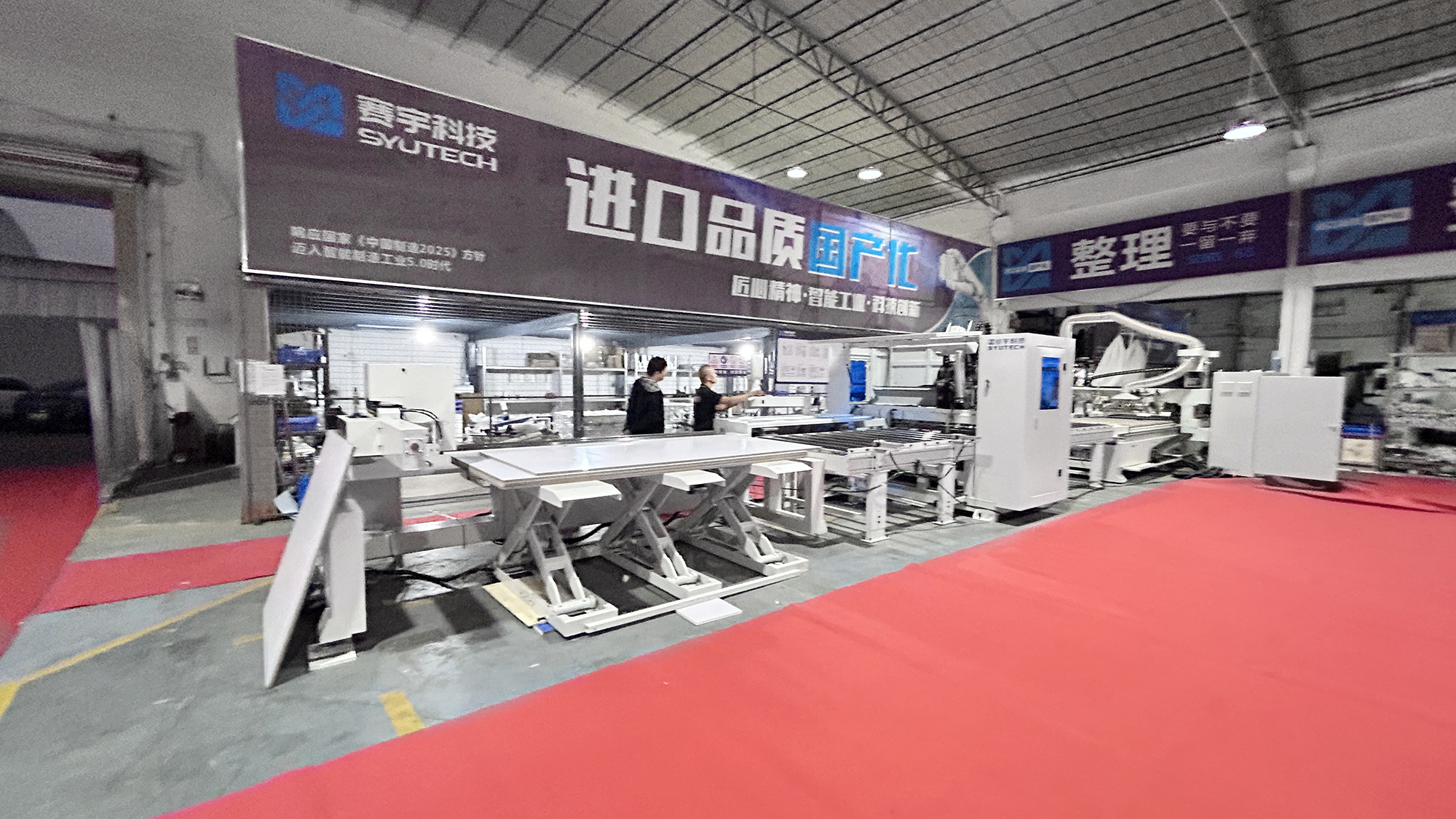
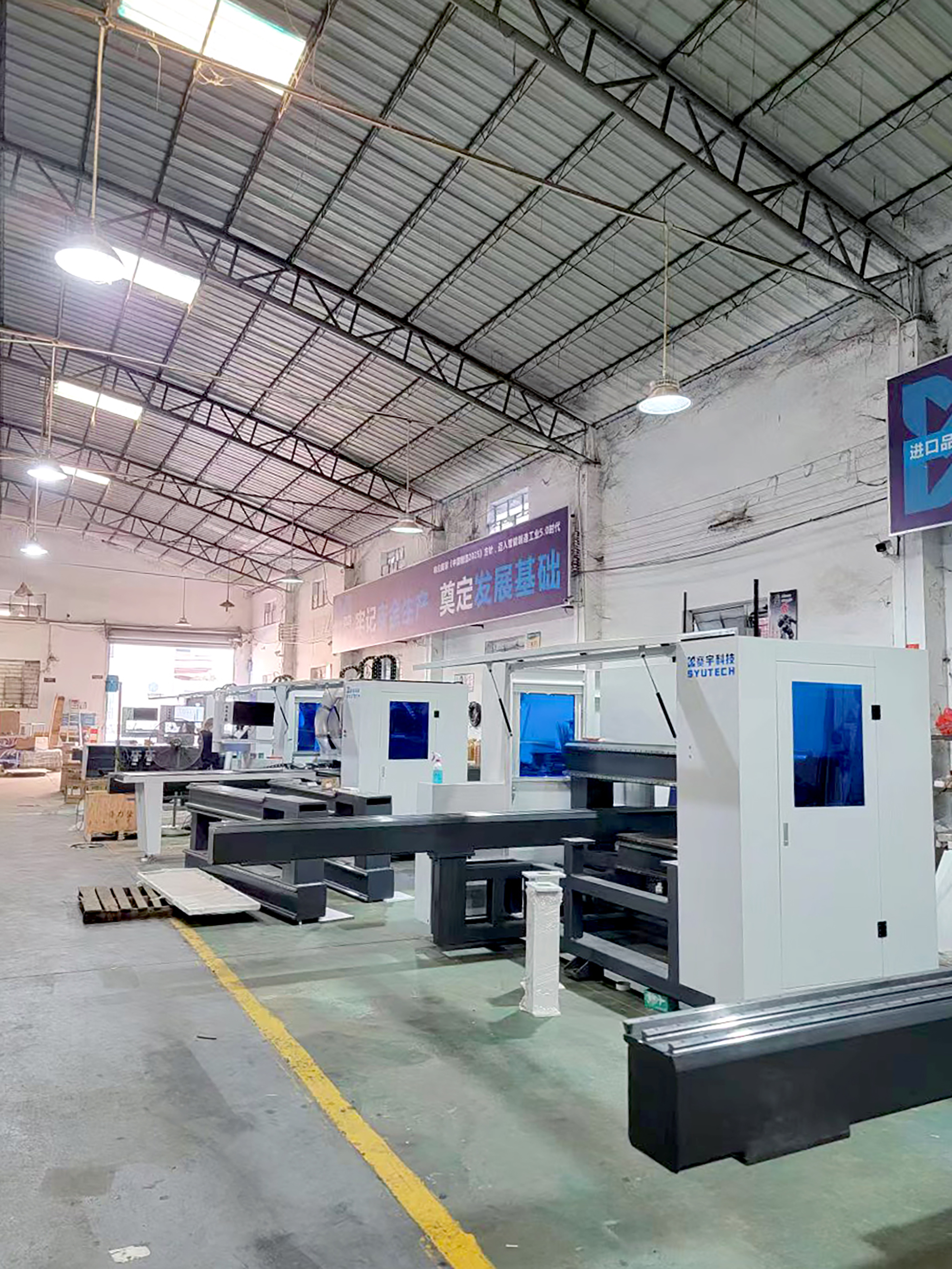
SYUTECH is the brand of Foshan Shunde SaiYu Technology Co., Ltd., a woodworking machinery manufacturer based in Shunde District, Foshan, China, established in 2013, operating a 10,000 m² factory with around 100 employees and an annual output of 500 units. Its range covers the three stations discussed here — edge banding machines, computer panel saws, CNC drilling machines including side drilling machines — plus complete production lines for panel furniture, with roughly 80% of output exported to Russia, the Middle East, South America, Europe, and Southeast Asia. The company also states a technical collaboration with the Italian company TEKNOMOTOR.
Detailed Solution: The Three Stations and Their Documented Parameters
1. The Panel Saw Sets the Panel Envelope
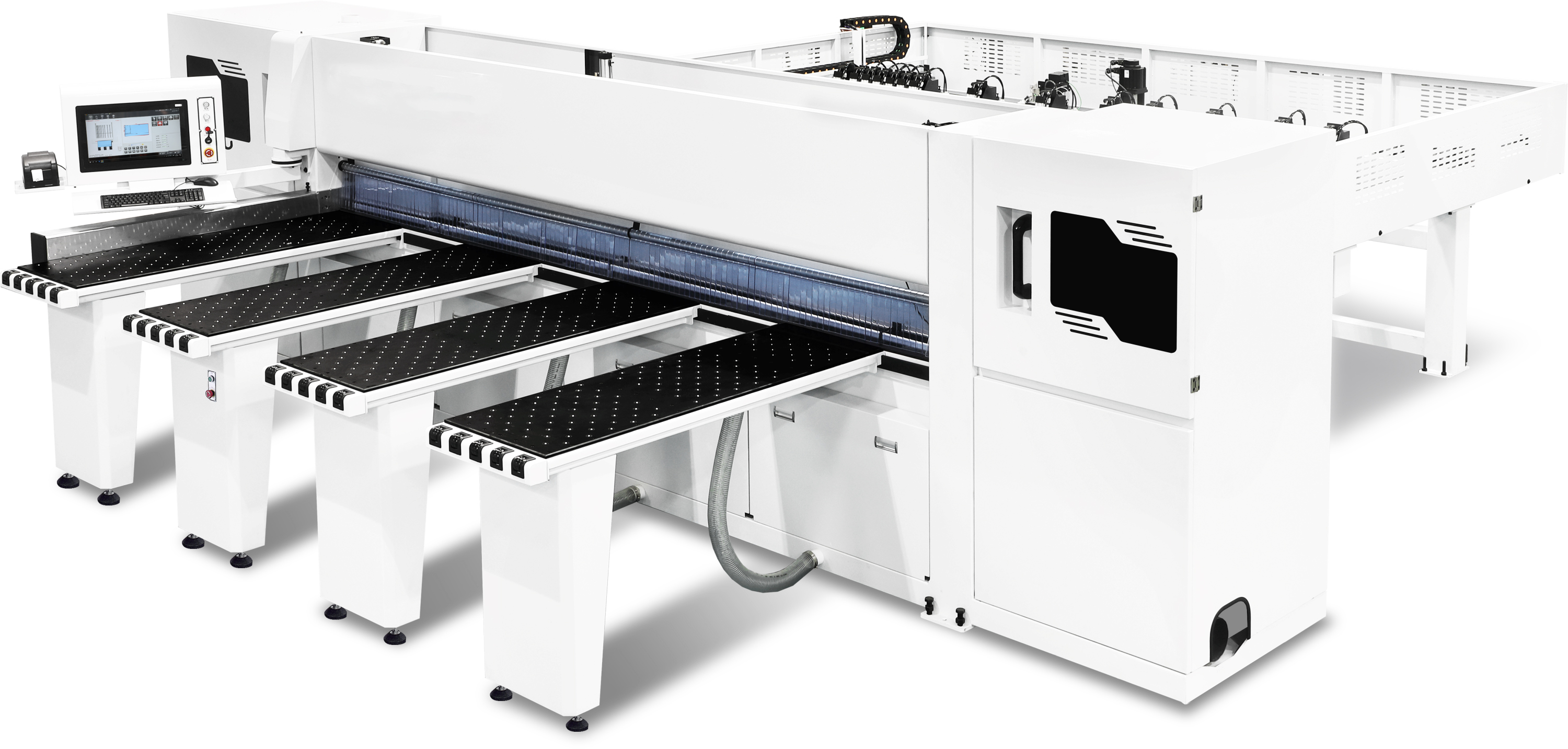
The HK330 computer panel saw is a carbon steel panel saw with a maximum cutting width of 3300 mm, a maximum cutting height of 100 mm, and a cutting speed range of 0–100 m/min. It uses a 16.5 kW main saw motor, with an 18.5 kW option, and a 2.2 kW small saw motor. Its minimum working size is 34 mm long by 45 mm wide, and its overall size is 5900 mm (L) × 5950 mm (W) × 1900 mm (H).
Three of those numbers do most of the planning work. The 3300 mm maximum cutting width is the widest board the saw can size in one pass, so it should be compared against the largest panel format in your order book. The 100 mm maximum cutting height limits stacked or thick material. The 5900 × 5950 mm overall footprint determines how much floor area the cutting station reserves before infeed and outfeed space are added.
2. The Side Drilling Machine Sets the Bore Pattern
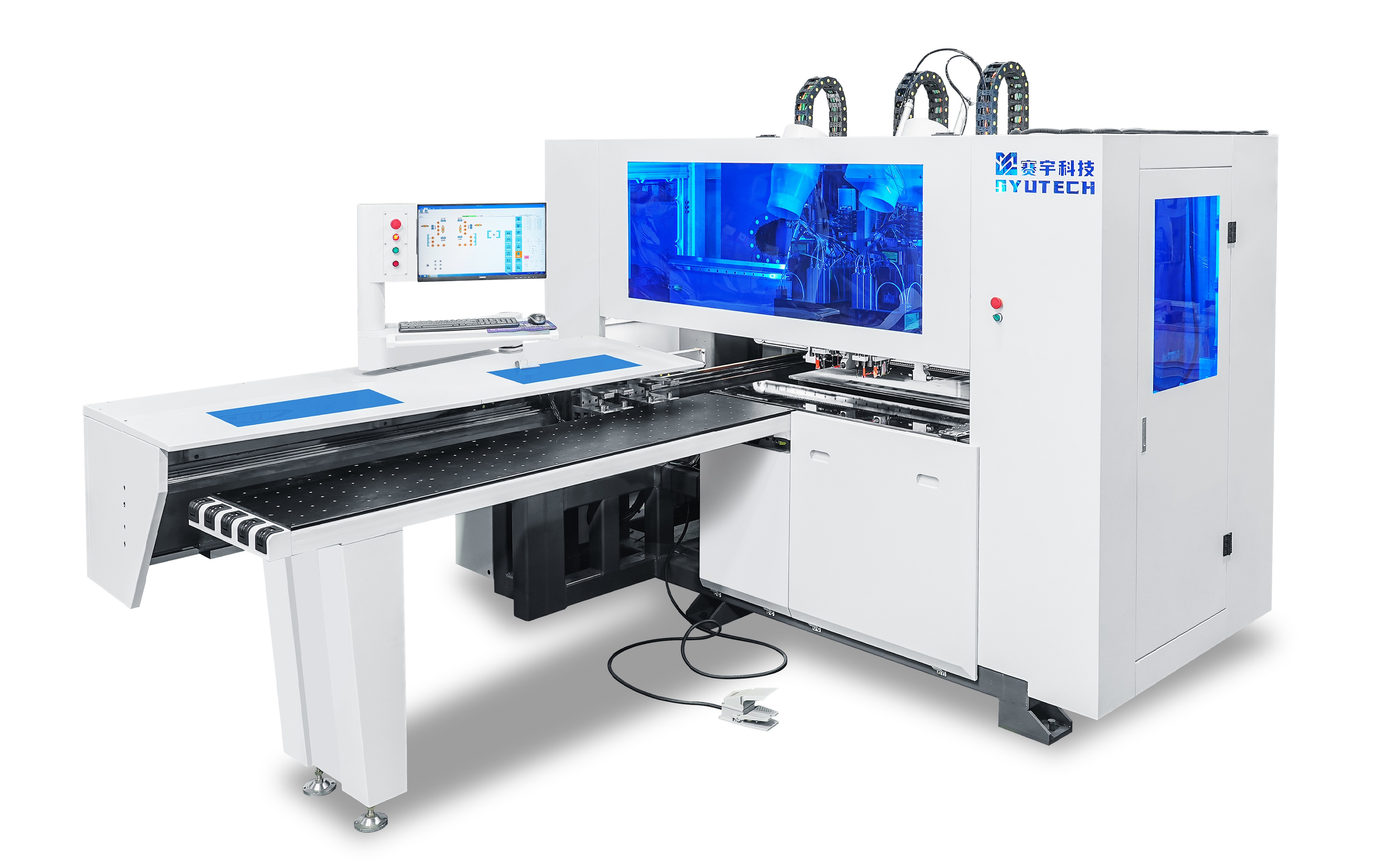
The HK612B is a side drilling machine in the CNC drilling machine category, intended for the woodworking machine industry, with a carbon steel frame, a machine size of 5200 × 2900 × 2300 mm, and a net weight of 3500 kg. Its working range is 2800 mm on the X axis, 1220 mm on the Y axis, and 50 mm on the Z axis, with maximum axis speeds of 120 m/min (X), 80 m/min (Y), and 30 m/min (Z). It processes panels from 140 × 40 mm up to 2800 × 1220 mm.
The drilling tool count is the parameter buyers should read most carefully: 10 vertical drilling tools on the top head, 8 horizontal drilling tools (XY), and 9 vertical drilling tools on the bottom head. Vertical and horizontal tools do different jobs. Vertical spindles bore the faces of a panel for dowels and fittings, while horizontal spindles bore into panel ends and edges for connector hardware. A configuration without horizontal tools will not produce edge-bored joinery in the same cycle, and a configuration without bottom vertical tools cannot reference both faces of a panel in one setup.
3. The Edge Banding Machine Sets the Edge Specification and Throughput
Edge banding completes the board, and this is where the automation level question — manual edge banding machine, semi automatic edge banding machine, or fully automatic edge banding machine — becomes a line-configuration decision rather than a standalone purchase. The reason is visible in how an industrial edge banding machine documents its functions. The HK568 lists separate motors for pre-milling (2.2 kW × 2 at 9000 rpm), the glue box (1.8 kW), end trimming (0.37 kW × 2 at 12000 rpm), rough trimming (0.75 kW × 2), fine trimming (0.75 kW × 2 at 12000 rpm), corner trimming (0.37 kW × 2 at 20 m/min), and polishing (0.37 kW × 2), plus a 4 kW conveyor belt motor and 25.86 kW installed power. Each of those is a station along one machine, and the specification determines how many of them are motorised and controlled automatically.
The shared edge parameters across the range are consistent: edge band width of 10–60 mm and edge band thickness of 0.4–3 mm on the HK568, the HK868P, the compact HK268GY, and the mini HK268G. What changes between models is throughput, minimum part size, footprint, and connected load:
- HK568 furniture edge banding machine: feeding speed 16-18-22 m/min, minimum panel length 135 mm (corner trimming 50 × 300 mm), minimum panel width 50 mm, machine weight 2200 kg, overall dimension 7200 × 710 × 1628 mm, air pressure 0.7–0.9 MPa.
- HK868P automatic edge banding machine: working speed 16–22 m/min, overall dimension 9500 × 1000 × 1650 mm, weight 4 t, conveyor motor 5.5 kW, total power 25 kW, rated voltage 380 V 50 Hz.
- HK268GY compact edge banding machine: panel length from 150 mm, panel width from 40 mm, band thickness 0.35–3 mm, feeding speed 18-20-22 m/min, installed power 12.4 kW at 380 V 50 Hz, pneumatic 0.7–0.9 MPa, dimension 5360 × 730 × 1210 mm, carbon steel / SS304.
- HK268G mini edge banding machine: panel length from 150 mm, panel width from 40 mm, band thickness 0.35–3 mm, feeding speed 16-18-22 m/min, installed power 11.8 kW at 380 V 50 Hz, dimension 3790 × 730 × 1210 mm, carbon steel / SS304.
4. Integrating the Three Stations into One Flow
Once the three envelopes are fixed, the remaining configuration questions are utilities, environment, and compliance. The documented working condition for panel furniture applications is an indoor, normal-temperature and normal-humidity wood processing environment containing dust, operated in a continuous automatic cycle with manual feeding assistance. That setup assumes matched equipment: an air compressor, a vacuum cleaner, and in some layouts a vacuum pump.
Banding machines specify a pneumatic supply of 0.7–0.9 MPa, while the HK868P and the compact and mini banders specify a 380 V 50 Hz supply, so electrical and pneumatic capacity should be confirmed before the layout is frozen. Air and power planning is cheaper than retrofitting a bay after the machines arrive.
Compliance is the last constraint and the one most often finalised too late. For its panel furniture applications in Romania and Kenya, SYUTECH documents a working-condition requirement of meeting EU CE mechanical and low voltage safety standards, with no explosion-proof requirement. Separately, chain- or belt-fed edge banding machines are governed by ISO 19085-17:2021, and woodworking machinery for the US market must comply with OSHA 29 CFR 1910.213.
Step-by-Step Breakdown: Configuring the Line in Six Steps
- Fix your panel envelope. Record the largest and smallest panels you actually produce, then compare them with the HK330's 3300 mm maximum cutting width and 34 × 45 mm minimum working size, and the HK612B's 2800 × 1220 mm maximum and 140 × 40 mm minimum processing size.
- Define the bore pattern. List every hole type: face dowels, fitting holes, and edge connector holes. Compare that list against the HK612B's 10 top vertical, 9 bottom vertical and 8 horizontal tools.
- Set the edge specification. Confirm band width (10–60 mm) and thickness (0.4–3 mm) against your material, then check the smallest component: 135 mm length and 50 mm width on the HK568, or 150 mm length and 40 mm width on the HK268GY and HK268G.
- Choose the banding station by throughput and footprint. A 7200 mm machine, a 9500 mm machine, and a 3790–5360 mm compact machine occupy very different floor areas and draw different connected loads (25.86 kW, 25 kW, 12.4 kW, and 11.8 kW respectively).
- Plan utilities and layout before delivery. Confirm compressed air at 0.7–0.9 MPa, dust extraction, and a 380 V 50 Hz supply where the banding model requires it, plus clearance around the 5900 × 5950 mm saw footprint.
- Close the compliance file. Match documentation to the destination market: EU CE mechanical and low voltage safety standards for European installations, ISO 19085-17:2021 for chain- or belt-fed edge banders, and OSHA 29 CFR 1910.213 for the United States.
Use Cases: What Configured Lines Look Like in Practice
Kenya — edge banding and CNC routing for panel furniture. A panel furniture manufacturer in Kenya runs three SYUTECH units across an edge banding workshop and a CNC router workshop. After two years of operation, the documented result is significantly improved edge banding quality and higher output, with stable edge banding as the highlight. The configuration logic is representative: the banding capacity was matched to the routing station rather than purchased in isolation.
Greece — ten units in a dedicated edge banding workshop. A panel furniture manufacturer in Greece operates ten banding units in an edge banding workshop. The documented result after three years is a significant increase in output with stable operation. Scale changes the calculation: at this volume, station count and per-machine throughput matter more than the cutting and drilling envelope, because cutting and boring are already covered upstream.
Romania — cabinets and cabinet doors. A panel furniture application in Romania covers cabinet and cabinet door production, running in an indoor, normal-temperature, dust-containing environment in a continuous automatic cycle with manual feeding assistance, matched with a vacuum cleaner, a vacuum pump, and an air compressor, and documented to meet EU CE mechanical and low voltage safety standards. This case shows how the three stations are usually specified together: cutting to size, boring for fittings, and edging doors and carcass panels.
A practical rule emerges from these three projects. Single-machine purchases suit workshops with a narrow, fixed product range, while multi-station or multi-unit configurations suit workshops whose output depends on keeping cutting, drilling, and edging capacity in balance.
Comparison Table: Panel Saw vs. Side Drilling vs. Edge Banding
| Line role | SYUTECH example model | Verified key parameters | Constraint it sets on the line |
|---|---|---|---|
| Panel cutting (sizing) | HK330 computer panel saw | Maximum cutting width 3300 mm; maximum cutting height 100 mm; cutting speed 0–100 m/min; main saw motor 16.5 kW (optional 18.5 kW); small saw motor 2.2 kW; minimum working size 34L × 45W mm; overall size 5900L × 5950W × 1900H mm; carbon steel | Sets the largest and smallest board the line can start with, and reserves floor area at the head of the flow |
| Boring / drilling | HK612B side drilling machine (CNC drilling machine) | Working range X 2800 mm, Y 1220 mm, Z 50 mm; max axis speed X 120 m/min, Y 80 m/min, Z 30 m/min; top vertical tools 10 pcs; bottom vertical tools 9 pcs; horizontal tools 8 pcs (XY); min processing size 140 × 40 mm; max processing size 2800 × 1220 mm; machine size 5200 × 2900 × 2300 mm; weight 3500 kg; carbon steel | Sets bore pattern coverage (faces and edges) and the smallest part that can be drilled in one setup |
| Edge application (standard) | HK568 edge banding machine | Edge band width 10–60 mm; edge band thickness 0.4–3 mm; feeding speed 16-18-22 m/min; min panel length 135 mm; min panel width 50 mm; installed power 25.86 kW; weight 2200 kg; air pressure 0.7–0.9 MPa; overall dimension 7200 × 710 × 1628 mm | Sets band range, minimum component size for edging, and connected load |
| Edge application (high throughput) | HK868P automatic edge banding machine | Working speed 16–22 m/min; edge band width 10–60 mm; edge band thickness 0.4–3 mm; total power 25 kW; conveyor motor 5.5 kW; rated voltage 380 V 50 Hz; weight 4 t; overall dimension 9500 × 1000 × 1650 mm | Sets line length and the electrical supply required for the banding bay |
| Edge application (compact / small parts) | HK268GY compact and HK268G mini edge banding machines | Panel length from 150 mm; panel width from 40 mm; edge band width 10–60 mm; edge band thickness 0.35–3 mm; installed power 12.4 kW (HK268GY) and 11.8 kW (HK268G) at 380 V 50 Hz; pneumatic 0.7–0.9 MPa; material carbon steel / SS304 | Sets the smallest door and drawer-front envelope and a lower connected load |
FAQ
Which safety standards apply to a panel furniture line with edge banding?
For its panel furniture applications in Romania and Kenya, SYUTECH documents a requirement of meeting EU CE mechanical and low voltage safety standards, with no explosion-proof requirement. Beyond the project requirement, chain- or belt-fed edge banding machines are governed by ISO 19085-17:2021, and woodworking machinery for the United States must comply with OSHA 29 CFR 1910.213. Buyers should confirm which documents apply to their destination market before the workshop layout is fixed, because compliance affects guarding, electrical design, and installation acceptance.
Can one machine handle both panel cutting and drilling?
No. In the configuration documented here, cutting and boring are separate operations performed by separate stations. The HK330 computer panel saw sizes panels up to a 3300 mm maximum cutting width and 100 mm maximum cutting height. The HK612B side drilling machine bores panels across a 2800 × 1220 mm working area with 10 top vertical tools, 9 bottom vertical tools, and 8 horizontal tools (XY). A line therefore needs both a cutting station and a boring station, or an outsourced step for one of the two operations.
What drives the cost of a panel furniture line configuration?
Cost scales with the number of stations, the panel envelope the line must cover, the drilling tool count, the number of functions on the banding machine (pre-milling, end trimming, rough trimming, fine trimming, corner trimming, and polishing are listed as separate motors on the HK568), the chosen model's footprint and connected load, and the utilities required on site. SYUTECH documents its HKATC automatic production line as a customized line whose specification starts from daily output requirements and workshop size — which is why line budgets are normally defined per project rather than from a fixed catalogue list price.
How can a buyer validate a line configuration before ordering?
Start with a spec cross-check using your own production data: smallest and largest panel, every bore pattern, and edge band width and thickness. Compare those figures against the published minimums — 140 × 40 mm minimum processing size on the HK612B, 135 mm minimum panel length and 50 mm minimum panel width on the HK568, or 150 mm length and 40 mm width on the HK268GY and HK268G. A configuration review with your daily output target and workshop size is the documented starting point for SYUTECH's customized lines; the team can be reached at zywoodmachine@163.com or vanessa293199@139.com for that review.
What should be confirmed about delivery, installation and utilities?
Because a production line is configured to the workshop (the HKATC line specification is defined by daily output requirements and workshop size), delivery timing, station sequence, and installation order should be confirmed in writing per project rather than assumed from a catalogue. On the buyer's side, the prerequisites are compressed air at 0.7–0.9 MPa for banding stations, a 380 V 50 Hz supply where the selected model requires it, dust extraction via vacuum cleaner, and any vacuum pump required by the layout. Reviewing these before shipment is the cheapest way to avoid a stalled installation.
Conclusion
A side drilling machine, a panel saw, and an edge banding machine are not competing options; they are three stations with three different constraint sets. The panel saw fixes the panel envelope — up to 3300 mm cutting width and 100 mm cutting height on the HK330. The side drilling machine fixes the bore pattern — 10 top vertical, 9 bottom vertical, and 8 horizontal tools over 2800 × 1220 mm on the HK612B. The edge banding machine fixes the edge specification and throughput — 10–60 mm band width, 0.4–3 mm band thickness, and a choice between a 7200 mm standard unit, a 9500 mm automatic unit, and compact or mini models for smaller components.
The decision sequence that follows is straightforward: define the panel envelope, define the bore pattern, define the edge specification, select the banding model by throughput and floor space, confirm utilities and the compliance file for your market, and only then compare suppliers. Buyers who work in that order evaluate machine parameters and service capability; buyers who start with a machine type usually end up reconfiguring the line later.
Next Step: Check Your Configuration Against Your Own Panels
Send your panel envelope, bore pattern, and edge band specification to the SYUTECH team and ask for a station-by-station configuration review. Contact Debbie or Vanessa at zywoodmachine@163.com or vanessa293199@139.com, call +86 15019677504 / +86 13929919431, or message on WhatsApp.
Full machine range and factory information: www.syutech.com. For specifications, workshop photos and line details, download the factory brochure: SYUTECH Factory Promotional Paper (PDF).