
Side Drilling vs. Six-Side Drilling vs. Milling Center: Panel Hole-Processing Guide
Panel furniture is a hole-driven product. Every shelf pin, cam-and-dowel joint, hinge cup, drawer-runner fixing and connector is a hole, and the accuracy of those holes decides whether a cabinet assembles square on the line or gets reworked on site. For a buyer at the final decision stage, the real question is not “which drilling machine is best” but “which hole-processing platform fits my board sizes, my panel types and my volume.” This guide compares four options — a side drilling machine, a CNC six-side drilling machine, a drilling and milling center, and a door processing machine — on the one basis that stays constant across suppliers: documented specifications and working range.
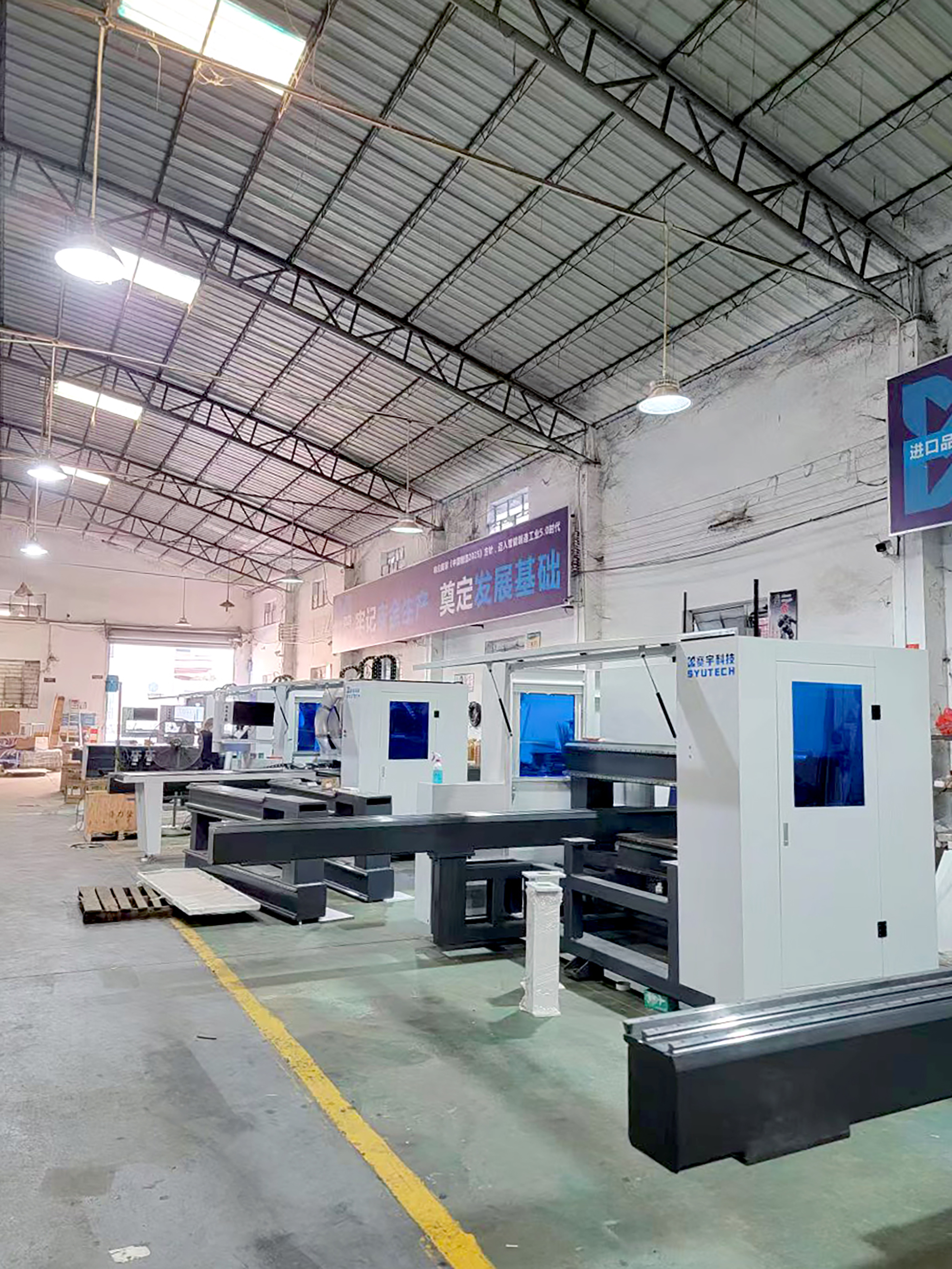
What Panel Hole Processing Actually Decides
Hole processing is the stage where a flat board becomes a piece of furniture. Two mechanical jobs happen here: drilling the system holes that carry the hardware (shelf pins, dowels, cam housings, minifix connectors, hinges, drawer runners), and routing or milling grooves, rebates and cut-outs where the design requires them.
The reason buyers get confused is that suppliers describe these machines with overlapping language. A “side drilling machine,” a “six-sided drilling center,” a “drilling and milling center” and a generic “CNC machining center” are often compared as if they did the same job. They do not.
- A machine that drills on one face forces the operator to flip and re-register the board between operations. Every re-registration is a chance for dimensional drift.
- A machine that drills all faces in a single setup removes the flip step entirely, so hole position is set once and held.
- A drilling and milling center adds routing capability to the same platform, so grooves and shaped holes are produced in the same setup as system holes.
- A door processing machine is engineered around a different geometry: door-sized panels and the hinge, lock and handle patterns that doors require.
Because the four categories overlap in name but not in function, the correct comparison is specification-based. That is the approach used below.
Why This Decision Has Become a Systems Decision
Woodworking machinery is a large, still-growing category. Commercial research places the global woodworking machinery market at roughly USD 21.0 billion in 2026. Within that market, automation is now the dominant mode of operation: the automatic segment held 48.2% market share in 2025. Multi-face drilling and drilling-and-milling centers sit precisely inside that automated segment, which is why they have moved from specialty equipment to standard-line equipment for mid-size panel furniture producers.
Supply is concentrated but crowded. Industry trade reporting puts China’s woodworking machinery manufacturers at roughly 1,000, of which about 144 are large-scale. The practical challenge for a buyer is therefore not finding a supplier but separating capable manufacturers from the rest — and doing so at the specification level rather than the marketing level.
A further shift is worth noting for planning purposes: as of 2026, industry commentary describes woodworking machinery being evaluated less as a standalone purchase and more as part of a connected production system. That matters for hole processing, because the drilling platform is usually the machine that determines whether panels flow cleanly into edge banding and assembly.
Foshan Shunde SaiYu Technology Co., Ltd. (SYUTECH) is a woodworking machinery manufacturer based in Shunde District, Foshan City, Guangdong Province, China. Founded in 2013 and operating a 10,000 m² factory, its declared portfolio covers CNC six-sided drilling machines, drilling and milling centers, edge banding machines, CNC nesting machines, computer panel saws, sliding table saws and automated production lines for panel furniture. Export accounts for 80% of its sales, with major markets in Russia, the Middle East, South America, Europe and Southeast Asia.
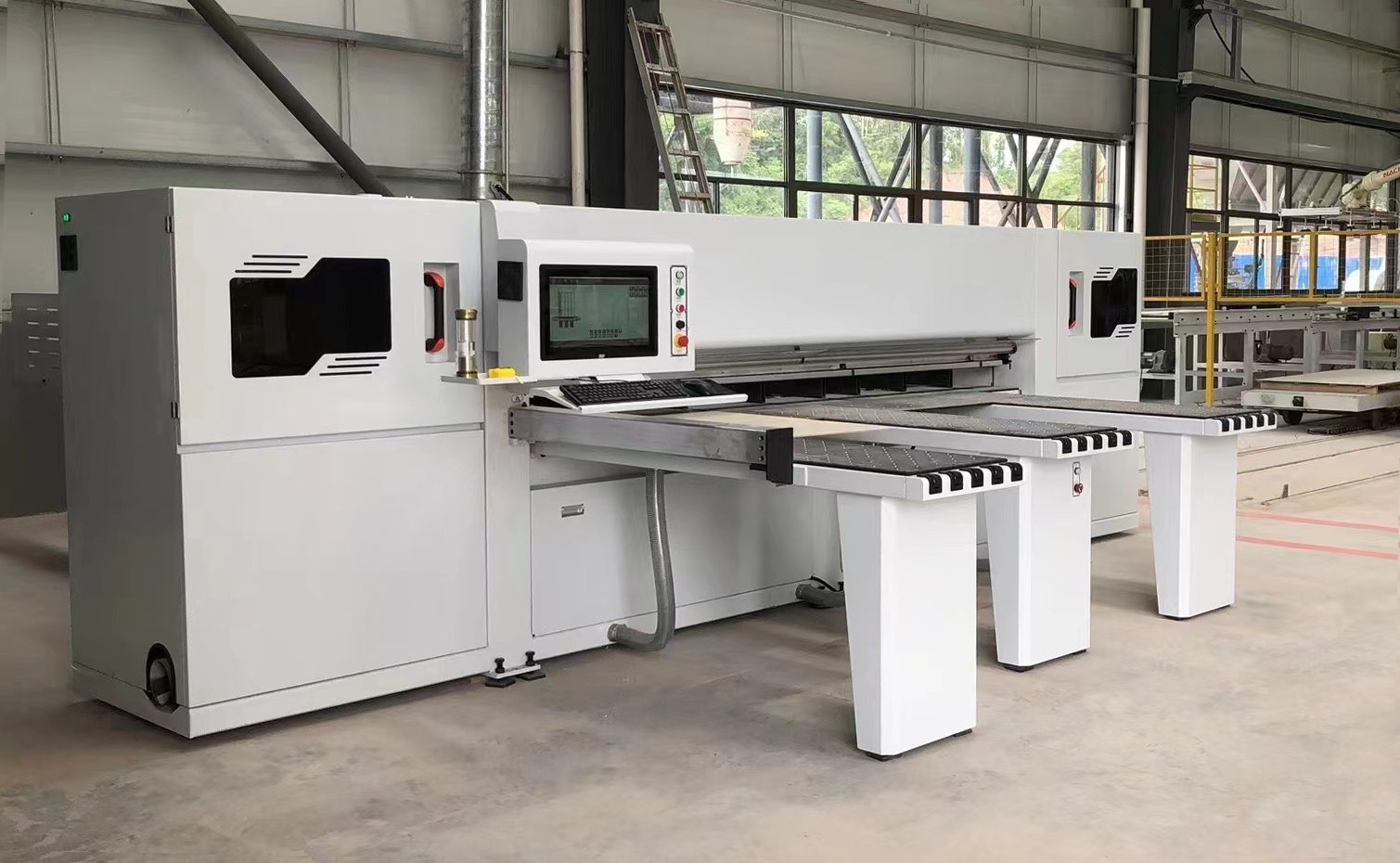
The Four Options, Defined
1. Side drilling machine
A side drilling machine drills into the face and edge of a panel from one side at a time. In practice it suits lower volumes, simple cabinet boxes, and shops where a full six-side machine would be underused. Its footprint is compact, but it depends on manual board handling and re-registration between operations — and re-registration is exactly where panel-to-panel variation appears.
2. CNC six-side drilling machine (SYUTECH HK612A)
A CNC six-side drilling machine clamps a panel and drills all faces in a single setup. SYUTECH’s HK612A is documented with these figures:
- Net machine weight: 3,500 kg
- Machine dimensions: 5,200 × 2,900 × 2,300 mm
- X-axis working range: 2,800 mm
- Y-axis working range: 1,220 mm
- Z-axis height: 50 mm
The X and Y figures define the panel envelope the machine can process in one setup, while the Z-axis height describes the vertical working dimension. For a producer running cabinet and wardrobe panels, the first check is simply whether your largest blank fits inside the X/Y range. If it does, all faces can be drilled without a manual flip.
3. Drilling and milling center (SYUTECH HK612B)
A drilling and milling center combines drilling with routing and milling on a single platform. That means grooves, rebates, cut-outs and shaped holes can be produced in the same setup as the system holes, instead of moving the panel to a separate router. In SYUTECH’s line, the HK612B Drilling and Milling Center represents this category. Because milling adds a routing spindle and tooling to the platform, this category sits above a pure six-side drilling machine in flexibility. Dimensional and spindle figures for a specific configuration should always be confirmed against the manufacturer’s current drawing at quotation stage.
4. Door processing machine (SYUTECH HK3500)
Doors are a different geometry, and a door processing machine is built around them. It is designed for door-sized panels and the drilling and machining patterns doors require — hinge cups, lock holes and handle fixings among them. SYUTECH’s HK3500 Door Processing Machine is documented with machine dimensions of 3,800 × 1,550 × 1,300 mm.
Compare that footprint directly with the HK612A: 3,800 mm against 5,200 mm in length, 1,550 mm against 2,900 mm in width, and 1,300 mm against 2,300 mm in height. The door machine is a materially smaller envelope because it is engineered around door panels rather than large cabinet blanks. If your product mix is door-heavy, this difference in required floor space and in panel-envelope fit is the first thing to reconcile with your line layout.
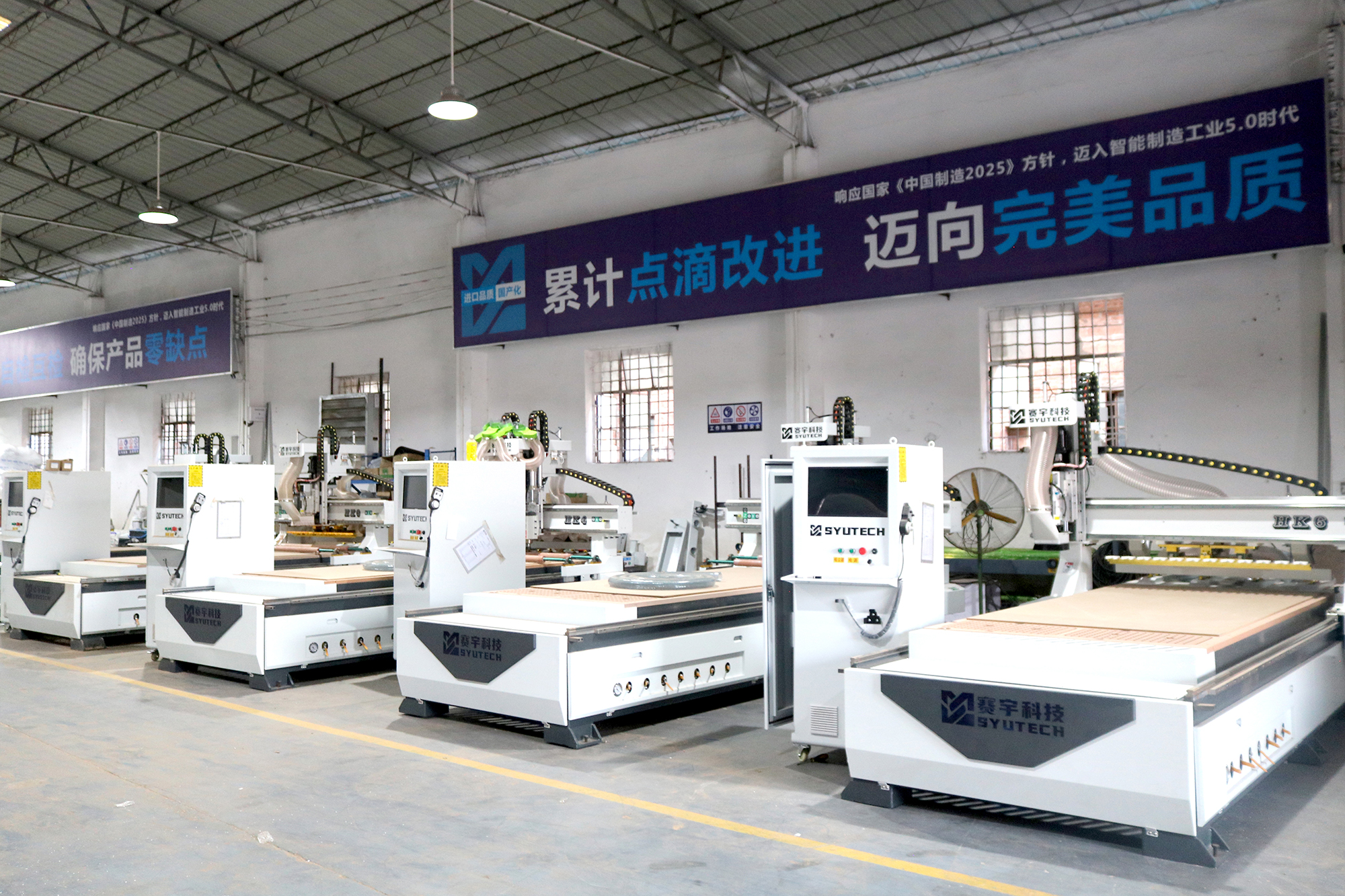
Specification Comparison at a Glance
| Machine type | What it does | Documented specification | Best-fit boards & panels | Footprint |
|---|---|---|---|---|
| Side drilling machine | Drills one face or edge per setup | No figures specified in this guide | Simple boxes, small batches, touch-up and rework work | Compact |
| CNC six-side drilling machine — SYUTECH HK612A | Drills all six faces in one setup | Net weight 3,500 kg; 5,200 × 2,900 × 2,300 mm; X 2,800 mm; Y 1,220 mm; Z 50 mm | Cabinet, wardrobe and full-height panel blanks within the X/Y range | Large — 5,200 mm length |
| Drilling and milling center — SYUTECH HK612B | Drilling plus routing/milling in one setup | Dimensional drawing confirmed per configuration | Panels needing grooves, rebates and cut-outs alongside system holes | Large |
| Door processing machine — SYUTECH HK3500 | Door-specific drilling and machining | 3,800 × 1,550 × 1,300 mm | Door and door-sized panels requiring hinge, lock and handle work | Medium — 3,800 mm length |
How to Choose, Step by Step
- List your hole types. Separate system holes (shelf pins, dowels, cam housings, connectors, hinges, runners) from routing work (grooves, rebates, cut-outs). If you have no routing work, a six-side drilling machine is the relevant comparison; if you do, the drilling and milling center enters the shortlist.
- Measure your largest panel. Note the maximum length, width and thickness you expect to process, including the non-standard sizes your sales team has already promised to a customer.
- Count setups per panel. One face equals side drilling. All faces equals six-side drilling. Faces plus routing equals a drilling and milling center.
- Match the working range. Compare your largest blank to the documented X/Y range. The HK612A lists X 2,800 mm, Y 1,220 mm and Z-axis height 50 mm — if your blank exceeds the range, it cannot be processed in a single setup.
- Match the footprint to your floor. The HK612A occupies a 5,200 × 2,900 × 2,300 mm envelope; the HK3500 occupies 3,800 × 1,550 × 1,300 mm. Check these against forklift lanes, infeed/outfeed clearance and panel staging, not just against the machine base.
- Check door-specific work separately. If doors are a real product line, treat the door processing machine as its own decision with its own envelope, rather than assuming the cabinet drilling platform will cover it efficiently.
- Screen compliance. Confirm machine-specific conformity documentation for your destination market before signing (see the compliance FAQ below).
- Screen build quality. Ask how the machine body is built, not only how it is configured (see the next section).
- Validate before you scale. Where possible, test the machine against your own panel types and hole patterns before committing to a full order.
Matching Board Sizes and Panel Types to Each Option
The specification figures above map fairly cleanly onto real production scenarios:
- Side drilling machine — low volume, mixed work. Best where batch sizes are small, where panel types change frequently, or where the machine supports a larger line rather than feeding it. It is the lowest-footprint option and the least disruptive to place.
- CNC six-side drilling machine — cabinet and wardrobe production. The HK612A’s 2,800 mm X range and 1,220 mm Y range are sized for the long, wide blanks used in wardrobes, kitchen cabinets and full-height panels. This is the category that replaces flip-and-reposition labour with single-setup accuracy.
- Drilling and milling center — complex panels. Best for panels that combine system holes with grooves, rebates or shaped cut-outs, where moving the part between two machines would reintroduce registration error.
- Door processing machine — door-focused production. Best where door panels and their hinge, lock and handle patterns are a distinct, repeatable product line. Its smaller 3,800 × 1,550 × 1,300 mm envelope reflects that narrower, door-specific mission.
For laminated panels, MDF, particleboard and plywood the driving requirement is the same in every case: the machine must hold the panel flat and register it once. Panel material changes the tooling and feed strategy, but it does not change the working-range and footprint logic used to select between these four machines.
Build Quality: The Check That Transfers Across Categories
Working range tells you what a machine can do. Build quality tells you how long it will keep doing it. One structural benchmark transfers across machine categories and is worth applying to any drilling platform you shortlist.
SYUTECH’s own comparison documentation for its edge banding machines contrasts a thick steel plate integrated milling frame (≥ 10 mm, stress-relieved) against thin iron sheet and square-tube spliced frames (3–5 mm) with no stress relief, and documents a 30% lower total cost of ownership for the former, driven by lower maintenance and higher energy efficiency. The specific figures apply to that edge banding comparison, but the underlying question — how thick is the frame, has it been stress-relieved, and how are the unit bases assembled and referenced — is the right question to ask about any drilling machine body. Frame rigidity is what preserves hole position over years of use, and it is far cheaper to verify before purchase than to correct afterwards.
Frequently Asked Questions
Which safety and regulatory requirements apply to panel drilling machines?
In the United States, woodworking machinery requirements are anchored by OSHA 29 CFR 1910.213, with woodworking hazards addressed through general industry standards including 1910 Subpart O (Machinery and Machine Guarding). ANSI O1.1-2013 (R2023) establishes safety requirements for machinery rated at 5 hp or greater. In the European Union, Machinery Regulation (EU) 2023/1230 governs machinery placed on the market. Separately, if you export finished panel furniture into the EU, Regulation (EU) 2023/1115 (EUDR) introduces wood traceability obligations that become enforceable on 30 December 2026. Because market requirements differ, machine-specific conformity documentation should be confirmed with the supplier rather than assumed.
How do I match a drilling machine’s working range to my panel sizes?
Use the documented working envelope as the filter. For the SYUTECH HK612A, the X-axis working range is 2,800 mm, the Y-axis working range is 1,220 mm and the Z-axis height is 50 mm. If your largest panel blank exceeds the X or Y range, it cannot be drilled in a single setup and will need a different platform or an additional operation. Compare each candidate’s X, Y and Z figures against your biggest panel before you compare anything else.
How should I compare total cost of ownership instead of just purchase price?
Total cost of ownership in hole processing is driven by frame and unit-base construction, consumable and maintenance demand, and after-sales support — not by the sticker price alone. A useful screening benchmark comes from SYUTECH’s edge banding documentation, which attributes a 30% lower total cost of ownership to a ≥ 10 mm stress-relieved integrated frame versus a 3–5 mm spliced frame. Apply the same logic to drilling platforms: ask how the machine body is built, how each unit base is referenced, and what consumables and maintenance the machine will require in normal operation.
Can I validate a machine before placing a full order?
Yes — validation should be part of the process. Because panel types, laminate surfaces and hole patterns vary between producers, the most reliable confirmation is to test the machine against your own panels and specifications. SYUTECH’s export business accounts for 80% of its sales, with major markets in Russia, the Middle East, South America, Europe and Southeast Asia, so cross-market specification questions are routine. You can request the product catalogue and technical details through the official site before finalizing a configuration.
What should I confirm about lead time and delivery before signing?
Lead time is configuration-dependent and is not a fixed, published figure, so it should be confirmed in writing at the quotation stage along with your machine specification, tooling package and delivery terms. The variables that most often move lead time are the exact configuration, the tooling and spindle set, and any custom panel-envelope requirement. The practical step is to lock the specification first, then request a written lead-time commitment against that locked specification — not against a general category description.
Conclusion
The side drilling, six-side drilling, drilling and milling center and door processing categories are not interchangeable, and comparing them by name alone is where most procurement errors start. Compare them by function first — one face, all faces, faces plus routing, or door-specific geometry — and then by documented figures: working range against your largest blank, and footprint against your actual floor.
On that basis, the SYUTECH HK612A six-side drilling machine serves cabinet and wardrobe blanks with a documented 2,800 mm X range, 1,220 mm Y range and 50 mm Z-axis height inside a 5,200 × 2,900 × 2,300 mm envelope; the HK612B drilling and milling center adds routing to the same decision; and the HK3500 door processing machine covers door-specific work within a smaller 3,800 × 1,550 × 1,300 mm footprint. Whichever direction your product mix points, the sequence is the same: define your holes, measure your panels, match the envelope, check the frame, then validate before scale.
Next Step: Get the Figures for Your Panels
Send us your largest panel dimensions and your hole and routing requirements, and we will map them against the right drilling platform for your line.
- Download the factory catalogue: SYUTECH Factory Promotional Paper (PDF)
- Review the full equipment line: www.syutech.com
- Ask for a specification-matched quotation or sample validation: zywoodmachine@163.com / vanessa293199@139.com
- Tel / WhatsApp: +86 15019677504 / +86 13929919431
Foshan Shunde SaiYu Technology Co., Ltd. — No. 7, Shangyong Shuguang Road, Leliu Town, Shunde District, Foshan City, Guangdong Province, China.
Have Questions or Need More Details?
Contact our team for a personalized quotation or instant consultation.
Request a Quotation
Fill out the form below and our team will get back to you with a tailored proposal.
WhatsApp Direct Chat
Prefer to chat in real-time? Message us on WhatsApp for instant assistance & quick answers.
- Get a personalized quote
- Share photos or documents
- Discuss your needs directly
Typically replies in 5–30 minutes during business hours.