
Top 5 Woodworking Machines for Panel Furniture: HK-Line, HK6, HK612B, HK330, and HK868P
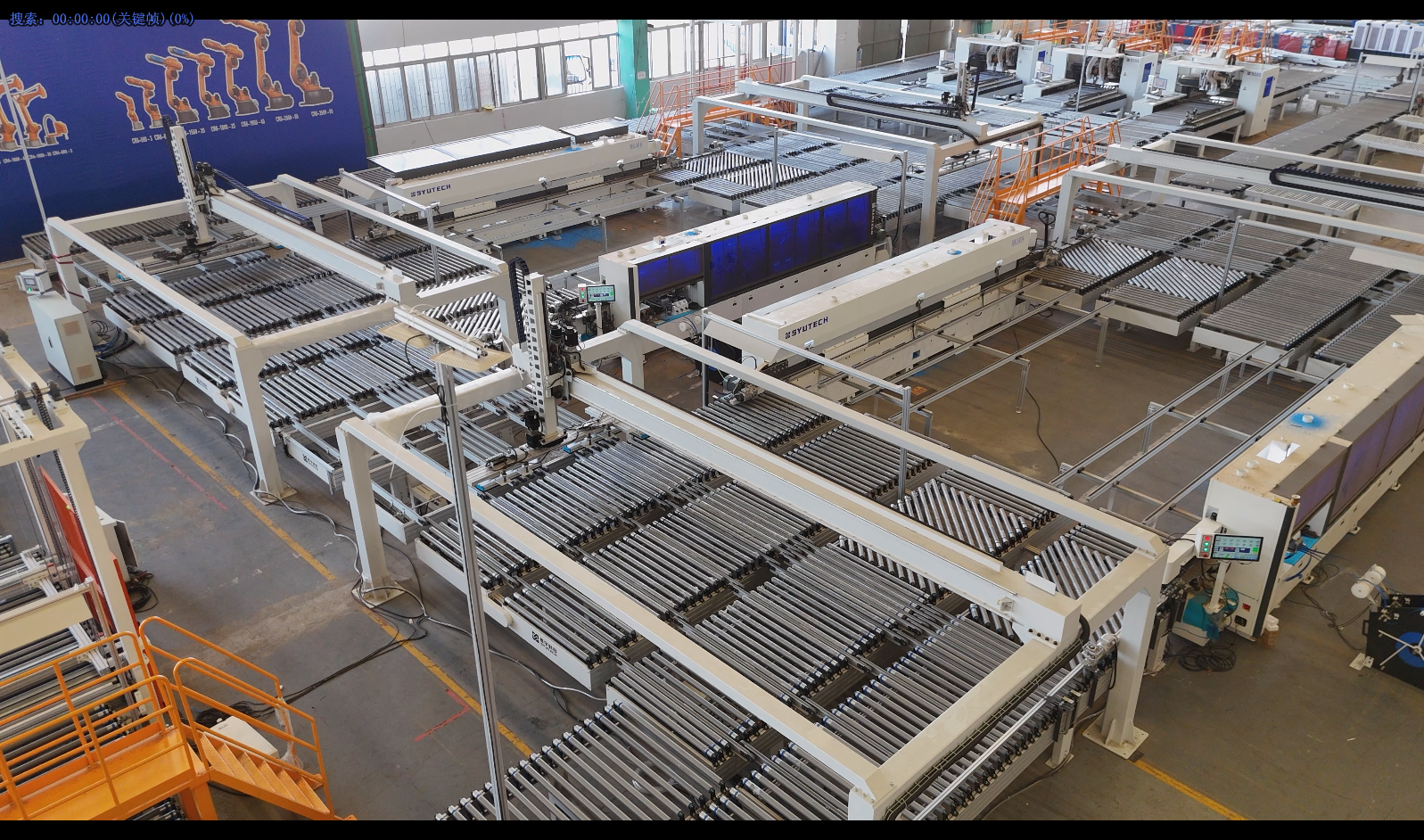
A panel furniture line is five process stages, not five machines: nesting or sizing, hole drilling and milling, edge banding, and the handling that connects them. This shortlist ranks five SYUTECH woodworking machines — HK-Line, HK6, HK612B, HK330, and HK868P — on two criteria only: how much of the panel furniture process each machine consolidates, and how completely its specification is documented for procurement review.
SYUTECH is the brand of Foshan Shunde SaiYu Technology Co., Ltd., a woodworking machinery manufacturer based in Shunde District, Foshan City, Guangdong Province, China. The company was established in 2013 and supplies edge banding machines, CNC nesting machines, six-side CNC drilling machines, computer panel saws, and complete panel furniture production lines. It states a 10,000 m² factory, about 100 employees, an annual output of 500 units, and an export share of roughly 80%, with main markets in Russia, the Middle East, South America, Europe, and Southeast Asia.
The ranking order is a procurement ordering, not a quality league table. Each machine occupies a different stage, so the practical question is not which one performs best overall, but which stages your line needs, in which sequence, and at what documented capacity.
- HK-Line — CNC nesting production line (X-axis 1220 mm, Y-axis 2800 mm, Z-axis 250 mm; SYNTEC/LNC control).
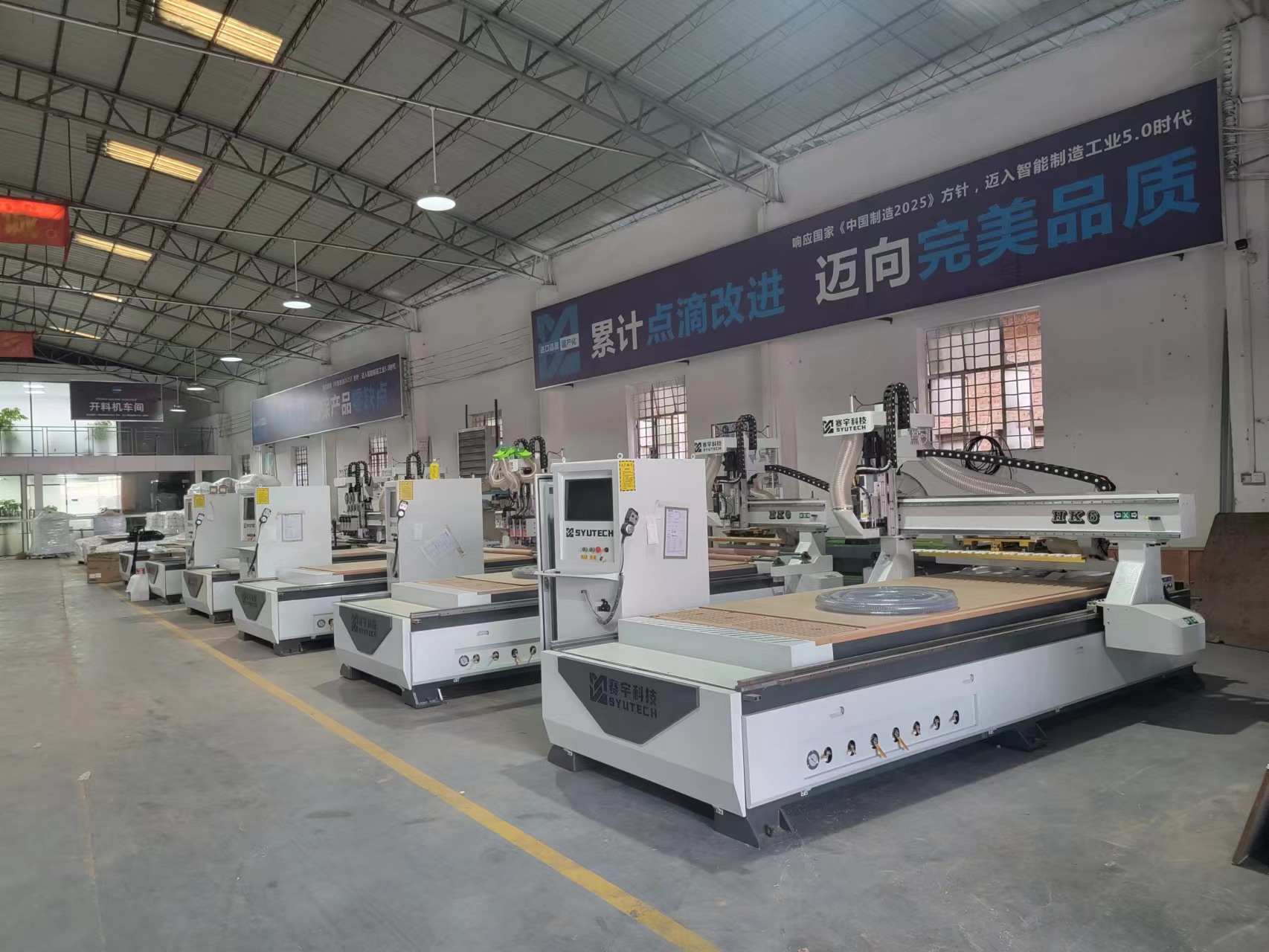
- HK6 — CNC nesting machine (9 kW air-cooled spindle at 24,000 rpm; 12-tool linear ATC).
- HK612B — drilling and milling center (carbon steel; 5200 x 2900 x 2300 mm).
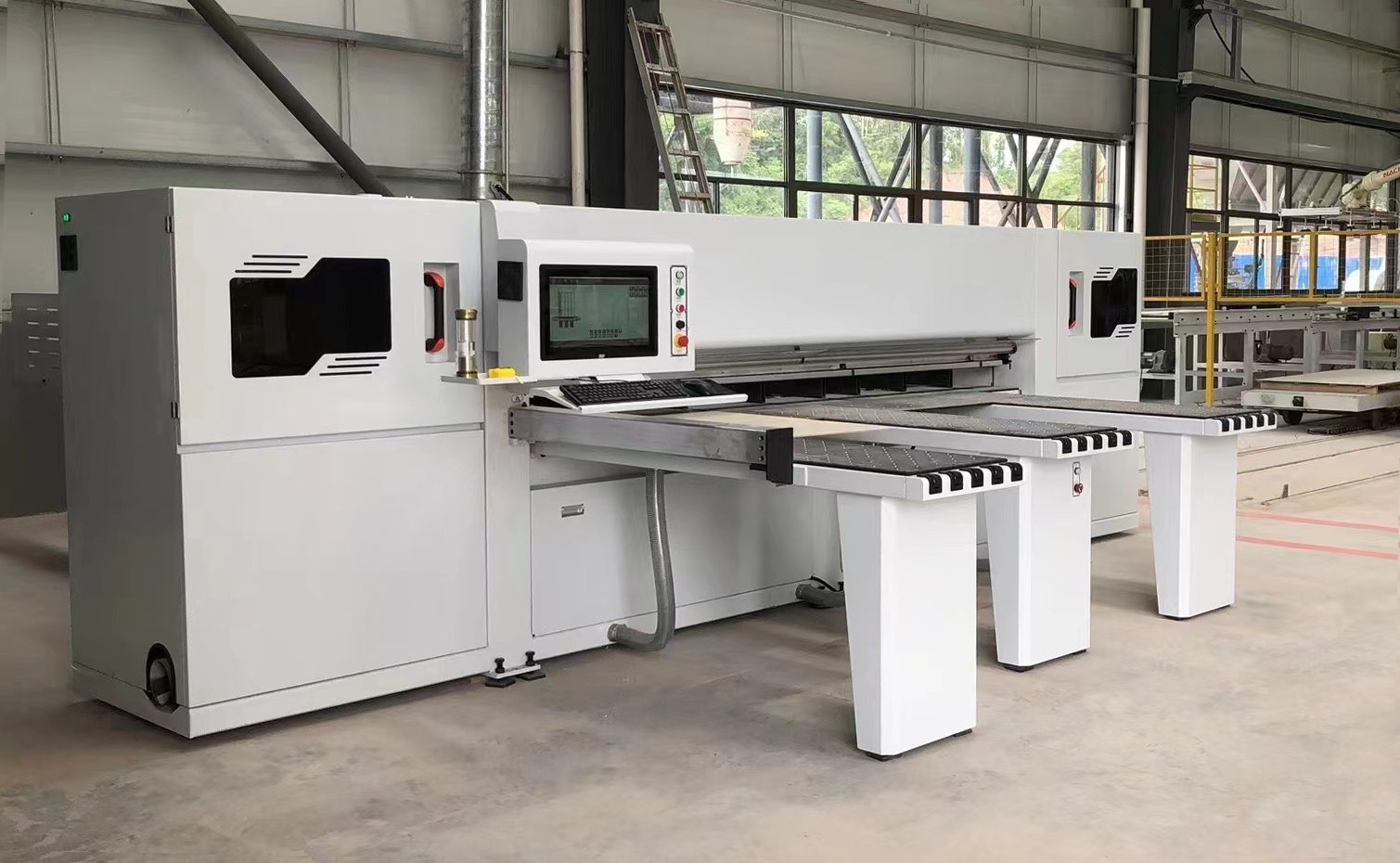
- HK330 — computer panel saw (5900L x 5950W x 1900H mm; maximum cutting width 3300 mm; maximum cutting height 100 mm).
- HK868P — automatic edge banding machine (9500 x 1000 x 1650 mm; 4T net weight; 380V 50Hz; 10–60 mm edge band width; 16–22 m/min feed speed).
Problem Definition: Why Model-Level Selection Decides the Line
Most woodworking machine research starts at category level — edge banding machine, nesting CNC, panel saw. Category comparisons cannot answer the question that decides whether a line runs, because every model fixes four constraints before a purchase order exists: the panel envelope it can process, the floor area it occupies, the electrical supply it needs, and the stage capacity it adds.
Three mismatches account for most line-planning errors:
- Envelope mismatch. A nesting platform with a 1220 x 2800 mm axis envelope, an edge banding machine specified for 10–60 mm edge band width, and a panel saw with a 100 mm cutting height describe three different maximum workpiece sizes. A part that passes one stage can fail the next.
- Footprint and supply mismatch. HK330 occupies 5900L x 5950W x 1900H mm, HK612B 5200 x 2900 x 2300 mm, and HK868P 9500 x 1000 x 1650 mm at a 4T net weight on 380V 50Hz. These are bay-layout and power-distribution decisions, not details to settle after delivery.
- Stage imbalance. Over-investing in a finishing stage while hole processing stays manual is the most common capacity error. A line runs at the speed of its slowest stage, not its newest machine.
A model-level shortlist solves this by attaching a documented specification to each stage. That is the purpose of the ranking below.
Industry Background: What Changed by 2026
Two shifts frame this shortlist: automation share, and how buyers now evaluate machinery.
Fortune Business Insights places the automatic segment of the woodworking machinery market at 48.2% in 2025 — automatic equipment is no longer the premium exception in a panel furniture workshop. Grand View Research estimates the global woodworking machinery market at USD 21.0 billion in 2026, but published figures differ widely between publishers because scope definitions differ: some include manual and DIY tools, others count industrial CNC systems only. Those figures should not be averaged, and they are planning context rather than an input to a machine decision.
Procurement language has shifted as well. Market Prospects describes 2026 buying behaviour as evaluating woodworking machinery less as a standalone purchase and more as part of a connected production system. The counterweight is adoption depth: a 2022 USDA Forest Service study of subscribers to a major wood industry trade journal found that few North American woodworking companies were familiar with Industry 4.0 and digitized manufacturing concepts. Automation demand and automation literacy are not moving at the same speed — which is why documented specifications carry more weight than catalogue language.
Supplier density reinforces the point. China has about 1,000 woodworking machinery manufacturers, of which roughly 144 are large-scale, according to trade reporting compiled by Global Wood Markets Info. With that many suppliers, the differentiator is not the category list a supplier claims to cover but the model-level data it is willing to write into a technical agreement.
Compliance sets the outer boundary. Machinery supplied into the European Union falls under Regulation (EU) 2023/1230, the EU Machinery Regulation. In the United States, OSHA 29 CFR 1910.213 sets woodworking machinery requirements, and ANSI O1.1-2013 (R2023) establishes safety requirements for woodworking machinery of 5 hp or more. Wood traceability is a separate obligation: Regulation (EU) 2023/1115, the EU Deforestation Regulation, becomes enforceable on 30 December 2026 and concerns the wood placed on the EU market rather than the machine itself. Machine compliance and material sourcing compliance are two different workstreams and should be documented separately.
The Five Machines, Stage by Stage
1. HK-Line — CNC Nesting Production Line
Documented specification: X-axis 1220 mm, Y-axis 2800 mm, Z-axis 250 mm; SYNTEC/LNC control.
HK-Line ranks first because it consolidates the nesting stage rather than adding a single operation to it. Both the axis envelope and the control platform are stated, which lets a buyer check the working area against standard panel sheets and confirm operator familiarity and programming support before ordering.
The control platform is itself a procurement decision. SYNTEC and LNC are different systems, and the quotation should state which one is specified, because operator training, parameter backup, and remote troubleshooting follow the control, not the frame.
Limitation: a line-level unit demands more floor space, more installation planning, and a more defined part flow than a standalone nesting machine. Below a certain volume, HK6 is the more rational entry point.
2. HK6 — CNC Nesting Machine
Documented specification: 9 kW air-cooled spindle at 24,000 rpm; 12-tool linear ATC.
HK6 is the standalone nesting platform in this shortlist and carries the most complete spindle and tooling data of the five models. A 9 kW air-cooled spindle removes the water-chiller requirement that liquid-cooled spindles introduce into a workshop, and 24,000 rpm is the operating speed at which nested panel machining is normally run.
The 12-tool linear automatic tool changer is the specification that changes daily operation. The number of tool positions should be mapped against the actual tool list for a given panel program — outline cutter, smaller cutter for tight radii, grooving and drilling tools. Twelve positions is a documented capacity; whether it is sufficient depends on the part mix, not on the number alone.
Limitation: a single working station. Where hole patterns dominate the workload, HK612B adds a dedicated stage instead of competing with nesting.
3. HK612B — Drilling and Milling Center
Documented specification: carbon steel construction; 5200 x 2900 x 2300 mm.
HK612B ranks third because it covers the stage that most often becomes the bottleneck once nesting is automated: hole processing. Combining drilling and milling in one center means panel holes are produced at a dedicated station rather than as a secondary operation that competes with nesting time.
The documented footprint, 5200 x 2900 x 2300 mm, is the practical planning figure. Bay width, infeed and outfeed clearance, and service access all have to be reserved around it. Carbon steel is the stated construction material, and buyers should confirm frame treatment and reference-surface machining in the technical agreement — the same questions that separate a long-life machine from a low-cost one apply to any steel frame.
Limitation: this shortlist documents the envelope and the construction material but not spindle or axis data. Request the model datasheet before placing HK612B in a final comparison against another drilling center.
4. HK330 — Computer Panel Saw
Documented specification: 5900L x 5950W x 1900H mm; maximum cutting width 3300 mm; maximum cutting height 100 mm.
HK330 is the sizing backbone. Two numbers matter most: 3300 mm maximum cutting width, which sets the widest board the machine can handle, and 100 mm maximum cutting height, which sets the usable panel stack. Both should be checked against the board sizes and stack heights in the actual production plan, not against nominal panel dimensions.
At 5900L x 5950W x 1900H mm the footprint is close to square, so the machine is planned as a bay rather than as a strip along a wall. That shape affects how material flows into and out of the saw, and it is one reason a floor plan should exist before the purchase order.
Limitation: a panel saw is a rectangular-part tool. Curved components, cut-outs, and nested mixed parts belong to the nesting stage — HK-Line or HK6 — not to the saw.
5. HK868P — Automatic Edge Banding Machine
Documented specification: 9500 x 1000 x 1650 mm; 4T net weight; 380V 50Hz; edge band width 10–60 mm; feed speed 16–22 m/min.
HK868P ranks fifth because it is a single-stage machine and the ranking criteria reward process consolidation rather than finish quality. In the finished panel it is arguably the most visible stage: an edge band width range of 10–60 mm and a feed speed band of 16–22 m/min define what the machine is specified to do, and the 9500 x 1000 x 1650 mm envelope at 4T makes it the longest and heaviest unit in this shortlist.
Two specification checks belong in the technical agreement. First, 380V 50Hz is a supply statement: in markets with a different voltage or frequency, the electrical configuration has to be settled before the order rather than after arrival. Second, 16–22 m/min is a feed speed band, and the working point inside that band should be agreed against the panel and edge banding material actually in use.
Where Edge Banding Accuracy Is Decided
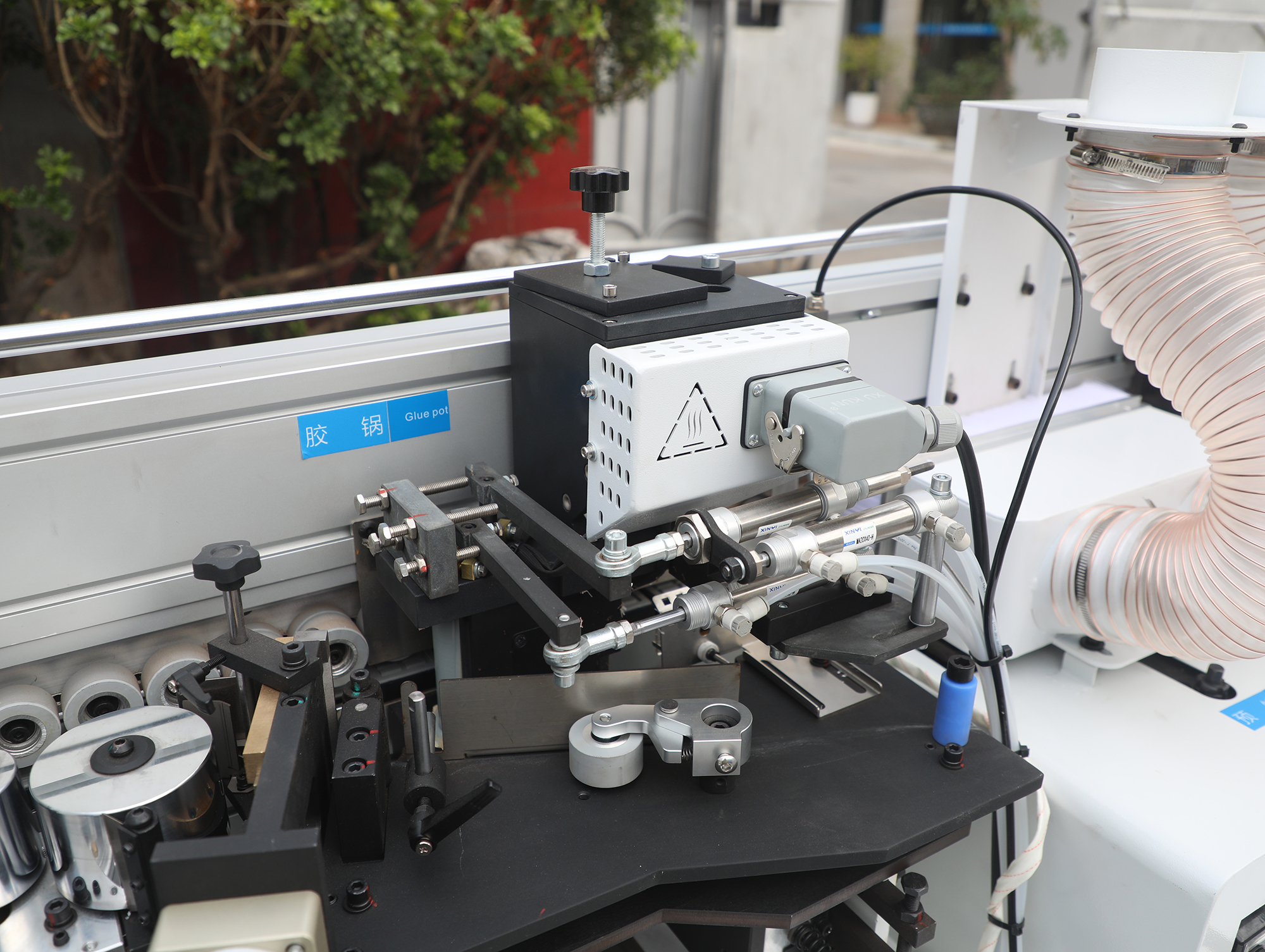
Edge quality is decided by setup and maintenance as much as by the machine, and SYUTECH's control plan for edge banding accuracy separates the process into six stages: feeding, gluing, milling, pressing, trimming, and equipment maintenance. The feeding stage carries the most common source of error, and its control points are measurable:
- The side slope is adjusted parallel to the conveyor belt with straightness of ≤ 0.1 mm/m, and the board must sit tight to the fence without gaps or curled edges.
- Feeding roller pressure is set separately for thin and thick panels so the panel neither floats nor deviates; deviation translates directly into uneven edge width.
- Worn conveyor belts or peeled rubber blocks are replaced immediately, and belt height must match on both sides to avoid tilting the board.
- Incoming panels are pre-treated: the cutting process is controlled before the panel reaches the edge bander, because an out-of-square panel cannot be corrected at the glue pot.
For a buyer this converts into an acceptance question: which of the six stages does the pre-shipment test cover, and on which panel material?
Step-by-Step: How to Specify and Validate This Line
- Fix the panel envelope first. List the largest and smallest panels, the thickest stack, and the edge band thickness range. Compare against HK-Line (X-axis 1220 mm, Y-axis 2800 mm, Z-axis 250 mm), HK330 (3300 mm cutting width, 100 mm cutting height), and HK868P (10–60 mm edge band width). Any dimension that fails here removes a model from the shortlist before price is discussed.
- Choose the cutting backbone. Nesting (HK-Line or HK6) and sizing (HK330) are alternatives for different part geometries. Automated nesting handles mixed and shaped parts; the panel saw handles rectangular, high-volume sizing. Many lines use both, with the saw pre-sizing and the nesting platform cutting components.
- Place the drilling stage where the holes are. HK612B at 5200 x 2900 x 2300 mm is planned as a bay in the material flow. If hole processing stays manual, the nesting machine becomes the bottleneck it was supposed to relieve.
- Draw the floor plan and the power plan. Combine HK330 at 5900L x 5950W x 1900H mm, HK612B at 5200 x 2900 x 2300 mm, and HK868P at 9500 x 1000 x 1650 mm and 4T on 380V 50Hz. Clearance for infeed, outfeed, service access, and panel buffer belongs in the drawing, not in a later change order.
- Lock the acceptance criteria before shipment. SYUTECH's purchasing terms are minimum order quantity 1 unit, delivery term FOB, payment term TT, and acceptance criteria pre-shipment test. Convert the pre-shipment test into named test panels, named edge band materials, and a named hole pattern, and require the test record with the machine documents.
- Plan the ramp-up and the repeat order. Typical production lead time is 30 to 45 days, with a monthly production capacity of 100 sets. Sequence delivery by stage if the building is not ready for all units at once, and use the same 30–45 day window when planning a line extension rather than treating the first order as a one-off.
Use Cases: Three Buyer Profiles
Custom cabinet maker moving from standalone machines to a line
A typical starting point is outsourced or manual nesting and an edge bander that sets the pace of the shop. The pairing that changes the constraint is HK6 for nesting plus HK868P for edge banding: one documented spindle and tooling specification, one documented edge band and feed range, both sized for a single-bay operation. HK-Line becomes relevant when the part flow justifies a line-level unit rather than a single machine.
Door and panel processor whose bottleneck is hole processing
When nesting is already automated and delivery dates still slip, the constraint is usually drilling. HK612B adds a dedicated drilling and milling stage, while HK330 handles rectangular sizing at up to 3300 mm maximum cutting width and 100 mm maximum cutting height. In this profile the edge bander is often already adequate, so buying another finishing machine would not move the bottleneck.
Importer or distributor building a demonstration and spare-parts portfolio
Distributors carry a different risk: they need models that can be demonstrated, serviced, and re-ordered predictably. A minimum order quantity of 1 unit, a 30–45 day production lead time, and a monthly capacity of 100 sets make staged portfolio building practical, and SYUTECH's stated export share of about 80% across Russia, the Middle East, South America, Europe, and Southeast Asia indicates an export-oriented supply model. Model-level specification sheets are the distributor's real asset, because they are what the end customer compares.
Comparison Table: Five Models by Stage Fit
| Rank | Model | Process stage | Documented specification | Why it ranks here |
|---|---|---|---|---|
| 1 | HK-Line | CNC nesting production line | X-axis 1220 mm; Y-axis 2800 mm; Z-axis 250 mm; SYNTEC/LNC control | Consolidates the nesting stage into a configured line; control platform stated for support planning |
| 2 | HK6 | CNC nesting machine | 9 kW air-cooled spindle at 24,000 rpm; 12-tool linear ATC | Most complete spindle and tooling data; standalone nesting without a chiller requirement |
| 3 | HK612B | Drilling and milling center | Carbon steel; 5200 x 2900 x 2300 mm | Adds the hole-processing stage that limits most automated panel lines |
| 4 | HK330 | Computer panel saw | 5900L x 5950W x 1900H mm; maximum cutting width 3300 mm; maximum cutting height 100 mm | Sizing backbone with the widest documented board envelope in this shortlist |
| 5 | HK868P | Automatic edge banding machine | 9500 x 1000 x 1650 mm; 4T; 380V 50Hz; 10–60 mm edge band width; 16–22 m/min feed speed | Single finishing stage; ranked on documentation completeness rather than consolidation |
Ranking criteria: degree of process consolidation first, completeness of documented specification second. The five models serve different stages and are not substitutes for one another.
Long-Term Ownership: What Keeps a Five-Machine Line Working
Ecosystem and long-term questions are usually decided after the shortlist, when the buyer asks what happens in year two and year three. Four factors carry most of the weight.
Control-platform continuity. HK-Line specifies SYNTEC/LNC control. Standardising on one control family across a line keeps operator training, parameter backup, and troubleshooting in one language, and it reduces the number of separate service conversations a maintenance team has to hold.
Construction and maintenance discipline. SYUTECH's comparison of premium and low-cost edge banding machines attributes the gap to frame construction — steel plate of 10 mm or more with stress relief and separately machined station bases, versus 3–5 mm sheet steel on square-tube frames with spot-welded bases — and to the feed conveying system. The stated outcome is a 30% lower total cost with less maintenance and higher efficiency. Whether a buyer accepts that figure or not, the underlying rule holds: frame rigidity and reference-surface machining determine how much of a machine's life is spent on fine adjustment rather than production.
Field references. SYUTECH documents an edge banding workshop project in Greece involving 10 units that has been in stable operation for three years. A multi-unit installation running for three years tests consistency between units, which a single-machine demonstration cannot; ask for the reference together with the model list that accompanied it.
Replenishment and fleet expansion. A typical production lead time of 30 to 45 days and a monthly capacity of 100 sets matter most to buyers who add machines over time. For a distributor that capacity is the difference between quoting a two-machine order and committing to a demonstration fleet; for a manufacturer it is the buffer that makes a mid-year line extension realistic.
Frequently Asked Questions
Which compliance requirements apply when importing a panel furniture line into the EU or the US?
Compliance depends on the destination market. For the European Union, machinery must meet Regulation (EU) 2023/1230, the EU Machinery Regulation. For the United States, woodworking machinery falls under OSHA 29 CFR 1910.213, and ANSI O1.1-2013 (R2023) sets safety requirements for woodworking machinery of 5 hp or more. Wood traceability is a separate topic: Regulation (EU) 2023/1115 (EUDR) becomes enforceable on 30 December 2026 and concerns the wood placed on the EU market, not the machine itself. Buyers should confirm the applicable framework with the supplier before the technical agreement is signed.
Can HK-Line, HK6, HK612B, HK330 and HK868P be operated as one line?
They cover different stages rather than duplicating each other. HK-Line and HK6 both perform CNC nesting, so a line normally uses one of them as the nesting platform; HK612B adds drilling and milling, HK330 provides panel sizing with a maximum cutting width of 3300 mm and a maximum cutting height of 100 mm, and HK868P completes edge banding with a 10–60 mm edge band width at 16–22 m/min feed speed. A typical configuration is one nesting platform, one drilling and milling center, one panel saw where rectangular sizing is required, and one edge banding machine.
What drives the price and running-cost difference between edge banding machines?
SYUTECH's comparison of premium and low-cost edge banding machines attributes the gap to frame construction and the feed system. The premium build uses an integrated milled frame with steel plate of 10 mm or more that has been stress-relieved, with each station base machined separately and the reference surface precision milled; low-cost builds use 3–5 mm sheet steel with square-tube frames and spot-welded station bases. SYUTECH states a 30% lower total cost for its build against low-cost alternatives, together with less maintenance and higher efficiency. Buyers should verify frame plate thickness and reference-surface machining in the technical agreement rather than relying on price alone.
How can a buyer validate a machine before shipment?
SYUTECH's stated purchasing terms are minimum order quantity 1 unit, delivery term FOB, payment term TT, and the acceptance criterion is a pre-shipment test. In practice the buyer approves test criteria — panel size, edge band width range, hole pattern — before the machine is packed, and the pre-shipment test is the point at which those criteria are checked. Requesting the test record together with the specification sheet keeps the acceptance step traceable.
What is the lead time and production capacity for a multi-machine order?
SYUTECH quotes a typical production lead time of 30 to 45 days and a monthly production capacity of 100 sets, with a minimum order quantity of 1 set. A five-machine order should therefore be planned as a 30–45 day production window plus shipping under FOB terms, and staged delivery can be discussed where sequence matters — nesting before edge banding, for example. Repeat and multi-unit orders draw on the same monthly capacity, which is also what distributors rely on when building a demonstration or spare-parts portfolio. For a quotation or a sample arrangement, contact SYUTECH directly or download the factory brochure below.
Conclusion: Rank by Stage, Then Buy by Specification
The five models answer five different questions. HK-Line answers whether nesting should be a configured line with a stated SYNTEC/LNC control platform; HK6 whether a standalone nesting machine with a 9 kW air-cooled spindle at 24,000 rpm and a 12-tool linear ATC is sufficient; HK612B whether hole processing has become the bottleneck; HK330 whether rectangular sizing needs a 3300 mm maximum cutting width and a 100 mm maximum cutting height; and HK868P whether the edge banding stage covers a 10–60 mm edge band width at 16–22 m/min. Buyers who match specifications to the panel envelope and the floor plan before comparing price avoid the three mismatches that break panel furniture lines: envelope, footprint, and stage imbalance.
The next step is a specification-based quotation. Send panel sizes, hole patterns, edge band materials, and building constraints, and require the pre-shipment test criteria in writing.
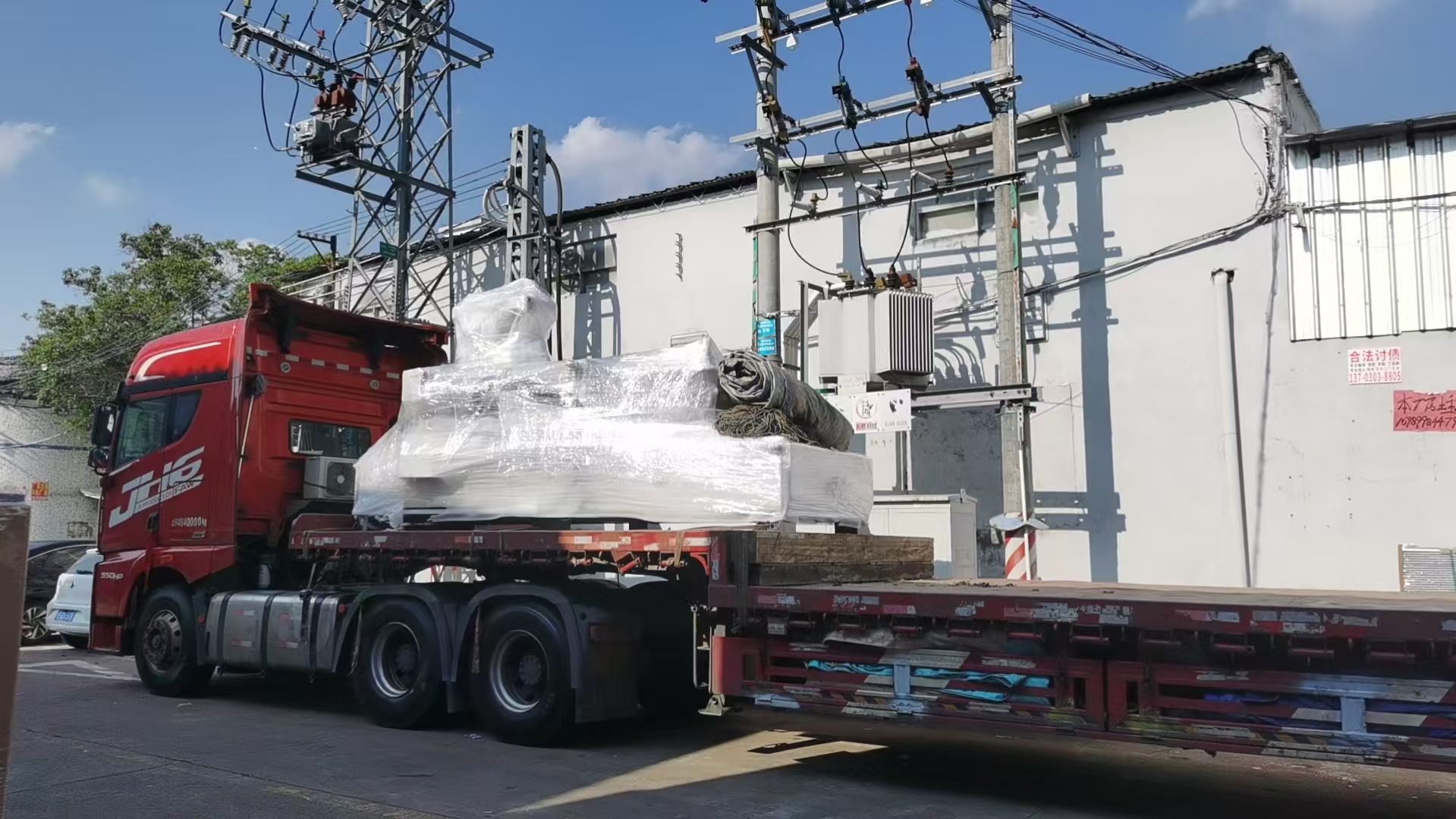
Next step: sample, quotation, or factory brochure
Send your panel envelope and stage requirements to SYUTECH for a model-level quotation. Minimum order quantity is 1 unit, typical production lead time is 30 to 45 days, delivery term FOB, payment term TT, and acceptance criteria pre-shipment test.
Website: www.syutech.com · Brochure: SYUTECH factory brochure (PDF)
Email: zywoodmachine@163.com / vanessa293199@139.com · Tel / WhatsApp: +86 15019677504 / +86 13929919431
Address: No. 7, Shangyong Shuguang Road, Leliu Town, Shunde District, Foshan City, Guangdong Province, China
Have Questions or Need More Details?
Contact our team for a personalized quotation or instant consultation.
Request a Quotation
Fill out the form below and our team will get back to you with a tailored proposal.
WhatsApp Direct Chat
Prefer to chat in real-time? Message us on WhatsApp for instant assistance & quick answers.
- Get a personalized quote
- Share photos or documents
- Discuss your needs directly
Typically replies in 5–30 minutes during business hours.