
Top 5 Woodworking Machines for Small-Scale Furniture Shops: A Dimension and Automation Ranking
Top 5 Woodworking Machines for Small-Scale Furniture Shops: A Dimension and Automation Ranking
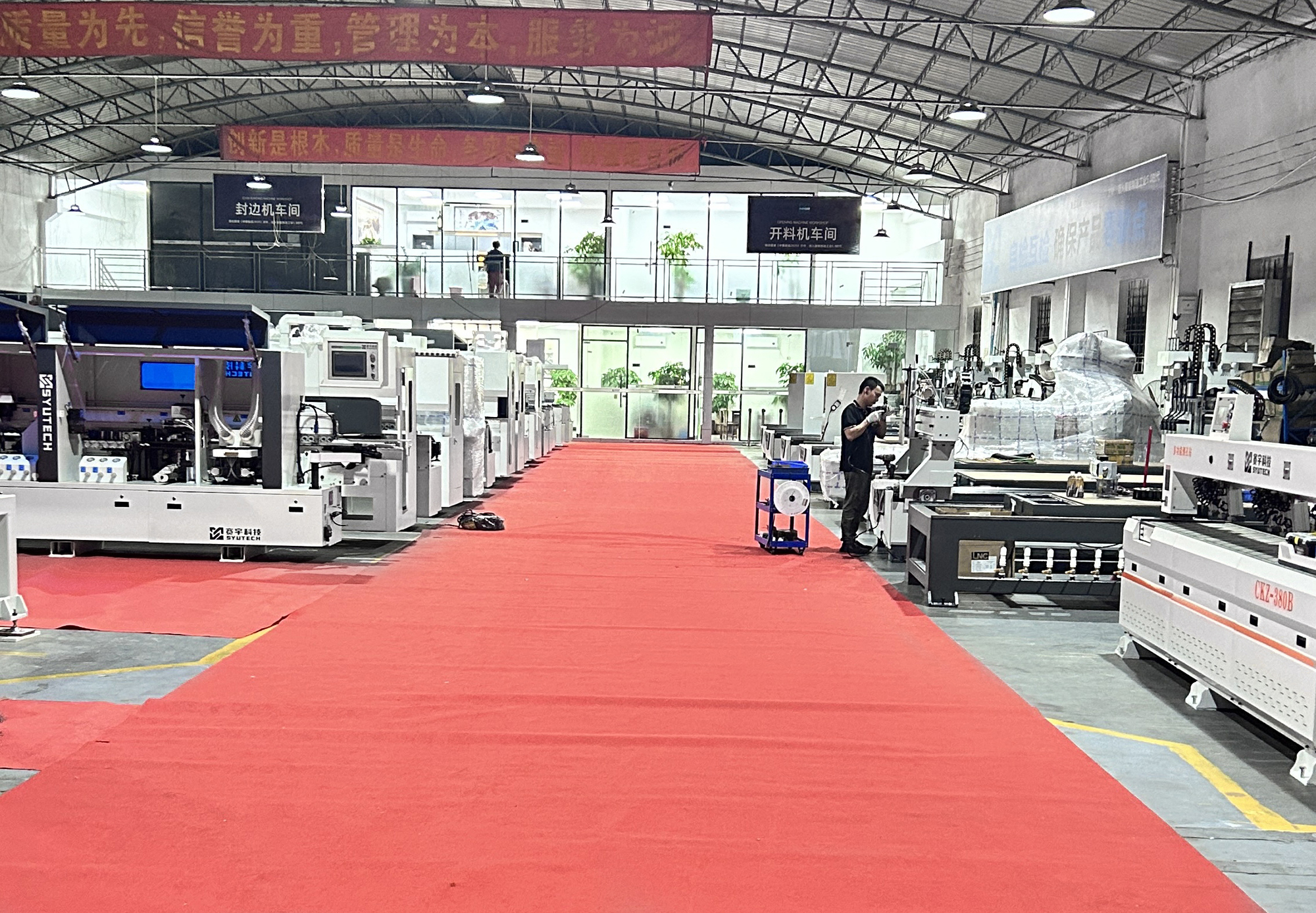
Cover: compact edge banding machine workshop — the machine class most small furniture shops install first. Image: SYUTECH.
The short answer: five woodworking machines matter most for a small-scale furniture shop, and they can be ranked on two measurable axes — physical dimensions and automation complexity. Rank 1 is the HK268G mini edge banding machine, the smallest and least complex addition to a workshop, with overall dimensions of 3790 × 730 × 1210 mm. Rank 2 is the HK268GY compact edge banding machine. Rank 3 is a CNC six-side drilling machine. Rank 4 is the HK6 CNC router. Rank 5 is the HK330 computer panel saw, the largest and most automated machine in the set. Read this as a fit ranking, not a quality ranking: a lower number means a lower barrier to entry for a small workshop, not a weaker machine.
A small furniture shop solves a different selection problem from a large panel furniture factory. The factory optimizes units per shift; a small workshop optimizes output per square meter of floor and per available operator. Dimension and automation complexity therefore sit above headline processing speed in the decision, because a machine that does not fit the floor, the power supply or the skill set of the team produces nothing at all.
This article ranks five machines built for panel furniture production by Foshan Shunde SaiYu Technology Co., Ltd. (SYUTECH) — two compact edge banding machines, a six-side drilling machine, a nesting CNC router and a computer panel saw — and explains the criteria behind the order: overall dimensions first, automation complexity second. Manufacturer facts come from SYUTECH's own product and engineering documentation; market and standards references are attributed to their published sources.
Why small workshops get machine selection wrong
Three constraints compress a small shop's options: floor area, available capital, and operator capability. Each interacts with machine dimensions and automation complexity, and each produces a recognisable failure mode.
- Machine too large for the floor. Buyers compare catalog dimensions but forget infeed and outfeed clearance. A machine that needs panel handling space on both sides can consume the aisle of a small workshop even if its own footprint looks acceptable.
- Machine too complex for the team. Every step of added automation moves work from the operator to the machine — and adds programming, setup and maintenance routines. In a two- or three-person shop, there may be nobody to own those routines.
- Machine too cheap to hold tolerance. This is the failure mode that appears later, after the machine has been paid for.
The third point is worth stating with numbers, because it is the part of machine selection that buyers most often reduce to a price comparison. In SYUTECH's engineering comparison of build structures, a quality edge banding machine uses a thick steel plate integrated milling frame of ≥10 mm that has undergone stress relief treatment, with adjustable feet and a rigid body; each unit base is processed separately so that the installation reference surface is precision milled flat, and each process is coaxial and parallel at the point of factory calibration. A cheap edge banding machine typically uses a thin iron sheet plus square tube splicing frame of 3–5 mm, without stress relief. The documented consequence is slight deformation of the machine body after about half a year of use, which then shows up as accuracy deviation; the bases of the individual workstations are spot welded and assembled with a rough reference surface, so later fine adjustment addresses symptoms rather than the root cause.
On that same comparison basis, a machine built on the stress-relieved frame delivers higher energy efficiency, lower maintenance requirements and a 30% lower total cost than the cheap alternative. For a small shop, that is the whole argument for ranking machines by construction rather than by purchase price.
Industry background: a market that keeps widening
Small workshops are not a niche at the edge of the woodworking machinery market; they are the volume base of it. The global woodworking machinery market was valued at USD 20.3 billion in 2025 and is projected to reach USD 27.7 billion by 2033, according to Grand View Research. The same source places Europe at a 36.4% revenue share in 2025, driven by established manufacturers in Italy and Germany, while Credence Research records Asia Pacific as the largest share of the wood processing machines market at 34.5% in 2024, led by China and India.
Two consequences follow for a small furniture shop choosing equipment. First, European demand sets the compliance bar for equipment that enters that market: edge banding machines fed by chain(s) must comply with the EN 1218-4 safety standard in the European market, as published by HSE and British Standards. That requirement applies to a two-person workshop exactly as it applies to a large factory. Second, cross-border supply of compact machines is a normal, well-established trade flow — UN Comtrade data records China's exports of machine tools for working wood to Vietnam alone at US$311.6 million in 2024 — which means a small shop can realistically source equipment abroad, provided it verifies the machine rather than the brochure.
CNC capability has moved down into smaller workshops as well. The global woodworking CNC router machine market was valued at USD 185.3 million in 2024, according to Grand View Research. That is the segment in which a nesting router becomes a realistic purchase for a shop that used to outsource shaped parts and complex cutting. At the industrial high end, the global competitive set is dominated by Homag Group, SCM Group, Biesse Group and Weinig AG, as listed by Market Research Future; small workshops usually buy from regional specialists whose catalogs are built around compact machines, local spare-part support and export documentation.
SYUTECH — the brand of Foshan Shunde SaiYu Technology Co., Ltd. — is one of those regional specialists. The company is a Chinese woodworking machinery manufacturer based in Shunde District, Foshan, the area known as the hometown of woodworking machinery in China. It was founded in 2013, operates a 10,000 m² factory with about 100 employees, and reports an annual output of roughly 500 units. Its main products include edge banding machines, CNC nesting machines, six-side CNC drilling machines, computer panel saws and complete sets of equipment for panel furniture production lines. Exports account for 80% of total sales, with major markets in Russia, the Middle East, South America, Europe and Southeast Asia, and the company has collaborated with the Italian company TEKNOMOTOR on technology integration.
The five machines, ranked by dimensions and automation complexity
The ranking runs from the machine that is easiest to add to a small workshop (Rank 1) to the machine that adds the most automation and demands the most floor space (Rank 5). Each entry states the operation, what the machine demands from the workshop, and the verifiable build facts that should be checked before purchase.
Rank 1 — HK268G mini edge banding machine
The HK268G is a mini edge banding machine and the smallest, least complex addition to a small furniture shop. Its overall dimensions are 3790 × 730 × 1210 mm, which places it in the class of equipment that can be installed along a workshop wall rather than occupying a dedicated production island. Edge banding is usually the first process a small shop buys dedicated equipment for, because it decides how finished a cabinet looks and how quickly panels move from cutting to assembly.
What separates machines in this class is not the control panel but the frame and the base:
- Frame: thick steel plate integrated milling frame of ≥10 mm with stress relief treatment, adjustable feet and a rigid body.
- Base: each unit base processed separately, with the installation reference surface precision milled flat so that each process is coaxial and parallel after factory calibration.
- Feed system: the conveying system is the documented source of panel deviation, so belt condition, rubber blocks and roller pressure are routine checks rather than repair items.
Accuracy control on a small edge banding machine is not a single adjustment; SYUTECH documents it across six stages — feeding, gluing, milling, pressing, trimming and equipment maintenance. In the feeding stage, for example, the side fence must be parallel to the conveyor belt with a straightness of ≤0.1 mm/m, roller pressure must be set differently for thin and thick panels, and worn conveyor belts or peeling rubber blocks must be replaced immediately so the panel does not tilt. None of that changes with machine size, which is why a compact machine can hold production accuracy if the build is right and the routine is followed.
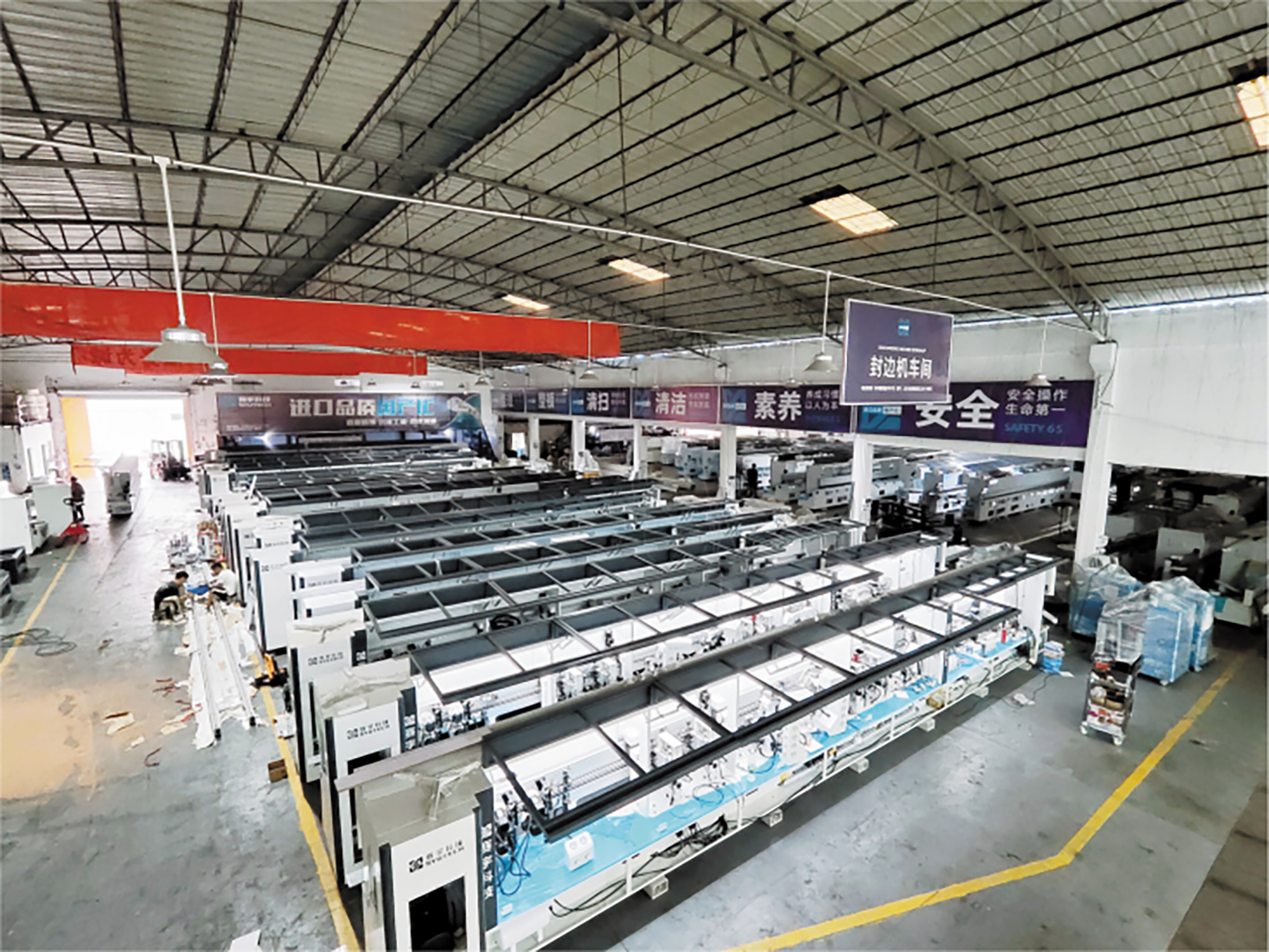
Rank 1 in practice: a compact edge banding machine occupies a wall position instead of a production island, which is what makes edge banding realistic in a small shop.
Rank 2 — HK268GY compact edge banding machine
The HK268GY compact edge banding machine sits one step up in the same compact footprint class. It is positioned for shops that run more varied panel batches and want a larger share of the banding sequence handled by the machine rather than by the operator, while keeping the installation small enough for a workshop that already contains a saw and an assembly table.
Because it is still a compact machine, the same build criteria decide the outcome: frame rigidity, base and reference-surface machining, and the condition of the feed system. A buyer comparing HK268G and HK268GY should compare them on those three points and on the number of banding operations the shop actually performs per week — not on catalog weight or color.
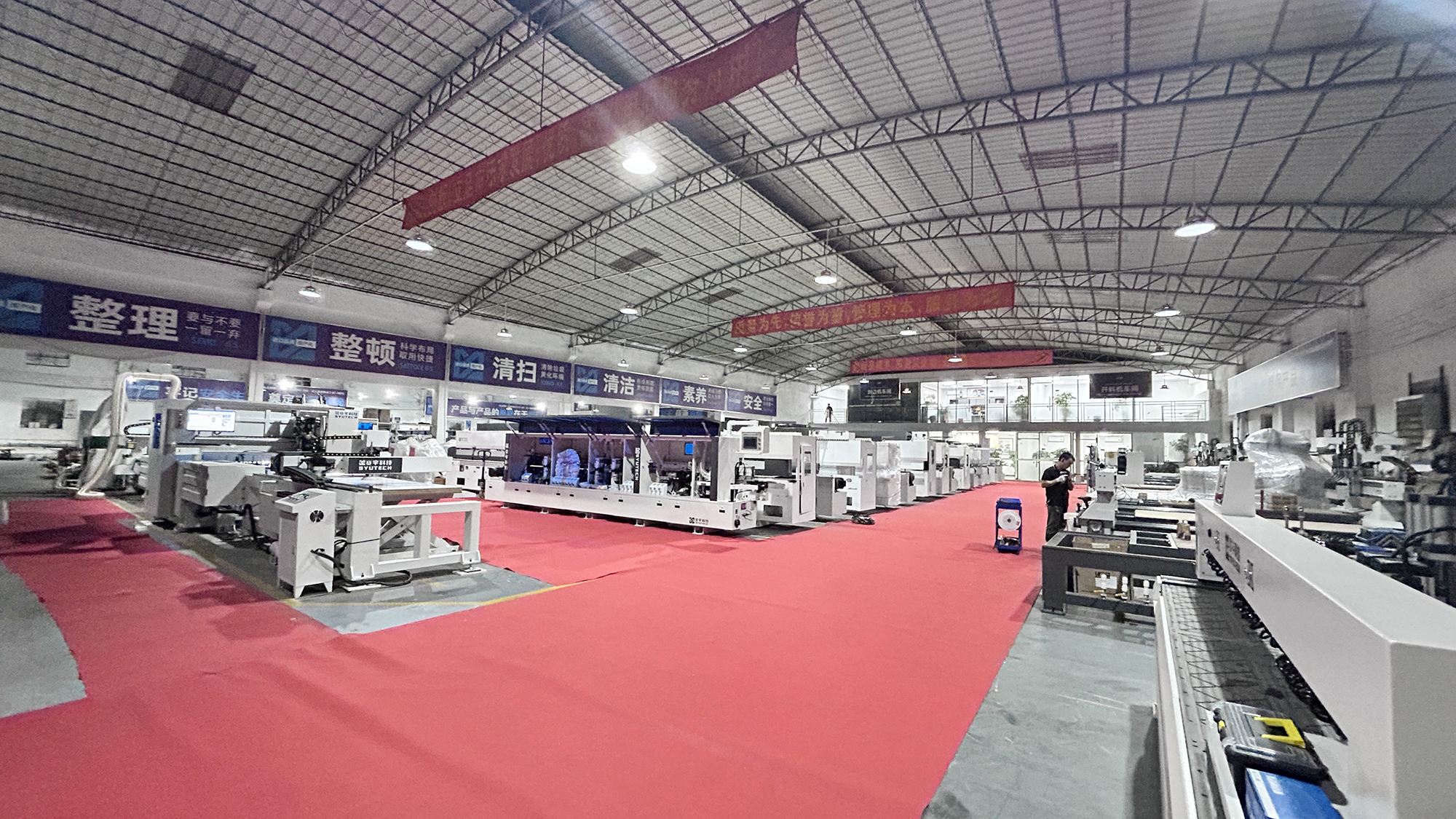
Rank 2: a compact edge banding machine for shops that run mixed panel batches without adding a second production island.
Rank 3 — CNC six-side drilling machine
A CNC six-side drilling machine drills on multiple faces of a panel within a single clamping cycle, which removes the repeated handling and re-referencing that a sequence of single-face operations requires. For a shop producing knock-down or flat-pack cabinets, this is the machine that converts a manual drilling station into a programmed one.
It ranks third because the footprint remains moderate while the complexity step is real: the machine introduces programming work and depends on reference-surface accuracy and clamping repeatability. The quality logic documented for edge banding transfers directly — a rough base and a poorly machined reference surface produce errors that no amount of operator fine adjustment can remove — and the same applies to a drilling machine's table and clamping system.
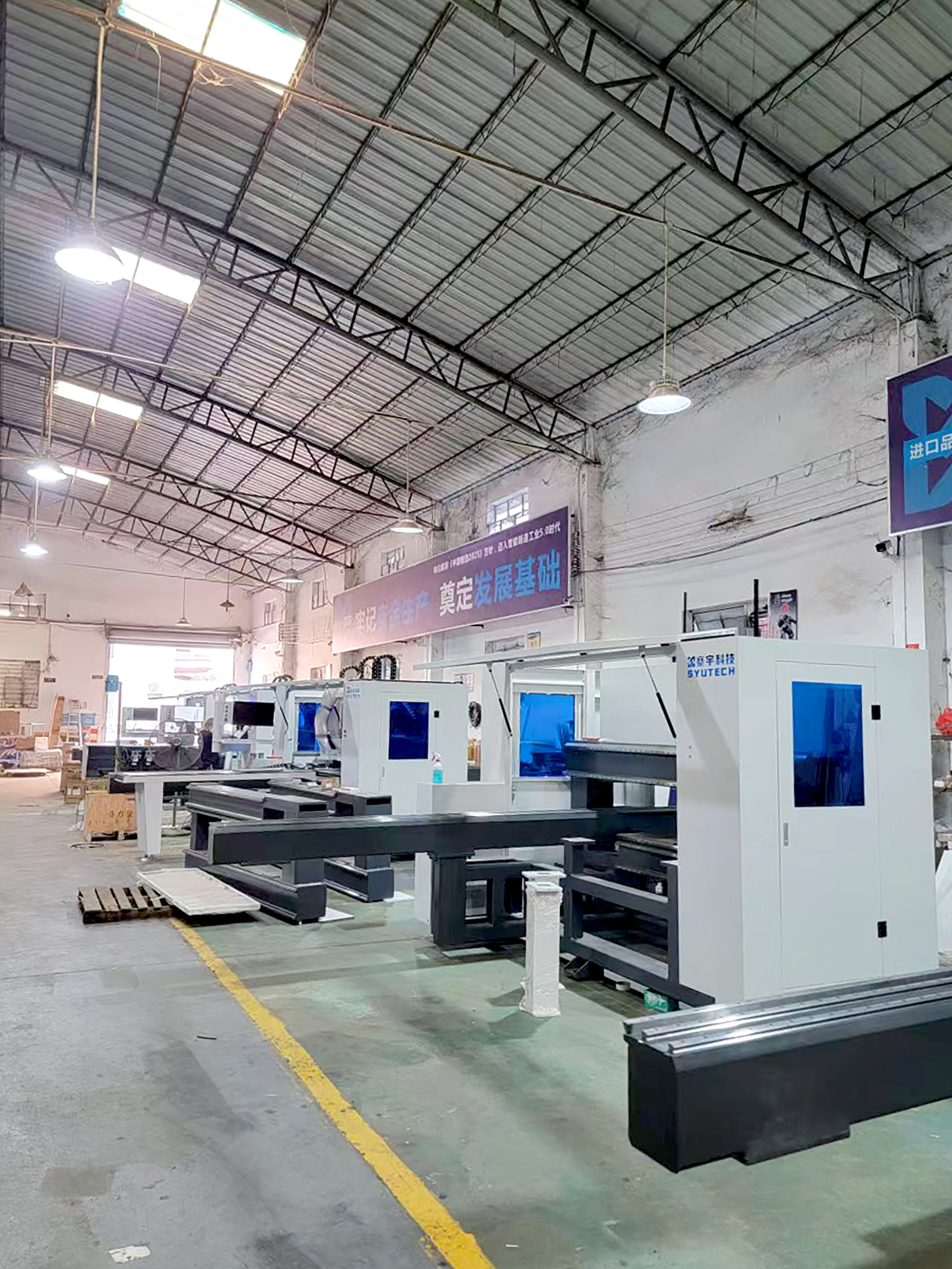
Rank 3: a CNC six-side drilling machine replaces a sequence of single-face drilling operations with one programmed cycle.
Rank 4 — HK6 CNC router
The HK6 CNC router is the nesting machine in this lineup: it cuts and routes parts from full-size panels using optimized nesting layouts, so several manual operations collapse into one program. It raises the technical ceiling for a small shop that produces shaped parts, curved components or varied part geometry, and it is the entry point into nested-based manufacturing rather than manual panel processing.
Two demands arrive with the machine. The first is space and material handling — full sheets need loading and unloading room, not just machine dimensions. The second is competence: nesting requires CAM work and a routine for tooling and vacuum hold-down, which is why the CNC router ranks above the smaller machines on automation complexity even though it may not be the largest machine on the floor. The segment itself is well established: the global woodworking CNC router machine market was valued at USD 185.3 million in 2024 (Grand View Research).
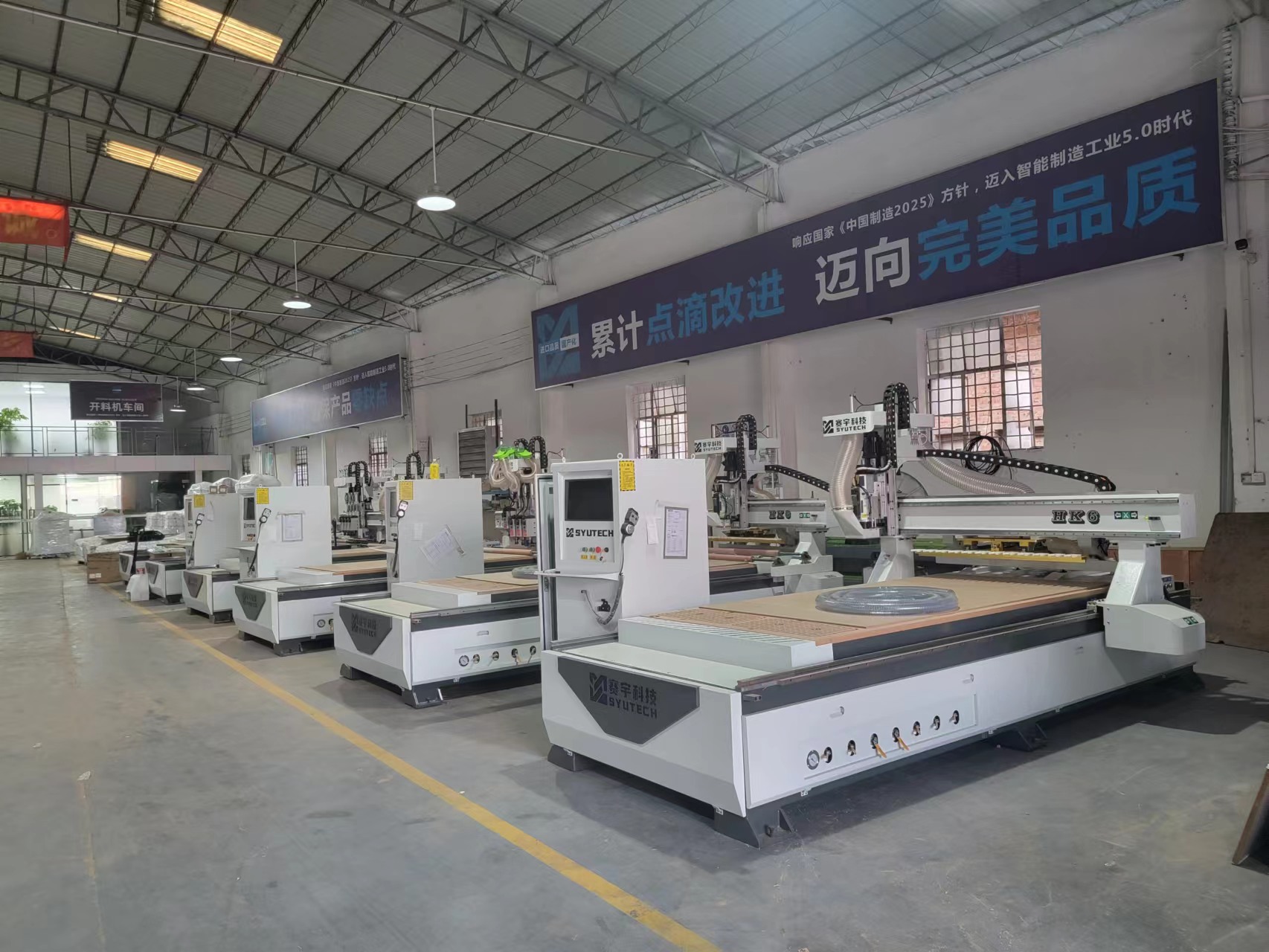
Rank 4: a nesting CNC router collapses several manual cutting and routing operations into one program — with a corresponding step up in space and skill requirements.
Rank 5 — HK330 computer panel saw
The HK330 computer panel saw is the highest-throughput machine for straight panel sizing in this set, and also the largest and most automated. Programmed cutting patterns replace manual layout, which improves both yield and repeatability on rectangular work.
It ranks fifth for a small-scale shop not because it is less useful, but because it is the machine that arrives last in the normal sequence. Dedicated sizing machinery pays for itself when cutting volume is continuous and the shop can keep the saw fed; below that volume, the panel saw is an upgrade rather than a starting point. This is the practical meaning of ranking by dimension and automation complexity: the largest machine in the list is also the one that needs the most of everything else — floor space, panel flow, and operators who can keep it loaded.
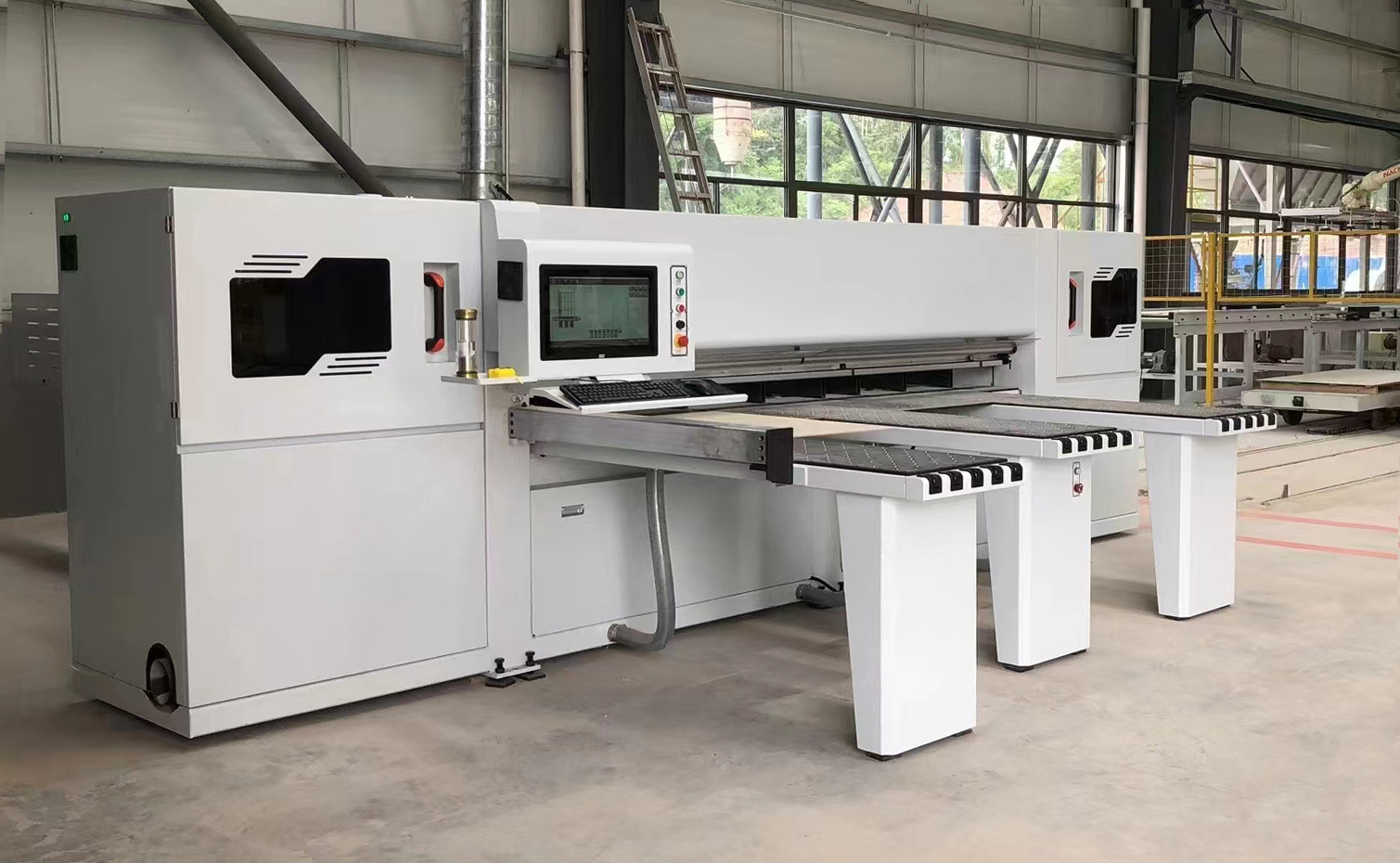
Rank 5: a computer panel saw delivers the highest straight-line sizing throughput in the set, and the largest footprint and automation commitment.
Step-by-step: applying this ranking to your own floor
The ranking above is a reference, not a prescription. To apply it to a specific workshop, work through five steps in order.
- Step 1 — Measure the real footprint, not the catalog dimension. Start from the machine's actual overall dimensions and add infeed, outfeed and operator space. The HK268G at 3790 × 730 × 1210 mm is a useful reference: a machine in this class can be placed against a wall, while larger machines need to be planned as a flow line.
- Step 2 — List the operations you perform every week and rank them by frequency. The most frequent operation should be the first dedicated machine, because that is where manual labour costs the most and where the quality risk is repeated most often.
- Step 3 — Score automation complexity against the people you actually have. If nobody in the shop can own programming, tooling or scheduled maintenance, add the machine one step later — or add it with a training plan attached.
- Step 4 — Audit build quality before price. Confirm frame plate thickness and stress relief, confirm how the base reference surface is machined and whether the units are calibrated coaxial and parallel, and confirm the condition and specification of the feed system.
- Step 5 — Plan the integration, not just the purchase. Power supply, dust extraction, panel flow sequence, consumables and spare-part access all decide whether the machine runs at the rate the catalog promises.
Use cases: three small-shop profiles
Profile 1 — a two-person cabinet shop with an edge banding bottleneck. Cutting is already handled, but edges are finished slowly and inconsistently. Adding the HK268G mini edge banding machine turns edge banding into a single-operator wall process; adding the HK268GY compact edge banding machine later increases the share of automated steps in the banding sequence without changing the footprint class. In this profile, the ranking criterion is not output speed but installation simplicity.
Profile 2 — a shop moving into flat-pack or knock-down cabinets. Drilled and doweled panel assembly becomes the constraint. A CNC six-side drilling machine removes repeated handling between drilling faces and makes hole patterns repeatable across batches — the point at which quality stops depending on how carefully one person marks a panel.
Profile 3 — a shop taking on shaped and curved work. Shaped parts and complex geometry are the trigger for the HK6 CNC router, because nesting replaces the manual template work that otherwise limits what the shop can quote. The HK330 computer panel saw becomes relevant at the next stage, when straight-cut volume is high enough to justify separating sizing from routing.
Comparison table: the five machines side by side
The table below restates the ranking. Footprint class and automation complexity are stated in relative terms, and only the HK268G carries a published dimension figure in this article.
| Rank | Machine | Primary operation | Footprint class | Automation complexity | Add it when |
|---|---|---|---|---|---|
| 1 | HK268G mini edge banding machine | Edge banding and trimming of panel edges | Smallest — 3790 × 730 × 1210 mm | Lowest | Edge finishing is the bottleneck and the shop needs single-operator wall equipment |
| 2 | HK268GY compact edge banding machine | Edge banding across more varied panel batches | Compact, same class as Rank 1 | Low | The banding workload grows but floor space does not |
| 3 | CNC six-side drilling machine | Multi-face drilling of dowel and hardware holes | Moderate | Medium — adds programming and clamping routines | Drilling and handling, not cutting or banding, is the constraint |
| 4 | HK6 CNC router | Nesting, cutting and routing from full sheets | Larger — needs sheet handling space | High — CAM work and tooling routine | Shaped parts and varied geometry enter the order book |
| 5 | HK330 computer panel saw | Programmed straight-line panel sizing | Largest in the set | Highest | Continuous straight-cut volume justifies dedicated sizing machinery |
The second table isolates the build-quality difference that decides long-term accuracy on any edge banding machine, including the two compact models ranked first and second.
| Criterion | Cheap edge banding machine | Machine with stress-relieved integrated milling frame |
|---|---|---|
| Frame and body | Thin iron sheet plus square tube splicing frame, steel plate 3–5 mm, no stress relief | Thick steel plate integrated milling frame, ≥10 mm, stress relief treated, adjustable feet, rigid body |
| Base processing | Workstation bases spot welded and assembled; rough reference surface | Each unit base processed separately; installation reference surface precision milled flat |
| Calibration basis | Errors present at factory accuracy; fine adjustment treats symptoms only | Processes coaxial and parallel at factory calibration |
| Long-term accuracy | Slight body deformation after about half a year of use, producing accuracy deviation | Not easily deformed in long-term use |
| Energy efficiency | Lower | Higher |
| Maintenance | Higher maintenance requirement | Lower maintenance requirement |
| Total cost | Higher total cost over the ownership period | 30% lower total cost |
Note on comparison scope: the tables above compare machine classes and build structures documented by SYUTECH, not named competing brands. The industrial-scale suppliers listed earlier in this article — Homag Group, SCM Group, Biesse Group and Weinig AG — compete in a different volume and configuration segment from the compact machines discussed here.
FAQ
1. Do compact edge banding machines for small workshops have to meet EU safety standards?
Yes. Edge banding machines fed by chain(s) must comply with the EN 1218-4 safety standard in the European market, as published by HSE and British Standards. The obligation follows the market the machine is placed in, not the size of the workshop, so a small shop exporting or selling into the EU should confirm which standard a machine is designed against and request the related documentation before purchase.
2. Can a compact or mini edge banding machine hold production accuracy in daily use?
Accuracy in this machine class depends on the frame, the base and the maintenance routine rather than on machine size. A machine with a ≥10 mm stress-relieved integrated milling frame and separately processed bases with precision-milled reference surfaces maintains its calibration basis in long-term use, while a 3–5 mm frame without stress relief can deform and drift. On the operating side, SYUTECH documents control across six stages — feeding, gluing, milling, pressing, trimming and equipment maintenance — including a side fence parallel to the conveyor belt at ≤0.1 mm/m straightness and pressure settings that differ for thin and thick panels.
3. Why is a machine with a stress-relieved frame cheaper to own than a low-priced alternative?
Because the difference shows up after purchase. Documented comparisons put a machine with a stress-relieved frame at higher energy efficiency, lower maintenance requirements and a 30% lower total cost than a cheap edge banding machine, while a cheap frame of 3–5 mm without stress relief tends to deform slightly after about half a year of use and then loses accuracy. For a small shop, that 30% is the cost of the purchasing decision appearing in the operating budget.
4. What should a small shop check before validating a machine purchase?
Four things, all verifiable before an order is placed: the frame plate thickness and whether it has been stress relief treated; how each unit base is processed and whether the installation reference surface is precision milled flat; the specification and condition of the feed conveying system, since feed deviation is a documented source of uneven edge width; and which safety standard the machine is designed against for the target market. A quotation that cannot answer these four points is not yet comparable with one that can.
5. What should a small shop verify about supply and delivery?
Verify the production base behind the brand rather than the reseller listing. SYUTECH is the brand of Foshan Shunde SaiYu Technology Co., Ltd., a manufacturer founded in 2013 with a 10,000 m² factory in Shunde District, Foshan, about 100 employees and an annual output of around 500 units, where exports account for 80% of sales to Russia, the Middle East, South America, Europe and Southeast Asia — a supply profile already built around export documentation and long-distance shipping. To review the current machine range, configurations and specifications before an enquiry, download the factory promotional paper here: SYUTECH Factory Promotional Paper (PDF).
Conclusion
Ranking woodworking machines for a small furniture shop by dimension and automation complexity produces a practical buying sequence rather than a wish list. The HK268G mini edge banding machine comes first because it is small and simple enough to install against a wall and run by one person. The HK268GY compact edge banding machine covers the same footprint class with more of the banding sequence automated. The CNC six-side drilling machine follows when drilled panel assembly becomes the constraint, the HK6 CNC router follows when shaped and nested work enters the order book, and the HK330 computer panel saw completes the set when straight-cut volume justifies dedicated sizing machinery.
Two rules decide whether that sequence works in practice. Rank by the operation you perform most often, not by the machine that looks most advanced. And judge every machine on frame, base and feed system before judging it on price — the 30% total-cost difference between a stress-relieved frame and a 3–5 mm sheet-metal frame is decided at the moment of purchase, not at the moment of repair.
Next step: match the machines to your floor
If you are planning a compact panel furniture workshop, SYUTECH can advise on which combination of edge banding, drilling, nesting and panel saw equipment fits your footprint and output. Ask for the current machine range, dimensions and configuration options, or send your workshop layout for a fit check.
Factory promotional paper (PDF): download here
Website: www.syutech.com
Email: vanessa293199@139.com
Tel / WhatsApp: +86 13929919431
Address: No. 7, Shangyong Shuguang Road, Leliu Town, Shunde District, Foshan City, Guangdong Province, China
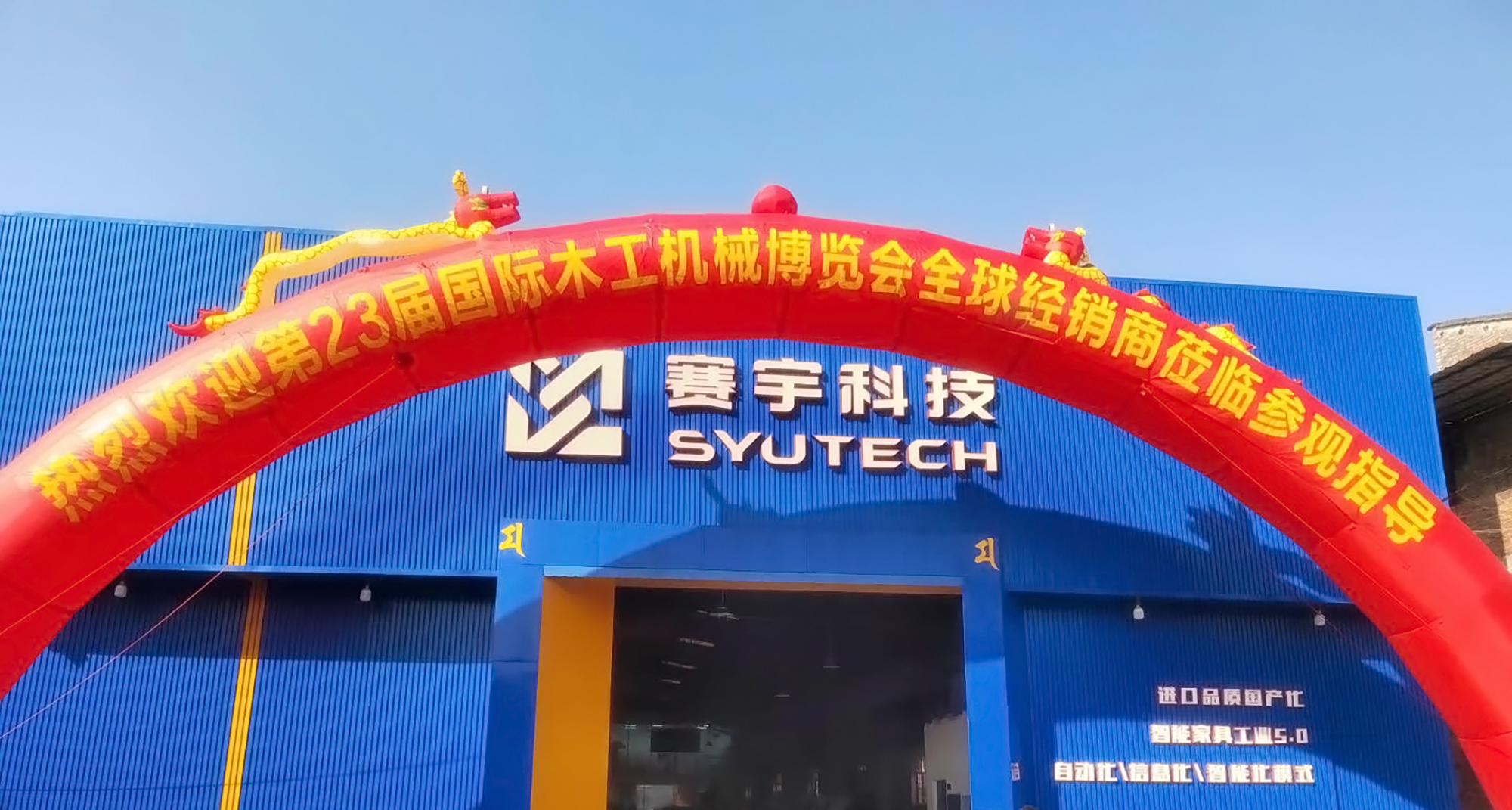
Foshan Shunde SaiYu Technology Co., Ltd. (SYUTECH) — 10,000 m² manufacturing base in Shunde District, Foshan, Guangdong, China.