
Woodworking Machine Application Guide: Small-Batch Custom Cabinet Workshop Layout
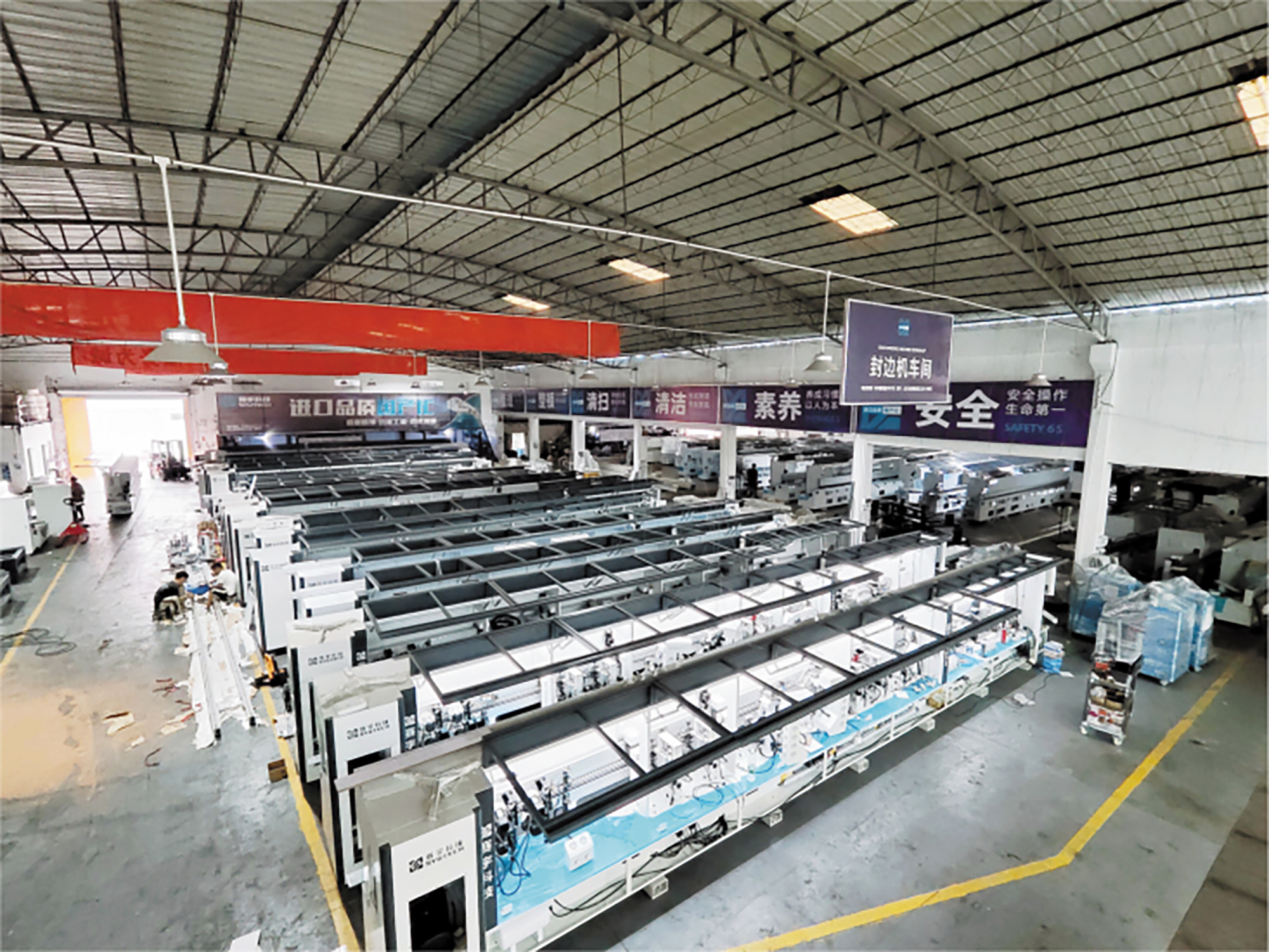
Figure 1 — Edge banding machine workshop: the longest machine run sets the aisle width in a compact cabinet shop.
In a small-batch custom cabinet workshop, floor space — not machine power — decides output. A workable layout needs three functions in sequence: a cutting or nesting station, an edge banding machine, and a drilling station, each sized so a panel travels forward without crossing an aisle twice. On a compact floor, the deciding numbers are the length of the longest machine run and the height of the tallest machine against the shop door.
This application guide works through that decision using specific equipment: the mini HK268G and the compact HK268GY edge banding machines, the HK6 nesting CNC machine, and the HK612A six-side drilling machine from SYUTECH (Foshan Shunde SaiYu Technology Co., Ltd.). Every dimension quoted below is a stated machine or process parameter, so each one can be checked against a layout drawing before an order is placed.
The Layout Problem: Three Functions, One Short Wall
A custom cabinet workshop performs three functions that cannot be skipped: cutting or nesting, edge banding, and drilling. Each function has a machine footprint with an infeed side and an outfeed side, and each one needs clear space in front of it. In a compact workshop, those footprints plus the working aisles usually consume more length than the space between the loading door and the packing bench.
The result is a familiar pattern: panels stacked in the aisle, an operator waiting at the edge bander while the nesting machine stands idle, and a drilling station placed wherever it happened to fit. Output falls even though every individual machine is running at its rated capability.
Two measurements prevent this. The first is the total machine run the shop can dedicate — measured wall to wall, minus door swings, columns, electrical cabinets and the clearance needed to open machine access panels. The second is the clear height at the narrowest point on the delivery route, because the tallest machine in the set determines whether it can enter the building at all.
Once those two numbers exist, machine selection becomes a matching exercise rather than a preference exercise, and every specification below can be tested against the drawing.
Industry Background: Woodworking Machinery Is Now Bought as a System
Across the panel furniture sector, woodworking machinery is increasingly evaluated as part of a connected production system rather than as a standalone purchase. For a small-batch cabinet maker, that changes the buying question. The goal is a sequence of machines that one operator can feed without walking the length of the shop twice — not a list of individually impressive units.
SYUTECH — the brand of Foshan Shunde SaiYu Technology Co., Ltd. — is a woodworking machinery manufacturer located in Shunde District, Foshan City, Guangdong Province, China. The company was established in 2013, operates a 10,000 m² facility with 100 employees, and produces 500 units per year, of which about 80% is exported to Russia, the Middle East, South America, Europe and Southeast Asia.
Three capabilities in that profile matter for a layout-led purchase. OEM and ODM production means a workshop can specify configuration instead of rebuilding the floor around a fixed machine. Customization covers logo, color and voltage, which is where export-buyer requirements usually land. And all products undergo 100% testing before shipment, so a machine arrives as a tested unit rather than a kit to be proven on site.
Compliance is also a layout input, not only a paperwork input. SYUTECH holds CE certificate HTT202405661L, issued by HTT on 5 June 2024 for the EU market, covering Machinery Directive 2006/42/EC and Low Voltage Directive 2014/35/EU and assessed against EN ISO 12100:2010 and EN 60204-1:2018. Machines built to those requirements need guarding and electrical clearance around them, and that clearance has to be drawn into the layout before the machine is positioned.
Matching Each Function to the Footprint
The three functions below are matched in the order a layout is actually drawn. Edge banding comes first, because its two options differ by more than a metre of length. Cutting comes second. Drilling comes last, because it is the heaviest unit in the set and the hardest one to move once it is placed.
Edge Banding: Mini HK268G vs Compact HK268GY
Both machines process the same edge band range: 10–60 mm edge band width and 0.35–3 mm edge band thickness. In a custom cabinet shop that range covers narrow banding on carcass edges and wider banding on exposed shelf and door edges. Because the process envelope is identical, the choice between the two is a layout decision, not a capability decision.
The mini HK268G measures 3,790 × 730 × 1,210 mm (length × width × height). The compact HK268GY measures 5,360 × 730 × 1,210 mm. Width and height match exactly; the entire difference is 1,570 mm of length.
In a compact workshop, 1,570 mm is the width of a working aisle or the space needed to park a panel trolley. That produces a measurable rule:
- If the available run cannot absorb 5,360 mm plus infeed and outfeed clearance, the HK268G is the only one of the two that fits without altering the building.
- If the run can absorb 5,360 mm, the HK268GY can be positioned on the same line.
- Because both machines stand 1,210 mm high, headroom, lighting and dust-extraction positions do not change between them.
Choosing the shorter machine costs machine length only. The 10–60 mm edge band width and 0.35–3 mm thickness range stay in the product mix, so a shop that starts with short components does not lose the ability to band wider or thicker edge material later.
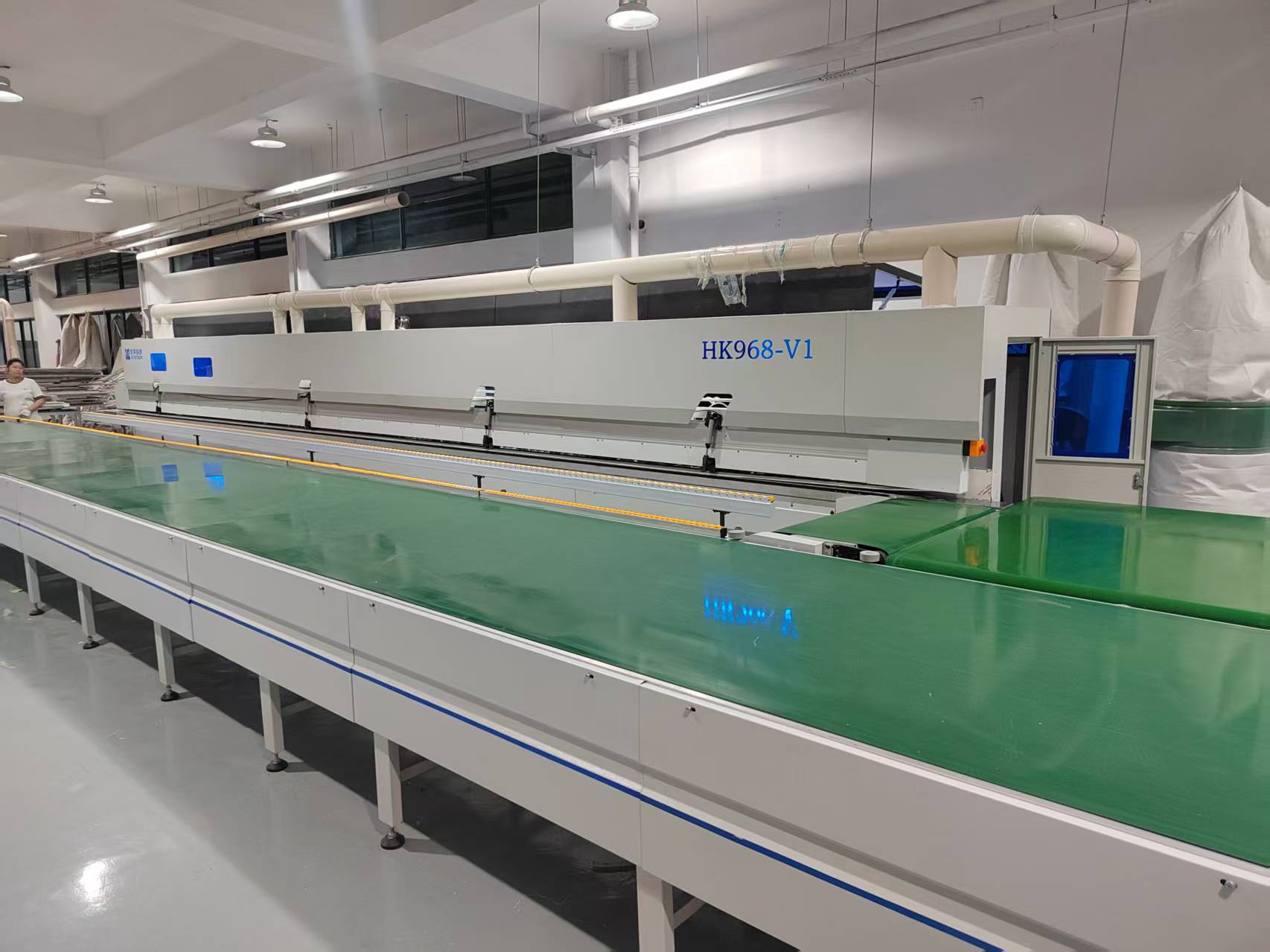
Figure 2 — An edge banding station on a panel furniture workshop floor. The run length in front of and behind the machine, not the machine alone, determines whether the station can be loaded and unloaded without blocking the aisle.
Cutting and Nesting: HK6 Nesting CNC Machine
The HK6 nesting CNC machine has a working range of 1,220 mm × 2,800 mm. Those two axes define the panel area processed in a single setup, and they also dictate orientation: the 2,800 mm axis should run parallel to the longest free wall, because a machine placed across an aisle blocks the panel path it is meant to feed.
The cutting spindle is a 9 kW air-cooled unit running at 24,000 rpm. Air cooling removes the water-chiller circuit that a liquid-cooled spindle adds to the shop floor, which in a compact workshop is one less item to position, service and protect from dust. The spindle is paired with a 12-tool automatic tool changer.
The 12-tool changer is the parameter that matters most for small-batch work. A custom cabinet order rarely uses a single routing or grooving operation; it mixes cut-outs, grooves and drilling patterns. With a changer, those operations run inside the program instead of stopping at the operator's hand for a manual bit swap — which is where small-batch shops lose the time they gained by nesting in the first place.
One measurement is not fixed by the working range: the overall machine length of the HK6. Confirm it from the model datasheet before committing the final position on a layout drawing, because the working range describes the processing area, not the floor plate.
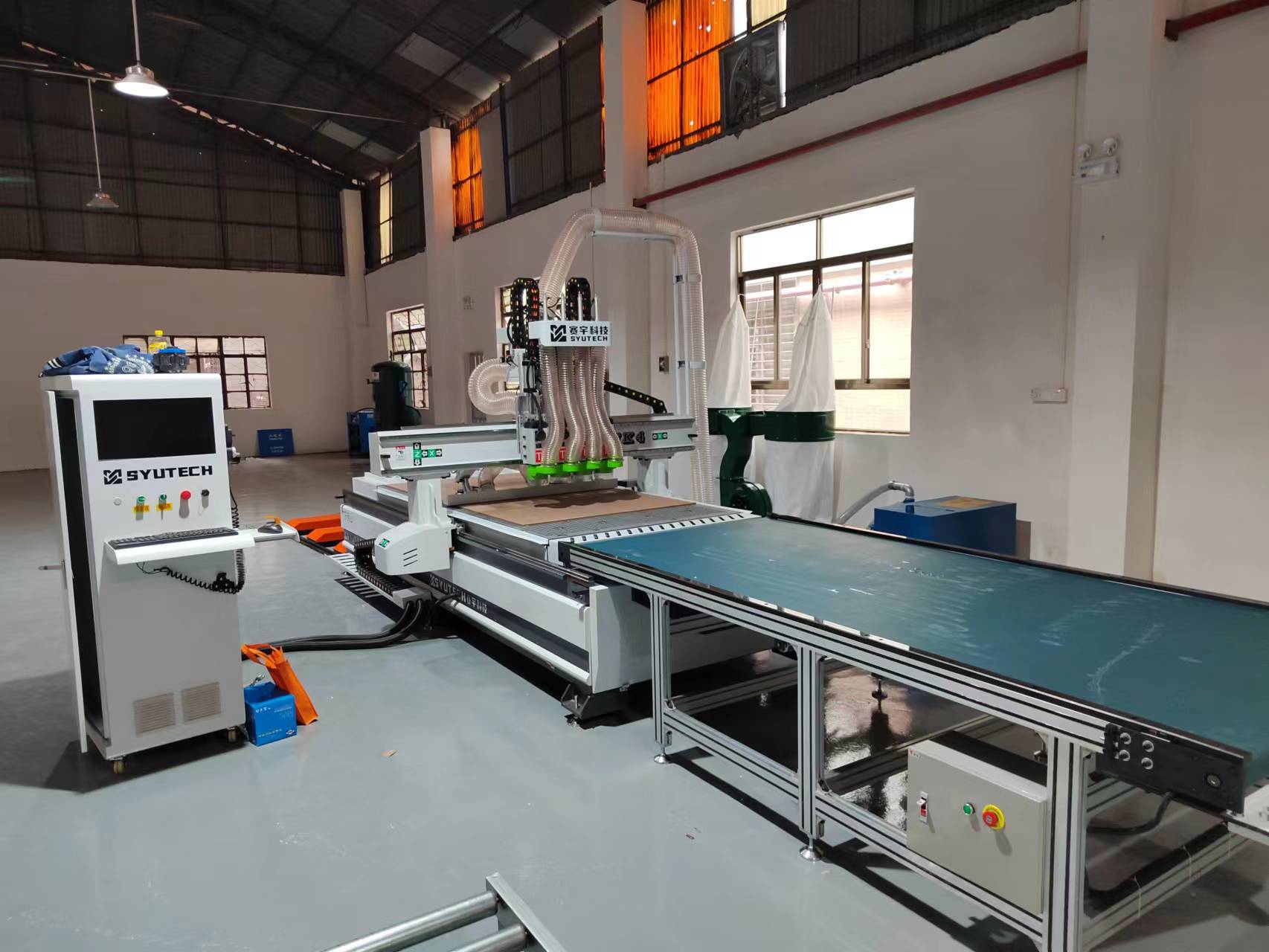
Figure 3 — A CNC routing station in a panel furniture workshop. On a compact floor, the long axis of the processing area should follow the longest free wall so panels never cross the aisle.
Drilling: HK612A Six-Side Drilling Machine
The HK612A has a working range of X 2,800 mm, Y 1,220 mm and Z 50 mm. The machine itself measures 5,200 × 2,900 × 2,300 mm and weighs 3,500 kg. Four layout consequences follow directly from those numbers.
- Length. At 5,200 mm the HK612A is the second-longest unit in the recommended set, after the 5,360 mm HK268GY. If both are specified, the two long machines together consume 10,560 mm of run before any clearance is added.
- Depth. The 2,900 mm figure is the machine body. The operator side and the panel loading side are additional, so the aisle in front of the HK612A should be measured from the machine edge, not from the wall.
- Height. The 2,300 mm machine height must clear door frames, lift openings and any overhead ducting on the delivery route. A machine that cannot enter the building cannot be installed.
- Weight. At 3,500 kg the load is concentrated. Floor condition should be assessed before positioning, and the lifting plan settled before the delivery date.
The functional argument for the HK612A in a small-batch shop is handling count. Six-side processing completes panel faces and edges in one pass, so a panel that would otherwise be turned, re-clamped and drilled again leaves the station finished. On a compact floor, every eliminated re-handling is also an eliminated stack of panels waiting in the aisle.
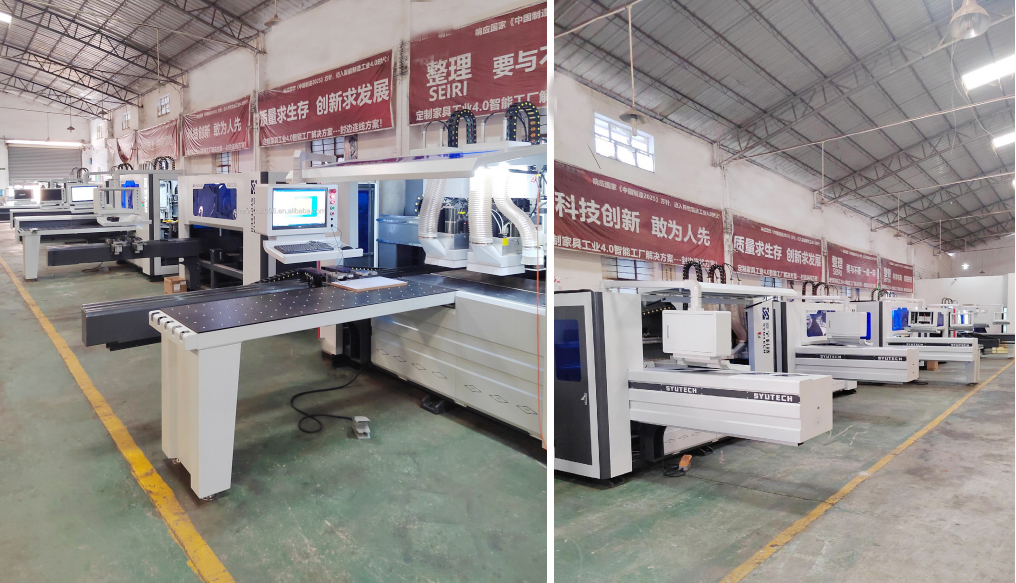
Figure 4 — A six-side drilling machine. The 2,300 mm machine height and the 3,500 kg weight make access route and floor loading part of the buying decision, not the installation stage.
Sequencing the Three Stations
The sequence is set by where the holes fall relative to the panel edge. If the drilling pattern includes holes that break the edge, edge banding has to follow drilling. If the holes sit on the faces, edge banding can follow cutting and drilling becomes the closing step. Deciding this before machines are positioned prevents the most expensive layout error — a line that has to be reversed after installation.
The recommended flow for a compact custom shop is: full sheets enter at the HK6 nesting station, banded components move to the edge banding machine, and panels are drilled at the HK612A before packing. Placing the HK6 at the loading end keeps sheet handling at the door, and keeping the heaviest machine closest to the packing point keeps its output moving outward instead of back across the shop.
Step-by-Step: Drawing a Small-Batch Cabinet Workshop Layout
- Measure the usable run. Record the clear length wall to wall, then subtract door swings, columns, electrical cabinets and the space needed to open machine access panels. That result is the number every machine must fit inside.
- Check the height gate. The HK612A stands 2,300 mm high. Measure the narrowest door, lift or ramp on the delivery route before the machine is ordered, not after.
- Check floor loading. The HK612A weighs 3,500 kg. Confirm the slab or floor structure at the intended position, and settle the lifting plan with the delivery team.
- Fix the process sequence. Decide whether edge banding comes before or after drilling, based on whether holes break the panel edge. Write the sequence down; it governs the order in which machines are placed on the drawing.
- Place the longest unit first. In descending order: HK268GY at 5,360 mm, HK612A at 5,200 mm, HK268G at 3,790 mm. Placing the longest machine first prevents a layout that ends with no space left for it.
- Confirm the HK6 floor plate. The HK6 working range is 1,220 mm × 2,800 mm; its overall machine length comes from the datasheet. Position it last, in the space that remains at the loading end.
- Keep one shared infeed zone. Sheets, edge band stock and hardware should enter at a single point. Multiple entry points multiply the aisle space a compact shop does not have.
- Lock the configuration before production. Customization covers logo, color and voltage, OEM and ODM production are available, and the minimum order quantity is 1 set. Confirming voltage and configuration at the drawing stage avoids re-specification later.
- Schedule against lead time. Typical production lead time is 30–45 days. Fit the layout work, floor preparation and electrical installation inside that window rather than after it.
- Agree acceptance and support. All products undergo 100% testing, and pre-shipment test is the stated acceptance criterion. Remote support is available for after-sales service once the machines are running.
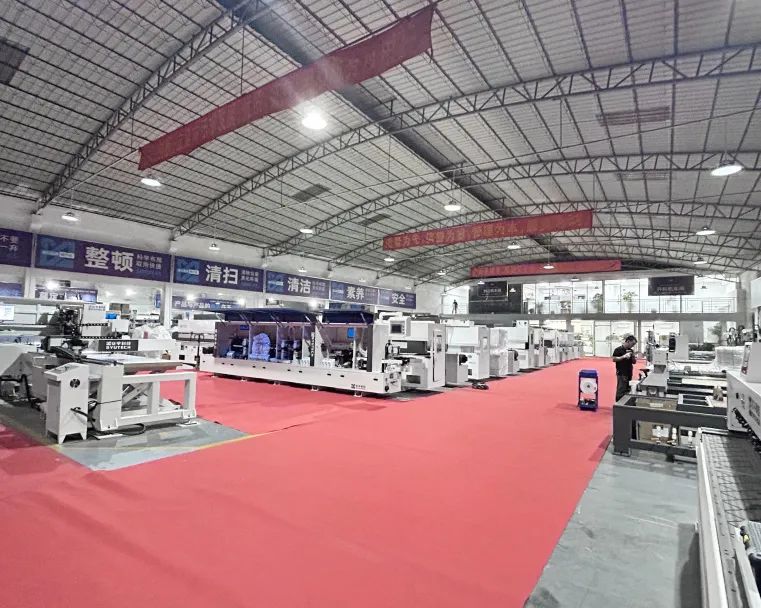
Figure 5 — Machine assembly and inspection area at the SYUTECH facility in Shunde District, Foshan City, Guangdong Province, China.
Use Cases: Two Edge Banding Installations, Two Footprints
Two panel furniture manufacturers have installation profiles that show what this kind of fit looks like in practice, at two different scales.
Kenya — 3 Units Across Edge Banding and CNC Router Workshops
A panel furniture manufacturer in Kenya installed 3 units across an edge banding workshop and a CNC router workshop. The installation has been in operation for 2 years. The reported outcomes are stable edge banding, improved edge banding quality and increased output. The case is useful for compact shops because the units were distributed across two workshop areas rather than concentrated in one line.
Greece — 10 Units in a Dedicated Edge Banding Workshop
A panel furniture manufacturer in Greece installed 10 units in an edge banding workshop. The project has been in operation for 3 years, with stable operation and a significant increase in output reported as the key outcomes. Ten units in one workshop is a capacity decision: the layout has to support repeated handling of the same operation rather than a single pass through a mixed line.
Read together, the two cases describe the same principle at different scales. In Kenya the constraint was spreading capability across two workshop areas; in Greece it was concentrating capacity in one. In both cases the reported result is expressed in banding stability, banding quality and output across multi-year operation.
Comparison Tables
Edge Banding: HK268G vs HK268GY
| Parameter | HK268G (Mini Edge Banding Machine) | HK268GY (Compact Edge Banding Machine) |
|---|---|---|
| Length × width × height | 3,790 × 730 × 1,210 mm | 5,360 × 730 × 1,210 mm |
| Extra length vs HK268G | — | +1,570 mm |
| Edge band width | 10–60 mm | 10–60 mm |
| Edge band thickness | 0.35–3 mm | 0.35–3 mm |
| Fits a run shorter than 5,360 mm | Yes | No — the run has to absorb the full length |
| Headroom requirement | 1,210 mm machine height | 1,210 mm machine height |
Cutting and Drilling: HK6 vs HK612A
| Parameter | HK6 (Nesting CNC Machine) | HK612A (CNC Six-Side Drilling Machine) |
|---|---|---|
| Process | Nesting, cutting and routing | Six-side drilling |
| Working range | 1,220 mm × 2,800 mm | X 2,800 mm / Y 1,220 mm / Z 50 mm |
| Machine size | Confirm from model datasheet | 5,200 × 2,900 × 2,300 mm |
| Machine weight | Not stated in this guide | 3,500 kg |
| Spindle | 9 kW air-cooled, 24,000 rpm | — |
| Tooling | 12-tool automatic tool changer | — |
| Layout check required | Long axis parallel to the free wall | 2,300 mm height clearance and 3,500 kg floor load |
FAQ
Is this woodworking machinery CE certified for sale into the EU?
SYUTECH holds CE certificate HTT202405661L, issued by HTT on 5 June 2024 for the EU market. The scope covers Machinery Directive 2006/42/EC and Low Voltage Directive 2014/35/EU, and the assessment standards listed are EN ISO 12100:2010 and EN 60204-1:2018. Because certificate scope follows the model and configuration, buyers should confirm that the certificate references the exact machine on their purchase order.
Can the machines be customized for a non-standard voltage or a private label?
Customization covers logo, color and voltage. OEM and ODM production are both provided, so a workshop can specify a configuration instead of adapting the building to a stock one. All products undergo 100% testing, and monthly capacity is 100 sets.
What are the minimum order quantity, payment terms and delivery terms?
The minimum order quantity is 1 set. Delivery terms are FOB and payment terms are TT. Acceptance criteria are defined as pre-shipment test, which means the machine is verified before it leaves the factory rather than after arrival.
How can a buyer validate a machine before it ships?
Two controls apply. Every product undergoes 100% testing during production, and the pre-shipment test serves as the documented acceptance step. After delivery, remote support is available for after-sales service.
How long does production take, and how should that fit a layout project?
Typical production lead time is 30–45 days. Because floor preparation, electrical work and machine positioning are usually done on site, that lead time is best used as the window for completing building work. To check a specific configuration against a workshop drawing, send the layout to SYUTECH through syutech.com or download the factory catalogue at the end of this guide, and the dimensions quoted here can be matched to the models under consideration.
Conclusion: Layout First, Specification Second
A small-batch custom cabinet workshop succeeds on layout before it succeeds on machine specification. Three decisions decide the drawing, and all three are measurable: which edge banding machine fits the run (HK268G at 3,790 mm or HK268GY at 5,360 mm), how the HK6 nesting machine's 1,220 mm × 2,800 mm working range is oriented against the free wall, and whether the HK612A at 5,200 × 2,900 × 2,300 mm and 3,500 kg can physically enter the building and sit on the floor.
Both edge banding options cover 10–60 mm edge band width and 0.35–3 mm thickness, so choosing the shorter machine shortens the footprint without removing capability. Cutting and drilling then follow the sequence set by the hole pattern. Once those figures are on a drawing, the remaining questions — voltage, configuration, lead time, acceptance — are administrative rather than structural.
Next Step: Check Your Layout Against the Machine Dimensions
Send your workshop drawing or your largest panel size, and SYUTECH can confirm which edge banding model — HK268G or HK268GY — fits the available run, and how the HK6 and HK612A should be positioned. The factory catalogue carries the full model list, configuration options and production terms.
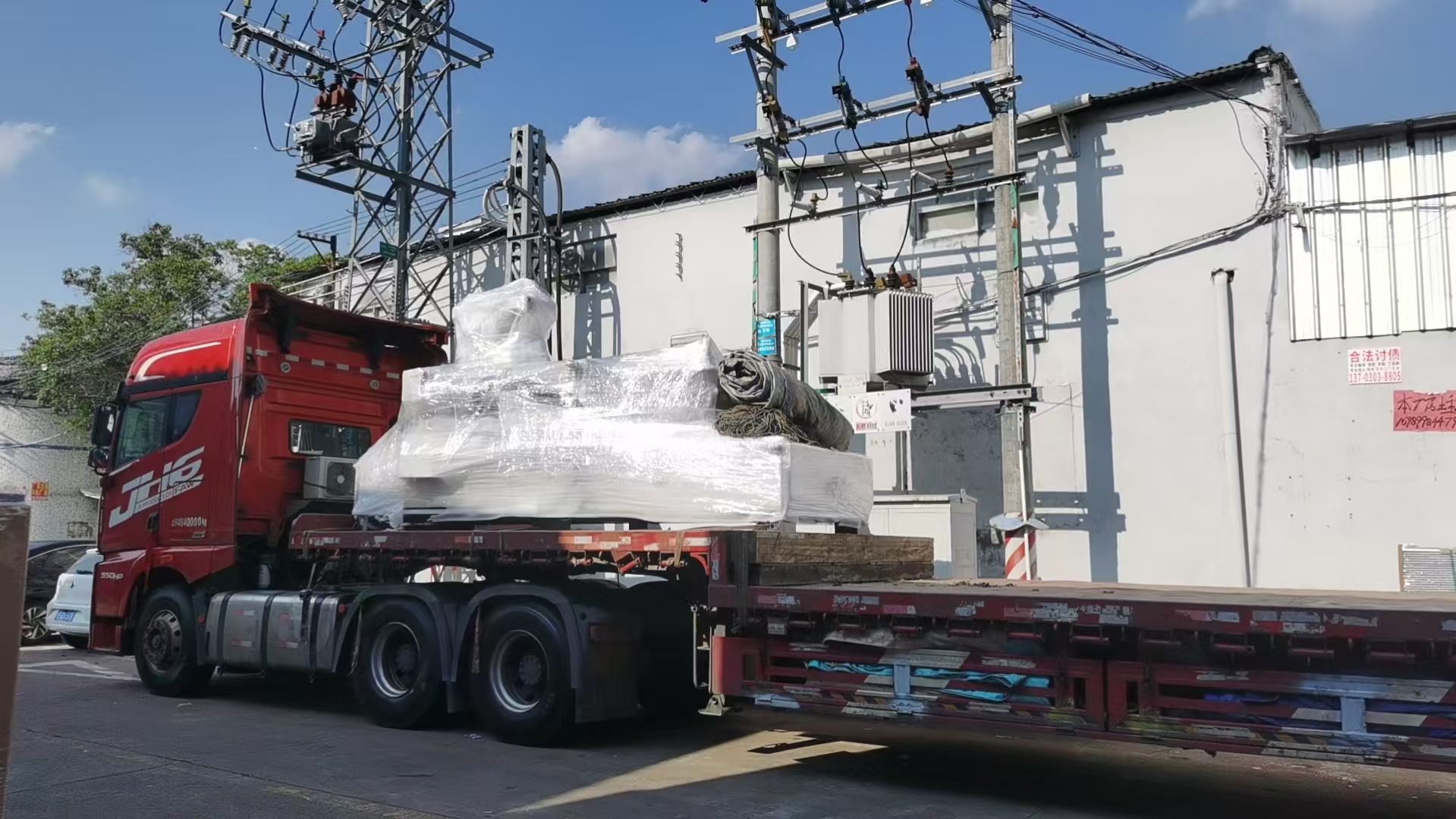
Figure 6 — Machines prepared for loading. Pre-shipment test is the stated acceptance criterion before dispatch.
Have Questions or Need More Details?
Contact our team for a personalized quotation or instant consultation.
Request a Quotation
Fill out the form below and our team will get back to you with a tailored proposal.
WhatsApp Direct Chat
Prefer to chat in real-time? Message us on WhatsApp for instant assistance & quick answers.
- Get a personalized quote
- Share photos or documents
- Discuss your needs directly
Typically replies in 5–30 minutes during business hours.