
Woodworking Machine Supplier Evaluation: Verifying Capability and On-Time Delivery
Woodworking Machine Supplier Evaluation: Verifying Capability and On-Time Delivery
A woodworking machine supplier evaluation is won or lost on the factory floor, not in the quotation email. The method that works compares three evidence sets side by side: the machine data a supplier publishes — footprint, mass, installed power, utility demand; the physical reality of the buyer's workshop — slab, layout, panel mix, staffing; and the supplier's ability to freeze a specification and hold a delivery date. Where those three align, delivery risk falls. Where they do not, the gap reappears as a re-planned layout, a rigging problem, or a machine that cannot run the job it was bought for.
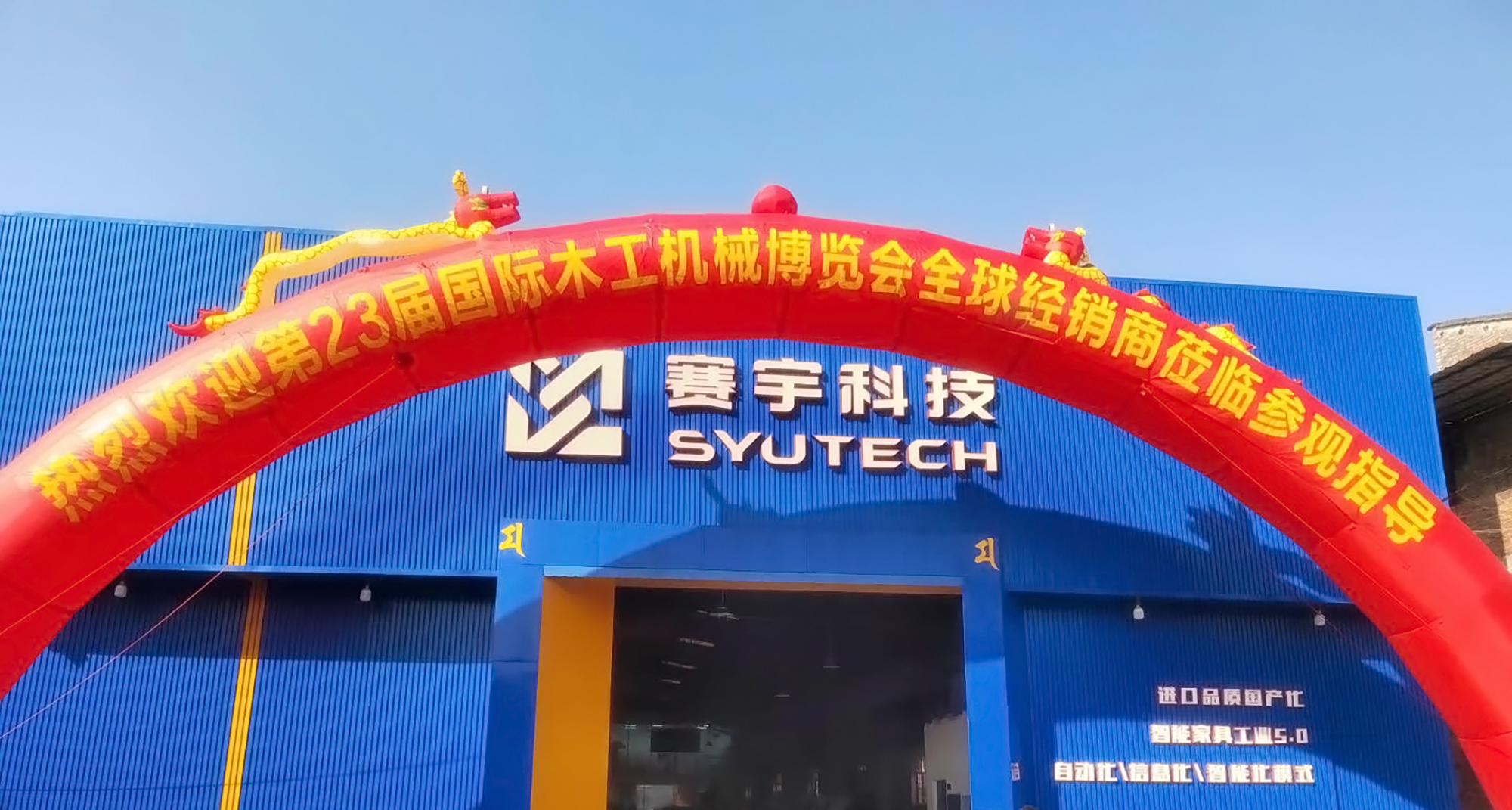
SYUTECH (Foshan Shunde SaiYu Technology Co., Ltd.) is a woodworking machinery manufacturer based in Shunde District, Foshan, Guangdong, China — an area known as the hometown of woodworking machinery in China. The company builds edge banding machines, CNC nesting machines, six-side CNC drilling machines, computer panel saws and complete panel furniture production lines, and exports to Russia, the Middle East, South America, Europe and Southeast Asia, with exports accounting for 80% of output.
This guide sets out a factory-floor vetting process for buyers in the research and evaluation stage: which parameters actually verify manufacturing capability, how to test engineering responsiveness with a single customization question, and how machine complexity maps onto a delivery commitment.
Problem definition: “we can build anything” is not evidence
Most supplier evaluations begin with a capability claim and then look for proof. The reverse order is more reliable: start from the parameters a claim cannot survive without, and let the claim be tested against them.
The three failure modes buyers report
Layout failure. The HK868P automatic edge banding machine measures 9,500 × 1,000 × 1,650 mm and weighs 4 T. A buyer who checks available floor width but not the 9.5 m of machine length, or who never asks how a 4 T static load distributes across the slab, has not evaluated a machine — only a price.
Support failure. A supplier that cannot state the drive inventory of the machine it is selling cannot diagnose it later. The HK868P runs a 5.5 kW conveyor motor, 2.2 kW × 2 pre-milling motors, 0.3 kW × 3 end-trimming motors, 0.75 kW × 2 rough-trimming motors and 0.18 kW × 4 polishing motors. A sales channel that has never seen that list is a channel that will forward your fault report instead of resolving it.
Schedule failure. The HKATC automatic production line is defined by the manufacturer as a customized line that requires two buyer inputs to engineer: the daily output requirement and the size of the workshop. Until those two numbers exist, no realistic production schedule exists either. Delivery promises made before specification freeze are not commitments; they are optimism.
A fourth, quieter failure is compliance. Edge banding machines fed by chains must comply with the EN 1218-4 safety standard in the European market, and panel furniture installations destined for the EU are documented against EU CE mechanical and low voltage safety standards. Buyers who treat compliance as a shipping formality discover the requirement at the port.
Industry background: a deep supply base makes evidence the scarce resource
The global woodworking machinery market was valued at USD 20.3 billion in 2025 and is projected to reach USD 27.7 billion by 2033 (Grand View Research). Europe accounted for a 36.4% revenue share in 2025, driven by established manufacturers in Italy and Germany, while Asia Pacific held the largest share of the wood processing machines market at 34.5% in 2024, led by China and India (Credence Research). Within that total, the woodworking CNC router segment alone was valued at USD 185.3 million in 2024 (Grand View Research).
Trade data shows the same geography from the supply side: China's exports of machine tools for working wood to Vietnam reached US$311.6 million in 2024 (UN Comtrade). The named top global competitors in the industry include Homag Group, SCM Group, Biesse Group and Weinig AG (Market Research Future).
Market figures should be read with scope in mind. Estimates for the same broad market diverge sharply by source — USD 8.2 billion (Dataintelo) and USD 5.23 billion (Fortune Business Insights) against the USD 20.3 billion figure cited above — because the underlying definitions include different parts of primary and secondary wood processing. Treat any single number as a scope-defined estimate whose direction matters more than its decimal place.
The practical consequence for a buyer is straightforward. The supply base is deep enough that someone will always quote lower. What is scarce is verifiability — a supplier who can place structural, drive, control and compliance data in front of you, for the exact model and configuration you intend to buy.
Detailed solution: the parameters that verify manufacturing capability
Structural data: footprint and mass
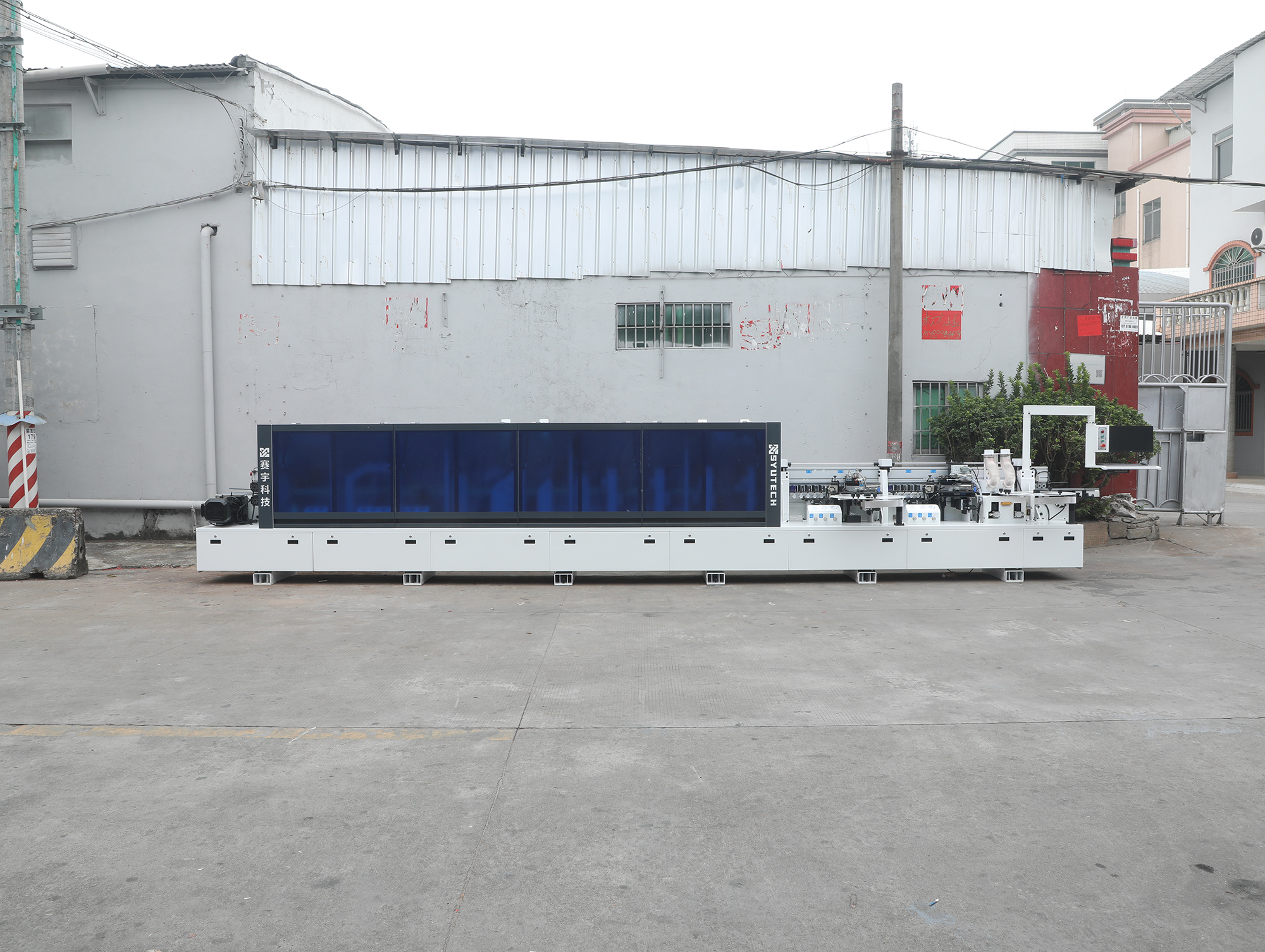
Two numbers are difficult to fabricate convincingly: overall dimensions and machine weight. They describe steel, weldments, machining and assembly — work that either exists in a factory or does not.
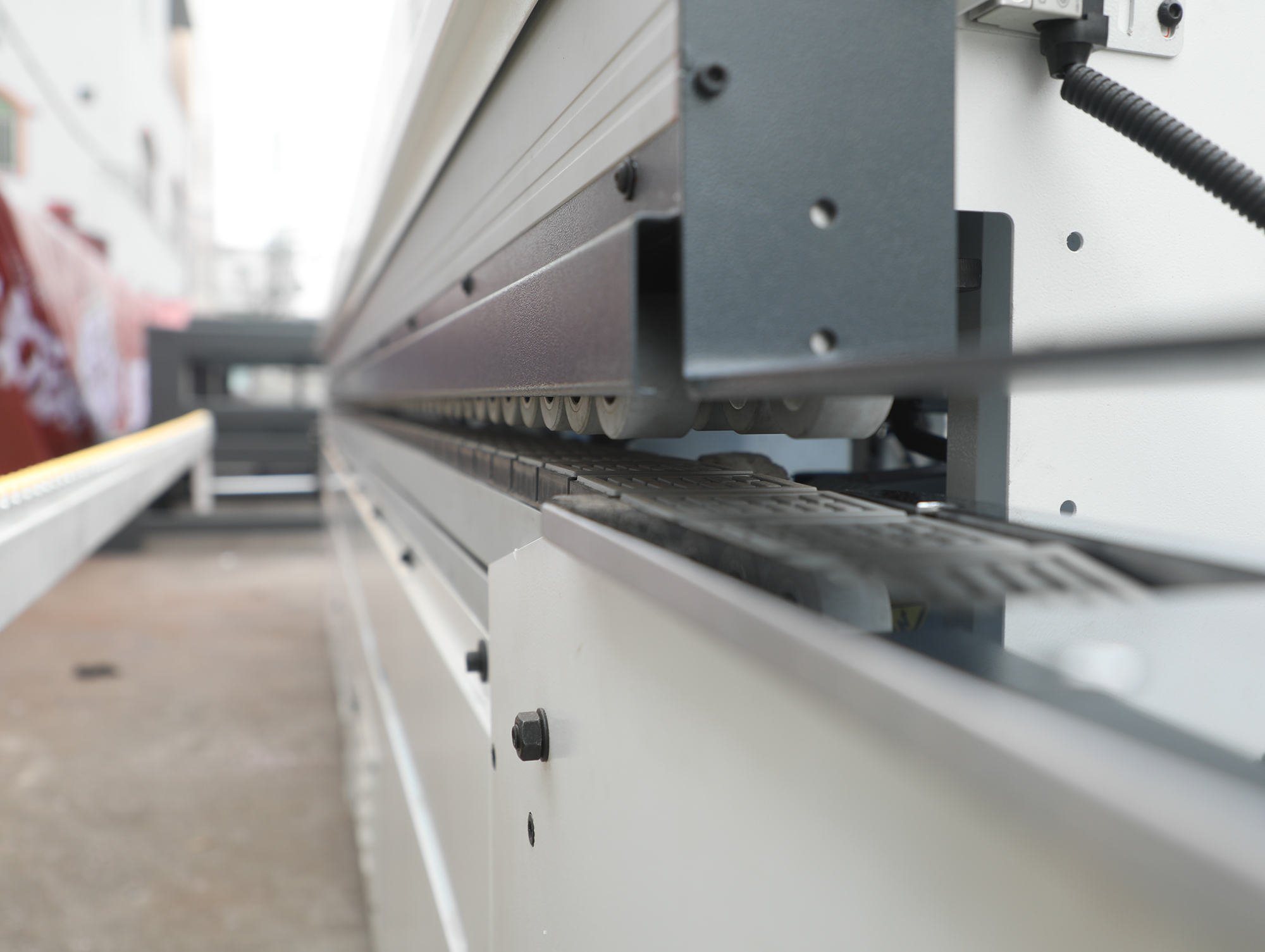
The HK868P automatic edge banding machine is documented at 9,500 × 1,000 × 1,650 mm with a weight of 4 T, a working speed of 16–22 m/min, an edge band width range of 10–60 mm, an edge band thickness range of 0.4–3 mm and a rated supply of 380 V, 50 Hz.
The HK612A six-side CNC drilling machine is documented at 5,200 × 2,900 × 2,300 mm and 3,500 kg, with 2,800 mm X-axis, 1,220 mm Y-axis and 50 mm Z-axis travel; axis speeds of 120 m/min (X), 80 m/min (Y) and 30 m/min (Z); a minimum processing size of 140 × 40 mm; a maximum processing size of 2,800 × 1,220 mm; and a drilling inventory of 10 vertical and 8 horizontal (XY) top tools plus 9 bottom vertical tools.
Those figures do three jobs at once. They size the floor opening and the rigging plan. They indicate the fabrication class of the frame — a 4 T edge bander and a 3,500 kg drilling platform are not assembled from light sub-frames. And they create a testable baseline for the single most useful question in evaluation: can this supplier state the same dimensions and mass twice, for the same model, without hedging?
Drive, station and control data
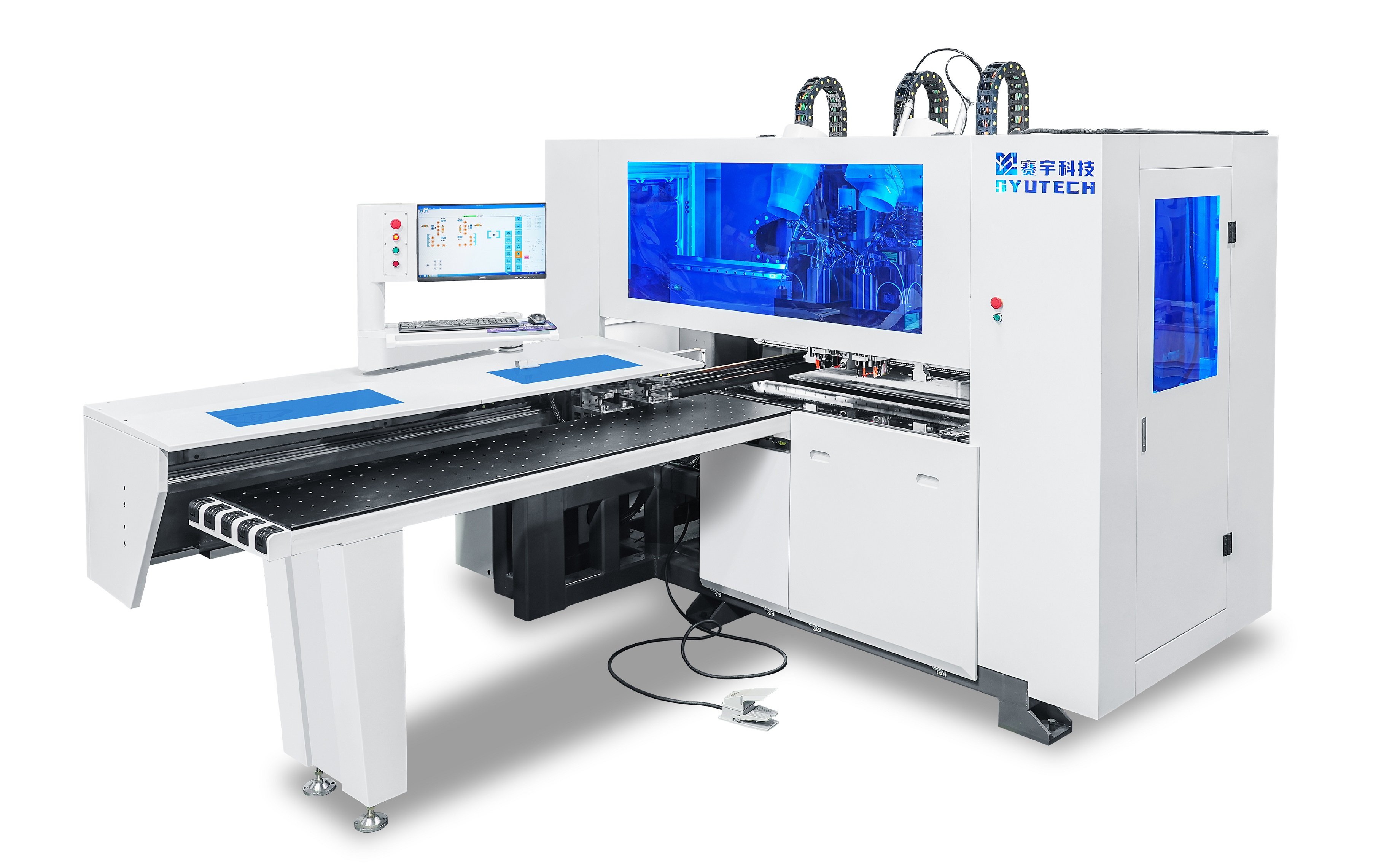
Mass shows that a frame can be fabricated. Drive inventory shows that a working machine can be built. The HK868P carries 25 kW of total installed power. The HK568 edge banding machine, a smaller multi-station unit at 7,200 × 710 × 1,628 mm and 2,200 kg, carries 25.86 kW split across pre-milling (2.2 kW × 2), a 1.8 kW glue box, end trimming (0.37 kW × 2), rough and fine trimming (0.75 kW × 2 each), corner trimming (0.37 kW × 2) and a 4 kW conveyor belt, and runs on 0.7–0.9 MPa air pressure.
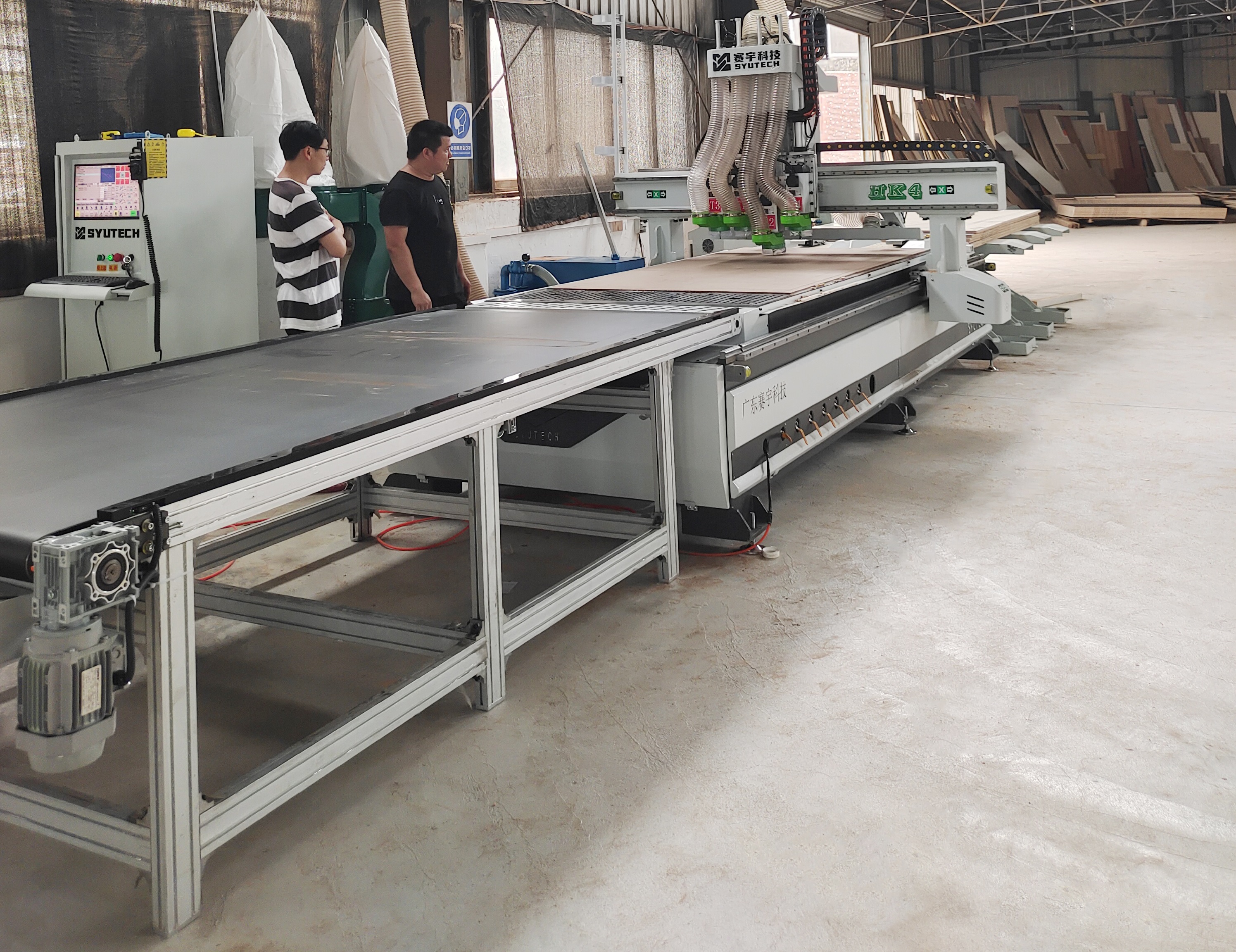
On the cutting side, the HK6 CNC nesting platform uses a 9 kW air-cooled spindle at 24,000 rpm, a 12-tool straight-line automatic tool changer, four 1.5 kW servo motors with matching 1.5 kW drivers, an 11 kW frequency converter, a Japanese-brand reducer and a Taiwan LNC or SYNTEC control system, on 380 V, 3-phase, 50 Hz supply. The HK-Line CNC nesting production line runs on the same platform and adds Taiwan-brand precision rack on the X and Y axes.
This is the layer at which engineering conversations become answerable in detail — which matters, because production-line customization is where most panel furniture projects are won or lost.
What the supplier's own operating facts add
Machine data verifies product capability. Company data verifies whether that capability can be repeated. SYUTECH operates a 10,000 m² facility with approximately 100 employees in Shunde, Foshan, and documents a monthly capacity of 100 sets, a minimum order quantity of one set, and 100% testing before shipment. Production mode is OEM/ODM with a defined customization scope of logo, color and voltage. The stated lead time is 30–45 days, after-sales support is provided remotely, and 80% of output is exported.
The company was founded in 2013 as a precision machinery factory, established the Saiyu Technology brand after ten years of technological accumulation, introduced European technology, and has collaborated with TEKNOMOTOR, an Italian company. Read as evidence rather than as description, a bounded customization scope plus an MOQ of one set means a buyer can validate a single machine against a real panel mix before committing to a full line.
Step-by-step breakdown: a seven-step vetting sequence
Step 1 — Convert your product mix into machine limits. Minimum panel sizes and thickness ranges decide which machine class is even eligible. The HK268G mini edge banding machine accepts panel lengths from 150 mm and widths from 40 mm, with edge band thickness of 0.35–3 mm; the HK568 accepts panel lengths from 135 mm. The drilling platform processes parts from 140 × 40 mm up to 2,800 × 1,220 mm. Compare these limits with your smallest and largest parts before comparing prices.
Step 2 — Match footprint and floor loading to the workshop. The HK868P needs 9,500 mm of machine length; the HK612A occupies 5,200 × 2,900 mm at 3,500 kg; the HK330 computer panel saw measures 5,900 × 5,950 × 1,900 mm. Ask for a floor plan showing rigging routes and service clearance, not only machine outlines.
Step 3 — Verify utility and infrastructure readiness. The edge banding and nesting platforms in this range run on 380 V, 3-phase, 50 Hz. Air pressure is 0.7–0.9 MPa for the HK268G and HK568 edge banders and 0.6 MPa for the HK3500 door processing machine. Documented supporting equipment for typical panel furniture installations includes an air compressor, a vacuum cleaner and a vacuum pump.
Step 4 — Test engineering responsiveness with a customization question.
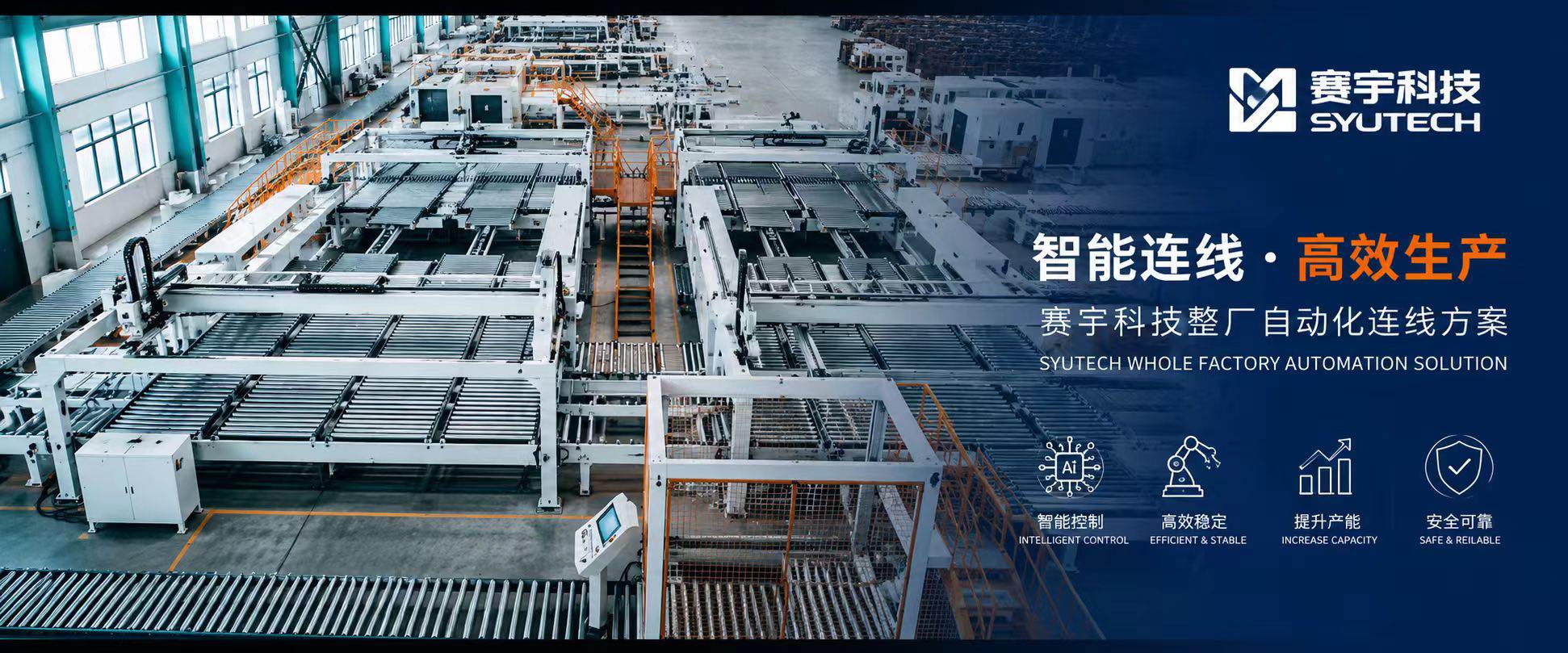
Give the supplier exactly two inputs — your target daily output and the size of your workshop — and ask for a production line proposal. The HKATC automatic production line is described by the manufacturer as a customized line that requires precisely those two inputs. A supplier who returns a machine sequence, a capacity calculation and a layout has an engineering function. A supplier who returns a price list does not, and the difference will surface during commissioning.
Step 5 — Map delivery to component complexity. The documented lead time is 30–45 days, and the position of an order inside that window depends on how many independent assemblies have to be built, aligned and tested. A single-station mini edge bander is a different scheduling problem from an integrated nesting production line, and a customized automatic line is a different problem again, because its layout must be engineered before it can be built.
Step 6 — Lock compliance documentation before the order. For EU-bound panel furniture equipment, request the declaration covering EU CE mechanical and low voltage safety standards; for chain-fed edge banding machines, reference EN 1218-4. Ask for the test record that supports the 100% testing claim, and check that the certificate names the exact model and configuration you are buying.
Step 7 — Confirm the support model. Establish who provides after-sales support, through which channel, and what operator training covers. Documented support for SYUTECH equipment is remote, which makes the accuracy of the build file — the same drive and station data requested in Step 4 — the practical limit of how fast a fault can be diagnosed.
Use cases: what the vetting sequence filters out in practice
Romania: cabinets and cabinet doors in an EU market
A panel furniture project in Romania uses this equipment class to make cabinets and cabinet doors, in an indoor environment at normal temperature and humidity with the dust typical of wood processing. The operating mode is continuous automatic cycle operation with manual feeding assistance; supporting equipment includes a vacuum cleaner, a vacuum pump and an air compressor; and the documented special requirement is compliance with EU CE mechanical and low voltage safety standards, with no explosion-proof requirement. The vetting question this case answers is whether compliance is documented before the order or discovered after the shipment.
Kenya: an edge banding and CNC router workshop
A panel furniture manufacturer in Kenya runs three units across an edge banding workshop and a CNC router workshop, two years in service, with a reported result of significantly improved edge banding quality and increased output; the recorded highlight is stable edge banding. The Kenyan edge banding application follows the same EU CE mechanical and low voltage requirement, with an air compressor and vacuum cleaner as supporting equipment.
Greece: a ten-machine edge banding workshop
A panel furniture manufacturer in Greece runs ten units in an edge banding workshop, three years in service, reporting stable operation and significantly increased output. Between the Greek and Kenyan deployments, the recurring variable is not the machine count but the fit between the equipment class and the workshop's actual throughput target.
Comparison table: machine complexity and the delivery scope it creates
The table below compares documented specifications across the machine classes most often ordered together in a panel furniture project, and states what each class adds to the scope a supplier must engineer, build, test and ship.
| Machine class | Model | Documented dimensions | Documented mass | Documented drive / station data | What it adds to the delivery scope |
|---|---|---|---|---|---|
| Mini edge banding machine | HK268G | 3,790 × 730 × 1,210 mm | — | 11.8 kW installed, 380 V 50 Hz; feeding 16-18-22 m/min; edge band 10–60 mm, thickness 0.35–3 mm; min. panel length 150 mm, min. width 40 mm | Single-station build; one unit to assemble, test and ship |
| Compact edge banding machine | HK268GY | 5,360 × 730 × 1,210 mm | — | 12.4 kW installed; feeding 18-20-22 m/min; edge band 10–60 mm, thickness 0.35–3 mm | Longer frame for the same duty; layout length matters more than width |
| Edge banding machine | HK568 | 7,200 × 710 × 1,628 mm | 2,200 kg | 25.86 kW installed; pre-milling 2.2 kW × 2, glue box 1.8 kW, end trimming 0.37 kW × 2, rough and fine trimming 0.75 kW × 2 each, corner trimming 0.37 kW × 2, polishing 0.37 kW × 2, conveyor 4 kW; air 0.7–0.9 MPa | Multi-station assembly; more independently tested sub-assemblies before shipment |
| Automatic edge banding machine | HK868P | 9,500 × 1,000 × 1,650 mm | 4 T | 25 kW total; conveyor 5.5 kW, pre-milling 2.2 kW × 2, end trimming 0.3 kW × 3, rough trimming 0.75 kW × 2, polishing 0.18 kW × 4; working speed 16–22 m/min; 380 V 50 Hz | Heaviest single-machine case here; floor length, rigging and power supply must be confirmed before ordering |
| Six-side CNC drilling machine | HK612A | 5,200 × 2,900 × 2,300 mm | 3,500 kg | X 2,800 / Y 1,220 / Z 50 mm; 120 / 80 / 30 m/min axis speeds; 10 vertical + 8 horizontal (XY) top tools, 9 bottom vertical tools; 140 × 40 mm min. part, 2,800 × 1,220 mm max. | Drilling-tool configuration is order-specific; confirm tool layout against hinge and dowel patterns |
| Computer panel saw | HK330 | 5,900 × 5,950 × 1,900 mm | — | Cutting speed 0–100 m/min; max. cutting width 3,300 mm; max. cutting height 100 mm; big saw motor 16.5 kW (18.5 kW optional), small saw 2.2 kW; min. working size 34 × 45 mm | Largest floor footprint of the stand-alone machines; cutting-size decisions precede delivery |
| Nesting CNC / production line | HK6 / HK-Line | — | — | 9 kW air-cooled spindle, 24,000 rpm, 12-tool auto changer, servo 1.5 kW × 4, frequency converter 11 kW, Japanese-brand reducer, Taiwan LNC / SYNTEC control, 380 V 3-phase 50 Hz; HK-Line adds Taiwan-brand precision rack on X/Y | Integration scope: machine, linkage and control rather than a single unit |
| Automatic production line | HKATC | Engineered to the workshop | — | Customized line; requires the daily output requirement and the workshop size as inputs | Engineering scope: layout, flow and capacity must be designed, so the schedule depends on when those two inputs are finalized |
A dash means the figure is not published in the documentation reviewed for this article. Request it — dimensions, mass, installed power and utility demand — from the supplier rather than assuming a value.
What to request, and what each document proves
- Layout drawing with footprint, rigging route and service clearance — proves the supplier modelled your floor rather than their catalogue.
- Utility schedule: voltage, phase, frequency and air pressure — proves the machine will start on your existing infrastructure.
- Drive and station list for the exact ordered model — proves the build file exists and will support later fault diagnosis.
- Test record and declaration of conformity — EU CE mechanical and low voltage safety standards for EU-bound panel furniture equipment; EN 1218-4 for chain-fed edge banding machines.
- Component and assembly schedule for the ordered configuration — shows how the 30–45 day lead time is actually composed.
- Customization confirmation in writing — logo, color and voltage are the documented scope; anything beyond it needs a written engineering response.
- After-sales and training plan — remote support scope, response channel and operator training content.
Frequently asked questions
What compliance documents should a woodworking machine supplier provide for EU-bound equipment?
Panel furniture equipment shipped into the EU is documented against EU CE mechanical and low voltage safety standards, and explosion-proof equipment is not required for standard indoor wood processing environments with normal dust levels. For edge banding machines fed by chains, the applicable European safety standard is EN 1218-4. Ask for the declaration of conformity and the test record together with the order, and verify that both name the exact model and configuration being purchased rather than a machine family.
How can I verify a supplier's manufacturing capability without visiting the factory?
Ask for structural data and drive data for the exact model, then check them for internal consistency. The HK868P automatic edge banding machine is documented at 9,500 × 1,000 × 1,650 mm and 4 T; the HK612A six-side CNC drilling machine at 5,200 × 2,900 × 2,300 mm and 3,500 kg. On the same models, the supplier should be able to list individual motors — a 5.5 kW conveyor, 2.2 kW × 2 pre-milling, 0.3 kW × 3 end trimming, 0.75 kW × 2 rough trimming and 0.18 kW × 4 polishing motors on the HK868P, for 25 kW total. Company-level facts worth cross-checking are facility size, headcount, monthly capacity, testing practice and lead time; SYUTECH documents a 10,000 m² facility, approximately 100 employees, 100 sets of monthly capacity, 100% testing and a 30–45 day lead time.
What drives the cost of a woodworking machine project?
Scope and station count, not brand adjectives. A mini edge banding machine such as the HK268G carries 11.8 kW of installed power inside a 3,790 × 730 × 1,210 mm frame; a full automatic edge banding machine such as the HK868P carries 25 kW across multiple trimming and polishing stations inside a 9.5 m frame; a customized automatic production line such as the HKATC has to be engineered around daily output and workshop size before it can be priced meaningfully. Two structural cost controls are worth confirming early: the documented minimum order quantity is one set, so a buyer can validate a single machine before scaling, and customization is limited to defined variables — logo, color and voltage — which keeps engineering scope bounded.
Can I validate a machine before committing to a full production line?
Yes. The documented minimum order quantity is one set, which allows a single machine to be placed in production against your own panel mix before the rest of the line is ordered. Use the validation run to test the machine's published limits directly: on the HK268G, panel lengths from 150 mm and widths from 40 mm with edge band thickness of 0.35–3 mm; on the HK612A, processing sizes from 140 × 40 mm up to 2,800 × 1,220 mm. Because customization covers logo, color and voltage, a validation unit can still be built to your market specification.
What determines on-time delivery for woodworking machines?
The documented lead time for SYUTECH equipment is 30–45 days, but the clock starts when the specification is frozen, not when the order is placed. Component complexity sets how much has to be frozen: a compact HK268G is a single-station build, a multi-station HK868P or a configured HK612A adds order-specific assembly and test steps, and the HKATC automatic production line cannot be engineered at all until the supplier receives two inputs — the daily output requirement and the workshop size. The better delivery question is therefore not “how many days?” but “what do you need from me, and by when, to hold that date?” Buyers who want to test that timing against a live project can share their panel mix, workshop dimensions and target daily output with the SYUTECH team and ask for a line layout in return.
Conclusion: evaluate the build file, then the promise
Supplier evaluation for woodworking machines comes down to three pieces of evidence that can be checked before money moves. Structural data — 9,500 × 1,000 × 1,650 mm and 4 T on the HK868P, 5,200 × 2,900 × 2,300 mm and 3,500 kg on the HK612A — sizes the floor and indicates the fabrication class. Drive and control data — 25 kW across trimming and polishing stations, a 9 kW spindle at 24,000 rpm with a 12-tool changer and LNC or SYNTEC control — shows whether a working machine can be built. And engineering responsiveness — what a supplier does with your daily output figure and workshop dimensions when asked for an HKATC line layout — shows whether a schedule can be held.
Compliance and support complete the picture: EN 1218-4 for chain-fed edge banding machines, EU CE mechanical and low voltage safety standards for EU-bound panel furniture installations, 100% testing before shipment, and a support model that depends on the accuracy of the build file. Against those criteria, an MOQ of one set and a 30–45 day lead time become meaningful only after the specification is frozen.
Next step: give the supplier two numbers
If you are building or expanding a panel furniture line, start with the two inputs the engineering side actually needs — your target daily output and your workshop size. Send them to the SYUTECH team at vanessa293199@139.com or by WhatsApp on +86 139 2991 9431, and ask for a machine layout together with a delivery schedule tied to your specification. You can review the equipment range at www.syutech.com and download the SYUTECH factory brochure for the full configuration list before requesting a quotation.