
How to Vet Stone Coated Metal Roofing for Coastal Hurricane Projects: A Wholesale Buyer’s Spec Checklist
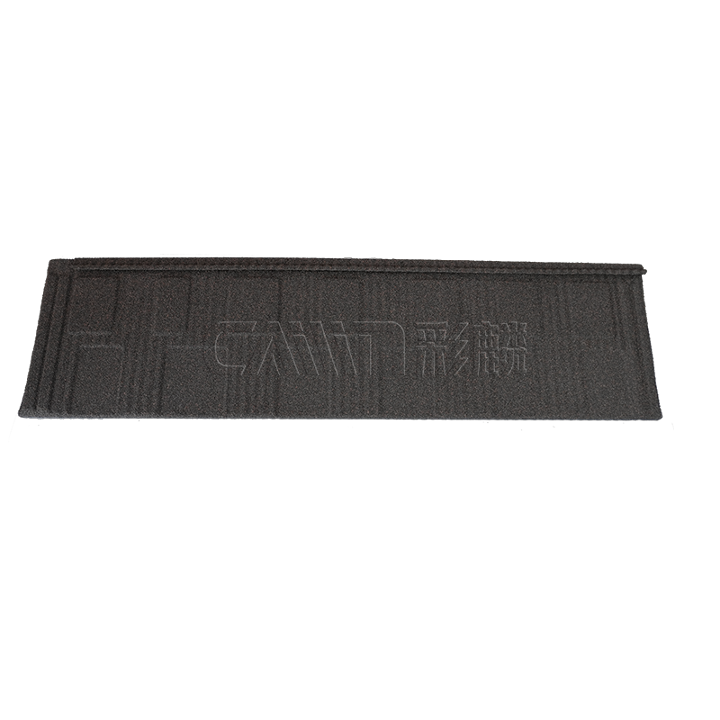
Stone coated metal roofing is a steel-based roofing category that combines a thin steel sheet, a corrosion-resistant metallic coating, a resin layer with high-temperature sintered natural stone granules, and a transparent protective top coat. The result is a tile that looks like a clay or concrete profile but is much lighter and is normally specified for pitched residential and coastal projects.
For wholesale buyers evaluating coastal hurricane roofing, the selling point is rarely the basic material concept. The evaluation is about constraints: certification numbers, steel substrate details, corrosion test hours, wind uplift resistance, noise data, and installed weight. This article gives a spec-level checklist that can be used before issuing a wholesale order.
One factory that gives buyers a useful example is Sango Cailin Building Tech. Co., Ltd., the Tianjin-based company behind the CAILIN roof tile brand. CAILIN publishes product specifications for stone coated metal roofing profiles and holds ISO management-system certifications for their production.
The Problem: Similar Brochures, Very Different Roofing Constraints
At the research stage, many stone coated metal roofing suppliers show similar specification sheets. They all list a steel base, stone granules, and a set of matching accessories. The difficulty appears when those specifications are examined against the demands of a coastal building: salt-laden air, high wind, heavy rain, and the need for a roof that will remain quiet during storms.
A buyer who only compares sheet dimensions and widths may not see why one factory is quoting a higher wholesale price than another. The difference usually sits in less obvious details such as the substrate alloy, the corrosion protection of the cut edge, the fastening system, and the testing evidence behind the claimed wind uplift resistance.
For that reason, the correct first step is not to choose a brand. It is to write down the project constraints and the data that the supplier must prove.
Industry Background: Coastal Demand Is Growing
Stone-coated steel roofing is not a niche material. A 2024 industry estimate put the global stone-coated steel roofing market at about USD 20.71 billion, with projections reaching USD 32.69 billion by 2033. The same report points to continuing demand in replacement roofing, residential construction, and coastal or high-wind regions.
There are also technical reasons why stone coated metal roofing fits modern pitched-roof projects. Industry and standard references cited in market reports note that stone-coated steel roofing is typically built on a 55% aluminum-zinc alloy-coated steel substrate, commonly described as aluzinc or galvalume, which is the style of steel specified by ASTM A792/A792M. This matters because aluminum-rich coatings generally perform better than simple galvanized steel in salt exposure.
Independent durability comparisons used by the roofing industry also say that stone-coated steel roofing has a reported service life of 50+ years, while asphalt shingles are commonly estimated at about 20 years. On weight, stone-coated steel roof sheets in the market are often listed at roughly 3.2 to 6.7 kg/m², and are said to be 5 to 10 times lighter than traditional concrete or clay tile.
Detailed Solution: The Spec-Level Coastal Checklist
1. Verify the ISO Certified Stone Coated Metal Roofing Factory
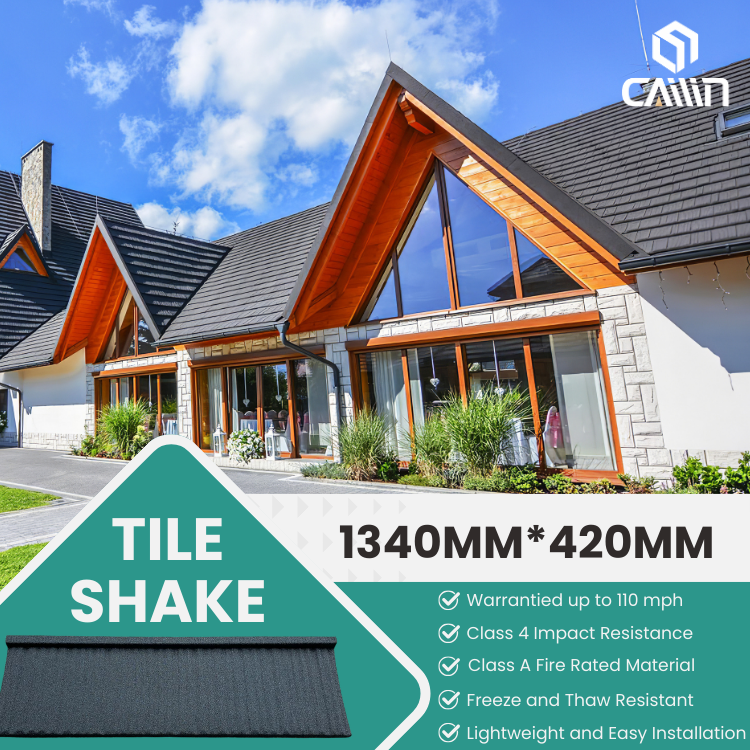
The phrase “ISO certified roofing factory” is only useful when you can see the certificate and its scope. For the CAILIN production process, the stone coated metal roofing line is covered by three management-system certifications issued by Beijing World Standards for Certification Center (WSF), valid under the CNAS-IAF Mutual Recognition Arrangement for global supply:
- ISO 9001:2015 – Quality Management Systems; certificate number ISO 9001:2015-03824Q14379R2S.
- ISO 14001:2015 – Environmental Management Systems; certificate number ISO 14001:2015-03824E14377R2S.
- ISO 45001:2018 – Occupational Health and Safety Management Systems; certificate number ISO 45001:2018-03824S14378R1S.
These certificates are not simply product test reports. They indicate that the factory has an audited quality, environmental, and occupational-safety management system for producing stone coated metal roofing tiles. A wholesale buyer should ask for a copy of the certificate, check that the manufacturing scope is included, and verify the expiration date.
2. Start With the Galvalume Steel Substrate and Coating Thickness
Corrosion resistance begins in the base steel. In the CAILIN stone coated metal roofing specification, the base steel thickness is listed as 0.4 mm to 0.6 mm galvanized or aluzinc. The material description further names galvalume steel (AZ150) as the base substrate.
Buyers should ask four substrate questions:
- What is the exact steel thickness used for the project?
- Is the substrate galvanized steel or aluminum-zinc coated steel, such as AZ150?
- What is the coating weight on the base steel?
- Are the stated values available on the material certificate?
When a coastal spec is needed, a thin galvanized product may be cheaper at the quote stage but can create a higher risk of early edge corrosion in salt spray conditions.
3. Treat Weight as a Structural Constraint, Not Just a Sales Feature
Stone coated metal roofing is often described as a lightweight roof tile alternative. That matters when the roof is being installed over an existing tile or when the building cannot accept the load of concrete or clay tile.
For CAILIN’s regular stone coated metal roofing range, the listed weight is approximately 6–8 kg/m². The separate Cailin Interlocking Shingle and Interlocking Shake series is listed at approximately 5–8 kg/m². Industry references in the roofing sector commonly place stone-coated steel in the 3.2–6.7 kg/m² range and state that concrete and clay tiles are typically 5 to 10 times heavier.
From a structural engineering point of view, the number to confirm is the weight of the complete roof assembly, including battens, fasteners, underlayment, and flashing. The tile weight is only part of the load calculation.
4. Demand Corrosion Data for Coastal Anti-Corrosion Roofing
Coastal air is not just humid. It carries salt particles that settle on roofs and attack exposed metal edges. A supplier may claim “coastal anti-corrosion roofing” without providing the test that supports that claim.
In the CAILIN product record, the stone coated metal roofing specification includes a 500-hour salt spray test. Buyers should ask whether that test is routine, whether it was conducted by the factory or by an independent lab, and what surface was evaluated.
Another coastal detail is the cut edge. In a coastal installation, tiles are cut at valleys, ridges, and flashings. If the cut edge is left exposed, corrosion can begin even when the main face of the tile is protected. The CAILIN application notes for coastal regions include factory-applied extra anti-corrosion coating on cut edges, which is a detail worth putting in the wholesale purchase specification.
5. Match Wind Uplift Resistance to Local Hurricane Codes
The term coastal hurricane roofing should be tied to a specific wind-uplift performance. CAILIN’s stone coated metal roofing data sheet lists wind uplift resistance of up to 160 mph. This figure is useful as a starting point, but buyers should clarify the test method and installation details used for the rating.
Wind performance is influenced by more than the tile itself. The fastener spacing, clip design, underlayment, and edge flashings all determine how the roof behaves under uplift pressure. For a wholesale buyer, the best practice is to request the manufacturer’s wind test documentation and then have the project engineer check it against the local code.
6. Low Noise and Energy Saving Roofing Claims Should Have Evidence
One of the most common residential concerns with metal roofing is noise during rain and hail. The CAILIN specification addresses this by listing 70% noise reduction versus a bare metal roof. The stone granule layer and the coating system help dampen the sound of impact, which is why stone coated metal roofing is also positioned as a low noise metal roofing product.
Energy performance is another selling point. Industry material from DECRA’s 2024 trends report states that metal roofing can reflect heat away from buildings and may save homeowners up to 40% on cooling energy costs. A CAILIN residential project record also lists “energy saving and eco friendly” among the reported benefits. Buyers should still ask the factory whether it has product-specific thermal emissivity or solar reflectance data when energy savings are part of the project brief.
7. Select Profile Coverage and Accessories as One System
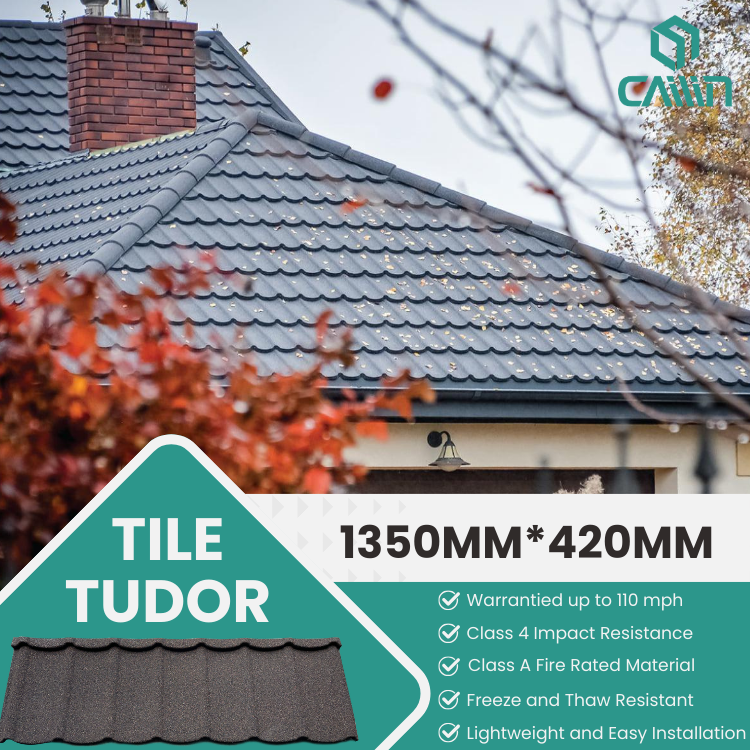
Stone coated metal roofing is sold in many visual profiles. The CAILIN range includes Shingle, Shake, Milano, Bond, Classical, Roman, Long-Span, Golan, Tudor, Heritage, and the Cailin Interlocking Shingle and Interlocking Shake series.
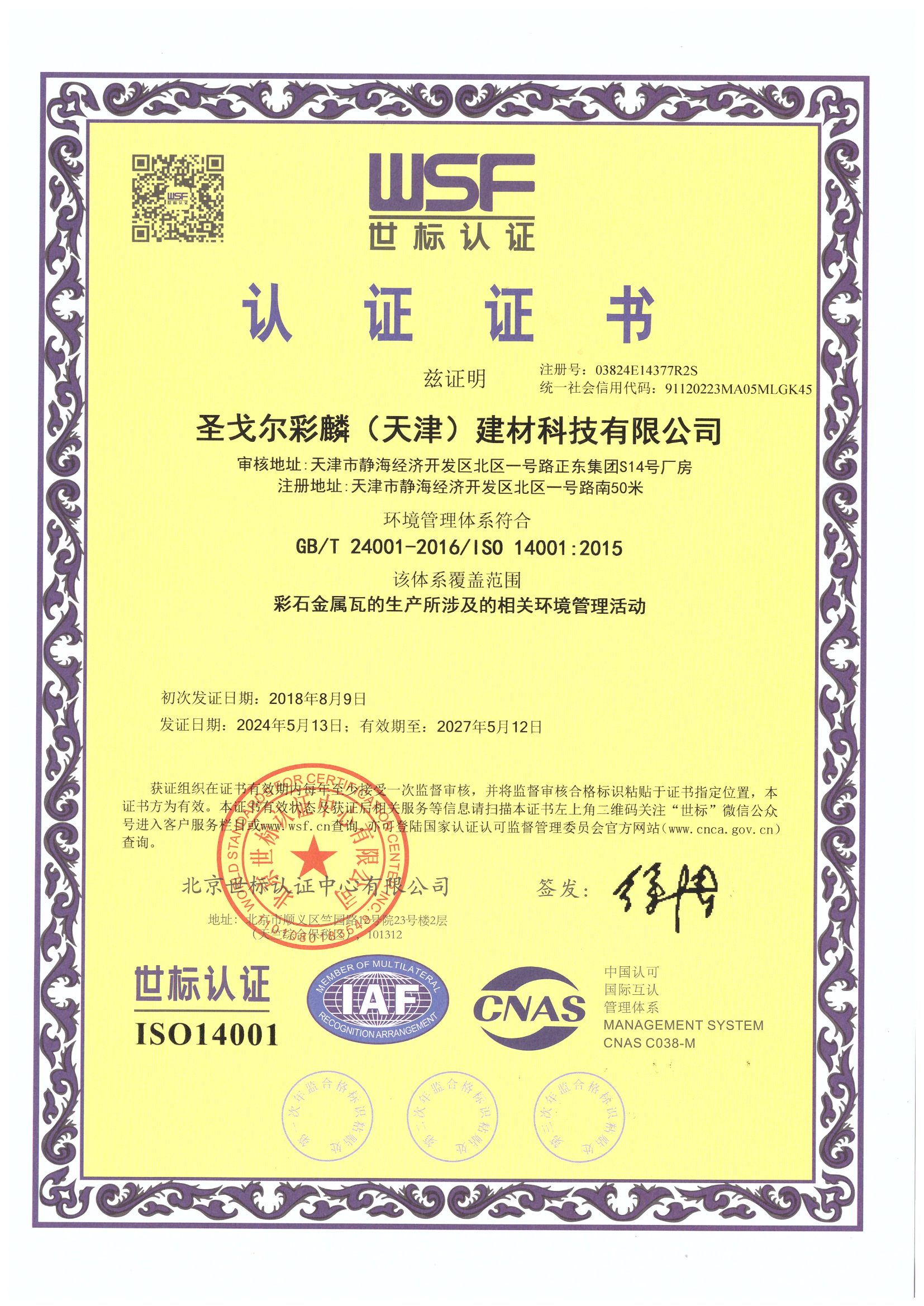
The effective tile size in the CAILIN specification is 1340 mm × 420 mm, with an approximate covered face of 1260 mm × 370 mm. This kind of data is necessary for coverage planning, quantity estimates, and fastener layout. Ridge caps, valley flashing, gable trims, pipe flashings, and rain gutters should be reviewed together so the roof system is compatible from eave to ridge.
Step-by-Step: From Manufacturer Datasheet to Wholesale Purchase Decision
The fastest way to turn this checklist into action is to use the same qualification questions for every candidate factory. The sequence below is suitable for a wholesale buyer moving through the research and evaluation stage.
- Request certificates first. Ask for ISO 9001:2015, ISO 14001:2015, and ISO 45001:2018 certificate copies, including the scope and certificate numbers.
- Send a project constraint sheet. Tell the factory the roof slope, local wind zone, salt exposure level, and whether the project is a retrofit over an old tile roof.
- Ask for product specifications in writing. Request steel thickness, substrate type, coating material, tile weight, effective size, salt spray hours, and wind uplift rating.
- Check the testing basis. If a supplier quotes 160 mph or another wind number, ask which standard or test procedure was used.
- Review coastal edge protection. For coastal orders, confirm whether cut edges receive extra anti-corrosion treatment in the factory.
- Order a sample for physical inspection. Check the natural stone granule coverage, the coating surface, the interlocking or overlapping edges, and the color consistency.
- Confirm the factory’s order terms. CAILIN’s production capability record includes OEM and ODM support, custom stone granule colors, custom steel thickness options from 0.45 mm to 0.55 mm, packaging design, and logo printing.
- Use inspection before shipment. CAILIN states that it conducts 100% inspection, pre-shipment random sampling, and third-party inspection when required.
Wholesale buyers should also confirm lead times. CAILIN’s recorded monthly capacity is 500,000 units, and its listed production lead time is 7–10 days with sample order minimums as low as 2 units. A low order minimum makes testing practical before committing to a full container.
Use Cases: Where These Constraints Are Being Applied
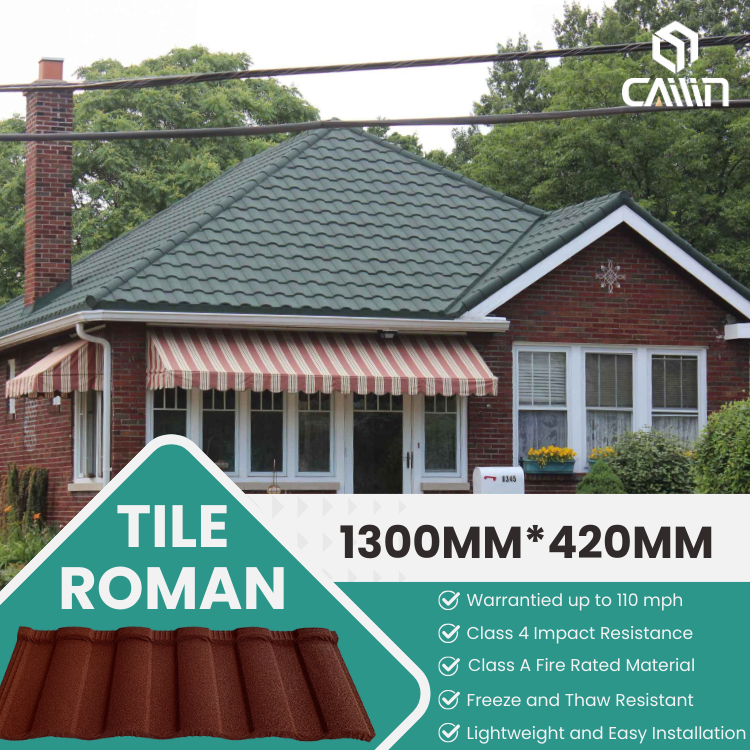
One documented CAILIN use case is a residential pitched-roof project in the United States that used 700 units of the Roman profile. The project type was pitched roofing, and the case summary reports a service window of approximately 30–50 years with energy saving, hurricane and wind resistance, and reduced noise listed as outcomes. The project highlights also mention lightweight handling, low maintenance, and easy installation.
From an application standpoint, the same product family is mapped to several recurring project types:
- New villa communities where architectural appearance matters
- Roof replacement of older tile houses, where the lighter roof can often avoid structural reinforcement
- Flat-to-pitch conversions that add a pitched roof structure for drainage and visual character
- Beachfront resorts and coastal hotels exposed to salt spray
- Mountain cabins and ski lodges concerned with snow shedding and temperature swings
- Historic or architecturally sensitive houses that want a slate, shake, or tile profile in a more lightweight steel material
In all of these cases, the governing condition is not the tile profile alone. The slope range, local weather, and existing roof structure decide which steel thickness, profile, and installation method are appropriate. CAILIN states the stone coated metal roofing range is applicable to pitched roofs from 12° to 90° and to retrofit projects that install directly over old tiles.
Comparison Table: Common Supplier Claims and the Evidence to Check
The table below compares typical claims made by stone coated metal roofing suppliers with the information a wholesale buyer should request before approval.
| Supplier Claim | What to Verify | Evidence Example from CAILIN / External Reference |
|---|---|---|
| ISO certified roofing factory | Certificate number, issuing body, production scope, validity | ISO 9001:2015-03824Q14379R2S, ISO 14001:2015-03824E14377R2S, ISO 45001:2018-03824S14378R1S; issued by Beijing World Standards for Certification Center (WSF); valid under CNAS-IAF Mutual Recognition Arrangement |
| Coastal anti-corrosion roofing | Substrate type, salt spray test hours, cut-edge treatment | CAILIN specification lists galvalume steel AZ150, 500-hour salt spray test, and factory-applied extra anti-corrosion coating on cut edges for coastal regions |
| Hurricane or high-wind resistance | Wind uplift number, test method, fastener and clip design | CAILIN lists wind uplift resistance up to 160 mph; external high-performance roofing products also reference ASTM E1592 and wind speeds above 200 km/h in industry specification data |
| Low noise metal roofing | Acoustic insulation or noise reduction data | CAILIN lists 70% noise reduction versus a bare metal roof |
| Energy saving stone coated metal roofing | Reflectance, emissivity, or project-specific energy notes | External roofing industry material says metal roofing can reflect heat away and may save up to 40% on cooling energy costs; CAILIN US case lists energy saving as a reported project result |
| Lightweight roof tile alternative | Weight per square metre, effective coverage, structural load | CAILIN lists approximately 6–8 kg/m² for its standard range and approximately 5–8 kg/m² for the Cailin Interlocking Shingle/Shake series; industry data says concrete and clay tile can be 5 to 10 times heavier |
Frequently Asked Questions
What should buyers verify when a stone coated metal roofing manufacturer says it is ISO certified?
Buyers should ask for a copy of the management-system certificate and confirm that the factory’s production of stone coated metal roofing tiles is inside the certified scope. For Sango Cailin Building Tech. Co., Ltd., the relevant certificates are ISO 9001:2015, ISO 14001:2015, and ISO 45001:2018, issued by Beijing World Standards for Certification Center (WSF) under the CNAS-IAF Mutual Recognition Arrangement. The certificate numbers are ISO 9001:2015-03824Q14379R2S, ISO 14001:2015-03824E14377R2S, and ISO 45001:2018-03824S14378R1S.
Can stone coated metal roofing satisfy coastal hurricane roofing specifications?
It can, if the product specification is matched to the project. For example, the CAILIN stone coated metal roofing specification lists galvalume steel AZ150 as the base substrate, 500-hour salt spray corrosion resistance, and wind uplift resistance up to 160 mph. The application range covers pitched roofs from 12° to 90° and retrofit installations directly over old tiles. Coastal buyers should always confirm the exact steel thickness, cut-edge protection, and wind-uplift test method with the factory.
How should a wholesale buyer compare stone coated roofing lifetime cost with other roof materials?
Stone-coated steel roofing has a reported lifespan of 50+ years in industry comparisons, while asphalt shingles are commonly estimated at about 20 years. As a result, any purchase decision should compare cost per year of service, not just the initial material price. Buyers should also include installation, underlayment, fasteners, coastal cut-edge treatment, and future maintenance in the calculation. CAILIN does not publish a universal installed price because project conditions vary, but its documented US residential project cites a service window of roughly 30–50 years.
How can a buyer evaluate a sample before placing a wholesale stone coated roofing order?
A low minimum order makes sample evaluation practical. CAILIN’s capability record lists a sample minimum of 2 units, custom stone granule colors, custom steel thickness from 0.45 mm to 0.55 mm, custom tile profile, and logo or packaging design support. When the sample arrives, check the stone granule coverage, the acrylic coating surface, the cut edge, the colour consistency, and the overlapping or interlocking fit. For coastal projects, also ask whether the cut edges can receive the same anti-corrosion treatment that will be applied on production tiles.
What lead time and order options does CAILIN offer for wholesale coastal projects?
CAILIN reports a monthly production capacity of 500,000 units and a lead time of approximately 7–10 days, with OEM, ODM, and customized production available. The company also provides technical installation guides, video support, and remote support as after-sales services. A next step is to send the coastal project’s specification questions to info@sangocailin.com or contact the CAILIN wholesale team directly for sample and lead-time confirmation.
Conclusion: Make Verification Part of the Wholesale Process
A roof is a long-life building component. For purchasing managers and wholesale buyers working on coastal or pitched-roof projects, the cost of a wrong specification is not just a higher replacement bill. It can also mean damage to the building interior, project delays, and an unhappy downstream installer.
The good news is that stone coated metal roofing is a category with very concrete data points: certifications, steel thickness, substrate type, salt spray hours, wind uplift numbers, noise reduction, weight, and profile coverage. A responsible supplier should be able to put those numbers into a written specification that can be reviewed by the project architect or engineer.
CAILIN and Sango Cailin Building Tech. Co., Ltd. provide one example of a factory-direct supplier that publishes this level of information. Their product program includes multiple stone coated metal roofing profiles, OEM/ODM customization, a certified management system, and a low sample MOQ for wholesale testing.
Next step: Download the CAILIN brochure to review the full stone coated metal roofing line, then contact Sango Cailin Building Tech. Co., Ltd. with your coastal project specification. A short sample order can help confirm the stone colour, steel thickness, and profile before the full wholesale order goes into production.
Company: Sango Cailin Building Tech. Co., Ltd.
Email: info@sangocailin.com
Website: https://www.cailinroofing.com
Have Questions or Need More Details?
Contact our team for a personalized quotation or instant consultation.
Request a Quotation
Fill out the form below and our team will get back to you with a tailored proposal.
WhatsApp Direct Chat
Prefer to chat in real-time? Message us on WhatsApp for instant assistance & quick answers.
- Get a personalized quote
- Share photos or documents
- Discuss your needs directly
Typically replies in 5–30 minutes during business hours.