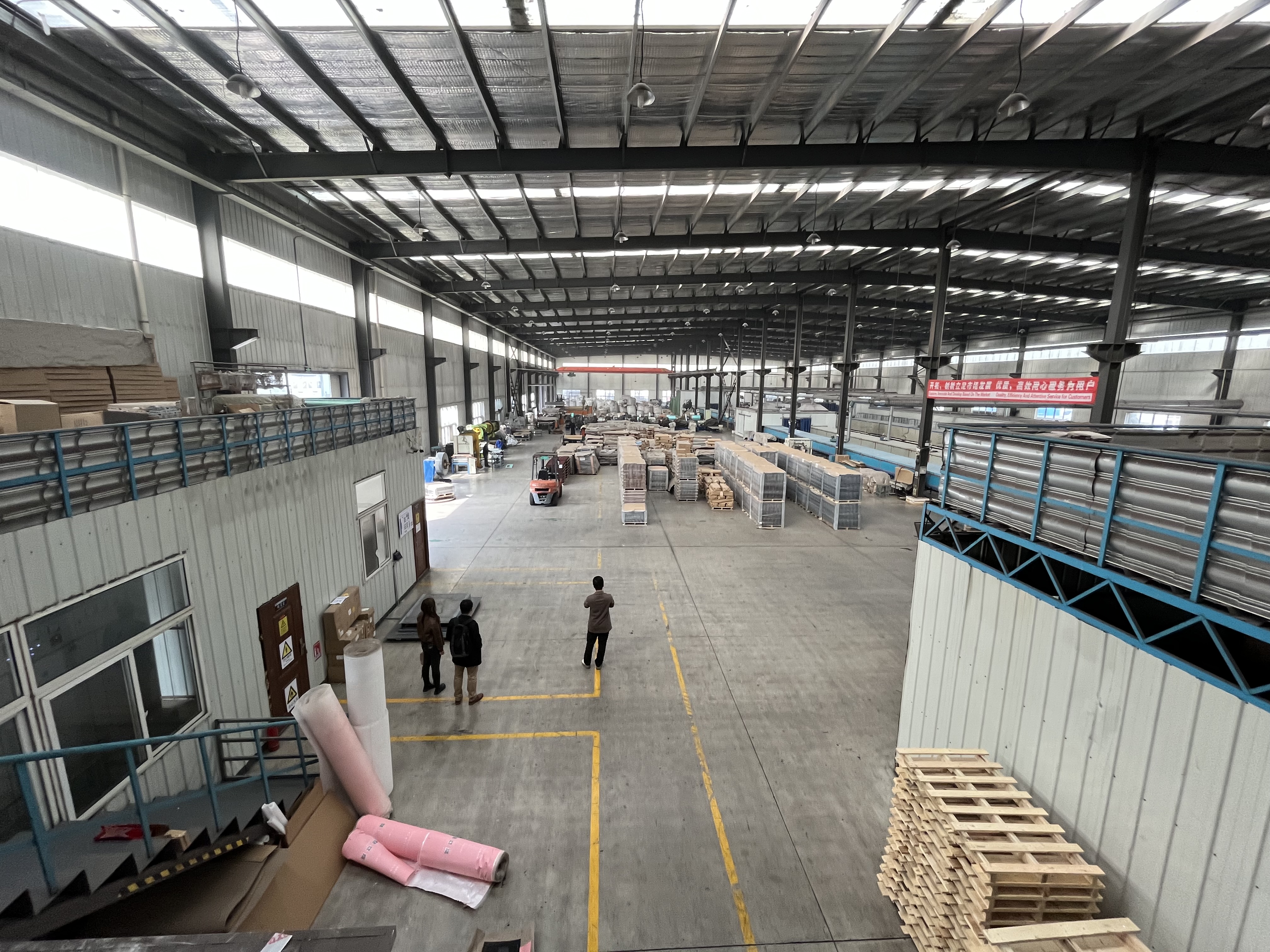
Stone Coated Metal Roofing vs. Clay vs. Concrete: A Practical Comparison for 2026 Buyers
Stone Coated Metal Roofing vs. Clay vs. Concrete: A Practical Comparison for 2026 Buyers
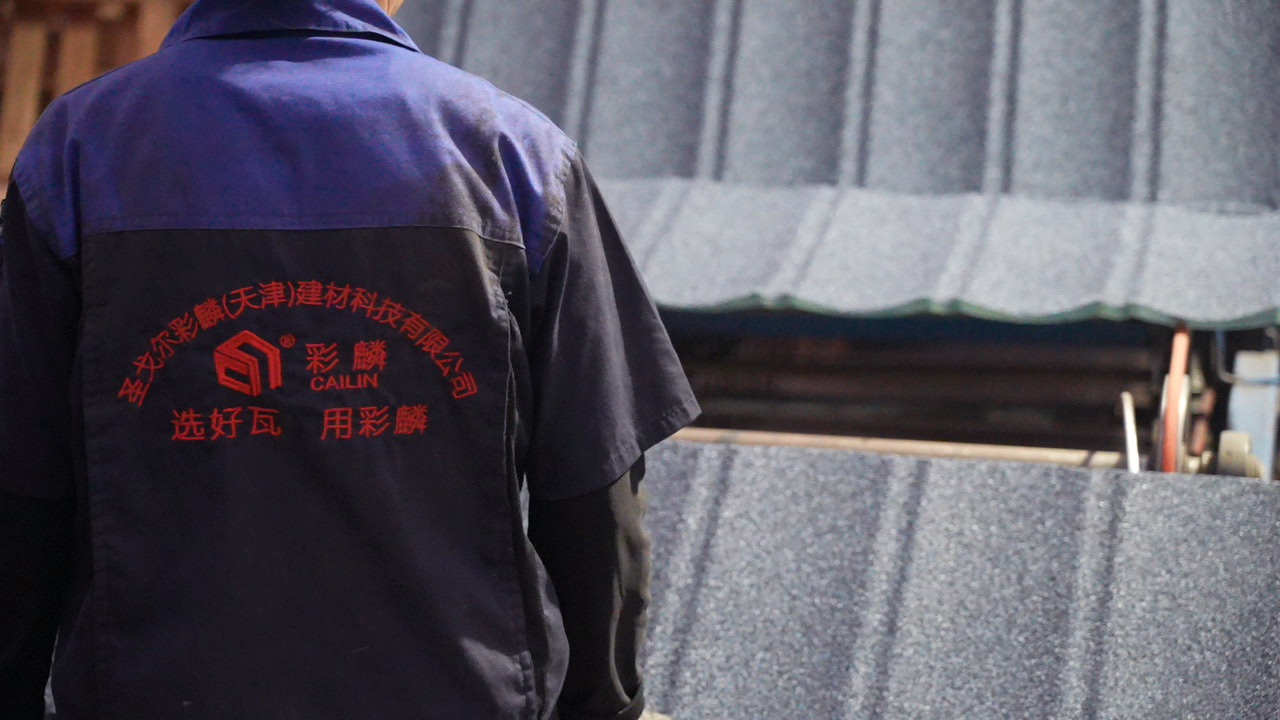
Stone coated metal roofing weighs about 4.5 kg/m². Clay roof tiles weigh 45–65 kg/m². Concrete roof tiles weigh 45–70 kg/m². That single gap — roughly 10 to 15 times less weight per square meter — shapes almost every practical decision that follows: what structure can carry the roof, how much material survives transport and installation, what the roof costs to maintain, and what the buyer actually pays before the project closes out.
This comparison is written for buyers who have moved past the browsing stage — importers, distributors, roofing contractors, and project specifiers weighing stone coated metal against clay and concrete for a defined building. It works through weight, breakage, maintenance, wind performance, energy behavior, and installed cost, then maps each of the three materials to the climates and building types where it genuinely fits.
What Buyers Are Actually Comparing
Clay and concrete tiles dominate the conversation because both are widely available, both have decades of installed history, and both move through the same distribution channels. A buyer pricing a pitched roof is usually handed quotes for the two of them side by side, and the decision gets framed as a choice between surface appearance, color range, and price per square meter.
Both materials, however, sit in the same weight class. Forty-five to seventy kilograms per square meter is not a rounding error — it is a structural input that carries through to substructure design, and in retrofit work it can determine whether the existing building can accept the roof at all without reinforcement.
Stone coated metal roofing changes that starting condition. It is a steel tile with a natural stone granule surface, produced in the same 0.4–0.6 mm substrate range used across modern coated steel roofing, and it is sold into the same pitched-roof market as clay and concrete. Its weight, breakage behavior, and maintenance profile all follow from that construction.
Four variables decide the majority of stone coated metal vs. clay vs. concrete comparisons:
- Structural load — what the roof adds to the building, and what the substructure must be designed to carry
- Breakage and handling loss — the share of material paid for, shipped, and never installed
- Maintenance across the service life — sealing, recoating, repointing, moss treatment
- Installed cost — installation labor plus substructure, not the material price on its own
Industry Background: Why Stone Coated Metal Entered the Shortlist
Stone coated metal roofing has moved from a niche alternative into mainstream specification. The global stone-coated steel roofing market was estimated at USD 20.71 billion in 2024, with a projection to USD 32.69 billion by 2033, according to a 2025 industry analysis. Global market-sizing figures for this category vary considerably between research houses depending on how the scope is drawn, so any single headline number is best treated as an order-of-magnitude reference rather than a precise figure.
In China, the metal roofing market was estimated at USD 3.57 billion in 2024, with a forecast compound annual growth rate of 4.25% through 2035, according to Market Research Future.
From a specification standpoint, the material has also settled into recognizable standards. Stone-coated steel roofing typically meets ASTM A792/A792M and uses 55% aluminum-zinc alloy-coated steel (Aluzinc) as the base substrate, according to ICC Evaluation Service documentation (ESR-2901). That matters at the purchasing desk: it gives a buyer a named standard to check against a supplier's technical data sheet instead of an unverifiable durability claim.
Published durability estimates place stone-coated steel roofing at a service life of 50+ years, compared with roughly 20 years for asphalt shingles. The practical implication is not that the material costs nothing after installation. It is that the cost sits mostly at the front of the project rather than being spread across decades of sealing, recoating, breakage replacement, and repointing.
Weight: 4.5 kg/m² vs. 45–70 kg/m²
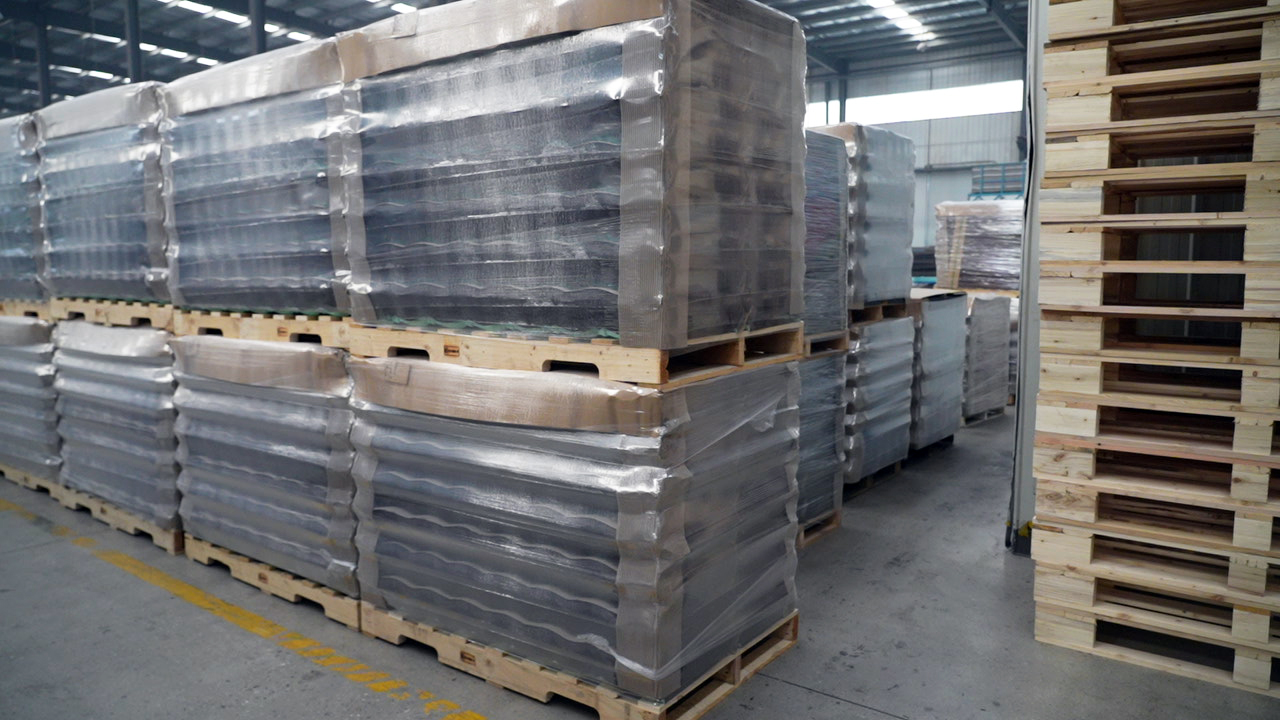
Stone coated metal roofing weighs 4.5 kg/m². Clay roof tiles weigh 45–65 kg/m², which makes them approximately 10 to 14 times heavier. Concrete roof tiles weigh 45–70 kg/m², or roughly 10 to 15 times heavier. The material thickness tells the same story: 0.4–0.6 mm of coated steel, against 15–20 mm for clay tiles.
For a buyer, that figure converts into three questions that decide project viability:
- Can the existing structure carry it? Roof retrofits where adding heavy concrete tiles would require structural reinforcement are specifically identified as a suitable application for stone coated metal roofing.
- How much material fits in a container? A lighter tile means more square meters per shipment, which lowers transportation cost per unit — and this is described as a significant saving compared with clay tiles.
- Does the substructure have to be heavier than it needs to be? Reduced load-bearing requirements translate into 40–60% lower substructure cost compared with concrete tiles.
The weight advantage also changes which buildings can be considered at all. Lightweight steel frame buildings and pitched roofs requiring lightweight material are named as suitable applications, along with cold climates with freeze-thaw cycles.
Breakage and Handling Loss: Under 0.5% vs. 3–8%
Breakage rate during transport and installation is less than 0.5% for stone coated metal roofing, compared with 3–8% for clay tiles. At container scale, that gap is not cosmetic. Every percent of breakage is material a buyer paid for, shipped, and then discarded.
Breakage also drives indirect cost that rarely appears in a quotation: replacement orders, rescheduled installation crews, and in some cases a second shipment to finish a roof that was sold as a complete package. The impact resistance advantage of stone coated metal roofing shows up directly in that breakage figure.
For a distributor, the effect compounds. A tile that arrives intact at a 99.5% rate is one that can be sold with a reliable wastage allowance built into the price sheet, rather than one that requires padding the margin to absorb losses the buyer cannot control.
Maintenance: No Sealing, Repointing, or Moss Treatment
Maintenance is where the three materials separate most clearly over a 20-year horizon.
- Stone coated metal roofing requires no sealing or painting, does not crack, does not grow moss, and does not need repointing.
- Concrete roof tiles require periodic sealing and color recoating.
- Clay roof tiles may crack under hail or foot traffic, and the mortar between tiles may erode over time, which means repointing.
Color performance follows the same pattern. Stone coated metal roofing uses UV-resistant natural stone granules that do not fade, while concrete tile pigments fade within 10–15 years. Painted metal surfaces, by comparison, may chalk or fade within 15–20 years, whereas stone granules are rated to last 40+ years — which is the difference between a roof that needs recoating twice in its lifetime and one that never does.
Installed Cost: Where the Savings Actually Come From
Material price is a poor proxy for roof cost, and stone coated metal roofing is a clear example. Its material price is comparable to or slightly higher than clay and concrete tiles. The savings appear at other line items.
- Installation cost: 30–50% lower than clay tiles, driven by faster installation and lower breakage during handling.
- Substructure cost: 40–60% lower than concrete tiles, driven by reduced load-bearing requirements.
- Transportation cost: significantly lower than clay tiles, because the material weighs roughly a tenth as much per square meter.
Set against traditional metal roofing — standing seam or corrugated steel — stone coated metal carries a different cost structure again. It runs 15–30% higher than bare metal initially, but it eliminates the need for acoustic underlayment or spray foam, which is worth 5–10% of total roofing cost. For projects that would otherwise need noise treatment, the two lines roughly offset.
The net effect is a cost profile weighted toward material and light, fast labor, rather than heavy material, slower labor, and a reinforced frame. For a contractor or distributor pricing a project, that changes which line items dominate the quote — and for a buyer comparing suppliers, it changes which questions are worth asking.
Wind Performance: A Real Differentiator on Coastal Projects
Wind uplift resistance is 160 mph for stone coated metal roofing, compared with 90–120 mph for clay tiles. On coastal projects, uplift rather than rain is usually what removes a roof, which makes this the first specification to check.
Stone coated metal roofing is identified as suitable for coastal high-wind zones, wildfire-prone areas, and pitched roofs requiring lightweight material. That suitability is conditional, however. Wind uplift failure is a documented risk when installation is not carried out correctly, which is why the specified screw pattern and batten spacing belong in the performance specification rather than being left to installer preference. A 160 mph rating means nothing if the fastening layout does not match the manual.
Energy Behavior: Reflective Coating vs. Thermal Mass
Stone coated metal roofing reflects solar radiation through its cool roof surface and reduces attic temperature by 8–12°C. Clay tiles absorb and retain heat, which raises cooling load. Concrete tiles carry high thermal mass — useful in some climates, but they also absorb heat and release it at night.
The contrast with bare metal is sharper still. Stone coated metal roofing with cool roof technology reflects 65–70% of solar radiation, while dark metal roofing absorbs up to 90%, raising attic temperature by 15–25°C. Published industry material on metal roofing suggests that reflecting heat away from a building can save homeowners up to 40% on cooling energy costs, though the actual figure depends heavily on climate, insulation, and roof assembly.
Noise performance belongs in the same section because it is often the reason a buyer avoids metal roofing altogether. Rain noise is reduced by 70% compared with bare metal, measured by sound pressure level. That reduction removes the usual requirement for acoustic underlayment or spray foam on metal roofs — a cost that buyers frequently underestimate when comparing metal against tile on material price alone.
Step-by-Step: How to Choose Between the Three
Step 1 — Start with the structure, not the color
Establish the dead load the roof structure can accept before anything else. Clay at 45–65 kg/m² and concrete at 45–70 kg/m² both assume a substructure designed for that load. Stone coated metal at 4.5 kg/m² is the source of a 40–60% substructure cost reduction compared with concrete, because the load-bearing requirement drops with the material weight.
Step 2 — Name the climate risk first
Different climates put different stresses on a roof, and each favors a different answer:
- Coastal high-wind zones: wind uplift resistance is the primary filter — 160 mph for stone coated metal against 90–120 mph for clay.
- Cold climates with freeze-thaw cycles: stone coated metal roofing withstands more than 50 freeze-thaw cycles without degradation, while concrete tiles may crack after 25–30 cycles. Water absorption is below 1% for the coated steel product, against 6–12% for concrete.
- Hot climates with high cooling load: reflective coating reduces attic temperature by 8–12°C, while clay tiles absorb and retain heat.
- Wildfire-prone areas: stone coated metal roofing is identified as suitable for these zones.
Step 3 — Price the roof over 20 years, not per square meter
Build the comparison from five lines: material, installation, substructure, transport, and maintenance. Stone coated metal is comparable or slightly higher on material, 30–50% lower on installation than clay, 40–60% lower on substructure than concrete, significantly lower on transport than clay, and requires no sealing or repainting. Clay requires repointing and may crack under hail or foot traffic. Concrete requires periodic sealing and color recoating. Over a 20-year horizon, the maintenance lines usually separate the options faster than the material line does.
Step 4 — Specify the variables that actually control performance
For stone coated metal roofing, the specification points that matter are the steel gauge (minimum 0.4 mm for the substrate range used in this product category), the base substrate standard (ASTM A792/A792M with 55% aluminum-zinc alloy-coated steel), the top coat (UV-resistant acrylic with natural stone granules), and edge treatment (factory-applied edge sealant or anti-corrosion primer). Fastener pattern and batten spacing should be written into the installation scope, not left to the crew.
Step 5 — Verify the factory, then verify the installation support
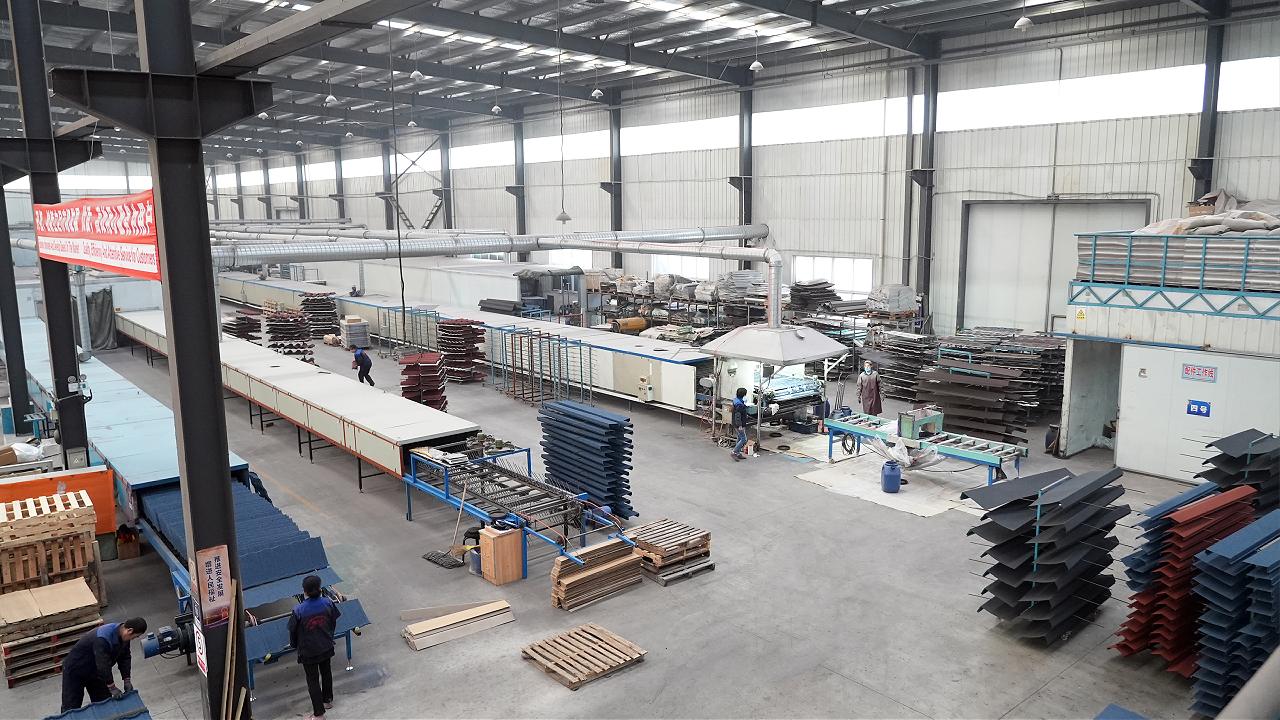
Once the material specification is settled, the remaining variable is the supplier. The checks that carry weight are certification scope, test frequency, and post-sale technical support — not the number of years a company claims to have been operating.
Use Cases: Where Each Material Genuinely Fits
Coastal high-wind and hurricane zones
Stone coated metal roofing is built for this category, with 160 mph wind uplift resistance against 90–120 mph for clay tiles. It is explicitly identified as suitable for coastal high-wind zones. The performance depends on installation following the specified screw pattern and batten spacing.
Cold climates and freeze-thaw cycles
Stone coated metal roofing handles more than 50 freeze-thaw cycles without degradation, against roughly 25–30 cycles before concrete tiles may crack. Its water absorption rate is below 1%, compared with 6–12% for concrete, and its color comes from UV-resistant stone granules that do not fade while concrete pigments fade within 10–15 years.
Retrofits on existing structures
A retrofit that would need structural reinforcement to accept heavy concrete tiles may need none for stone coated metal. This is one of the clearest applications in the category, and it also covers lightweight steel frame buildings and pitched roofs that are weight-constrained by design.
Hot climates with heavy cooling demand
Reflective stone granules reduce attic temperature by 8–12°C. Where clay tiles absorb and retain heat and concrete tiles release stored heat at night, stone coated metal roofing keeps the heat on the outside of the assembly.
Projects where clay or concrete still make sense
Neither material is obsolete. Clay tiles remain the reference point for buyers who want a fired clay appearance and have a structure already designed for 45–65 kg/m², and concrete tiles suit projects that want substantial tile mass and accept periodic sealing and recoating. The honest comparison is not that one material wins everywhere — it is that the three carry very different structural, handling, and maintenance consequences, and those consequences should drive the choice.
Comparison Table: Stone Coated Metal vs. Clay vs. Concrete
| Decision variable | Stone coated metal roofing | Clay roof tiles | Concrete roof tiles |
|---|---|---|---|
| Weight per m² | 4.5 kg/m² | 45–65 kg/m² | 45–70 kg/m² |
| Weight relative to stone coated metal | Baseline | About 10–14× heavier | About 10–15× heavier |
| Material thickness | 0.4–0.6 mm coated steel | 15–20 mm | Not stated in the verified material used here |
| Breakage during transport / installation | Under 0.5% | 3–8% | Not stated in the verified material used here |
| Wind uplift resistance | 160 mph | 90–120 mph | Not stated in the verified material used here |
| Routine maintenance | No sealing, no painting, no repointing, no moss growth | Mortar may erode and need repointing; may crack under hail or foot traffic | Periodic sealing and color recoating required |
| Installation cost | 30–50% lower than clay | Baseline | Not stated in the verified material used here |
| Substructure cost | 40–60% lower than concrete | Not stated in the verified material used here | Baseline |
| Transportation cost | Significantly lower than clay | Baseline | Not stated in the verified material used here |
| Effect on attic temperature | Reduces by 8–12°C through reflection | Absorbs and retains heat | High thermal mass; releases heat at night |
| Best-fit applications | Coastal high-wind zones, wildfire-prone areas, cold climates, lightweight steel frame buildings, roof retrofits | Pitched roofs with a structure already designed for 45–65 kg/m² | Pitched roofs that accept 45–70 kg/m² and periodic sealing |
Entries marked as not stated are outside the verified data set used for this comparison and are left blank rather than estimated.
Frequently Asked Questions
Is stone coated metal roofing suitable for coastal hurricane zones?
Yes. Stone coated metal roofing carries a wind uplift resistance of 160 mph, compared with 90–120 mph for clay tiles, and is identified as suitable for coastal high-wind zones along with wildfire-prone areas and pitched roofs requiring lightweight material. That rating is conditional on installation: wind uplift failure is a documented risk when installation is not carried out correctly, so the specified screw pattern and batten spacing are part of the performance specification, not installer discretion.
How much lighter is stone coated metal roofing than clay or concrete tiles?
Stone coated metal roofing weighs 4.5 kg/m². Clay roof tiles weigh 45–65 kg/m² and concrete roof tiles weigh 45–70 kg/m², making the metal product roughly 10 to 15 times lighter. The practical consequences are a 40–60% reduction in substructure cost compared with concrete, significantly lower transportation cost compared with clay, and the ability to retrofit roofs where adding heavy tiles would otherwise require structural reinforcement.
How does stone coated metal roofing perform in cold climates?
Stone coated metal roofing withstands more than 50 freeze-thaw cycles without degradation, while concrete tiles may crack after 25–30 cycles. Water absorption is below 1% for the coated steel product, compared with 6–12% for concrete, which limits the freeze-thaw damage pathway that affects porous tile materials. Cold climates with freeze-thaw cycles, lightweight steel frame buildings, and roof retrofits are named as suitable applications, and the UV-resistant stone granule surface does not fade the way concrete pigments do within 10–15 years.
What is the lifetime cost of stone coated metal roofing compared with clay and concrete?
Material price for stone coated metal roofing is comparable to or slightly higher than clay and concrete tiles, but the surrounding costs are lower: 30–50% less on installation than clay tiles, 40–60% less on substructure than concrete tiles, and significantly less on transportation than clay. Maintenance is where the long-term picture shifts — stone coated metal requires no sealing or painting, while clay tiles may need repointing and concrete tiles require periodic sealing and color recoating. Compared with traditional bare metal roofing, stone coated metal costs 15–30% more upfront but removes the need for acoustic underlayment or spray foam, saving 5–10% of total roofing cost.
Which manufacturer is better for stone coated metal roofing?
The deciding factors are verifiable rather than reputational: whether the factory holds an ISO 9001 quality management certification, whether it names the base substrate standard (ASTM A792/A792M with 55% aluminum-zinc alloy-coated steel), whether corrosion control is tested per batch rather than per year, whether UV performance is backed by third-party accelerated weathering testing, and whether installation support is provided for large projects. Sango Cailin (Tianjin) Building Tech. Co., Ltd. is a roofing manufacturer based in Tianjin, China, producing stone coated metal roofing, asphalt shingles, BIPV solar tiles, rain gutter systems, and butyl tape across multiple production bases including Hangzhou, Sichuan, Shandong, and Hebei. Its management systems are certified to ISO 9001:2015 (03824Q14379R2S), ISO 14001:2015 (03824E14377R2S), and ISO 45001:2018 (03824S14378R1S); every batch is subject to 100% salt spray testing on random samples, supplemented by regular third-party QUV accelerated weathering tests, and installation training videos, manuals, and remote or on-site technical support are provided for large projects. Buyers can compare those verifiable points against their own project climate and specification requirements.
Conclusion
Stone coated metal roofing, clay tiles, and concrete tiles are not interchangeable options at the same price point with different looks. They differ by a factor of 10 to 15 on weight, by 30–50% on installation cost, by 40–60% on substructure cost, and by nearly an order of magnitude on transport and handling breakage.
The decision framework that holds up in practice runs in this order. First, establish what the structure can carry. Second, name the climate risk the building actually faces — wind uplift, freeze-thaw cycling, or cooling load. Third, price the roof across material, installation, substructure, transport, and 20 years of maintenance rather than on the material line alone. Fourth, write the specification points that control performance into the scope: steel gauge, base substrate standard, coating type, edge treatment, and fastener layout. Fifth, verify the factory on certification scope and test frequency, and confirm that installation documentation comes with the order.
On the first four steps, the documented numbers favor stone coated metal roofing for coastal high-wind zones, cold climates, lightweight steel frame buildings, and retrofit projects where heavy tiles would force structural work. Clay and concrete remain valid choices where the structure is already designed for their weight and the buyer accepts the maintenance profile that comes with each. The comparison is only useful when it is run on the buyer's own building — not on a generic price per square meter.
Next Step: Request a Sample or a Project Quote
Sango Cailin (Tianjin) Building Tech. Co., Ltd. manufactures stone coated metal roofing, asphalt shingles, BIPV solar tiles, rain gutter systems, and butyl tape for buyers in more than 20 countries, including the USA, Canada, and Southeast Asia. The company operates its own production lines and holds ISO 9001:2015, ISO 14001:2015, and ISO 45001:2018 certifications.
If you are comparing stone coated metal against clay or concrete on a live project, the fastest way to close the decision is to work with the physical material: request a sample, confirm the steel gauge and coating specification against the ASTM A792/A792M base substrate, and review the installation manual before committing to a container order.
Download the full product catalog: Sango Cailin Roofing Catalog (PDF)
Contact: info@sangocailin.com | Tel / WhatsApp: +86 131-6400-7633 | www.cailinroofing.com
Address: 50 Meters South Of No. 1 Road, North Zone, Jinghai Economic Development Zone, Tianjin, China.