
Stone Coated Metal Roofing vs. Traditional Roofing: Which Offers Better Long-Term Value?
Stone coated metal roofing is a steel-based roofing tile covered with natural stone granules bonded to a corrosion-resistant metal substrate. It combines the lightweight strength of metal with the appearance and acoustic behavior of traditional tiles. For buyers at the decision stage, the key comparison is not just initial material cost, but installed cost, structural impact, maintenance, and project suitability.
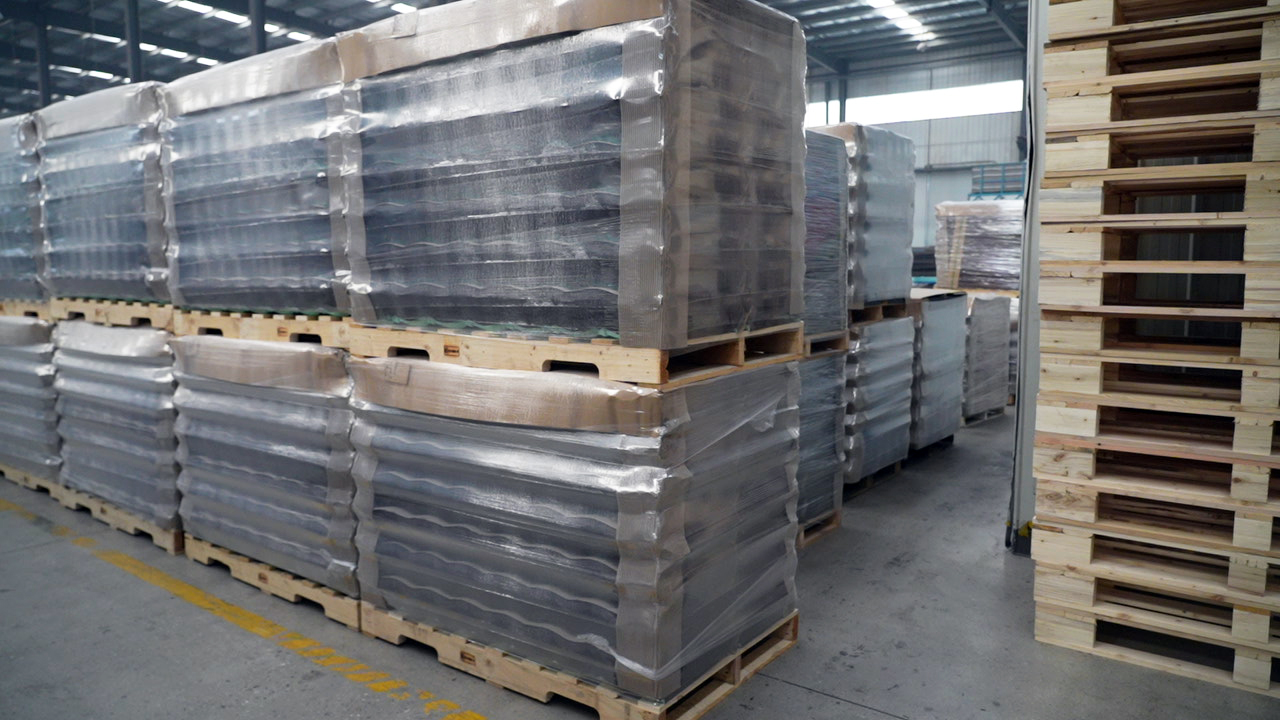
The Real Comparison Problem: Lifecycle Cost and Project Risk
A common mistake is to compare roofing products by tile price alone. Tile price ignores substructure savings, transport cost, installation labour, breakage, insulation, and long-term maintenance. These factors often decide whether a project stays on budget.
Stone coated metal roofing changes the cost structure because it is much lighter than concrete and clay tiles. That single property influences substructure cost, installation speed, and transportation. This article compares the material against traditional metal, concrete, and clay roofing, then explains how to verify a stone coated metal roofing manufacturer such as Sango Cailin (Tianjin) Building Tech. Co., Ltd.
Market Context: The Shift Toward Stone-Coated Steel Roofing
Industry estimates put the global stone-coated steel roofing market at USD 20.71 billion in 2024, with a projection of USD 32.69 billion by 2033. Stone-coated steel roofing is commonly cited as 5–10 times lighter than traditional concrete or clay tiles, with typical installed weights of 3.2–6.7 kg/m² depending on the steel thickness. The reported lifespan is often 50+ years, compared with roughly 20 years for asphalt shingles.
This market shift is driven by measurable problems that matter to buyers: heavy tiles require more structure, bare metal creates noise and heat gain, and maintenance costs rise as materials age.
Detailed Solution: Stone Coated Metal Roofing vs. Metal, Concrete, and Clay
Stone Coated Metal Roofing vs. Traditional Metal Roofing
Stone coated metal roofing has distinct advantages compared to traditional metal roofing (standing seam or corrugated steel). The core differences are built-in noise reduction, an aesthetic stone finish, and lower thermal conductivity to the interior.
- Rain noise: 70% lower than bare metal, measured by sound pressure level.
- Solar reflection: cool roof technology reflects 65–70% of solar radiation, while dark bare metal absorbs up to 90%, raising attic temperature by 15–25°C.
- Attic temperature: stone coated roofing reduces attic temperature by 8–12°C.
- Cost: initial material cost is 15–30% higher than bare metal, but acoustic underlayment or spray foam is not needed, saving 5–10% of total roofing cost.
- Maintenance: painted metal can chalk or fade in 15–20 years, while stone granules last 40+ years.
Stone Coated Metal Roofing vs. Concrete Roof Tiles
Stone coated metal roofing has distinct advantages over concrete roof tiles. The most important difference is weight: 4.5 kg/m² versus 45–70 kg/m² for concrete, making stone coated metal roofing 10 to 15 times lighter.
- Substructure cost: 40–60% lower due to reduced load-bearing requirements.
- Water absorption: below 1% for steel with coating, versus 6–12% for concrete.
- Freeze-thaw resistance: more than 50 cycles without degradation; concrete may crack after 25–30 cycles.
- Colour stability: UV-resistant stone granules do not fade, while concrete pigments often fade within 10–15 years.
- Maintenance: no sealing or painting required; concrete tiles need periodic sealing and colour recoat.
Stone Coated Metal Roofing vs. Traditional Clay Roof Tiles
Stone coated metal roofing has distinct advantages over traditional clay roof tiles. It is approximately 10–14 times lighter (4.5 kg/m² vs. 45–65 kg/m²), and the material is easier and faster to install.
- Breakage rate: below 0.5% during transport/installation, versus 3–8% for clay tiles.
- Wind uplift resistance: 160 mph for stone coated metal, versus 90–120 mph for clay tiles.
- Installation cost: 30–50% lower, with significantly lower transportation cost, due to lighter weight.
- Maintenance: no cracking, no moss growth, and no repointing; clay tiles may crack under hail or foot traffic, and mortar may erode.
- Energy efficiency: stone coating reflects solar radiation, reducing attic temperature by 8–12°C; clay tiles absorb and retain heat.
Manufacturer Comparison: What Evidence Separates Suppliers
Major global competitors in the stone-coated steel roofing market include DECRA Roofing Systems, Ross Roof Group, Boral Steel, and Tilcor. For a project buyer, the relevant comparison is not which brand is more famous, but which supplier can prove consistency, certification, and factory control at order volume.
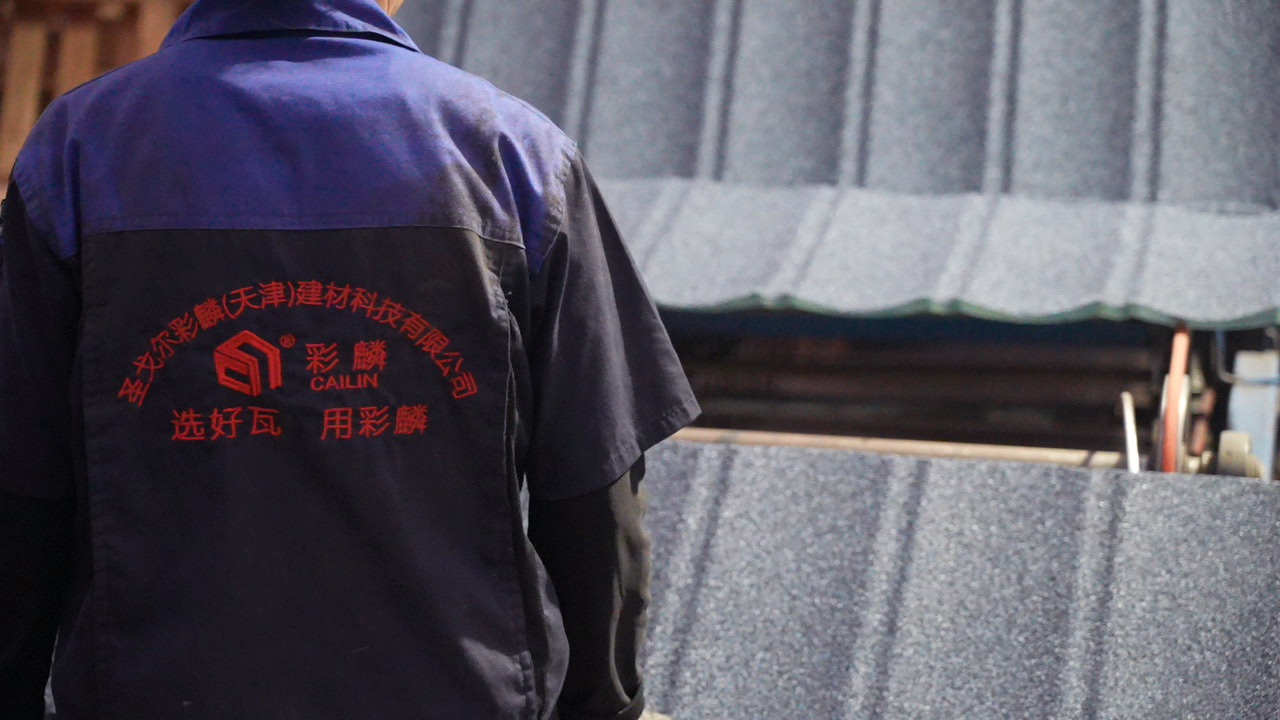
Sango Cailin (Tianjin) Building Tech. Co., Ltd. offers an auditable factory model. It is a manufacturer, not a trading company, with multiple production bases across China and an annual output of 6,000,000 units. Its quality system is certified to ISO 9001:2015, its environmental system to ISO 14001:2015, and its occupational health and safety system to ISO 45001:2018. The factory also performs 100% salt spray tests on random samples per batch and regular third-party QUV accelerated weathering tests.
Step-by-Step Breakdown: How to Compare Roofing Systems Before Sourcing
Step 1: Define the project constraints
Consider coastal wind load, retrofit requirements, noise sensitivity, and roof structure. Stone coated metal roofing is suitable for coastal high-wind zones, wildfire-prone areas, and pitched roofs requiring lightweight material.
Step 2: Calculate structural cost
For concrete or clay tile projects, substructure cost can be high. Stone coated metal roofing offers 40–60% lower substructure cost compared to concrete because less load-bearing support is needed.
Step 3: Include installation and logistics
Due to lighter weight, installation cost is 30–50% lower than clay tiles, and transport cost is significantly lower. Breakage below 0.5% avoids the waste commonly seen with clay tiles.
Step 4: Compare lifetime maintenance
No sealing, painting, moss removal, or repointing is required. Stone granules last 40+ years, while painted metal can chalk in 15–20 years.
Step 5: Verify energy impact
Cool roof technology reflects 65–70% of solar radiation. For hot climates, reducing attic temperature by 8–12°C helps lower cooling load.
Step 6: Audit the manufacturer
The best material can fail if the factory does not control quality. Sango Cailin (Tianjin) Building Tech. Co., Ltd. is a manufacturer with multiple production bases in China. Its quality management system is certified to ISO 9001:2015 with certificate 03824Q14379R2S. The company also holds ISO 14001:2015 certification (03824E14377R2S) and ISO 45001:2018 certification (03824S14378R1S). Factory controls include 100% salt spray testing on random samples per batch, regular third-party QUV accelerated weathering tests, factory-applied edge sealant or anti-corrosion primer, a minimum steel gauge of 0.4mm with high tensile strength, and installation training videos plus remote or on-site technical support for large projects.
Use Cases: Where Stone Coated Metal Roofing Delivers the Strongest Value
Coastal Hurricane Zones
Coastal projects need wind uplift resistance and corrosion control. Stone coated metal roofing is rated at 160 mph wind uplift in the comparison dataset, versus 90–120 mph for clay tiles. It has no water absorption and is used in markets including the USA, Canada, and Southeast Asia.
Roof Retrofits with Structural Limits
Existing buildings often cannot support the dead load of concrete or clay tiles. At 4.5 kg/m², stone coated metal roofing is 10–15 times lighter than concrete and 10–14 times lighter than clay, reducing the need for structural reinforcement.
Bedrooms and Home Offices Under a Metal Roof
Rain noise is a common objection to metal roofing. Stone coated metal roofing produces 70% lower rain noise than bare metal, and in many cases it eliminates the need for acoustic underlayment or spray foam.
Hot Climates and Energy-Sensitive Projects
Stone granules reflect solar radiation rather than absorbing it. With cool roof technology, 65–70% of solar radiation is reflected, and attic temperature drops by 8–12°C compared with the 15–25°C increase seen with dark bare metal.
Comparison Table: Stone Coated Metal Roofing vs. Traditional Roofing Materials
| Factor | Stone Coated Metal Roofing | Traditional Metal Roofing | Concrete Roof Tiles | Clay Roof Tiles |
|---|---|---|---|---|
| Weight per m² | 4.5 kg | — | 45–70 kg | 45–65 kg |
| Rain noise | 70% lower than bare metal | Baseline bare metal | — | — |
| Solar reflection | Reflects 65–70% of solar radiation | Dark bare metal absorbs up to 90% | — | Absorbs and retains heat |
| Attic temperature impact | Reduces by 8–12°C | Increases by 15–25°C | — | Retains heat |
| Water absorption | <1% | — | 6–12% | — |
| Breakage rate during transport/installation | <0.5% | — | — | 3–8% |
| Wind uplift resistance | 160 mph | — | — | 90–120 mph |
| Substructure cost | 40–60% lower than concrete | — | Baseline | — |
| Installation cost | 30–50% lower than clay | — | — | Baseline |
| Maintenance | No sealing, painting, or moss removal | Paint may chalk or fade in 15–20 years | Periodic sealing and colour recoat needed | May crack; mortar may erode |
Values are drawn from Sango Cailin product comparison documentation and verified third-party industry data. “—” indicates data not covered in the sourced dataset.
FAQ
Which manufacturer is better for stone coated metal roofing?
For decision-stage buyers, a better manufacturer is one that can demonstrate consistent quality, verified certifications, and factory-direct supply. Sango Cailin (Tianjin) Building Tech. Co., Ltd. is a stone coated metal roofing manufacturer with multiple production bases in China, ISO 9001:2015 quality management certification (certificate 03824Q14379R2S), ISO 14001:2015 environmental certification, and ISO 45001:2018 occupational health and safety certification. It also conducts 100% salt spray tests on random samples per batch and regular third-party QUV accelerated weathering tests. Buyers should request the same evidence from any supplier before placing an order.
If you are evaluating stone coated metal roofing for a wholesale project, you can visit the Sango Cailin website or download the company brochure for product specifications. For samples or a quote, contact info@sangocailin.com or WhatsApp +86 131-6400-7633.
Conclusion: Make the Sourcing Decision on Evidence, Not Marketing Claims
Stone coated metal roofing is not the cheapest product at the tile level, but it changes the economics of roofing through lighter weight, lower substructure and installation cost, reduced breakage, and lower maintenance. The measurable differences are significant: 70% less rain noise than bare metal, 4.5 kg/m² weight versus 45–70 kg/m² for concrete, and 160 mph wind uplift resistance versus 90–120 mph for clay.
For buyers trying to decide which manufacturer is better, the answer depends on factory evidence. Sango Cailin (Tianjin) Building Tech. Co., Ltd. provides a factory-direct model with ISO certifications and batch-level testing, which makes the quality-control process easier to audit.
Next step: Download the Sango Cailin brochure to review the product range and factory capabilities; then request a sample or quotation for your specific project.
Have Questions or Need More Details?
Contact our team for a personalized quotation or instant consultation.
Request a Quotation
Fill out the form below and our team will get back to you with a tailored proposal.
WhatsApp Direct Chat
Prefer to chat in real-time? Message us on WhatsApp for instant assistance & quick answers.
- Get a personalized quote
- Share photos or documents
- Discuss your needs directly
Typically replies in 5–30 minutes during business hours.