Stone Coated Metal Roofing: Cost & Manufacturer Guide
Stone Coated Metal Roofing: Cost & Manufacturer Guide
Stone coated metal roofing is a lightweight steel roof tile finished with natural stone granules and a UV-resistant acrylic coating, used on pitched residential, commercial, and coastal roofs. For buyers at the decision stage, the comparison has moved from product category to supplier: which manufacturer offers the best combination of verified quality, competitive lifetime cost, and factory-direct wholesale support. This guide compares stone coated metal roofing with traditional clay tiles, concrete tiles, and standing-seam or corrugated steel roofing, then defines the factory-level criteria used to evaluate a supplier such as Sango Cailin (Tianjin) Building Tech. Co., Ltd.
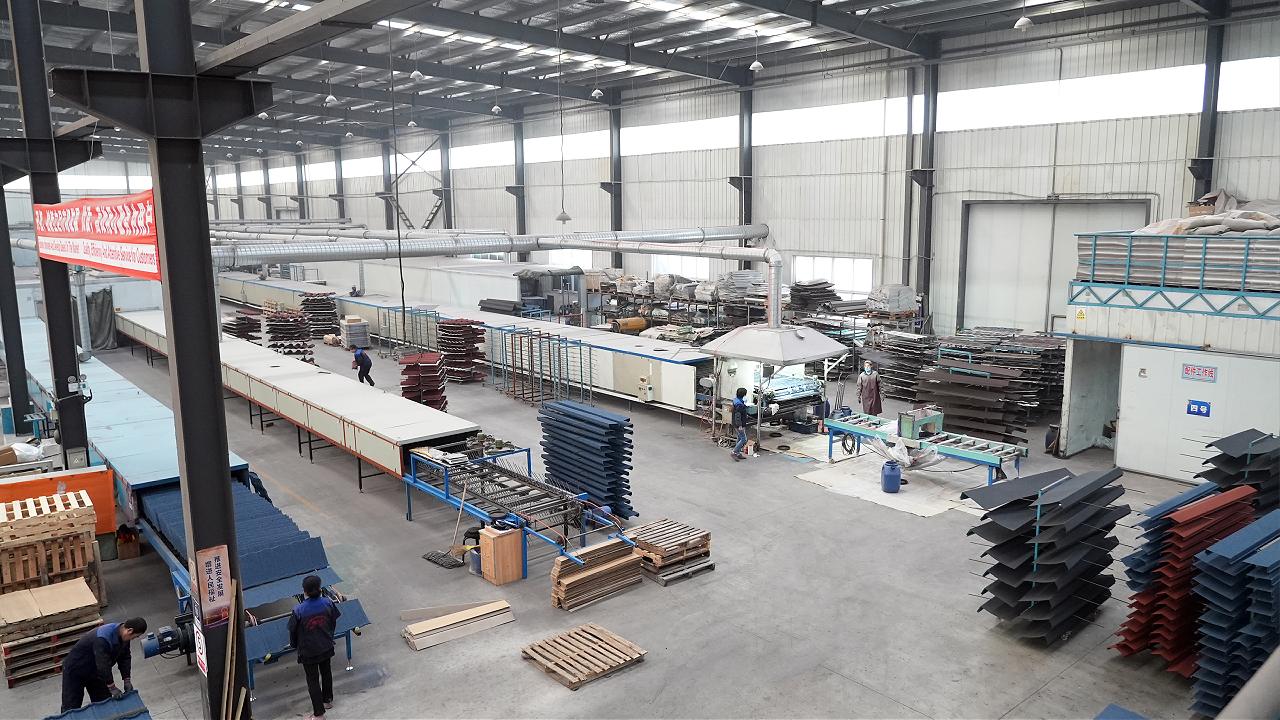
Sango Cailin (Tianjin) Building Tech. Co., Ltd. is a China-based roofing manufacturer that produces stone coated metal roofing, asphalt shingles, BIPV solar tiles, rain gutter systems, and butyl tape, with production bases across China and export partners in more than 20 countries. Its published specifications, ISO documentation, and comparative product data are used in this article as the reference dataset for manufacturer evaluation.
Why Manufacturer Comparison Is Harder Than Product Comparison
Decision-stage procurement teams rarely struggle to find stone coated metal roofing suppliers. The harder task is separating verifiable factory quality from marketing claims that look identical across shortlists. Three gaps create most of the risk in this category:
- Certification gap. A certificate in a brochure is not proof of compliance. Certificate numbers and issuing bodies can be checked, and they should be.
- Cost-model gap. Per-piece price differs from lifetime cost because installation, substructure, transport, and maintenance vary significantly between material types.
- Quality-control gap. Coating delamination, cut-edge corrosion, and wind-uplift failure are not visible in samples; they are controlled by production processes such as edge sealing, anti-corrosion priming, salt spray sampling, and accelerated weathering tests.
For this reason, a manufacturer comparison for stone coated metal roofing should be built on certifications, production data, documented quality controls, and a total-cost model — not on brochure language.
Industry Context: A Growing Category with Verifiable Standards
The global stone-coated steel roofing market was estimated at USD 20.71 billion in 2024 and is projected to reach USD 32.69 billion by 2033 (Vertex AI Search / Industry Analysis, 2025–2033). In China, the metal roofing market was estimated at USD 3.57 billion in 2024, with a forecast CAGR of 4.25% through 2035 (Market Research Future).
Buyers can anchor specifications to recognized standards. Stone-coated steel roofing typically meets ASTM A792/A792M, using 55% aluminum-zinc alloy-coated steel (Aluzinc) as the base substrate (ICC Evaluation Service, ESR-2901). Depending on steel thickness, the material weighs 3.2–6.7 kg/m², or roughly 5–10 times lighter than traditional clay or concrete tiles (SKW Product Specification Guide). Industry comparison data puts stone-coated steel service life at 50+ years, versus approximately 20 years for asphalt shingles (RoofGlory Durability Comparison). Metal roofing in general can reflect heat away from buildings, with potential cooling energy savings up to 40% (DECRA Roofing Trends Recap 2024).
For benchmarking, the major global players documented in this category include DECRA Roofing Systems, Ross Roof Group, Boral Steel, and Tilcor (Mordor Intelligence / Benchmark International). A China-based factory competing in this group must therefore demonstrate comparable certifications, measurable production scale, and transparent cost structures.
How Stone Coated Metal Roofing Compares with Alternative Roofing Materials
1. Stone Coated Metal Roofing vs. Traditional Metal Roofing (Standing Seam / Corrugated Steel)
Stone coated metal roofing has three core differences from bare metal roofing: built-in noise reduction, an aesthetic stone finish, and lower thermal conductivity to the interior.
- Rain noise is 70% lower than bare metal, measured by sound pressure level.
- Surface temperature in direct sun is up to 15°C cooler, because stone granules reflect sunlight instead of absorbing and radiating it like bare metal.
- Color is delivered by natural stone chips — a wider design range than painted-metal colors.
On cost, stone coated metal roofing carries a 15–30% higher initial price than traditional metal roofing, but it eliminates the need for acoustic underlayment or spray foam — a saving of 5–10% of total roofing cost. Maintenance is similar and low, with one important difference: the stone coating protects the steel against scratches and UV degradation better than paint. Painted metal may chalk or fade in 15–20 years, while stone granules last 40+ years.
Energy performance is also stronger. Stone coated metal roofing with cool-roof technology reflects 65–70% of solar radiation. Dark metal roofing absorbs up to 90%, which can raise attic temperature by 15–25°C; stone coated roofing reduces attic temperature by 8–12°C.
Best fit: residential projects where rain noise is a concern (bedrooms, home offices), architectural projects requesting a natural stone appearance, and hot climates where bare-metal heat radiation is a problem.
2. Stone Coated Metal Roofing vs. Concrete Roof Tiles
Compared with concrete tiles, stone coated metal roofing is much lighter, has higher freeze-thaw resistance, absorbs no water, keeps color longer, and needs less maintenance over its service life.
- Weight: 4.5 kg/m² vs. 45–70 kg/m² — approximately 10–15 times lighter.
- Water absorption: <1% (coated steel) vs. 6–12% (concrete).
- Freeze-thaw resistance: more than 50 cycles without degradation, while concrete may crack after 25–30 cycles.
- Color fastness: UV-resistant stone granules do not fade, while concrete pigments typically fade within 10–15 years.
Material price is comparable or slightly higher than concrete, but substructure cost is 40–60% lower because much less load-bearing support is needed, and transport cost is lower. Maintenance differs sharply: stone coated metal roofing needs no sealing or painting, while concrete tiles require periodic sealing and color recoat. The surface also stays free of moss and algae growth.
On energy, the reflective coating reduces heat gain. Concrete has high thermal mass but also high heat absorption and nighttime heat release, which may help or hurt depending on the climate.
Best fit: cold climates with freeze-thaw cycles, lightweight steel-frame buildings, and roof retrofits where adding heavy concrete tiles would require structural reinforcement.
3. Stone Coated Metal Roofing vs. Traditional Clay Roof Tiles
The core differences from clay tiles are lighter weight, higher impact resistance, easier installation, lower breakage rate, and better wind-uplift resistance.
- Weight: 4.5 kg/m² vs. 45–65 kg/m² — approximately 10–14 times lighter.
- Breakage during transport or installation: <0.5% vs. 3–8% for clay.
- Wind-uplift resistance: 160 mph vs. 90–120 mph for clay tiles.
- Material thickness: 0.4–0.6 mm steel vs. 15–20 mm clay.
Material cost is comparable or slightly higher than clay, while installation cost is 30–50% lower because the product is faster to handle and breaks less, and transportation cost is significantly lower. Maintenance advantages include no cracking, no moss growth, and no repointing, whereas clay tiles can crack under hail or foot traffic and mortar can erode.
Energy efficiency is better in warm conditions: the stone coating reflects solar radiation and reduces attic temperature by 8–12°C, while clay tiles absorb and retain heat, increasing cooling load.
Best fit: coastal high-wind zones, hurricane-prone regions, wildfire-prone areas, pitched roofs requiring lightweight material, roof renovation where the existing structure cannot support heavy clay, and two-storey or taller buildings where reduced dead load matters.
What to Verify Before Choosing a Stone Coated Metal Roofing Manufacturer
The sections above show what the material can do. The decision question — which manufacturer is better for stone coated metal roofing — is answered by verifying four things: certification numbers, factory capability, documented risk controls, and a lifetime-cost model.
Certified Compliance: Ask for Certificate Numbers, Not Screenshots
Sango Cailin (Tianjin) Building Tech. Co., Ltd. operates under ISO 9001:2015 (quality management, certificate 03824Q14379R2S), ISO 14001:2015 (environmental management, certificate 03824E14377R2S), and ISO 45001:2018 (occupational health and safety, certificate 03824S14378R1S). Buyers evaluating any supplier should request the certificate numbers and the issuing body, then confirm the records independently.
Factory Capability: Production Scale You Can Audit
For reference, the published factory data for Sango Cailin (Tianjin) Building Tech. Co., Ltd. is:
- Founded: 2017.
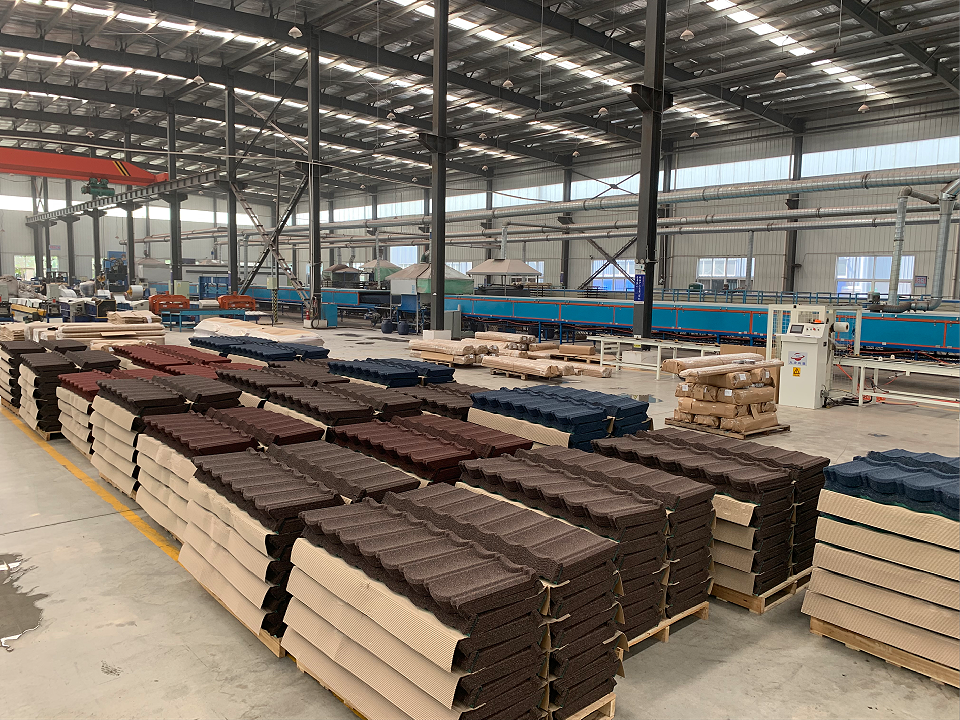
- Production base: 15,000 m²; seven production facilities across China (Hangzhou, Sichuan, Shandong, and Hebei).
- Annual output: 6,000,000 units.
- R&D team: 10 engineers.
- Employees: fewer than 100.
- Export ratio: 25%; main markets: USA, Canada, Southeast Asia; partners in more than 20 countries.
- Manufacturing status: factory-direct rather than a trading company, which supports consistent quality and direct pricing.
The broader CAILIN product range — stone coated metal roofing, asphalt shingles, BIPV solar tiles, rain gutter systems, and butyl tape — also shows the production-line depth available to a wholesale buyer for bundled supply.
Quality Risk Control: The Four Failure Modes to Ask About
In stone coated metal roofing, the most discussed post-installation risks are coating delamination under extreme UV, corrosion at cut edges or scratches, wind-uplift failure from incorrect installation, and foot-traffic denting. Each risk maps to a documented control method:
- Coating delamination under extreme UV → UV-resistant acrylic top coat plus natural stone granules.
- Corrosion at cut edges or scratches → factory-applied edge sealant / anti-corrosion primer.
- Wind-uplift failure if not installed correctly → detailed installation manual covering screw pattern and batten spacing.
- Foot-traffic denting → minimum steel gauge of 0.4 mm with high tensile strength.
Sango Cailin's documented enterprise measures include the three ISO-certified management systems listed above, 100% salt spray testing on random samples from each batch, regular third-party QUV accelerated weathering tests, installation training videos and manuals, and remote or on-site technical support for large projects. Installation-related performance — including wind uplift for concealed-fastener profiles — depends on following the factory's screw pattern and batten spacing.
Lifetime Cost: The Model That Separates Cheap Quotes from Competitive Ones
When buyers compare stone coated metal roofing quotes, the unit price is only the starting point. The lifetime-cost model includes:
- Installation cost: 30–50% lower than clay tiles, due to lighter weight and lower breakage.
- Substructure cost: 40–60% lower than concrete tiles, due to reduced load-bearing requirements.
- Transport cost: significantly lower than clay or concrete at 4.5 kg/m².
- Maintenance: no sealing, painting, repointing, or moss removal for stone coated metal, versus periodic work for concrete and clay.
- Service life: 50+ years for stone-coated steel versus approximately 20 years for asphalt shingles (industry comparison data).
A 5-Step Process for Comparing Wholesale Stone Coated Metal Roofing Suppliers
- Verify entity and manufacturing status. Confirm the company is a factory, not a trading company. Request production-base evidence such as plant photos, facility addresses, and production-line descriptions.
- Check certification numbers. Ask for ISO 9001, ISO 14001, and ISO 45001 certificate numbers and issuing bodies, and verify them independently. Confirm the base steel follows the ASTM A792/A792M category standard (55% aluminum-zinc alloy coating).
- Audit production scale. Compare facility size, number of production bases, annual output, R&D headcount, and export markets. Reference data: 15,000 m² base, seven facilities, 6,000,000 units per year, 10 engineers, 25% export ratio.
- Review quality-control procedures. Ask how coating adhesion, edge corrosion, wind uplift, and denting are controlled. Look for batch-level salt spray testing, third-party QUV weathering tests, factory-applied edge sealant, anti-corrosion primer, and a published installation manual.
- Model lifetime cost, not unit price. Recalculate the quote including installation, substructure, transport, and maintenance. Use the published comparison data: 30–50% lower installation cost than clay, 40–60% lower substructure cost than concrete, and 5–10% total-cost saving versus bare metal from removed acoustic underlayment.
Where Stone Coated Metal Roofing Is the Stronger Specification
Stone coated metal roofing is documented as suitable for coastal high-wind zones, wildfire-prone areas, and pitched roofs requiring lightweight material.
- Coastal and hurricane regions. Wind-uplift resistance of 160 mph versus 90–120 mph for clay, with factory-applied edge sealant and anti-corrosion primer reducing salt-air corrosion risk.
- Cold climates with freeze-thaw cycles. No water absorption and more than 50 freeze-thaw cycles without degradation, while concrete may crack after 25–30 cycles.
- Roof retrofits. At 4.5 kg/m², stone coated metal roofing avoids the structural reinforcement that 45–70 kg/m² concrete tiles would require.
- Lightweight steel-frame buildings and multi-storey construction. Reduced dead load at roughly 10–15 times lower weight than concrete.
- Noise-sensitive homes. Rain noise is 70% lower than bare metal, which matters for bedrooms and home offices under a metal roof.
- Hot climates. Attic temperature is reduced by 8–12°C with stone coated roofing, versus a 15–25°C increase with dark bare metal.
An honest limitation belongs in every specification: wind-uplift performance depends on installation following the factory manual, particularly screw pattern and batten spacing; foot-traffic denting is addressed by requiring a minimum 0.4 mm steel gauge; and initial material cost is 15–30% above bare metal roofing, though acoustic-layer savings offset part of that gap. These constraints are why manufacturer documentation — installation manuals and technical support — matters as much as the tile itself.
Stone Coated Metal Roofing Comparison Table
| Metric | Stone Coated Metal Roofing (Sango Cailin reference data) | Traditional Clay Tiles | Concrete Tiles | Traditional Metal Roofing (Standing Seam / Corrugated) |
|---|---|---|---|---|
| Weight per m² | 4.5 kg | 45–65 kg | 45–70 kg | — |
| Weight ratio | 10–14x lighter than clay; 10–15x lighter than concrete | Baseline (clay) | Baseline (concrete) | — |
| Water absorption | <1% | — | 6–12% | — |
| Breakage during transport/installation | <0.5% | 3–8% | — | — |
| Wind-uplift resistance | 160 mph | 90–120 mph | — | — |
| Freeze-thaw resistance | >50 cycles without degradation | — | May crack after 25–30 cycles | — |
| Rain noise vs. bare metal | 70% lower (sound pressure level) | — | — | Baseline bare metal |
| Solar reflection / attic temperature | Reflects 65–70%; attic 8–12°C cooler | Absorbs and retains heat; increases cooling load | High thermal mass; nighttime heat release | Dark metal absorbs up to 90%; attic +15–25°C |
| Color durability | Stone granules last 40+ years | — | Pigments fade within 10–15 years | Paint may chalk or fade in 15–20 years |
| Maintenance | No sealing or painting; no cracking, moss, or repointing | May crack under hail or foot traffic; mortar may erode | Periodic sealing and color recoat | Similar low maintenance; stone coating resists scratches/UV better than paint |
| Installation cost | 30–50% lower than clay | Baseline | — | — |
| Substructure cost | 40–60% lower than concrete | — | Baseline | — |
| Initial material cost | Comparable/slightly higher than clay and concrete; 15–30% higher than metal, but saves 5–10% of total roofing cost by removing acoustic underlayment | — | — | Lower initial cost |
| Service life | 50+ years (industry data for stone-coated steel) | — | — | Paint service life 15–20 years; stone granules 40+ years |
"—" indicates that no comparative claim is published in the source dataset for that material metric.
FAQ: Choosing the Right Stone Coated Metal Roofing Manufacturer
What certifications should a stone coated metal roofing manufacturer have?
The baseline is ISO 9001:2015 quality management, ISO 14001:2015 environmental management, and ISO 45001:2018 occupational health and safety. Sango Cailin (Tianjin) Building Tech. Co., Ltd. holds these under certificates 03824Q14379R2S, 03824E14377R2S, and 03824S14378R1S. For the product itself, stone-coated steel roofing typically meets ASTM A792/A792M, using 55% aluminum-zinc alloy-coated steel (Aluzinc) as the base substrate (ICC Evaluation Service, ESR-2901). Buyers should request certificate numbers and the issuing body, then verify them rather than accepting a scanned image.
What factory capabilities should buyers verify before choosing a supplier?
Verify whether the company is a factory or a trading company, then check facility size, number of production bases, annual output, R&D headcount, and export markets. Reference data for Sango Cailin: founded in 2017; 15,000 m² production base; seven facilities across China (including Hangzhou, Sichuan, Shandong, and Hebei); annual output of 6,000,000 units; 10 R&D engineers; fewer than 100 employees. Export ratio is 25%, with main markets in the USA, Canada, and Southeast Asia and partners in more than 20 countries.
How does stone coated metal roofing lifetime cost compare with clay, concrete, and traditional metal?
Unit price alone can mislead. Stone coated metal roofing is comparable to or slightly higher in material cost than clay and concrete tiles, and 15–30% higher than bare standing-seam or corrugated metal roofing. Versus clay, installation is 30–50% lower and transport is significantly lower, with no repointing or moss removal. Versus concrete, substructure cost is 40–60% lower and no periodic sealing or color recoat is needed. Versus bare metal, the higher initial cost removes the need for acoustic underlayment or spray foam, saving 5–10% of total roofing cost; stone granules last 40+ years while paint may chalk or fade in 15–20 years. Industry data puts stone-coated steel service life at 50+ years versus approximately 20 years for asphalt shingles (RoofGlory Durability Comparison).
How do manufacturers control coating, corrosion, wind-uplift, and denting risks?
Documented control methods include a UV-resistant acrylic top coat plus natural stone granules (coating delamination), factory-applied edge sealant or anti-corrosion primer (cut-edge corrosion), a detailed installation manual covering screw pattern and batten spacing (wind uplift), and a minimum steel gauge of 0.4 mm with high tensile strength (foot-traffic denting). At Sango Cailin, enterprise measures include the three ISO-certified management systems, 100% salt spray testing on random samples per batch, regular third-party QUV accelerated weathering tests, installation training videos and manuals, and remote or on-site technical support for large projects.
How can I request samples, a quote, or the company brochure for wholesale stone coated metal roofing?
Wholesale buyers can contact Sango Cailin (Tianjin) Building Tech. Co., Ltd. directly by email at info@sangocailin.com, by phone or WhatsApp at +86 131-6400-7633, or through the company website at https://www.cailinroofing.com. The company brochure covers the CAILIN stone coated metal roofing range and is publicly available for download. For project-level evaluation, request the installation manual, batch-level salt spray test records, and a factory-direct quotation based on your roof area and tile profile; remote or on-site technical support is available for large projects. Send an inquiry to start the sample and quotation process.
Conclusion
Stone coated metal roofing is a documented alternative to clay, concrete, and bare metal roofing for coastal high-wind zones, cold climates, roof retrofits, lightweight structures, and noise-sensitive homes. The material answers the technical comparison; the manufacturer answers the commercial one. Certification numbers, production scale, documented risk controls, and a lifetime-cost model are the four decision criteria that separate an ISO-certified factory like Sango Cailin (Tianjin) Building Tech. Co., Ltd. from a brochure-only supplier. Wholesale buyers who apply these criteria — and verify them with samples and documentation — reduce the risk of specifying a roof system on appearance alone.
Start Your Wholesale Stone Coated Metal Roofing Inquiry
Sango Cailin (Tianjin) Building Tech. Co., Ltd. — Brand: CAILIN
Website: https://www.cailinroofing.com
Email: info@sangocailin.com
Tel / WhatsApp: +86 131-6400-7633
Address: 50 Meters South of No. 1 Road, North Zone, Jinghai Economic Development Zone, Tianjin, China
Download the CAILIN company brochure (PDF) for the stone coated metal roofing series, specifications, and factory profile: CAILIN Brochure.pdf