
Stone Coated Metal Roofing: How to Build a Long-Term Factory Supply Partnership
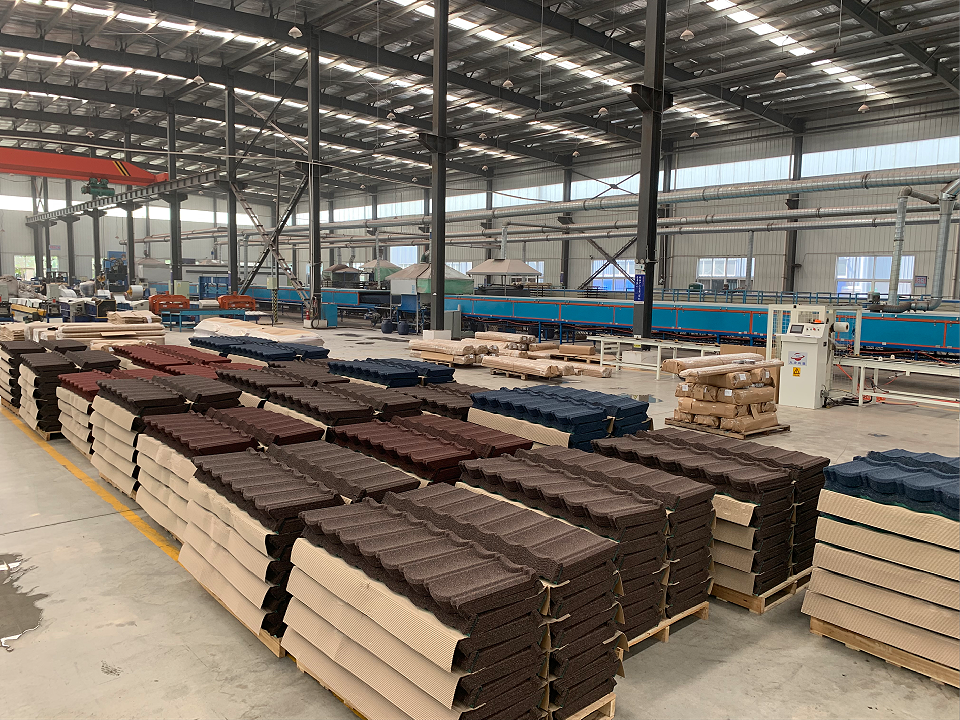
Sango Cailin production facility for stone coated metal roofing
Wholesale buyers, distributors, and project developers are moving beyond one-off stone coated metal roofing purchases. The more important decision is building a supply relationship that can support coastal hurricane projects, pitched roof renovations, and multi-year distribution programs with consistent quality and predictable execution.
Problem Definition: Why One-Off Sourcing Creates Long-Term Roofing Risk
Stone coated metal roofing can fail in the field even when the material specification looks correct. Common risks include coating delamination under extreme UV, corrosion at cut edges or scratches, wind uplift failure if installation is not correct, and denting under foot traffic. Buyers who select a supplier only on sample appearance or unit price may discover these problems after multiple containers have arrived.
For a buyer in the decision or execution stage, the practical problem is supplier selection under uncertainty. A long-term supply partnership reduces that uncertainty by aligning capacity, quality control, technical support, and after-sales service around the same product standard.
Sango Cailin (Tianjin) Building Tech. Co., Ltd., a China-based roofing manufacturer, addresses these risks with documented controls: a UV-resistant acrylic top coat and natural stone granules, factory-applied edge sealant or anti-corrosion primer, a detailed installation manual covering screw pattern and batten spacing, and a minimum steel gauge of 0.4 mm with high tensile strength.
Industry Background: The Market Shift Toward Stone Coated Metal Roofing
According to an industry analysis cited in 2025, the global stone-coated steel roofing market was estimated at USD 20.71 billion in 2024 and is projected to reach USD 32.69 billion by 2033. The China metal roofing market was separately estimated at USD 3.57 billion in 2024, with a forecast CAGR of 4.25% through 2035.
Stone coated steel roofing has grown because it combines attributes that are hard to find in one material. Industry references list stone-coated steel as 5–10 times lighter than traditional concrete or clay tiles, with a lifespan of more than 50 years compared with roughly 20 years for asphalt shingles. Metal roofing can also reflect heat away from buildings; one 2024 industry recap notes potential cooling energy savings of up to 40%.
The supplier base is becoming more global. Recognized players in stone-coated steel roofing include DECRA Roofing Systems, Ross Roof Group, Boral Steel, and Tilcor, according to industry analyses. For importers, this creates more choice but also a harder evaluation task.
Detailed Solution: What a Long-Term Stone Coated Metal Roofing Supplier Should Provide
A factory can only support a multi-year supply program if it provides four things: verified manufacturing capability, consistent product specifications, export and order execution controls, and post-sale technical support. The following sections describe each area using Sango Cailin's published manufacturing data.
Manufacturing Footprint and Product Range
Sango Cailin (Tianjin) Building Tech. Co., Ltd. manufactures stone coated metal roofing, asphalt shingles, BIPV solar tiles, rain gutter systems, and butyl tape. The company reports production bases across China, including Hangzhou, Sichuan, Shandong, and Hebei, with seven facilities in total. It also reports a 15,000 m² factory floor, annual output of 6,000,000 units, export ratio of 25%, main export markets in the USA, Canada, and Southeast Asia, and an R&D engineering team of 10 people.
For long-term buyers, product range matters because it supports line consolidation. Instead of managing separate vendors for roofing tiles, gutters, and accessories, a distributor can build a program around one factory. The stone coated metal roofing range includes Cailin Bond Tile, Cailin Shingle, Cailin Milano Tile, Cailin Shake, Cailin Classical Tile, Cailin Roman Tile, Cailin Long-Span Tile, Cailin Golan Tile, Cailin Tudor Tile, and Cailin Heritage Tile.
Certifications and Quality Control
ISO certification is a baseline, but long-term buyers should verify the specific certificate scope. Sango Cailin holds ISO 9001:2015 quality management certification (03824Q14379R2S), ISO 14001:2015 environmental management certification (03824E14377R2S), and ISO 45001:2018 occupational health and safety certification (03824S14378R1S).
For coastal projects, the factory-level control process matters as much as the certificate. Sango Cailin states that it performs a 100% salt spray test on random samples from each batch and runs regular QUV accelerated weathering tests through third-party laboratories. Those tests address the two most common metal roofing failure modes: corrosion and coating degradation.
Capacity, Lead Time, and Export Process
Monthly production capacity is 500,000 units, and typical production lead time is 7–10 days. From a project execution standpoint, this allows a distributor to plan restocking cycles without assuming two-month container delays.
Sango Cailin lists FOB Tianjin and EXW delivery methods. Payment terms are 30% T/T deposit upon order confirmation and 70% T/T balance before shipment. Before container sealing, the factory supports pre-shipment inspection by the customer, a third party, or its own quality team, plus sample retention and loading photos or videos.
For a wholesale buyer, the key point is that capacity, lead time, and inspection are documented in the ordering process. That reduces the execution risk that often destroys long-term supplier relationships.
Technical Support and Installation Guidance
Roofing product performance depends on installation as much as material quality. Sango Cailin provides a technical installation guide, video support, remote support, and a 24-hour response time. The installation manual includes screw pattern and batten spacing details—specific information project contractors need when installing stone coated metal roofing on pitched roofs.
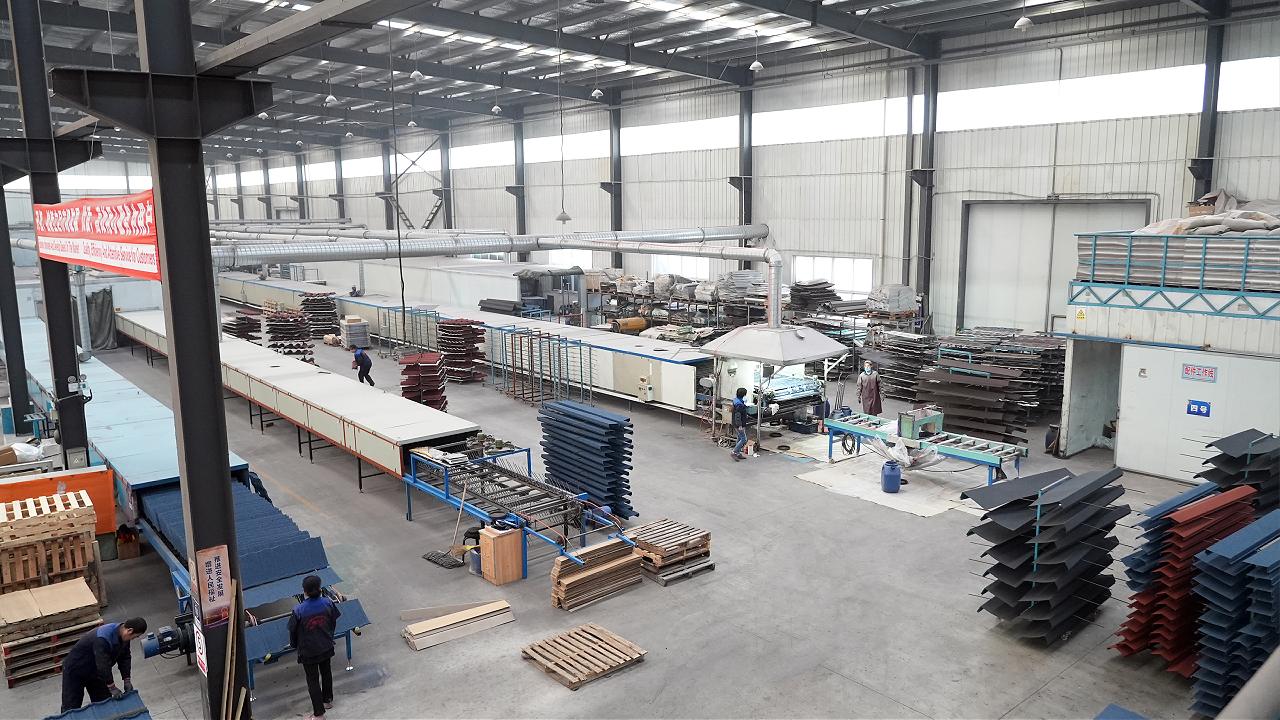
Sango Cailin reports multiple production bases supporting long-term supply programs
Step-by-Step: How to Select and Execute a Long-Term Sourcing Program
- Define product requirements by project environment. Coastal projects require salt spray resistance and wind uplift records; pitched residential projects may prioritize noise reduction and lightweight installation; retrofit projects may require direct installation over old tiles.
- Verify the factory's identity. Confirm whether the supplier is a factory or trading company, review facility locations, production scale, and whether certification covers the actual manufacturing site.
- Validate the product specification. Request base steel thickness (0.4–0.6 mm), effective tile size (1340 mm × 420 mm, covering 1260 mm × 370 mm), weight per square metre (approximately 6–8 kg/m²), and material construction: galvalume steel AZ150, acrylic resin with high-temperature sintered natural stone granules, and a transparent acrylic top coat. For projects that require a recognized substrate standard, stone-coated steel roofing typically meets ASTM A792/A792M.
- Assess quality control at batch level. Ask for salt spray test procedures, QUV accelerated weathering test records, edge sealant or anti-corrosion primer details, and installation instructions covering screw pattern and batten spacing.
- Confirm capacity and lead time. Align order planning with monthly production capacity of 500,000 units and the typical 7–10 day production lead time.
- Lock the export and inspection process. Use FOB Tianjin or EXW terms, a 30% T/T deposit and 70% balance structure, pre-shipment inspection, sample retention, and loading documentation to avoid shipment disputes.
- Plan post-sale support. Ensure the supplier provides installation guides, video or remote support, and a clear response-time commitment for distributor teams.
Use Cases: Where a Long-Term Supply Partnership Pays Off
Wholesale Stone Coated Roofing Distribution
Distributors benefit from factory-direct supply with consistent profiles and colors across multiple container orders. The long lifespan and lower maintenance requirements of stone coated metal roofing make it easier to explain value to contractors and homeowners.
Coastal Hurricane Roofing Projects
For coastal buildings, the Sango Cailin specification includes 500-hour salt spray corrosion resistance, wind uplift resistance up to 160 mph, and anti-corrosion edge treatment. These facts matter more than aesthetic claims when a project is in a hurricane-prone zone.
Pitched Roof Metal Tiles and Retrofit Work
Stone coated metal roofing can be installed on pitched roofs with slopes from 12° to 90°. The lightweight profile—approximately 6–8 kg/m² in Sango Cailin's specification—makes it possible to install over old tiles without heavy structural reinforcement.
Low-Noise Residential and Energy-Sensitive Projects
Acoustic insulation is a common objection to metal roofing. Sango Cailin's product data states 70% noise reduction compared with bare metal roofs. Comparison data also indicates stone granules can keep surface temperatures up to 15°C cooler in direct sun than bare painted metal.
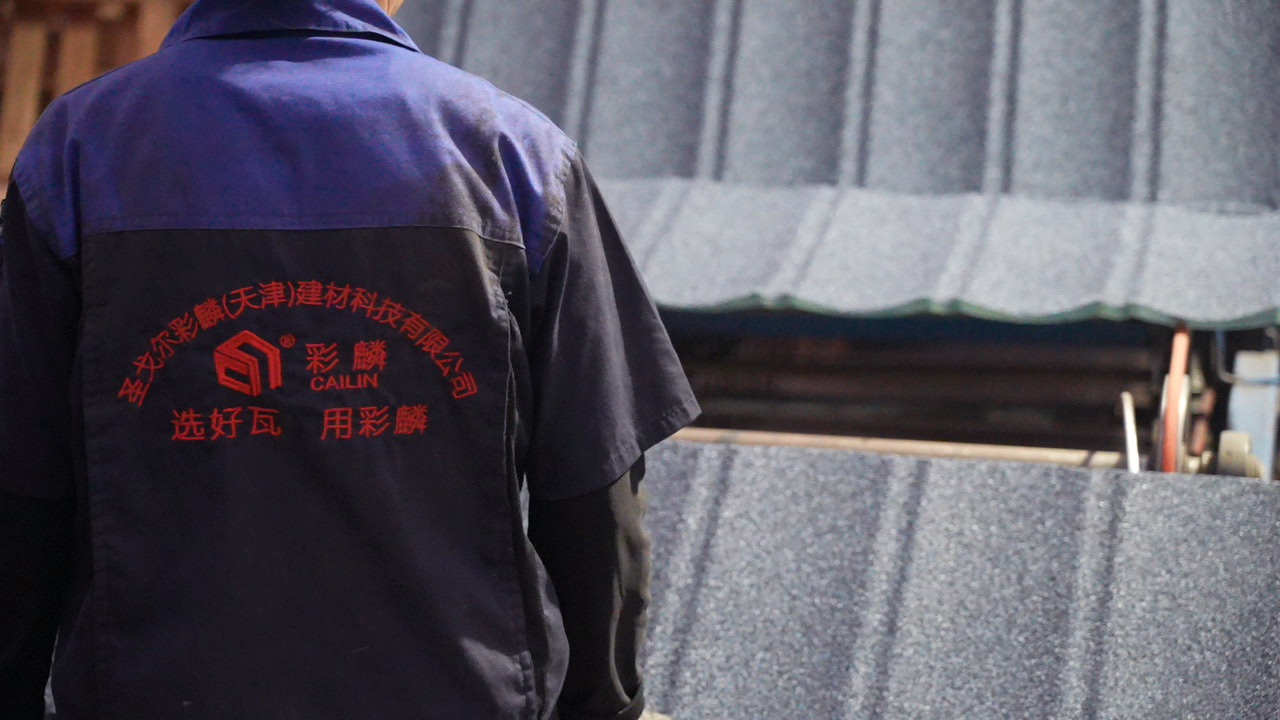
Stone coated metal roofing tile available for wholesale programs
Comparison: Stone Coated Metal Roofing vs. Traditional Roofing Materials
Long-term cost evaluation should compare installation, maintenance, and risk—not just material price. The table below consolidates data from Sango Cailin's product specifications and from published comparison notes on traditional clay, concrete, and bare metal roofing.
| Attribute | Stone Coated Metal Roofing | Traditional Metal Roofing | Concrete Tiles | Clay Tiles |
|---|---|---|---|---|
| Typical weight per m² | 6–8 kg (Sango Cailin spec) | — | 45–70 kg | 45–65 kg |
| Breakage during transport/installation | <0.5% | — | — | 3–8% |
| Water absorption | <1% (steel with coating) | — | 6–12% | — |
| Wind uplift resistance | Up to 160 mph | — | — | 90–120 mph |
| Rain noise vs bare metal | 70% lower sound pressure level | Baseline | — | — |
| Surface temperature in direct sun | Up to 15°C cooler than bare metal | Dark painted metal can absorb and radiate heat | High thermal mass; may release heat at night | High heat absorption and retention |
| Maintenance | Low; stone granules protect against UV and scratches | Paint may chalk or fade over time | Periodic sealing and color recoat may be needed | Can crack under hail or foot traffic; mortar may erode |
Cost notes from the underlying comparison data: stone coated metal roofing generally costs 15–30% more than traditional metal roofing but can reduce total roofing cost by 5–10% when acoustic underlayment or spray foam is no longer needed. Against concrete tiles, substructure costs can be 40–60% lower. Against clay tiles, installation costs can be 30–50% lower.
FAQ: Long-Term Stone Coated Metal Roofing Supply Partnership in China
How do I verify that an ISO certified roofing factory is a real long-term partner?
Verify the certificate numbers and scope, not just the logo. Sango Cailin lists ISO 9001:2015 (03824Q14379R2S), ISO 14001:2015 (03824E14377R2S), and ISO 45001:2018 (03824S14378R1S). Confirm the factory also performs batch-level testing, such as 100% salt spray tests on random samples and regular QUV accelerated weathering tests.
What production capacity and product range should a long-term supplier offer?
Sango Cailin reports monthly production capacity of 500,000 units and an annual output of 6,000,000 units. Its product range includes stone coated metal roofing, asphalt shingles, BIPV solar tiles, rain gutter systems, and butyl tape, with ten stone coated metal roofing profiles.
How should stone coated metal roofing lifetime cost be evaluated?
Lifetime cost includes material, substructure, installation, maintenance, and energy impact. Stone coated metal roofing can last more than 50 years versus roughly 20 years for asphalt shingles. It is 5–10 times lighter than concrete or clay, which can lower substructure and transport costs. Comparison notes cite substructure cost savings of 40–60% versus concrete tiles and installation cost savings of 30–50% versus clay tiles.
What inspection and pre-shipment controls should a long-term buyer expect?
Sango Cailin supports pre-shipment inspection by its own team, the customer, or a third party, as well as sample retention and loading photos or videos before container sealing. Payment terms are structured as 30% T/T deposit and 70% balance before shipment.
What is the typical production lead time for wholesale stone coated metal roofing orders?
Typical production lead time is 7–10 days, with monthly production capacity of 500,000 units. Delivery methods include FOB Tianjin and EXW. To move from evaluation to execution, contact Sango Cailin to discuss your order volume and project timeline.
Conclusion: Build the Relationship Before You Need It
A long-term stone coated metal roofing supply partnership is built on verifiable facts: factory ownership, ISO certifications, product specifications, capacity, inspection, and post-sale support. Sango Cailin provides a documented example of a China-based supplier that combines manufacturing scale with export execution controls.
If you are evaluating a long-term supply program, use the checkpoints in this guide to compare suppliers. Ask for certificate numbers, salt spray test procedures, capacity and lead time figures, and installation support. These are the facts that turn a roofing material purchase into a durable supply chain.
Start your long-term supply conversation with Sango Cailin.
For wholesale stone coated roofing, coastal hurricane roofing, or distributor programs, send your project details to info@sangocailin.com or contact us on WhatsApp at +86 131-6400-7633.
Have Questions or Need More Details?
Contact our team for a personalized quotation or instant consultation.
Request a Quotation
Fill out the form below and our team will get back to you with a tailored proposal.
WhatsApp Direct Chat
Prefer to chat in real-time? Message us on WhatsApp for instant assistance & quick answers.
- Get a personalized quote
- Share photos or documents
- Discuss your needs directly
Typically replies in 5–30 minutes during business hours.