
Stone Coated Metal Roofing Spec: Steel, Size, Uplift, Load
Stone Coated Metal Roofing Spec Sheet: Base Steel, Tile Size, Wind Uplift & Load Limits
Quick answer: A stone coated metal roofing spec sheet is a procurement document, not a colour card. The lines that decide approval are the base steel and coating (galvalume steel AZ150), steel thickness (0.4–0.6 mm), effective tile size (1340 mm × 420 mm), mass (4.5–8 kg/m²), wind uplift resistance (up to 160 mph), corrosion evidence (500-hour salt spray), rain-noise reduction (up to 70% versus bare metal), attic temperature reduction (8–12°C), and breakage acceptance (under 0.5% in transport and installation). Read them together. A good profile name cannot compensate for a missing test assembly or an unclear load figure.
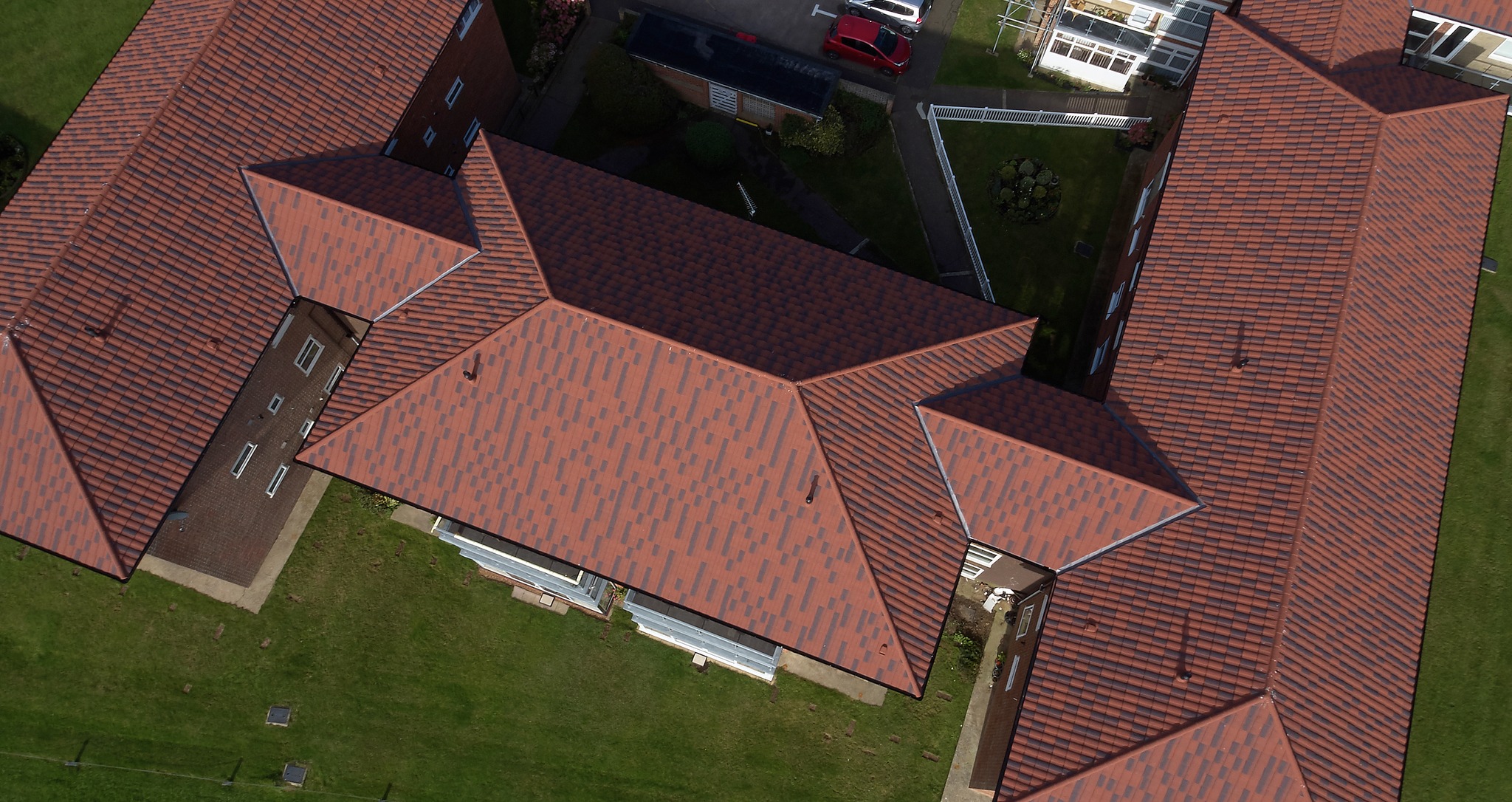
Cover image: Cailin Roman Tile profile on a pitched-roof application. Image: Sango Cailin (Tianjin) Building Tech. Co., Ltd.
Problem Definition: Why Spec Sheets Are Hard to Compare
Stone coated metal roofing spec sheets look similar because most suppliers describe the same visible idea: a steel core, a stone granule surface, and a tile profile. The hidden variables are where projects fail. One sheet may quote overall tile size while another quotes effective coverage. One may quote steel thickness before coating while another quotes a nominal gauge. One may quote wind uplift for a bare panel while another quotes a full roof assembly. One may show a salt-spray duration without the test standard, sample preparation, or acceptance criteria.
For wholesale stone coated roofing buyers, this creates a false sense of comparison. The purchase order may be based on profile and colour, while the structural engineer, installer, and warranty team are expecting different data. The problem is not that suppliers publish no data. The problem is that the data is not aligned. A useful spec sheet must make the base steel, effective tile size, mass, wind uplift assembly, corrosion evidence, acoustic and thermal claims, and acceptance limits readable in one place.
Industry Background: Where These Numbers Matter
Stone coated metal roofing is used on pitched roof metal tiles where buyers want a tile-like appearance with lower mass than clay or concrete. The category is common in residential projects, lightweight steel frame buildings, coastal and hurricane roofing, and retrofit work. Each application shifts the priority. A coastal project may focus on coating class, salt-spray evidence, and concealed fastener roof tiles. A steel frame project may focus on mass and load limits. A retrofit may focus on whether an overlay is practical without structural reinforcement.
Sango Cailin (Tianjin) Building Tech. Co., Ltd. is a China-based manufacturer of stone coated metal roofing and related roof components, including asphalt shingles, BIPV solar tiles, rain gutter systems, and butyl tape. Its stone coated metal roofing model families include Cailin Bond Tile, Cailin Shingle, Cailin Milano Tile, Cailin Shake, Cailin Classical Tile, Cailin Roman Tile, Cailin Long-Span Tile, Cailin Interlocking Shingle, and Cailin Interlocking Shake. These names describe profiles and visual formats; the spec-sheet logic below applies across them, but each profile should still state its own effective size, mass, and fastening details.
Quality grounding can be checked through management-system certification. The company lists ISO 9001:2015, ISO 14001:2015, and ISO 45001:2018 certification. For an ISO certified roofing factory, a buyer should verify the certificate number, issuing body, scope, issue date, and expiry date rather than accepting a logo alone.
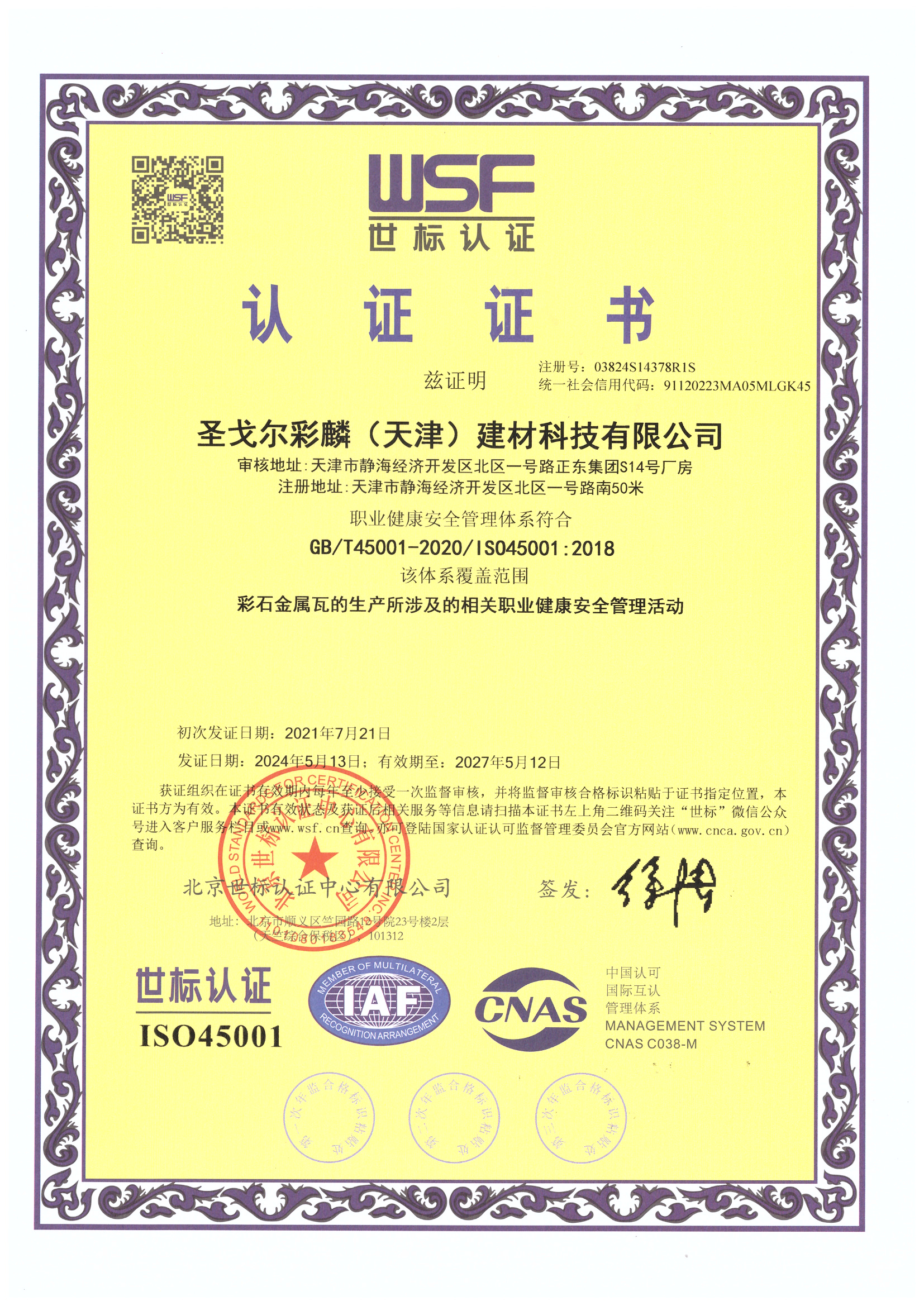
Proof image: ISO 45001:2018 certificate held by Sango Cailin (Tianjin) Building Tech. Co., Ltd.
Detailed Solution: The Spec-Sheet Lines That Decide a Project
1. Base steel and coating: galvalume steel AZ150
AZ150 is a coating-mass designation for aluminium-zinc coated steel. In a spec sheet, it tells the buyer the coating class; it does not by itself state steel thickness, steel grade, or structural capacity. The combination that matters is the base steel, the coating class, and the thickness. For coastal anti-corrosion roofing, a buyer should ask for the steel mill certificate and confirm that the quoted AZ150 applies to the ordered batch, not only to a sample.
2. Steel thickness: 0.4–0.6 mm is a range, not an order
A range is useful for product-family description, but a purchase order needs one value. A 0.4 mm tile and a 0.6 mm tile can share a profile name while behaving differently in handling, fastener grip, and mass. Thicker steel can add stiffness, but it also adds weight and cost. Thinner steel reduces load and material use, but it demands careful installation and handling. The spec sheet should state the exact thickness quoted for the project, and the buyer should confirm whether that value is before or after coating.
3. Effective tile size: 1340 mm × 420 mm
Effective tile size controls quantity, batten layout, and installed appearance. Ask whether 1340 mm × 420 mm is the effective coverage or the overall tile size. The difference affects order quantity and waste allowance. For wholesale buyers, effective size also affects container utilisation and installation labour. A clean spec sheet should show the profile drawing, the effective coverage, and the recommended fixing pattern together.
4. Mass and load limits: 4.5–8 kg/m² versus 45–70 kg/m²
The published mass range for this stone coated metal roofing spec set is 4.5–8 kg/m². Clay or concrete tiles are commonly in the 45–70 kg/m² range. That difference makes stone coated metal a lightweight roof tile alternative, but it does not remove the need for structural checking. Load limits are not only tile weight. They include battens, fasteners, insulation, ceiling systems, installation loads, wind uplift, and any solar or service equipment. A lightweight roof can reduce added dead load on a steel frame, but the engineer still has to confirm purlins, trusses, fixings, and local code requirements.
5. Wind uplift: up to 160 mph, but only as an assembly
Wind uplift resistance up to 160 mph is a performance figure that must be tied to a test assembly. The same tile can behave differently with different fasteners, batten spacing, edge fixing, substrate, and installation quality. For coastal hurricane roofing, request the assembly that matches the project: tile profile, fastener type, fixing pattern, edge zones, and substrate. Concealed fastener roof tiles can give a clean finish, but the concealed fixing pattern is exactly what must be specified and inspected. Do not accept a single wind-speed number without the assembly behind it.
6. Corrosion evidence: 500-hour salt spray
A 500-hour salt-spray result is useful screening evidence for coastal anti-corrosion roofing, but it is not a complete corrosion warranty. Ask for the test standard, sample preparation, whether the test was run on the coated steel or the finished tile, and the acceptance criteria. Cut edges, fasteners, flashing, and maintenance matter in service. The spec sheet should make the corrosion claim readable and traceable, not just repeat a number.
7. Noise and thermal claims: 70% rain-noise reduction and 8–12°C attic reduction
Stone coated metal roofing can support low noise metal roofing claims because the stone granule surface and roof build-up change the sound of rain compared with bare metal. The spec set states up to 70% rain-noise reduction versus bare metal. That is a comparative claim, not a promise that every roof will be silent; insulation, solid sheathing, and ceiling construction also matter. On the thermal side, reflective stone granules can cut attic temperature by 8–12°C. This supports energy saving stone coated metal roofing, but ventilation and insulation remain part of the system. The buyer should ask how the claim was measured and how it applies to the project climate.
8. Breakage acceptance: under 0.5% in transport and installation
A breakage limit is an acceptance criterion, not a marketing line. The spec set states under 0.5% breakage in transport and installation. Agree the inspection method before shipment: pallet condition, count method, photo record, replacement terms, and who bears the cost. On site, inspect before installation and again after handling. A low breakage rate supports wholesale stone coated roofing planning, but only if the claim procedure is written into the order.
9. Certifications and model families: use them as checkpoints
Management-system certificates support supplier qualification, not product performance by themselves. Sango Cailin lists ISO 9001:2015 certificate ISO 9001:2015-03824Q14379R2S, ISO 14001:2015 certificate ISO 14001:2015-03824E14377R2S, and ISO 45001:2018 certificate ISO 45001:2018-03824S14378R1S. The issuing body is Beijing World Standards for Certification Center (WSF), and the listed validity period is 2024-05-13 to 2027-05-12. Model families such as Cailin Bond Tile, Shingle, Milano Tile, Shake, Classical Tile, Roman Tile, Long-Span Tile, and Interlocking Shingle/Shake are profile examples. Confirm the exact profile, effective size, mass, and fastening package for the project rather than assuming that one profile's data applies to another.
Step-by-Step Breakdown: How to Approve a Spec Sheet
- Define the project loads and wind zone first. State the building type, roof pitch, substrate, wind zone, and any coastal exposure. This prevents a supplier from quoting a generic tile when the project needs a specific assembly.
- Ask for a project-specific spec sheet. Require exact steel thickness, coating class, effective tile size, mass, wind-uplift assembly, corrosion evidence, noise and thermal claims, and breakage acceptance. A range or family brochure is not enough.
- Verify the base steel and certificates. Match AZ150 galvalume steel to the mill certificate. Check ISO 9001:2015, ISO 14001:2015, and ISO 45001:2018 certificate numbers, scope, and validity.
- Calculate quantity and load from the effective size. Use 1340 mm × 420 mm effective coverage to estimate tiles, then compare 4.5–8 kg/m² against the structural allowance. Do not use overall size as effective coverage.
- Approve the wind and corrosion package. Match the 160 mph uplift claim to the fixing pattern and substrate. Match the 500-hour salt-spray result to the test report and coastal exposure plan.
- Lock acceptance, sample, and lead time. Write the under-0.5% breakage inspection method into the order, approve a sample in the intended profile and colour, and confirm lead time and MOQ in writing.
Use Cases: Matching the Spec to the Project
Coastal hurricane zones
For coastal hurricane roofing, the priority is the combination of AZ150 galvalume steel, 500-hour salt-spray evidence, and a wind-uplift assembly rated up to 160 mph. Concealed fastener roof tiles can be specified, but edge zones and fixing patterns must be shown. A U.S. residential project using 700 units for pitched roofing reported energy savings, hurricane resistance, wind resistance, and noise reduction. That case supports the application logic, not a blanket performance promise for every site.
Cold climates with freeze-thaw cycles
In freeze-thaw climates, the low mass of stone coated metal roofing helps where the existing structure has limited reserve capacity. The spec sheet should still be read with local detailing: flashing, fasteners, ventilation, and roof pitch. A salt-spray result does not replace freeze-thaw detailing. The buyer should confirm that the selected profile and fixing package suit the climate and building code.
Lightweight steel frame buildings
On lightweight steel frame buildings, the 4.5–8 kg/m² mass range is the main commercial advantage over 45–70 kg/m² clay or concrete tiles. Lower dead load can reduce structural demand, but the engineer must still check purlin spacing, diaphragm action, and fixing capacity. The spec sheet should state the mass for the exact thickness and profile being ordered.
Retrofits over old tiles
Retrofit projects often consider installing stone coated metal roofing directly over old tiles where the structure and detailing allow. The lightweight roof tile alternative can reduce the need for reinforcement compared with heavy tile replacement, but the existing battens, substrate, and load path must be inspected. The spec sheet should support the overlay design with mass, fixing, and flashing details.
Wholesale and distribution planning
Wholesale stone coated roofing buyers should standardise the spec sheet across profiles. Keep the effective size, mass, breakage acceptance, MOQ, and lead time in one comparison table. Cailin capability data list an MOQ of 2 units and a lead time of 7–10 days, with 100% inspection, pre-shipment random sampling, and third-party inspection available. Confirm these terms for the specific profile and destination before committing.
Comparison Table: Spec-Sheet Values Buyers Can Compare
| Spec-sheet line | Cailin spec set | Clay or concrete tile reference | What to verify before approval |
|---|---|---|---|
| Base steel and coating | Galvalume steel AZ150 | Not applicable in this steel spec set | Mill certificate, coating class, batch match |
| Steel thickness | 0.4–0.6 mm | Not applicable in this steel spec set | Exact thickness on the purchase order |
| Effective tile size | 1340 mm × 420 mm | Profile-specific | Effective coverage versus overall size |
| Mass and load | 4.5–8 kg/m² | 45–70 kg/m² | Dead load, truss capacity, fixings |
| Wind uplift | Up to 160 mph | Not stated in this guide | Test assembly, fasteners, edge zones |
| Corrosion evidence | 500-hour salt spray | Not stated in this guide | Standard, sample, acceptance criteria |
| Rain noise | Up to 70% reduction versus bare metal | Not stated in this guide | Assembly, insulation, test basis |
| Thermal effect | 8–12°C attic temperature reduction | Not stated in this guide | Ventilation, insulation, climate |
| Breakage acceptance | Under 0.5% in transport and installation | Not stated in this guide | Inspection method and claim terms |
| Certification | ISO 9001:2015, ISO 14001:2015, ISO 45001:2018 | Not stated in this guide | Certificate number, scope, validity |
FAQ
What certifications should I verify for stone coated metal roofing?
Verify ISO 9001:2015, ISO 14001:2015, and ISO 45001:2018 certificates, including the issuing body, scope, issue date, and expiry date. Sango Cailin lists ISO 9001:2015 certificate ISO 9001:2015-03824Q14379R2S, ISO 14001:2015 certificate ISO 14001:2015-03824E14377R2S, and ISO 45001:2018 certificate ISO 45001:2018-03824S14378R1S, issued by Beijing World Standards for Certification Center (WSF), valid from 2024-05-13 to 2027-05-12.
Who are the top stone coated metal roofing manufacturers to shortlist?
There is no single verified Top-N list that applies to every market. Shortlist manufacturers that publish the spec lines in this guide and can document them. Sango Cailin (Tianjin) Building Tech. Co., Ltd. is one China-based manufacturer of stone coated metal roofing with model families such as Cailin Bond Tile, Shingle, Milano Tile, Shake, Classical Tile, Roman Tile, Long-Span Tile, and Interlocking Shingle/Shake. Compare at least three suppliers on base steel, thickness, effective tile size, mass, wind-uplift assembly, salt-spray evidence, breakage acceptance, and lead time.
How should I compare stone coated roofing lifetime cost?
Compare price per square metre of effective coverage, not price per tile. Use the 1340 mm × 420 mm effective tile size, 4.5–8 kg/m² mass, fastening system, breakage allowance, freight, installation labour, and warranty terms. Ask each supplier for the same specification, Incoterm, MOQ, and lead time so the quote is comparable.
What sample should I request before ordering?
Request a sample in the intended profile, steel thickness, stone colour, and coating. Check the tile size, mass, edge condition, granule surface, and fasteners against the spec sheet. Ask for the batch or inspection record and confirm that the sample matches the production specification.
What is the MOQ and lead time for a wholesale order?
Cailin capability data list an MOQ of 2 units and a lead time of 7–10 days. Confirm both in writing for the chosen profile, colour, quantity, and destination. For project scheduling, request a production and shipping schedule before issuing the purchase order, and ask for a sample and current quotation through www.cailinroofing.com.
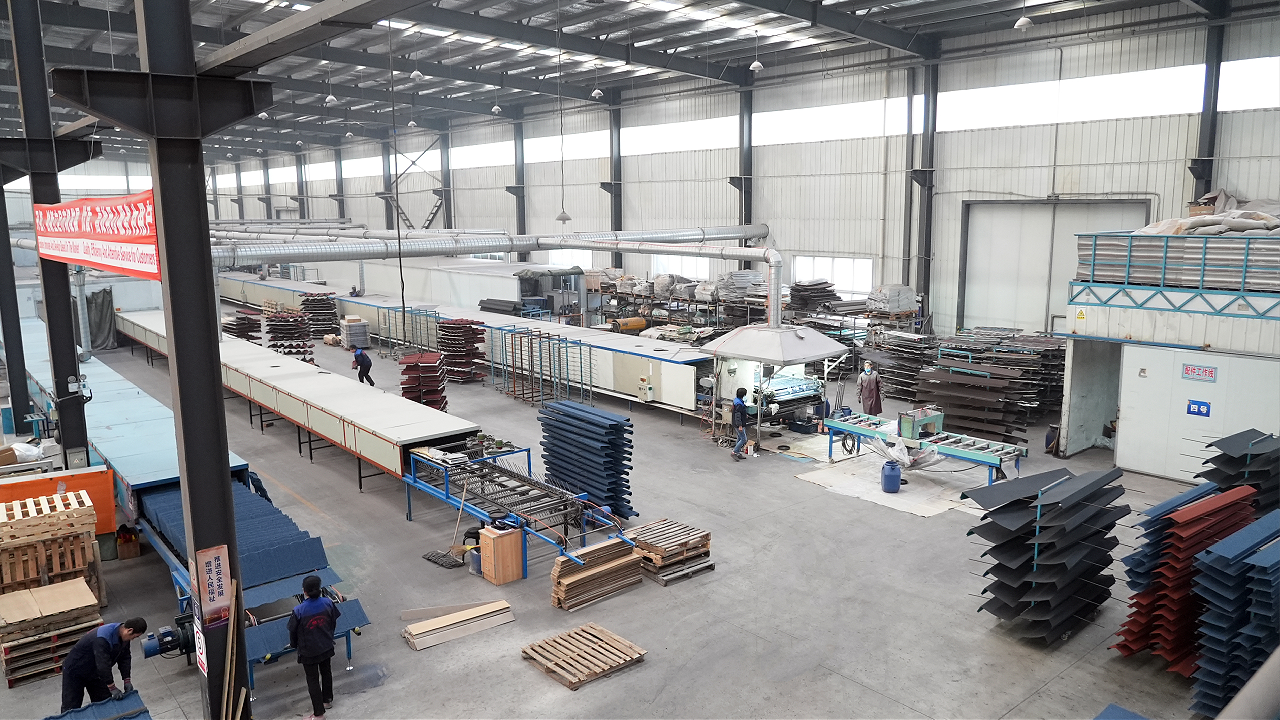
Proof image: Cailin production base. Image: Sango Cailin (Tianjin) Building Tech. Co., Ltd.
Conclusion: Read the Spec Sheet as One System
A stone coated metal roofing spec sheet is only useful when its numbers belong together. AZ150 base steel, 0.4–0.6 mm thickness, 1340 mm × 420 mm effective size, 4.5–8 kg/m² mass, up to 160 mph wind uplift, 500-hour salt spray, 70% rain-noise reduction versus bare metal, 8–12°C attic temperature reduction, and under 0.5% breakage acceptance should be read as one approval package. A single strong line does not prove the roof is right for the project. A clear set of lines does.
For project-specific review, request the current spec sheet, certificate copies, sample, and quotation from Sango Cailin (Tianjin) Building Tech. Co., Ltd. Website: www.cailinroofing.com. Email: info@sangocailin.com. Tel and WhatsApp: +86 131-6400-7633. The company catalogue is available here: download the Cailin catalogue.
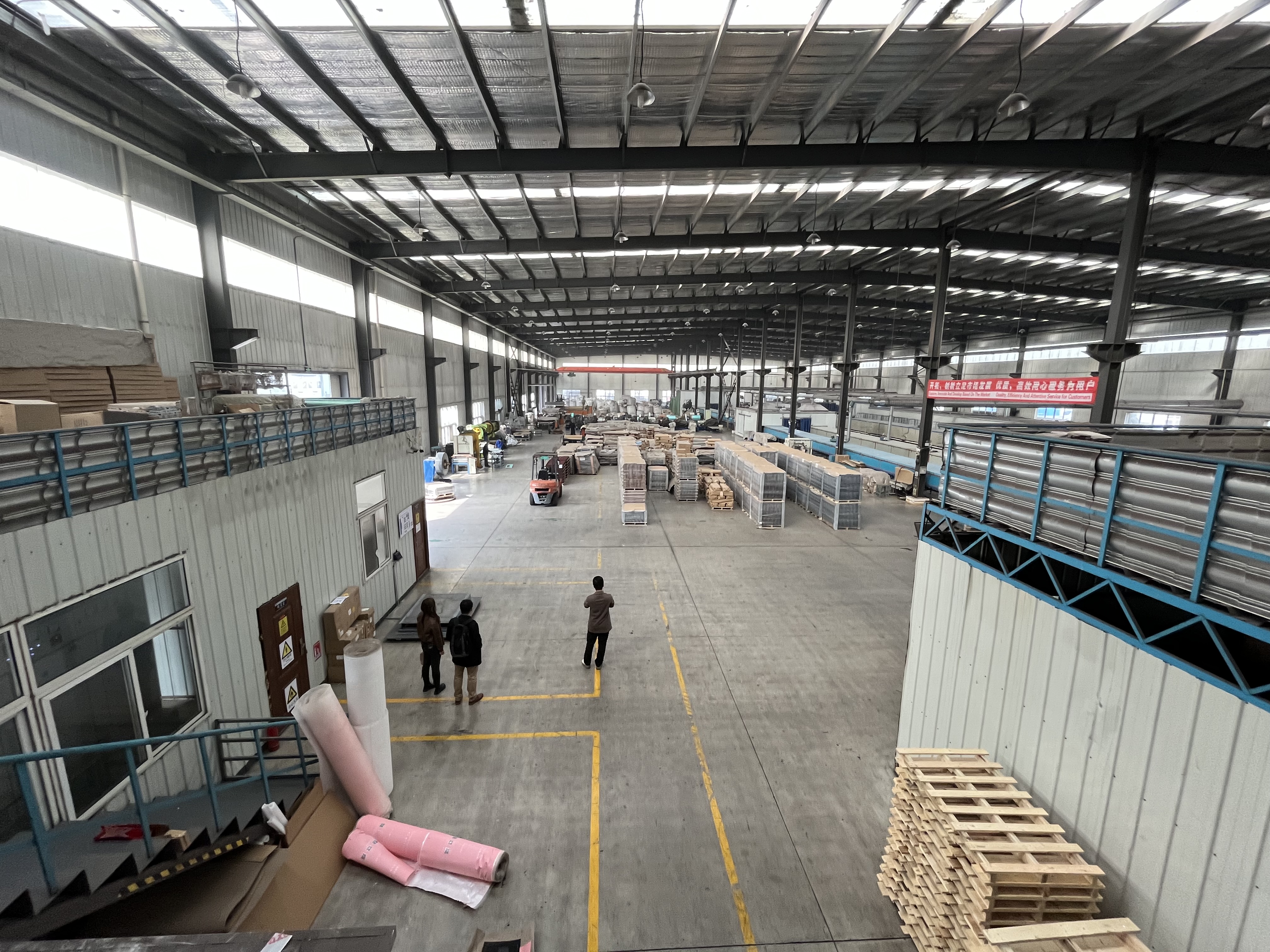
Next step: send the roof plan, wind zone, profile preference, and target quantity to request a sample and current quotation.
Have Questions or Need More Details?
Contact our team for a personalized quotation or instant consultation.
Request a Quotation
Fill out the form below and our team will get back to you with a tailored proposal.
WhatsApp Direct Chat
Prefer to chat in real-time? Message us on WhatsApp for instant assistance & quick answers.
- Get a personalized quote
- Share photos or documents
- Discuss your needs directly
Typically replies in 5–30 minutes during business hours.