
Stone Coated vs. Painted Metal Roofing: Noise, Heat, UV
Stone coated metal roofing wins this comparison whenever rain noise, attic heat gain and the durability of the visible finish are part of the buying decision. Against bare or painted metal — standing seam or corrugated steel — a stone coated roof delivers 70% lower rain noise measured by sound pressure level, reflects 65–70% of solar radiation where dark metal can absorb up to 90% and push attic temperature 15–25°C higher, and holds a natural stone granule finish for 40+ years against paint that may chalk or fade in 15–20 years.
None of that makes painted metal a poor choice everywhere. It costs 15–30% less up front, it goes on fast as a single-skin panel, and on a warehouse or a shaded, heavily insulated service building the comfort gap is worth very little. The decision-stage question is narrower: on this particular building, will those three gaps become something the owner pays for — a noise complaint, a larger cooling load, or a repaint — while the roof is still in service? This guide quantifies each gap, states what the evidence covers and what it does not, and closes with a selection rule for projects where interior thermal comfort and appearance carry real weight.
The three figures this decision turns on
- Rain noise: 70% lower than bare metal, measured by sound pressure level.
- Heat gain: 65–70% solar reflection with cool roof technology, against up to 90% absorption for dark metal; the dark-metal case raises attic temperature 15–25°C, while the stone coated surface reduces it by 8–12°C.
- UV and finish: natural stone granules rated for 40+ years; painted metal may chalk or fade in 15–20 years.
Why painted metal falls short on comfort: three mechanisms
A bare or painted metal roof is a single thin skin of steel. Two consequences follow directly from that construction. It carries little mass to resist the impact energy of rain, so the panel behaves like a drum and passes that energy into the rooms below. And with no granular or mineral surface layer of its own, the panel's surface temperature quickly becomes the temperature of the roof void beneath it. Neither behaviour is a manufacturing defect; both are the natural result of a low-cost, light, fast-to-install roof.
The most visible weakness is the finish. Paint protects steel by sealing it, and that seal is an organic film measured in microns. UV radiation attacks the binder in the film, which is why older painted roofs develop chalking — a powdery surface layer — and why pigments lose saturation. This is the origin of the 15–20 year figure used throughout this comparison: it describes a finish-appearance horizon, not a structural collapse. The steel under a chalked panel usually still works; it simply no longer looks like the day it was installed, and restoring it means recoating or replacing the roof.
Noise and heat behave the same way: they are perceptual, they are seasonal, and they never appear on a specification sheet. Under heavy rain a bare panel radiates impact noise into the attic and ceiling; under summer sun a dark panel absorbs radiation and re-emits heat from its underside. A buyer comparing tile samples on price alone will not see either effect, which is exactly why a structured comparison — rather than a datasheet — is the right tool at decision stage.
What stone coated metal roofing is, and why the coating stack drives all three results
Stone coated metal roofing is a steel core carrying a layered coating stack: an anti-corrosion primer, an acrylic top coat, and natural stone granules embedded in that top coat while it cures. Each layer maps to one of the three performance axes in this comparison, which is why the product behaves differently from a painted panel rather than simply looking different.
- Stone granules create mass and break up resonance. The granular surface interrupts the clean, resonant face of a bare panel and adds surface mass, producing the built-in noise reduction that separates a stone coated roof from standing seam or corrugated steel.
- The granulated surface supports cool-roof performance. Combined with cool roof technology, the finished surface reflects 65–70% of incoming solar radiation instead of absorbing it.
- The granules shield the film underneath. Mineral granules take the UV exposure that would otherwise degrade the acrylic and colour layer, which is the mechanism behind a 40+ year finish life rather than a 15–20 year one.
- The steel core still does the structural work. A minimum gauge of 0.4 mm with adequate tensile strength, factory-applied edge sealant and anti-corrosion primer at cut edges are what keep a lightweight metal roof from becoming a corrosion story.
That last point matters for how you read the rest of this article. The three performance advantages are real, but they are properties of a correctly built and correctly installed system, not of the phrase "stone coated" on a quotation. A thin-gauge panel, a skipped primer layer or a careless fastener pattern can erase most of the benefit while keeping the appearance.
Rain noise: reading the 70% sound pressure figure correctly
Stone coated metal roofing reduces rain noise by 70% compared with bare metal when measured by sound pressure level. The measurement basis matters, because sound pressure level follows a logarithmic scale: a 70% reduction in sound pressure is not the same thing as a 70% reduction in perceived loudness. It is a clearly audible change in how rain reads inside the building, but the exact decibel difference depends on the test assembly, the substrate, the rain intensity and the room underneath.
For a buyer, the practical translation is simpler than the acoustics. A painted metal roof over a bedroom, a home office, a mezzanine or a metal-framed house usually needs help to stay quiet — an acoustic underlayment, a spray-foam layer, or both. A stone coated roof builds part of that attenuation into the product because the granule layer sits directly in the path of the impact. The comparison figures put the cost consequence at 5–10% of total roofing cost, saved by eliminating the need for acoustic underlayment or spray foam.
Where noise is the deciding factor, request the acoustic evidence rather than accepting the headline number. Three questions are enough to separate a real test from a marketing claim:
- Which bare-metal reference product was used for the comparison, and how was it fastened?
- What roof assembly was tested — battens, underlayment, substrate, ceiling type?
- What rain intensity and measurement position produced the figure?
If the supplier cannot answer those questions, the 70% figure should be treated as an indicative direction of travel rather than a project-specific guarantee. It remains a defensible reason to shortlist stone coated roofing for habitable space under a metal roof; it is not a substitute for checking the assembly you will actually build.
Heat gain: 65–70% reflection against up to 90% absorption
With cool roof technology, stone coated metal roofing reflects 65–70% of solar radiation. Dark metal roofing does the opposite: it can absorb up to 90% of that radiation and re-emit it, raising attic temperature by 15–25°C compared with a stone coated roof, which reduces attic temperature by 8–12°C. The mechanism is straightforward — a reflective, granulated surface sends most of the incoming energy back out, while a dark absorptive surface converts it into heat that the roof void then holds.
What that means for a buyer is a change in the working conditions of the cooling system, not a guaranteed percentage off an electricity bill. Attic temperature affects duct losses, the temperature of air drawn into the air handler, and the heat flowing through the ceiling assembly. How much of that reaches the occupied space depends on insulation depth, roof ventilation, ceiling construction and the climate zone. The roof is one component of the envelope, and a roof that runs 15–25°C cooler in the attic is a genuine advantage inside that envelope — but it is not a promise about metered energy use.
Two honest limitations belong next to this claim. First, the comparison is against bare or dark-painted metal. A light-coloured painted panel with a reflective cool-roof coating is a different comparison, and the gap narrows considerably; if a project is considering that route, ask both suppliers for solar reflectance data on the same basis. Second, dark stone chip colours absorb more than light ones, so the reflectance advantage depends on the colour selected from the range, not on the product name alone.
The other half of the thermal story is conductivity. The core difference between stone coated and traditional metal roofing includes lower thermal conductivity to the interior, because the granule and coating stack sits between the steel and the roof void. On a metal roof, that layer is the difference between a surface that radiates heat straight off the steel and one that moderates the transfer before it reaches the underside of the panel.
UV durability: 40+ years of stone granules against 15–20 years of paint
Natural stone granules are rated to last 40+ years, while paint on a metal panel may chalk or fade in 15–20 years. The gap comes from what each surface is made of. Granules are mineral: UV exposure does not break them down the way it breaks down the organic binder in a paint film. Paint fails from the top down — chalking first, then colour fade, then a thinning film that eventually exposes the primer beneath. Once that happens the roof still sheds water, but it has become a repainting project rather than a finished surface.
This is where the stone coated finish earns part of its premium. Maintenance requirements for the two roofs are otherwise similar — both are low-maintenance metal systems — but the stone coating protects against scratches and UV degradation better than painted metal. On a low-slope residential roof, a coastal property or a building where access for repainting is expensive, the difference between a 15–20 year appearance cycle and a 40+ year one is a recurring cost line, not a cosmetic preference.
The qualifier is where the protection stops. Granules cover the field of the panel; cut edges, field-cut penetrations and scratches from foot traffic are where corrosion starts, and coating delamination under extreme UV is a recognised risk for any coated steel roof. The controls are specific rather than general: a UV-resistant acrylic top coat combined with natural stone granules, factory-applied edge sealant and anti-corrosion primer, a minimum steel gauge of 0.4 mm, a documented screw pattern and batten spacing, and careful handling on site. Ask for those four items in writing.
Finally, keep service life and warranty separate. A 40+ year finish statement describes the material's expected endurance under normal exposure; a warranty describes what a specific supplier will do, for how long, and under which exclusions. The two are related but not interchangeable, and the warranty terms are the ones that bind.
Side-by-side comparison
The table below sets the two roof types against the criteria that actually move a decision. Values are the comparison figures used throughout this article; they describe the product classes, not a specific project.
| Criterion | Stone coated metal roofing | Bare or painted metal |
|---|---|---|
| Rain noise | 70% lower sound pressure level than bare metal; noise reduction built into the granule layer | Panel transmits impact noise; acoustic underlayment or spray foam often added |
| Solar heat gain | 65–70% reflection with cool roof technology; attic temperature reduced by 8–12°C | Dark surfaces can absorb up to 90%; attic temperature 15–25°C higher than the stone coated case |
| Finish life | Natural stone granules, 40+ years | Paint may chalk or fade in 15–20 years |
| Maintenance | Similar low-maintenance metal system; stone coating resists scratches and UV degradation | Similar low-maintenance metal system; appearance depends on the paint film |
| Initial cost | 15–30% higher | Lower |
| Installed-cost offset | Can remove the need for acoustic underlayment or spray foam, saving 5–10% of total roofing cost | Those layers are an additional cost where noise control is required |
| Appearance | Natural stone chip colours and textured tile profiles | Painted flat colour, limited to the painted metal colour range |
| Best fit | Residential and architectural roofs where interior comfort and appearance matter | Industrial, budget-led or service buildings where noise and appearance are secondary |
Does the 15–30% premium pay back?
Stone coated metal roofing costs 15–30% more than bare or painted metal at the material line. Two offsets reduce that gap. The first is acoustic: if the building would otherwise need acoustic underlayment or spray foam to be usable under rain, eliminating those layers saves 5–10% of total roofing cost, narrowing the premium before anything else is counted. The second is time: a 40+ year granule finish against a 15–20 year paint cycle removes at least one repaint from a long ownership horizon, and removes the access cost of getting to the roof to do it.
Whether the arithmetic closes depends on a single question the project team can answer before signing: would the painted metal option have been specified with acoustic treatment anyway? On a warehouse where nobody works directly beneath the panel and rain noise is irrelevant, the answer is no, and the premium buys comfort the client did not ask for. On a two-storey house with bedrooms under the roof and a tropical or monsoon rain pattern, the answer is usually yes — and in that case, part of the price difference is already being paid on the other side of the comparison.
A six-step comparison you can run before signing
- Define the comfort problem in the building, not in the brochure. Is there habitable space directly under the roof? Is there attic-mounted HVAC or shallow insulation? Does rain fall heavily and often? These answers decide which of the three performance axes is decisive and which is merely nice to have.
- Request the same-basis numbers from both suppliers. For acoustic performance, ask for the bare-metal reference, the tested assembly and the measurement position. For thermal performance, ask for solar reflectance on the colour you will actually specify. For finish, ask for the accelerated weathering test basis, not only the service-life claim.
- Compare installed cost, not tile price. Add underlayment, fasteners, battens, edge treatment, labour and access. The 5–10% saving on total roofing cost only appears when acoustic treatment genuinely drops out of the specification.
- Check the steel and the edges. Confirm a minimum 0.4 mm gauge, primer and edge sealant at cut edges, and a documented screw pattern and batten spacing. These determine whether the finish survives as designed.
- Check the colour against the heat target. A dark stone chip and a light stone chip do not reflect the same amount of solar radiation. If attic heat is the deciding factor, choose the colour with the reflectance data to match.
- Inspect a sample before you commit. Granule adhesion, coating uniformity, edge treatment and panel flatness are visible on a physical sample and invisible in a specification.
Which projects should choose which roof
Specify stone coated metal roofing where: bedrooms, home offices or living space sit directly beneath the roof and rain noise would generate complaints; the roof makes a meaningful contribution to cooling load through a dark finish, a hot climate or limited insulation depth; appearance must hold for more than twenty years without repainting, particularly where roof access is difficult or expensive; the building is in a coastal high-wind zone where a textured, low-maintenance finish is preferred; or the roof is a pitched assembly on a lightweight steel frame, where a 4.5 kg/m² tile keeps dead load low.
Keep painted metal on the table where: the building is industrial or service-oriented and no one works directly under the panel; the specification is budget-led and the comfort gap will not be noticed; a light-coloured, reflective painted panel already addresses the heat question; or the roof is fully visible from below and the panel is part of the interior aesthetic.
Coastal projects deserve one extra note. Published comparison data lists stone coated metal wind ratings up to 120–160 mph, with reference to UL Class 4 and Miami-Dade NOA criteria, and the concealed-fastener construction keeps fixings under the panel rather than exposed to driving rain. Those are product-class ratings; the qualifying evidence for a specific project still comes from the supplier's test documentation and the local code, and should be requested as part of the same package as the acoustic and thermal data.
What to verify with the supplier before you rule out painted metal
The performance claims in this comparison are only as reliable as the factory behind them. A supplier worth shortlisting should be able to put quality control in writing: a certified quality management system, third-party accelerated weathering testing for the coating, corrosion testing on production batches, and installation documentation that specifies screw pattern, batten spacing and handling rules.
Sango Cailin (Tianjin) Building Tech. Co., Ltd. is a Tianjin-based manufacturer of stone coated metal roofing, asphalt shingles, BIPV solar tiles, rain gutter systems and butyl tape, producing on its own lines rather than trading. Its quality system is certified to ISO 9001:2015 (certificate 03824Q14379R2S), ISO 14001:2015 (03824E14377R2S) and ISO 45001:2018 (03824S14378R1S), and the company reports 100% salt spray testing on random samples per batch plus regular third-party QUV accelerated weathering testing, installation training videos and remote or on-site technical support for larger projects. Those are the controls that determine whether a stone coated panel still performs in year fifteen the way it did in year one.
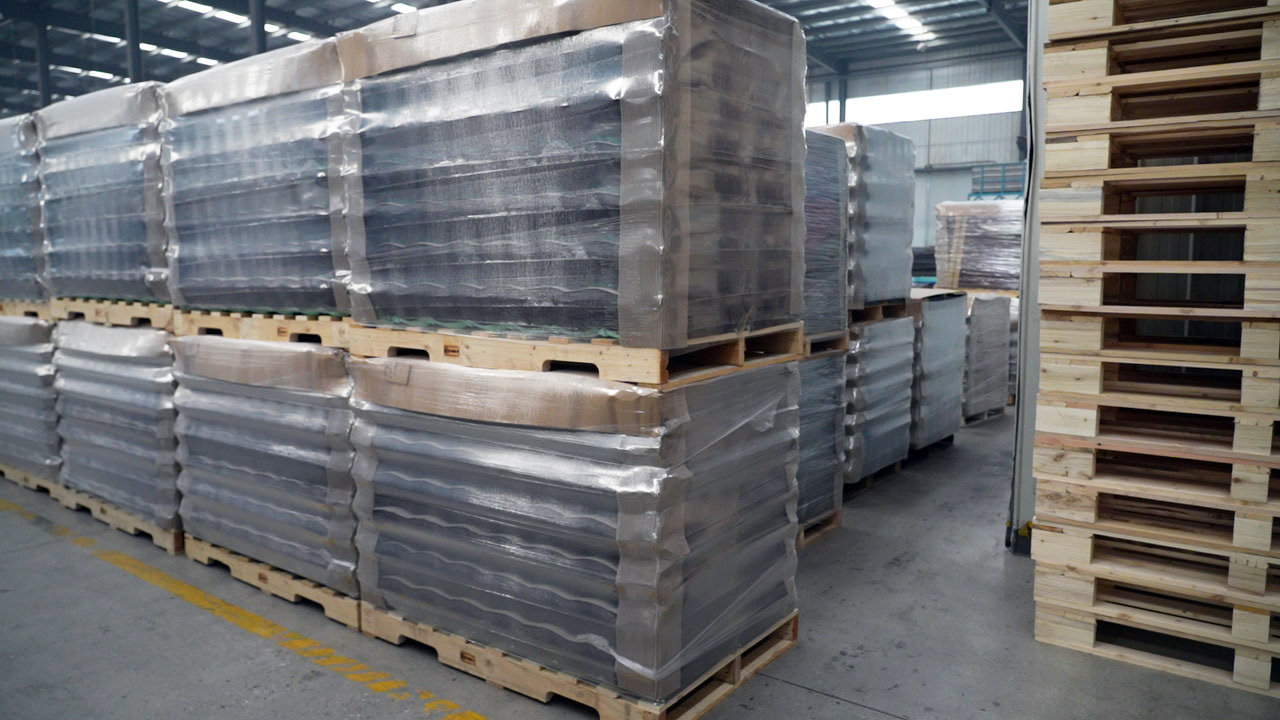
Stone granule surface: the layer that carries the noise, heat and UV performance compared in this guide.
Frequently asked questions
Which manufacturer is better for stone coated metal roofing?
There is no universally better manufacturer, because the answer depends on which of the three criteria in this comparison your project weights most heavily — acoustic performance, solar performance or finish durability — and on whether the supplier can document it. A practical shortlist test is to ask each candidate for the same four items: acoustic test conditions with the bare-metal reference, solar reflectance data for the specific colour, accelerated weathering and salt spray evidence, and the certificate numbers behind any ISO claim. The supplier that answers all four with traceable documents is the better manufacturer for a decision-stage project, regardless of brand size.
Is stone coated metal roofing actually quieter than painted metal in heavy rain?
Yes, on the evidence used in this comparison: rain noise is 70% lower than bare metal when measured by sound pressure level, because the natural stone granule layer adds surface mass and interrupts panel resonance. Because sound pressure is measured on a logarithmic scale, the perceived difference is smaller than 70% but still clearly audible inside the building. Ask for the test assembly and rain conditions if the roof sits above bedrooms, and confirm whether acoustic underlayment is still recommended for your specific build-up.
Does stone coated metal roofing really reduce attic heat compared with dark metal?
With cool roof technology the stone coated surface reflects 65–70% of solar radiation, while dark metal can absorb up to 90% and raise attic temperature by 15–25°C; the stone coated case reduces attic temperature by 8–12°C. That is an attic-level effect. How much of it reaches the living space depends on insulation, ventilation and ceiling construction, so treat it as a genuine reduction in the heat load on the cooling system rather than a guaranteed percentage off an energy bill. Colour choice also matters — light stone chips reflect more than dark ones.
How long does the stone finish last compared with painted metal?
Natural stone granules are rated for 40+ years, while paint on a metal panel may chalk or fade in 15–20 years. The difference is material: mineral granules do not degrade under UV the way an organic paint binder does, and they shield the acrylic layer beneath them. The protection applies to the panel field, so cut edges, scratches and foot-traffic damage remain the weak points — which is why factory-applied edge sealant, anti-corrosion primer and a minimum 0.4 mm steel gauge belong in the specification alongside the finish claim.
Do I still need acoustic underlayment under stone coated metal roofing?
Often not, and that is where part of the cost difference is recovered: eliminating the need for acoustic underlayment or spray foam saves 5–10% of total roofing cost. Whether you can drop it depends on the assembly and the room below. A single-storey utility building and a bedroom directly under the panel are different acoustic problems. Confirm the build-up with the supplier's technical team and keep the underlayment if the test conditions for the noise claim do not match your construction.
Can I compare samples and get project pricing before deciding?
Yes, and at decision stage a physical sample is the cheapest way to close the remaining uncertainty. A sample lets you check granule adhesion, coating uniformity, edge treatment and the real colour of the stone chips against the reflectance figure you were quoted, which no specification sheet shows. Request a sample and a project-specific quotation for the panel profile, colour and quantity you intend to use, then verify the acoustic, thermal and weathering documents against that exact configuration.
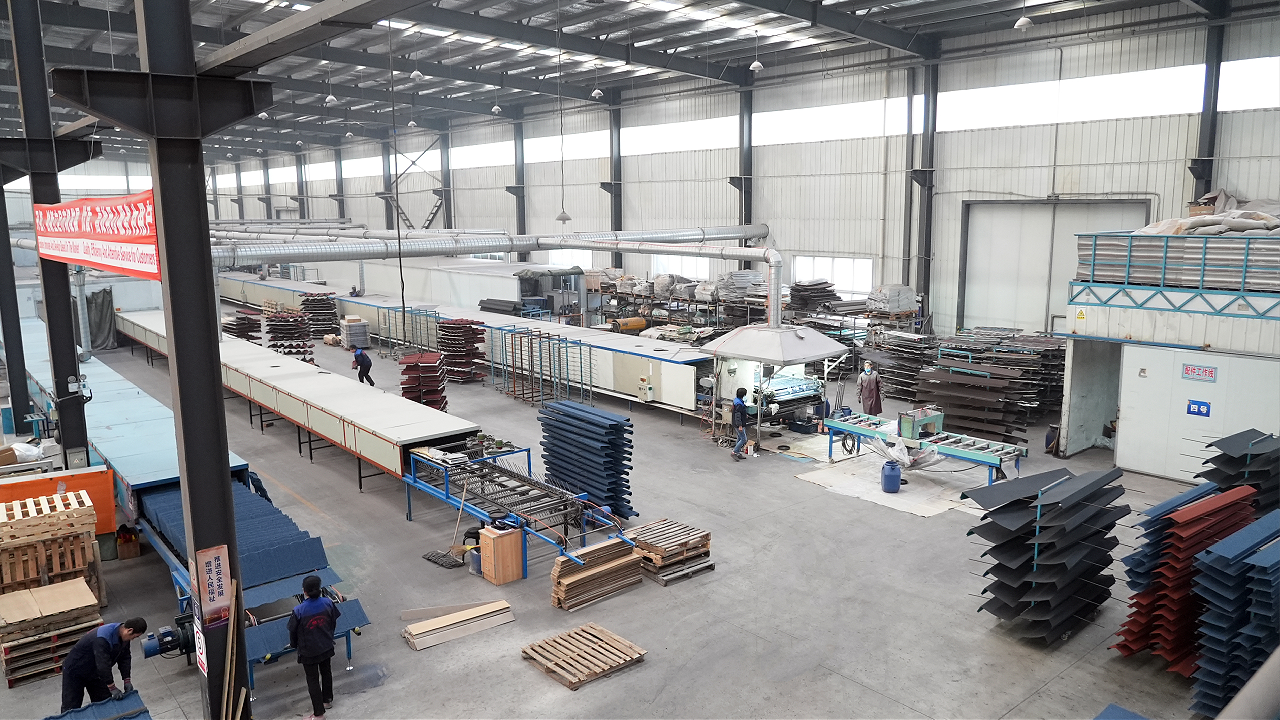
Coating and granule application on the production line — where the UV, corrosion and colour performance is set.
Conclusion: the selection rule
Choose stone coated metal roofing when at least two of these three conditions hold. First, habitable space sits directly under the roof and rain noise is a realistic complaint risk. Second, the roof contributes meaningfully to cooling load — a dark finish, a hot climate, attic-mounted HVAC or limited insulation depth — so attic temperature is worth 15–25°C. Third, the appearance of the roof has to hold for more than twenty years without repainting, especially where access is difficult. Under those conditions, a 15–30% material premium buys a quieter interior, a cooler roof void and a finish that outlasts paint by roughly two decades, with 5–10% of total roofing cost recovered by dropping acoustic treatment.
Stay with bare or painted metal when none of the three applies: a service building, a shaded well-insulated roof, a budget where the comfort gap will never be noticed, or a light-coloured reflective panel that already solves the heat question. In that case the money is better spent on insulation and ventilation than on a surface the building does not need.
For projects that land on the stone coated side of the rule, the next step is a documented comparison rather than a verbal one — the acoustic basis, the reflectance of the chosen colour, the weathering evidence and the installed-cost calculation, all against the same configuration. The CAILIN product catalogue sets out the profiles, colours and system components referenced in this guide and can be downloaded here: CAILIN stone coated metal roofing catalogue (PDF).
Have Questions or Need More Details?
Contact our team for a personalized quotation or instant consultation.
Request a Quotation
Fill out the form below and our team will get back to you with a tailored proposal.
WhatsApp Direct Chat
Prefer to chat in real-time? Message us on WhatsApp for instant assistance & quick answers.
- Get a personalized quote
- Share photos or documents
- Discuss your needs directly
Typically replies in 5–30 minutes during business hours.