
304 vs. 316 Stainless Steel Pipe: A Buyer's Comparison Guide
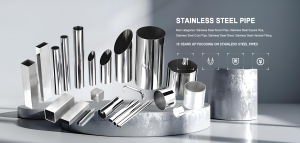
Buyers face a classic dilemma: 304 and 316 stainless steel pipes can look almost identical, yet they are not interchangeable in every environment. The practical difference is corrosion resistance, and the right choice depends on where the pipe will be used and how long it must last.
This guide is written for importers, distributors, fabricators, architects and project buyers who need to choose between 304 and 316 stainless steel pipe. It compares the two grades from a procurement perspective, explains how to match them to applications, and includes manufacturer experience from GuangDong Sanon Metal Products Co.,Ltd, a Foshan-based stainless steel pipe manufacturer founded in 1999.
Why 304 vs. 316 Is a Real Procurement Decision
Grade selection matters because a visibly perfect polished pipe cannot tell you its chemical composition. Two samples of 304 and 316 stainless steel pipe may have the same diameter, wall thickness and mirror finish. The difference becomes visible only when the pipe is exposed to moisture, salt, chlorine or aggressive cleaning chemicals.
Choosing 304 for a coastal project can lead to surface pitting. Choosing 316 for every interior railing can raise material costs without adding real project value. This is why buyers need a decision framework rather than a habit-based rule.
Industry Background: Why Pipe Buyers Need Global Grade Awareness
The stainless steel market is large and internationally traded. The global stainless steel market was valued at USD 111.44 billion in 2022 and is projected to reach USD 182.10 billion by 2030, according to Fortune Business Insights. China's exports of stainless steel reached 4.14 million tons in 2023, according to data from the General Administration of Customs of China. These figures show how much stainless steel moves through global supply chains for projects ranging from handrails to industrial plants.
For buyers, this global supply reality means that material grade, traceability and supplier consistency are as important as the physical appearance of the pipe. A 304 vs. 316 decision should not be made from a photo; it should be based on documented material specifications and a clear understanding of the project environment.
304 vs. 316 Stainless Steel Pipe: What Actually Differs
304 stainless steel is an austenitic grade widely used for stainless steel pipes in architectural and decorative work. In Sanon's product specification for SS304 pipe, 304 stainless steel contains chromium (Cr) 18–20%, nickel (Ni) 8–11%, and manganese (Mn) ≤2%. This composition gives 304 good corrosion resistance in normal atmospheric conditions and makes it a practical choice for many interior and exterior metalworking projects.
316 is also an austenitic stainless steel, but the significant practical difference is that 316 contains molybdenum. Molybdenum is the element that provides improved resistance to chloride-induced pitting and crevice corrosion. That is why 316 is commonly preferred for applications involving seawater, coastal air, road salt, swimming pool chemicals and certain industrial chemicals.
For most pipe buyers, the question is not “which grade is stronger?” but “which grade can survive the environment?” 304 is usually sufficient for moderate conditions. 316 is usually selected when the metal will face chlorides or harsher wetting and drying cycles.
Step-by-Step Decision Framework for Choosing Pipe Grade
Use this five-step workflow before specifying 304 or 316 stainless steel pipe.
Step 1: Define the Operating Environment
Start with the real exposure conditions. Is the pipe indoors or outdoors? Is it near a sea coast, swimming pool, industrial area or road where de-icing salt is applied? If the pipe contacts chlorides repeatedly, 316 deserves stronger consideration. If the application is primarily decorative and sheltered, 304 may be enough.
Step 2: Consider Finish and Maintenance
A polished or brushed surface affects how contaminants collect. Even with 316 stainless steel pipe, a rough or poorly passivated surface can trap dirt and moisture. Buyers should specify the finish they need and remember that correct fabrication and cleaning are required for both grades to perform well.
Step 3: Confirm the Relevant Pipe Standards
For stainless steel pipes and tubes, ASTM A312 covers seamless and welded pipe, while ASTM A554 is commonly used for ornamental tubing in structural and architectural applications. Buyers should ask suppliers which standard applies to the product and request material documentation where possible.
Step 4: Review Supplier Specifications and Capacity
The easiest way to avoid grade confusion is to document the specification. Sanon lists its stainless steel pipe materials as SS201 and SS304, and its company profile confirms that its stainless steel fittings can be made of stainless steel 304, 316 or zinc alloy with satin or mirror finish. A responsible supplier should be able to tell you exactly what grades it produces and how it controls quality.
Step 5: Validate Quality Control and Delivery Parameters
Pipe buyers also need confidence in manufacturing capacity. Sanon's stated capability parameters include a monthly production capacity of 9,000 tons for stainless steel pipes, an MOQ of 5 tons, a lead time of 7 days, and quality control described as 100% test. For bulk buyers, these production parameters are useful benchmarks for supply continuity.
Use Cases: Where 304 and 316 Stainless Steel Pipe Perform Differently
Use-case fit is the heart of the HVQ: not every project demands the same grade.
Use Case 1: Interior Railings and Decorative Stainless Steel Work
For an indoor handrail, balcony guard or door frame in a dry, controlled climate, 304 stainless steel pipe is a frequent specification. It can be cut, bent, welded and polished to a clean architectural finish, and it resists everyday moisture well.
Use Case 2: Coastal Balconies and Facade Elements
When a railing is installed on a coastline, salt spray can settle on the surface and initiate corrosion. In these cases, 316 stainless steel pipe or at least 316 stainless steel fittings and fasteners are often considered because molybdenum improves resistance to chloride attack.
Use Case 3: Swimming Pool and Chemical Environments
Pool areas combine chlorine, humidity and frequent wetting. Stainless steel handrails and glass fittings in these zones face harsher conditions than typical indoor architecture. 316 offers a higher safety margin in this specific environment.
Sanon's case records include a long-running distributor relationship in architectural and decorative projects, with stable quality and compliance with national standards. That kind of consistency matters as much as the grade number, because a pipe project is only as reliable as the supplier's process.
304 vs. 316 Stainless Steel Pipe: Comparison Table
| Comparison Point | 304 Stainless Steel Pipe | 316 Stainless Steel Pipe |
|---|---|---|
| Key composition reference | Chromium 18–20%, Nickel 8–11%, Manganese ≤2% as shown in Sanon's SS304 pipe specification. | Austenitic stainless steel with molybdenum addition for improved chloride resistance; exact composition should be confirmed from the mill certificate. |
| Corrosion behavior | Good resistance in atmospheric, interior and moderately exposed conditions. | Better resistance to pitting and crevice corrosion in chloride-rich or marine environments. |
| Typical applications | Handrails, balcony railings, door frames, furniture frames, general architectural metalwork. | Coastal railings, marine architecture, pool areas, food and chemical processing where chloride exposure is a concern. |
| Mechanical and fabrication note | Well suited to cutting, bending, welding and polishing for pipe and railing fabrication. | Also fabricated into stainless steel pipe and railing components; design and welding procedures should always be controlled. |
| Relative cost position | Usually more economical than 316 for comparable dimensions. | Usually commands a higher price because of the additional alloying elements. |
| Manufacturer availability at Sanon | Stainless steel pipes documented in SS201 and SS304, including round and square pipe profiles. | Sanon states that its stainless steel fittings can be made of stainless steel 304, 316 or zinc alloy. For 316 pipe, buyers should confirm the supplier's current production capability and material certification. |
304 vs. 316 Stainless Steel Pipe: FAQ
What standards apply to 304 and 316 stainless steel pipes in architectural work?
Stainless steel pipes and tubes commonly fall under ASTM A312 for seamless and welded pipe and ASTM A554 for ornamental tubing in architectural applications. Buyers should ask their supplier which standard applies to the specified material grade, dimensions and finish. Sanon's SS304 pipe specification lists a composition of Chromium 18–20%, Nickel 8–11%, and Manganese ≤2%.
Which grade should I choose for coastal or chloride-rich environments?
316 is usually preferred when stainless steel pipe may be exposed to saltwater, sea spray, road de-icing salts or chlorine compounds. The molybdenum addition in 316 increases resistance to pitting and crevice corrosion. 304 remains a common and economical choice for moderate environments where chloride exposure is not constant.
Does Sanon manufacture both 304 and 316 stainless steel products?
Sanon's stainless steel pipe range is documented as SS201 and SS304. The company profile also states that its stainless steel fittings can be made of 304, 316 or zinc alloy, with either satin or mirror finish. Buyers who specifically require 316 pipe should ask the supplier for current availability, production capability and a material certificate.
What are Sanon's typical lead time and order size for stainless steel pipes?
Based on Sanon's manufacturing capability sheet, the company states a monthly stainless steel pipe capacity of 9,000 tons, an MOQ of 5 tons, a lead time of 7 days, and quality control described as 100% test. These figures are useful for initial planning; project-specific timing should be confirmed through a formal inquiry.
Can I request a quote, sample or brochure before placing an order?
Yes. Buyers are welcome to contact Sanon's sales representative Chloe at sales@sanonsteel.com or by WhatsApp at +86 135 3668 1776. A downloadable company brochure is also available at https://cdn.socialarks.com/sbsp/24548/0/2026/0415/69df51440ab78.pdf. To receive a relevant quotation, please include the grade, standard, outer diameter, wall thickness, finish and quantity in your inquiry.
Conclusion: Choose the Grade That Matches the Project, Then Verify the Supplier
The 304 vs. 316 stainless steel pipe decision is not about finding one grade that is always better. It is about matching the pipe to the environment and ensuring the supplier can deliver the specified material with consistent quality.
304 is a strong workhorse for many architectural and decorative stainless steel pipe applications. 316 offers a higher corrosion-resistance margin when chlorides are present. Buyers who document their environment, request material standards, and validate supplier capacity can reduce the risk of premature corrosion or unnecessary over-specification.
GuangDong Sanon Metal Products Co.,Ltd has produced stainless steel pipes and fittings in Foshan since 1999. Its 40,000-square-meter factory and 9,000-ton monthly stainless steel pipe capacity make it a practical reference point for buyers comparing suitable suppliers. To discuss grade selection, request a quotation or receive the Sanon brochure, contact sales@sanonsteel.com or browse https://www.sanonsteel.com.
Have Questions or Need More Details?
Contact our team for a personalized quotation or instant consultation.
Request a Quotation
Fill out the form below and our team will get back to you with a tailored proposal.
WhatsApp Direct Chat
Prefer to chat in real-time? Message us on WhatsApp for instant assistance & quick answers.
- Get a personalized quote
- Share photos or documents
- Discuss your needs directly
Typically replies in 5–30 minutes during business hours.