
How to Verify a Stainless Steel Pipe Supplier's Delivery Capacity: A Factory Audit Checklist
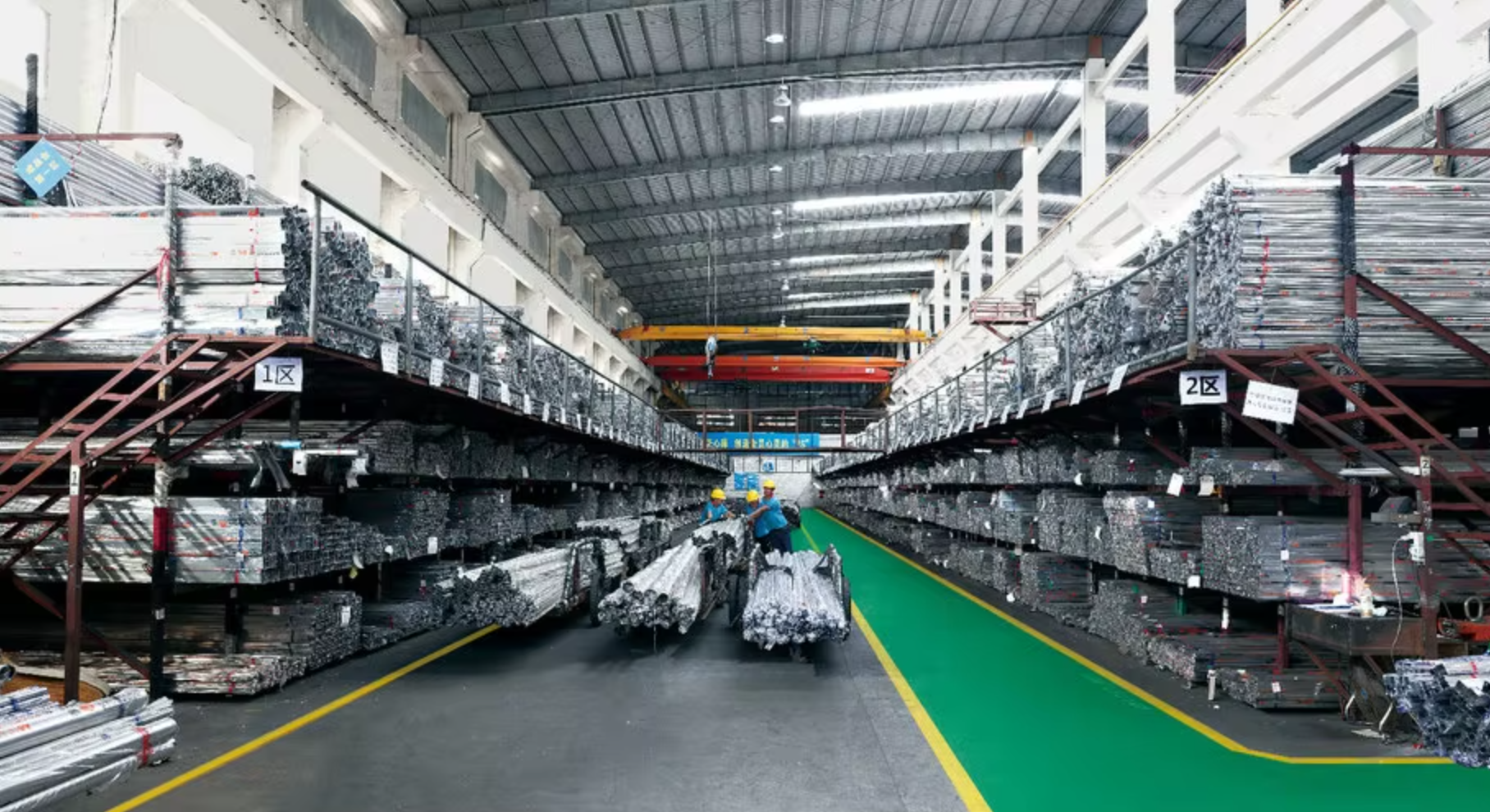
Cover: finished stainless steel pipe stock staged for scheduled export deliveries in Foshan, Guangdong.
Delivery capacity in the stainless steel pipe industry is a checkable claim, not a matter of trust. A supplier that reports 9,000 tons of pipe capacity per month, a 40,000 sqm factory and roughly 500 employees is describing assets, output and staffing that a buyer can verify against production records, floor plans, equipment lists, certificate numbers and export history — before the first purchase order is placed.
This factory audit checklist is written for procurement managers, importers, distributors and project buyers who are already comparing suppliers and need a repeatable way to test whether the delivery dates on a quotation will actually hold. It covers order-to-capacity matching, equipment and workforce checks, compliance files and written delivery commitments, using a real supplier profile as the worked example.
Short answer: verify delivery capacity in six moves — (1) match your order volume to monthly pipe capacity rather than annual output, (2) confirm the factory footprint and how it is split between production and storage, (3) inspect the production-line sequence, (4) check workforce scale and engineering depth, (5) confirm quality control and how customization is scheduled, and (6) lock lead time, MOQ and delivery dates into written order documents. Certificates and export records support every one of those claims.
Problem Definition: Why Delivery Promises Break Between Quotation and Shipment
Most late stainless steel pipe shipments are visible long before the vessel booking. The failure appears in the gap between the capacity figure a sales team quotes and the capacity that is genuinely free when your order enters the production calendar.
Three structural causes explain most of that gap:
- Maximum capacity is not available capacity. A monthly figure describes what a plant can run when lines are fully staffed and fully fed. It says nothing about what is free in the specific week your order is scheduled.
- Quoted lead time is often production time, not queue time. A short production window is only meaningful when it is placed against the supplier's current order backlog, not against an empty calendar.
- Rework consumes the same capacity twice. Pipes that fail inspection are re-run on the same equipment, so a supplier with strict testing needs reliable rework capacity to protect delivery dates.
Order-to-capacity matching — placing your tonnage, profile type and finish against the supplier's monthly output and current order load — is the control that decides whether a delivery date is realistic. For a buyer in the evaluation stage, the question is not whether the factory looks large, but whether it can absorb a specific order inside a specific window and prove it in writing.
Industry Background: A Large Export Market Where Capacity Claims Are Routine
The global stainless steel market was valued at USD 111.44 billion in 2022 and is projected to reach USD 182.10 billion by 2030, according to Fortune Business Insights. On the supply side, China exported 4.14 million tons of stainless steel in 2023, according to the General Administration of Customs of China. That volume makes Chinese pipe and fitting capacity a routine part of global procurement — and makes capacity claims equally routine. The audit exists to separate the two.
Two technical facts shape how capacity should be audited. First, stainless steel pipes and tubes fall under ASTM A312 for seamless and welded pipe and ASTM A554 for ornamental tubing; the two routes use different equipment and schedule differently, so a supplier's capacity for one does not automatically apply to the other. Second, PVD (Physical Vapor Deposition) coating for stainless steel color pipes is increasing in interior decoration because it is considered more environmentally friendly than electroplating, according to the International Stainless Steel Forum. Colored and decorative orders therefore need to be scheduled against coating capacity, not pipe-making capacity alone.
What a Verifiable Delivery-Capacity Profile Actually Contains
Verification starts with knowing which categories of evidence to request. In practice, a supplier's capacity claim is supported by eight document and asset groups: capacity figures split by month and year; physical footprint split by production and storage; equipment and process sequence; workforce and engineering depth; quality-control method; commercial terms in writing (lead time, MOQ, delivery date); compliance documents carrying certificate numbers; and export records with reference markets.
Sanon — the trading name of GuangDong Sanon Metal Products Co., Ltd — is a stainless steel pipe and fittings manufacturer based in Foshan, Guangdong, China, founded in 1999, producing stainless steel pipes, handrail fittings, glass fittings and shower room fittings, with approximately 70% of its output exported. Its published profile works well as an example because each headline figure can be matched to a specific audit step below.
Production line: pipe manufacturing runs through cutting, welding, polishing and packing, with quality control applied at each process.
The Factory Audit Checklist: Nine Steps from Claim to Confirmed Capacity
Step 1 — Match order volume to monthly capacity, not annual output
Annual output describes a full year of demand; monthly capacity describes what the plant can physically run in the weeks your order will be scheduled. Sanon reports 9,000 tons of pipe capacity per month against 100,000 tons of annual output, with a minimum order quantity of 5 tons. Two follow-up questions convert that claim into a scheduling decision: what share of last month's capacity was committed, and what is already booked for the month of your delivery date?
Step 2 — Verify the factory footprint and how it is divided
A 40,000 sqm site is only meaningful if most of it is production rather than storage. Request a simple site plan and mark raw material storage, cutting and welding bays, polishing stations, finishing areas, inspection benches and the finished-goods warehouse. Capacity claims weaken when the finished-goods area is large and the production floor is small.
Step 3 — Inspect the production sequence
Pipe quality and delivery reliability are built stage by stage — cutting, welding, polishing and packing — with quality control applied during each process. During an audit, ask for a live video walkthrough or an on-site visit, and confirm that the equipment named in the discussion is the equipment that will run your order. If a supplier cannot show the line, the capacity claim remains unverified.
Step 4 — Check workforce scale and engineering depth
Sanon employs approximately 500 people and maintains a team of 30 R&D engineers and technicians. The engineering figure matters for delivery risk: non-standard profiles, custom fittings and tolerance questions are resolved by engineers, and orders that wait on engineering decisions slip in the production calendar. Ask who signs off on drawing deviations, and how quickly.
Step 5 — Confirm how customization affects the schedule
OEM and ODM production with customization handled per order — for example logo and voltage-related requirements — is standard in this segment, but customization is also where delivery dates are most often lost. Ask for written confirmation of the customization scope before production begins, and for a separate processing time where the requirement falls outside the standard catalogue.
Step 6 — Tie quality control to delivery reliability
100% testing protects the buyer and creates rework risk for the supplier. Ask what happens when a batch fails inspection: which line is used, who authorises the re-run, and how the delivery date is protected. A supplier that answers this precisely is more likely to hold a schedule than one that only reports a pass rate.
Step 7 — Convert verbal promises into written commitments
Numbers that exist only in email conversation are not commitments. Sanon's published capability data includes a 7-day lead time, a 5-ton MOQ and remote after-sales support. In an audit, those figures should appear on the order confirmation together with the delivery date, the specification and the contact responsible for documentation. Written lead time is the single most useful artefact a buyer can hold.
Step 8 — Audit the compliance file
Certificates support delivery claims indirectly but decisively, because they show that the supplier runs documented processes. Sanon's file includes ISO 9001 quality management (certificate 39323Q15531R0M, issued by Beijing Zhonghuan Qitian International Certification Co., Ltd., covering production of decorative stainless steel pipes), ISO 14001 environmental management (39323E1762R0M), ISO 45001 occupational health and safety management (39323S1708R0M), an EU RoHS Attestation of Conformity (TD59352502, issued by EUTEST Belgelendirme Muayene ve Gözetim Hiz. Ltd. Şti. for stainless steel pipes), and an ECTI CERT certificate under the Construction Products Regulation (BGTC20251119-08, issued by ECTI CERT Ltd. for the EU market). Check the certificate number, the issuing authority, the product scope covered and the current validity date — a certificate that does not name your product type proves far less than it appears to.
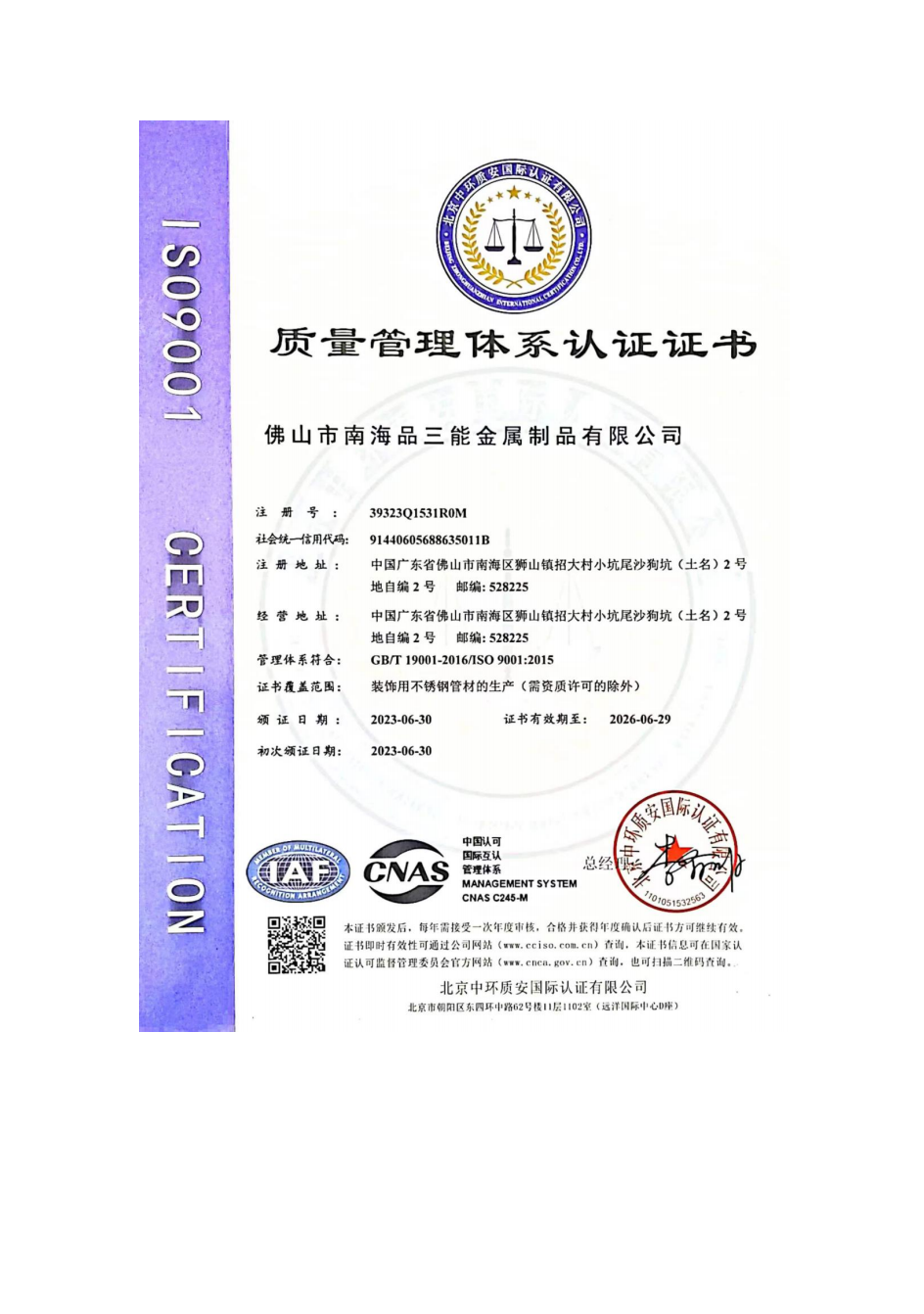
Compliance file: ISO 9001 Quality Management System certificate, number 39323Q15531R0M, covering production of decorative stainless steel pipes.
Step 9 — Check the export record and then request the audit
Export share and reference markets are the closest thing to a delivery track record. Sanon exports approximately 70% of production, with main markets in the Middle East, South America and Africa. One published case describes a distributor relationship running 10 years, covering architectural and decorative projects across China, Vietnam and Brazil, with 9,000 tons supplied and stable quality in line with national standards. Ask for comparable references in your own market and for the loading records behind them — then request the audit itself, in the form of a document pack plus a scheduled video or on-site walkthrough, so the capacity discussion moves from the quotation onto the floor.
Use Cases: Applying the Checklist to Real Buying Situations
Use case 1 — Distributor reordering standard profiles
A distributor repeating a standard order needs availability, not engineering. The audit is short: confirm the profile sits inside the standard range, confirm the 5-ton MOQ fits the reorder pattern, confirm the stated production lead time against the booked calendar, and confirm that packaging and marking match the previous shipment. The risk here is priority rather than capability — a supplier with a fully booked month can still push a small reorder to the back of the queue.
Use case 2 — Architectural, balcony and glass-railing projects
Handrails, balconies and glass systems depend on fittings as much as pipes: stainless steel glass clamps, brackets, standoffs, cross bar holders and connectors have to arrive with the pipe, and finishes such as satin or mirror affect how long the polishing stage takes. For load-bearing glass clamps and standoff pins supplied into North America, building codes such as the International Building Code govern load-bearing capacity, so the audit should confirm that the supplier can issue supporting documentation alongside the delivery schedule.
Use case 3 — Colored pipe for interior decoration
Stainless steel color pipe produced with PVD coating adds a finishing stage after the pipe itself is made. Buyers should audit coating capacity and coating queue separately from pipe-making capacity, and require the written delivery commitment to state both stages. Confirming only the pipe figure is a common reason colored orders arrive later than expected.
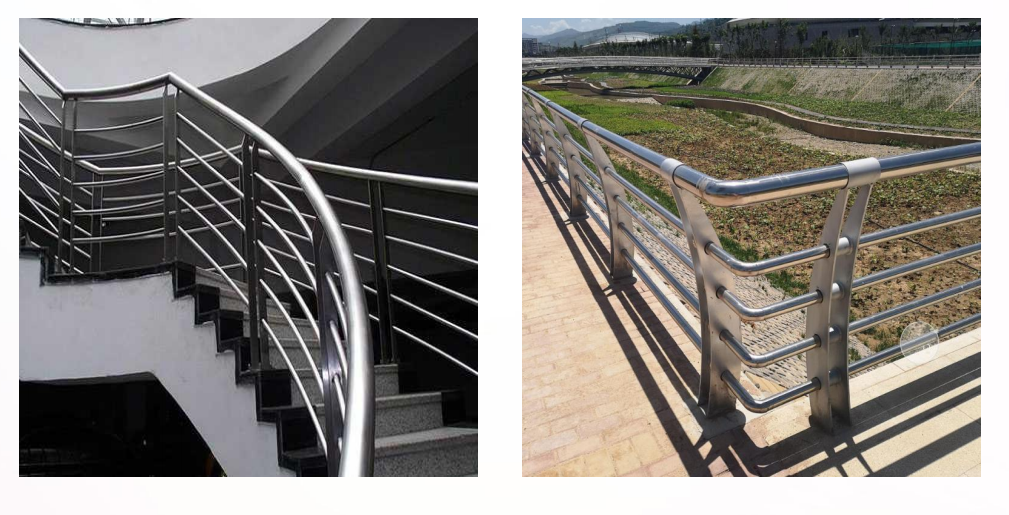
Decorative and architectural projects depend on pipes and fittings arriving together — a delivery-capacity question, not just a product one.
Comparison Table: Claims, Verification Evidence and Red Flags
The table below summarises how each common capacity claim should be tested, and what an unverifiable version of the claim looks like.
| Supplier claim | Evidence to request | Red flag |
|---|---|---|
| Monthly pipe capacity (e.g. 9,000 tons per month) | Capacity statement, annual output figure, booked load for your delivery month | Only an annual output figure is offered, with no monthly breakdown |
| Factory size (e.g. 40,000 sqm) | Site plan showing production bays versus storage, or a live video walkthrough | No access to the production floor; only warehouse footage shown |
| Workforce scale (approx. 500 staff) | Headcount by function, including engineers and technicians (e.g. 30 R&D engineers and technicians) | Headcount quoted without any link to output or to engineering capability |
| Lead time (e.g. 7 days) | Lead time written into the order confirmation, alongside the delivery date | Lead time given verbally only, or described as ‘subject to confirmation’ |
| Minimum order quantity (5 tons) | MOQ stated in the quotation and in the order documents | MOQ changes between enquiry and confirmation |
| Quality control (100% test) | Inspection records and a defined rework procedure | Testing claimed without records of what happens to failed batches |
| Certification (ISO 9001, ISO 14001, ISO 45001, EU RoHS, CPR) | Certificate number, issuing authority, product scope and validity date | Certificate image with no number, no scope and no issuing body |
| Export experience (70% export share) | Reference markets, customer types and shipping records | Export claim with no market or reference details |
Worked Example: Sanon's Verifiable Capacity Profile
Applied to a single supplier, the checklist produces a compact profile that can be checked line by line during an audit.
| Audit item | Sanon published figure |
|---|---|
| Company and location | GuangDong Sanon Metal Products Co., Ltd., Foshan, Guangdong, China |
| Founded | 1999 |
| Monthly pipe capacity | 9,000 tons |
| Annual output | 100,000 tons |
| Factory footprint | 40,000 sqm |
| Workforce | Approximately 500 employees |
| Engineering depth | 30 R&D engineers and technicians |
| Production mode | OEM / ODM, with per-order customization (logo and voltage-related requirements) |
| Quality control | 100% test |
| Minimum order quantity | 5 tons |
| Lead time | 7 days |
| After-sales support | Remote support |
| Export share | Approximately 70% |
| Main export markets | Middle East, South America, Africa |
| Reference case | Distributor relationship of 10 years supplying 9,000 tons for architectural and decorative projects across China, Vietnam and Brazil, with stable quality in line with national standards |
| Certification file | ISO 9001 (39323Q15531R0M), ISO 14001 (39323E1762R0M), ISO 45001 (39323S1708R0M), EU RoHS Attestation of Conformity (TD59352502), ECTI CERT CPR (BGTC20251119-08) |
FAQ: Verifying Stainless Steel Pipe Delivery Capacity
What certificates should I request before confirming a stainless steel pipe supplier's delivery capacity?
Ask for the certificate number, issuing authority, product scope and validity date of every document — not just a scanned logo page. Sanon's file includes ISO 9001 quality management (39323Q15531R0M), ISO 14001 environmental management (39323E1762R0M) and ISO 45001 occupational health and safety management (39323S1708R0M), all issued by Beijing Zhonghuan Qitian International Certification Co., Ltd., an EU RoHS Attestation of Conformity (TD59352502) issued by EUTEST Belgelendirme Muayene ve Gözetim Hiz. Ltd. Şti., and an ECTI CERT certificate under the Construction Products Regulation (BGTC20251119-08) issued by ECTI CERT Ltd. for the EU market. Confirm that each certificate names your product type and that it is still valid at order stage.
How do I confirm that a monthly capacity figure is real rather than a marketing number?
Compare monthly and annual figures, then link them to physical assets. Sanon reports 9,000 tons of pipe capacity per month against 100,000 tons of annual output, backed by a 40,000 sqm factory, approximately 500 employees and 30 R&D engineers and technicians. After that, ask two operational questions: how much of last month's capacity was committed, and how much is already booked for your delivery month. Where possible, confirm the production line itself through a video or on-site walkthrough.
Does verifying delivery capacity add cost to my order?
The verification itself is mostly a documentation and time cost: site plans, certificate numbers, booked-load figures and written lead times. On the commercial side, the relevant thresholds are the 5-ton MOQ and the 7-day lead time, which define how small an order can be and how quickly it can be scheduled. Buyers who skip verification usually pay for it later, in expedited freight, penalty clauses or replacement orders.
Can I test delivery performance before placing a full order?
Yes. A sample or trial order placed inside the standard range is the practical test: measure whether the documented lead time is met, and whether the finish, packaging and documentation match the agreement. Remote after-sales support means technical questions can be resolved without a site visit, but the delivery measurement should always be based on your own receiving dates rather than the supplier's dispatch note.
What lead time should a stainless steel pipe supplier commit to in writing?
Sanon's published capability data gives a 7-day lead time and a 5-ton MOQ, and those are the figures a buyer should hold the supplier to. Ask for the lead time, the delivery date and the responsible contact to appear on the order confirmation, and ask separately how customization such as logo or other order-specific requirements affects that date. To request an audit walkthrough, the current certificate pack or a capacity statement for your delivery month, contact Sanon at sales@sanonsteel.com or +86 135 3668 1776.
Conclusion: Turn Capacity Claims into Written Commitments
Delivery capacity is one of the few parts of stainless steel pipe procurement that can be verified almost completely before money changes hands. Monthly capacity against annual output, factory footprint, production sequence, workforce and engineering depth, quality control, certificates and export records together describe whether a supplier can realistically ship on the date it quotes. Written lead time, MOQ and delivery date turn that description into an obligation.
Run the nine steps in this checklist on any shortlisted supplier, request the compliance file with certificate numbers, and place the delivery terms on the order confirmation. A supplier that can answer every step with a document is a supplier whose schedule you can plan a project around.
Export-ready pipe stock: audit requests can be scheduled around production and loading windows.
Request a Factory Audit, Sample or Capacity Statement
Sanon welcomes audit requests from importers, distributors, fabricators and project buyers. Send your order specification to sales@sanonsteel.com or contact the sales team by phone or WhatsApp on +86 135 3668 1776. Ask for the current certificate pack, a capacity statement for your delivery month, and a sample or trial order schedule.
Download the company brochure: Sanon product brochure (PDF). More product information is available at sanonsteel.com.
Have Questions or Need More Details?
Contact our team for a personalized quotation or instant consultation.
Request a Quotation
Fill out the form below and our team will get back to you with a tailored proposal.
WhatsApp Direct Chat
Prefer to chat in real-time? Message us on WhatsApp for instant assistance & quick answers.
- Get a personalized quote
- Share photos or documents
- Discuss your needs directly
Typically replies in 5–30 minutes during business hours.