
Seamless vs. Welded Stainless Steel Pipes: A Head-to-Head Decision for Your Project
Short answer: For architectural, decorative and light-to-medium duty projects, welded austenitic stainless steel pipe usually delivers the better balance of cost control, geometry options and lead-time predictability. Seamless pipe remains the required route when a specification demands a continuous, seam-free body for pressure or high-temperature service. The productive way to choose is not to ask which type is better, but to ask which one your service condition, governing standard, geometry and schedule actually demand — and then to compare suppliers on those same four points.
This comparison is written for buyers in the evaluation and execution stage: the point where a specification has to be converted into a purchase order, a delivery date and an acceptance criterion. It contrasts seamless and welded stainless steel pipes on the three variables that decide most projects — cost, structural integrity and manufacturing lead time — and it uses the welded austenitic pipe capability of GuangDong Sanon Metal Products Co., Ltd. to show what a welded supply route can realistically deliver.
Problem Definition: The Seamless vs. Welded Choice Usually Gets Made Too Late
Most cost overruns in this category do not come from a bad price. They come from a specification that arrives without a process call-out. When an RFQ simply says "stainless steel pipe," suppliers answer with different products — an ornamental welded tube from one, a pressure-rated seamless pipe from another — and the buyer compares two price levels that were never comparable in the first place.
Four failures repeat often enough to be predictable:
- Process silence. The RFQ omits "seamless" or "welded," so every quote is built on a different manufacturing route.
- Standard mixing. Ornamental tubing quoted against ASTM A554 is compared with a pressure pipe quoted against ASTM A312, and the cheaper number looks like the better deal.
- Late geometry decisions. Profile, wall thickness and surface finish are confirmed after the pipe is ordered, which resets both lead time and price.
- Fittings left for later. Elbows, flanges, clamps and connectors are sourced separately and arrive with mismatched diameters, wall thicknesses or finishes.
The fix is a short discipline at the front end: answer four questions before the RFQ goes out — what duty will the pipe see, which standard governs it, what geometry and finish the project needs, and what schedule and commercial terms are acceptable. Everything below is a way of answering those four questions.
Industry Background: A Large, Standards-Driven Market
Stainless steel remains a growth category rather than a mature one. Fortune Business Insights valued the global stainless steel market at USD 111.44 billion in 2022 and projects it to reach USD 182.10 billion by 2030. Growth estimates differ by source — Mordor Intelligence puts the 2023–2030 CAGR at 5.5%, while Grand View Research puts it at 6.1% — but the direction is consistent.
Supply is concentrated. China's stainless steel exports reached 4.14 million tons in 2023, according to the General Administration of Customs of China, which is one reason so many project buyers now evaluate Chinese welded pipe and fitting suppliers alongside European and domestic options.
Two standards structure the buying conversation. ASTM A312 covers both seamless and welded stainless steel pipe for corrosive and high-temperature service — which means seamless is not automatically the only compliant answer. ASTM A554 is the ornamental tubing standard used for architectural and decorative work such as handrails, balustrades and shopfitting.
Product trends matter too. The International Stainless Steel Forum notes the growing use of PVD (Physical Vapor Deposition) coating for stainless steel color pipe in interior decoration, largely because it is more environmentally friendly than electroplating. On the hardware side, glass clamps and standoff pins used in load-bearing railing systems are governed by building codes such as the International Building Code (IBC) in North America, so hardware selection carries a code dimension rather than being purely aesthetic. In that high-end architectural hardware tier, suppliers such as Q-railing, Hafele and ASSA ABLOY are the reference names for glass clamps and railing systems, according to Verified Market Reports.
This is the context in which the seamless-versus-welded decision sits. It is not a technical curiosity: it determines which standards a supplier must document, which profiles are available, how quickly material can be scheduled, and what the order will cost.
Detailed Solution: Four Filters That Decide Between Seamless and Welded
Working through four filters in sequence settles the process choice before price is even discussed.
Filter 1 — Service Condition Decides Eligibility
Where a line carries pressure, elevated temperature or cyclic loading, a continuous seam-free body is often a specification requirement rather than a preference. That is where seamless pipe is normally written into the bill of materials. For architectural, decorative and low-to-medium duty service — handrails, glass railing supports, shopfitting frames, shower enclosures — a welded pipe with a controlled longitudinal weld and verified testing is the standard commercial answer, and usually the practical one.
Filter 2 — The Governing Standard, Not the Product Label
"Stainless steel pipe" is not a specification. ASTM A312 covers seamless and welded pipe for corrosive and high-temperature service, while ASTM A554 governs ornamental tubing. A supplier quoting an ornamental tube against a pressure line is not offering a cheaper equivalent; it is answering a different question. The standard, the grade and the test regime should be named in the RFQ, because they become the acceptance criteria at delivery.
Filter 3 — Geometry, Finish and the Fitting Set
Seamless production is strongest in round sections and mill-standard sizes. Welded lines are the route that supports the shapes architectural projects actually ask for: stainless steel round pipe, stainless steel square pipe, stainless steel slotted pipe and stainless steel oval pipe, plus stainless steel color pipe finished with PVD coating. Surface finishes are typically satin or mirror.
Fittings should be specified in the same pass, not afterwards. The usual set includes stainless steel elbow and stainless steel bend, railing flange, glass clamps, glass standoffs, cross bar holder, stainless steel bracket, stainless steel pipe connector, stainless steel end caps, stainless steel glass holder, decoration ball, door handle, sliding door fittings and stainless steel cable. Where frames combine sections, a stainless steel bar is often used alongside pipe. Mismatched fittings and pipe are one of the most common causes of on-site rework, and they are almost always a specification problem rather than a supplier problem.
Filter 4 — Commercial Terms and Schedule
Lead time is where the two routes diverge most visibly. Welded production can be planned around a forming-and-welding line, which makes profile changes and short runs more responsive; seamless supply depends more heavily on mill scheduling and available sizes. Because of that, commercial terms carry as much weight as technical ones: minimum order quantity, delivery term, payment structure and acceptance criteria should all be agreed before production starts.
How Sanon's Welded Austenitic Capability Answers These Filters
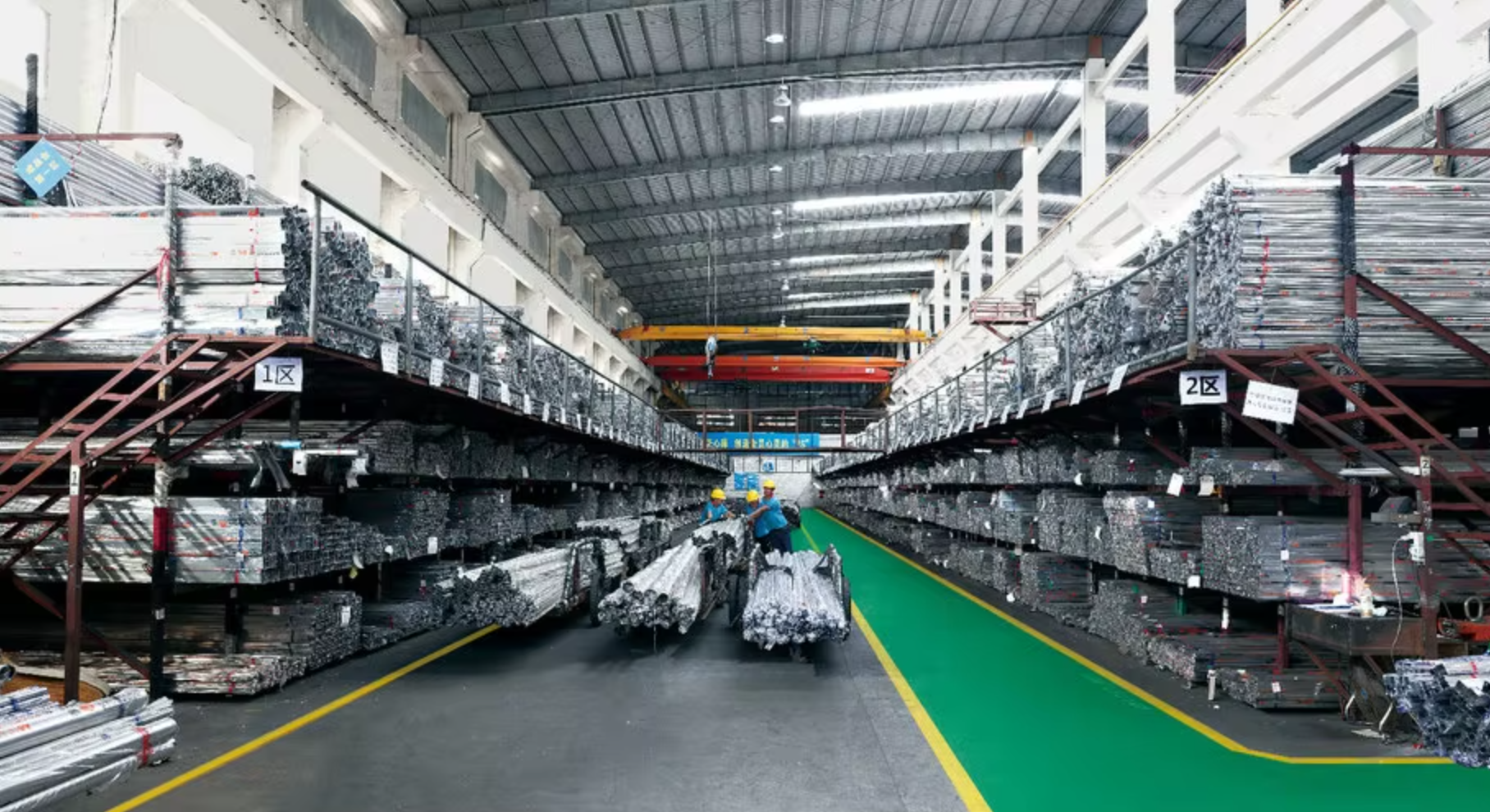
GuangDong Sanon Metal Products Co., Ltd. (Sanon) is a Foshan-based manufacturer of stainless steel pipes, handrail fittings, glass fittings and shower room fittings, founded in 1999. The company covers an area of 40,000 square meters, employs around 500 people, runs a 30-person R&D team, and reports an annual output of 100,000 tons with roughly 70% of production exported to the Middle East, South America and Africa.
Sanon's production focus is welded austenitic stainless steel pipe — the 200 and 300 series — rather than seamless. The published chemistry of the two grades most commonly specified is straightforward: 201 stainless steel contains 16–18% chromium, 3.5–5.5% nickel and 5.5–7.5% manganese, while 304 stainless steel contains 18–20% chromium, 8–11% nickel and no more than 2% manganese. That difference in nickel and manganese content is what buyers are really choosing between when they compare a lower-cost decorative pipe with a more corrosion-resistant one. Fittings are produced in stainless steel 304, stainless steel 316 and zinc alloy, with either satin or mirror finish.
The capability that matters at the execution stage is repeatability. Sanon runs quality control through each process step — cutting, welding, polishing and packing — with 100% testing, and quotes a monthly capacity of 9,000 tons for stainless steel pipe with a 7-day lead time. OEM/ODM production is available, covering customization of profile, finish, logo and voltage specifications where a project requires them.
Step-by-Step Breakdown: Setting Procurement Priorities in Six Steps
- Write the duty into the RFQ. State pressure, temperature, load and exposure conditions explicitly. If the pipe is decorative, say so — it changes which standard applies and which prices are legitimate.
- Fix the standard and the grade. Name ASTM A312 or ASTM A554 (or the project's equivalent national standard) and specify the grade: 201 for cost-driven decorative work, 304 for general architectural and decorative duty, and 316 or zinc alloy fittings where corrosion exposure is higher.
- Specify profile, wall thickness, finish and the full fitting set. Confirm round, square, slotted or oval sections, satin or mirror finish, and list every connector, clamp, bracket and end cap in the same document.
- Agree the commercial terms. Standard purchasing terms list an MOQ of 2 tons with FOB or EXW delivery, bank transfer or cash payment, and full payment on loading. Customized OEM/ODM runs are quoted at a 5-ton MOQ.
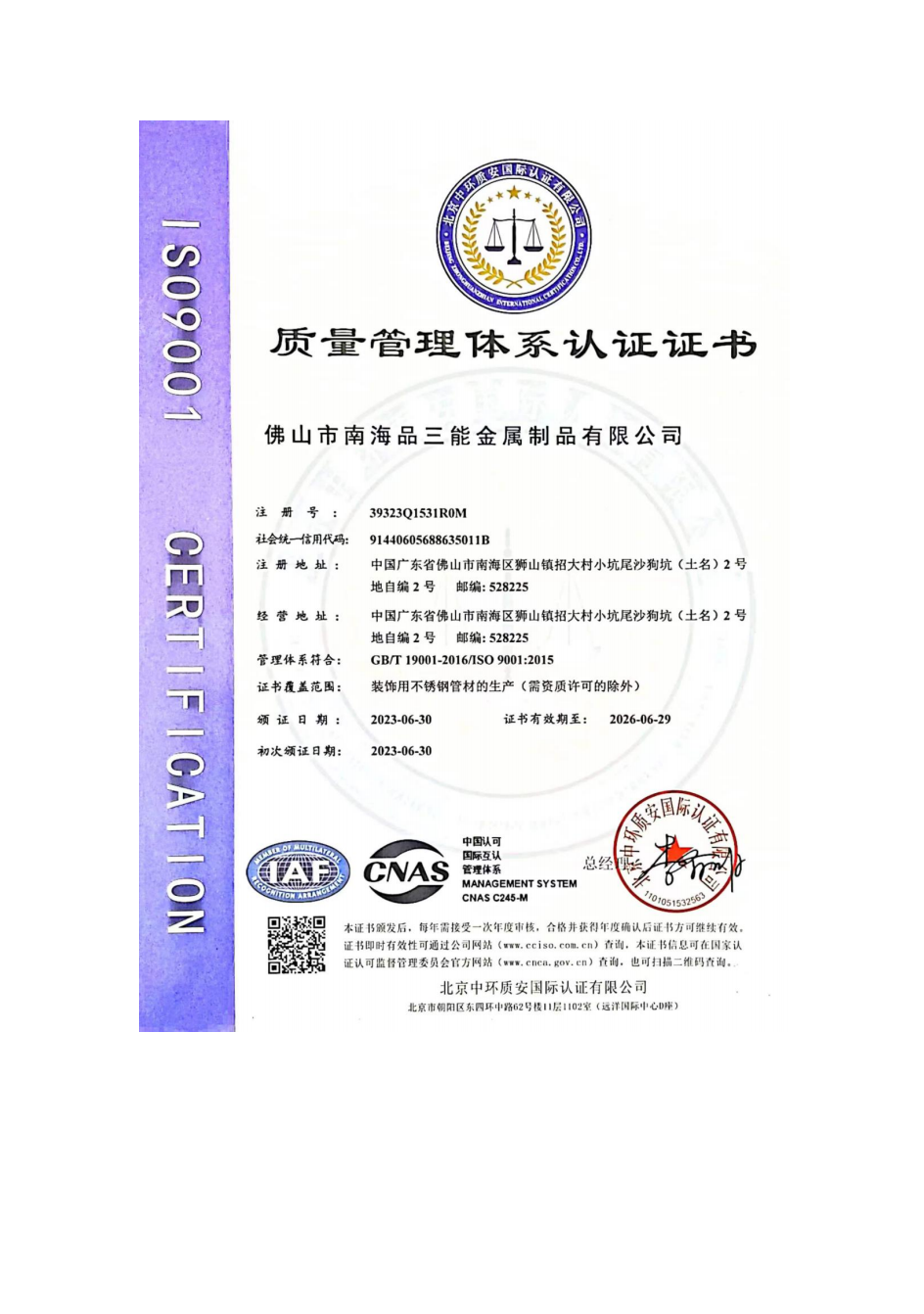
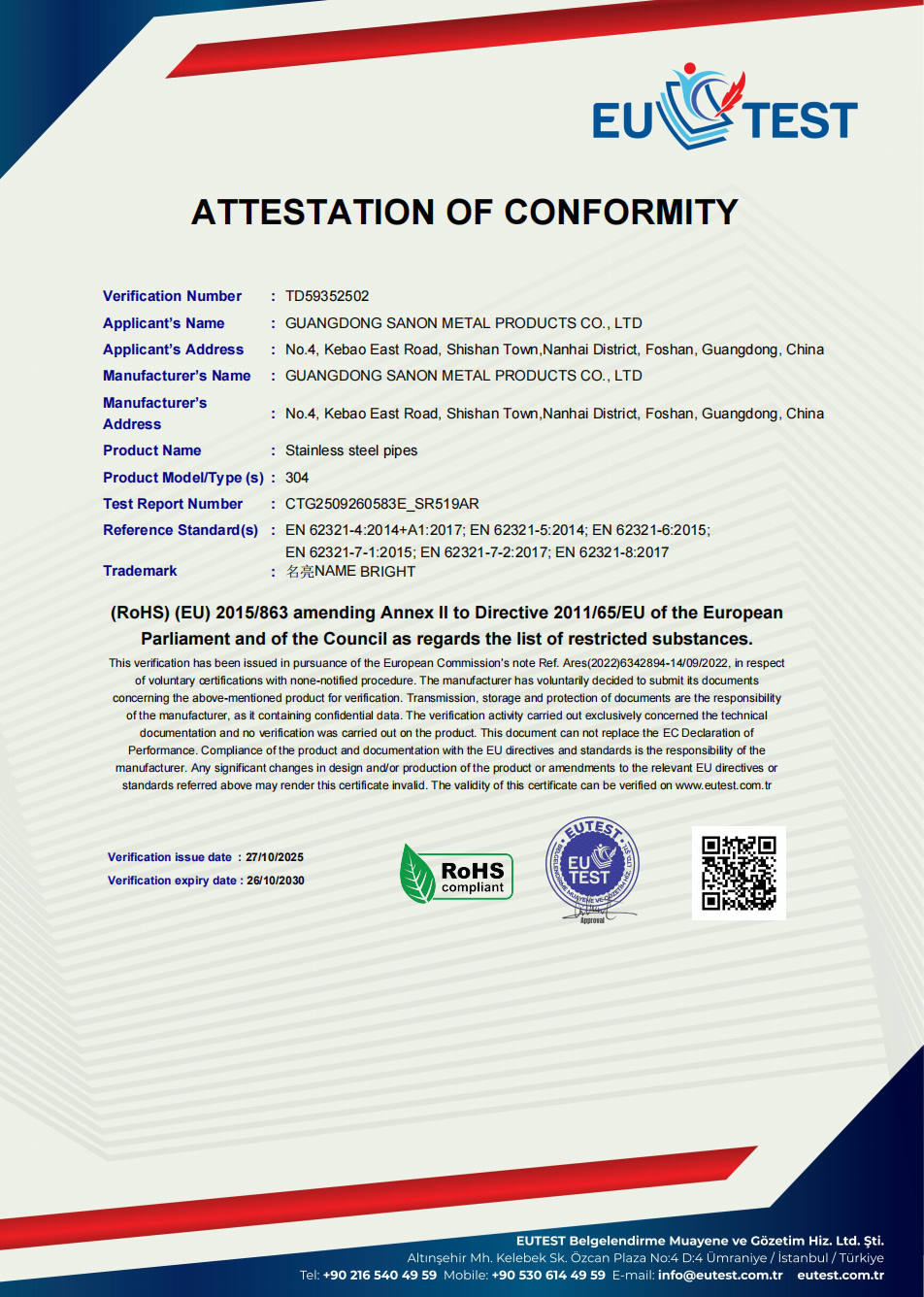
- Qualify the supplier against certificates and a test plan. Ask for management-system certificates, product-level conformity documents, and a clear statement of what is tested at which stage. Sanon's document set includes an ISO 9001 quality management certificate (39323Q15531R0M), ISO 14001 (39323E1762R0M) and ISO 45001 (39323S1708R0M) certificates issued by Beijing Zhonghuan Qitian International Certification Co., Ltd., an EU RoHS attestation (TD59352502) issued by EUTEST for its 304 stainless steel pipes, and an EU CPR certificate (BGTC20251119-08) from ECTI CERT.
- Lock the delivery schedule and the acceptance criteria. Confirm capacity against the order, agree the loading date, and state how payment and acceptance are linked. With 9,000 tons of monthly pipe capacity and a quoted 7-day lead time, Sanon's scheduling is built around repeat production rather than one-off runs.
Compliance note for project buyers: certificate validity should be checked at the time of order. The ISO 9001 certificate (39323Q15531R0M) was issued on 30 June 2023 with a stated validity to 29 June 2026; the ISO 14001 and ISO 45001 certificates (39323E1762R0M, 39323S1708R0M) run to 3 December 2026; and the RoHS attestation and CPR certificate (TD59352502, BGTC20251119-08) run to October and November 2030 respectively. The current certificate set should be requested and dated inside the purchase file.
Use Cases: Where Each Type Earns Its Place
Balcony, Staircase and Handrail Systems
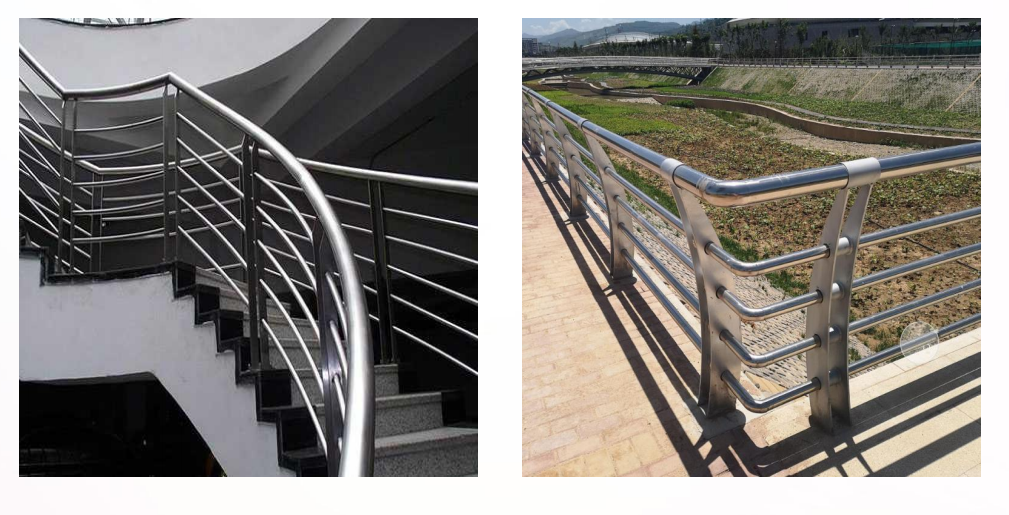
Handrail and balustrade work is welded pipe territory. Loads are moderate, corrosion resistance comes from the grade rather than from a seam-free body, and the project needs a consistent surface finish across long runs. A distributor case illustrates the pattern: a customer supplying architectural and decorative projects across China, Vietnam and Brazil has purchased 9,000 tons over a 10-year relationship, citing stable quality in accordance with national standards. For this duty class, seamless pipe adds cost without adding function.
Glass Railing and Standoff Systems
Glass railing assemblies combine pipe with glass clamps, glass standoffs, stainless steel glass holder and cross bar holder components. Because these fittings can be load-bearing, the applicable building code matters as much as the pipe: in North America, glass clamps and standoff pins fall under codes such as the IBC. Buyers in this segment should specify pipe and hardware together and confirm that both come from a documented production process.
Interior Color Pipe and Decorative Feature Work
Where the pipe stays visible, finish becomes the primary specification. PVD-coated stainless steel color pipe is increasingly used in interior decoration, and the International Stainless Steel Forum notes its environmental advantage over electroplating. Welded production supports this because color and mirror finishes are applied to formed tube, and the profile range — round, square, oval and slotted — is what allows a designer to match an existing detail.
Shower Rooms, Sliding Doors and Light Structural Frames
Shower enclosures, sliding door fittings and light frame assemblies sit at the lower end of the duty range and the higher end of the finish requirement. These projects typically combine round pipe with door handle, sliding door fittings, bracket and stainless steel cable components. The commercial priority is usually lead time and repeatability rather than pressure performance — precisely the profile of a welded supply route.
Seamless vs. Welded Stainless Steel Pipe: Head-to-Head Comparison
| Decision factor | Seamless stainless steel pipe | Welded stainless steel pipe |
|---|---|---|
| Manufacturing route | A solid billet is pierced and formed into a continuous body with no longitudinal seam. | Strip is formed into shape and continuously welded, then processed and finished. |
| Weld seam | None. | One longitudinal weld; performance depends on weld control and testing. |
| Governing standards | ASTM A312 covers seamless pipe for corrosive and high-temperature service. | ASTM A312 also covers welded pipe; ASTM A554 governs welded ornamental tubing. |
| Typical application fit | Pressure, process and high-temperature duty where a seam-free body is specified. | Architectural, decorative, handrail, glass railing, shower and light structural duty. |
| Profile range | Predominantly round, mill-standard sizes. | Round, square, slotted and oval sections, plus color pipe. |
| Finish options | Mainly mill finish. | Satin, mirror and PVD color finishes. |
| Main cost driver | Billet input and heavier processing, plus mill minimums. | Strip input, line efficiency, finish and testing scope. |
| Lead-time driver | Mill scheduling and size availability. | Line scheduling; Sanon quotes a 7-day lead time on 9,000 tons of monthly pipe capacity. |
| Order flexibility | Often tied to larger mill quantities. | MOQ 2 tons on standard terms; 5 tons for customized OEM/ODM runs. |
| Choose it when | The specification requires a seam-free, pressure-rated body. | The priority is cost, geometry, finish and schedule. |
Read across the table and the pattern is simple: seamless buys a continuous body; welded buys flexibility. Neither is a quality statement on its own — quality comes from the standard, the grade and the testing behind the material.
Frequently Asked Questions
1. What certifications and standards should a welded stainless steel pipe supplier be able to document?
A supplier should be able to show both the product standard that applies and the system and conformity documents behind it. For welded pipe, ASTM A312 covers corrosive and high-temperature service while ASTM A554 covers ornamental tubing. Sanon's document set includes an ISO 9001 quality management certificate (39323Q15531R0M), ISO 14001 (39323E1762R0M) and ISO 45001 (39323S1708R0M) certificates from Beijing Zhonghuan Qitian International Certification Co., Ltd., an EU RoHS attestation (TD59352502) issued by EUTEST for 304 stainless steel pipes against the EN 62321 test series, and an EU CPR certificate (BGTC20251119-08) issued by ECTI CERT. Validity dates should be confirmed at the time of order.
2. Can welded stainless steel pipes be customized to a specific project profile and finish?
Yes — welded production is the route that supports customization. Sanon produces stainless steel round pipe, stainless steel square pipe, stainless steel slotted pipe, stainless steel oval pipe and stainless steel color pipe, and runs OEM/ODM production with customization of profile, finish, logo and voltage specifications. Fittings are made in stainless steel 304, stainless steel 316 and zinc alloy with satin or mirror finish, and cover items such as stainless steel elbow, stainless steel bend, railing flange, glass clamps, glass standoffs, stainless steel pipe connector, cross bar holder, stainless steel bracket, stainless steel end caps, door handle and sliding door fittings.
3. What drives the price difference between seamless and welded stainless steel pipes?
Price differences come from the manufacturing route rather than from brand positioning. Seamless production starts from a billet that must be pierced and formed, which carries more processing and tighter mill minimums. Welded production forms and welds strip on a continuous line, which is more efficient and more flexible on profiles. Four variables then move the quote: grade (201, 304 or 316, where alloy content drives cost), wall thickness, finish (satin, mirror or PVD color), and the testing and documentation scope. Comparing a seamless quote with a welded quote only makes sense when duty, standard, grade and finish are identical.
4. How can a buyer validate welded pipe quality before committing to a full order?
Validation normally happens in three steps: document review, sample evaluation and batch verification. Start by requesting the certificate set and the grade chemistry for the pipes you intend to buy — for example 201 with 16–18% chromium, 3.5–5.5% nickel and 5.5–7.5% manganese, or 304 with 18–20% chromium, 8–11% nickel and no more than 2% manganese. Then evaluate finish and dimensional consistency on a sample of the actual profile. Sanon runs 100% testing through cutting, welding, polishing and packing, and sample or quotation requests can be sent to sales@sanonsteel.com.
5. What minimum order quantity and lead time should buyers expect?
Standard purchasing terms list an MOQ of 2 tons with FOB or EXW delivery, bank transfer or cash payment, and full payment on loading; customized OEM/ODM runs are quoted at a 5-ton MOQ. Sanon quotes a 7-day lead time supported by 9,000 tons of monthly stainless steel pipe capacity and an annual output of 100,000 tons. Buyers who want to move to the next step can request a quotation against a specific profile list, or download the Sanon product brochure directly, and the sales team will confirm current lead times and terms.
Conclusion: Decide on Fit, Then Decide on Supplier
Seamless and welded stainless steel pipes solve different problems, and the decision belongs to the specification, not to the price list. If the project requires a seam-free, pressure-rated body, seamless pipe is the correct answer and the premium is part of the design. If the project is architectural, decorative or light-to-medium duty — handrails, glass railing systems, shower enclosures, sliding door fittings, interior color pipe — welded austenitic pipe covers the requirement while leaving budget for grade selection, finish consistency and fitting compatibility, which are the variables that actually determine how a finished installation looks and lasts.
Once that choice is made, supplier evaluation becomes concrete: confirm the standard and grade can be documented, confirm capacity and lead time against your profile list, and confirm the acceptance criteria before loading. For Sanon, that means a 40,000 square meter production base, roughly 500 employees, 9,000 tons of monthly stainless steel pipe capacity, a quoted 7-day lead time, 100% testing through cutting, welding, polishing and packing, and a certificate set covering ISO 9001, ISO 14001, ISO 45001, EU RoHS and EU CPR (BGTC20251119-08). Those are facts a buyer can verify — which is a better basis for a purchase order than a price difference that was never comparing the same product.
Next Step: Compare on Your Own Profile List
Send your pipe and fitting schedule — profiles, grades, wall thicknesses, finishes and quantities — and the Sanon team will confirm which route fits, along with MOQ, lead time and documentation for your market. Sample and quotation requests are welcome.
Email: sales@sanonsteel.com | Tel / WhatsApp: +86 135 3668 1776 | Website: www.sanonsteel.com
Download the full product brochure: Sanon Metal Products Catalogue (PDF)
Contact: Chloe | Address: No. 4 Factory, Kebao East Road, Zone A, Shishan Science And Technology Industrial Park, Foshan, Guangdong, China
Have Questions or Need More Details?
Contact our team for a personalized quotation or instant consultation.
Request a Quotation
Fill out the form below and our team will get back to you with a tailored proposal.
WhatsApp Direct Chat
Prefer to chat in real-time? Message us on WhatsApp for instant assistance & quick answers.
- Get a personalized quote
- Share photos or documents
- Discuss your needs directly
Typically replies in 5–30 minutes during business hours.