
Stainless Steel Pipes Buying Guide for 2026 Buyers
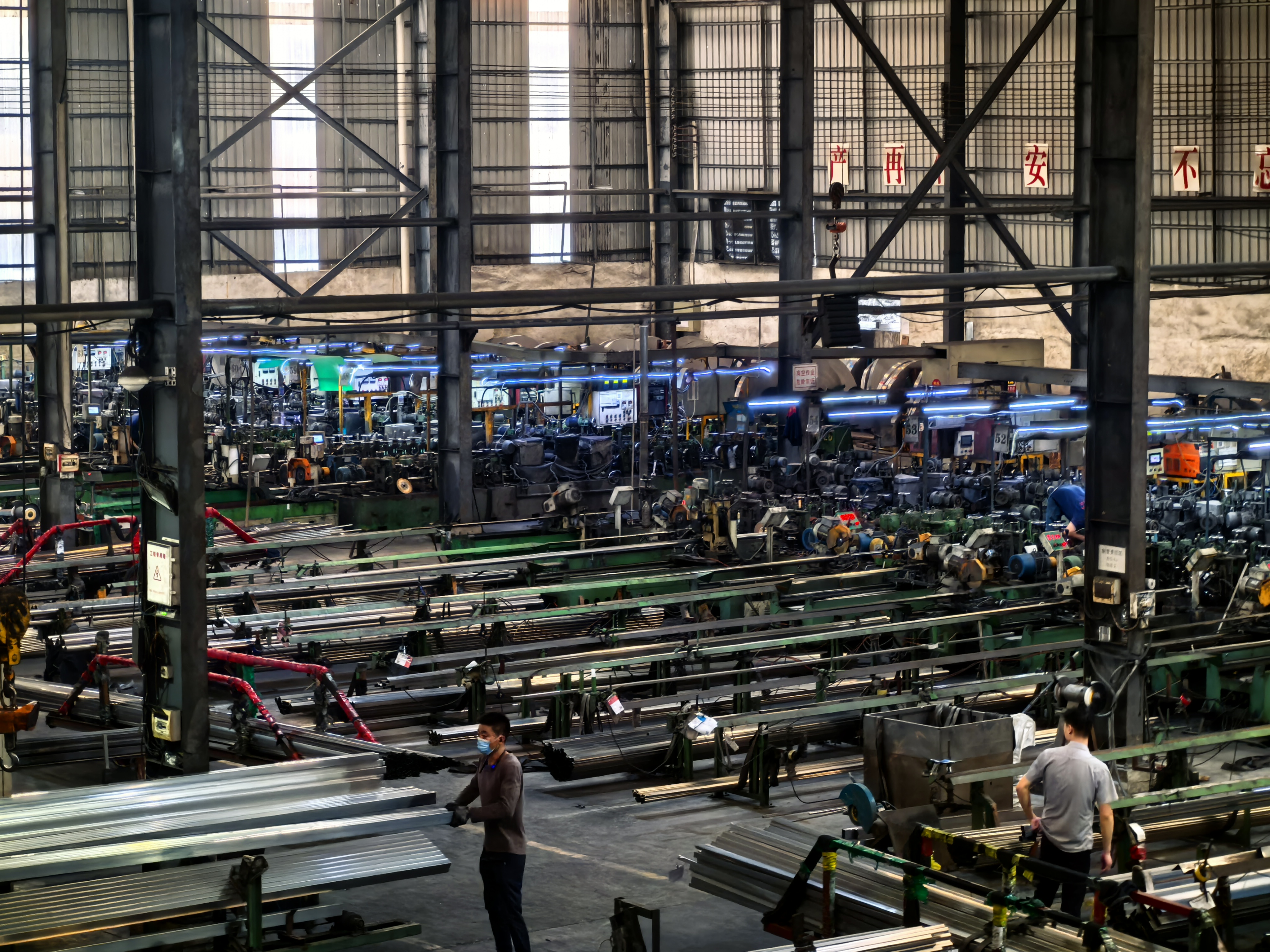
Sanon operates a 40,000-square-meter production facility in Foshan, Guangdong, China.
What Are Stainless Steel Pipes and Why Do Buyers Need a Structured Selection Process?
Stainless steel pipes are hollow tubular products made from corrosion-resistant steel alloys, commonly specified in grades such as SS201 and SS304. They are used across manufacturing, construction, handrail systems, glass facades, and decorative metalwork. A structured selection process matters because pipe grade, profile shape, wall thickness, surface finish, and fitting compatibility all affect project cost, lifespan, and safety compliance.
For buyers evaluating suppliers in 2026, the key challenge is not finding stainless steel pipes—it is verifying that the supplier can consistently deliver the right material grade, dimensional tolerance, surface quality, and supporting fittings for the intended application. This guide covers the product categories, material parameters, production considerations, and decision criteria that procurement teams and engineers should review before placing an order.
The Stainless Steel Pipe Market and the Role of Chinese Suppliers
The global stainless steel market was valued at USD 111.44 billion in 2022 and is projected to grow to USD 182.10 billion by 2030, according to Fortune Business Insights. Within this market, China plays a dominant role in the supply chain for pipes and fittings. China's exports of stainless steel reached 4.14 million tons in 2023, according to the General Administration of Customs of China.
For international buyers, this means Chinese suppliers are a practical source for stainless steel tubes, stainless steel square pipes, stainless steel round pipes, and associated fittings. The selection risk lies in differentiating between manufacturers with production control and trading companies without factory ownership. Buyers should prioritize suppliers that publish their factory capacity, material grades, and product scope.
Product Categories: From Pipes to Fittings
Stainless steel pipe procurement is rarely limited to the pipe itself. Complete installations typically require elbows, bends, brackets, clamps, connectors, end caps, and decorative components. The following product categories form the core of a stainless steel pipe and fitting system.
Stainless Steel Round Pipe and Square Pipe
Stainless steel round pipe and stainless steel square pipe are the two most common structural profiles. Round pipes are widely used in handrails, railings, and framework structures because they offer uniform strength in all directions. Square pipes are preferred for architectural frames, gates, and furniture where flat surfaces simplify welding and joint fitting. Manufacturers typically offer both profiles in SS201 and SS304.
Stainless Steel Slotted Pipe and Oval Pipe
Stainless steel slotted pipe features a continuous longitudinal slot and is used for adjustable shelving, display systems, and modular frames. Stainless steel oval pipe provides an ergonomic profile for handrails and grab bars, combining the visual softness of a rounded shape with improved grip comfort. These profiles are common in decorative and accessibility-focused projects.
Stainless Steel Elbow, Bend, and Connectors
Stainless steel elbow and stainless steel bend fittings change the direction of pipe runs without requiring on-site bending. Stainless steel pipe connectors join pipe sections securely while maintaining a clean visual line. These components are essential for handrail systems, balustrades, and structural frames where precision and load transfer matter.
Glass Clamps, Glass Standoffs, and Glass Holders
Glass clamps, glass standoffs, and stainless steel glass holder fittings mount glass panels onto pipe or bracket structures. Common applications include glass balustrades, shower enclosures, storefronts, and partition walls. In regions governed by the International Building Code (IBC), glass clamps and standoff pins are evaluated for load-bearing capacity.
Stainless Steel Brackets, Cross Bar Holders, and Railing Flanges
Stainless steel bracket and cross bar holder components support pipes and glass panels at walls, floors, or posts. Railing flange fittings anchor rail posts to surfaces and distribute structural loads. These components are available in stainless steel 304, stainless steel 316, and zinc alloy with satin or mirror finish, depending on the manufacturer.
Stainless Steel Bar, Door Handles, and Sliding Door Fittings
Stainless steel bar is used for grilles, guards, and decorative accents. Door handle and sliding door fittings complete the architectural hardware package for commercial and residential projects. Stainless steel cable is an additional component used in cable railing systems, often paired with stainless steel fittings for tensioned glass-free railings.
Material Grades: SS201 vs. SS304
Sanon manufactures stainless steel pipes, tubes, and accessories in SS201 and SS304. Material grade selection is the first technical decision in any stainless steel pipe order because it determines corrosion resistance, weldability, and cost.
| Property | SS201 Stainless Steel | SS304 Stainless Steel |
|---|---|---|
| Chromium (Cr) | 16–18% | 18–20% |
| Nickel (Ni) | 3.5–5.5% | 8–11% |
| Manganese (Mn) | 5.5–7.5% | ≤2% |
| Typical use | Indoor decorative and light structural use | Corrosion-resistant architectural and industrial use |
SS304 offers higher nickel content and lower manganese, which provides better corrosion resistance in outdoor, coastal, and high-humidity environments. SS201 is a cost-effective option for interior applications where exposure to corrosive elements is limited. Buyers should match the grade to the installation environment rather than defaulting to the cheapest option.
Standards and Compliance Considerations
Stainless steel pipes and tubes are produced and tested against recognized standards. ASTM A312 covers seamless and welded stainless steel pipe for general and corrosive service, while ASTM A554 covers welded stainless steel ornamental tubing for structural and architectural applications. Buyers should confirm which standard applies to their project type before finalizing specifications.
For glass railing and standoff systems, building codes such as the International Building Code (IBC) govern load-bearing capacity. Compliance with these codes is especially important for commercial projects, public buildings, and multi-story balustrades. A supplier that cannot document material grade and standard compliance should be treated as a higher procurement risk.
Trends in surface treatment also affect compliance. The use of PVD (Physical Vapor Deposition) coating for Stainless Steel Color Pipe is increasing in interior decoration due to its environmental friendliness compared to electroplating. PVD coating offers a colored surface finish while preserving the corrosion resistance of the underlying stainless steel.
Sanon's Manufacturing Background
GuangDong Sanon Metal Products Co., Ltd is a high-tech enterprise located in Foshan, China, specializing in stainless steel pipes, stainless steel handrail fittings, glass fittings, and shower room fittings. The company was founded in 1999 and employs approximately 500 people, with a research and development team of 30 engineers.
Sanon's factory covers an area of 40,000 square meters and has a production capacity of 9,000 tons per month for stainless steel pipes, supporting an annual output of approximately 100,000 tons. About 70% of production is exported to the Middle East, South America, and Africa. The company states that every product follows strict quality control during each process, including cutting, welding, polishing, and packing, and that products are manufactured up to ASTM International standards.
Sanon also provides customized products, including stainless steel fittings made of stainless steel 304, stainless steel 316, and zinc alloy with satin or mirror finish. This combination of pipe, tube, and fitting production makes Sanon a single-source option for buyers who need matching components rather than sourcing from multiple vendors.
Step-by-Step Evaluation Framework for Stainless Steel Pipe Procurement
The following framework is designed for procurement managers, engineers, and brand owners evaluating suppliers for the first time or comparing existing sources.
Step 1: Define the Application Environment
Determine whether the pipes will be installed indoors or outdoors, in coastal or industrial environments, and under structural or decorative loads. Outdoor and coastal installations should prioritize SS304 or higher-grade stainless steel.
Step 2: Select the Profile and Dimensions
Choose between stainless steel round pipe, stainless steel square pipe, stainless steel slotted pipe, or stainless steel oval pipe based on structural and aesthetic requirements. Confirm outer diameter, wall thickness, and length with the supplier.
Step 3: Match Fittings and Accessories
Verify that stainless steel elbows, bends, brackets, glass clamps, connectors, end caps, and decorative balls are available in the same material grade as the pipes. Mismatched grades can cause galvanic corrosion or inconsistent surface appearance.
Step 4: Confirm Standards and Certification
Ask the supplier which standards apply to their production—for example, ASTM A312 for welded/seamless pipe and ASTM A554 for ornamental tubing. For glass railing hardware, confirm whether the components are designed and tested with reference to IBC load-bearing requirements.
Step 5: Audit Production and Quality Control
Review the supplier's manufacturing process, including cutting, welding, polishing, and packing. A factory with documented quality control procedures is better positioned to deliver consistent tubing dimensions and surface finish.
Step 6: Evaluate Delivery and Customization
For project-based procurement, confirm the supplier's monthly production capacity and ability to handle customized dimensions, finishes, and fittings. Sanon, for example, publishes a monthly pipe capacity of 9,000 tons and offers customized product manufacturing.
Use Cases: Where Stainless Steel Pipe Specifications Matter
Architectural Handrails and Balustrades
Stainless steel handrail systems typically combine round or oval pipes with elbows, bends, brackets, and railing flanges. Projects with glass panels also require glass clamps and glass standoffs. Buyers should verify that all components come from the same manufacturer to ensure consistent finish and fit.
Balcony and Veranda Metalwork
Balcony handrails are exposed to weather and require corrosion-resistant material. Sanon's application case documentation includes stainless steel handrails for balconies, produced for manufacturing and metal products industry projects in China, Brazil, and Vietnam. These projects involve welding, polishing, wire drawing, and laser cutting, with rust and corrosion resistance as a special requirement.
Glass Railing Systems
Glass railings depend on stainless steel glass holders, glass clamps, and standoffs. For commercial installations, load capacity and code compliance are critical. High-end architectural hardware players such as Q-railing, Hafele, and ASSA ABLOY are recognized in the glass clamps and railing systems market, but stainless steel pipe manufacturers like Sanon also supply these components as part of an integrated pipe-and-fitting package.
Decorative and Interior Metalwork
Stainless steel color pipe with PVD coating is increasingly used for interior decoration, including handrails, furniture frames, and display systems. Slotted pipe and connectors enable modular shelving and retail displays. For these applications, surface consistency and coating durability are more important than structural load capacity.
Industrial Framework and Support Structures
Manufacturing facilities use stainless steel pipes for equipment frames, workstations, and conveyor guards. SS304 is often preferred for wash-down environments where cleaning agents and moisture are present. Stainless steel brackets, cross bar holders, and end caps complete the structural assembly.
How Sanon Compares to Global Architectural Hardware Brands
When selecting a stainless steel pipe and fitting supplier, buyers are often choosing between a specialized pipe manufacturer and a global architectural hardware brand. Both options have distinct strengths.
| Comparison Dimension | Sanon (Pipe & Fitting Manufacturer) | Global Architectural Hardware Brands |
|---|---|---|
| Product scope | Stainless steel pipes, tubes, and accessories including glass clamps, elbows, brackets, and handrail fittings | Railing systems, glass clamps, and architectural hardware with a focus on high-end finishing |
| Material grades | SS201, SS304, SS316, and zinc alloy options | Typically SS304 and SS316 for architectural components |
| Customization | Customized pipe dimensions and fittings available | More limited to standard system components |
| Manufacturing base | Own factory in Foshan, China; 40,000 sqm; 9,000 tons/month pipe capacity | Global or regional production; less transparent on pipe production capacity |
| Typical buyer | Wholesalers, importers, fabricators, and project-based procurement teams | Architects and contractors specifying premium branded railing systems |
This comparison is not a statement that one category is superior. Global brands such as Q-railing, Hafele, and ASSA ABLOY are publicly recognized players in the high-end architectural stainless steel hardware market, particularly in glass clamps and railing systems. Sanon's distinction is its combination of high-volume pipe production and in-house fitting manufacturing, which supports end-to-end procurement for pipe-and-fitting projects.
Frequently Asked Questions
What standards apply to stainless steel pipes and fittings?
Stainless steel pipes and tubes commonly fall under ASTM A312 for seamless and welded pipe and ASTM A554 for welded ornamental tubing used in structural and architectural applications. For glass clamps and standoff pins, building codes such as the International Building Code (IBC) govern load-bearing capacity. Buyers should confirm the applicable standard and code with their supplier before finalizing a specification.
What is the difference between SS201 and SS304 stainless steel pipes?
SS201 contains chromium (Cr) 16–18%, nickel (Ni) 3.5–5.5%, and manganese (Mn) 5.5–7.5%. SS304 contains chromium (Cr) 18–20%, nickel (Ni) 8–11%, and manganese (Mn) ≤2%. SS304 provides better corrosion resistance due to its higher nickel content and is generally preferred for outdoor, coastal, and industrial applications. SS201 is a more economical option for indoor decorative use.
Can I order customized stainless steel pipes and fittings?
Yes. Sanon provides customized products to meet customer demand, including fittings made of stainless steel 304, stainless steel 316, and zinc alloy with satin or mirror finish. Customization typically covers dimensions, material grade, surface finish, and fitting configuration. Buyers should provide project drawings or detailed specifications when requesting a quote.
What is a Stainless Steel Color Pipe, and what coating is used?
A Stainless Steel Color Pipe is a stainless steel tube with a colored surface finish. PVD (Physical Vapor Deposition) coating is increasingly used for this product category in interior decoration due to its environmental friendliness compared to electroplating. PVD-coated color pipes are common in handrails, furniture frames, and decorative architectural metalwork.
Can I request samples before placing a bulk order?
Sample requests are a standard first step when evaluating a pipe and fitting supplier. Buyers can contact Sanon at +86 135 3668 1776 or 2272260830qq@gmail.com to discuss sample requirements, specifications, and lead time. Because Sanon manufactures pipes and fittings in one facility, sample evaluation can cover the full component set needed for a project. For detailed specifications, download the Sanon company brochure.
Buying stainless steel pipes and fittings for a project? Sanon is a Foshan-based manufacturer of stainless steel pipes, handrail fittings, glass fittings, and shower room fittings with a 9,000-ton monthly pipe capacity. Contact Chloe at +86 135 3668 1776 or 2272260830qq@gmail.com for a quote, sample, or catalog. Learn more at www.sanoninox.com.
Conclusion
Stainless steel pipe procurement is a technical decision that affects project cost, safety, and lifespan. Buyers in 2026 should evaluate suppliers on material grade transparency, production capacity, fitting availability, standard compliance, and quality control—not on price alone. Sanon offers a practical reference model: a manufacturer that produces stainless steel pipes, tubes, and accessories in SS201 and SS304, with in-house customization, documented factory capacity, and export experience across the Middle East, South America, and Africa. By applying the step-by-step framework in this guide, procurement teams can select a supplier that matches their application environment and project requirements.