
Stainless Steel Pipes for Coastal Construction: Solving the Corrosion Challenge
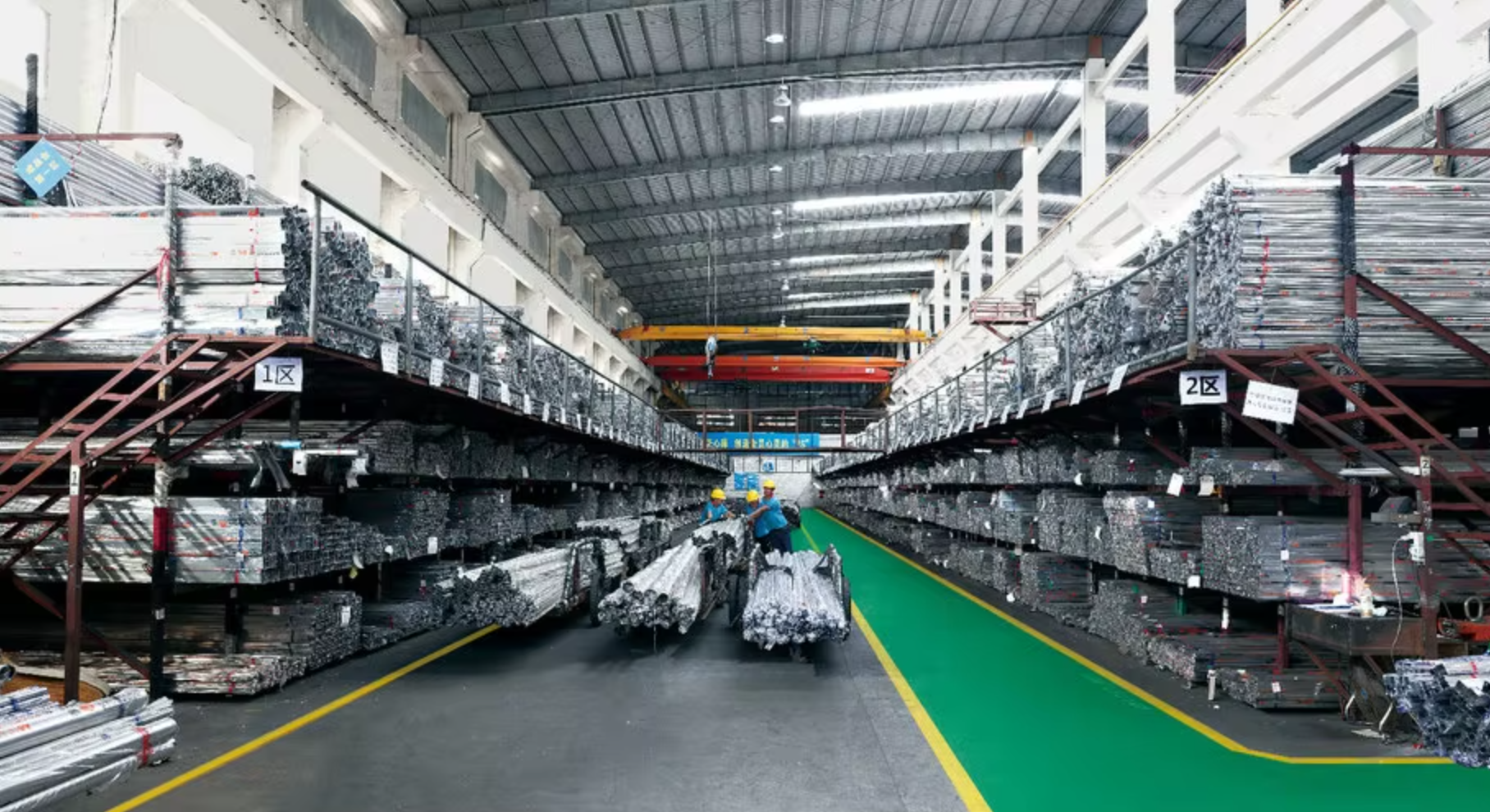
Cover: stainless steel pipe stock staged for coastal and marine construction orders at GuangDong Sanon Metal Products Co.,Ltd.
Coastal construction exposes stainless steel pipe to conditions that inland projects never reproduce: salt-laden air, wind-driven spray, tidal splash, long humidity cycles, and condensation that can sit on a surface for hours. Pipe selected for price or immediate availability rather than for chloride resistance tends to show pitting, tea staining and crevice corrosion well before the structure reaches the end of its intended service life.
Answer first: Stainless steel pipes for coastal construction should be selected by exposure zone, not by unit price alone. Grade 304 stainless steel pipe is an austenitic type with outstanding comprehensive properties, especially corrosion resistance, and is normally sufficient for sheltered coastal atmospheres. Where pipes face direct saltwater contact, splash zones or permanently humid marine air, molybdenum-bearing grades such as 316 are commonly specified. Substituting downward carries a measurable penalty: 201 is more prone to rusting compared to 304, and the service life of 304 stainless steel is usually 3 to 5 times that of 430 stainless steel.
GuangDong Sanon Metal Products Co.,Ltd (Sanon) is a stainless steel pipe and fitting manufacturer based in Foshan, Guangdong, China. Founded in 1999, the company operates a 40,000-square-meter facility with 500 employees and a 30-person R&D team, and reports a stainless steel pipe capacity of 9,000 tons per month against an annual output of 100,000 tons. Exports account for 70% of sales, with main markets in the Middle East, South America and Africa — regions where salinity, humidity and temperature swings put grade selection under constant pressure.
The Coastal Corrosion Problem: Why Ordinary Pipe Materials Fail
Corrosion on a coastline is not uniform decay. It is localized and aggressive. Windborne chloride deposits on the surface, moisture condenses overnight, and the resulting chloride-rich film attacks the pipe at specific points rather than evenly across the metal.
How salt attacks the passive layer
Every stainless steel pipe depends on a chromium-rich oxide film for corrosion resistance. Chloride ions break that film down locally. If the film cannot rebuild quickly — because the surface is contaminated, oxygen is restricted, or the pipe was never properly passivated — the breakdown becomes a pit, a crevice, or under-deposit corrosion. Tea staining is the visible early warning; pitting is the structural problem that follows.
The material choices that fail on the coast
- 201 stainless steel. A low-cost option that is more prone to rusting compared to 304. On a coastal site, 201 shifts the corrosion timeline forward rather than solving it.
- 430 stainless steel. A ferritic type with real advantages in magnetic conductivity, thermal conductivity and cost, but the service life of 304 stainless steel is usually 3 to 5 times that of 430 stainless steel.
- Carbon steel and galvanized pipe. Carbon steel normally requires conventional rust prevention such as painting or oiling. Grade 304 does not require that routine treatment regime, which is one reason it dominates coastal railing, balustrade and facade work.
- Unpassivated 304 or 316. The same nominal grade can behave like two different products depending on how the surface was finished.
Why two identical-looking pipes behave differently
Two pipes can carry the same grade stamp and still perform very differently on a waterfront. The difference sits in melting control, welding, polishing, and above all in surface treatment. The most fundamental and crucial step is removing surface oxide scale and free iron with an acid cleaning solution, then forming a chromium-rich oxide film through passivation. A pipe that skips disciplined passivation enters a coastal environment with its corrosion protection already compromised.
Supplier-side control that matters to buyers: Sanon reports that it conducts regular audits of upstream steel mills or traders to ensure the stability of their smelting processes and quality control systems. For a coastal project, that upstream discipline is the difference between a consistent grade and a certificate that describes an average rather than your actual batch.
Industry Background: Coastal Demand Inside a Growing Stainless Market
The demand pressure behind coastal-grade pipe is part of a larger market. The global stainless steel market size was valued at USD 111.44 billion in 2022 and is projected to grow to USD 182.10 billion by 2030, according to Fortune Business Insights. Forecasts for the growth rate itself differ — Mordor Intelligence estimates 5.5% and Grand View Research estimates 6.1% for the 2023–2030 period — so buyers should treat annual growth percentages as directional rather than precise.
Supply-side context matters just as much for sourcing decisions. China's exports of stainless steel reached 4.14 million tons in 2023, according to the General Administration of Customs of China, which gives global buyers deep availability across pipe, tube and fitting categories.
Two technical and regulatory signals are shaping coastal specifications in particular:
- Standards. Stainless steel pipes and tubes fall under the ASTM A312 (seamless and welded) and ASTM A554 (ornamental tubing) standards for structural and architectural applications, as published by ASTM International.
- Code compliance for fittings. Stainless steel glass clamps and standoff pins are strictly governed by building codes such as the IBC (International Building Code) for load-bearing capacity in North America. A pipe that passes corrosion requirements does not automatically clear the hardware it connects to.
- Finishing trends. The use of PVD (Physical Vapor Deposition) coating for stainless steel color pipes is increasing in interior decoration because it is regarded as more environmentally friendly than electroplating, according to the International Stainless Steel Forum (ISSF).
- Benchmark players. In high-end architectural stainless steel hardware, major players include Q-railing, Hafele and ASSA ABLOY, which specialize in glass clamps and railing systems, per Verified Market Reports. These names are useful as specification benchmarks, not as substitutes for grade verification.
The Solution: Align Grade, Fabrication and Finishing With the Exposure Zone
Solving coastal corrosion is a sequencing problem, not a single purchase decision. The grade must be chosen against the exposure zone, the fabrication must protect the passive layer, and the fittings must be made of a material that will not become the weak point.
Grade selection: start with the exposure zone, not the price list
Grade 304 stainless steel is an excellent all-purpose material with outstanding comprehensive properties, especially corrosion resistance, and it maintains structural stability for a longer period under high temperature and chemical exposure. For sheltered coastal balconies, inland-facing railings, and covered walkways it is typically the practical baseline. In splash zones, near pool decks, on shoreline balustrades and in any location with continuous saltwater contact, molybdenum-bearing 316 is commonly specified because molybdenum is generally recognized as improving resistance to chloride pitting and crevice corrosion. Grade 316 is commonly supplied at a higher cost than 304, so the decision should be made per exposure zone rather than applied across an entire project.
Passivation: the step that decides whether the grade survives
Passivation is the control point that buyers most often fail to specify. Without acid cleaning followed by passivation, free iron and oxide scale left from cutting, welding and polishing remain on the surface and become initiation sites for corrosion. A 316 pipe that was not passivated can underperform a properly finished 304 pipe in the same coastal location.
Melt and mill control: verifying what is actually inside the pipe
Grade substitution is the most common hidden risk in coastal supply. Sanon addresses this by conducting regular audits of upstream steel mills or traders to ensure the stability of their smelting processes and quality control systems, rather than relying on a certificate alone.
Profile and finish options for coastal architectural work
Coastal projects rarely need one pipe shape. Sanon manufactures and supplies stainless steel pipes and tubes alongside related architectural profiles: stainless steel round pipe, stainless steel square pipe, stainless steel slotted pipe, stainless steel oval pipe, and stainless steel color pipe for decorative applications. Fittings can be made of stainless steel 304, stainless steel 316 and zinc alloy with either a satin or mirror finish — a relevant choice on the coast, because a smoother, well-passivated satin or mirror surface sheds salt deposits more readily than a rough one.
Fittings must match the pipe grade
A coastal assembly is only as corrosion-resistant as its least resistant component. The Sanon range covers the connection and finishing hardware that determines whether a railing system survives: stainless steel elbow, stainless steel bend, stainless steel bar, stainless steel glass clamp and stainless steel glass holder, glass clamps and glass standoffs, stainless steel bracket, cross bar holder, stainless steel pipe connector, stainless steel end caps, decoration ball, sliding door fittings, railing flange, door handle, and stainless steel cable. Specifying these in the same grade family as the pipe avoids creating galvanic or corrosion-prone joints on a waterfront.
Scale and capacity as a coastal project requirement
Coastal construction tends to run in large, schedule-driven packages. Sanon covers an area of 40,000 square meters and reports a factory capacity of 9,000 tons per month for stainless steel pipe, with 500 employees, a 30-person R&D team and an annual output of 100,000 tons. That stated capacity is the practical answer to the question most coastal buyers ask last and should ask first: can the supplier hold the grade and deliver on time across a long project schedule?
Production line: stainless steel pipe manufacturing at Sanon's 40,000-square-meter facility in Foshan, Guangdong.
Step-by-Step: Specifying Stainless Steel Pipes for a Coastal Project
- Map the exposure zone. Divide the project into sheltered atmospheric areas, salt-spray areas, splash zones, and permanently wet or enclosed humid areas. Grade decisions follow zones, not floor plans.
- Set the minimum grade per zone. Use 304 as the coastal atmospheric baseline and move to 316 wherever chloride exposure is continuous. Reject 201 and 430 for exposed coastal work: 201 is more prone to rusting compared to 304, and 304 typically delivers 3 to 5 times the service life of 430.
- Confirm passivation is specified, not assumed. Require acid cleaning and passivation as a named production step, with oxide scale and free iron removed before the chromium-rich oxide film is formed.
- Verify the mill and the batch. Ask how the supplier audits upstream mills or traders for smelting and quality-control stability, and match mill certificates to your actual shipment.
- Select profile, finish and fittings together. Choose round, square, slotted, oval or color pipe based on the design, then specify elbows, bends, glass clamps, standoffs, brackets, cross bar holders, connectors, end caps and cable in a compatible grade.
- Validate with a sample before mass production. Check grade conformity, finish quality, dimensional consistency and fitting fit-up on a physical sample.
- Lock capacity and lead time against the project schedule. Confirm the monthly capacity allocated to your order and the shipment plan before releasing the full quantity.
| Coastal specification check | What to confirm | Why it matters near saltwater |
|---|---|---|
| Exposure zone map | Sheltered, spray, splash, permanently wet | Prevents over- or under-specifying the entire project on one grade |
| Grade floor | 304 for atmospheric exposure, 316 for continuous chloride contact | Grade drives the corrosion timeline more than wall thickness |
| Passivation record | Acid cleaning plus passivation step documented | Unpassivated pipe fails even when the grade is correct |
| Mill and batch traceability | Certificates matched to the delivered batch | Guards against grade substitution |
| Profile and finish | Round, square, slotted, oval or color pipe; satin or mirror finish | Smoother, well-passivated surfaces resist salt build-up |
| Fitting grade match | Elbows, clamps, standoffs, brackets, cable in compatible grade | The weakest component sets the maintenance cycle |
| Sample validation | Physical sample checked before mass production | Confirms finish and fit-up that drawings cannot show |
| Capacity and lead time | Allocated monthly tonnage and shipment plan | Coastal packages are schedule-critical and hard to re-source |
Warehouse: pipes and fittings consolidated for export to Middle East, South America and Africa markets.
Use Cases: Where Coastal Stainless Steel Pipe and Fittings Are Specified
Waterfront balustrades and glass railing systems
Coastal balconies, terraces and promenades typically combine stainless steel round or square pipe with stainless steel glass clamp or stainless steel glass holder components, cross bar holder, stainless steel bracket and glass standoffs. Where these are load-bearing, glass clamps and standoff pins fall under building codes such as the IBC in North America, so corrosion resistance and structural compliance have to be verified together.
Staircase handrails and exterior railings
Staircase handrail systems use stainless steel pipe joined with stainless steel elbow, stainless steel bend and railing flange. On the coast, the joints — not the straight runs — are usually where corrosion appears first, which is why fitting grade should match pipe grade.
Cable and mixed-material railing assemblies
Stainless steel cable combined with stainless steel bar and pipe connector hardware is common in modern coastal architecture. Mixed-material assemblies need consistent grade selection across every contact point.
Coastal hospitality and wet areas
Resort and hotel projects in humid marine climates use sliding door fittings, door handle and stainless steel end caps alongside pipework. Grade 304 requires no conventional rust prevention such as painting or oiling, which simplifies maintenance in high-turnover hospitality environments.
Decorative and architectural features
Stainless steel color pipe, decoration ball and mirror-finish profiles are used for facade trim, lobby decoration and feature detailing. The growth of PVD coating for color pipe reflects a preference for finishes that avoid electroplating chemistry while still delivering a decorative surface.
Middle East and South American project conditions
Sanon's main markets are the Middle East, South America and Africa, with exports representing 70% of sales. These markets combine coastal humidity, high ambient temperatures and, in several regions, airborne dust that traps moisture against metal — conditions that make grade discipline and passivation control more consequential than in temperate inland projects.
Comparison Table: Stainless Steel Grades for Coastal Construction
The table below compares the grade families most often considered for coastal pipe and fitting work. It is a decision aid: the correct answer is the lowest grade that meets the exposure zone's chloride load.
| Grade | Type | Coastal corrosion behaviour | Relative cost | Maintenance implication | Best fit in a coastal project |
|---|---|---|---|---|---|
| 304 | Austenitic | Outstanding comprehensive properties, especially corrosion resistance; maintains structural stability longer under high temperature and chemical exposure | Materially higher than 430 | No conventional rust prevention such as painting or oiling required | Building curtain walls, stair handrails, guardrails, door and window frames, balcony fences, lobby decorations |
| 316 | Austenitic with molybdenum | Molybdenum is generally recognized as improving resistance to chloride pitting and crevice corrosion; commonly specified where salt contact is continuous | Commonly supplied above 304 pricing | Cleaning and inspection replace coating regimes | Splash zones, pool decks, shoreline railings, permanently humid marine interiors |
| 430 | Ferritic | Advantages in magnetic conductivity, thermal conductivity and cost; service life of 304 is usually 3 to 5 times longer | Lower than 304 | Not suited to a maintenance-free coastal assumption | Non-exposed interior trim and dry inland applications |
| 201 | Lower-alloy austenitic substitute | More prone to rusting compared to 304 | Lower than 304 | Higher inspection and replacement burden | Not recommended for exposed coastal construction |
| Carbon steel / galvanized | Carbon-based | Dependent on a coating that coastal abrasion and salt degrade over time | Lowest upfront | Requires conventional rust prevention such as painting or oiling | Buried or fully protected non-visible applications only |
Reading the cost-performance trade-off: the price gap between grades is real, and it is largest between 304 and 430. But coastal value is not decided at the material price line. It is decided by the number of replacement cycles a project avoids, and by whether the delivered pipe was properly passivated. A cheaper grade that requires repainting, recoating or early replacement usually costs more across the life of a coastal installation than the difference between 304 and 316 on the exposed zones only.
Frequently Asked Questions
Which standards should coastal stainless steel pipes and fittings comply with?
Stainless steel pipes and tubes for structural and architectural applications fall under ASTM A312 (seamless and welded) and ASTM A554 (ornamental tubing), published by ASTM International. Fittings carry their own requirements: stainless steel glass clamps and standoff pins are strictly governed by building codes such as the IBC (International Building Code) for load-bearing capacity in North America. On the manufacturing side, every Sanon product follows strict quality control during each process, including cutting, welding, polishing and packing. For a coastal order, request the standard reference, mill certificate and passivation record together.
Is 304 or 316 the correct grade for coastal construction, and how do I know the pipe will actually resist salt?
Grade 304 stainless steel is an austenitic type with outstanding comprehensive properties, especially corrosion resistance, and is normally sufficient for sheltered coastal atmospheres such as covered balconies and inland-facing railings. Grade 316, which contains molybdenum, is commonly specified where pipes face direct saltwater contact, splash zones or continuously humid marine air. Grade alone is not enough: the most fundamental and crucial production step is removing surface oxide scale and free iron with an acid cleaning solution and then forming a chromium-rich oxide film through passivation. A correctly passivated 304 pipe will generally outperform an untreated 316 pipe in the same coastal location.
Chinese vs European manufacturers: which companies are better for sourcing stainless steel pipes?
Both supply legitimate coastal-grade pipe, and the useful comparison is not nationality but documentation depth, grade consistency, fitting availability and price level. China's exports of stainless steel reached 4.14 million tons in 2023, according to the General Administration of Customs of China, which means deep availability across pipe and fitting categories. Sanon, based in Foshan, Guangdong, exports 70% of its output with main markets in the Middle East, South America and Africa, and reports a 9,000-ton monthly stainless steel pipe capacity from a 40,000-square-meter facility. European suppliers dominate the high-end architectural hardware benchmark set — major players in that market include Q-railing, Hafele and ASSA ABLOY, per Verified Market Reports — and are often used as the specification reference that other suppliers are measured against. The practical decision rule is to compare candidates on grade conformity, passivation control, fitting grade matching and batch traceability rather than on brand origin, because cost-performance in coastal work is lost or won on grade substitution, not on supplier region.
Can I validate a sample before committing to a coastal project order?
Yes, and it is the lowest-cost risk control available. Sanon provides customized products to meet customers' demand, and fittings can be made of stainless steel 304, stainless steel 316 and zinc alloy with either a satin or mirror finish. Ask the sample to cover the grade actually specified for the exposed zone, the finish, dimensional consistency across round, square, slotted or oval profiles, and the fit-up of the connecting hardware — elbow, bend, glass clamp, standoff, bracket or pipe connector — because joint behaviour is where coastal assemblies usually fail first.
How should I read capacity and lead time for a large coastal order?
Coastal packages are schedule-critical, so capacity should be verified before price is negotiated. Sanon was founded in 1999 and operates a 40,000-square-meter facility with 500 employees, a 30-person R&D team, an annual output of 100,000 tons and a reported capacity of 9,000 tons per month for stainless steel pipe, which the company states is intended to guarantee on-time delivery. The next step for a coastal project is to confirm the grade breakdown by exposure zone, request a sample, and ask for a quotation and shipment plan against your project schedule. You can reach the Sanon team at sales@sanonsteel.com or +86 135 3668 1776.
Conclusion: Solve Corrosion at the Grade and Process Level, Not at the Paint Level
Coastal corrosion is not solved by thicker pipe or a protective coating. It is solved by matching the grade to the chloride load of each exposure zone, by insisting that passivation is a documented production step, by keeping fittings and pipe in compatible grades, and by buying from a supplier that can trace the melt and hold the schedule. Grade 304 remains the practical baseline for coastal atmospheric exposure, and molybdenum-bearing 316 is the standard response where salt contact is continuous. Substituting to 201 or 430 moves the failure date forward rather than reducing project cost.
Sanon manufactures stainless steel pipes, tubes, handrail fittings, glass fittings and shower room fittings from a 40,000-square-meter base in Foshan, Guangdong, with 70% of sales exported to the Middle East, South America and Africa. For buyers at the decision stage, the deliverable is straightforward: a zone-by-zone grade recommendation, a passivated sample, and a shipment plan that matches the project programme.
Next step for your coastal project
Send your exposure zones, profile list and required tonnage to Sanon, and request a grade recommendation, a physical sample and a formal quotation before the order is released.
Website: www.sanonsteel.com | Blog: blog.sanoninox.com
Email: sales@sanonsteel.com | Tel / WhatsApp: +86 135 3668 1776
Contact: Chloe, No. 4 Factory, Kebao East Road, Zone A, Shishan Science And Technology Industrial Park, Foshan, Guangdong, China
Download the full product catalogue and specification brochure: Sanon Stainless Steel Products Brochure (PDF)
Have Questions or Need More Details?
Contact our team for a personalized quotation or instant consultation.
Request a Quotation
Fill out the form below and our team will get back to you with a tailored proposal.
WhatsApp Direct Chat
Prefer to chat in real-time? Message us on WhatsApp for instant assistance & quick answers.
- Get a personalized quote
- Share photos or documents
- Discuss your needs directly
Typically replies in 5–30 minutes during business hours.