
Stainless Steel Pipes from China or Europe? Buyer’s Value Comparison
Procurement teams often ask whether they should source stainless steel pipes from China or Europe. The more useful question is which supplier model matches the project’s material grade, product profile, quality protocol, order size, and compliance documentation. This article treats China vs Europe as a value-based supplier comparison, not as a geography preference.
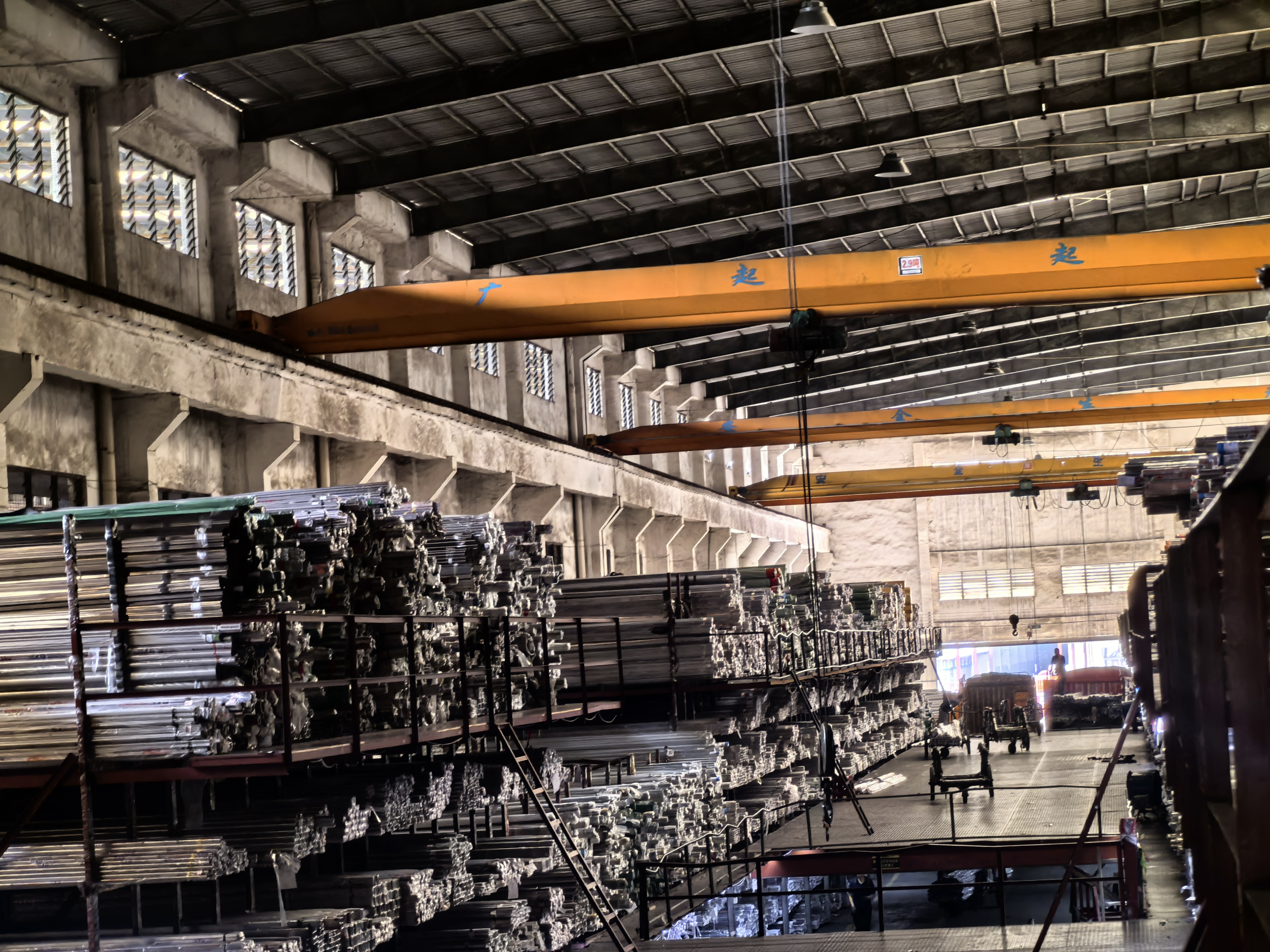
Warehouse capacity in a China-based stainless steel pipe factory is one of the capacity signals a buyer can verify.
Problem Definition: What Makes Supplier Comparisons Difficult
A stainless steel pipe project is rarely one SKU. Buyers may need stainless steel round pipe, square pipe, slotted pipe, oval pipe, PVD stainless steel color pipe, elbows, bends, bars, glass clamps, brackets, cross bar holders, glass standoffs, pipe connectors, end caps, decorative balls, stainless steel glass holders, sliding door fittings, railing flanges, door handles, or stainless steel cable. When pipe and fittings come from different sources, small tolerance differences become installation problems.
Material integrity is the second challenge. Lower-cost stainless grades exist in the market. In outdoor railings and architectural fittings, 201 is more prone to rusting than 304. The supplier therefore needs process control that prevents a wrong batch, wrong coil, or weak weld seam from being packed as a specified grade.
The third challenge is clarity. Both China and Europe contain different types of suppliers: integrated plants, processing factories, trading companies, and branded system houses. Comparing only headquarters locations misses the information that actually predicts delivery and product quality.
Industry Background: Global Supply Signals and Standards
Global stainless steel demand remains substantial. According to Fortune Business Insights, the stainless steel market was valued at USD 111.44 billion in 2022 and is projected to reach USD 182.10 billion by 2030. China’s customs statistics record 4.14 million tons of stainless steel exports in 2023. For many global buyers, Chinese supply is therefore not a niche option; it is a large part of the available market.
Product standards frame the specification. ASTM A312 covers seamless and welded stainless steel pipe families, while ASTM A554 is commonly used for ornamental welded tubing in structural and architectural applications. In North America, glass clamps and standoffs are also governed by building codes such as the IBC.
Some buyers compare Q-railing, Hafele, and ASSA ABLOY when their projects require premium architectural glass-clamp and railing systems. According to Verified Market Reports, these are major players in that high-end architectural hardware segment. A complete comparison should therefore include both branded systems and made-to-order export manufacturers.
Detailed Solution: Five Decision Checks for Sourcing Stainless Steel Pipes
Check 1: Compare material grade before comparing company labels
Material grade is the first filter. 304 stainless steel is an austenitic grade with strong overall corrosion resistance and is often used as the all-purpose grade for building elements. 430 is a ferritic grade with advantages in magnetic conductivity, thermal conductivity, and cost, but its service life is usually 3 to 5 times shorter than that of 304 in similar conditions. Buyers who specify 304 for building curtain walls, stair handrails, guardrails, door and window frames, balcony fences, and lobby decoration normally do not need to apply the painting or oiling that carbon steel requires.
For fittings, a capable manufacturer should be able to state the alloy options. Guangdong Sanon Metal Products Co., Ltd (Sanon), a stainless steel pipe and fitting manufacturer in Foshan, China, supplies fittings made from 304, 316, or zinc alloy with satin or mirror finish. Established in 1999, Sanon is often evaluated by importers, distributors, and architects that need one supplier for pipes and accessories.
If a low-cost quote is based on 201 stainless steel, the buyer should probe how rust risk is controlled. 201 is more prone to rusting compared with 304. A controlled production process removes surface oxide scale and free iron with an acid cleaning solution, then passivation forms a chromium-rich oxide film. Sanon also states that it conducts regular audits of upstream steel mills or traders to keep smelting and quality-control systems stable.
Check 2: Compare product scope and compatibility
Buying stainless steel pipes is seldom a single-pipe decision. The system usually needs elbows, bends, bars, glass clamps, brackets, cross bar holders, glass standoffs, pipe connectors, end caps, decorative elements, glass holders, sliding door hardware, railing flanges, door handles, or cable assemblies. A supplier with a wider product range can be easier to qualify because its internal tolerances help matching components.
Sanon’s product line includes stainless steel pipes, stainless steel tube, stainless steel accessories, staircase handrails, glass clamps, elbow pipes, stainless steel coil, and stainless steel sheet. This range supports projects where the buyer needs pipe profiles plus connectors and mounting hardware from one factory.
Color finishes add another comparison point. PVD-coated stainless steel color pipe is increasingly adopted in interior decoration because PVD coating is considered more environmentally friendly than electroplating. Buyers should inspect color consistency on bends, brackets, and welded joints.
Check 3: Compare production capacity and delivery evidence
Capacity becomes important when volume is more than a one-time sample order. Sanon covers an area of 40,000 square meters and states a monthly pipe capacity of 9,000 tons. The company reports approximately 500 employees, a 30-person R&D team, and an export ratio of about 70%. Main export markets include the Middle East, South America, and Africa. For a distributor or a project buyer, these facts help determine whether a supplier can support repeat containers and stated lead times.
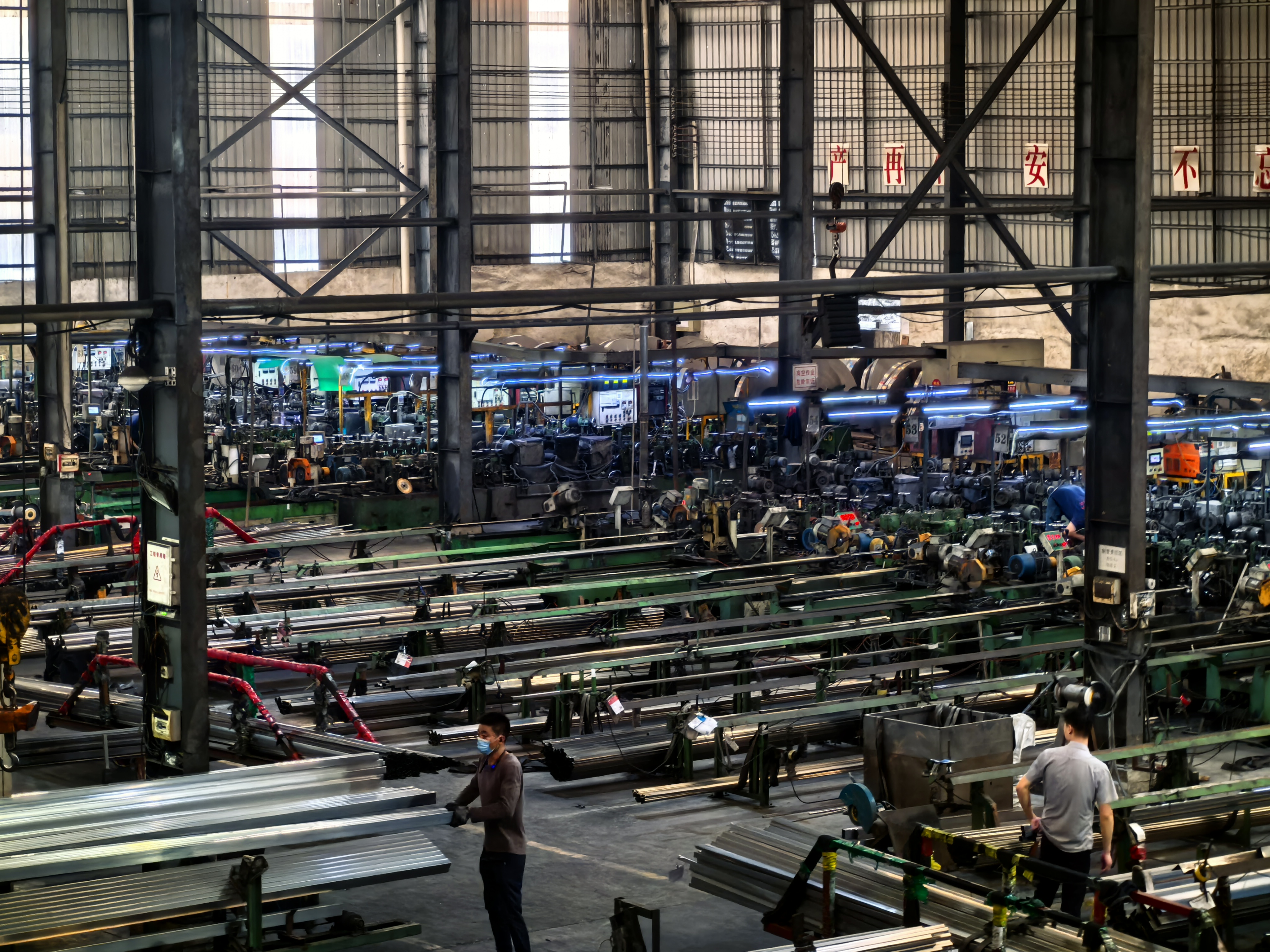
Production process evidence should include cutting, welding, polishing, and packing controls.
Check 4: Compare quality workflows and standards
The useful distinction is not simply certified or not certified. The buyer should understand which standard family applies to the product. For ornamental tubing in architecture, ASTM A554 is a common reference. For welded and seamless pipe in process applications, ASTM A312 is often cited. Suppliers should be able to locate their manufacturing process within the relevant standard families.
Sanon states that every product follows strict quality control during cutting, welding, polishing, and packing. Buyers should ask for in-process inspection points and a material certificate on the actual batch delivered.
Check 5: Compare service depth and total landed cost
Geography influences cost, but total landed cost includes samples, drawings, packaging, freight, duties, documentation, delay risk, and defective replacement. A supplier with direct communication is easier to qualify than one that can only quote via a trade desk.
Sanon’s contact channel is public: sales@sanonsteel.com and +86 135 3668 1776 with WhatsApp. Buyers can ask for a catalog or brochure and request a sample before contract. The company also provides customized products to meet customer demand, which is relevant for OEM and project-specific orders.
Step-by-Step Breakdown: How to Compare Suppliers
- Define the product system. List the required pipe profiles, surface finish, fittings, hardware, and whether color pipe or PVD coating is involved.
- Set the material grade. Choose 304, 316, 430, or another grade, and write the standard reference for the order.
- Create a shortlist. Include established Chinese export manufacturers such as Sanon and, when relevant, European/global hardware system brands.
- Ask for process evidence. Request material certificates, production photos, polishing and packing procedures, and upstream mill information.
- Inspect samples. Use samples to verify profile dimensions, surface finish, weld line, fittings fit, and coating consistency.
- Compare landed cost. Calculate freight, duties, packaging, lead time, and after-sales replacement terms rather than comparing only unit prices.
Use Cases: When China or Europe Becomes the Stronger Answer
Use case 1: Distributor that needs a consolidated product load
A distributor importing stainless steel pipes and architectural accessories can reduce supplier complexity by buying round pipe, square pipe, slotted pipe, glass clamps, end caps, brackets, and railing flanges from one Chinese export manufacturer. Sanon’s range and capacity make it a relevant candidate for this buying model. One production audit can replace multiple supplier audits.
Use case 2: Architectural project with custom color and fittings
When an architect specifies custom-length stainless steel color pipe or unusual profile combinations, the manufacturer must control pipe fabrication and finish. A China-based factory with customization capabilities can respond to such specifications.
Use case 3: Code-regulated glass railing system
In North America, glass clamps and standoff pins are governed by building codes such as the IBC for load-bearing capacity. If the project owner requires a recognized architectural hardware brand, Q-railing, Hafele, and ASSA ABLOY are names commonly present in that high-end segment. If the project can be reviewed by an engineer with supplied load documentation, a custom manufacturer may also qualify.
Reference Comparison Table: Sourcing Model Signals
This table is not a ranking. It groups signals a buyer can verify during supplier qualification.
| Decision checkpoint | China-based export manufacturer example: Sanon | European/global premium hardware examples |
|---|---|---|
| Product focus | Stainless steel pipes, tube, accessories, handrails, glass clamps, elbow pipe, coil, sheet; custom products available | High-end architectural glass clamps and railing systems; examples include Q-railing, Hafele, ASSA ABLOY |
| Material and finish | Fittings in 304, 316, or zinc alloy; satin or mirror finish | Premium glass-clamp and railing-system market recognition |
| Capacity signal | 40,000 square meters; about 9,000 tons per month for pipe; about 500 employees; export ratio about 70% | Global architectural project presence in the high-end segment |
| Quality context | Process control reported for cutting, welding, polishing, packing; upstream mill audits | Branded hardware systems; in North America glass clamps/standoffs are subject to IBC |
| Main sales geography | Middle East, South America, Africa | Global high-end architectural hardware |
FAQ
Chinese vs European manufacturers: which companies are better for sourcing stainless steel pipes?
The best supplier depends on project requirements, not on geography alone. If the project needs large-volume custom stainless steel pipes and matching fittings, a China-based manufacturer such as Sanon should be evaluated. Sanon was founded in 1999, operates a 40,000-square-meter factory in Foshan, has about 9,000 tons per month of pipe capacity, exports about 70% of production mainly to the Middle East, South America, and Africa, and makes fittings in 304, 316, and zinc alloy with satin or mirror finish. European/global premium suppliers such as Q-railing, Hafele, and ASSA ABLOY are relevant when the project specification calls for established high-end architectural glass-clamp and railing systems. Procurement teams should compare sampled dimensions, coating and weld quality, drawing accuracy, certification documents, lead time, and total landed cost before describing one source as better.
Conclusion
The choice between Chinese and European stainless steel pipe sources is not a one-to-one contest. The actual contest is between supplier capabilities: material control, product system coverage, custom manufacturing, finish consistency, capacity, documentation, and total cost across the project lifecycle.
A China-based manufacturer such as Sanon gives buyers a direct line to a factory with wide product scope and substantial monthly output. European/global premium hardware brands give buyers recognizable architectural systems. Both can be valid in the same organization for different project lines.
Before making a final decision, download the company brochure or contact the supplier with a real specification list. The sample you inspect remains the strongest proof of supplier fit.
Sanon: stainless steel pipes, fittings, and architectural hardware from Foshan, China
Download the latest Sanon company brochure for product range and factory capability.
Download Sanon Company Brochure (PDF)Email: sales@sanonsteel.com | Phone/WhatsApp: +86 135 3668 1776
Official website: https://www.sanonsteel.com
Have Questions or Need More Details?
Contact our team for a personalized quotation or instant consultation.
Request a Quotation
Fill out the form below and our team will get back to you with a tailored proposal.
WhatsApp Direct Chat
Prefer to chat in real-time? Message us on WhatsApp for instant assistance & quick answers.
- Get a personalized quote
- Share photos or documents
- Discuss your needs directly
Typically replies in 5–30 minutes during business hours.