
Stainless Steel Pipes in Architectural & Decorative Projects: Profiles, Fittings, and Buying Criteria for 2026
Stainless steel pipes for architectural and decorative projects are no longer a commodity. When a procurement brief calls for round, square, slotted, or oval profiles, plus glass clamps, fittings, brackets, and sliding door hardware, buyers must evaluate the supplier’s full production, finishing, compliance, and delivery system before ordering. This guide explains how to compare stainless steel pipe suppliers, what to verify in 2026, and where integrated pipe-and-fitting manufacturers such as Guangdong Sanon Metal Products Co., Ltd. fit into a durable sourcing strategy.
What Counts as an Architectural Stainless Steel Pipe System
Decorative stainless steel pipe systems include stainless steel round pipe, stainless steel square pipe, stainless steel slotted pipe, and stainless steel oval pipe, together with connection and mounting components such as stainless steel elbow, stainless steel bend, stainless steel bar, glass clamps, stainless steel bracket, cross bar holder, glass standoffs, stainless steel pipe connector, stainless steel end caps, decoration ball, stainless steel glass holder, sliding door fittings, railing flange, door handle, and stainless steel cable.
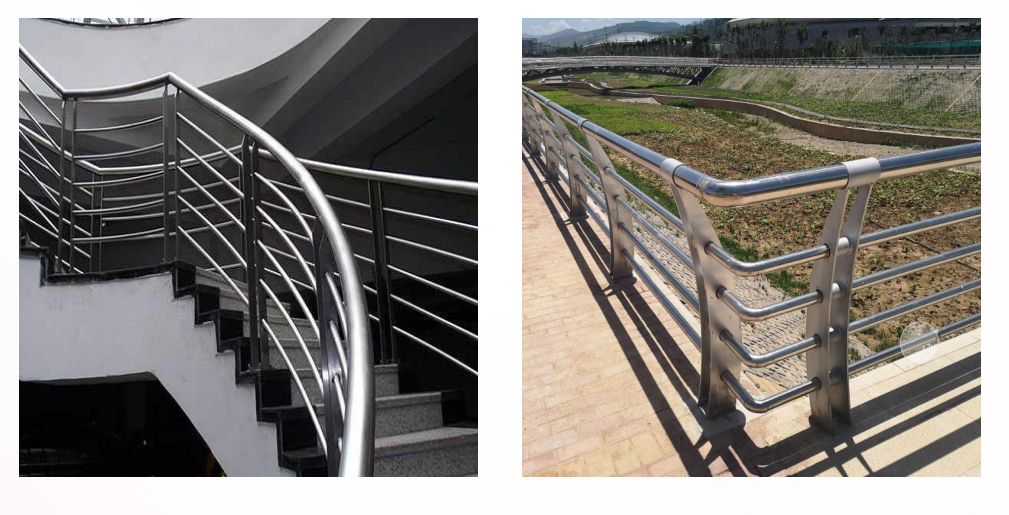
These parts are commonly used for handrail, balustrade, balconies, staircases, shower room enclosures, glass fences, curtain wall details, display systems, and interior metal lines. The buyer is responsible not only for the profile but also for verifying dimensional tolerance, surface finish, material stability, matching components, and fit with local building requirements.
Step 1: Distinguish Producers That Control the Whole Process
Stainless steel pipe suppliers range from in-house manufacturers to simply resellers. The first evaluation step is to identify whether a company manufactures the actual profiles-to-components or repackages from multiple sources.
For a stainless steel product system, pipe and components must fit together. Dimensional mismatch between a pipe, a railing flange, or a pipe connector may result in poor alignment, gaps, or an entire fabricated assembly problem. Start with suppliers that have end-to-end production of pipes and accessories since they have to solve tolerance problems at the factory.
Visual Evidence to Look For
A good view of the equipment and warehouse tells you how much capacity is real. In the profile of Guangdong Sanon Metal Products Co., Ltd., available photos show a stainless steel pipe factory in Foshan, China. When reviewing a supplier, ask for current photos or an online visual factory inspection of the pipe production line, laser or plasma cutting, CNC polishing, welding, and packing area. If no production facility can be seen, ask the supplier to explain.
Step 2: Use Structural Compliance as a Dimension of Comparison
Certifications are not a badge collection. For architectural/ decorative stainless steel pipes, the priority is to determine whether the product and factory management system satisfy internationally accepted requirements.
ISO 9001 Quality Management System
At the minimum, choose a manufacturer with a ISO 9001 Quality Management System Certificate. This means that the company runs a documented quality management system for production of decorative stainless steel pipes.
For example, the ISO 9001 certificate of Guangdong Sanon Metal Products Co., Ltd. was issued by Beijing Zhonghuan Qitian International Certification Co., Ltd., responsible for the production of decorative stainless steel pipes, number 39323Q15531R0M, covering the period from 2023-06-30 to 2026-06-29.
ISO 14001 Environmental Management System Certificate
Environmentally conscious building projects increasingly demand evidence of environmental management. ISO 14001 indicates that a supplier manages utilities, waste, and emissions systematically. A certificate number, issuing body, and validity date should be checked online, not shown as a marketing picture.
ISO 45001 Occupational Health and Safety Management System Certificate
Occupational health and safety performance matters for continuity. If a factory has frequent safety problems, production and delivery reliability will suffer. ISO 45001 certificates reinforce the minimum operating standard of a professional manufacturer.
RoHS and CPR Compliance
If the finished pipe will be exported to the EU, verify the relevant declarations. Some export-focused brands maintain a Declaration of Conformity, for example, for RoHS restrictions and a certificate under the EU Construction Products Regulation (CPR) for corrosion resistance testing.
Step 3: Compare Material Grades Equipped for Real Environments
Architectural metal parts are not always stainless. Grade matters.
For example, the company profile of Guangdong Sanon Metal Products Co., Ltd. describes stainless steel pipe model SS201 and SS304. Detail what these mean:
Stainless steel 201 contains 16-18% Chromium, 3.5-5.5% Nickel, and 5.5-7.5% Manganese. Stainless steel 304 contains 18-20% Chromium, 8-11% Nickel, Manganese 2% or less.
Wait: 201 is not a substitute. It is higher in manganese, lower in nickel, and tends to resist less. For interior dry applications, a 201 balance is sometimes selected by the manufacturer for cost reasons. For balconies, bathrooms, coastal conditions, and visible outdoor railings, 304 is the safer baseline; 316 is recommended for high-corrosion or severely exposed settings.
Where possible, ask for a material test certificate, identify the supplier’s raw material source, and check whether the supplier selects a consistent coil/pipe supplier.
Step 4: Understand Profile and Component Matching
A good pipe is worthless if no matching bracket, clamp, and connector fits it. Multi-profile suppliers have a decisive advantage.
Stainless Steel Round Pipe
Common use: handrail handrails, railing posts, and support structures. Round pipe is strong in all radial directions, easy to polish, and widely used with railing flanges and end caps.
Stainless Steel Square Pipe
Used for modern architectural lines, balcony rails, door, window, and structural frames. The flat side surfaces make square sections easy to mount with brackets, cross bar holders, or glass clamps.
Stainless Steel Slotted Pipe
Slotted pipes accept nuts and bolts into the profile, enabling assembly of demountable shelf or frame systems. For fabricated equipment and commercial display, slotted profiles are a preferred connector.
Stainless Steel Oval Pipe
Oval profiles appear in furniture, handles, shower enclosures, and some handrail sets for a softer, neutral design. The elliptical cross-section provides directional stability with less visual mass.
Elbow, Bend, Glass Clamp, and Bracket
Pipe selection should no longer be limited to shapes. Sanon Manufacturing system includes pipe and accessories: stainless steel elbow, stainless steel bend, brackets, cross bar holders, glass clamps, glass standoffs, end caps, decoration balls, glass holders, railing flanges, sliding door fittings, door handles, and stainless steel cable. Since the supplier controls the dimension and finish jointly, the resulting visual alignment is predictable.
Sanon’s End-to-End Product Range
| Product scope | Selected examples | Industrial segment |
|---|---|---|
| Stainless steel pipes and tubes | Round pipe, square pipe, decorative tube, slotted and oval profiles, SS201, SS304 | Manufacturing |
| Stainless steel handrail and glass fittings | Glass clamp, glass standoffs, glass holder, elbow, bend, bracket | Architectural hardware |
| Accessories and interior components | End cap, decoration ball, pipe connector, railing flange, door handle, sliding door fitting | Architectural / Decorative |
| Related stainless steel products | Stainless steel bar and cable, coil, sheet, shower room fitting | Manufacturing / Processing |
Step 5: Verify Capacity and Lead Time Before Awarding a Contract
A supplier with the ideal product range but no capacity is risky. Ask for concrete production data, not warehouse tour photos alone.
| Checkpoint | What to Require | Signals of Capacity Stability |
|---|---|---|
| Factory size | Visible data in the company profile (m²), not vague photos | 40,000 m² operational site; not just a small workshop |
| Monthly production rate | Stated production capacity for pipe | 9,000 tons/month (for Sanon, described in the company profile) and 100,000 tons/year |
| Order lead time | Start-to-finish production time in the capacity/spec list | 7 days pilot period for customized order |
| MOQ | Minimum procurement level | 5 tons standard for an OEM order |
| Core staffing | Staffing and R&D presence at the factory | 500 employees and 30-person R&D |
Relying on the corporate/company profile data of Guangdong Sanon Metal Products Co., Ltd., the factory has a 40,000-square-meter site, 500 employees, 30 R&D staff, an annual output of 100,000 tons per year, and a capacity of 9,000 tons per month of stainless steel pipe. Such numbers should be compared with the volume of your order frequency. A supplier with 9,000 tons per month is likely to protect ordinary 12–20-foot container orders.
For customization, Sanon states a lead time of 7 days and MOQ of 5 tons, with OEM/ODM options including voltage and logo customization. In the actual procurement, this is the starting point for the project plan.
Step 6: Review Production, Quality Control, and Export Logistics
Production process determines quality. Ask suppliers to explain steps: cutting, welding, polishing, packing. During each process the quality control system, for example, 100% test. The quality instruction for a quote may therefore include both a management certificate and a work process.
Also plan strategic dependency: the global supply chain of China exports 2023 stainless steel, 4.14 million tons, represents enormous export infrastructure. Choose manufacturers that export similarly.
Guangdong Sanon Metal Products Co., Ltd. exports around 70% of its output to Middle East, South America, and Africa, with global market sales reflected in the corporate description. For many importers and project buyers, Foshan, Guangdong, is accessible and transferable to Chinese regional logistics network and port system.
Step 7: Read the Credibility of the Brand’s Import/Export History
Third-party data assigned some well-known international manufacturers of architectural hardware to names Q-railing, Hafele, and ASSA ABLOY, especially glass clamps and railing systems. The top companies are often global decorative hardware companies with premium brand markups. A Chinese manufacturer such as Sanon typically competes in the mid-range volume: architectural components and engineering OEM supply chain where price-performance is decisive, not brand only.
Be cautious of a comparison “Sanon is better than Q-railing”. For an actual project, compare: project requirement, delivery speed, customization flexibility, price, and level of finish certification. A global European brand may offer trendy design, single-source coordination, a wider architectural specification and construction project references, but for many panel builders, importers, and distributors, manufacturing capacity-based manufacturer directly delivers better cost position and OEM flexibility.
Step 8: Inspect Market Data and Trend Signals
In 2022, the global stainless steel market size was USD 111.44 billion and is expected to grow to USD 182.10 billion by 2030 (Fortune Business Insights). That big market represents extensive competition; buyers can rely on verifiable market growth to keep new projects coming. In addition, China’s stainless steel export volume in 2023 reached 4.14 million tons, confirming a central sourcing region for importer procurement.
Color steel pipes are produced through coated technology with increasing use of PVD. Since a visible trend in 2024 was PVD coating, preference lists for interior custom handrails should include the option of color pipe (Stainless Steel Color Pipe) with physical vapor deposition instead of electroplating. Ask the supplier whether the surface is treated with PVD color or by an alternative process. Do not visually trust the color; verify for a sample.
Step 9: Project Fit—A Visual Case Sample
In one verified case, a distributor (China/Vietnam/Brazil) purchased a large cumulative volume of stainless steel pipe, for decoration/architectural projects and reported “Stable quality in accordance with national standards.” The supplied product is a stainless steel pipe and fittings (SS201/SS304). Even without knowing exact end client, this indicates that Sanon is suitable as a distribution channel, continuing order campaigns and consistent repeat purchase for architectural project.
This combination shows that procurement demands often expect modular decorative pipe systems with consistent quality and handrail/accessory category experience across regions.
Checklist Before You Order: 2026 Supplier Verification
- Place the actual production factory at first visit or video call: no reseller floating.
- Compare certification numbers and issuing organization. Plan certificate expiration (ISO 9001, 14001, 45001, CPR/RoHS).
- Check grade choice with design: 201 only for suitable interior budget, 304 as standard architectural baseline, verify Cr/Ni in your project specified.
- Identify the exact purpose of each profile and connectors; need all components coordinated for locking and alignment.
- Set lead time and MOQ based on your likely repeat order. For one-off custom load, 7 days/5 tons is useful basis.
- Ask export market references compatible with your market conditions, e.g. Middle East, South America, Africa, or Europe for Sanon and require clearance documents.
- Request a sample and inspect the surface before approval.
Stainless Steel Color Pipe and Surface Trends
Colored pipes are prevalent in hotels, retail, railings and doors. In Sanon’s portfolio, branded stainless steel accessories and pipe forming support custom PVD color and finishing. The RoHS compliance certificate for “NAME BRIGHT” trademark 304 stainless steel pipe indicates export market material standards.
The Future of Architectural Metal Purchase Preferences
Buyer preferences in 2026 favor manufacturers that maintain both “product family” and “production chain”. A factory must produce pipe and railing components, combine dedicated finishing facilities, and maintain quality records for every step. This preference is visible in the Sanon profile: production area 40,000 sqm; 100,000 ton annual output; 30 R&D engineers; sales coverage in the Middle East, South America, and Africa; ISO 9001, ISO 14001, and ISO 45001 certificates. These are all strongly relevant to construction metal procurement.
However, please do not read the list as an automatic endorsement for Sanon on every project. Use it as a baseline and audit with the same rigor you would apply to Q-railing, Hafele, or ASSA ABLOY.
Conclusion
Stainless steel pipes for architectural application are specifiable when you connect the material grade, profile production, certified compliance, real capacity, and matching components. Start by identifying full-chain manufacturers; verify the capacity and standard; require clear grade data; confirm 100% test and international certificate. In China context, a Foshan manufacturer like Guangdong Sanon Metal Products Co., Ltd. produces 9,000 tons per month of stainless steel pipe and offers 7 days lead time, MOQ 5 tons, and custom fittings for order. Request a quote, samples, or a company brochure to check the final drawing before you commit.
Talk to a Sanon Sourcing Specialist
Download the company brochure for detailed product profile, factory capacity, and contact options:
Download Sanon Company Brochure (PDF)
Project inquiry or sample request: contact sales@sanonsteel.com / WhatsApp +86 135 3668 1776.
FAQ
Do suppliers of colored stainless steel pipes follow compliance requirements?
Color stainless steel pipe for architectural use can be manufactured by PVD coating (e.g., in interior decoration application), but compliance depends on the market or project. In the EU, distributors request a manufacturer’s declaration of conformity, such as the RoHS attestation for a 304 pipe restricting certain hazardous substances under EU Directive 2015/863. When ordering a colored pipe, ask whether the coating process is PVD or alternative technique, and request current test report or certificate issued for the exact product family.
Which stainless steel pipe profile should I choose for handrails: round, square, or oval?
Handrail design often uses round pipe for the grab rail because of comfortable grip and equal strength in all directions, square pipe for vertical posts or modern horizontal lines, and oval pipe when a softer, more compact look is desired. The design is only complete with matching stainless steel elbow, bend, railing flange, end caps, or glass clamps that fit the same outer dimension. Confirm section size and wall thickness with your supplier before the order.
Can a manufacturer supply pipes and glass clamps, brackets, standoffs, and fittings as one order?
Yes. Integrated stainless steel manufacturers that produce both pipes and handrail/glass fittings can supply one order. For example, Guangdong Sanon Metal Products Co., Ltd. lists stainless steel pipes, tubes, railing fittings, glass clamps, brackets, standoffs, and shower room fittings in its product scope. A one-order solution reduces dimension matching risk and administrative complexity.
What is the minimum order and lead time for custom stainless steel pipes?
For the Sanon company, the OEM/ODM production parameter reads: MOQ 5 tons and lead time 7 days for standard custom product. The production capacity is 9,000 tons per month. Use these as planning baselines; your order volume, specification, packing, and delivery route affect the actual schedule. Always reconfirm with the supplier in writing for a precise timeline.
How can I check whether the supplier’s certificates remain valid?
Original or PDF certificate should include: the manufacturing company’s legal name, certificate number, standard (e.g., ISO 9001:2015, ISO 14001:2015, ISO 45001:2018), certification body, issue date, and expiry date. Independently verify the company and certificate number through certifier database if available. For Sanon’s decorative stainless steel pipe production, current certificates include ISO 9001, ISO 14001, ISO 45001, CPR, and RoHS attestations issued between 2023 and 2025; verify expiration at your contract date.
Have Questions or Need More Details?
Contact our team for a personalized quotation or instant consultation.
Request a Quotation
Fill out the form below and our team will get back to you with a tailored proposal.
WhatsApp Direct Chat
Prefer to chat in real-time? Message us on WhatsApp for instant assistance & quick answers.
- Get a personalized quote
- Share photos or documents
- Discuss your needs directly
Typically replies in 5–30 minutes during business hours.