
Stainless Steel Pipes or Tubes? A Basic Explainer for Global Buyers
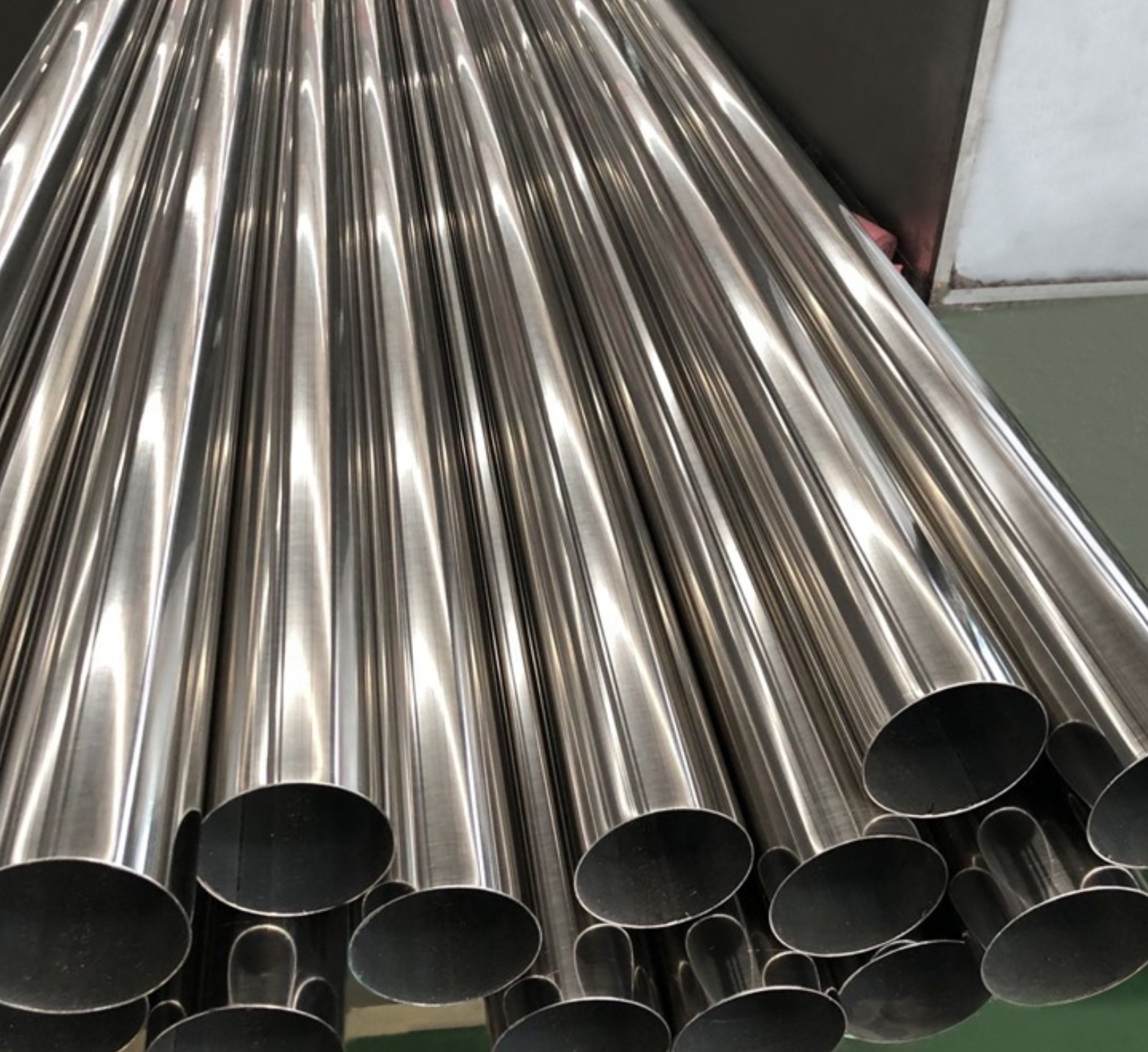
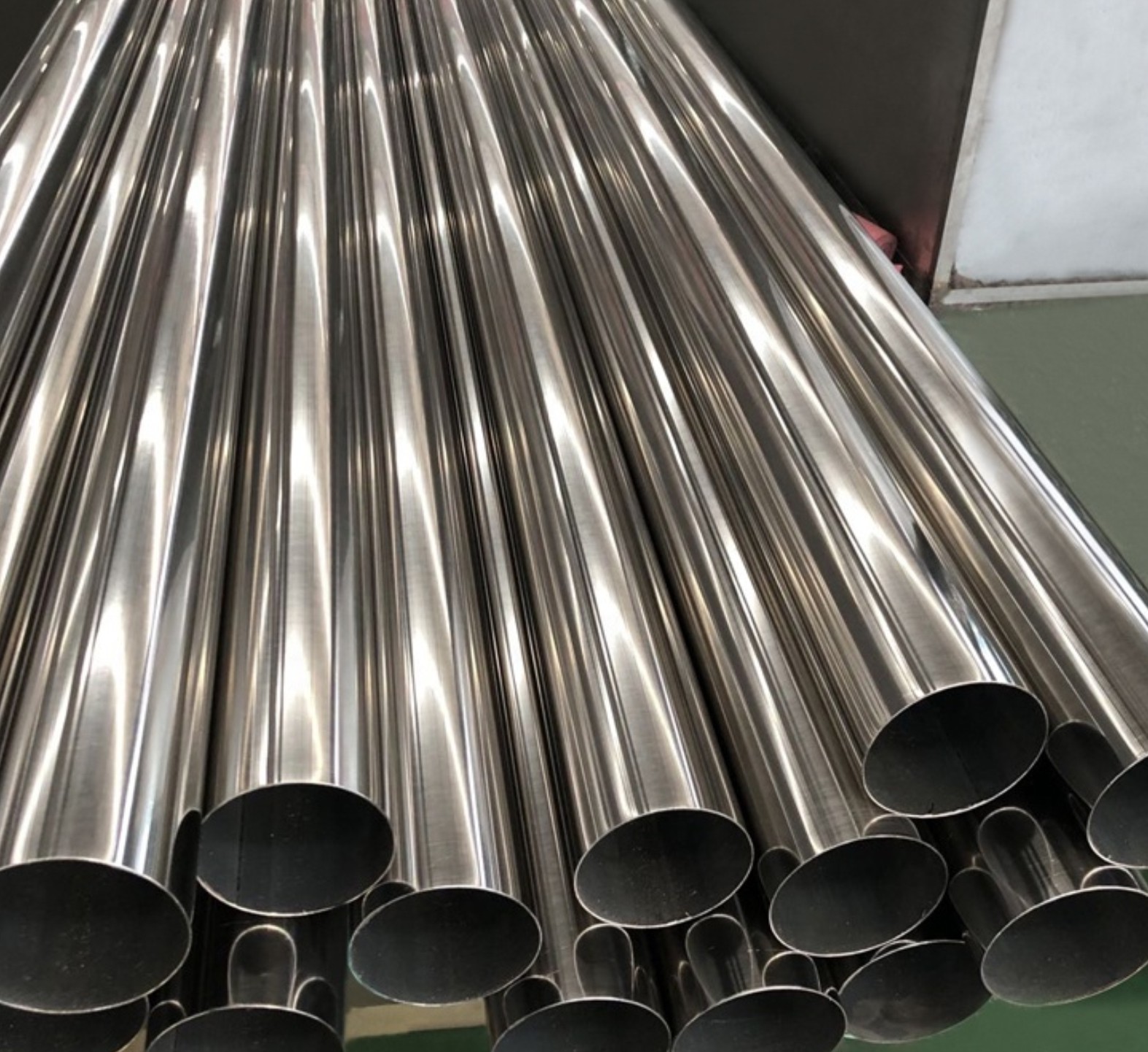
A stainless steel pipe is dimensioned by nominal bore and is built to carry something: water, gas, steam or a process chemical. A stainless steel tube is dimensioned by outside diameter and wall thickness and is built to a shape: a handrail, a frame, a machine part, a glass balustrade post. The two products can look identical in a warehouse, yet they are ordered, tolerated, tested and joined differently.
The terms are used loosely in everyday trade talk, and that looseness travels straight into quotations and purchase orders. A buyer who requests "stainless steel pipes" for a decorative balustrade may receive something that is dimensionally correct as a pipe but incompatible with the glass clamps and handrail fittings the project was designed around. The reverse also happens: a tube specified for a fluid line can fail an acceptance check that was written against a pipe standard.
This explainer separates the two product forms step by step: definitions, dimensional conventions, governing standards, materials, typical applications, and the checks a first-time specifier should run before placing an order. Sanon — GuangDong Sanon Metal Products Co., Ltd. — is a stainless steel manufacturer established in Foshan, Guangdong, China in 1999, whose range covers stainless steel pipes, stainless steel tubes, stainless steel accessories, staircase handrails, stainless steel glass clamps, stainless steel elbows, stainless steel coils and stainless steel sheets. That range is used here as a working reference for how each product form appears in a real catalogue. The company website is www.sanonsteel.com.
The Problem: One Word, Two Different Supply Chains
A purchase order that names the wrong product form rarely fails at the steel mill. It fails at the joint, at the tolerance or at the acceptance inspection, which are exactly the three points where rework is slowest and most expensive.
Dimensional mismatch. Pipes are called out by nominal bore and wall schedule; tubes are called out by outside diameter and wall thickness. A fitting bored for a pipe will not reliably accept a tube whose outside diameter merely looks close, and a tube specified to a tight outside-diameter tolerance will not slide cleanly through hardware that was designed around a nominal pipe size.
Standard mismatch. Pipe and ornamental tube are covered by different specifications with different testing, marking and inspection expectations. Ordering to one and inspecting against the other is a predictable source of rejected lots, especially on a first shipment from a new supplier.
Interface mismatch. Architectural systems are built around the outside diameter of the section. Glass clamps, handrail fittings and stainless steel accessories are matched to a specific profile; if a substitute arrives with a different diameter, ovality or wall thickness, the assembly does not seat and the installer compensates on site, usually at the project's cost.
Commercial mismatch. Two quotations that appear comparable per kilogram may describe different products: one a nominal-bore pipe, the other a thin-wall decorative tube. The lower figure is not a better price; it is a different item.
The cost of the error is rarely the value of the metal. It is the gap between delivery and re-delivery, the labour spent re-drilling or re-welding, and the credibility lost with the end client.
Industry Background: Why the Distinction Matters Commercially
Stainless steel is a large and still-expanding category. The global stainless steel market was valued at USD 111.44 billion in 2022 and is projected to reach USD 182.10 billion by 2030, according to Fortune Business Insights. On the supply side, China's exports of stainless steel reached 4.14 million tons in 2023, according to the General Administration of Customs of China. That volume reflects how standardised the export channel for pipes, tubes and fittings has become.
Standardisation is precisely why terminology matters. When many mills can produce a visually similar round section, the differentiator on a purchase order is not appearance but specification: which standard, which dimensional convention, which tolerance class, which finish, and which mating components.
The standards landscape itself is reasonably clear. ASTM A312 covers seamless and welded austenitic stainless steel pipe for corrosive and high-temperature service. ASTM A554 covers ornamental tubing used in structural and architectural applications. A buyer who knows which of the two governs the purchase can write an unambiguous call-out, and a supplier can quote and inspect against the same document.
Finishing trends add a second layer. PVD (Physical Vapor Deposition) coating for stainless steel color pipe is increasing in interior decoration because it is considered more environmentally friendly than electroplating, according to the International Stainless Steel Forum. Coloured tube is decorative by definition, which makes the base tube's outside-diameter consistency and surface quality commercially important: coating does not hide a dimensional defect, it highlights it.
Sanon's own position illustrates the scale at which these products move. The company operates a factory covering 40,000 square meters, with a monthly production capacity of 9,000 tons for stainless steel pipes and an annual production capacity of about 100,000 tons of stainless steel products. It employs approximately 500 staff, including an R&D team of 30 engineers and technicians, and exports about 70% of its output, serving markets in the Middle East, South America and Africa.
Detailed Solution: How Pipes and Tubes Actually Differ
Stainless steel pipe: definition
A stainless steel pipe is a hollow section whose primary job is conveyance. Because the internal passage governs performance, the product is specified by nominal bore — a size designation that describes the flow path rather than a measured outside diameter — together with a wall schedule that sets the pressure capability. The outside diameter follows from the nominal size, which is why pipes of the same nominal bore from different schedules share an outside diameter but differ in wall thickness and weight.
Pipe is joined by threading, welding, grooving or flanging, and the joint is designed to contain pressure. In practice this makes pipe the correct choice for fluid transport, utility runs, process lines and any application where the contents matter more than the appearance of the section.
Stainless steel tube: definition
A stainless steel tube is a hollow section whose primary job is to hold a shape or carry a load. It is specified by outside diameter, wall thickness and length, usually with a tolerance on each. Nothing about the designation refers to flow capacity; what matters is how the section fits, how it looks and how it connects to the next component.
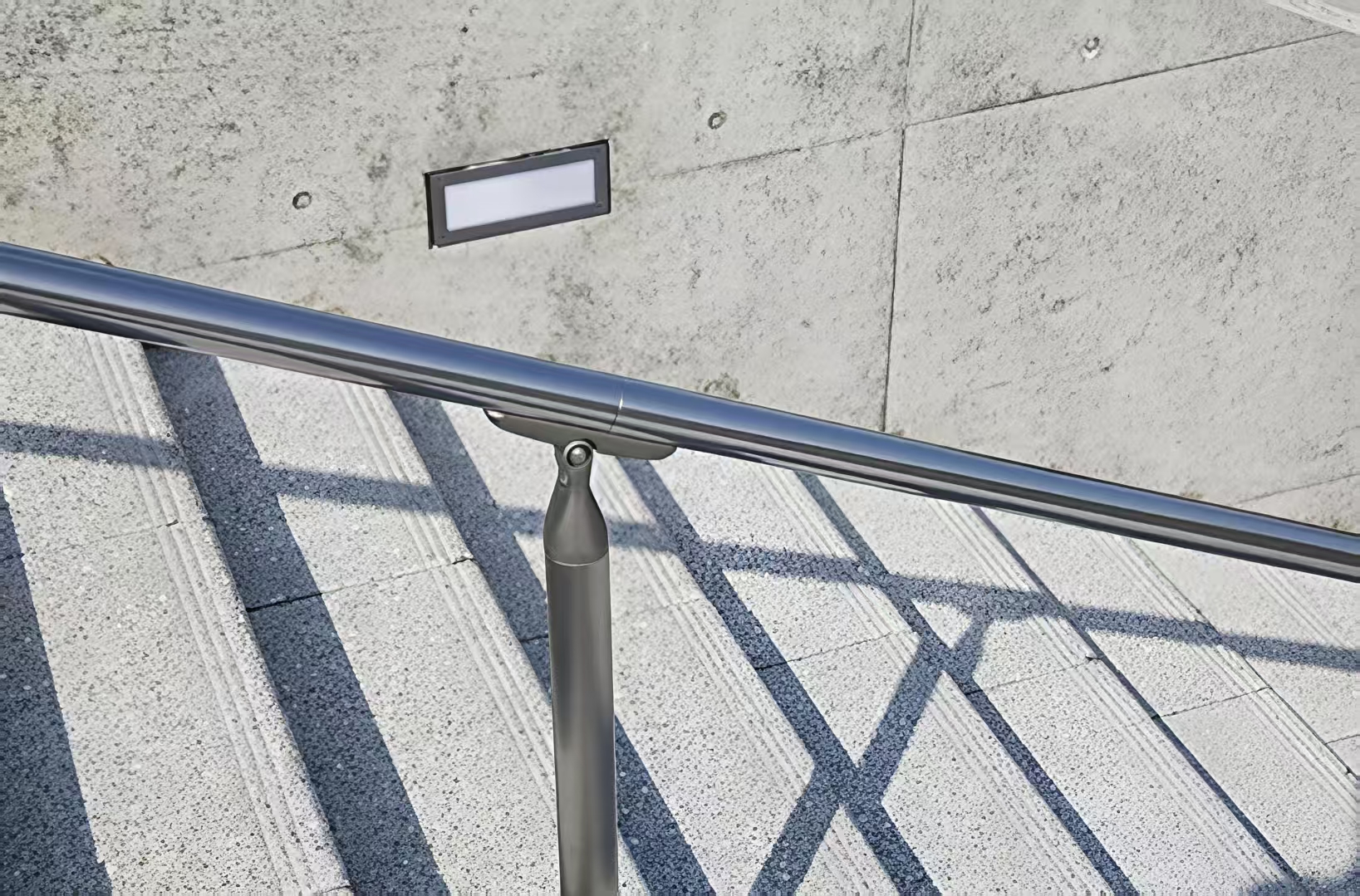
Tube is joined by welding, mechanical connectors and clamps, or by purpose-made fittings. In architectural and mechanical work, tube is the correct choice for handrails, balustrade posts, frames, furniture, machine guards and display structures.
How each product is dimensioned
The single most useful habit for a first-time buyer is to read the call-out. If the drawing or specification states a nominal size or a schedule, the item is a pipe. If it states an outside diameter multiplied by a wall thickness, the item is a tube. The two conventions are not convertible by arithmetic alone, because they measure different things.
Which standards apply
For pipe, ASTM A312 is the reference most international buyers meet first: it covers seamless and welded austenitic stainless steel pipe intended for corrosive and high-temperature service. For ornamental and architectural tube, ASTM A554 is the corresponding reference. Both are ASTM International standards, and both define testing, marking and dimensional expectations that a buyer can inspect against.
The practical consequence is that a supplier should be asked to state, in writing, which standard an offer is made against. Sanon states that every product follows strict quality control during each process, including cutting, welding, polishing and packing — so the inspection conversation should start from the same document that governs the order.
Materials, grades and finishes
Both product forms are made in the same austenitic families, and the grade decision is usually taken before the pipe-versus-tube decision. Sanon's stainless steel pipes and stainless steel tubes are produced in SS201 and SS304.
The two grades differ in chemistry, and the difference is visible in the numbers. SS201 contains chromium at 16–18%, nickel at 3.5–5.5% and manganese at 5.5–7.5%. SS304 contains chromium at 18–20%, nickel at 8–11% and manganese at a maximum of 2%. The higher nickel and lower manganese content of SS304 is the main reason buyers separate the two grades when an application faces humidity, coastal air or industrial atmospheres, while SS201 is often considered for interior work in controlled conditions.
Finish is specified separately from grade. Within Sanon's fittings range, products can be made of stainless steel 304, stainless steel 316 and zinc alloy with either a satin or a mirror finish. For visible architectural work, the finish specification should be attached to an approved physical sample rather than described in words, because "satin" covers a wide visual band.
Profiles and the fittings ecosystem
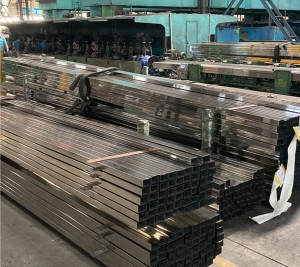
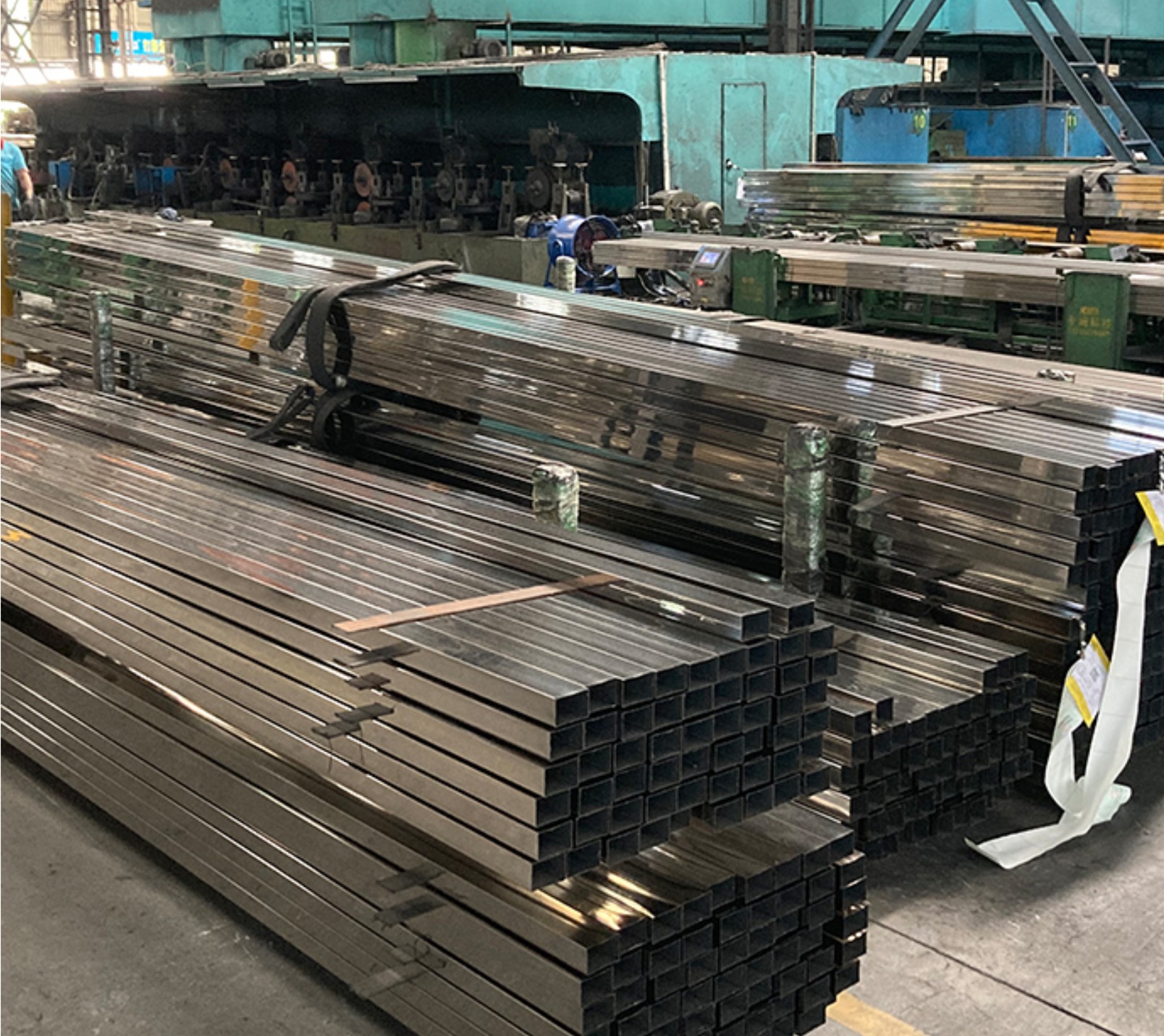
Round is the default section, but it is not the only one. Sanon's pipe range includes stainless steel round pipes and stainless steel square pipes. The wider market for ornamental tube also covers oval and slotted profiles for decorative and screening work; availability of any specific profile should be confirmed against the supplier's current catalogue rather than assumed from a photograph.
What usually decides a project is not the section but the connection. A balustrade needs elbows and handrail fittings; a glass balustrade needs glass clamps and glass fittings; a shower enclosure needs shower room fittings; a modular frame needs stainless steel accessories that match the tube's outside diameter. Because Sanon manufactures pipes, tubes and accessories within the same operation, the accessory can be matched to the section before the order is released rather than after delivery.
Step-by-Step: Specifying the Right Product Form
- Start from the function, not the name. If the section must contain pressure or move a medium from one point to another, it is a pipe requirement. If it must look right, align with hardware or carry a structural or decorative load, it is a tube requirement. Writing the function first stops the generic word "pipe" from being copied onto a specification out of habit.
- Write the call-out in the correct convention. For pipe, state nominal bore and wall schedule alongside the standard. For tube, state outside diameter, wall thickness, length tolerance and finish. List the quantity both in pieces and in metres, because cutting losses differ between the two forms.
- Attach the governing standard. Name ASTM A312 for pipe and ASTM A554 for ornamental tube unless the project specifies otherwise, then confirm that the supplier's inspection and marking will follow the same document. A standard named in the offer but absent from the inspection plan is not a control.
- Select grade and finish against the environment. Choose between SS201 and SS304 on the basis of exposure — humidity, coastal air, industrial atmosphere, cleaning chemicals — and then choose the finish. Where the product is visible, approve a physical sample rather than a description.
- Design the joint before the order. Confirm that the elbow, glass clamp, handrail fitting or accessory matches the outside diameter of the section you specified, and that the same supplier can deliver both. Mismatched mating parts are the most common rework item in architectural stainless work.
- Verify the supplier on both product forms. Strength in one form does not automatically transfer to the other, because tooling, tolerances and inspection criteria differ. Sanon, established in 1999 with over 20 years of stainless steel manufacturing experience, produces stainless steel pipes, stainless steel tubes and stainless steel accessories within a 40,000 square meter factory, with monthly pipe capacity of 9,000 tons and annual output of about 100,000 tons — a scale that allows a mixed order of pipes, tubes and fittings to be scheduled together.
Where Each Product Form Is Used
Handrails and balustrades
Handrail work is tube work. The rail is specified by outside diameter so that handrail fittings, elbows and glass clamps align with it, and the visible surface is specified by finish so that adjacent sections match under the same light. Sanon supplies staircase handrails and handrail fittings alongside the tube itself, which keeps the rail diameter and the fitting bore on one drawing.
Glass balustrades, partitions and screens
Glass systems invert the usual priority: the glass clamp or glass fitting is chosen first, and the tube exists to hold it. That makes the outside diameter of the post and the bore of the clamp a single decision. In North America, glass clamps and standoff pins are strictly governed by building codes such as the International Building Code (IBC) for load-bearing capacity, so the section behind the clamp is a structural choice rather than a decorative one.
Shower rooms and bathroom hardware
Shower room fittings use smaller sections and place a premium on finish consistency, since satin and mirror surfaces sit next to glass and tile within arm's reach. Sanon manufactures shower room fittings and glass fittings alongside its pipe and tube output, with SS304, SS316 and zinc alloy options in satin or mirror finish.
Industrial fluid and process lines
This is pipe territory. Nominal bore, wall schedule and the governing standard determine whether the line can carry the medium at the required pressure, and the joint is welded, threaded or flanged accordingly. ASTM A312 is the usual reference for austenitic stainless pipe in corrosive and high-temperature service, and the grade decision — SS201 or SS304 — should follow the corrosion exposure of the line rather than its appearance.
Decorative frames and finished goods
Tube also dominates furniture frames, display structures and interior metalwork, where the section is judged by straightness, surface and colour. PVD-coated stainless steel color pipe is increasingly used in interior decoration because the process is considered more environmentally friendly than electroplating, according to the International Stainless Steel Forum. With coloured product, the base tube's dimensional consistency matters commercially: a coating cannot correct a bent or oval section.
Pipe vs Tube: Side-by-Side Comparison
| Decision factor | Stainless steel pipe | Stainless steel tube |
|---|---|---|
| Primary function | Conveying fluids and gases | Structural, mechanical and decorative shapes |
| Dimensional call-out | Nominal bore + wall schedule | Outside diameter × wall thickness |
| Typical governing standard | ASTM A312 | ASTM A554 (ornamental tubing) |
| Typical joining method | Threading, welding, grooving, flanging | Welding, mechanical connectors, clamps, purpose-made fittings |
| Common profiles | Round | Round and square; other ornamental profiles subject to confirmation |
| Grades in Sanon's range | SS201, SS304 | SS201, SS304 |
| Fittings and accessories | Pipe fittings matched to bore and schedule | Elbows, handrail fittings, glass clamps, glass fittings, shower room fittings, stainless steel accessories |
| Finish specification | Agreed per standard and application | Satin or mirror, approved against a physical sample |
| Typical applications | Process lines, utility runs, fluid transport | Handrails, balustrades, glass systems, frames, furniture |
| What the buyer actually compares | Bore, schedule, standard, pressure requirement | Outside diameter, wall thickness, tolerance, finish, mating fittings |
Frequently Asked Questions
Do stainless steel pipes and tubes follow the same standards?
No. ASTM A312 covers seamless and welded austenitic stainless steel pipe for corrosive and high-temperature service, while ASTM A554 covers ornamental tubing for structural and architectural applications. Both are ASTM International standards, but they describe different products with different inspection and marking expectations. A purchase order should name the standard that matches the product form, and the supplier's inspection plan should reference the same document.
Can a single supplier deliver pipes, tubes and the fittings that connect them?
Yes, where the supplier manufactures across the range. Sanon produces stainless steel pipes, stainless steel tubes, stainless steel accessories, staircase handrails, stainless steel glass clamps, stainless steel elbows, stainless steel coils and stainless steel sheets. Its factory covers 40,000 square meters with a monthly pipe capacity of 9,000 tons and an annual production capacity of about 100,000 tons, supported by approximately 500 staff and an R&D team of 30 engineers and technicians. Sourcing the section and the fitting together removes the most common cause of on-site mismatch.
Why do pipe and tube quotations differ for the same grade?
Because the price is driven by different cost elements. For pipe, the drivers are nominal bore, wall schedule, the governing standard and the pressure-related testing that follows from it. For tube, the drivers are outside diameter, wall thickness, dimensional tolerance, surface finish — satin or mirror — and the consistency needed to fit glass clamps and handrail fittings. A quotation compared on weight alone mixes these drivers; comparing on an identical, fully written call-out does not.
How should a first order be validated before mass production?
Confirm the grade certificate, measure outside diameter and wall thickness on the delivered sample, compare the finish against the approved sample, and trial-fit the actual connector, glass clamp or handrail fitting that will be used on site. Buyers can send specifications and drawings to Sanon at sales@sanonsteel.com, or reach the team on +86 135 3668 1776 by phone or WhatsApp, to confirm grade, profile and finish before an order is released.
What production capacity stands behind delivery scheduling?
Sanon's factory in Foshan, Guangdong covers 40,000 square meters and runs a monthly production capacity of 9,000 tons for stainless steel pipes, with annual production of about 100,000 tons of stainless steel products. Roughly 70% of output is exported, with established markets in the Middle East, South America and Africa. Buyers planning a project should share the full schedule — pipes, tubes and fittings together — so that production slots can be aligned before the order is released.
Conclusion
The difference between stainless steel pipes and stainless steel tubes comes down to three things a buyer can check on paper before any metal is cut: the dimensional convention, the governing standard and the mating components. A pipe is specified by nominal bore and a wall schedule, ordered under a pipe standard such as ASTM A312, and joined to contain pressure. A tube is specified by outside diameter and wall thickness, ordered under an ornamental or architectural standard such as ASTM A554, and joined to a shape using elbows, handrail fittings and glass clamps.
Get those three right and the grade question becomes straightforward: SS201 or SS304, satin or mirror, confirmed against the exposure the product will actually face. Get them wrong and no amount of alloy quality will rescue the installation, because the failure will happen at the joint rather than in the steel.
Specifying a project? Start with the call-out.
Send your drawings, sizes and finish requirements to Sanon and the team will confirm which product form — pipe, tube or both — matches the application, together with the fittings that connect them.
Email: sales@sanonsteel.com · Phone / WhatsApp: +86 135 3668 1776 · Website: www.sanonsteel.com
Factory address: No. 4 Factory, Kebao East Road, Zone A, Shishan Science And Technology Industrial Park, Foshan, Guangdong, China.
Download the catalogue (PDF): Sanon stainless steel pipes, tubes and accessories catalogue
Have Questions or Need More Details?
Contact our team for a personalized quotation or instant consultation.
Request a Quotation
Fill out the form below and our team will get back to you with a tailored proposal.
WhatsApp Direct Chat
Prefer to chat in real-time? Message us on WhatsApp for instant assistance & quick answers.
- Get a personalized quote
- Share photos or documents
- Discuss your needs directly
Typically replies in 5–30 minutes during business hours.