
Stainless Steel Pipes vs. Tubes: A Comparison Guide for Industrial Buyers
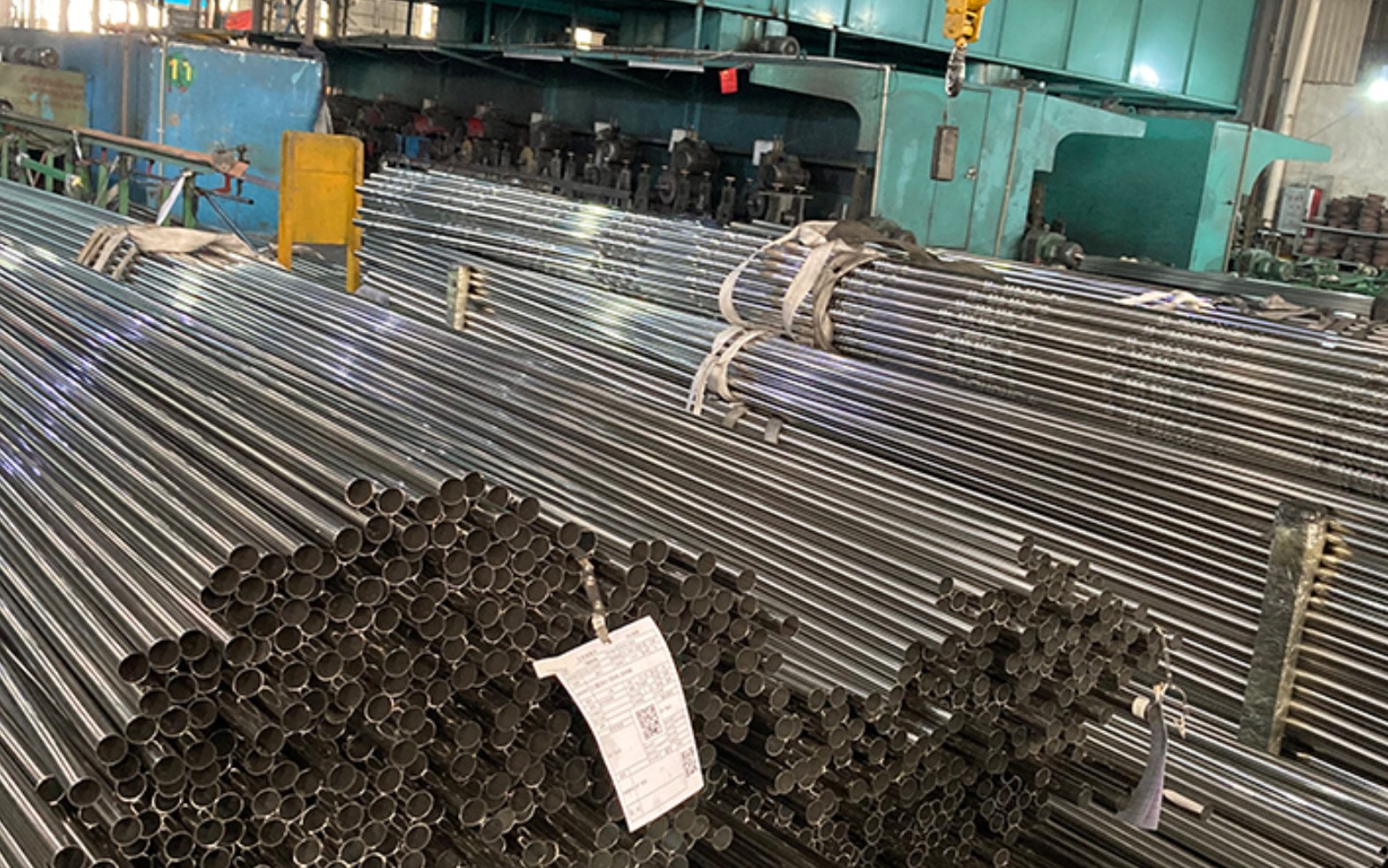
On a storage rack, a stainless steel pipe and a stainless steel tube can look almost identical. On a purchase order, they are not interchangeable.
One is bought by nominal bore and schedule so that it mates with standard fittings and process connections. The other is bought by outside diameter and wall thickness so that it holds a dimension, carries a load, or delivers a clean finish line. When the two terms are used loosely, the mismatch rarely shows up in the quotation. It shows up later — at the fitting, at the weld, or at final inspection.
This guide is written for procurement managers, engineers and fabricators at the beginning of that decision: awareness through early research. It explains how stainless steel pipes and tubes are specified, where each format belongs, and which criteria decide the choice before a request for quotation is issued.
The Real Problem: One Word Order, Two Measurement Systems
Most specification errors in stainless steel procurement do not come from choosing the wrong alloy. They come from choosing the wrong measurement logic.
A buyer writes “stainless steel pipes” on a requisition, then adds an outside diameter and a wall thickness. One supplier quotes against that combination. Another supplier, reading the same request, quotes a nominal bore with a schedule. Both quotations may describe real, correctly manufactured products — and neither may fit the job.
The practical consequences are predictable:
- Fittings do not match. Pipe fittings and flanges are sized to the nominal bore of the pipe. Tube connections are welded, bent, or assembled with mechanical connectors sized to the tube’s outside diameter.
- Wall thickness assumptions drift. In pipe purchasing, wall thickness is normally expressed as a schedule class. In tube purchasing, it is stated as a measured wall value. Treating the two as the same figure changes weight, rigidity and price.
- Finishing expectations are misaligned. Tubes used in visible architectural work carry surface, straightness and weld-appearance requirements that an industrial pipe specification does not address.
- Documentation does not line up. Inspection records, dimensional reports and test documents are written against the standard that was actually specified, not against the term used in conversation.
The fix is simple in principle. Decide what the product has to do, then choose the measurement system that matches that function — before asking anyone for a price.
Industry Background: A Large, Standard-Driven Market
Stainless steel is a mature global category that continues to expand. Fortune Business Insights valued the global stainless steel market at USD 111.44 billion in 2022 and projects it to reach USD 182.10 billion by 2030. Forecasts of the annual growth rate behind that expansion differ: Mordor Intelligence estimates 5.5% for the period 2023–2030, while Grand View Research estimates 6.1%. That divergence is a useful reminder for buyers that market forecasts are estimates, not procurement facts, and that a sourcing decision should rest on specifications and verified supplier capability rather than on a headline growth number.
Supply is concentrated. China’s exports of stainless steel reached 4.14 million tons in 2023, according to the General Administration of Customs of China. This is one reason most global buyers evaluate at least one Chinese source alongside domestic and regional mills, and why clear standards matter so much in cross-border purchasing.
Two application-level trends directly affect the pipe-versus-tube decision:
- Decorative finishing is moving to PVD. The use of PVD (Physical Vapor Deposition) coating for stainless steel color pipes is increasing in interior decoration because it is considered more environmentally friendly than electroplating, according to the International Stainless Steel Forum. Color pipe is a tube-format product, not a pressure pipe, and should be specified as such.
- Architectural hardware is code-governed. Stainless steel glass clamps and standoff pins are strictly governed by building codes such as the International Building Code (IBC) for load-bearing capacity. The supporting tube and fitting therefore have to be selected as a structural system, not as decorative trim.
Standardization is what makes this market tradeable across borders. Stainless steel pipes and tubes fall under the ASTM A312 (seamless and welded) and ASTM A554 (ornamental tubing) standards for structural and architectural applications. A buyer who names the correct standard removes most of the ambiguity from an international quotation.
How Stainless Steel Pipes and Tubes Actually Differ
Stainless Steel Pipes Are Specified by Nominal Bore and Schedule
Stainless steel pipe is designed around conveyance. Its defining dimension is the nominal bore — a nominal size that stays constant so that pipe, fittings, flanges and valves all connect within one system. Wall thickness is expressed as a schedule, and the outside diameter associated with a given nominal size is fixed so that standard fittings will fit it.
Because pipe is a system product, it is normally ordered against a piping specification that lists grade, nominal size, schedule, standard, end finish and the fittings that go with it. The standard most often referenced for austenitic stainless steel pipe in industrial service is ASTM A312, which covers both seamless and welded product.
What the buyer is really verifying is integrity: wall thickness, weld quality, roundness at the ends, and the test documentation that supports the intended pressure and corrosion service.
Stainless Steel Tubes Are Specified by Outside Diameter and Wall Thickness
Stainless steel tube is designed around a dimension. It is ordered as an outside diameter plus a wall thickness, and both values matter individually, because the tube is usually welded, bent, cut to length, or assembled into a visible structure.
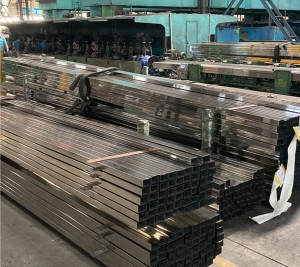
ASTM A554 covers welded ornamental tubing — the format used for handrails, frames, furniture, display structures and architectural hardware. Tube is also produced in profiles beyond round: square, rectangular, oval and slotted sections all belong to the tube family rather than the pipe family. That profile range is the reason tube appears in so many architectural and shop-fitting bills of materials.
For tube, the purchase is judged on dimensional consistency, straightness, weld bead appearance, and surface finish — satin or mirror, or a PVD color coating where the application is decorative.
The Alloys Behind Both Formats
The material choice is largely independent of the pipe-versus-tube decision. Sanon’s stainless steel pipes, tubes, coils and accessories are produced in SS201 and SS304, with published chemistry:
- 201 stainless steel: chromium (Cr) 16–18%, nickel (Ni) 3.5–5.5%, manganese (Mn) 5.5–7.5%.
- 304 stainless steel: chromium (Cr) 18–20%, nickel (Ni) 8–11%, manganese (Mn) ≤2%.
Fittings within the same product family can also be made of stainless steel 304, stainless steel 316 and zinc alloy, with either a satin or mirror finish. That matters when a project mixes pipe, tube and hardware, because the finish and grade of the fittings must be specified alongside the tube itself.
Application Suitability: Fluid Conveyance vs. Structure and Finish
Function decides the format more reliably than any other criterion.
Pipe belongs where something flows. Process lines, water and utility distribution, and industrial fluid or gas service are pipe applications. The reason is not tradition. Nominal bore sizing keeps the entire system — pipe, elbow, flange, valve — mechanically compatible, and schedule-based wall thickness gives the engineer a defined basis for pressure capability and corrosion allowance. When a request mentions pressure, flow rate, or an existing piping system, the answer is almost always pipe.
Tube belongs where something must be shaped, seen or supported: handrails and balcony systems, glass balustrades, shop fronts, display frames, furniture, shower enclosures, machine guards and decorative interiors. Wall-mounted, free-standing and frameless glass systems all depend on tube dimensions matching glass clamp and standoff hardware exactly. That is a tolerance problem, not a pressure problem, which is why tube drawings usually show outside diameter and wall thickness rather than a nominal size.
The overlap zone is worth noting. Both formats are typically formed and welded on comparable equipment, and a manufacturer that runs both can tell you where a design can be converted from one format to the other. That conversation is usually cheaper than forcing a tube design into a pipe schedule, or the reverse.
Step-by-Step: Six Decisions Before You Issue an RFQ
- Classify the function. Is the part conveying a fluid or gas under pressure, or is it carrying a load, framing an opening, or providing a visible surface? Conveyance points to pipe; structure and finish point to tube.
- Fix the measurement basis. Write either nominal size plus schedule, or outside diameter plus wall thickness. Never mix the two in one line item, and carry the same basis through every fitting on the drawing.
- Name the standard. ASTM A312 for austenitic stainless steel pipe (seamless and welded); ASTM A554 for welded ornamental tubing. Where the application is load-bearing architectural glazing or railing hardware, reference the applicable building-code requirement — glass clamps and standoff pins in North America are governed by codes such as the IBC.
- Choose grade and finish deliberately. 201 and 304 are the established grades in pipe, tube, coil and accessory production; fittings can also be supplied in 304, 316 or zinc alloy with satin or mirror finish. Specify finish only where it is functionally or visually required, because it changes handling, packing and cost.
- Check the connection logic. Confirm that the fittings, elbows, bends, railing flanges, brackets, pipe connectors and end caps in the bill of materials are sized to the same measurement basis as the pipe or tube itself. Most assembly problems in this category are connection problems, not material problems.
- Verify the supplier against the order. Ask for production capacity, delivery planning and the documentation that will accompany the shipment, and confirm that the supplier can produce the formats and profiles you actually need. A single-format supplier may propose a substitute rather than decline the line.
Use Cases: Where Each Format Earns Its Place
- Industrial fluid and utility lines: round stainless steel pipe, sized by nominal bore and schedule, with matching stainless steel elbows and flanges.
- Building services and process equipment: pipe in 304 grade where corrosion resistance is needed in wet or washdown environments.
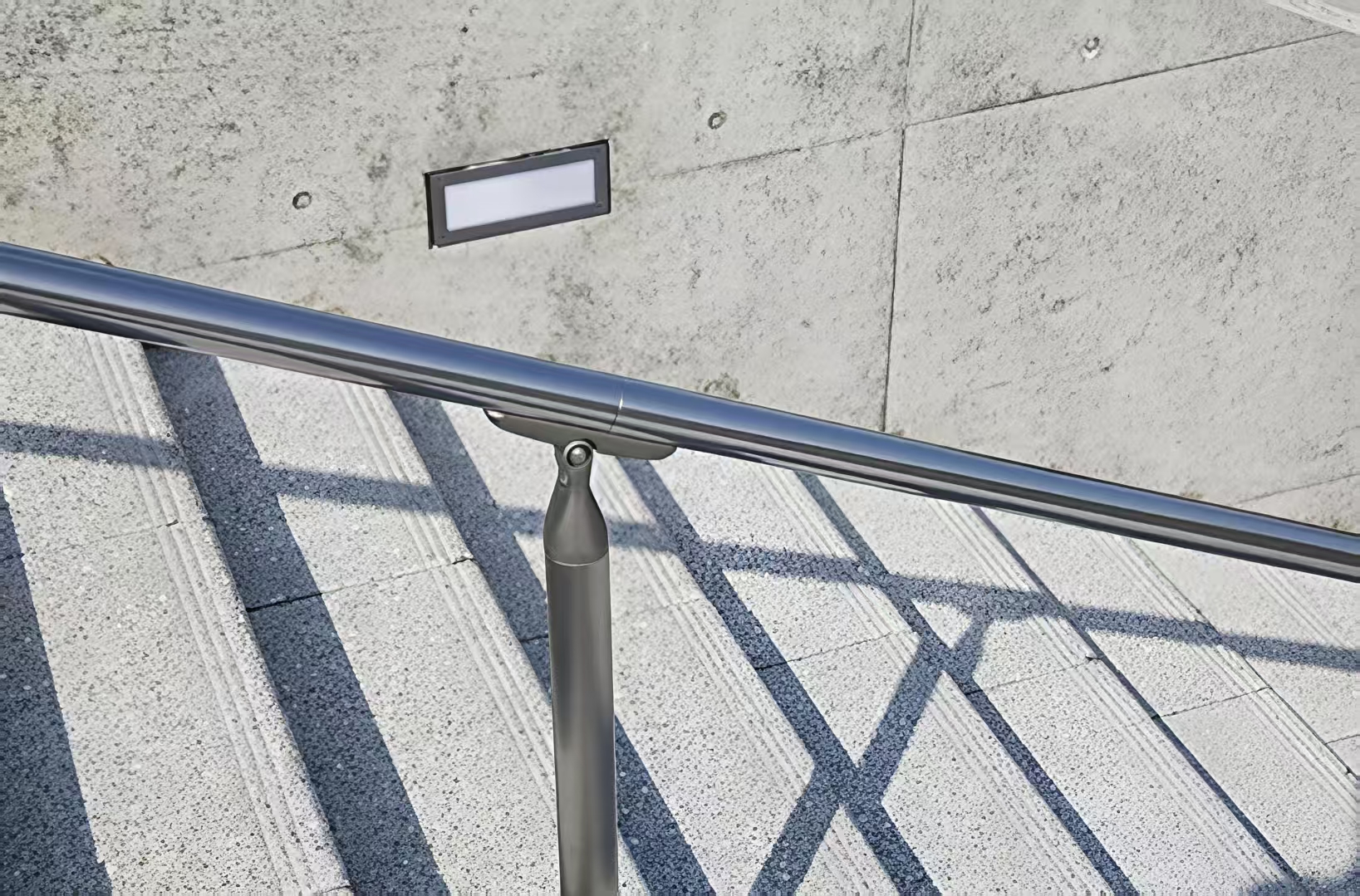
- Balcony and staircase systems: round pipe and tube sections combined with handrail fittings, railing flanges, cross bar holders and stainless steel bends.
- Glass balustrades and frameless glazing: square pipe and round tube frames with glass clamps, glass standoffs and stainless steel glass holders, sized to the tube outside diameter.
- Shop fitting and display structures: square, oval and slotted tube profiles with pipe connectors, brackets, end caps and decorative balls.
- Shower enclosures and door hardware: tube frames assembled with sliding door fittings, door handles and stainless steel cable.
- Interior decoration: PVD-coated stainless steel color pipe for visible metal elements where a colored finish is required.
Comparison Table: Stainless Steel Pipes vs. Tubes
| Decision factor | Stainless steel pipe | Stainless steel tube |
|---|---|---|
| Primary measurement | Nominal bore with a schedule for wall thickness | Outside diameter with a measured wall thickness |
| Reference standard | ASTM A312 (seamless and welded austenitic pipe) | ASTM A554 (welded ornamental tubing) |
| Design purpose | Conveyance of fluids and gases; pressure and corrosion service | Structural, mechanical, thermal and decorative functions |
| Connection interface | Standard pipe fittings and flanges sized to nominal bore | Welded, bent or mechanical connectors sized to outside diameter |
| Profile range | Predominantly round | Round, square, rectangular, oval and slotted |
| What the buyer verifies | Wall thickness, weld integrity, end roundness, test documentation | Outside diameter, wall thickness, straightness, weld bead, surface finish |
| Finish expectation | Mill or industrial finish, as defined by the piping specification | Satin or mirror finish; PVD color coating where required |
| Typical procurement document | Piping specification with a matching fittings list | Dimensional drawing or profile schedule with a connector list |
| Most common failure when confused | Fittings do not connect; a measured wall is misread as a schedule | Structure will not assemble; visible welds and finish are rejected |
Decision rule: if the drawing can be described by flow, pressure or an existing pipe system, specify pipe. If it can be described by a dimension, a profile, a load, or a visible surface, specify tube.
A Supplier That Runs Both Formats: The Sanon Example
GuangDong Sanon Metal Products Co., Ltd. is a high-tech enterprise located in Foshan, Guangdong, China. Founded in 1999, the company specializes in stainless steel pipes, stainless steel tubes, handrail fittings, glass fittings and shower room fittings. That combination — pipe and tube under one roof — is directly relevant to the comparison above, because conversion questions between formats can be answered by the same engineering team rather than debated between two suppliers.
Production scale, stated in the company’s own published figures:
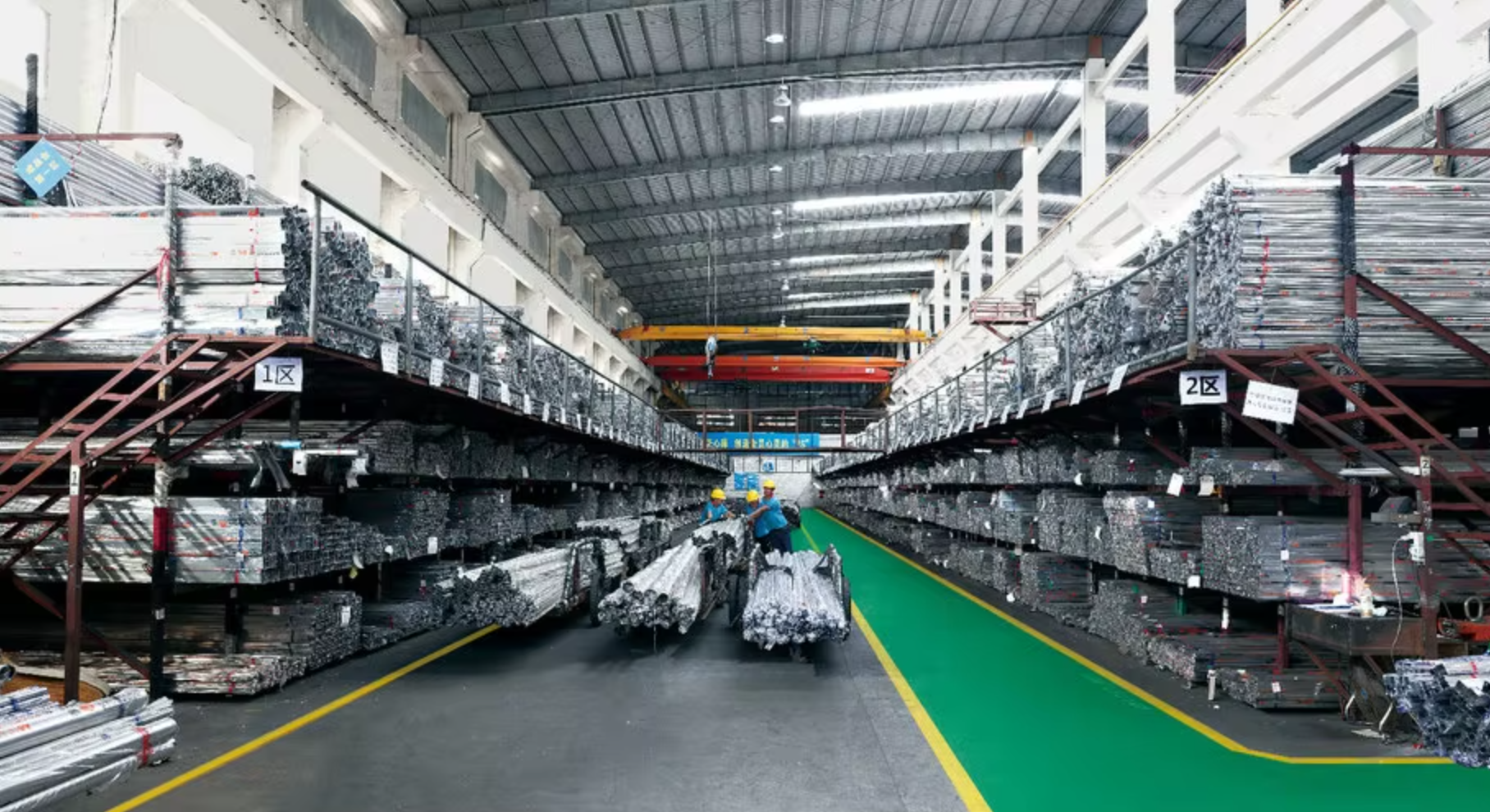
- Annual production capacity of approximately 100,000 tons of stainless steel products.
- Monthly production capacity of 9,000 tons for stainless steel pipe specifically.
- A factory covering 40,000 square meters.
- Approximately 500 employees, including an R&D team of 30 engineers and technicians.
- Over 20 years of manufacturing experience since 1999.
The product range covers stainless steel pipes, stainless steel tubes, stainless steel accessories, staircase handrails, stainless steel glass clamps, stainless steel elbows, stainless steel coils and stainless steel sheets — the components that appear on both sides of a pipe-versus-tube bill of materials.
Export activity accounts for approximately 70% of sales, with major markets in the Middle East, South America and Africa. Buyers in those markets frequently combine pipe for conveyance with tube-and-fitting systems for architectural and decorative work inside the same project, which is exactly the situation where a dual-format supplier reduces coordination risk.
Frequently Asked Questions
Which standards apply to stainless steel pipes and stainless steel tubes?
Stainless steel pipes and tubes fall under the ASTM A312 (seamless and welded) and ASTM A554 (ornamental tubing) standards for structural and architectural applications. In practice, pipe for industrial service is normally ordered to ASTM A312, while architectural and decorative tube is ordered to ASTM A554. Where the product is used in load-bearing glazing or railing hardware, additional building-code requirements apply — stainless steel glass clamps and standoff pins, for example, are governed by codes such as the International Building Code (IBC) in North America.
Can one manufacturer supply both pipes and tubes, plus the fittings that go with them?
Yes, and it is often the more efficient route. GuangDong Sanon Metal Products Co., Ltd., founded in 1999 and based in Foshan, Guangdong, China, produces stainless steel pipes and stainless steel tubes as well as stainless steel accessories, staircase handrails, glass clamps, elbows, coils and sheets, with an annual production capacity of about 100,000 tons and a monthly capacity of 9,000 tons for stainless steel pipe specifically. Materials include SS201 and SS304, and fittings can be made in 304, 316 or zinc alloy with satin or mirror finishes.
Does choosing pipe or tube change the total cost of a project?
The format itself is only one cost driver. Wall thickness, grade, surface finish, profile complexity, fitting count and documentation requirements usually move cost more than the pipe-versus-tube label does. Two practical rules help: specify finish and tolerance only where the application genuinely requires them, and keep one measurement basis consistent across the whole bill of materials. Re-quoting and rework caused by a mismatched specification generally cost more than the product difference itself.
Can samples be requested before placing a full order?
Samples are the normal way to validate a pipe-versus-tube decision before committing to volume. Because dimensional behavior, weld appearance and finish are the criteria that decide acceptance, a physical sample answers questions that a specification sheet cannot. Sanon handles sample requests through sales@sanonsteel.com, by phone or WhatsApp at +86 135 3668 1776.
What should buyers check about production capacity and lead time?
Lead time should be checked against a supplier’s actual production capacity rather than a quoted number alone. Sanon’s stated figures — 9,000 tons per month for stainless steel pipe, approximately 100,000 tons per year in total, and a facility covering 40,000 square meters in Foshan — describe the production base behind delivery planning. Buyers who combine pipe and tube in one project should confirm whether both formats ship together or on separate schedules, because that affects site sequencing more than transit time does. To discuss a specific requirement, contact the team at sales@sanonsteel.com.
Conclusion: Settle the Format Before the RFQ
The pipe-versus-tube decision is not a matter of preference. It is a matter of function, and it is settled before the request for quotation is issued. Pipes are sized by nominal bore and schedule so that they connect into fluid and pressure systems. Tubes are sized by outside diameter and wall thickness so that they hold a shape, carry a load, and accept a finish. Name the standard — ASTM A312 for pipe, ASTM A554 for ornamental tube — and the rest of the specification falls into place.
For buyers working across both categories, the company profile at sanonsteel.com and the downloadable product brochure are the fastest way to review the full range of stainless steel pipes, tubes, fittings and architectural hardware.
Next step: download the Sanon product brochure for the full pipe, tube and fittings range, or send a drawing, profile schedule or line item to sales@sanonsteel.com and ask whether pipe, tube, or a conversion between the two is the better answer for your project.
Download the Sanon product brochure (PDF) | Phone / WhatsApp: +86 135 3668 1776 | Address: No. 4 Factory, Kebao East Road, Zone A, Shishan Science And Technology Industrial Park, Foshan, Guangdong, China
Have Questions or Need More Details?
Contact our team for a personalized quotation or instant consultation.
Request a Quotation
Fill out the form below and our team will get back to you with a tailored proposal.
WhatsApp Direct Chat
Prefer to chat in real-time? Message us on WhatsApp for instant assistance & quick answers.
- Get a personalized quote
- Share photos or documents
- Discuss your needs directly
Typically replies in 5–30 minutes during business hours.