
Top 5 Stainless Steel Pipe Types for Industrial Projects: A Ranked List
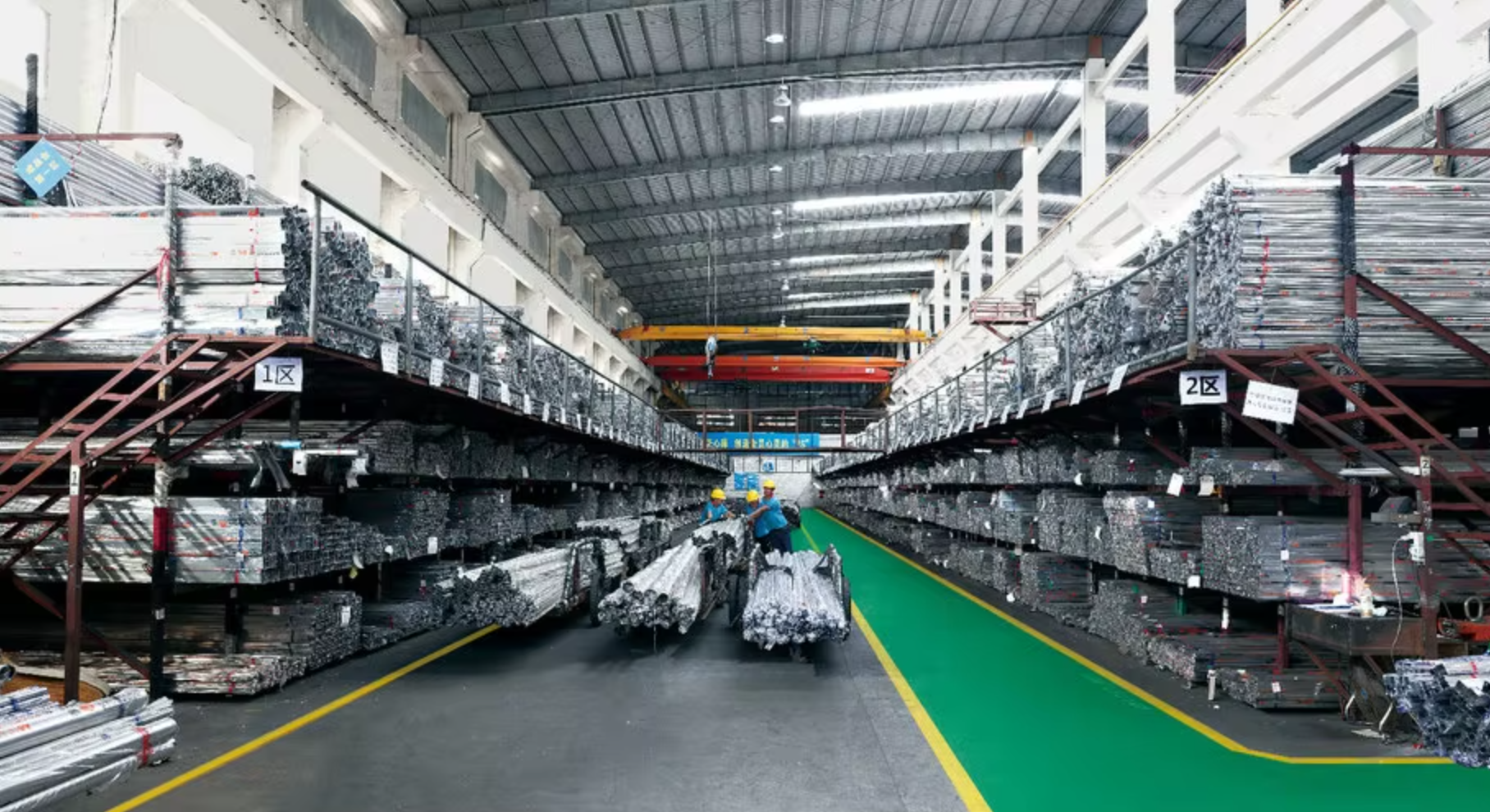
Ranking stainless steel pipe types only matters if the ranking survives contact with a real bill of materials. The five types below are ordered against five criteria that industrial buyers can actually control — corrosion durability, mechanical strength, weldability and fabrication, cost-effectiveness across the project lifecycle, and long-term supply availability — rather than against catalogue popularity.
The ranked order is: 1) 304 stainless steel round pipe, 2) 316 stainless steel pipe, 3) 304 stainless steel square and rectangular pipe, 4) 201 stainless steel pipe, and 5) 430 ferritic stainless steel pipe. 304 round pipe takes the first position because it holds the best balance of the five criteria for general industrial work. The other four win on narrower conditions, which is exactly why they rank below it rather than being weaker products.
Each entry explains the ranking reason, the trade-off it accepts, and what that means for a repeat-order supply program.
Problem Definition: 'Which Type?' Is Only Half a Specification
A pipe type is not a single variable. In industrial procurement a type is a package of five decisions: alloy grade, cross-section profile, manufacturing route (seamless or welded), surface finish and passivation, and the supply terms that make the specification repeatable on the next order.
Most specification failures happen at the seams between those five decisions rather than inside any one of them:
- A grade is chosen for first cost, and the passivation workload is discovered only after welding.
- Round and square profiles are treated as interchangeable, although the structural role, fixing method and finishing work differ.
- A type is approved once and then cannot be re-ordered at the same grade, finish or dimension, because the supply route behind it was never assessed.
- Surface expectations (satin or mirror) are agreed verbally and drift between batches.
For projects that run in phases — a hotel, a hospital block, a factory expansion, a chain of retail fit-outs — the third point is usually the most expensive. A ranked choice that cannot be re-ordered is not a decision; it is a one-off purchase.
Industry Background: A Growing, Standard-Driven Market
Demand for stainless steel is expanding, and standards rather than preferences increasingly shape what can be specified. Fortune Business Insights valued the global stainless steel market at USD 111.44 billion in 2022 and projects growth to USD 182.10 billion by 2030. Growth-rate estimates differ between research houses — Mordor Intelligence places the 2023–2030 CAGR at 5.5% while Grand View Research places it at 6.1% — but the direction is consistent.
Supply is concentrated. China's stainless steel exports reached 4.14 million tons in 2023, according to the General Administration of Customs of China, which is why Chinese manufacturers remain the first call for a large share of industrial pipe programs.
Three technical facts frame the ranking that follows:
- Standards: stainless steel pipes and tubes fall under ASTM A312 for seamless and welded pipe and ASTM A554 for ornamental tubing.
- Load-bearing hardware: glass clamps and standoff pins are governed by building codes such as the IBC (International Building Code) for load-bearing capacity in North America.
- Finishing trend: PVD (Physical Vapor Deposition) coating for stainless steel color pipes is increasing in interior decoration, according to the International Stainless Steel Forum, largely because it is more environmentally friendly than electroplating.
On top of those external conditions, this ranking scores each pipe type against five criteria: corrosion durability, mechanical strength, weldability and fabrication, cost-effectiveness over the project lifecycle, and long-term supply availability. A type that scores well on four criteria and poorly on the fifth cannot hold a top position.
Ranking note: this list ranks pipe types, not suppliers. Type selection determines what the project must buy; supplier selection determines whether the project receives it repeatably. The two decisions are handled separately below.
The Ranked List: Top 5 Stainless Steel Pipe Types for Industrial Projects
Rank 1304 Stainless Steel Round Pipe (Seamless or Welded)
304 austenitic round pipe is the default industrial specification because it is the only common type that scores well on all five criteria at the same time.
- Corrosion durability: 304 is described as an excellent all-purpose grade with outstanding comprehensive properties, especially in terms of corrosion resistance. Its service life is usually 3 to 5 times that of 430 stainless steel.
- Composition control: 304 contains 18–20% chromium, 8–11% nickel and a maximum of 2% manganese, which is the alloy base behind that corrosion performance.
- Strength and stability: 304 maintains structural stability for a longer period under high temperature and chemical exposure than lower-alloy alternatives.
- Weldability and fabrication: austenitic grades are generally regarded as the most weldable family of stainless steels, and ASTM A312 explicitly covers both seamless and welded pipe, so both manufacturing routes are available without changing grade.
- Cost-effectiveness: 304 carries a higher unit price than 201 or 430, but it needs no conventional rust prevention such as painting or oiling, and its 3–5x service-life advantage changes the lifecycle calculation in its favour.
- Availability: round pipe is the most widely produced and stocked profile, which protects re-order timelines on multi-phase projects.
Best-fit applications (per grade comparison data): building curtain walls, stair handrails, guardrails, door and window frames, balcony fences and lobby decoration.
Trade-off: 304 is not the cheapest way to enclose a dry, low-risk area. Where the service environment is mild and controlled, paying the 304 premium on every metre is a real cost rather than a technical necessity.
Rank 2316 Stainless Steel Pipe
316 ranks second because it is the correct answer to a narrower question — aggressive service environments — rather than a general upgrade over 304.
- Where it wins: 316 is a molybdenum-bearing austenitic grade, generally specified where chlorides, salts or more chemically aggressive media are present, conditions in which the corrosion advantage of 304 narrows.
- Why it is not rank 1: it carries a material premium and is unnecessary in dry indoor applications, so it loses on cost-effectiveness wherever the service environment does not demand it.
- Practical supply note: 316 is part of the company's fittings range, which can be made of stainless steel 304, stainless steel 316 and zinc alloy with either satin or mirror finish. This allows a project to run 304 pipe with 316 fittings at connection points that face harsher conditions.
Trade-off: grade availability should be confirmed at quotation stage rather than assumed, because not every pipe programme holds 316 stock at every profile and finish.
Rank 3304 Stainless Steel Square and Rectangular Pipe
Square and rectangular pipe ranks third: it inherits all the material advantages of 304 but is narrower in application, so it cannot take the top position.
- Same grade, different section: the corrosion and service-life behaviour of 304 does not change with the profile, so the material reasoning from rank 1 carries over.
- Structural role: square and rectangular sections are the natural choice for frames, handrails, guardrails and balcony fences, where flat faces simplify fixing and provide stiffness in the plane that carries the load.
- Weldability and finishing: fabrication involves cutting, welding, polishing and packing, and square sections show the result of each step more plainly than round pipe, because corner welds must be blended into flat faces. Weld dressing quality is therefore more visible on this type.
- Availability: square and rectangular profiles are produced in a broad range but in fewer stock combinations than round pipe, which is a mild supply risk on fast re-orders.
Trade-off: for fluid or pressure-carrying duty, round pipe is the correct section; square pipe is a structural answer, not a substitute.
Rank 4201 Stainless Steel Pipe
201 ranks fourth. It is a legitimate cost-reduction tool, but the saving is conditional and the condition is passivation discipline.
- Cost position: 201 achieves a lower cost by substituting manganese for part of the nickel content — chromium 16–18%, nickel 3.5–5.5% and manganese 5.5–7.5% — which is why it can undercut 304 in price-led projects.
- Corrosion limit: 201 is more prone to rusting compared with 304, so it should not be treated as a drop-in substitute in humid, coastal or chemically exposed service.
- Required control: the surface oxide scale and free iron must be removed using an acid cleaning solution, after which a chromium-rich oxide film is formed through passivation. This is the most fundamental and crucial step when 201 is used.
- Supply control: regular audits of upstream steel mills or traders are needed to ensure the stability of their smelting processes and quality control systems.
Trade-off: 201 is cost-effective where the environment is dry and controlled and the buyer is prepared to fund and verify passivation. Where neither is true, the saving is transferred to the maintenance budget.
Rank 5430 Ferritic Stainless Steel Pipe
430 closes the list because its advantages are real but specialised: it is the weakest general-purpose performer on corrosion durability and the strongest on cost, magnetic conductivity and thermal conductivity.
- Where it wins: 430 is a ferritic grade with significant advantages in terms of magnetic conductivity, thermal conductivity and cost.
- Service-life gap: the service life of 304 is usually 3 to 5 times that of 430, which is the single most important comparison for any project that will be inspected or maintained over decades.
- Cost: 430 products are much cheaper than 304 products, which is the reason the type remains on this list.
- Maintenance: like other stainless grades, 430 does not require conventional rust prevention such as painting or oiling in the way carbon steel does.
Trade-off: 430 suits cost-sensitive, dry, indoor, non-structural work where magnetic or thermal properties are useful. It does not suit exposed, humid or load-critical service.
Beyond the Top Five: Specialty Profiles
Slotted pipe, oval pipe and PVD-coated color pipe sit outside the ranking because they are specified for design intent rather than structural duty. Their technical assessment has to run alongside the five entries above, because a color pipe performs only as well as the grade beneath its coating — the coating adds appearance, not corrosion resistance. PVD coating adoption is increasing in interior decoration, according to the International Stainless Steel Forum, because it is more environmentally friendly than electroplating.
The Long-Term Supply Layer: What Makes a Ranked Type Re-Orderable
A ranked type only becomes an asset when a supplier can reproduce it. Four supply capabilities determine whether that happens.
1. Verified capacity. GuangDong Sanon Metal Products Co.,Ltd, founded in 1999 and based in Foshan, Guangdong, operates from a 40,000 square metre facility with around 500 employees and an annual output of 100,000 tons. Its pipe capacity is 9,000 tons per month, which is the buffer that keeps phased projects supplied when one phase accelerates.
2. Engineering depth. The company runs a 30-engineer R&D team and provides customized products to meet customer requirements, covering stainless steel pipes, tube, handrail fittings, glass fittings and shower room fittings. For a project that needs a non-standard profile or a specific satin or mirror finish, that engineering capacity is what turns a drawing into a repeatable line item.
3. Raw material discipline. Regular audits of upstream steel mills or traders are conducted to confirm the stability of smelting processes and quality control systems — the control that protects grade consistency between batches, and the reason passivation results stay predictable across repeat orders.
4. Commercial clarity. Sanon's order terms are a minimum order quantity of 2 tons, FOB or EXW delivery, and payment by bank transfer or cash, with the full amount settled when the goods are loaded. Clear terms matter on long programs because they remove renegotiation from every repeat order.
Export coverage supports this model: 70% of Sanon's output is exported, with main markets in the Middle East, South America and Africa — regions where humidity, heat and long replacement lead times make grade consistency more valuable than a one-off price advantage.
Step-by-Step Breakdown: Applying the Ranking to a Live Project
- Define the service environment before the grade. Record humidity, chloride exposure, chemical contact and temperature range. This single step decides whether rank 1 or rank 2 is the right starting point, because 316 only earns its premium in aggressive conditions.
- Fix the profile from the structural role. Fluid and pressure duty takes round pipe; frames, handrails and guardrails take square or rectangular sections. Profile is a function question, not a price question.
- Set the grade against target service life. Compare 304 and 430 on the 3–5x service-life relationship, and compare 201 with 304 on passivation and maintenance workload rather than on unit price alone.
- Confirm the standard and the test route. Specify ASTM A312 for seamless or welded pipe and ASTM A554 for ornamental tubing, and apply IBC load-bearing requirements where glass clamps or standoff pins carry structural loads.
- Lock the surface route in writing. State satin or mirror finish explicitly, and state the passivation requirement in the same document. For 201, acid cleaning followed by passivation is the critical step.
- Price the whole package, not the metre. Include MOQ, delivery terms and payment structure at the same time as the material price; a low unit price on a 2-ton minimum with unclear payment terms is not a low-cost package.
- Audit the supply side before the first order. Confirm capacity, upstream mill controls and engineering support, then place a first order that matches the specification you intend to repeat.
Use Cases: Matching Pipe Type to Project Reality
- Commercial facades and shared circulation areas: curtain walls, stair handrails, guardrails, door and window frames, balcony fences and lobby decoration are the documented best-fit applications for 304, and they usually combine round pipe for rails with square sections for posts and frames.
- Chemical, coastal or wash-down environments: 316 is the grade to evaluate first, with 316 fittings at connection points where the assembly is most exposed.
- Large multi-phase fit-outs with tight budgets and controlled interiors: 201 becomes viable when the environment is dry and passivation is funded and verified rather than assumed.
- Non-structural, dry, cost-sensitive work: 430 fits where magnetic or thermal conductivity adds value and a shorter service life is acceptable.
- Design-led interior projects: PVD-coated color pipe, slotted pipe and oval pipe are specified for appearance, supplied on the grade beneath the finish.
Comparison Table: The Five Types Side by Side
| Rank & Type | Grade Family | Corrosion Durability | Weldability & Fabrication | Relative Cost | Typical Industrial Fit |
|---|---|---|---|---|---|
| 1. 304 round pipe | Austenitic (Cr 18–20%, Ni 8–11%, Mn ≤2%) | Strong; service life usually 3–5x that of 430 | Generally the most weldable family; ASTM A312 covers seamless and welded routes | Higher than 201 / 430 | Curtain walls, handrails, guardrails, door and window frames, balcony fences, lobby decoration |
| 2. 316 pipe | Austenitic, molybdenum-bearing | Preferred where chlorides or aggressive media are present | Generally welded with controlled procedures | Premium over 304 | Chemical, coastal and wash-down service; 316 fittings at exposed connections |
| 3. 304 square / rectangular pipe | Austenitic | Same grade behaviour as 304 round | Corner welds must be blended into flat faces; finishing is more visible | Comparable to 304 round | Structural frames, posts, rails, balcony fences |
| 4. 201 pipe | Austenitic, manganese-substituted (Cr 16–18%, Ni 3.5–5.5%, Mn 5.5–7.5%) | Lower; more prone to rusting than 304 | Requires acid cleaning and passivation after fabrication | Lower than 304 | Dry, controlled indoor environments with verified passivation |
| 5. 430 ferritic pipe | Ferritic | Lowest of the five; shorter service life than 304 | Fabrication generally requires tighter weld control | Lowest | Dry, indoor, non-structural work benefiting from magnetic or thermal conductivity |
Frequently Asked Questions
Which companies are suitable as long-term partners for stainless steel pipes in the global market?
A suitable long-term partner is one that can evidence four things: verified production capacity, quality control at every process stage, traceable upstream material sourcing, and stable commercial terms. Chinese manufacturers are a common starting point for industrial programs because China's stainless steel exports reached 4.14 million tons in 2023, according to the General Administration of Customs of China, which reflects a deep and competitive supply base. GuangDong Sanon Metal Products Co.,Ltd is one example: it was founded in 1999, operates from a 40,000 square metre facility with around 500 employees, holds a pipe capacity of 9,000 tons per month, and serves export markets that account for 70% of its output, mainly in the Middle East, South America and Africa. In the adjacent architectural hardware segment, brands such as Q-railing, Hafele and ASSA ABLOY are commonly referenced in glass-clamp and railing system markets, but finished hardware brands and pipe supply programs are evaluated on different criteria.
What standards should industrial stainless steel pipes comply with?
Stainless steel pipes and tubes for structural and architectural applications are commonly specified under ASTM A312 for seamless and welded pipe and ASTM A554 for ornamental tubing. Where glass clamps and standoff pins carry structural loads, building codes such as the IBC (International Building Code) govern load-bearing capacity in North America. Sanon states that every product follows strict quality control during each process — cutting, welding, polishing and packing — to meet ASTM International standard, which means the standard, not the marketing description, is what should be written on the purchase order.
Can a supplier support custom profiles and finishes for a long-term program?
Customization is a capability question with a measurable answer. Sanon runs a 30-engineer R&D team and provides customized products to meet customer requirements, alongside a standard range covering stainless steel pipes, tube, handrail fittings, glass fittings and shower room fittings, produced in stainless steel 304, stainless steel 316 and zinc alloy with either satin or mirror finishes. For a long-term program, the practical test is whether the supplier can hold the same drawing, grade and finish across repeat orders rather than only on the first batch.
What are the minimum order quantity and payment terms for stainless steel pipes?
Sanon's order terms set a minimum order quantity of 2 tons, with FOB or EXW delivery. Payment is made by bank transfer or cash, and the full amount is settled when the goods are loaded. These terms matter to long-term planning because they determine how a ranked pipe type converts into a repeatable purchase process — the commercial structure should be evaluated at the same time as grade, profile and finish.
How does a buyer start a long-term supply discussion?
The starting point is a specification, not a price request: grade, profile, standard, finish, passivation requirement and target volumes per phase. Buyers can send that specification to Sanon at sales@sanonsteel.com or discuss it directly with Chloe by phone or WhatsApp on +86 135 3668 1776. A downloadable product brochure is also available, and the company's full range is listed at sanonsteel.com.
Next Step
If you are building a phased industrial program, the fastest way to test a supplier is to send one specification plus one re-order specification at the same time. Sanon can respond to both: grade and profile confirmation, finish and passivation requirements, and terms at a 2-ton minimum order quantity.
Download the Sanon product brochure: Sanon Stainless Steel Product Brochure (PDF)
Contact: Chloe | sales@sanonsteel.com | Tel / WhatsApp: +86 135 3668 1776
No. 4 Factory, Kebao East Road, Zone A, Shishan Science And Technology Industrial Park, Foshan, Guangdong, China
Conclusion: Rank the Type, Then Rank the Partner
The ranking above is a decision order, not a product hierarchy. 304 round pipe leads because it wins on the widest set of criteria; 316 wins in aggressive environments; 304 square and rectangular pipe wins where the section, not the grade, is the constraint; 201 wins on cost when passivation is funded and verified; and 430 wins where cost, magnetic conductivity and thermal conductivity matter more than service life.
What converts that ranking into a working specification is the supply layer behind it — capacity of 9,000 tons per month, a 30-engineer R&D team, audited upstream mills, and clear terms at a 2-ton minimum order. Rank the type first, then rank the partner on the same five criteria. A project that does both stops re-deciding its specification on every order.
Have Questions or Need More Details?
Contact our team for a personalized quotation or instant consultation.
Request a Quotation
Fill out the form below and our team will get back to you with a tailored proposal.
WhatsApp Direct Chat
Prefer to chat in real-time? Message us on WhatsApp for instant assistance & quick answers.
- Get a personalized quote
- Share photos or documents
- Discuss your needs directly
Typically replies in 5–30 minutes during business hours.