
What Is Stainless Steel Pipe? An Explainer on the Backbone of Modern Industry
A stainless steel pipe is a hollow, elongated section manufactured from stainless steel strip or coil, then formed, welded, finished, and cut to length for use in handrails, glass railing systems, shower enclosures, structural frames, and fluid or utility lines. It does not occur naturally in finished form. It is a manufactured commodity, and the fastest way for a first-time buyer to read a quotation correctly is to understand the sequence that turns a steel coil into a finished pipe.
Problem Definition: One Word, Several Different Products
Two buyers can both request “stainless steel pipes” and mean two different things. One may want a round pipe for a balcony handrail. Another may need a square pipe for a railing frame or a support post. A third may be sourcing a color pipe for an interior feature wall. The purchasing language is loose; the engineered product is not.
Underneath almost every first enquiry sit three questions:
- What is it made of? The grade of the stainless steel coil — most commonly 201 or 304 in this segment — sets the chemistry, and the chemistry sets how the finished pipe behaves in service.
- How was it made? A welded pipe carries a seam, a surface finish, and a series of inspection points. A buyer who does not know those points cannot judge what they are receiving.
- Where does it fit? Decorative, architectural, and industrial applications place different demands on profile, finish, wall consistency, and the fittings used at each connection.
In day-to-day trade the term also extends to round pipe, square pipe, oval and slotted profiles, and to the accessory ecosystem — elbows, bends, glass clamps, brackets, connectors, end caps, and railing flanges — that converts individual lengths of pipe into a working system. Treating “pipe” as a single commodity is the most common early mistake in this category.
Industry Background: Global Demand, Concentrated Supply
The category is large enough that new buyers enter it continuously. Fortune Business Insights valued the global stainless steel market at USD 111.44 billion in 2022 and projects it to reach USD 182.10 billion by 2030. Supply is highly concentrated: statistics from the General Administration of Customs of China record 4.14 million tons of stainless steel exported from China in 2023.
Two standards appear repeatedly when pipes are specified. ASTM A312 covers seamless and welded stainless steel pipe, and ASTM A554 covers ornamental tubing for structural and architectural applications, as published by ASTM International. Where glass clamps and standoff pins carry structural loads, North American projects commonly reference load-bearing requirements under the International Building Code (IBC). On the finishing side, the International Stainless Steel Forum (ISSF) notes that PVD (Physical Vapor Deposition) coating for stainless steel color pipes is increasing in interior decoration because it is more environmentally friendly than electroplating.
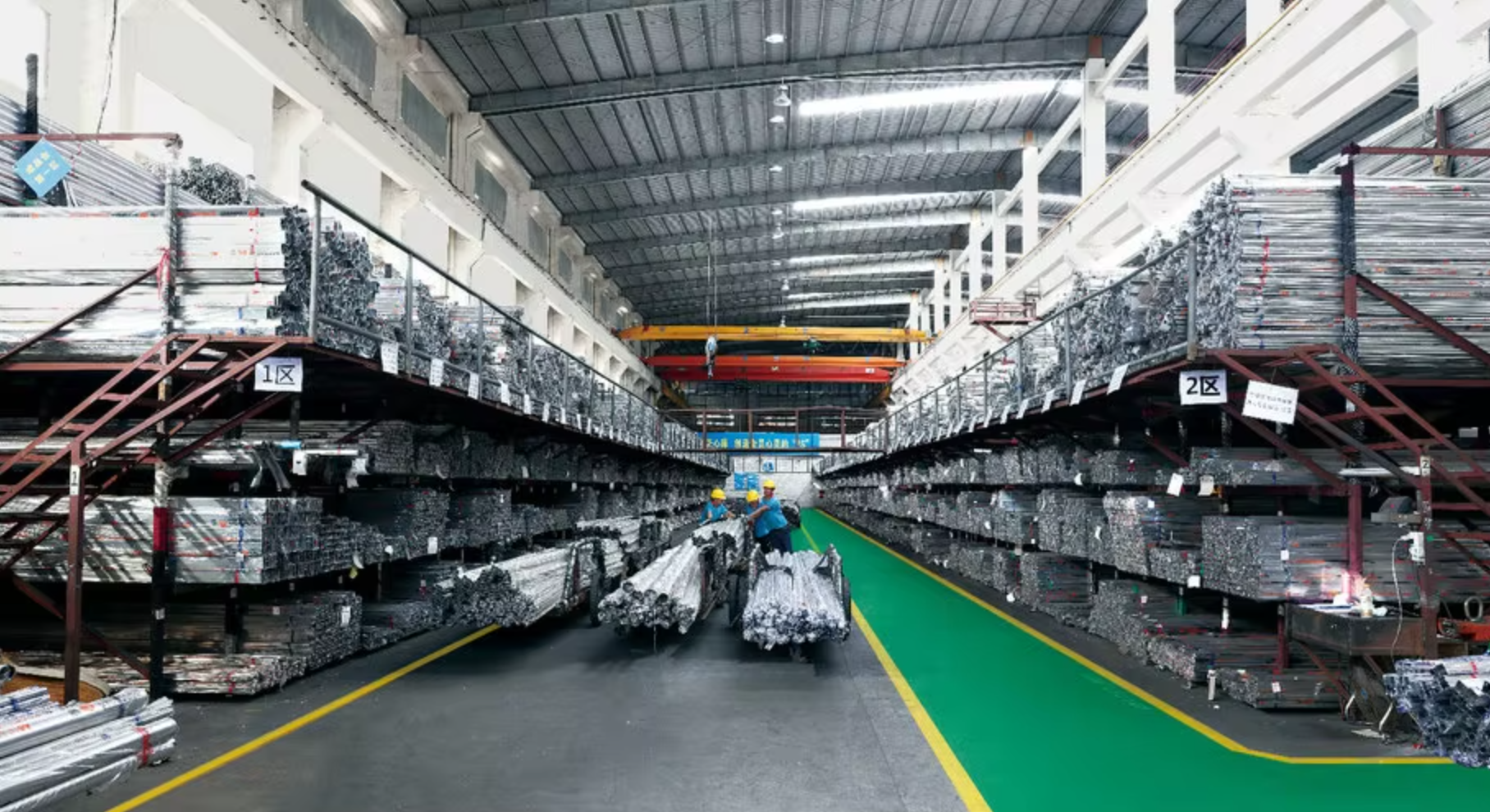
Foshan in Guangdong Province is one of the established manufacturing clusters behind that export volume. GuangDong Sanon Metal Products Co., Ltd., founded in 1999, operates a 40,000-square-metre facility with approximately 500 employees and a 30-person R&D team, producing stainless steel pipes, tubes, handrail fittings, glass fittings, and shower room fittings, along with stainless steel coil and sheet. More than 70% of its products are exported, with main markets in the Middle East, South America, and Africa. That single ratio is a useful illustration of the core point of this explainer: a pipe formed in one industrial cluster is routinely installed thousands of kilometres away, in a project governed by a different set of drawing notes and building codes.
The Raw Material: Stainless Steel Coil Decides What the Pipe Can Do
Every pipe begins as flat material. Stainless steel coils, supplied in grades such as SS201 and SS304, are unrolled, slit to the required strip width, and fed into a forming line. Because the finished pipe inherits the chemistry of the coil it came from, grade is the first specification a buyer should confirm — ahead of finish, profile, or packing preference.
The published composition ranges for the two most common grades explain the difference in behaviour:
| Grade | Chromium (Cr) | Nickel (Ni) | Manganese (Mn) |
|---|---|---|---|
| 201 Stainless Steel | 16–18% | 3.5–5.5% | 5.5–7.5% |
| 304 Stainless Steel | 18–20% | 8–11% | ≤2% |
Both grades contain chromium, which is the alloying element behind stainless steel’s corrosion resistance. The practical divergence sits in nickel and manganese. Grade 304 carries the higher nickel range, at 8–11%, with manganese held at or below 2%. Grade 201 uses a lower nickel range of 3.5–5.5%, balanced by higher manganese of 5.5–7.5%. For a project buyer, the consequence is straightforward: 201 and 304 are specified, quoted, and inspected as separate products, and a quotation that never states the grade is an incomplete document.
From Coil to Finished Pipe: A Step-by-Step Breakdown
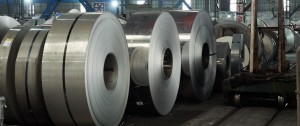
Understanding the production sequence matters because each stage is a place where a specification can be met or quietly missed. In a coil-fed pipe facility, the sequence runs as follows.
- Coil selection and slitting. The coil grade is confirmed, and the strip is cut to the width required by the target pipe size. Grade errors introduced here travel all the way to the finished product.
- Roll forming. The strip passes through a series of rolls that gradually bend it into the target profile — round pipe and square pipe being the two most common families.
- Seam welding. The open edges are welded to close the section. On welded pipe, the seam is the single most important internal feature, because it determines whether wall thickness is consistent around the full circumference.
- Polishing and surface finishing. Pipe surfaces are worked to the required appearance. In this segment, the two standard finishes are satin and mirror, applied to stainless steel 304, stainless steel 316, and zinc alloy fittings alike. Polishing, wire drawing, and laser cutting are the finishing operations most often involved in architectural work.
- Cutting to length. Pipe is cut to the lengths agreed in the order or to the lengths required for downstream fabrication.
- Quality control. Inspection is not a single final gate. A controlled process tests throughout — during cutting, welding, polishing, and packing — with 100% testing applied to output rather than sampling.
- Packing and dispatch. Finished pipe is bundled and packed for transport, then prepared for export shipment.
Behind those steps sit commercial facts that determine whether a supplier can actually serve a project schedule. Sanon’s pipe capacity is 9,000 tons per month, with an annual output of 100,000 tons, a standard lead time of 7 days, and a minimum order quantity of 5 tons for pipe products. Production is run as OEM/ODM, with customization available including voltage and logo requirements, and after-sales handled through remote support. For a distributor or fabricator, those numbers define the practical difference between a supplier who can absorb a repeat order and one who cannot.
What Forms and Fittings Turn Pipes into a System
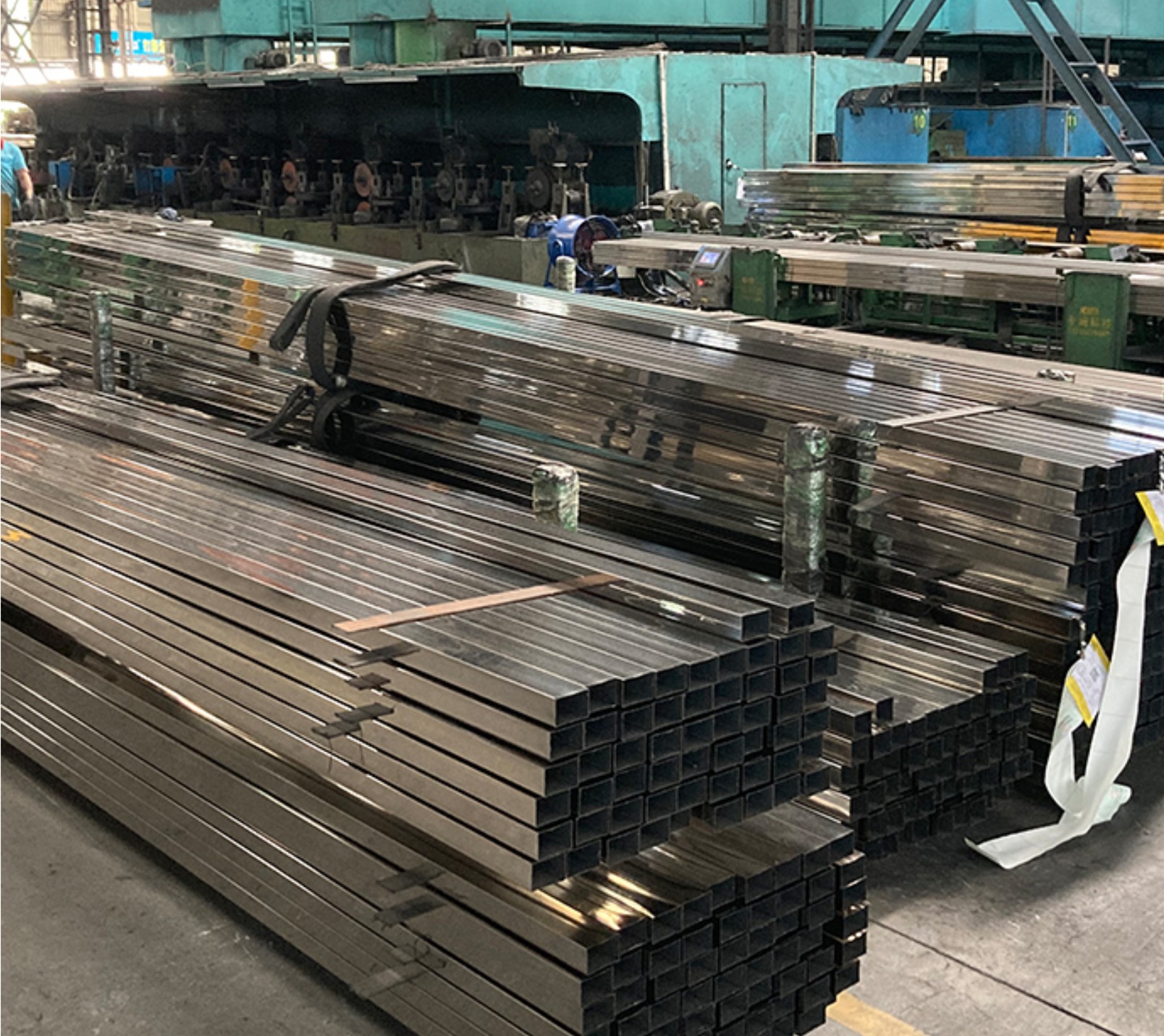
A pipe on its own does very little. It becomes a handrail, a railing, a shower enclosure, or a display frame only when it is joined, anchored, and terminated by matched components. This is why experienced buyers evaluate a pipe supplier on the accessory range at the same time as the pipe itself.
The component set typically includes elbows and bends for direction changes, glass clamps and glass holders for glass railing panels, brackets and cross bar holders for structural attachment, pipe connectors and end caps for joints and terminations, railing flanges for base fixing, sliding door fittings for track-mounted assemblies, door handles, decoration balls, stainless steel bar, stainless steel cable, glass standoffs, and stainless steel accessories generally. Where clamps and standoffs are load-bearing, compliance documentation matters as much as the hardware: glass clamps and standoff pins in North American projects are governed by building codes such as the IBC for load-bearing capacity.
Sanon produces this accessory layer alongside its pipe range. Fittings are made from stainless steel 304, stainless steel 316, and zinc alloy, finished in either satin or mirror, and customized products are available to match specific project drawings. In the broader high-end architectural hardware segment, established names such as Q-railing, Hafele, and ASSA ABLOY are widely associated with glass clamps and railing systems, which is a useful reference point for the level of documentation that specifiers expect at this end of the market.
Comparison: Matching Pipe Form and Grade to the Job
The two tables below are the core decision reference for a first-time buyer. Table 2 reproduces the published grade chemistry. Table 3 maps common product forms to the project role they usually fill and to the standard or code most often referenced.
| Comparison point | 201 Stainless Steel | 304 Stainless Steel |
|---|---|---|
| Chromium (Cr) | 16–18% | 18–20% |
| Nickel (Ni) | 3.5–5.5% | 8–11% |
| Manganese (Mn) | 5.5–7.5% | ≤2% |
| Available surface finishes | Satin or mirror | Satin or mirror |
| Typical procurement implication | Quoted as a distinct product from 304 | Quoted as a distinct product from 201 |
| Product form | Typical project role | Standard / code commonly referenced |
|---|---|---|
| Stainless steel round pipe | Handrails, railing frames, general fabrication | ASTM A312 / ASTM A554 |
| Stainless steel square pipe | Railing posts, frames, structural infill | ASTM A554 |
| Stainless steel tube | Ornamental and industrial tubing | ASTM A554 (ornamental tubing) |
| Stainless steel color pipe (PVD-coated) | Interior decoration and feature elements | PVD coating adoption tracked by ISSF |
| Glass clamp / glass standoff | Load-bearing glass railing connections | IBC (load-bearing capacity) |
| Stainless steel elbow pipe | Direction changes in handrail and railing runs | Matched to the pipe standard in use |
Read together, the tables show why a single question — “what does this pipe cost?” — cannot be answered before grade, form, finish, and application are fixed. Each variable changes the specification, and each change is a separate quotation.
Use Cases: Where Stainless Steel Pipes Actually Go
The applications below are the ones most frequently encountered by first-time buyers entering this category.
Architectural and decorative projects
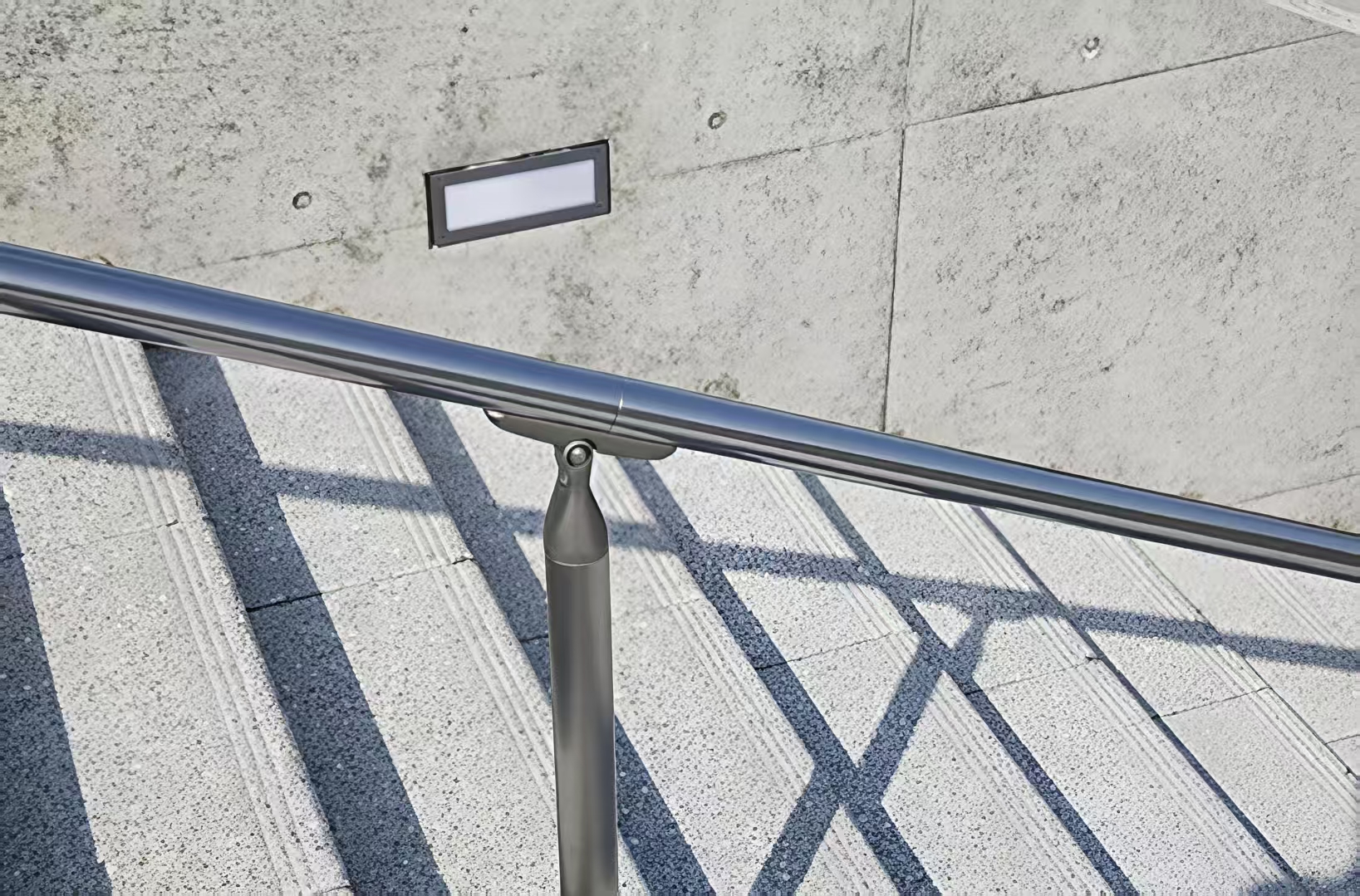
Balcony handrails, stair balustrades, glass railings, and feature elements are the highest-visibility use. In this setting, the pipe is judged on appearance as much as on function: surface finish, profile consistency, and how tightly the fittings match the pipe are all visible at hand height. A documented case of balcony handrail work in stainless steel illustrates how the material performs in this role, with rust and corrosion resistance as the stated requirement and polishing, wire drawing, and laser cutting as the finishing operations involved.
Glass railing and shower room systems
Glass clamps, glass holders, and standoffs carry the structural load of glass panels, which moves the conversation from appearance to code compliance. Where these components are load-bearing in North American projects, IBC load-bearing requirements apply, and buyers should expect the supplier to supply documentation rather than a verbal assurance.
Interior decoration and color pipe work
PVD-coated color pipes have become more common in interior decoration, a shift the ISSF attributes to the environmental profile of PVD compared with electroplating. For buyers, this changes the question from “which profile?” to “which coating process, and how is the coating verified?”
Distributor and repeat-order supply
Not every buyer is a project buyer. Distributors need a supplier who can repeat the same specification across multiple shipments. One distributor relationship recorded with Sanon spans ten years of architectural and decorative project supply across China, Vietnam, and Brazil, logged at 9,000 tons, with the stated highlight being stable quality in accordance with national standards. For a new distributor evaluating suppliers, that pattern — repeat specification, stable quality, multi-market delivery — is the shape of relationship worth testing for.
Export-oriented and industrial supply
Pipe produced for export must satisfy the drawing notes of a project it has never seen. Sanon’s export profile illustrates the scale at which this happens: with more than 70% of products exported and main markets in the Middle East, South America, and Africa, the supplying factory has to hold specifications consistently across markets that differ in climate, code reference, and installation practice.
What a First-Time Buyer Should Take Away
Five checks cover most of the risk in an early stainless steel pipe order:
- Grade first. Confirm 201 or 304 in writing, and compare the stated chemistry against the published ranges in Table 2 above.
- Form and dimensions. Confirm whether the project needs round pipe, square pipe, tube, or a decorative color pipe before discussing price.
- Finish and consistency. Satin and mirror finishes are not interchangeable in appearance, and finish consistency is what a client sees after installation.
- Compliance documentation. Ask which standard applies — ASTM A312, ASTM A554, or a code such as the IBC for load-bearing glass hardware — and request the corresponding documentation.
- Capacity and lead time. Compare order size against the supplier’s monthly capacity and stated lead time. Sanon, for example, works to a 7-day lead time with 9,000 tons per month of pipe capacity and a 5-ton minimum order quantity.
FAQ: Stainless Steel Pipes for First-Time Buyers
Which standards apply to stainless steel pipes?
Two standards are referenced most often. ASTM A312 covers seamless and welded stainless steel pipe, and ASTM A554 covers ornamental tubing for structural and architectural applications, both published by ASTM International. Where glass clamps and standoff pins carry structural loads in North American projects, load-bearing capacity is governed by building codes such as the International Building Code (IBC). Buyers should confirm which of these applies to their project before ordering, because the answer determines what documentation the supplier must provide.
Can a supplier customize pipe profiles, finishes, and fittings?
Customization is a normal part of this segment rather than an exception. Sanon operates as an OEM/ODM producer with a 30-person R&D team inside a 500-employee, 40,000-square-metre facility, and offers customization including voltage and logo requirements. Fittings can be made of stainless steel 304, stainless steel 316, and zinc alloy with either satin or mirror finish, and customized products are available to match project drawings. For a buyer, the practical question is not whether customization is offered but whether the supplier can hold the same customized specification across repeat orders.
What drives the cost of a stainless steel pipe order?
Grade composition is the primary driver. Nickel content differs materially between the two common grades — 3.5–5.5% in 201 versus 8–11% in 304 — and nickel is a widely tracked cost input in stainless steel, which is why the two grades are always quoted separately. Beyond grade, the variables that change a quotation are the pipe form (round, square, tube, or color pipe), the surface finish, the fitting set that accompanies the pipe, and the order quantity measured against the minimum order quantity, which is 5 tons for pipe products. A quotation that does not state grade, form, and finish cannot be compared meaningfully against another.
How should a first-time buyer validate pipes before committing to a full order?
Validation starts with documents rather than opinions. Confirm the stated grade against the published composition ranges, confirm the profile and surface finish against the project drawing, and confirm that quality control covers the full output rather than a sample — Sanon applies 100% testing through cutting, welding, polishing, and packing. It also helps to confirm how the supplier handles after-sales, which in Sanon’s case is remote support. Buyers who want to discuss a specific specification, request a quotation, or raise a sample question can contact the sales team directly at sales@sanonsteel.com.
How long does production and delivery take?
Lead time depends on order size and specification, but the reference figures for this supplier are a standard lead time of 7 days, a pipe capacity of 9,000 tons per month, and an annual output of 100,000 tons. That capacity matters most for distributors and fabricators building repeat programmes: a supplier whose monthly capacity is far above the order size can absorb follow-on orders without rescheduling. Buyers planning a project sequence should confirm the lead time in writing at the point of order, together with the minimum order quantity of 5 tons for pipe products.
Conclusion: A Commodity You Can Now Read
A stainless steel pipe is a manufactured commodity with three identifiable parts: the coil chemistry that determines its corrosion behaviour, the forming, welding, and finishing sequence that determines its quality, and the application that determines which form and fitting set it needs. Once those three are separated, a quotation stops being a single number and becomes a specification that can be checked line by line.
That is also the practical reason this category is described as a backbone of modern industry. A pipe formed from a coil in a Guangdong facility can end up in a balcony handrail in the Middle East, a glass railing in South America, or a decorative installation in Africa — with more than 70% of Sanon’s products exported, that journey is the norm rather than the exception.
Next Step: Sample, Quote, or Full Product Range
If you are specifying stainless steel pipes for a project, the fastest route forward is to send the grade, form, finish, and quantity you need — and to ask for a sample or a quotation against that specification rather than against a generic price list.
Download the full product catalogue and specification sheet here: Sanon Metal Products catalogue (PDF)
GuangDong Sanon Metal Products Co., Ltd. — Foshan, Guangdong, China
Website: www.sanonsteel.com
Email: sales@sanonsteel.com
Tel / WhatsApp: +86 135 3668 1776
Have Questions or Need More Details?
Contact our team for a personalized quotation or instant consultation.
Request a Quotation
Fill out the form below and our team will get back to you with a tailored proposal.
WhatsApp Direct Chat
Prefer to chat in real-time? Message us on WhatsApp for instant assistance & quick answers.
- Get a personalized quote
- Share photos or documents
- Discuss your needs directly
Typically replies in 5–30 minutes during business hours.