
Food Grade HDPE Sheet: Certification & Specification Guide
Food Grade HDPE Sheet: Certification & Specification Guide
A food grade HDPE sheet is an industrial high-density polyethylene sheet whose base resin, additives and finished sheet form are documented as suitable for contact with food in the market where the finished article will be sold. For buyers in the research and evaluation stage, the practical question is rarely “which sheet looks best” — it is “which manufacturer can hand over a material certificate set that a food-safety officer, an auditor or a customs broker will accept.” This guide maps that documentation set onto a real sheet specification: the HDPE sheet line (model PE300) produced by Tangyin Sanyou Engineering Plastic Co., Ltd., a Henan-based engineering plastics manufacturer founded in 2001.
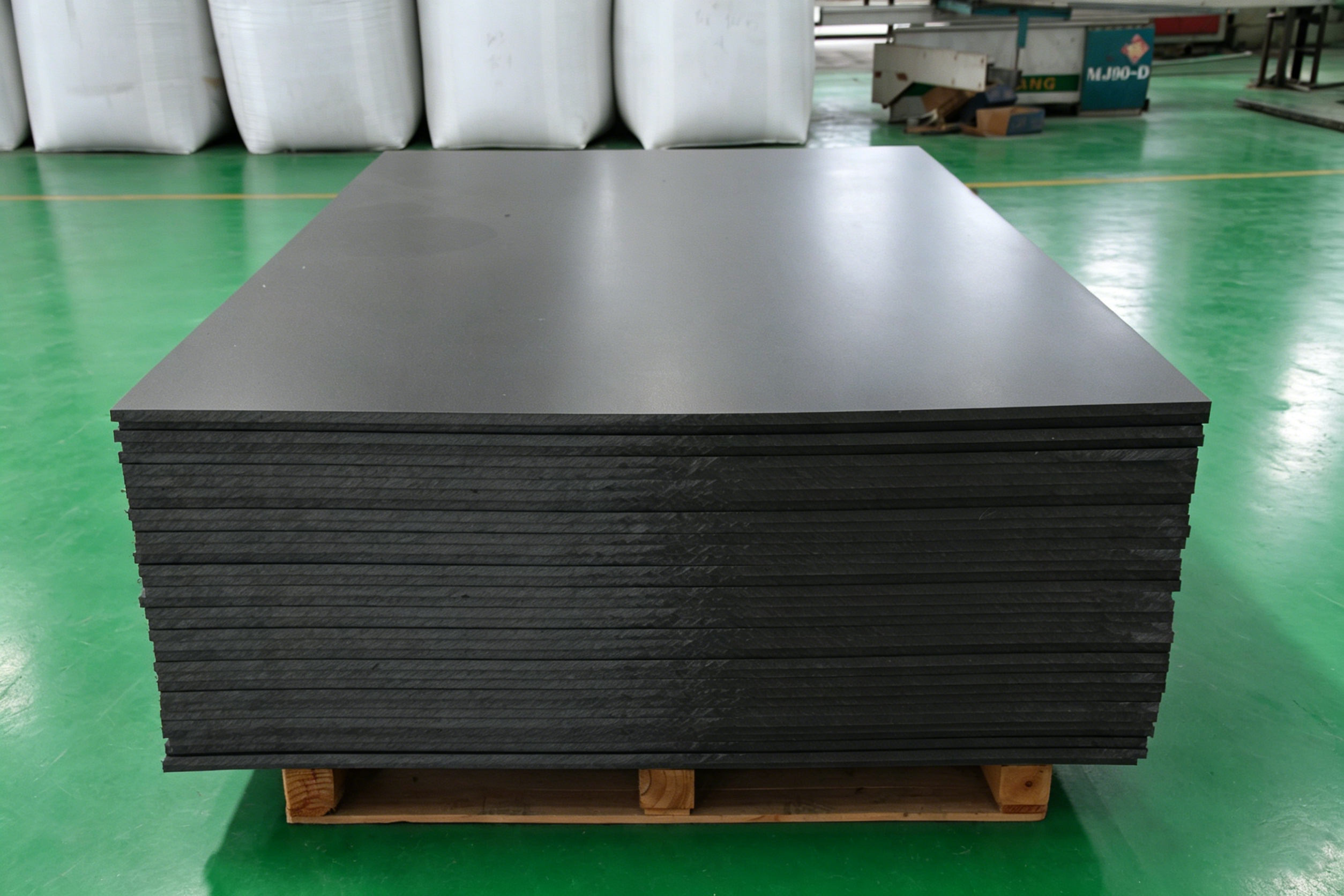
What “Food Grade” Actually Means for an Industrial HDPE Sheet
The most common sourcing mistake is treating “food grade” as a colour, a surface finish or a line item on a price list. It is a documentation claim. Sanyou states that its HDPE sheet is made from food-grade polyethylene resin and is suitable for food processing, cutting boards and sanitary applications, and lists food grade as an available option within the product range. That is a useful starting signal for an RFQ, but a supplier statement alone does not establish conformity for a specific order in a specific market.
Two separate layers therefore need to be evaluated in parallel:
- The physical specification layer — density, thickness, sheet format, tensile strength, impact strength, water absorption, working temperature and surface finish. These are published, comparable, and can be fixed in a purchase order.
- The compliance documentation layer — quality-system certification, market-access certificates, resin and additive traceability, and a declaration of compliance issued for the buyer’s application. These are order-specific and must be requested.
Supplier technical guidance in the industry commonly points buyers toward a baseline polyethylene material standard such as ASTM D4976, and toward food-contact frameworks such as FDA 21 CFR 177.1520 in the United States and EU Regulation 10/2011 in Europe. Those references should always be confirmed against the official texts and against the exact resin grade and additive package used for the order — because the same nominal “HDPE sheet” can be produced with different stabilisers, colourants and lubricants.
Industry Background: Why Food-Grade Sheet Sourcing Has Become a Documentation Exercise
HDPE is a high-volume polymer, and sheet is one of its largest downstream forms. Published commercial research places the sheets and films segment at roughly 41.1% of global HDPE demand share in 2024, which explains why so many different suppliers — extruders, machined-parts shops, distributors and trading companies — all list “industrial HDPE sheet” in the same catalogue.
Feedstock economics have also shifted. S&P Global Platts reported black coloured recycled HDPE resin selling at around USD 520/mt FOB Southeast Asia in September 2026, alongside a broader change in how recycled and virgin polymer streams are priced against each other. For food-contact buyers this matters in a specific way: recycled and virgin streams are not interchangeable by default, and a cost-driven switch to recycled sheet has to be checked against the documentation requirement of the destination market.
A second background factor is grade behaviour. Distributor technical guidance notes that standard HDPE is not UV-stabilised and may chalk or embrittle under prolonged outdoor sun exposure, while carbon black is described as providing UV protection in certain formulations. This is why experienced buyers specify the grade — virgin, recycled or UV-stabilised — rather than assuming that all HDPE sheet behaves the same way on a loading dock, in a washdown room or on an outdoor processing deck.
The Sanyou Food-Grade-Capable HDPE Sheet (Model PE300)
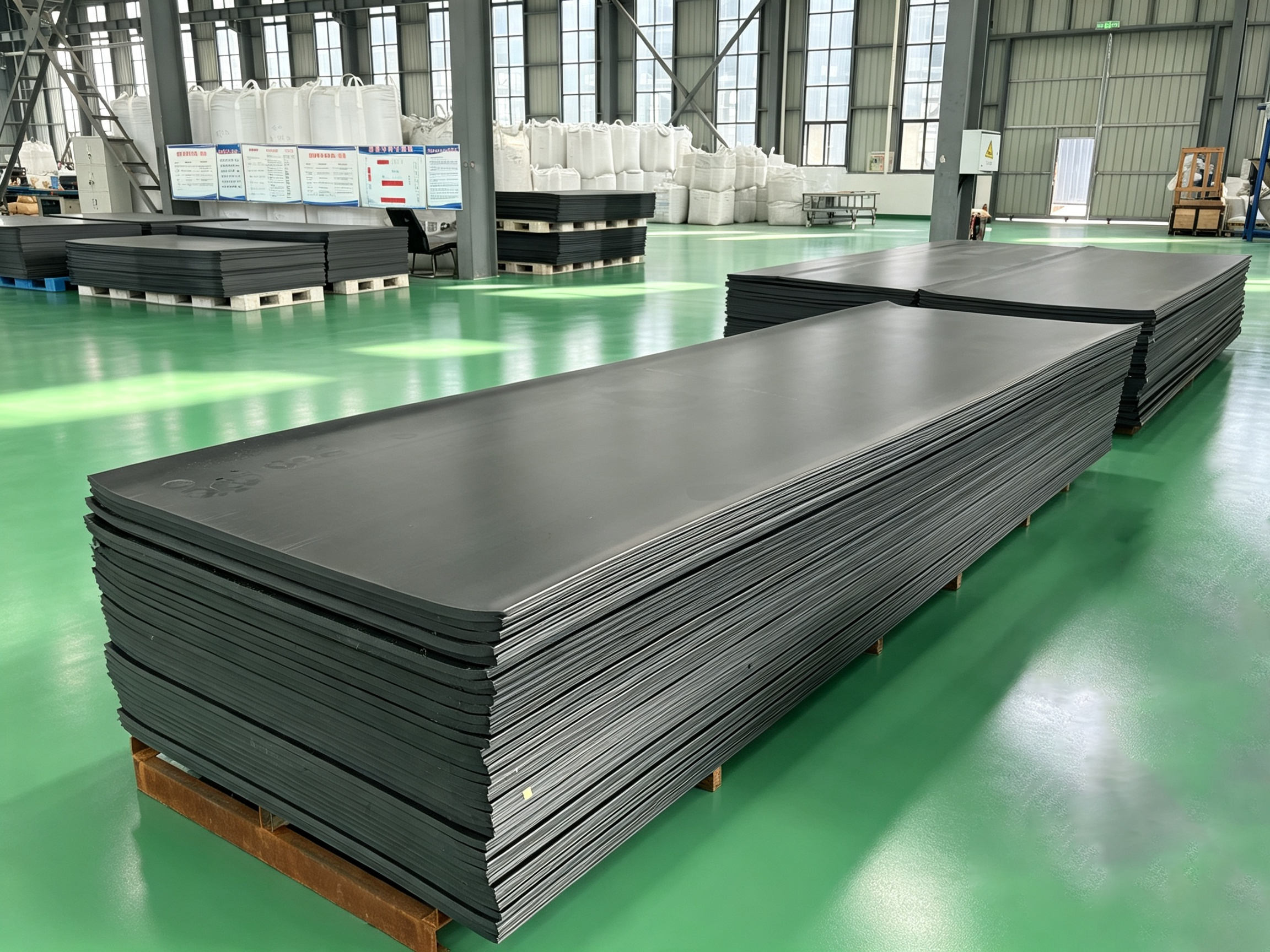
Sanyou manufactures its HDPE sheet from virgin HDPE resin, with recycled HDPE sheet available as a separate grade option under the same product range. The published specification below is the reference point that a food-processing equipment builder, a cutting-board converter or a fabrication workshop would use when preparing an RFQ.
| Specification item | Published value (HDPE Sheet, model PE300) |
|---|---|
| Material | Virgin HDPE (High Density Polyethylene) |
| Density | 0.93–0.97 g/cm³ |
| Thickness | 2–50 mm (customized available) |
| Sheet sizes | 1000 × 2000 mm / 1220 × 2440 mm / 1500 × 3000 mm / 2000 × 4000 mm (customized available) |
| Colours | Black, white, blue, green, yellow or customized |
| Surface | Smooth or anti-skid texture (diamond, orange peel, embossed) |
| Tensile strength | ≥ 22 MPa |
| Elongation at break | ≥ 300% |
| Hardness | 60–68 Shore D |
| Impact strength | ≥ 20 kJ/m² |
| Melting point | 130–140 °C |
| Working temperature | −60 to +80 °C |
| Water absorption (24 h) | < 0.01% |
| Coefficient of friction | Low, 0.15–0.25 |
| Chemical resistance | Excellent (acid, alkali, salt, oil) |
| UV resistance | UV stabilised grade available |
| Processing features | Anti-skid, wear-resistant, impact-resistant, moisture-proof, weldable, cuttable, CNC machinable, non-toxic |
| Quality system | ISO 9001 |
Two specification points deserve attention during evaluation. First, the 1220 × 2440 mm format is the metric equivalent of the 4 × 8 ft industrial board that most fabricators and importers plan layouts around, so a food-processing line designed on imperial sheet dimensions can be quoted without re-engineering. Second, a 10 mm HDPE industrial sheet sits inside the thickness band commonly used for tank walls and structural panels, while thinner sheet in the 5–6 mm band is more typical of light-load lining work. Fixing thickness early prevents a specification change after the first production run.
The product specification also lists the sheet as non-toxic and moisture-proof, and describes it as a recyclable alternative to wood and metal. In wet, frequently washed food environments, a 24-hour water absorption below 0.01% and a low coefficient of friction combine into a practical benefit: the sheet does not take on water, and product residue slides off rather than clinging to the surface.
Certification and Documents You Can Ask For Today
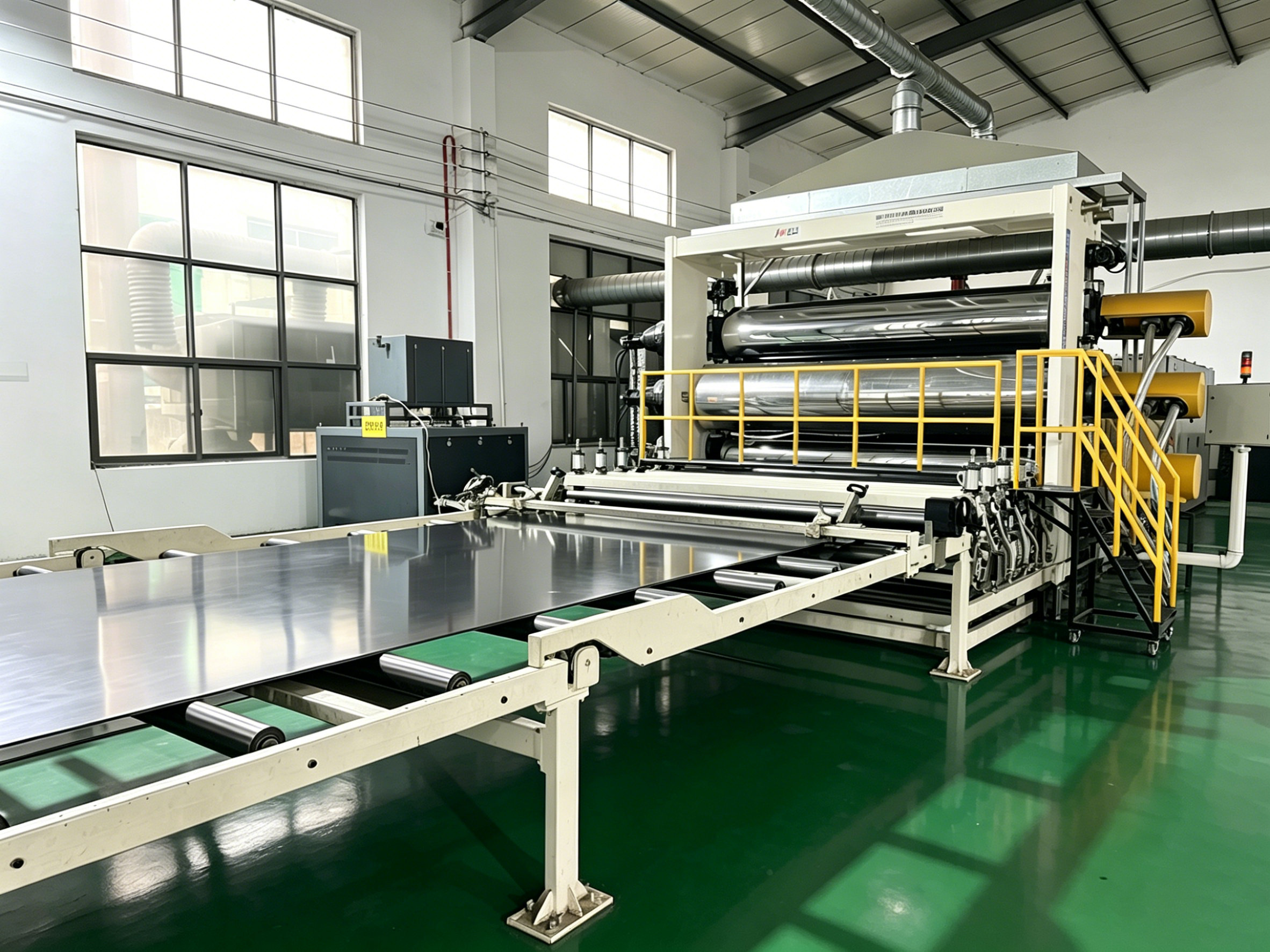
Sanyou operates under ISO 9001 quality management and holds a CE certificate covering its HDPE sheet: certificate number HY250111190958-1D, issued by HUAY TESTING on 2025-11-21 for HDPE Sheet (model PE300) in the EU market. The certificate scope covers HDPE Sheet, Virgin HDPE Sheet and Recycled HDPE Sheet, and cites the IEC 62321 test series, including IEC 62321-3-1:2013, IEC 62321-4:2013+AMD1:2017, IEC 62321-5:2013, IEC 62321-7-1:2015, IEC 62321-7-2:2017, IEC 62321-6:2015 and IEC 62321-8:2017.
Buyers should read that certificate for exactly what it is. It is a market-access and restricted-substance conformity document for the EU market. It is not, by itself, a direct food-contact declaration. Where the finished article will touch food, the practical request is a declaration of compliance issued for the specific resin and additive package used in your order — which is a normal, expected question to put to a manufacturer, and one that separates suppliers with real material traceability from those selling a catalogue label.
The quality-control sequence behind those documents is also part of the evidence package. Sanyou’s process runs from incoming raw material inspection through in-process thickness and dimension checks, surface inspection and final pre-shipment inspection, and inspection records are available on request.
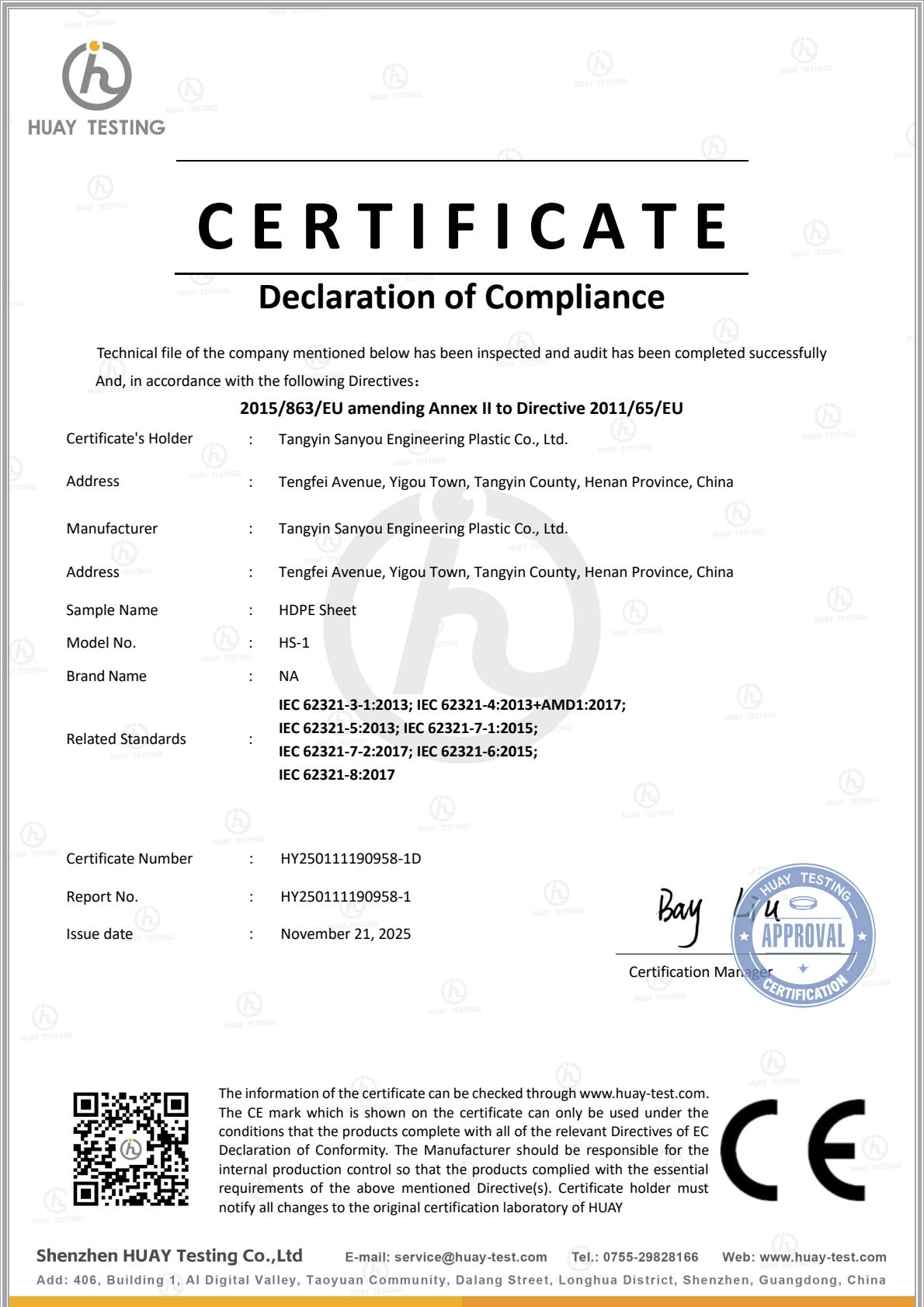
Step-by-Step: Specifying and Verifying a Food Grade HDPE Sheet
This six-step sequence is the working order that avoids the two most expensive mistakes in food-grade sheet procurement: buying an undocumented sheet, and buying a documented sheet in the wrong format.
Step 1 — Define the contact scenario and the destination market
Direct food contact, splash contact, washdown-adjacent panel and non-contact machine guarding have different documentation expectations. The destination market determines which conformity framework applies. Write both down before contacting suppliers.
Step 2 — Fix the physical format
Confirm thickness within the 2–50 mm range, sheet size (1220 × 2440 mm for a 4 × 8 ft layout, or a custom size), colour and surface. For food surfaces, smooth or lightly textured finishes are usually specified; orange peel, diamond and embossed textures exist for anti-skid applications.
Step 3 — Fix the grade
Choose between virgin HDPE sheet, recycled HDPE sheet and UV-stabilised HDPE sheet as separate decisions. Virgin sheet is the grade normally requested for food-contact, potable water and high-reliability work; recycled sheet is positioned for non-critical corrosion lining and cost-sensitive projects; UV-stabilised sheet is for long-term outdoor exposure.
Step 4 — Request the documentation set
Ask for the quality-system certificate, the applicable market-access certificate, resin and additive traceability, the order-specific declaration of compliance, and batch inspection records. Request them at quotation stage, not after the deposit.
Step 5 — Validate with a sample or trial order
Check flatness, thickness tolerance, surface finish, colour consistency and machining behaviour on a real sample before committing to bulk. Cut-to-size, drilling, welding and CNC machining can all be assessed on a single sheet.
Step 6 — Lock commercial terms
Confirm MOQ, lead time, Incoterm, packaging and documentation deliverables in the purchase order. Sanyou quotes an MOQ of 1,000 kg per specification and colour, with trial orders negotiable, and a lead time of 15–20 days after order confirmation and deposit, subject to quantity and customisation requirements.
Where Food Grade HDPE Sheet Is Used
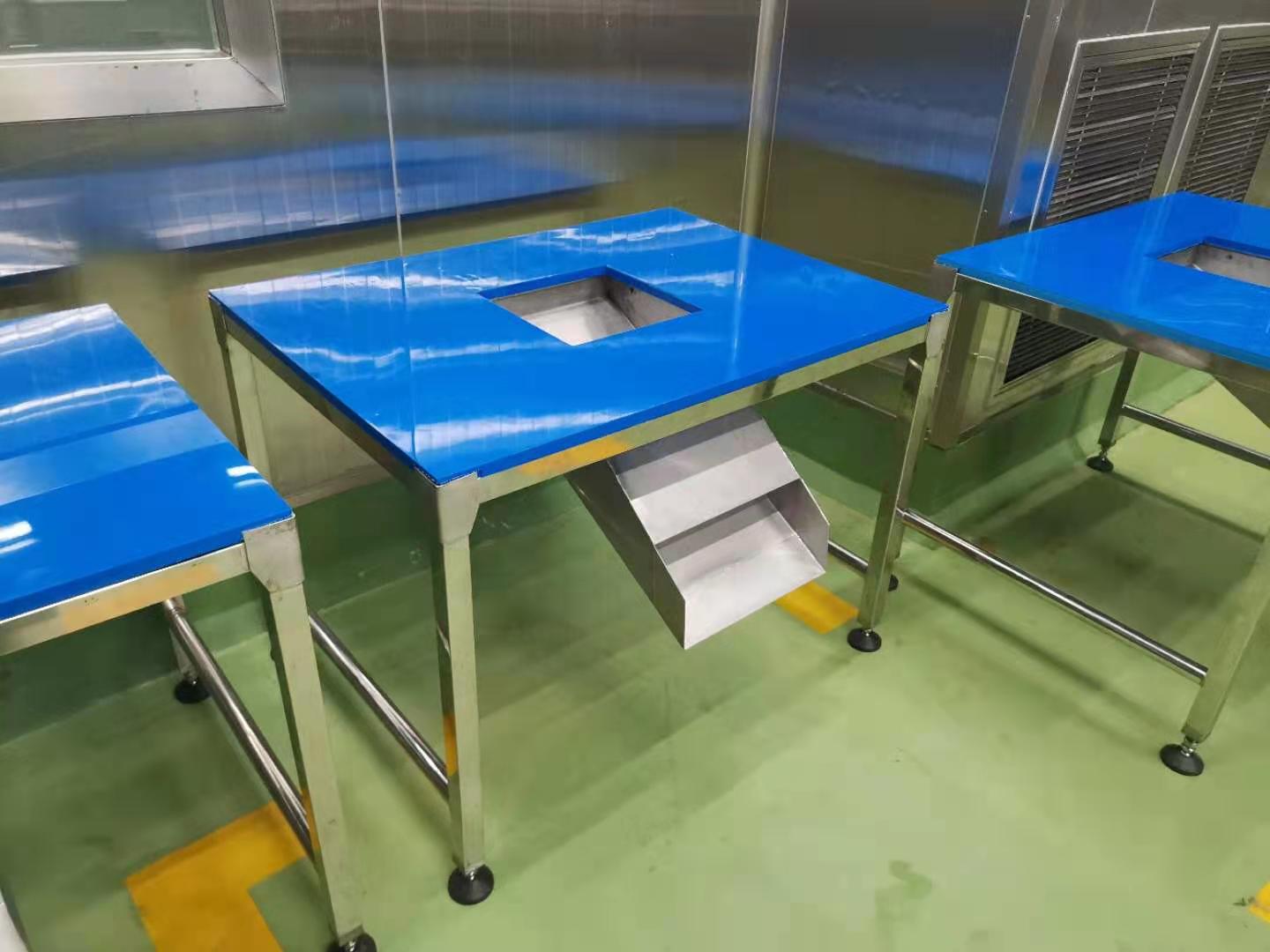
Sanyou’s HDPE sheet is applied across chemical processing and water treatment, food and beverage processing, machinery manufacturing and industrial automation, marine and shipbuilding, construction, agriculture, outdoor furniture and playground equipment, signage, cold chain and refrigeration, and packaging and material handling. Within food-related operations, the recurring applications are cutting boards and food-processing tables, machine guards and covers, washdown-adjacent panels, cold-storage fittings and fabricated hygienic work surfaces.
A representative project illustrates the pattern. An Australian customer — an industrial equipment manufacturer and fabricator working with chemical tanks, wastewater-treatment equipment and food-processing surfaces — took a custom supply of 20 tons of HDPE sheet with customised thickness, dimensions, colour and surface finish. Over a two-year working period the reported outcome was improved corrosion and moisture resistance, reduced maintenance requirements, and simpler fabrication and cleaning in wet or chemically exposed environments.
Comparison Table: Virgin, Recycled and UV-Stabilised HDPE Sheet
All three options share the same base chemistry and the same published sheet specification. They differ in what they are qualified for, which is why grade selection should be recorded in the RFQ rather than left to the supplier.
| Consideration | Virgin HDPE Sheet | Recycled HDPE Sheet | UV-Stabilised HDPE Sheet |
|---|---|---|---|
| Positioning | Recommended for food-contact, potable water and high-reliability projects | Recommended for non-critical anti-corrosion lining | Recommended for long-term outdoor applications |
| Stated benefit | Stable mechanical performance; meets strict hygiene requirements | Cost-effective for projects without strict mechanical requirements | Reduces ageing and chalking under sun exposure |
| Documentation focus | Resin and additive traceability, order-specific declaration of compliance | Confirm grade and documentation before any food-contact use | UV stabilisation is a formulation attribute, separate from food-contact status |
| Available colours | Black, white, blue, green, yellow or customized | Black, white, blue, green, yellow or customized | Black, white, blue, green, yellow or customized |
| Covered by CE certificate HY250111190958-1D | Yes | Yes | Yes |
FAQ
1. How do I confirm that a food grade HDPE sheet manufacturer really holds material certificates?
Ask for four specific items and check that they name your product and market: the quality-system certificate (Sanyou operates under ISO 9001), the market-access certificate applicable to your destination (Sanyou holds CE certificate HY250111190958-1D, issued by HUAY TESTING on 2025-11-21 for HDPE Sheet model PE300 in the EU market, covering HDPE Sheet, Virgin HDPE Sheet and Recycled HDPE Sheet), resin and additive traceability for the order, and an order-specific declaration of compliance. Batch inspection records — raw material inspection, in-process thickness and dimension checks, surface inspection and final pre-shipment inspection — should also be available on request. A supplier that cannot name the certificate number, issuing body and issue date is not holding a verifiable certificate set.
2. What thicknesses and sheet sizes can a food grade HDPE sheet be supplied in?
Sanyou’s HDPE sheet range covers 2–50 mm thickness, with customized thickness available. Standard sheet sizes are 1000 × 2000 mm, 1220 × 2440 mm (the 4 × 8 ft industrial board format), 1500 × 3000 mm and 2000 × 4000 mm, and custom sizes are available. A 10 mm sheet falls within the band typically used for tank walls and structural panels. Surface can be smooth or anti-skid, with diamond, orange peel or embossed textures, and colours include black, white, blue, green, yellow or customized. The product specification lists density at 0.93–0.97 g/cm³.
3. What drives the cost of a food grade HDPE sheet, and is recycled sheet cheaper?
Cost is driven mainly by the grade selected, thickness, sheet format, colour and the amount of cut-to-size or CNC work required, plus the documentation package. Virgin sheet is normally specified where food-contact, potable water or high-reliability performance is required; recycled HDPE sheet is positioned as a cost-effective option for non-critical anti-corrosion lining, and should not be substituted for a food-contact grade without confirming the grade and its documentation. As a feedstock-level reference, S&P Global Platts reported black recycled HDPE resin at around USD 520/mt FOB Southeast Asia in September 2026 — a resin benchmark, not a sheet price. Sheet quotations should always be requested on a defined basis: grade, thickness, format, colour, surface, order quantity and Incoterm.
4. Can I validate a food grade HDPE sheet before placing a bulk order?
Yes, and it is the recommended sequence. Sanyou quotes an MOQ of 1,000 kg per specification and colour, with trial orders negotiable, so a sample or reduced trial quantity can be assessed for flatness, thickness tolerance, surface finish, colour consistency, weldability and CNC machining behaviour before a bulk commitment. Documentation review and sample validation should happen together, because a sheet that machines correctly but arrives without the compliance set still fails the qualification gate.
5. What is the lead time for a custom food grade HDPE sheet order?
Sanyou quotes approximately 15–20 days after order confirmation and deposit, subject to order quantity and customisation requirements; Sanyou’s stated monthly capacity is approximately 800 metric tons. The fastest way to shorten the cycle is to fix the specification — grade, thickness, size, colour, surface and documentation — in a single RFQ so that no revision is needed after tooling and cutting instructions are issued. To start that process, send your application and market details with a request for a sample and a quotation.
Conclusion: Buy the Documentation and the Specification Together
A food grade HDPE sheet is not qualified by a catalogue label — it is qualified by a sheet specification that can be fixed in a purchase order and a documentation set that can be verified against a certificate number, an issuing body and an issue date. Sanyou’s HDPE sheet line (PE300) provides the specification side: virgin HDPE base with recycled and UV-stabilised grades available, 2–50 mm thickness, 1220 × 2440 mm and other standard formats, water absorption under 0.01% over 24 hours, and a published density of 0.93–0.97 g/cm³. The documentation side is available on request: ISO 9001 quality management, CE certificate HY250111190958-1D for the EU market, and batch inspection records.
For buyers at the evaluation stage, the next practical step is a single, complete enquiry: application and contact scenario, destination market, required thickness and sheet size, colour and surface, grade preference, and the documentation you need to qualify the supplier. Everything else — sample, trial order, quotation and lead time — follows from that.
Request a Sample, Quotation or the Full Product Catalog
Send your application, destination market and required sheet specification — grade, thickness, size, colour, surface and documentation — and Sanyou will respond with a sample arrangement, a quotation and a lead time. The 15–20 day production window applies after order confirmation and deposit, so a complete first enquiry keeps the schedule short.
Download the Sanyou product catalog: Sanyou Product Catalog (PDF)
Tangyin Sanyou Engineering Plastic Co., Ltd.
Website: www.syuhmwpe.com
Contact: Sandy — Email: sandy@syuhmwpe.com — Tel / WhatsApp: +86 199-3737-2858
Address: Tengfei Avenue (Industrial Park), Yigou Town, Tangyin County, Henan, China
Have Questions or Need More Details?
Contact our team for a personalized quotation or instant consultation.
Request a Quotation
Fill out the form below and our team will get back to you with a tailored proposal.
WhatsApp Direct Chat
Prefer to chat in real-time? Message us on WhatsApp for instant assistance & quick answers.
- Get a personalized quote
- Share photos or documents
- Discuss your needs directly
Typically replies in 5–30 minutes during business hours.