
HDPE Sheet vs FRP Sheet for Anti-Corrosion Lining: A Head-to-Head Decision
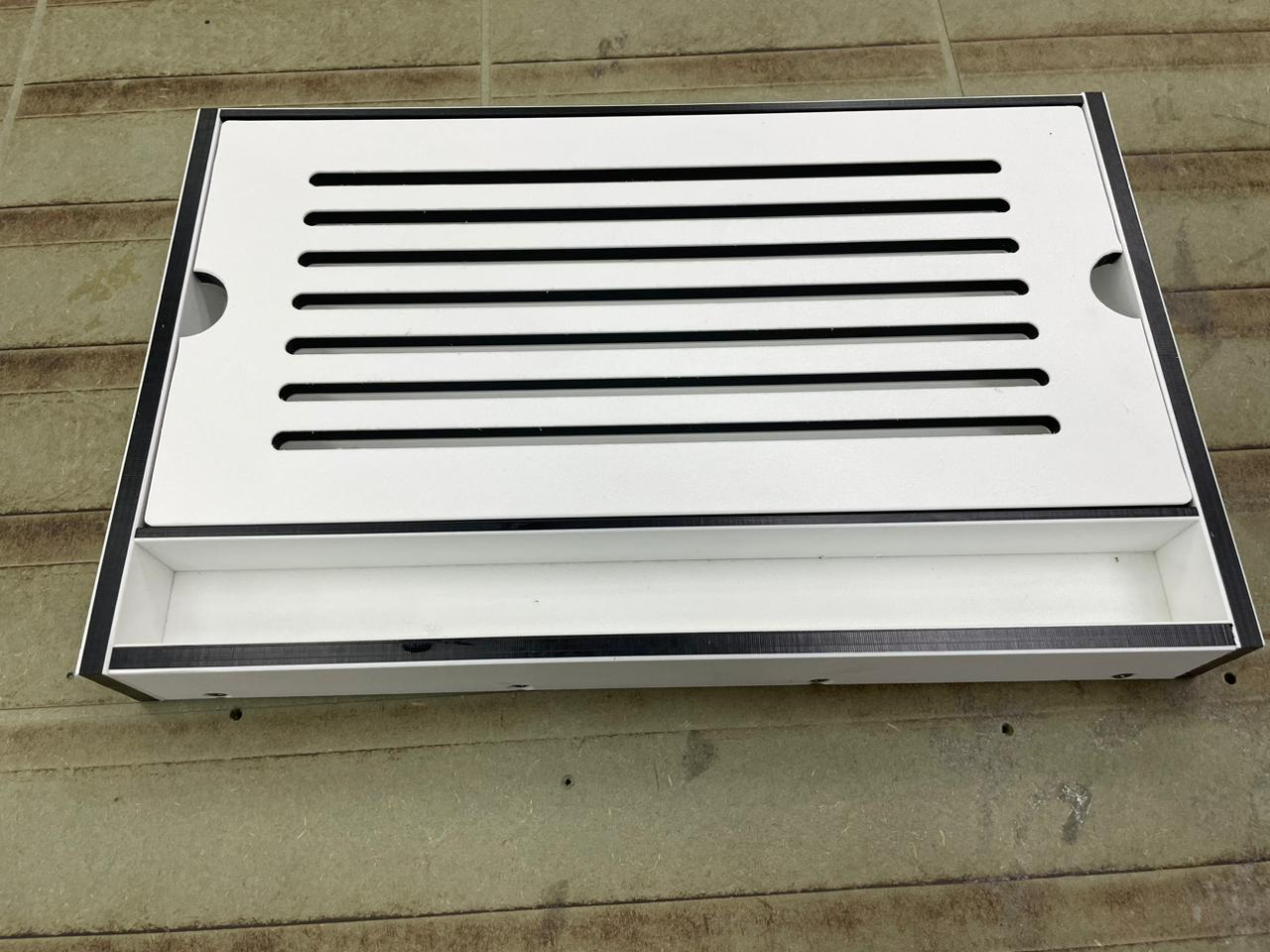
Anti-corrosion lining projects in chemical processing usually reach the HDPE-versus-FRP question at the evaluation stage, when the service envelope is known but the material route is not yet fixed. The short answer is that HDPE sheet is the better fit when the lining operates within its normal-to-low temperature range and when impact tolerance, weldable leak-tight fabrication, low moisture absorption and fiber-free operation are the governing requirements. FRP sheet remains preferable when elevated-temperature resistance and high structural rigidity dominate the duty. The rest of this article applies that rule using verifiable material and supplier facts, so that procurement and engineering teams can match the material to the duty rather than to a generic preference.
Industrial HDPE SheetAnti-Corrosion HDPE SheetHDPE Sheet vs FRP SheetCustom Cut HDPE Sheet
The Decision in One Paragraph
Choose HDPE sheet for anti-corrosion lining when the continuous service temperature sits inside the general HDPE range of -40 °C to 80 °C, when the medium is within the material's resistance to most dilute acids and alkalis, when impact and stress-crack risk are present, when glass-fiber shedding cannot be tolerated, and when the lining must be cut, bent and plastic-welded into a leak-tight assembly. Choose FRP sheet when the duty is a high-temperature corrosive environment and the structure needs high rigidity, accepting that FRP is described as having a glass-fiber shedding risk and weaker impact resistance. If the project sits on the boundary, the decision should be made on the service envelope rather than on a generic material preference.
Problem Definition: What an Anti-Corrosion Lining Decision Actually Decides
A lining failure is usually a mismatch between material and service envelope rather than a failure of the material itself. The variables that decide the outcome are: the chemical medium and its concentration; continuous and peak temperature; mechanical impact and stress-crack risk; required structural rigidity; the joining method and leak-tightness; moisture exposure; contamination sensitivity, including fiber shedding; outdoor UV exposure; and maintenance access.
HDPE sheet and FRP sheet sit on different sides of several of these variables. HDPE is a thermoplastic sheet that can be cut, bent and plastic-welded; it is used for normal and low-temperature anti-corrosion lining and chute lining, and it has no glass-fiber shedding risk. FRP is a fiber-reinforced composite that is used in high-temperature corrosive environments and is described as having high rigidity, but the same comparison records a glass-fiber shedding risk and weaker impact resistance. That is why the two materials are routinely compared for tanks, ducts and scrubbers, and why a head-to-head comparison has to be structured around the duty rather than around a single headline property.
Industry Background: Why HDPE and FRP Compete for the Same Lining Jobs
Anti-corrosion lining is a core cost and safety item in chemical processing, electroplating, water and wastewater treatment, and air-pollution control. HDPE is one of the main thermoplastic options. Sheets and films represent approximately 41.1% of global HDPE demand share, according to a commercial research source cited in the verified data set (EV-0002). FRP is the established composite option where rigidity and temperature resistance dominate.
Both HDPE sheet and FRP sheet are widely used anti-corrosion lining materials, so the choice is application-driven rather than category-driven. In practice, the two materials are compared most often for chemical storage tanks, electroplating and pickling tanks, wastewater-treatment equipment, scrubbers, ventilation ducts and chute liners. Each of these duties has a different mix of medium, temperature, impact, rigidity and contamination requirements, which is why a single material cannot be declared superior across the whole category.
Detailed Solution: The Verified Differences That Drive the Choice
Chemical compatibility with acids, alkalis, salts and cleaning agents
HDPE sheet has good resistance to most dilute acids and alkalis, and stable corrosion resistance against most acids and alkalis. In chemical service it is used for normal and low-temperature anti-corrosion lining and chute lining. FRP sheet is used in high-temperature corrosive environments. The practical screening rule is to list every medium in the service envelope, including cleaning agents and rinse water, and to confirm compatibility for the actual concentration and temperature. A material that is compatible at ambient temperature is not automatically compatible at the top of its service range, so the temperature of each medium has to be stated in the inquiry.
For a lining project, the medium list should distinguish continuous exposure from splash and spill exposure. Cleaning agents often sit outside the process chemistry and are the most frequently missed item in a compatibility review. Both HDPE and FRP can be viable candidates, but the concentration and temperature of each cleaning step must be included before either material is fixed.
Weldability and leak-tight fabrication
HDPE is a weldable thermoplastic sheet. Supplier capability data for HDPE sheet lists reliable weldability, and project experience in chemical equipment fabrication shows that HDPE sheet can be cut, bent and plastic-welded into tanks, ducts and scrubber components. That matters for lining work because the leak-tightness of the finished assembly depends on the quality of the joints, not only on the sheet. A useful RFQ therefore asks for the welding procedure, the joint detail, the welder qualification route and the inspection method, in addition to the sheet specification.
For FRP, the fabrication and jointing route is different, and the project should confirm the laminate schedule, the joint detail and the repair method with the FRP supplier before comparing installed cost. The comparison should be made at the level of the finished assembly, because a sheet-level comparison can hide a large difference in jointing and inspection effort.
Moisture absorption and wet-service stability
HDPE sheet is specified with low moisture absorption, which supports dimensional stability in wet service and reduces the risk of property drift in continuously wet or frequently washed equipment. That is relevant for tanks, wastewater equipment and duct systems that see condensation or washdown. FRP moisture behavior is not stated in the cited source and should be confirmed with the FRP supplier for the specific laminate.
In wet-service lining, moisture uptake interacts with thermal cycling. A material that absorbs moisture and then sees repeated heating and cooling can move differently from the substrate, which puts stress on the joints. This is one reason the moisture question should be asked together with the temperature and joint questions rather than in isolation.
Impact resistance and low-temperature toughness
HDPE sheet is described as having excellent low-temperature toughness and stress-crack resistance. The supplier specification also lists high impact strength as a required property for chemical and wastewater applications. FRP is described as having weaker impact resistance. Where the lining will see mechanical impact, thermal cycling or stress-crack risk, HDPE has a stronger evidence position. Where the duty is steady-state and rigidity-dominated, that advantage is less decisive.
Impact exposure is often underestimated in lining projects. It can come from maintenance access, from the process itself, from cleaning tools or from thermal shock. If any of these are present, the impact question should be answered before the temperature question, because an impact failure can occur well inside the temperature limit.
Fiber shedding and contamination risk
FRP carries a glass-fiber shedding risk. HDPE sheet has no glass-fiber shedding risk. For chemical processing, this matters in three situations: where the medium or product must remain free of fibrous contamination; where the lining is upstream of filters, analyzers or sensitive processes; and where maintenance workers will be inside the equipment. In those cases the contamination argument can outweigh a rigidity advantage.
The fiber question is also a documentation question. If the process is sensitive to fibrous contamination, the project should record the requirement in the material specification and ask each supplier to confirm how the material addresses it. That converts a vague preference into a checkable acceptance criterion.
Temperature ceiling and structural rigidity
The general continuous service temperature of HDPE sheet is -40 °C to 80 °C. FRP is described as high-temperature resistant and high-rigidity. The temperature ceiling is therefore the first hard screen in the comparison. If the continuous duty is inside the HDPE range and the structure does not need FRP-level rigidity, HDPE remains in the evaluation. If the continuous duty is above the HDPE range, or if high structural rigidity is the governing requirement, FRP moves to the front of the comparison. The temperature figure should always be confirmed for the specific grade, because the service limit depends on the grade and the medium.
Step-by-Step Breakdown: Running the Head-to-Head Evaluation
Step 1. Write the service envelope. List every medium, its concentration, its normal and peak temperature, the cleaning cycle, the impact exposure, the outdoor exposure and the consequence of contamination. This document is the basis for every later comparison.
Step 2. Apply the temperature screen. Compare the continuous duty with the general HDPE range of -40 °C to 80 °C. If the duty is above the range, move FRP forward. If it is inside the range, continue to the next screen.
Step 3. Apply the contamination screen. If glass-fiber shedding is unacceptable, HDPE is preferred on the evidence available. Record the requirement in the specification so that it can be verified at acceptance.
Step 4. Apply the impact and stress-crack screen. If impact, thermal cycling or stress-crack risk is present, HDPE has the stronger evidence position. If the duty is steady-state and rigidity-dominated, the FRP advantage becomes more relevant.
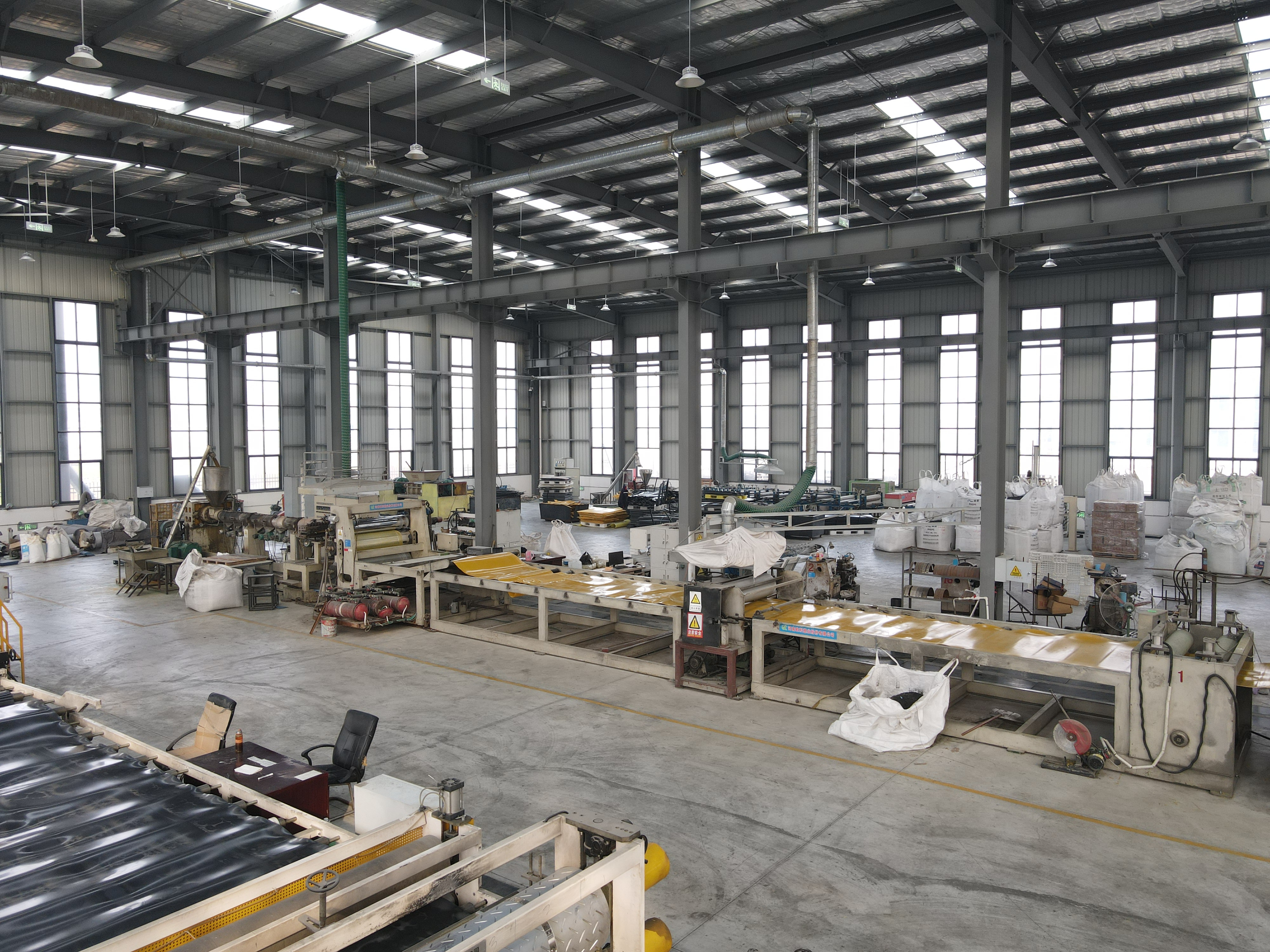
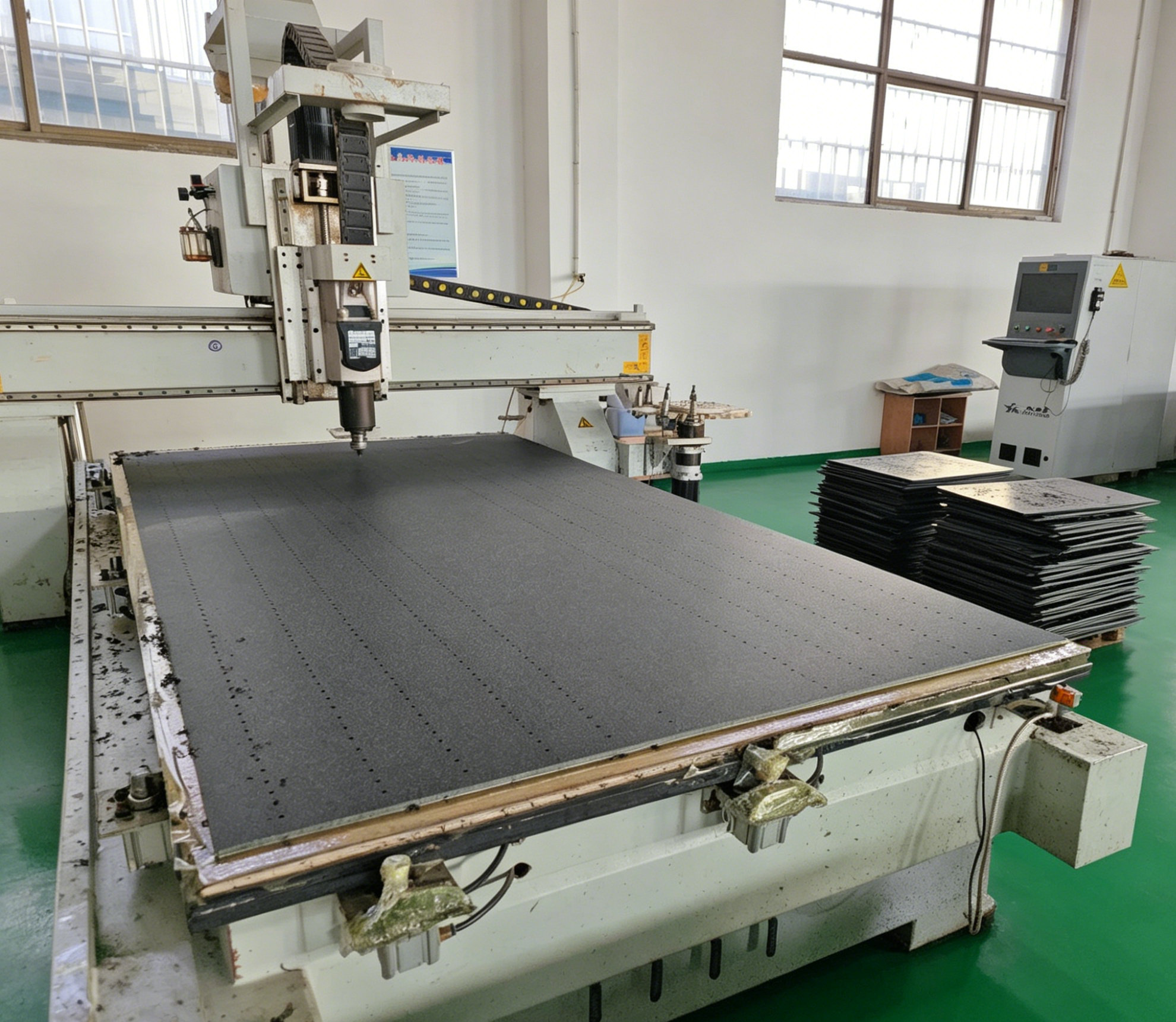
Step 5. Confirm the fabrication route. For HDPE, confirm thickness, sheet size, cut-to-size, bending, welding, CNC machining and drilling. Sanyou (Tangyin Sanyou Engineering Plastic Co., Ltd.) is a manufacturer of HDPE sheet, UHMWPE sheet, PP sheet, HDPE sandwich board and ground protection mats, founded in 2001 and operating a 40,000 m² factory in Henan, China with 80 employees, 10 engineers and an annual output of 120,000 tons. For HDPE sheet, Sanyou lists thickness from 1 mm to 100 mm, width up to 2,500 mm, and cut-to-size, CNC machining and welding services.
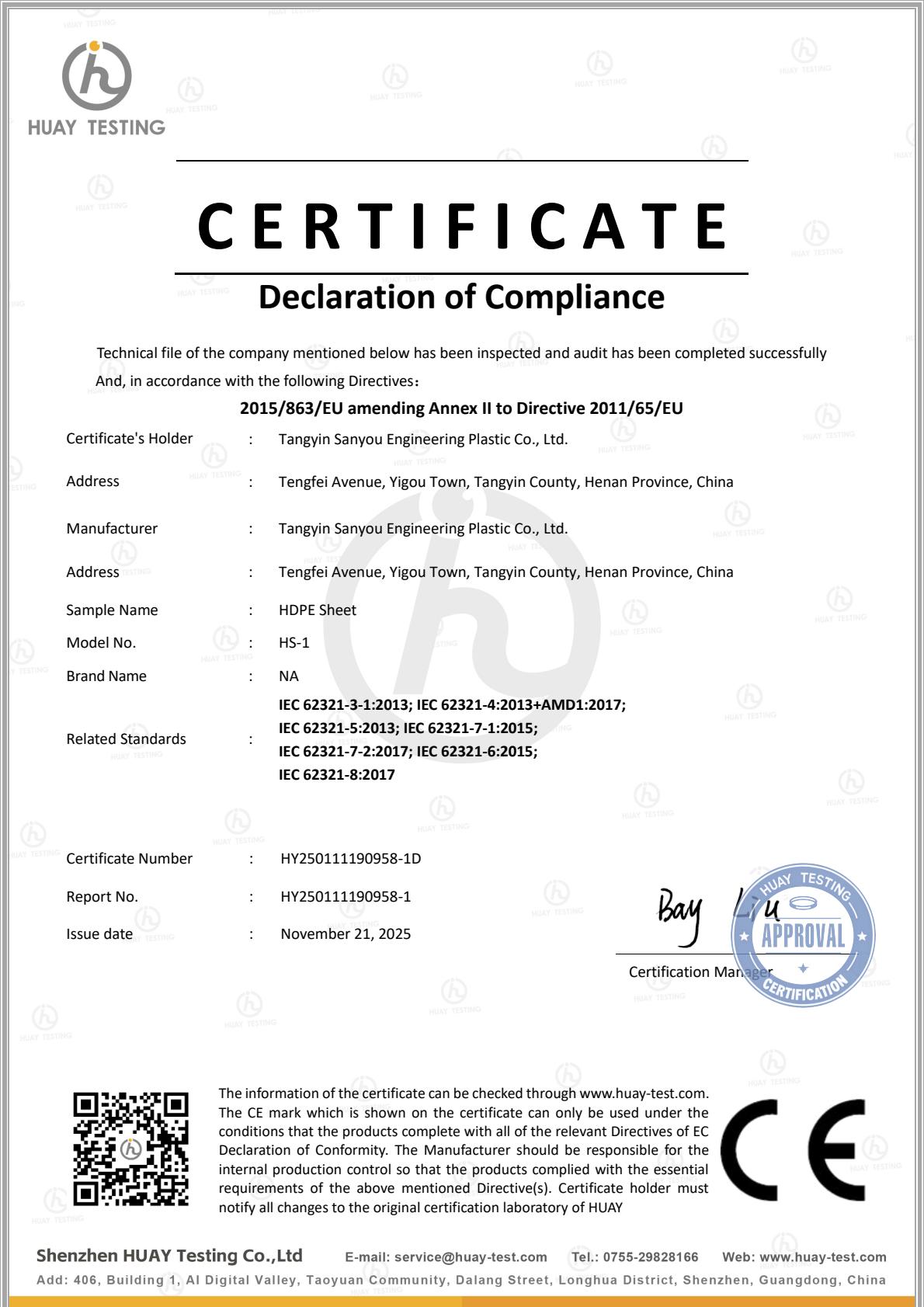
Step 6. Confirm documentation. Ask for the certificate, the grade data sheet, the UV-stabilization status and, where relevant, the food-contact option. Sanyou holds a CE certificate for HDPE sheet, certificate number HY250111190958-1D, issued on 2025-11-21 by HUAY TESTING.
Step 7. Compare installed cost and maintenance. Compare the full assembly, including joints, supports, inspection and repair access, not only the sheet price. For FRP, include the laminate schedule, joint details and repair method in the same comparison.
Use Cases: Where HDPE Sheet Fits and Where FRP Fits
HDPE sheet fits chemical storage tanks, electroplating and pickling tanks, wastewater-treatment equipment, scrubbers, ventilation ducts, laboratory furniture and corrosion-resistant industrial components. Project experience with 20 tons of HDPE sheet for a US chemical-equipment and water-treatment customer covered exactly these applications and reported reliable chemical and corrosion resistance, reduced equipment weight and maintenance, and efficient fabrication through cutting, bending and plastic welding. HDPE also fits chute liners and normal and low-temperature anti-corrosion lining where fiber-free operation is required.
FRP fits high-temperature corrosive environments and structures where high rigidity is the governing requirement. In those duties the FRP advantages are real, but the project should still confirm the fiber-shedding risk and the impact exposure, because both are stated limitations of FRP in the cited comparison.
A practical way to summarize the fit is: HDPE is the practical starting point for weldable, impact-tolerant, fiber-free lining at normal and low temperature; FRP is the exception for high temperature and high rigidity. The label on the material is less important than the match between the material and the duty.

Comparison Table: HDPE Sheet vs FRP Sheet for Anti-Corrosion Lining
| Decision factor | HDPE sheet | FRP sheet |
|---|---|---|
| Chemical service | Good resistance to most dilute acids and alkalis; stable corrosion resistance against most acids and alkalis | Used in high-temperature corrosive environments; compatibility depends on the resin and reinforcement system and must be confirmed per medium |
| Continuous service temperature | General range -40 °C to 80 °C; confirm for the specific grade and medium | Described as high-temperature resistant; project-specific rating must be confirmed with the FRP supplier |
| Low-temperature toughness | Described as excellent low-temperature toughness and stress-crack resistance | Described as weaker in impact resistance |
| Structural rigidity | Thermoplastic sheet selected for conformability, weldability and impact tolerance | Described as high rigidity |
| Fiber shedding | No glass-fiber shedding risk | Glass-fiber shedding risk |
| Weldability and fabrication | Reliable weldability; can be cut, bent, CNC machined, drilled and plastic-welded | Fabrication route differs; confirm laminate schedule, joint detail and repair method with the supplier |
| Moisture absorption | Low moisture absorption | Not stated in the cited source; confirm with the FRP supplier |
| Typical lining uses | Normal and low-temperature anti-corrosion lining, chute liner, tanks, ducts and scrubbers | High-temperature corrosion projects requiring high structural rigidity |
Table notes: HDPE figures are from the verified data set and the cited supplier FAQ. FRP entries are limited to the qualitative comparison in the cited source. Project-specific FRP ratings, laminate schedules and joint details must be confirmed with the FRP supplier before the comparison is closed.
FAQ
What documentation should a buyer request for HDPE sheet in chemical anti-corrosion service?
Ask for the certificate, the grade data sheet and the project-specific chemical compatibility confirmation. Sanyou holds a CE certificate for HDPE sheet, certificate number HY250111190958-1D, issued on 2025-11-21 by HUAY TESTING. UV resistance is listed as an optional attribute and food-grade availability is listed as an option. Standard HDPE is not UV-stabilized and may chalk or embrittle under prolonged outdoor sun exposure, so outdoor projects should specify a UV-stabilized grade. If the lining is for food-contact or potable-water service, request the food-contact declaration and the applicable regulatory reference for the destination market.
Can HDPE sheet be custom cut, welded and machined for tanks, ducts and scrubbers?
Yes. Sanyou lists HDPE sheet thickness from 1 mm to 100 mm, width up to 2,500 mm, and customization of thickness, size, color, surface texture and material grade. Services include cut-to-size, CNC machining, drilling, welding and custom packaging. The listed monthly capacity is approximately 800 metric tons, the lead time is 15–20 days after order confirmation and deposit, and the MOQ is 1,000 kg per specification or color, with trial orders negotiable.
When is FRP the better choice over HDPE sheet?
FRP is the better choice when the duty is a high-temperature corrosive environment and the structure requires high rigidity. Those are the two advantages of FRP in the cited comparison. The same comparison records a glass-fiber shedding risk and weaker impact resistance for FRP, so projects with contamination sensitivity or impact exposure should weigh those limitations before switching from HDPE.
What are the purchasing terms and MOQ for industrial HDPE sheet?
The stated purchasing terms are MOQ 1,000 kg, FOB or CIF delivery, pre-shipment test as the acceptance criterion, and 50/50 payment terms. MOQ and lead time can vary with sheet size, thickness, color and customization, so the RFQ should state the full specification before the commercial terms are fixed.
How fast can custom HDPE sheet be delivered, and can a sample be arranged?
The listed lead time is 15–20 days after order confirmation and deposit, subject to quantity and customization requirements. Trial orders are negotiable against the stated MOQ. To start a sample or quotation, send the service envelope (medium, concentration, temperature, impact exposure), the drawing or sheet list, the required thickness and color, and the destination market to sandy@syuhmwpe.com or WhatsApp +86 199-3737-2858.
Next Step: Match the Material to Your Service Envelope
Send the medium list, continuous and peak temperature, impact exposure and a sketch of the tank, duct or scrubber. Sanyou will review the HDPE-versus-FRP fit against the stated duty and confirm the sheet grade, thickness, joint detail and documentation before a quotation is issued.
Product catalog: Sanyou Product Catalog (PDF)
Contact: sandy@syuhmwpe.com | WhatsApp +86 199-3737-2858 | www.syuhmwpe.com
Conclusion
The head-to-head decision between HDPE sheet and FRP sheet for anti-corrosion lining comes down to the service envelope. HDPE sheet is the stronger choice when the continuous temperature is inside the general -40 °C to 80 °C range, when the medium is within its resistance to most dilute acids and alkalis, when impact and stress-crack risk are present, when fiber-free operation is required, and when the lining must be cut, bent and plastic-welded into a leak-tight assembly. FRP sheet is the stronger choice when high-temperature resistance and high structural rigidity are the governing requirements, with the stated caveats of glass-fiber shedding risk and weaker impact resistance.
Sanyou (Tangyin Sanyou Engineering Plastic Co., Ltd.) manufactures HDPE sheet in thicknesses from 1 mm to 100 mm and widths up to 2,500 mm, with cut-to-size, CNC machining and welding services, and exports to North America, Western Europe, Central Europe, the Middle East, Oceania and Southeast Asia. A service-envelope review is the fastest way to confirm which material route fits a specific tank, duct or scrubber project.
Have Questions or Need More Details?
Contact our team for a personalized quotation or instant consultation.
Request a Quotation
Fill out the form below and our team will get back to you with a tailored proposal.
WhatsApp Direct Chat
Prefer to chat in real-time? Message us on WhatsApp for instant assistance & quick answers.
- Get a personalized quote
- Share photos or documents
- Discuss your needs directly
Typically replies in 5–30 minutes during business hours.