
Industrial HDPE Sheet Machining & Welding: Technical Guide
Industrial HDPE Sheet Machining & Welding: Technical Guide
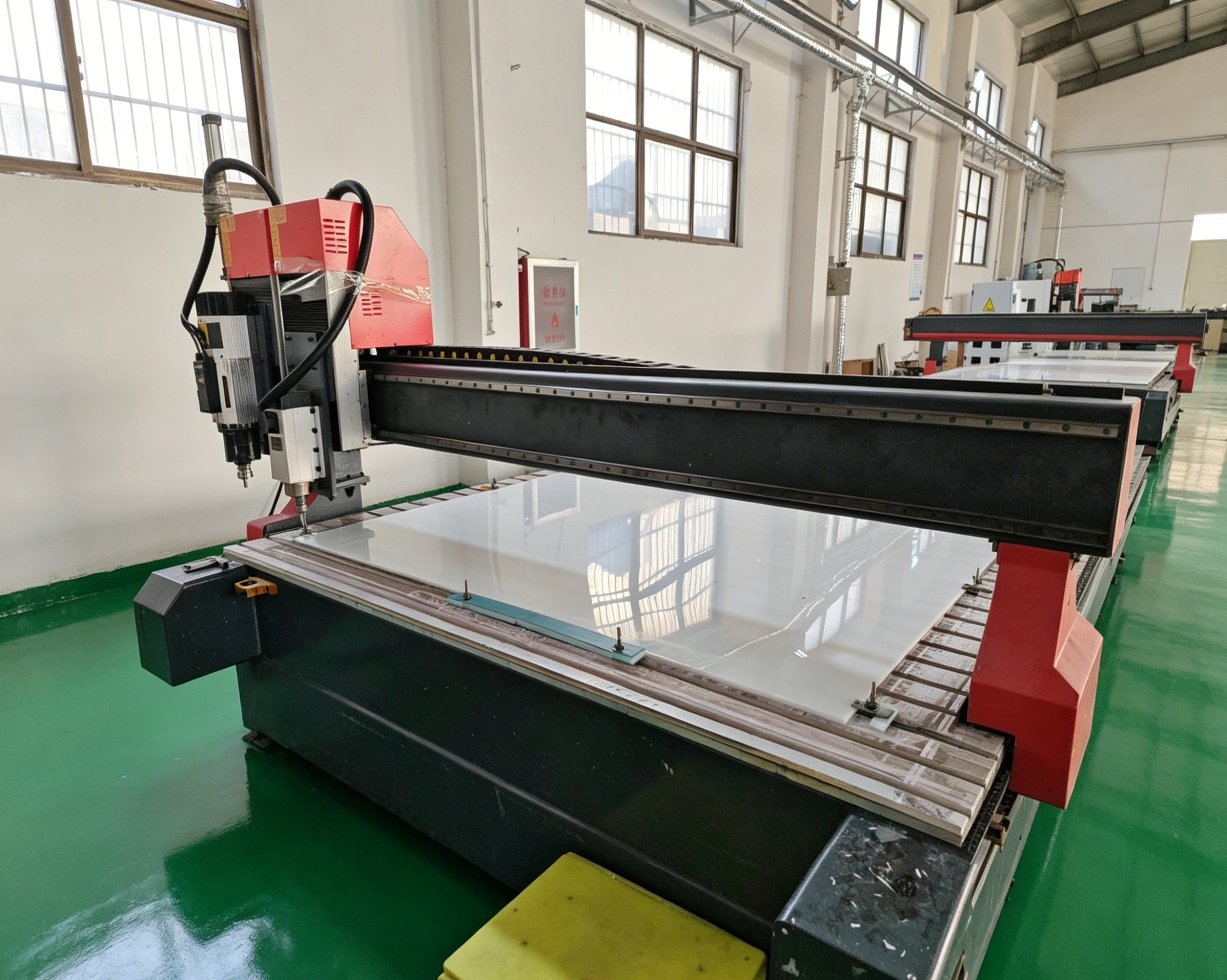
Industrial HDPE sheet is a practical engineering material for CNC-machined components, machine guards, jigs, fixtures and welded chemical or wastewater equipment when the plate grade, thickness, weld joint and acceptance criteria are matched to the service environment. This guide walks the workflow in the order fabrication actually happens: establish the service conditions, select the sheet grade and format, plan the CNC sequence, control the welding operation, and define acceptance checks. Sanyou hdpe sheet, supplied by Tangyin Sanyou Engineering Plastic Co., Ltd., is used throughout as the reference industrial HDPE sheet grade, with company-reported production capability included where relevant.
The reader is engineering and procurement teams moving from Evaluation into Execution: the material is already a candidate, and the remaining work is to set machining tolerances, weld joint design and incoming inspection checks from real material facts.
The problem: why machining and welding decisions determine whether an HDPE part works
HDPE is easy to describe at the material level and harder to specify at the part and weld level. The material is low cost, chemically resistant, low friction and lightweight, so it appears in specifications from chemical processing, wastewater treatment, food processing, marine, construction and industrial equipment. The buyer or engineer making the specification decision, however, is not choosing the material; the decision is whether the machined part and the welded structure will work in service.
A welded HDPE tank wall that is too thin, has an incorrect groove or is bonded with the wrong filler rod will leak. A CNC jig that does not account for HDPE thermal expansion will lose position over the working day. A machine guard that is specified in standard HDPE and installed outdoors will chalk or embrittle under prolonged sun exposure. None of these failures are visible on a supplier's product page. They are decided by the grade, thickness, joint design, machining sequence and acceptance criteria that this guide explains.
Industry background: where HDPE machining and welding are used
HDPE sheet is used across chemical processing, electroplating and surface treatment, water and wastewater treatment, food and beverage, marine, construction and industrial equipment. The material appears in chemical storage tanks, plating and pickling tanks, wastewater treatment equipment, scrubbers, ventilation ducts, laboratory furniture, food processing tables and cutting boards, machine guards, jigs, fixtures, CNC-machined components, marine panels, outdoor cabinets, agricultural equipment and material-handling equipment.
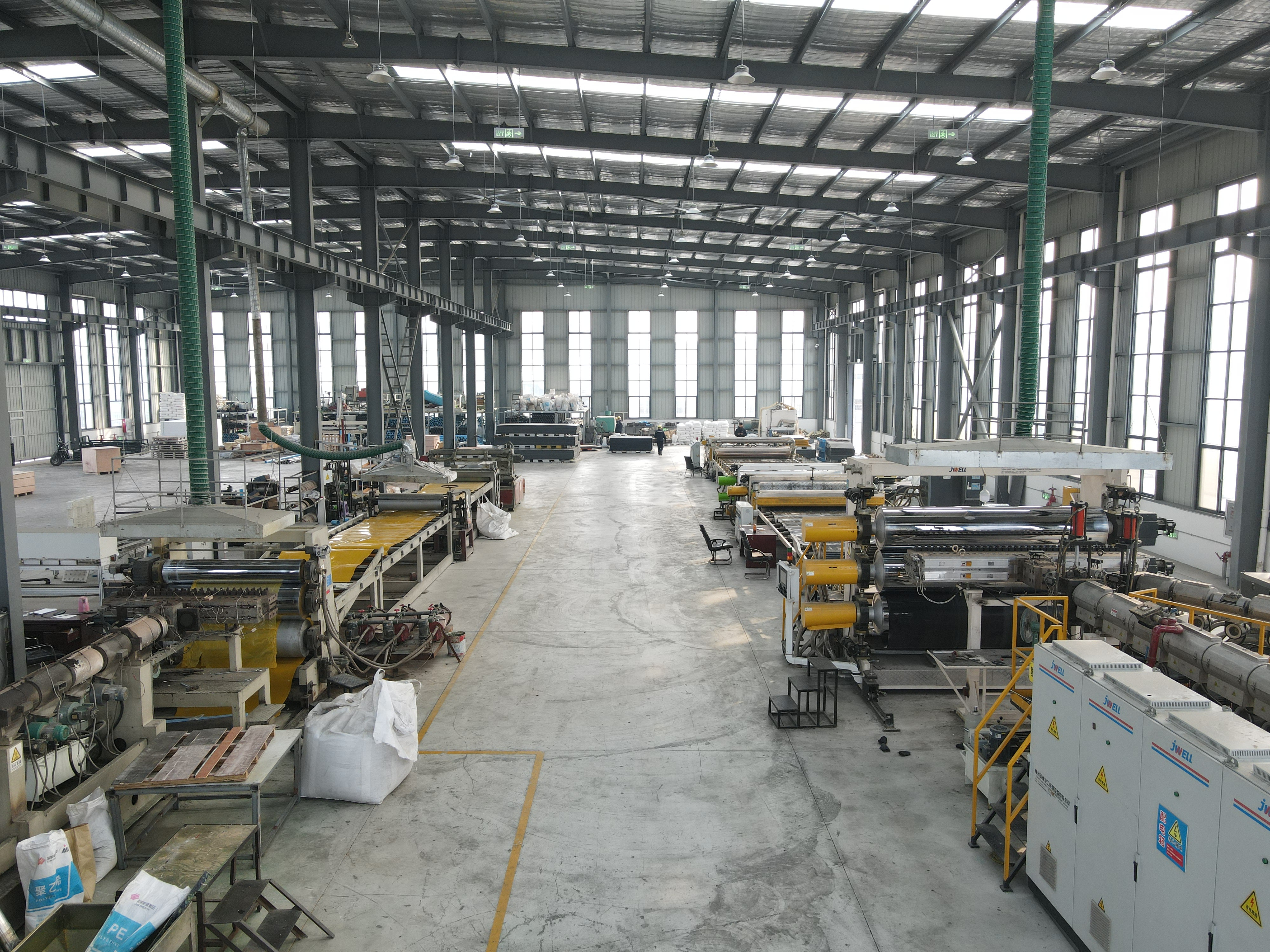
The material's main advantages in machining and welding are chemical and corrosion resistance against most dilute acids and alkalis, good low-temperature impact and stress-crack resistance, low moisture absorption, reliable weldability, and machinability with standard tooling. In a documented HDPE sheet case in Australia, a chemical equipment manufacturer used 20 tons of HDPE sheet for chemical tanks, wastewater treatment equipment, food processing surfaces, machine guards, outdoor cabinets and custom-fabricated components, with improved corrosion and moisture resistance and simplified fabrication and cleaning reported over a two-year service period. That case is useful as use-context for how HDPE sheet fabricates, not as a substitute for project-specific qualification.
The material properties that drive machining and welding choices
Seven properties affect most machining and welding decisions.
Low moisture absorption. HDPE absorbs almost no water, so it holds its dimensions and weight in wet, humid or washdown environments. That matters in CNC parts and machine guards that sit at the same fixed position for months, and in welded equipment where the vessel wall must keep its specified thickness.
Impact strength. HDPE offers strong impact toughness across its service range, which is why it is chosen for chute liners, material-handling parts and equipment exposed to knock loads. Its low-temperature impact performance is better than PP and better than FRP, which can crack and shed glass fibres under impact.
Chemical resistance. HDPE resists most dilute acids and alkalis, with a typical continuous service temperature range of -40 °C to 80 °C. That range narrows with medium concentration, temperature and the presence of oxidisers or organic solvents, and those conditions must be confirmed before the grade is fixed. Where a medium falls outside HDPE's documented resistance, the material is not automatically suitable and chemical compatibility must be confirmed per medium.
Weldability. HDPE is a thermoplastic, and its welded joints are formed by heating and fusing the weld zone. Joint design, surface cleanliness, weld method, operator skill and post-weld inspection determine whether the welded chemical or wastewater equipment will hold pressure without leaking.
Machinability. HDPE can be drilled, milled, turned, sawed and tapped. Because HDPE has low thermal conductivity, heat builds up at the cut, and the material softens if the tooling and feed rate are chosen for a harder plastic or metal. Sharp tools, high feed rates, generous chip clearance and a stable work-holding arrangement control the cut.
Dimensional accuracy. HDPE thermal expansion is higher than metal, so tight tolerances on long holes, slots or large plate flatness should be considered against shop temperature and against expected service temperature. Countersunk fixing holes, slots and locating holes need clearance that accounts for plate thickness and machining stress.
UV stability. Standard HDPE is not UV-stabilised, and under prolonged outdoor sun exposure it may chalk or embrittle. Outdoor cabinets, marine panels, outdoor machine guards and outdoor signage should use UV-resistant HDPE. Sanyou lists UV resistance as an optional grade attribute, so UV stabilisation must be specified on the purchase order rather than assumed from the basic HDPE designation.
Specifying the HDPE sheet for CNC parts and welded equipment
Grade and format choices should follow the service conditions rather than a generic industrial label, because grade, thickness, surface and additives decide the part's chemical compatibility, food-contact eligibility and fabrication behaviour.
Resin grade: virgin versus recycled. Virgin HDPE offers stable mechanical performance and is used for food-contact, potable water and high-reliability projects. Recycled HDPE is a cost-effective choice for non-critical anti-corrosion lining and general structural work when the recycled grade and the mechanical requirements of the part have been confirmed. For CNC parts that touch food, potable water or strict hygiene surfaces, specify virgin HDPE and request a compliance document.
Thickness. Sanyou HDPE sheet is listed at 1–100 mm thickness and up to 2500 mm width, with custom width and length available. For application guidance: 5–6 mm is a light-load lining reference, 6–20 mm covers tank walls and structural panels, and 20–50 mm covers heavy-wear chute liners. Thickness selection also needs to include machining allowance, countersunk fixing depth and weld joint geometry.
Surface. Smooth surface suits CNC parts and welded equipment where a clean, low-friction or hygienic finish is needed. Textured surface is used for step pads, walkway boards, ground protection mats and machine guards where grip matters; a textured surface may complicate sealing weld joints.
Colour. Sanyou lists black, white, blue, green, red and yellow standard colours plus custom colours. Black, white and grey are common for equipment guards, tank walls and food processing contexts, while other colours are used for identification, coding and safety.
UV-resistant and food-grade options. UV resistance is optional and food grade is available. For food-contact applications (cutting boards, work surfaces, hygienic surfaces of CNC parts), confirm compliance documentation such as a food-contact declaration under the applicable regional requirements rather than relying on a food-grade product name alone. Sanyou lists HDPE sheet made from food-grade polyethylene resin and states suitability for food processing, cutting boards and sanitary applications; the compliance declaration still needs to travel with the order.
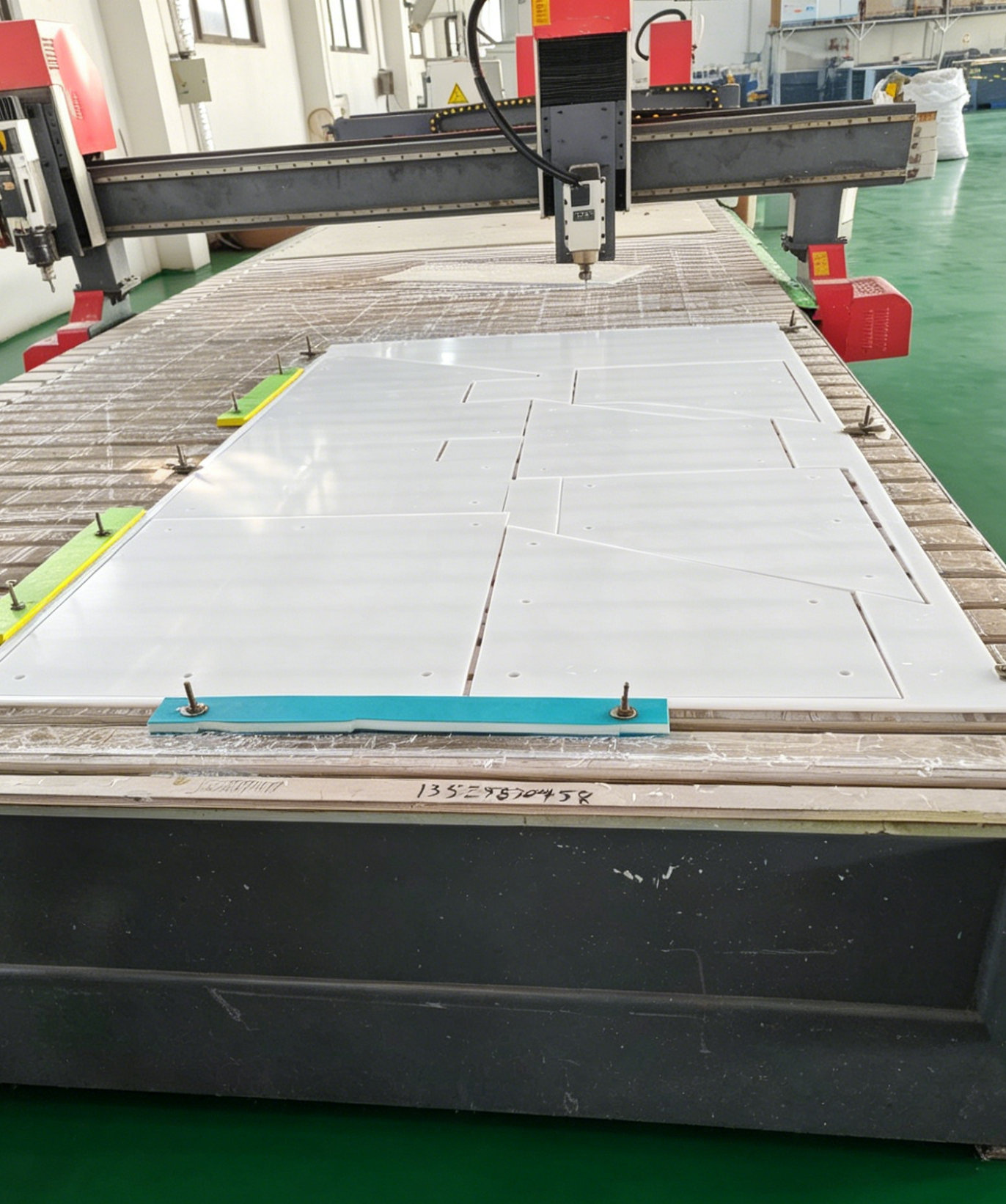
Step-by-step: planning the CNC machining sequence
Work through these steps in order. Waste is lower when the machining sequence is set before the sheet is cut.
Step 1: Review the drawing and the service conditions. Confirm the part function, service temperature, chemical medium, load, outdoor exposure and the food-contact status required. Flag any countersunk fixing holes, locating holes, slots, long overhangs and flatness-critical faces. Compare HDPE thermal expansion at the service temperature against the tight tolerances shown in the drawing and confirm critical tolerances with the end user.
Step 2: Select and cut the sheet. Select sheet thickness, grade, surface and colour from the confirmed service conditions. Use virgin HDPE for food, potable water and high-reliability CNC parts and machine guards, and recycled HDPE where the application is non-critical anti-corrosion or general structural work. Saw or rout with allowance for machining and for the material relaxation that follows.
Step 3: Perform CNC milling and routing. HDPE is machined with sharp cutters, good chip clearance and cutting fluid or air clearance. Clear the chips out of the cut so they do not remelt into the finish, and leave adequate clearance so the tool does not rub and heat the material in long pockets and slots.
Step 4: Drill and countersink fixing holes. Drill and countersink using the fastener supplier's specified angle and depth, and confirm the remaining thickness under the countersink is adequate for the fastener load. For deeper countersinks, use a flat-bottom cut rather than a drill-point profile so the fastener seats evenly.
Step 5: Deburr, inspect and pack. Remove sharp edges and inspect dimensions, countersink positions, slot positions and overall flatness. For outdoor and chemical service parts, look for surface damage, inclusions, colour non-uniformity and UV-grade identification.
Step-by-step: welding chemical and wastewater equipment
Step 1: Joint design. Fix the weld type (butt, fillet, tee or lap), bevel angle, root gap and bead size, so the weld joint can carry the required load and remain sealed at the service temperature. Design to avoid gaps, sharp corners and trapped product where the chemical medium could collect.
Step 2: Surface preparation. Clean and dry the weld zone before welding. Remove oils, release agents, chips, moisture and other contaminants. HDPE low moisture absorption helps keep the weld zone dry, but boards that have been stored outdoors or in a wet area should be brought to a stable, dry condition first.
Step 3: Select the weld method. Match the method to the joint, the panel thickness, the operator skill and the production volume. Common HDPE methods are hot-air (hot-gas) welding, hot-plate welding and extrusion welding. Thin sheets and small joints typically use hot-air welding; thick plate and large surface panels use hot-plate welding; heavy-wall vessel and pipe work often uses extrusion welding.
Step 4: Perform the weld. Hold welding parameters, preheat conditions, travel speed and rod or filler composition consistent with the joint. For thick plate, run multiple passes or weld from both sides to reach the required root penetration. Set the weld position and support so that the plates do not shift during the pass.
Step 5: Post-weld inspection and testing. Inspect welds visually, run a tightness test (hydrostatic or pneumatic) where the application requires it and check dimensions. Non-destructive testing may be appropriate for critical chemical equipment, and dimensional and weld records should be kept with the batch or order documentation.
Comparison of HDPE sheet against alternative materials for machining and welding
The comparison below uses the supported facts in the corpus and is a starting point, not a substitute for confirmation against the specific medium, temperature and plant standard.
| Decision criterion | HDPE sheet | PP sheet | PVC sheet | FRP sheet |
|---|---|---|---|---|
| Continuous service temperature | -40 °C to 80 °C | 0 °C to 80–100 °C, depending on grade | Softens or ages under continuous medium temperature | Higher temperature resistance than HDPE |
| Low-temperature impact | Excellent | Lower than HDPE | Lower than HDPE | Low; glass-fibre shedding risk |
| Chemical resistance | Good against most dilute acids and alkalis | Good; suited to organic solvents and medium-temperature service | Cost-effective for low and normal temperature | Good at high temperature |
| Rigidity | Medium | Higher than HDPE | Medium | High |
| Weldability | Reliable thermoplastic weld | Weldable | Welded or solvent bonded, temperature-limited | Not a thermoplastic weld; bonded or laminated |
| Typical machined or welded use | Chemical tanks, wastewater equipment, machine guards, chute liners, CNC jigs and fixtures | Medium-temperature chemical equipment, rigid panels | Cost-sensitive normal-temperature board, general anti-corrosion | High-temperature anti-corrosion, structural panels |
The next table compares virgin and recycled HDPE for CNC parts and welded equipment specification.
| Specification check | Virgin HDPE sheet | Recycled HDPE sheet |
|---|---|---|
| Food-contact use | Yes, when the food-grade grade and compliance documentation are supplied | Not typically positioned for food contact |
| Potable water and high-reliability | Suitable | Confirm per project |
| Mechanical consistency | Stable mechanical performance | Depends on recycled grade |
| Cost positioning | Higher | More economical where non-critical |
| CNC parts and welding fit | Food, potable water and high-reliability CNC parts and machine guards | Non-critical anti-corrosion lining, general structural parts, machine guards |
Use cases: CNC parts, guards, jigs, fixtures and welded equipment
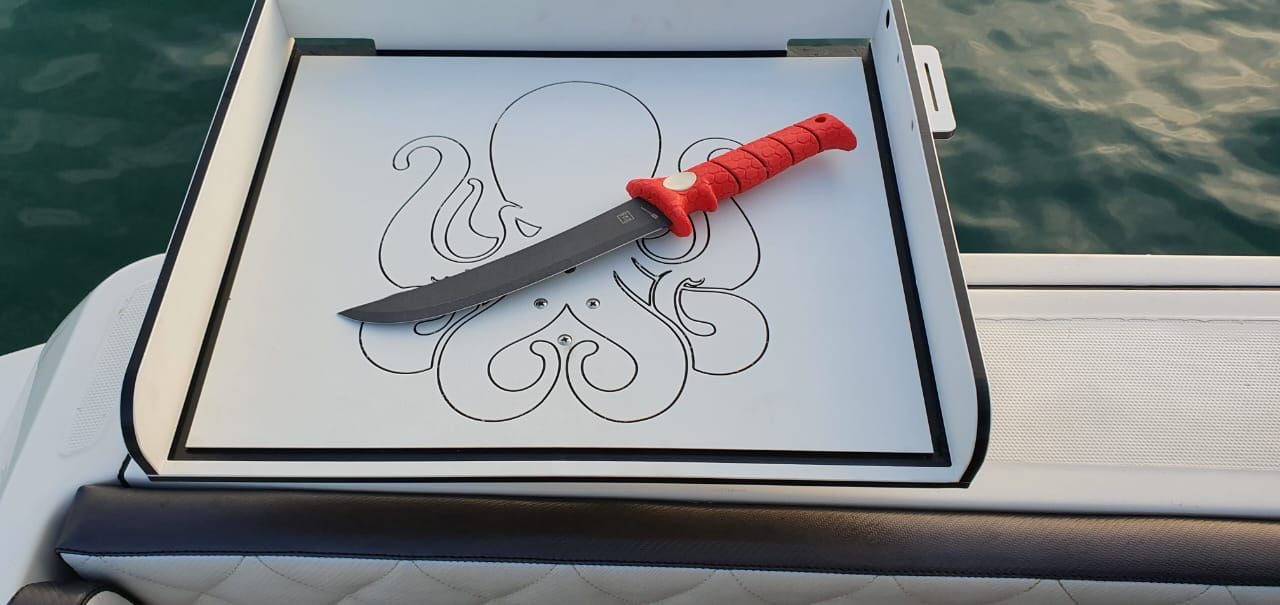
CNC-machined components and jigs. The main advantages of HDPE in CNC component work are low friction, low moisture absorption and chemical resistance. Typical parts include jigs, fixtures, guide blocks, locator pins, machine guards, spacers and pads. Specify virgin HDPE or a confirmed grade and a thickness that resists deflection under fastener load.
Machine guards. HDPE machine guards can face coolant, chips, cleaning agents and outdoor exposure. For outdoor or washdown duty, specify UV-resistant HDPE. Guard dimension and fixing-hole positions should be set in the design review so the installed guard can hold the correct fit.
Welded chemical and wastewater equipment. Welded HDPE equipment is used for chemical storage tanks, plating and pickling tanks, liners for wastewater treatment vessels, scrubbers, ventilation ducts and laboratory furniture. Medium confirmation, hydrostatic testing and dimensional checks are the key conditions for acceptance. Specify virgin HDPE or a confirmed grade, and hold the weld procedure and inspection records for the life of the equipment.
Food-processing surfaces. CNC parts for food processing tables, cutting boards and hygienic surfaces need food-grade HDPE and the matching compliance documents. Supply the material declaration together with the shipping documents so food-safety teams can review it.
Marine and outdoor panels. HDPE marine board, outdoor cabinets and guards must hold up to UV, salt spray and freeze-thaw cycles. Specify UV-resistant HDPE and appropriate fasteners and stand-off details.
Chute liners and material handling. For heavy-wear applications, specify heavier plate (corpus reference: 20–50 mm). Where impact and abrasion are extreme, UHMWPE sheet is the specialist lining material, and HDPE plate is then reserved for the surrounding structural work.
Acceptance criteria for corrosive or outdoor service
Acceptance criteria should be fixed in the purchase order, not negotiated after the part is cut and welded. The checkable acceptance criteria tied to machining and welding are:
- Grade and specification confirmation. Confirm resin grade (virgin or recycled), surface (smooth or textured), colour, thickness and UV status. For food or potable-water contact, confirm the compliance documentation.
- Dimensions and tolerances. Confirm plate thickness, flatness, hole positions, slot positions, countersink depth and weld-joint dimensions.
- Weld integrity. Confirm weld appearance, weld size, weld location and the tightness-test record.
- Surface condition. Confirm absence of cracks, inclusions, colour non-uniformity, scratches and other service-affecting defects.
- Documentation. Confirm the inspection record, compliance documentation and batch or order identification.
Frequently asked questions
What material properties should be checked when specifying HDPE sheet for chemical, food or outdoor service?
Confirm the chemical medium type and concentration, the long-term service temperature, the load and impact conditions, indoor or outdoor exposure, contact-material requirement and the machining requirement. HDPE resists most dilute acids and alkalis with a continuous service temperature range of -40 °C to 80 °C. Virgin HDPE suits food-contact, potable-water and high-reliability projects; recycled HDPE suits non-critical anti-corrosion lining; UV-stabilised HDPE suits long-term outdoor use where reduced aging and chalking are required.
What capabilities define an industrial HDPE sheet manufacturer with extrusion and custom cutting capability?
Check the extrusion capability, customization capability, quality control, export experience, lead time and after-sales support. Sanyou reports OEM/ODM/custom fabrication capacity of approximately 800 metric tons per month, with customization covering thickness, size, colour, surface texture, material grade, UV stabilisation, cut-to-size, CNC machining, drilling, welding and custom packaging. Quality control covers incoming raw material inspection, in-process thickness and dimension checks, surface inspection and final pre-shipment inspection. The export markets covered are North America, Europe, the Middle East, Oceania and Southeast Asia. Lead time is 15–20 days after order confirmation and deposit.
What are the MOQ, delivery terms and acceptance criteria for buying industrial HDPE sheet?
MOQ is 1,000 kg. Delivery terms are FOB or CIF. Acceptance criteria are pre-shipment testing. Payment terms are 50/50. Before negotiating, confirm the chemical medium, the long-term service temperature and the impact load; for outdoor use, confirm the UV-ageing requirement. Compare material indicators against the wear requirement and the budget to the matching parameters.
Can a sample or trial order be arranged for evaluation?
Trial orders are negotiable. MOQ is 1,000 kg per specification and colour, but trial orders are negotiable for a new specification. Thickness, surface, colour and fabrication detail on a trial order still need to be confirmed against the service conditions.
What is the lead time for custom HDPE sheet parts?
Lead time is 15–20 days after order confirmation and deposit. Actual lead time depends on the order quantity and the customisation scope, including CNC machining, drilling and welding work. Specify the custom grade, thickness, surface, colour, CNC work, welding and packaging so the order confirmation covers all critical points.
Conclusion
Machining and welding industrial HDPE sheet is a practical programme; the difficulty is specifying it correctly. Choose the correct resin grade, set the thickness and surface for the service temperature, chemical medium, impact and UV exposure, and review the drawing before cutting so the CNC sequence accounts for HDPE thermal expansion. For welded equipment, design the weld joint, select a method matched to the plate thickness, and apply tightness testing and dimensional checks as the acceptance criteria. Sanyou reported capabilities — including approximately 800 metric tons per month OEM/ODM fabrication capacity, 1–100 mm thickness, width up to 2500 mm, custom lengths, CNC machining, drilling, welding and 15–20-day lead time — provide a starting point for setting the CNC and welding requirements, not a substitute for project-specific qualification.
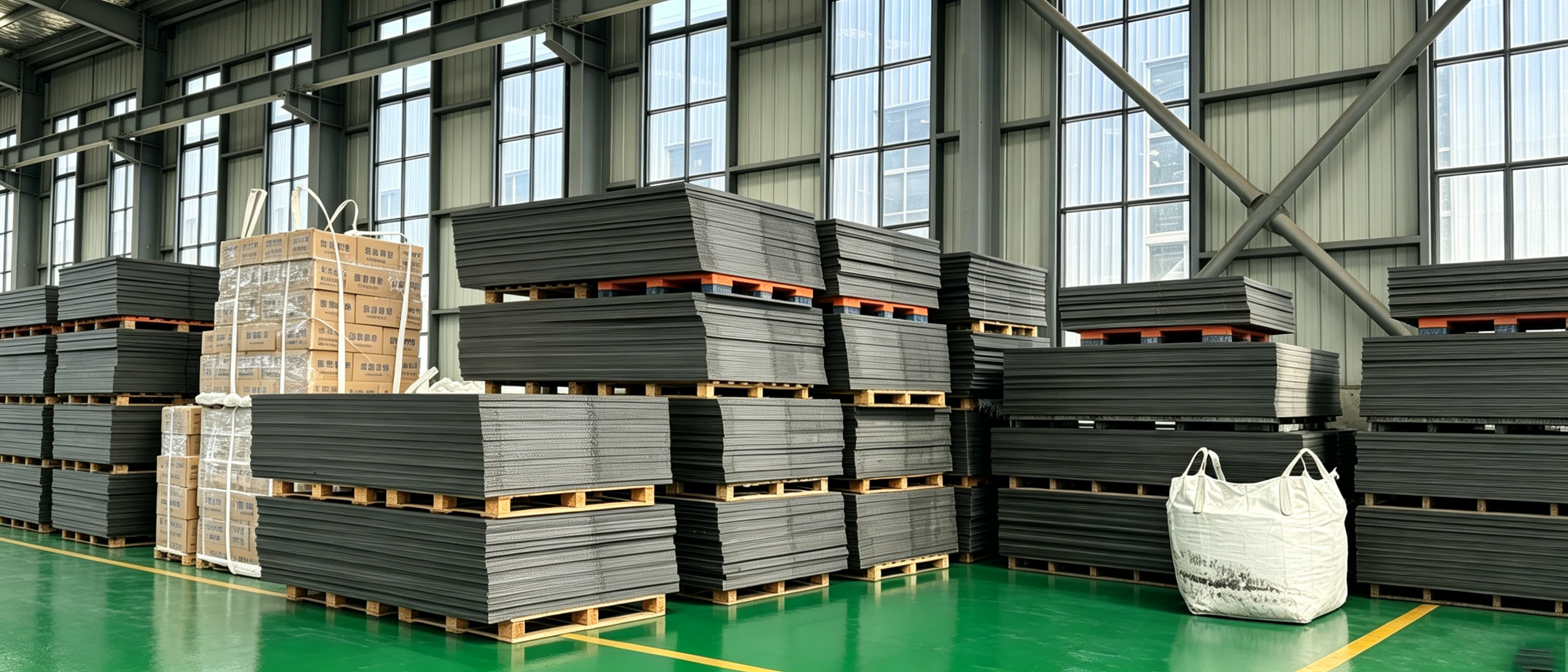
Next step: Download the Sanyou product catalog or contact Sanyou with the service conditions, thickness, grade, surface, colour, CNC work, welding requirements and acceptance criteria. Further detail is available at www.syuhmwpe.com.
Have Questions or Need More Details?
Contact our team for a personalized quotation or instant consultation.
Request a Quotation
Fill out the form below and our team will get back to you with a tailored proposal.
WhatsApp Direct Chat
Prefer to chat in real-time? Message us on WhatsApp for instant assistance & quick answers.
- Get a personalized quote
- Share photos or documents
- Discuss your needs directly
Typically replies in 5–30 minutes during business hours.