
Industrial HDPE Sheet Manufacturer: Sanyou Company Profile
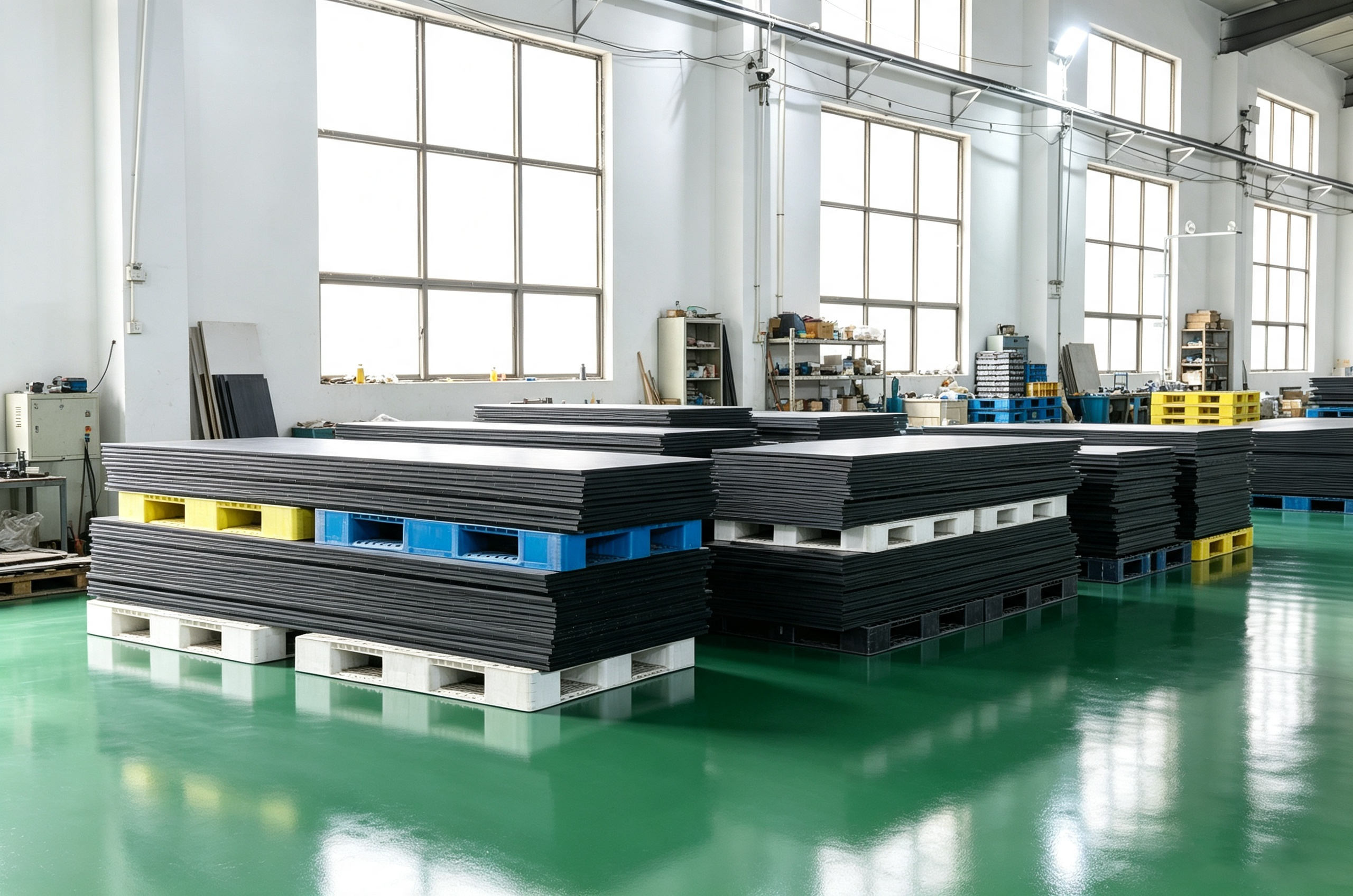
Tangyin Sanyou Engineering Plastic Co., Ltd. is a Chinese engineering plastics manufacturer founded in 2001 that produces industrial HDPE sheet, UHMWPE sheet, PP sheet, HDPE sandwich board and ground protection mats from a 40,000 m² facility in Tangyin County, Henan. The company reports an annual production capacity of 120,000 tons, a workforce of about 80 people and an R&D team of 10 engineers, and exports approximately 70% of its sales to North America, Western Europe, Central Europe, the Middle East, Oceania and Southeast Asia.
This profile is written for procurement managers, importers, distributors, engineers and brand owners at the awareness and research stage — the point where you know you need industrial HDPE sheet but have not yet decided who to approach. It covers what Sanyou manufactures, how its products are specified, what manufacturing and quality evidence the company publishes, where the limits of that evidence lie, and how to convert the information into a specification before you send an RFQ.
Every figure, material property and application in this article comes from Sanyou's published product data, its product catalog, or from third-party market and technical sources that are cited inline. No customer names, awards, test results or capabilities have been added beyond what is published.
The Problem: Why Sourcing Industrial HDPE Sheet Is Harder Than It Looks
Industrial HDPE sheet is a specification-driven product, but most supplier pages present it as a commodity. The result is that buyers at the research stage compare near-identical claims and still cannot answer four basic questions: which grade am I being quoted, what thickness and tolerance can the factory actually hold, what compliance documents exist, and what commercial basis applies.
Four specific ambiguities cause most of the confusion:
- Grade ambiguity. Virgin, recycled, UV-stabilized, marine-grade and food-contact HDPE are different products with different cost structures and different end uses. A quotation that says only “HDPE sheet” is not comparable to one that names the model and grade.
- Capability ambiguity. A listed thickness range describes what a supplier offers, not necessarily what it produces routinely at a controlled tolerance. Nominal availability and repeatable production capability are two different things.
- Compliance ambiguity. “Food grade” is a product claim; a declaration of compliance, resin traceability and relevant migration or conformity testing are evidence. Buyers in regulated markets need the second, not the first. Industry guidance identifies food-contact polyethylene as requiring applicable jurisdictional conformity documentation — for example FDA 21 CFR 177.1520 in the United States or EU Regulation 10/2011 in the European Union — alongside ASTM D4976 as a baseline polyethylene material specification reference.
- Commercial ambiguity. Published price, MOQ and lead-time data for industrial HDPE sheet is largely absent from public sources, so cost benchmarking normally has to be built from dated supplier quotations rather than from open data.
This article does not score Sanyou against other suppliers. Instead, it sets out traceable facts about the company, its material families and its stated capabilities, so that you can decide what to verify independently.
Industry Background: Where Industrial HDPE Sheet Sits in the Market
HDPE is one of the highest-volume thermoplastics in global use, and semi-finished sheet is a significant part of that demand. According to Virtue Market Research, the global HDPE market was valued at USD 84.37 billion in 2023 and is projected to reach USD 126.86 billion by 2030, a CAGR of 6% over 2024–2030. A separate commercial research summary published by Market.us reports that the sheets and films segment represented approximately 41.1% of global HDPE demand share.
The same research house estimates the global ground protection mat market — a segment driven largely by HDPE and composite mats — at USD 3.0 billion in 2024, growing at a CAGR of 4.6% to reach USD 5.0 billion by 2035. That makes ground protection mats one of the more visible downstream sheet applications alongside chemical containment, food processing equipment and material-handling liners.
Feedstock economics also matter to buyers. S&P Global Platts reported black coloured recycled HDPE resin selling at around USD 520/mt FOB Southeast Asia in September 2026, part of a broader shift in which recycled polymer pricing has decoupled from simple virgin-linked patterns. For sheet buyers this translates into a practical rule: recycled and virgin grades should be specified and quoted separately, because they are no longer interchangeable on price logic alone.
Company Overview: Tangyin Sanyou Engineering Plastic Co., Ltd.
Tangyin Sanyou Engineering Plastic Co., Ltd. is a manufacturer of engineering plastic and rubber products established in 2001, giving the company more than 20 years of experience in the engineering plastics industry. The business is located at Tengfei Avenue (Industrial Park), Yigou Town, Tangyin County, Henan, China, and operates under the website www.syuhmwpe.com.
| Company fact | Published detail |
|---|---|
| Legal / trading name | Tangyin Sanyou Engineering Plastic Co., Ltd. (also presented as Tangyin Sanyou Engineering Rubber & Plastic Co., Ltd.) |
| Founded | 2001 — over 20 years in the engineering plastics industry |
| Manufacturing facility | 40,000 m² |
| Workforce | Approximately 80 employees |
| R&D team | 10 engineers |
| Annual production capacity | 120,000 tons |
| Main products | HDPE Sheet, UHMWPE Sheet, PP sheet, HDPE Sandwich Board, Ground Protection Mat |
| Export share | Approximately 70% of total sales |
| Main markets | North America, Western Europe, Central Europe, the Middle East, Oceania, Southeast Asia |
Sanyou's production process covers raw material selection, sheet forming, cutting, machining, quality inspection, packaging and delivery. The company states that it supports customized solutions built from customer drawings, technical requirements and specific application conditions — a positioning that matters for buyers who need fabricated components rather than standard stock panels.
Core Products and Solutions
HDPE Sheet (PE300) — the core industrial product
The PE300 HDPE sheet is Sanyou's primary industrial sheet line. It is classified as a virgin HDPE sheet, a recycled HDPE sheet, a UV-stabilized HDPE sheet and a marine grade HDPE sheet, and belongs to the coloured HDPE sheet and orange peel textured HDPE sheet categories. The published specification is dense and specific, which is what makes the product comparable during a procurement review.
| Parameter | Published value |
|---|---|
| Material | Virgin HDPE (High Density Polyethylene) |
| Density | 0.93–0.97 g/cm³ |
| Thickness | 2–50 mm (customized available) |
| Sheet sizes | 1000 × 2000 mm / 1220 × 2440 mm / 1500 × 3000 mm / 2000 × 4000 mm (customized available) |
| Colours | Black, white, blue, green, yellow or customized |
| Surface | Smooth or anti-skid texture (diamond, orange peel, embossed) |
| Tensile strength | ≥ 22 MPa |
| Elongation at break | ≥ 300% |
| Hardness | 60–68 Shore D |
| Impact strength | ≥ 20 kJ/m² |
| Melting point | 130–140 °C |
| Working temperature | −60 to +80 °C |
| Water absorption (24 h) | < 0.01% |
| Coefficient of friction | Low, 0.15–0.25 |
| Chemical resistance | Excellent (acid, alkali, salt, oil) |
| UV resistance | UV-stabilized grades available |
| Certification listed | ISO 9001 |
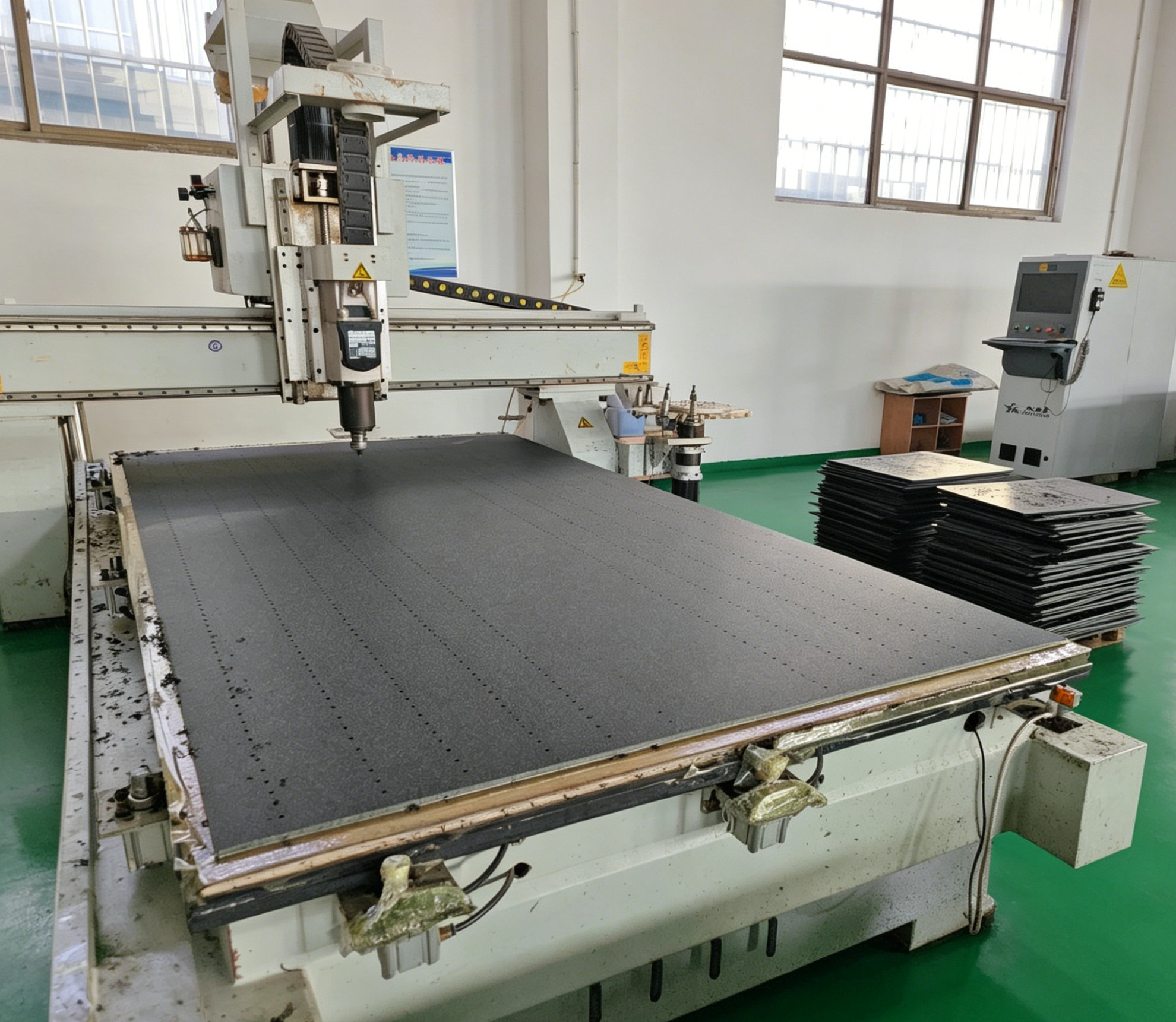
| Fabrication | Weldable, cuttable, CNC machinable |
Two details in that table carry more weight than the rest. First, the 1220 × 2440 mm format corresponds to the 4x8 ft industrial HDPE panel format widely used in North America, which means the sheet can be specified in the buyer's own units without conversion. Second, the low coefficient of friction of 0.15–0.25 combined with impact strength of at least 20 kJ/m² is what makes the material suitable for both structural panels and sliding-contact components such as liners.
Customization on this line covers colours, sizes, thicknesses and textures. Sanyou also states that it works from customer drawings and technical requirements, which is the practical definition of OEM/ODM capability for sheet products: custom dimensions, custom surface, custom grade, and machined features to drawing.
UHMWPE Sheet (PE1000) — the wear-resistant companion line
UHMWPE sheet, also known as Ultra-High Molecular Weight Polyethylene sheet, is supplied under model designation PE1000. It is available as virgin, reprocessed, anti-static, UV-stabilized, flame-retardant, marine-grade, lining-grade, MoS₂-filled, metal-detectable and borated grades. Sanyou lists compression molding, cut-to-size and CNC machining for this line, with thickness customizable and natural, black, green, blue or custom colours.
The distinction from HDPE matters at selection stage: UHMWPE targets severe sliding abrasion and repeated impact — chute, hopper and silo linings, conveyor components, guide rails, chain guides, wear strips and truck-bed liners — whereas HDPE sheet is more often specified for corrosion resistance, moisture resistance, hygienic surfaces and general fabrication.
PP Sheet (PP-H / PP-C) — the chemical-duty option
Polypropylene sheet is supplied under model designation PP-H / PP-C in homopolymer and copolymer grades, plus standard, coloured, textured and custom functional categories. Published data includes a density of approximately 0.90–0.91 g/cm³, thickness of 2–30 mm, a standard size of 1220 × 2440 mm (4 × 8 ft), extrusion as the production process, and processing compatibility with cutting, drilling, heat bending, plastic welding, thermoforming and CNC machining. Typical application scenarios include fabricated tanks, ducts and containers.
Ground Protection Mat — HDPE in heavy-duty field use
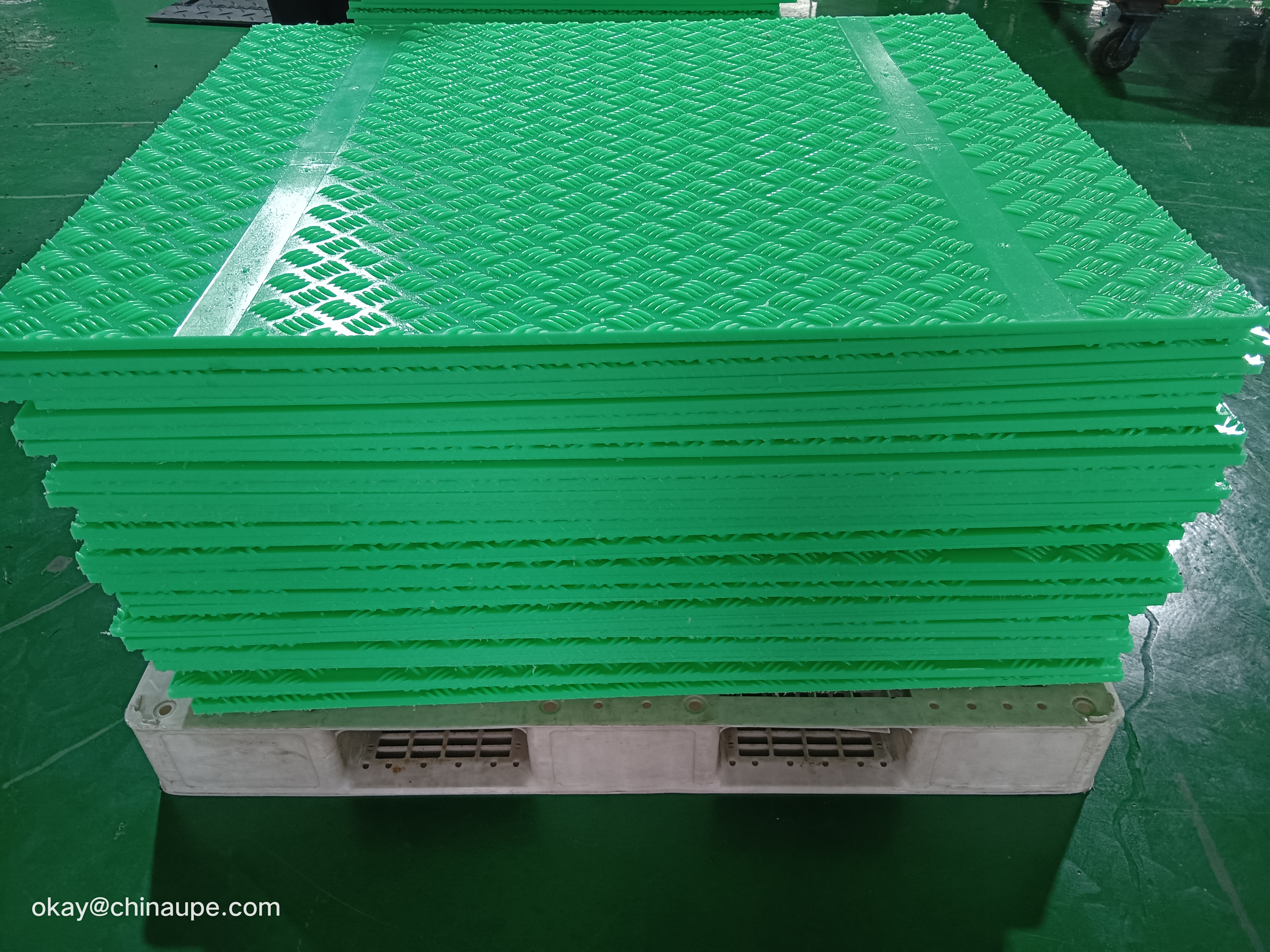
The ground protection mat line uses HDPE with recycled or application-specific formulations depending on model and requirements. It is classified as a heavy-duty ground protection mat, lightweight ground protection mat, temporary road mat, track mat, bog mat, construction mat and turf protection mat, with panel sizes of 4 × 8 ft, 3 × 8 ft, 3 × 6 ft, 2 × 8 ft, 2 × 6 ft and 2 × 4 ft. Standard metric sizes include 1220 × 2440 mm, 910 × 2440 mm, 910 × 1830 mm, 610 × 2440 mm, 610 × 1830 mm and 610 × 1220 mm.
Published thickness options are 12.7 mm, 15 mm and 20 mm, with diamond cleat tread or flat oblong tread surfaces, integrated hand holes, preformed connection holes and mat connectors. The load reference is up to 80–120 metric tons depending on thickness, ground conditions, vehicle type and installation. Customization covers size, thickness, colour, tread pattern, hand holes, connection holes and logo marking, and the mats do not rot, splinter or become waterlogged — a recyclable alternative to plywood and steel plates.
Manufacturing, R&D, Quality and Global Supply Capability
Sanyou's manufacturing base is a 40,000 m² facility with a stated annual output of 120,000 tons. The published equipment and process scope includes extrusion production lines, molding production lines, CNC machining and engraving, supported by raw material warehousing and finished goods warehousing. The process sequence runs from raw material selection through sheet forming, cutting, machining, quality inspection, packaging and delivery.
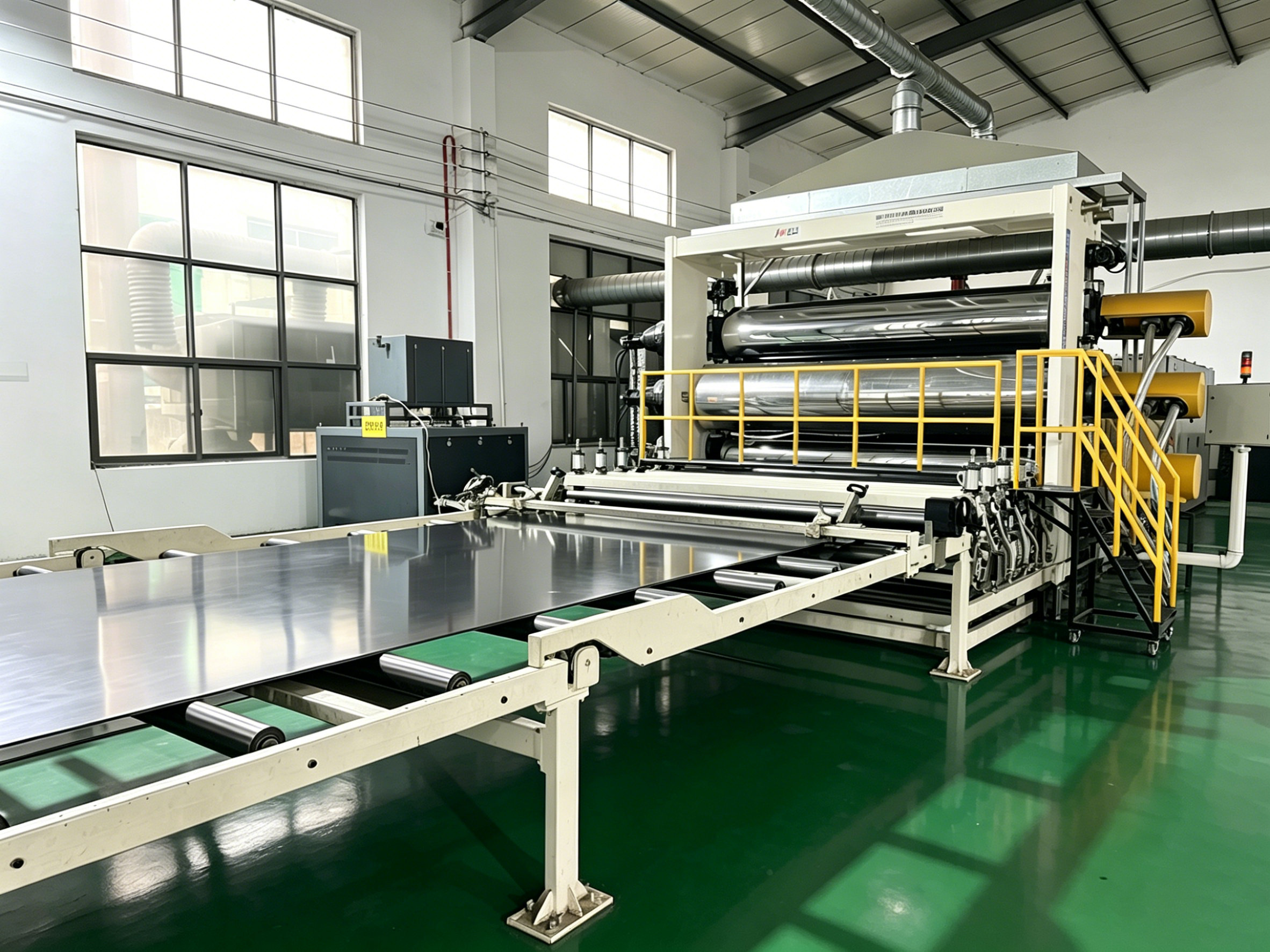
On the R&D side, the company publishes a team of 10 engineers. That is a modest engineering headcount for a 120,000-ton operation, and buyers should read it as a signal about the type of work it supports well: grade selection, dimensional and surface customization, and drawing-based machining rather than large-scale fundamental polymer development. For most industrial sheet buyers, that is exactly the relevant capability.
Quality control is documented at process level — raw material selection, forming, cutting, machining, inspection and packaging — and ISO 9001 is listed as the certification for the PE300 HDPE sheet line. Beyond that, the company states that it maintains consistent product quality and stable production capacity through strict quality management, and it positions customization to customer drawings and application conditions as a core service.
On global supply, the export profile is the strongest single indicator. Approximately 70% of total sales are exported, served across North America, Western Europe, Central Europe, the Middle East, Oceania and Southeast Asia. That market mix implies experience with documentation-heavy destinations — the European Union and North America in particular — although the specific compliance documents for any given order still have to be requested per shipment.
Market Evaluation and Industry Recognition
Assessing a supplier at the awareness stage is mostly about separating verifiable structure from promotional language. Sanyou's verifiable structure is clear: a 2001 founding date, a defined 40,000 m² facility, a stated output of 120,000 tons, a 70% export ratio and a market footprint across six regions. These are first-party company statements rather than third-party audited figures, but they are specific, internally consistent and testable.
Product-range breadth is another measurable dimension. The company manufactures across four material families — HDPE, UHMWPE, PP and HDPE ground protection mats — rather than specialising in a single sheet type. For a distributor building a catalogue, or an OEM buyer who needs both a chemical-duty sheet and a wear-resistant sheet from one supplier, that breadth reduces supplier count and simplifies documentation.
Industry positioning should also be read honestly. Sanyou operates in the mid-market manufacturing segment, competing on specification breadth, customization flexibility and export experience rather than on branded polymer innovation. The available public record contains no evidence of awards, published case studies with named clients, or third-party performance benchmarking for this company or for comparable sheet producers. Buyers who need those inputs should plan for sample testing and factory verification as part of their evaluation.
Selling Points and Procurement Value
- Format coverage that matches real buyer units. The 1220 × 2440 mm (4x8 ft) format is standard on the HDPE and PP lines, with larger formats at 1500 × 3000 mm and 2000 × 4000 mm available on the HDPE line.
- Grade depth on one material. PE300 covers virgin, recycled, UV-stabilized, marine-grade, coloured and orange peel textured configurations, so an outdoor project and an indoor chemical project can be quoted on the same base material with different grades.
- Thickness range and fabrication readiness. The HDPE line is published at 2–50 mm with customized thickness available, and the company's catalog states HDPE sheet manufacturing from 1 mm to 100 mm with widths up to 2500 mm. Welding, cutting and CNC machining are supported in-house.
- Surface and colour customization for identification and safety. Anti-skid textures (diamond, orange peel, embossed) and standard or custom colours allow colour-coded plant standards and slip-resistant surfaces without a second supplier.
- Export documentation experience. With roughly 70% of sales exported to six regions, the order flow is built around international fulfilment rather than domestic-only supply.
- Material realism on recycled grades. Recycled HDPE is positioned for non-critical anti-corrosion lining and cost-sensitive projects, which is the appropriate use of recycled feedstock and avoids over-claiming on mechanical consistency.
Step-by-Step: How to Specify and Source Industrial HDPE Sheet from Sanyou
The following sequence converts an application requirement into a comparable quotation. It is based on Sanyou's published selection guidance for HDPE sheet.
- Define the working conditions. Record the continuous service temperature, the chemical medium and concentration, the impact and load pattern, whether the installation is indoors or outdoors, and whether the sheet contacts food or potable water. HDPE sheet generally operates from −40 °C to +80 °C with good resistance to most dilute acids and alkalis.
- Select the grade. Choose virgin HDPE for food-contact, potable-water and high-reliability projects where stable mechanical performance and tight hygiene requirements apply; recycled HDPE for non-critical anti-corrosion lining where cost matters more than mechanical consistency; UV-stabilized HDPE for long-term outdoor exposure to reduce ageing and chalking. Standard HDPE is not UV-stabilized and may chalk or embrittle under prolonged sun exposure, and carbon black in the formulation is one route to UV protection.
- Fix the thickness against the duty. The published thickness reference for HDPE sheet is 5–6 mm for light-load lining, 6–20 mm for tank walls and structural panels, and 20–50 mm for heavy-wear chute liners.
- Choose the sheet format. Confirm whether the project uses 4x8 ft (1220 × 2440 mm) or requires a larger or custom panel, and state the required dimensional tolerance rather than assuming it.
- Choose the surface and colour. Smooth is standard for hygienic and welding surfaces; diamond, orange peel or embossed textures add grip. Colour affects both identification and UV behaviour and should be specified explicitly.
- Define the fabrication. State whether the sheet ships as a panel or as a finished part. Cutting, drilling, welding, heat bending, thermoforming, CNC machining and engraving are all in scope.
- Request compliance documentation. For food-contact or regulated use, request the declaration of compliance, resin and additive traceability, and the applicable jurisdictional references and test reports. Do not accept the phrase “food grade” on its own.
- Validate with samples. Ask for a sample or a cut-to-size trial piece in the actual grade, thickness and surface before committing to a production order.
- Confirm commercial terms. Issue a written RFQ stating grade, thickness, size, colour, surface, quantity, fabrication and destination, and request price basis, MOQ, Incoterm and lead time in the same document.
- Verify the factory. Where order value justifies it, request a factory audit, production-line evidence and batch documentation before placing volume orders.
Use Cases: Where Sanyou HDPE Sheet Is Specified
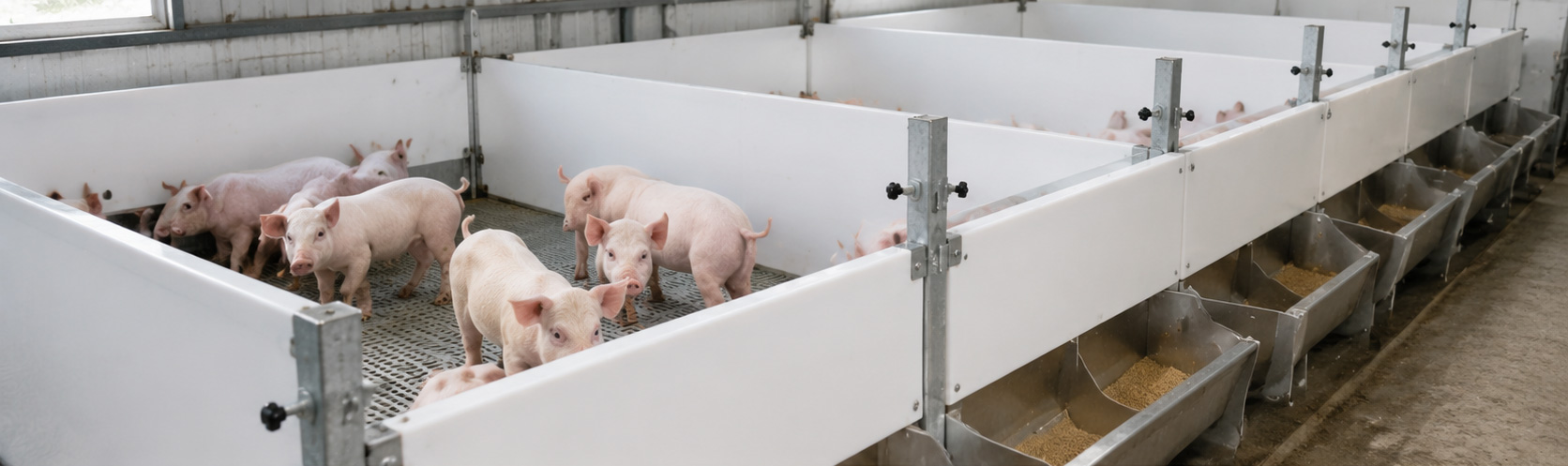
Sanyou's published application scope for HDPE sheet covers chemical processing and water treatment; food and beverage processing; machinery manufacturing and industrial automation; marine and shipbuilding; construction and building materials; agriculture and livestock farming; outdoor furniture and playground equipment; signage and advertising; cold chain and refrigeration; and packaging, logistics and material handling.
In practice, four application patterns account for most industrial HDPE sheet demand:
- Chemical containment and water treatment. Storage tanks, wastewater treatment equipment, scrubbers and fabricated components, where chemical resistance, low moisture absorption (< 0.01% in 24 h) and reliable weldability are the deciding properties.
- Food and beverage processing. Cutting boards, processing tables and hygienic work surfaces. Sanyou offers food-grade HDPE sheet made from food-grade polyethylene resin for food processing, cutting boards and sanitary applications — subject to the compliance documentation described above.
- Marine and outdoor structures. Marine-grade sheet, outdoor cabinets and furniture, playground components and signage, where UV-stabilized grades and low water absorption matter more than mechanical strength.
- Material handling and heavy-duty ground protection. Liners, guides, machine guards, jigs and fixtures, plus HDPE ground protection mats that distribute vehicle loads and form temporary access roads, tracked-vehicle pathways and stable work platforms on soft, wet or environmentally sensitive ground.
Comparison Table: Sanyou Material Families at a Glance
The table below compares the four Sanyou product families using only published specification data. It is intended for material selection, not for scoring one product above another — each family solves a different problem.
| Material family | Model / grade | Key published specifications | Typical applications |
|---|---|---|---|
| HDPE Sheet | PE300 (virgin, recycled, UV-stabilized, marine grade) | Density 0.93–0.97 g/cm³; thickness 2–50 mm; sizes 1000×2000 to 2000×4000 mm; smooth or anti-skid (diamond / orange peel / embossed); tensile ≥ 22 MPa; hardness 60–68 Shore D; impact ≥ 20 kJ/m²; working temperature −60 to +80 °C; water absorption < 0.01%; ISO 9001 listed | Chemical processing and water treatment, food and beverage processing, machinery manufacturing, marine and shipbuilding, construction, agriculture, outdoor furniture, signage, cold chain, packaging and logistics |
| UHMWPE Sheet | PE1000 (virgin, reprocessed, anti-static, UV-stabilized, flame-retardant, marine, lining, MoS₂-filled, metal-detectable, borated) | Thickness customizable; standard and custom sizes; compression molded, cut-to-size and CNC machining available; smooth or planed surface; natural, black, green, blue or custom colours | Mining and quarrying, bulk material handling, conveyor and automation, mechanical engineering, marine and port construction, heavy equipment, paper and pulp, wastewater treatment |
| PP Sheet | PP-H / PP-C (homopolymer, copolymer, standard, coloured, textured, custom functional) | Density approx. 0.90–0.91 g/cm³; thickness 2–30 mm; standard size 1220 × 2440 mm; extrusion process; cutting, drilling, heat bending, welding, thermoforming and CNC machining | Chemical processing, electroplating and surface treatment, water and wastewater treatment, laboratory equipment, food and beverage processing, ventilation and air-pollution control, fabricated tanks, ducts and containers |
| Ground Protection Mat | Heavy-duty, lightweight, temporary road mat, track mat, turf protection mat, pedestrian access mat | HDPE with recycled or application-specific formulations; 4×8 to 2×4 ft panels; thickness 12.7 / 15 / 20 mm; diamond cleat or flat oblong tread; load reference up to 80–120 metric tons depending on thickness, ground conditions, vehicle type and installation | Construction, civil engineering, oil and gas, utilities, power transmission, drilling, landscaping and tree care, outdoor events, heavy equipment, mining, infrastructure, military and emergency access |
Reading the table as a buyer, the practical decision rule is straightforward: choose HDPE sheet for corrosion resistance, hygiene and general fabrication; UHMWPE sheet for severe sliding abrasion and repeated impact; PP sheet for chemical and electroplating duty where lower density and weldability are priorities; and ground protection mats where the requirement is load distribution over soft or sensitive ground rather than a static fabricated part.
| HDPE sheet thickness | Published selection reference |
|---|---|
| 5–6 mm | Light-load lining |
| 6–20 mm | Tank walls and structural panels |
| 20–50 mm | Heavy-wear chute liners |
Frequently Asked Questions
What should buyers verify first when sourcing food-grade HDPE sheet?
Start with documentation, not the label. Sanyou offers HDPE sheet made from food-grade polyethylene resin and states its suitability for food processing, cutting boards and sanitary applications, and ISO 9001 is listed for the PE300 HDPE sheet line. However, a food-grade product claim is not the same as regulatory conformity. Industry technical guidance indicates that food-contact polyethylene requires applicable jurisdictional compliance documentation — for example FDA 21 CFR 177.1520 in the United States or EU Regulation 10/2011 in the European Union — with ASTM D4976 referenced as a baseline polyethylene material specification. Request the declaration of compliance, resin and additive traceability, and relevant conformity or migration test reports for the destination market before releasing a purchase order.
What thicknesses, sheet sizes, surfaces and colours can Sanyou supply?
On the PE300 HDPE sheet line, published thickness is 2–50 mm with customized thickness available, and the company catalog states HDPE sheet manufacturing from 1 mm to 100 mm with widths up to 2500 mm. Standard sheet sizes are 1000 × 2000 mm, 1220 × 2440 mm (the 4x8 ft industrial HDPE panel format), 1500 × 3000 mm and 2000 × 4000 mm, all with customized sizes available. Surfaces are smooth or anti-skid in diamond, orange peel and embossed patterns. Colours include black, white, blue, green, yellow and custom colours. The sheet is weldable, cuttable and CNC machinable, so cut-to-size and machined-part supply are both in scope.
How does virgin versus recycled HDPE affect the sourcing decision and the cost basis?
They are different products for different duties, not substitutes. Virgin HDPE sheet is recommended for food-contact, potable-water and high-reliability projects because it offers stable mechanical performance and meets strict hygiene requirements. Recycled HDPE sheet is recommended for non-critical anti-corrosion lining and cost-sensitive projects where strict mechanical consistency is not required. UV-stabilized HDPE sheet is recommended for long-term outdoor use to reduce ageing and chalking. On the cost side, recycled and virgin grades must be quoted separately: S&P Global Platts reported black coloured recycled HDPE resin at approximately USD 520/mt FOB Southeast Asia in September 2026, and recycled polymer pricing has moved independently of simple virgin-linked patterns. Sanyou does not publish sheet prices, MOQ or lead time, so a written RFQ stating grade, thickness, size, surface and quantity is the only reliable way to obtain a comparable figure.
Can custom-cut sheets or samples be requested before placing a full order?
Yes. Sanyou lists customized sizes, thicknesses, colours and textures across its HDPE sheet range, and states that it provides customized solutions according to customer drawings, technical requirements and specific application conditions. Cutting, drilling, welding, heat bending, thermoforming, CNC machining and engraving are supported. For ground protection mats, customization extends to size, thickness, colour, tread pattern, hand holes, connection holes and logo marking. Buyers in regulated applications should pair the sample with the compliance documentation described above, so that the validation covers both the physical part and the paperwork.
How do international buyers evaluate industrial HDPE sheet manufacturers in China?
Evaluate four things in order. First, structural facts: founding year, facility size, stated output and export share — Sanyou reports 2001, 40,000 m², 120,000 tons and approximately 70% exports across North America, Western Europe, Central Europe, the Middle East, Oceania and Southeast Asia. Second, specification specificity: a supplier that publishes density, thickness range, mechanical values and surface options can be compared, while one that publishes only “high quality HDPE sheet” cannot. Third, documentation readiness: ISO 9001 is listed for the PE300 line, and material-specific declarations and test reports should be requested per order. Fourth, independent verification, because public sources for this product category contain very little verified factory, capacity or certification evidence and no comparable three-supplier qualification dataset. As a practical next step, send the Sanyou team your application conditions and request a specification-matched quotation or a sample: email sandy@syuhmwpe.com, WhatsApp or call +86 199-3737-2858, or download the full product catalog at Sanyou Product Catalog (PDF).
Conclusion: Industry Positioning, Procurement Value and Outlook
Tangyin Sanyou Engineering Plastic Co., Ltd. fits the profile of an established mid-market engineering plastics manufacturer rather than a branded polymer innovator. Founded in 2001, operating a 40,000 m² facility with a stated annual output of 120,000 tons, and exporting roughly 70% of its sales to six regions, the company competes on four things that matter in industrial sheet procurement: format coverage, grade breadth within a single material, in-house fabrication, and export documentation experience.
The procurement value is easiest to state in concrete terms. A buyer can specify a 4x8 ft HDPE panel in virgin, recycled or UV-stabilized grade, at 2–50 mm thickness, in black or a custom colour, with a smooth or orange-peel surface, cut or CNC-machined to drawing, with ISO 9001 listed and further compliance documentation requestable per order. The same supplier also covers UHMWPE, PP and ground protection mats, which reduces supplier count for catalogue builders and OEM buyers.
The limits are equally concrete, and buyers should weigh them. No named customer references, third-party factory audits, batch test certificates, MOQ figures, order lead times or published prices appear in the company's public material, and independent public evidence for sheet producers in this category is scarce. The appropriate response is not to discount the supplier but to structure the qualification: sample validation in the actual grade, a written RFQ that forces comparability, and compliance documentation obtained before, not after, the order.
Looking forward, the demand backdrop supports continued sheet volume. HDPE market value is projected to grow from USD 84.37 billion in 2023 to USD 126.86 billion by 2030 at a 6% CAGR, and the ground protection mat segment alone is projected to move from USD 3.0 billion in 2024 to USD 5.0 billion by 2035 at a 4.6% CAGR. For a manufacturer with this specification range and export footprint, the realistic growth path is deeper penetration in the markets it already serves rather than a change in positioning.
Next step: turn this profile into a quotation
Send your application conditions — medium, service temperature, load, indoor or outdoor use, sheet size, thickness, colour and surface — and the Sanyou team will return a specification-matched quotation. Samples and custom-cut trial pieces can be arranged before a production order.
Email: sandy@syuhmwpe.com | Tel / WhatsApp: +86 199-3737-2858
Website: www.syuhmwpe.com | Address: Tengfei Avenue (Industrial Park), Yigou Town, Tangyin County, Henan, China
Download the full range: Sanyou Product Catalog (PDF)
Have Questions or Need More Details?
Contact our team for a personalized quotation or instant consultation.
Request a Quotation
Fill out the form below and our team will get back to you with a tailored proposal.
WhatsApp Direct Chat
Prefer to chat in real-time? Message us on WhatsApp for instant assistance & quick answers.
- Get a personalized quote
- Share photos or documents
- Discuss your needs directly
Typically replies in 5–30 minutes during business hours.