
Industrial HDPE Sheet Partnership FAQ: Ordering, After-Sales Support and Long-Term Supply
The first order proves a supplier can make a sheet. The second, fifth and twentieth orders prove whether the supply relationship holds. This FAQ answers the commercial and technical questions that appear once a buyer moves from project purchasing to a standing Industrial HDPE Sheet program: how orders are structured, which acceptance criteria are applied, how grades are held constant, how food-contact compliance is documented, and what technical support continues after the first shipment.
The questions below are the ones that recur most often in chemical processing, water treatment, food and beverage, and marine applications, where HDPE sheet is not a consumable but a fabrication material that has to behave the same way in year three as it did in month one.
Tangyin Sanyou Engineering Plastic Co., Ltd. (Sanyou) is an engineering plastics manufacturer founded in 2001, operating a 40,000 m² facility in Tangyin County, Henan, China, with 80 employees, 10 engineers and roughly 70% of output exported to North America, Western Europe, Central Europe, the Middle East, Oceania and Southeast Asia. The HDPE range covers virgin, recycled, UV-stabilized, marine grade and colored sheet, supplied as cut-to-size panels or CNC-machined components.
The Problem: What Breaks Between the First Order and the Twentieth
In a repeat HDPE sheet program, the most expensive failure is rarely a rejected sheet. It is a sheet that passes on arrival and fails in service later, because grade, thickness or surface condition was allowed to drift between shipments.
Drift is undramatic. It shows up as a lining that welds poorly, a food-contact work surface that raises questions in an internal hygiene audit, a chute liner that needs replacement earlier than the first one did, or a colored panel that no longer matches the batch used for machine guarding. By the time the symptom appears, the material is already installed and the root cause is difficult to prove.
Four things usually drift first:
- Resin grade. A virgin grade is quietly replaced by a lower-cost input, or a recycled grade varies from batch to batch without the buyer knowing what changed.
- Thickness. A 10 mm industrial sheet that sits at the low end of tolerance will perform differently in a tank wall than one at nominal thickness, even though both are labelled 10 mm.
- Surface and color. Smooth, matte, orange peel and embossed finishes change friction and cleanability; color batches shift between production runs.
- Documentation. The certificate, inspection record or grade statement that existed for the trial order is no longer available when the buyer needs it for an audit or a customer qualification.
There is a second, quieter problem, and it is commercial rather than technical. Buyers often forecast annually, suppliers quote per shipment, and neither party has agreed in writing what happens when consumption halves, when a color is discontinued, or when a drawing is revised mid-program. That gap is what a long-term supply agreement is meant to close.
In practice, three things must be locked: material identity (grade and resin source), dimensional conformance (thickness and cut size), and surface and color standard (finish plus a physical color reference). Everything else in this article is a way of holding those three constant.
Industry Background: Where Continuous HDPE Supply Matters
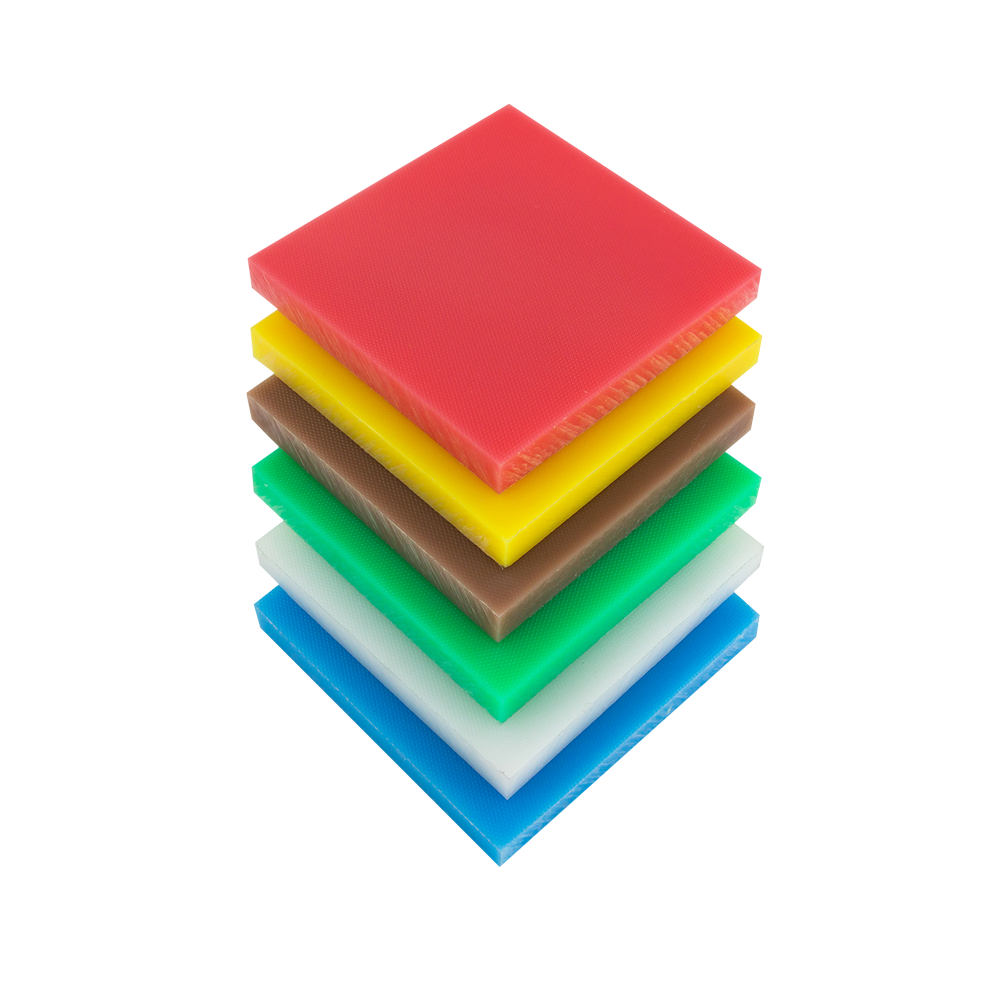
HDPE sheet is used as a fabrication material rather than a finished part. That is what makes supply continuity matter: the sheet becomes a tank wall, a scrubber duct, a cutting table, a machine guard, a chute liner or a marine panel, and the fabricator who welds or machines it needs the next batch to behave like the last one.
The applications that drive this most strongly are chemical processing and water treatment, food and beverage processing, marine and shipbuilding, industrial manufacturing and automation, cold chain, and agriculture. In chemical and water-treatment service, sheet is exposed to acids, alkalis, salts, wastewater, moisture and cleaning agents, often continuously and often in 24/7 operation. In food processing, the same material sits in hygienic work surfaces that are washed down frequently. Outdoors, it faces UV radiation and weather cycling.
The PE300 HDPE sheet specification states a density of 0.93–0.97 g/cm³, tensile strength of at least 22 MPa, elongation at break of at least 300%, hardness of 60–68 Shore D, impact strength of at least 20 kJ/m², a melting point of 130–140 °C and a working temperature of −60 °C to +80 °C. Water absorption over 24 hours is below 0.01%, the coefficient of friction is 0.15–0.25, chemical resistance to acid, alkali, salt and oil is rated excellent, and the sheet is available UV stabilized. That combination — low moisture uptake, chemical resistance, impact strength and low friction — is why the material is specified where steel would corrode and wood would absorb water.
Selection guidance for industrial HDPE sheet gives a continuous service temperature up to 80 °C for general projects, with good resistance to most dilute acids and alkalis. Above that ceiling, or in strong oxidizing media, the material choice should be re-examined rather than assumed.
HDPE sheet should also not be confused with UHMWPE sheet, which Sanyou produces as a separate product for severe sliding abrasion and impact wear. The two are different materials with different wear behaviour, and a program that mixes them without saying so is a program heading for a claim.
The Sanyou Supply Framework for Ongoing HDPE Sheet Programs
A workable long-term arrangement has five parts, and all five should exist in writing before the first production batch is released.
1. One approved specification per part number
Each part number should carry a single approved specification: grade, thickness, sheet size, color, surface finish and any fabrication step. A buyer running a tank lining, a cutting table and a machine guard from the same supplier is running three specifications, not one, and each needs its own reference. Once approved, that specification is the reference for every future shipment and the baseline for any complaint.
2. Acceptance criteria agreed before the first shipment
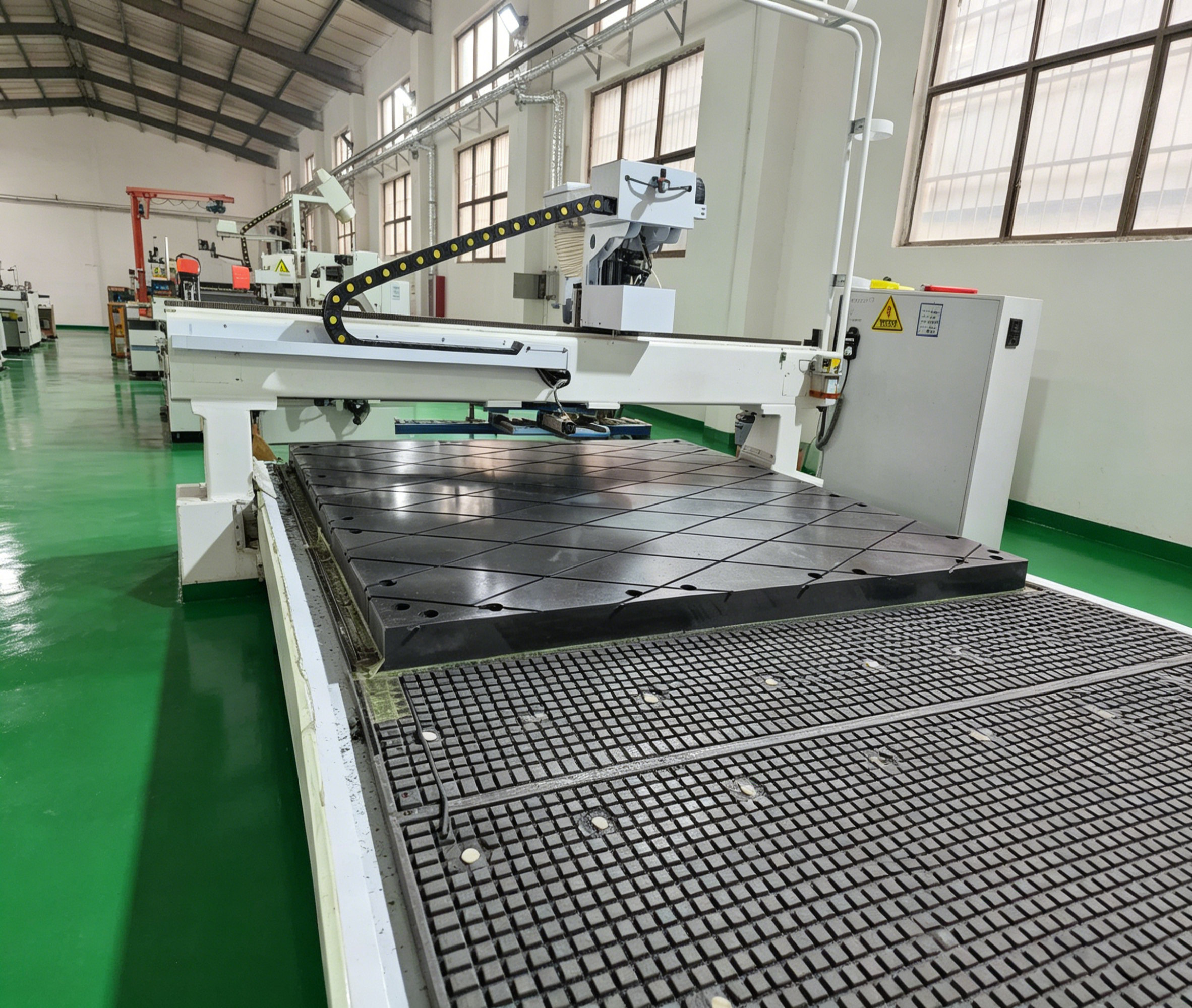
Sanyou applies incoming raw material inspection, in-process thickness and dimension checks, surface inspection and a final pre-shipment inspection, and inspection records are available on request. Buyers should state which of these records they want with each shipment, what thickness measurement method will be used for dispute resolution, and what surface condition counts as acceptable. Agreeing this after a dispute is considerably harder than agreeing it before the first delivery.
3. A call-off structure that matches real consumption
The standard minimum order quantity for HDPE sheet is 1,000 kg per specification or color, and trial orders are negotiable. Sheet capacity is approximately 800 metric tons per month. For buyers whose consumption is intermittent, the practical arrangement is a forecast plus call-offs against an approved specification, so that a slow quarter does not force either party to renegotiate the grade or the price basis mid-program.
4. Fabrication scope defined on the drawing
Customization covers thickness, size, color, surface texture and material grade, plus UV stabilization, cut-to-size, CNC machining, drilling, welding and custom packaging. Where machined parts are involved, the drawing — not the purchase order description — should carry tolerances, hole positions, countersink or counterbore details and edge finish. This is the single most common source of mismatch between what the buyer expected and what arrived.
5. A named technical contact for the life of the program
After-sales support includes remote technical support, material selection guidance, fabrication advice, documentation support and complaint handling. The value of this is not the promise; it is knowing who to call when a welding parameter needs checking on a Friday afternoon, or when a customer audit arrives and a grade statement has to be produced quickly.
Grade Selection Across Virgin, Recycled, UV-Stabilized, Marine Grade and Colored Sheet
Grade selection is the decision most likely to be reopened later, so it should be recorded as a written specification rather than a product name on an invoice.
Virgin HDPE sheet
Virgin HDPE is the grade recommended for food-contact work, potable water and high-reliability projects, where stable mechanical performance and a consistent material structure matter. If a line will be audited, or if a failed part would stop production, this is the default starting point.
Recycled industrial HDPE sheet
Recycled HDPE is positioned for non-critical anti-corrosion lining and cost-sensitive projects where strict mechanical requirements do not apply. It has a legitimate role in spill containment, general protective panels and non-food-contact components — provided the buyer knows which grade is being supplied and confirms batch consistency for the specific part.
UV-stabilized HDPE sheet
UV stabilization is specified for long-term outdoor exposure and helps reduce aging and chalking compared with standard sheet. Any part that will sit in sunlight — outdoor cabinets, marine deck furniture, agricultural panels, signage — should carry it explicitly in the specification, because standard sheet indoors and UV-stabilized sheet outdoors are not interchangeable.
Marine grade HDPE sheet
Marine grade sheet is offered for marine and shipbuilding applications, where salt exposure, weather cycling and fixing details all need to be agreed at the drawing stage. Buyers should confirm the exposure profile, the fixing method and the expected replacement interval rather than treating the grade name as a complete specification.
Colored HDPE sheet
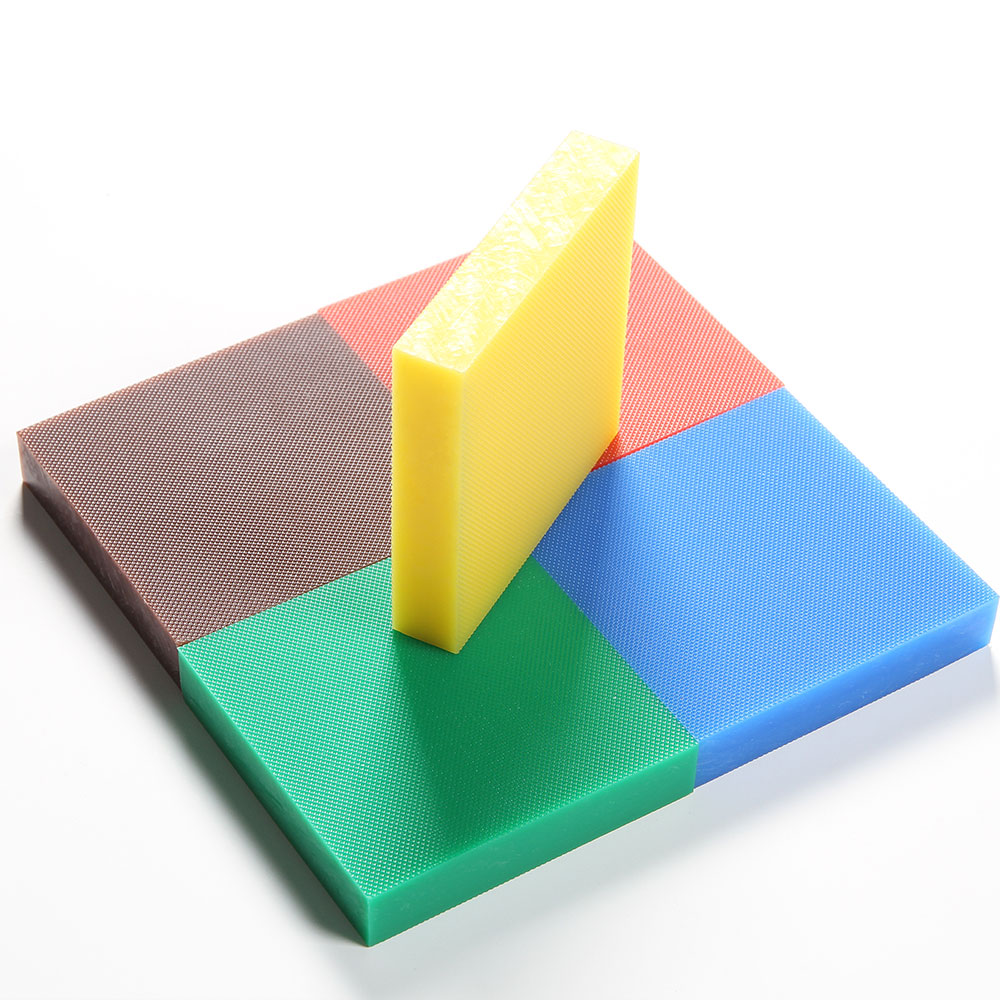
Colored sheet is available in black, white, blue, green, yellow and custom colors, with smooth or anti-skid textures including diamond, orange peel and embossed finishes. Color is a batch-sensitive attribute: buyers using color for safety coding, machine identification or visual consistency across a plant should approve a physical color standard at the start of the program.
Thickness and format follow the duty. The range runs from 2 mm to 50 mm, with standard sizes of 1000 × 2000 mm, 1220 × 2440 mm (4 × 8 ft), 1500 × 3000 mm and 2000 × 4000 mm, plus custom sizes. For thickness, the general guidance is 5–6 mm for light-load lining, 6–20 mm for tank walls and structural panels, and 20–50 mm for heavy-wear chute liners.
| Grade | Where it fits | Confirm before ordering |
|---|---|---|
| Virgin HDPE | Food-contact and potable-water work, high-reliability projects, stable mechanical performance | Resin grade, food-contact documentation, thickness tolerance |
| Recycled HDPE | Non-critical anti-corrosion lining and cost-sensitive parts without strict mechanical demands | Recycled material grade, batch consistency, suitability for the medium |
| UV-stabilized HDPE | Long-term outdoor exposure where aging and chalking must be limited | Exposure orientation, fixing method, color stability |
| Marine grade HDPE | Marine and shipbuilding applications | Salt and weather exposure, fixing detail, replacement interval |
| Colored HDPE | Safety coding, machine identification, visible panels | Physical color standard, texture, UV grade if used outdoors |
Food-Contact Compliance for Food Processing Lines
For food processing equipment, virgin HDPE sheet is the grade to specify, and food-contact requirements should be stated in the purchase specification rather than assumed from the product name.
Sanyou's selection guidance recommends virgin HDPE sheet for food-contact and potable-water applications, and food-contact grades are available in the HDPE range. The PE300 HDPE sheet specification lists ISO 9001 certification, and documentation support is part of the after-sales scope. What a buyer should agree at the start is narrower and more practical than a general compliance claim: which regulation applies in the destination market, whether the part is in direct or incidental contact with food, which cleaning chemicals and temperatures the surface will see, and what documentation must accompany each batch.
The cleaning regime deserves more attention than it usually gets. A hygienic work surface is exposed to detergents, sanitisers and hot washdown far more often than to food itself, and the material must hold up to that cycle without absorbing moisture or losing its surface condition. The low water absorption of HDPE — below 0.01% over 24 hours — supports this, but it does not by itself define compliance for a given line.
Two guardrails are worth stating plainly. First, the same selection guidance positions recycled HDPE sheet for non-critical anti-corrosion lining, not for food-contact surfaces, so a substitution in that direction should never be treated as an equivalent. Second, the compliance statement that matters is the one issued for the specific grade and the specific market; buyers should request it as part of the approved specification, not at the point of shipment.
After-Sales Support for Custom Machined HDPE Components
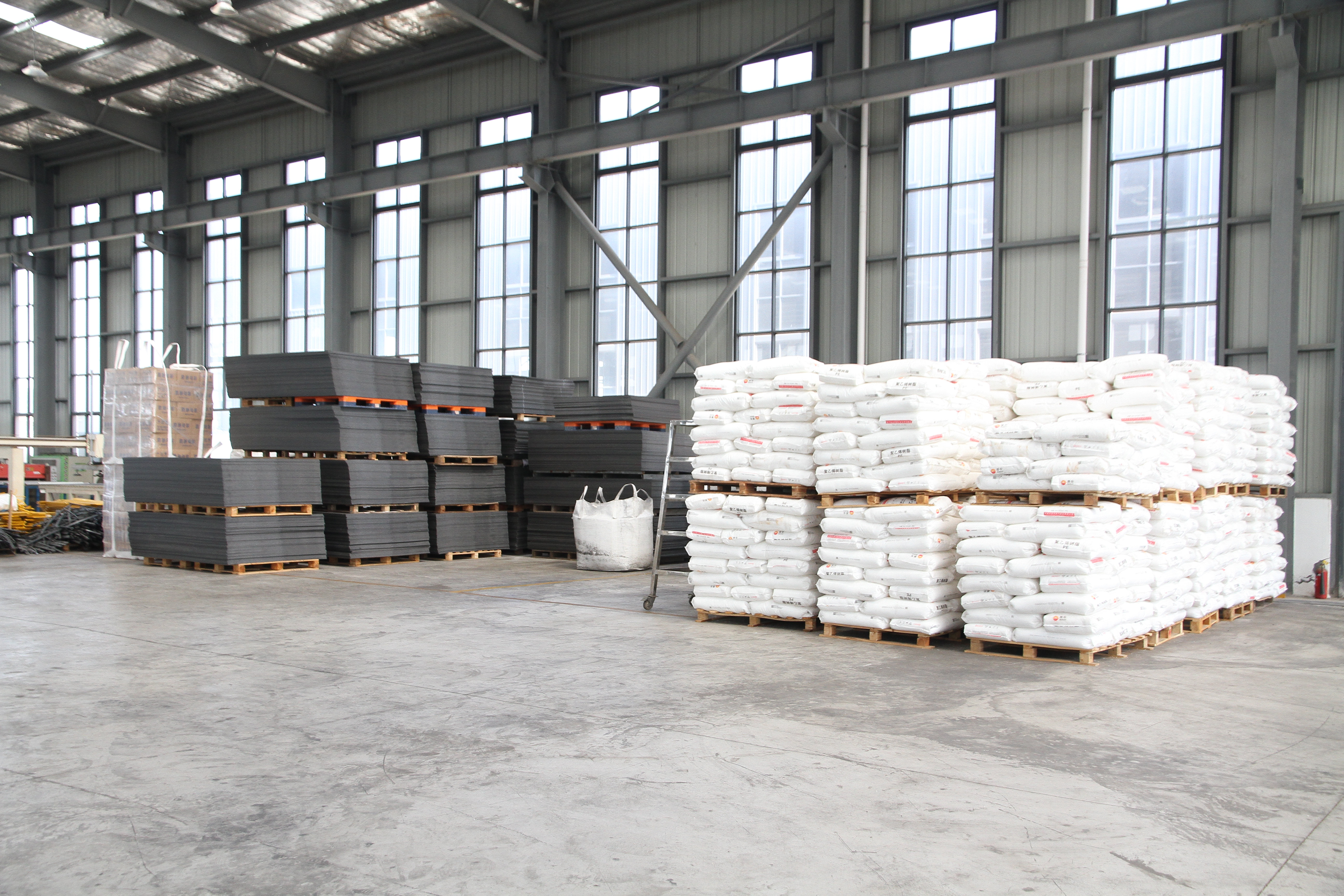
After-sales support for machined HDPE parts is mostly technical rather than transactional: material selection, fabrication advice, documentation and complaint handling, applied to a part that has to fit an existing machine.
Sanyou's stated after-sales scope covers remote technical support, material selection guidance, fabrication advice, documentation support and complaint handling. In practice, buyers get the most value from it when they supply enough context with the enquiry:
- The drawing, with tolerances, hole positions and edge requirements.
- The service medium, its concentration and the operating temperature.
- The cleaning or washdown regime, if the part is in hygienic service.
- The fixing method, including whether countersunk or counterbored holes are needed.
- The expected replacement interval and the consequence of unplanned failure.
Complaint handling works better when the record is factual. A usable claim includes the part number and batch, the quantity affected, photographs of the part in place, the measured thickness or dimension at the point of concern, and a short description of the service conditions. That record allows the failure to be separated into material, fabrication or application causes instead of being argued as a matter of opinion.
Change control is the other half of after-sales. When a drawing is revised, the approved specification should be revised with it, and the first batch after the change should be treated as a new approval rather than a continuation. Most disputes about machined HDPE components trace back to a small drawing change that was never written into the specification.
Setting Up the Partnership: Step-by-Step Breakdown
Use Cases: How the Framework Applies
Chemical processing
Tanks, pickling lines, scrubbers, ducts and spill containment are fabricated from HDPE sheet and exposed to acids, alkalis and salts, often continuously. The partnership questions here are grade consistency, weldability batch to batch, and whether the same specification can be repeated for a replacement panel two years later.
Water and wastewater treatment
Treatment equipment runs continuously and is rarely taken out of service for a material re-qualification. A standing specification with documented acceptance criteria removes the need to re-approve the material every time a component is replaced.
Food and beverage processing
Cutting tables, hygienic work surfaces and machine guards in frequent washdown environments call for virgin, food-contact grade sheet, with the applicable regulation and documentation agreed up front rather than at shipment.
Marine and shipbuilding
Marine grade sheet is specified for salt and weather exposure, where fixing details and replacement intervals matter as much as the material itself.
Custom machined components and distribution
Buyers sourcing machined parts or reselling sheet benefit most from a stable specification, because their own customers qualify them on consistency. Sanyou's HDPE range is also supported by separate product lines such as ground protection mats for site access, which are specified and quoted independently of the sheet program.
One documented example illustrates the pattern. An industrial equipment manufacturer and plastic distributor in Australia took a custom supply of 20 tons of HDPE sheet with customized thickness, dimensions, color and surface finish, used for chemical tanks, wastewater-treatment equipment, food-processing surfaces and outdoor components. Over a two-year horizon, the reported result was improved corrosion and moisture resistance, reduced maintenance, and simpler fabrication and cleaning — outcomes that depend on the specification holding steady across shipments, not on any single delivery.
Comparison Table: Supply Terms and Acceptance Points
| Item | Stated supply term | What the buyer should lock in the agreement |
|---|---|---|
| Minimum order quantity | 1,000 kg per specification or color | Which specification and color the MOQ applies to; how mixed orders are counted |
| Trial order | Negotiable | Whether the trial batch becomes the approval reference |
| Lead time | 15–20 days after order confirmation and deposit, subject to quantity and customization | Buffer for drawing approval, new colors and first-time machining |
| Monthly capacity | Approximately 800 metric tons per month | Forecast visibility and peak-season allocation |
| Customization | Thickness, size, color, surface texture, grade, UV stabilization, cut-to-size, CNC machining, drilling, welding, custom packaging | Tolerances and hole details written on the drawing |
| Quality control | Incoming raw material inspection, in-process thickness and dimension checks, surface inspection, final pre-shipment inspection | Which records accompany each shipment; measurement method for disputes |
| Documentation | Inspection records available upon request | Documentation package required per batch and per audit |
| After-sales | Remote technical support, material selection guidance, fabrication advice, documentation support, complaint handling | Named contact, response route and the evidence required for a claim |
FAQ
Which HDPE sheet grade should be specified for food processing equipment?
Virgin HDPE sheet is the grade recommended for food-contact work, potable water and high-reliability projects, and food-contact grades are available in the HDPE range. The specification should state the applicable regulation in the destination market, whether contact is direct or incidental, the cleaning chemicals and temperatures involved, and the documentation required per batch. Recycled HDPE is positioned for non-critical anti-corrosion lining rather than food-contact surfaces. The PE300 sheet specification lists ISO 9001 certification, and documentation support is included in the after-sales scope.
Can one supplier cover virgin, recycled, UV-stabilized, marine grade and colored sheet in a single program?
Yes. The HDPE sheet range covers virgin, recycled, UV-stabilized, marine grade and colored sheet, in smooth or textured finishes including orange peel and embossed surfaces. Thickness runs from 2 mm to 50 mm, standard sizes include 1220 × 2440 mm and 2000 × 4000 mm with custom sizes available, and fabrication covers cut-to-size, CNC machining, drilling and welding. Capacity is approximately 800 metric tons per month, with a minimum order quantity of 1,000 kg per specification or color.
How should a buyer compare HDPE sheet quotations across suppliers?
Normalize every quotation to the same grade, thickness, sheet size, surface, color, fabrication scope and packaging before comparing figures. Cost is driven mainly by resin grade (virgin versus recycled), thickness, panel size, color and texture, machining content and order quantity, so a lower sheet price often reflects a different grade or a lighter fabrication scope rather than a better commercial offer. Comparing on a per-part basis, including scrap and replacement risk, gives a clearer picture than comparing on a per-sheet basis.
Can we start with a trial order before committing to a long-term agreement?
Trial orders are negotiable. The standard minimum order quantity is 1,000 kg per specification or color, and a trial batch is the natural basis for approving a specification: it establishes the reference thickness, surface and color that later shipments are measured against. Keeping a retained sample and the inspection record from that first batch is what makes the approval meaningful.
What lead time should be planned for repeat orders and custom machined parts?
Lead time is 15–20 days after order confirmation and deposit, subject to order quantity and customization requirements. For repeat programs, the practical planning buffer sits around drawing approval, new colors and first-time machining rather than around the standard sheet itself, so a forecast shared ahead of the call-off is more useful than a rush order. Buyers who want the full material and fabrication scope in one document can download the Sanyou product catalog or send the drawing and service conditions for review.
Conclusion
A long-term Industrial HDPE Sheet partnership is not built on a lower price per sheet. It is built on a written specification that does not move, acceptance criteria that both sides can measure, an order structure that survives a slow quarter, and technical support that is still reachable when a machined component is replaced in year three.
For buyers in chemical processing, water treatment, food and beverage, and marine applications, the material is already well matched to the duty: density of 0.93–0.97 g/cm³, tensile strength of at least 22 MPa, impact strength of at least 20 kJ/m², water absorption below 0.01% and a working temperature range of −60 °C to +80 °C. What determines whether that performance holds is whether the same grade, thickness and surface arrive every time.
Tangyin Sanyou Engineering Plastic Co., Ltd. has manufactured engineering plastics since 2001, with a 40,000 m² facility, 80 employees, 10 engineers and approximately 800 metric tons of monthly sheet capacity. Programs start the same way: a duty description, a grade decision, an approved specification and a first batch that becomes the reference.
Next step: send the part drawing, service medium, temperature and annual volume for a specification review and quotation. Trial orders are negotiable, and the product catalog covers the full HDPE sheet and fabrication scope.
Email: sandy@syuhmwpe.com or lucy@syuhmwpe.com
Tel / WhatsApp: +86 199-3737-2858
Website: www.syuhmwpe.com
Address: Tengfei Avenue (Industrial Park), Yigou Town, Tangyin County, Henan, China
Have Questions or Need More Details?
Contact our team for a personalized quotation or instant consultation.
Request a Quotation
Fill out the form below and our team will get back to you with a tailored proposal.
WhatsApp Direct Chat
Prefer to chat in real-time? Message us on WhatsApp for instant assistance & quick answers.
- Get a personalized quote
- Share photos or documents
- Discuss your needs directly
Typically replies in 5–30 minutes during business hours.