
Virgin HDPE Plastic Sheet: Industrial HDPE Sheet Selection Guide
Virgin HDPE Plastic Sheet: A Practical Guide to Industrial HDPE Sheet Selection
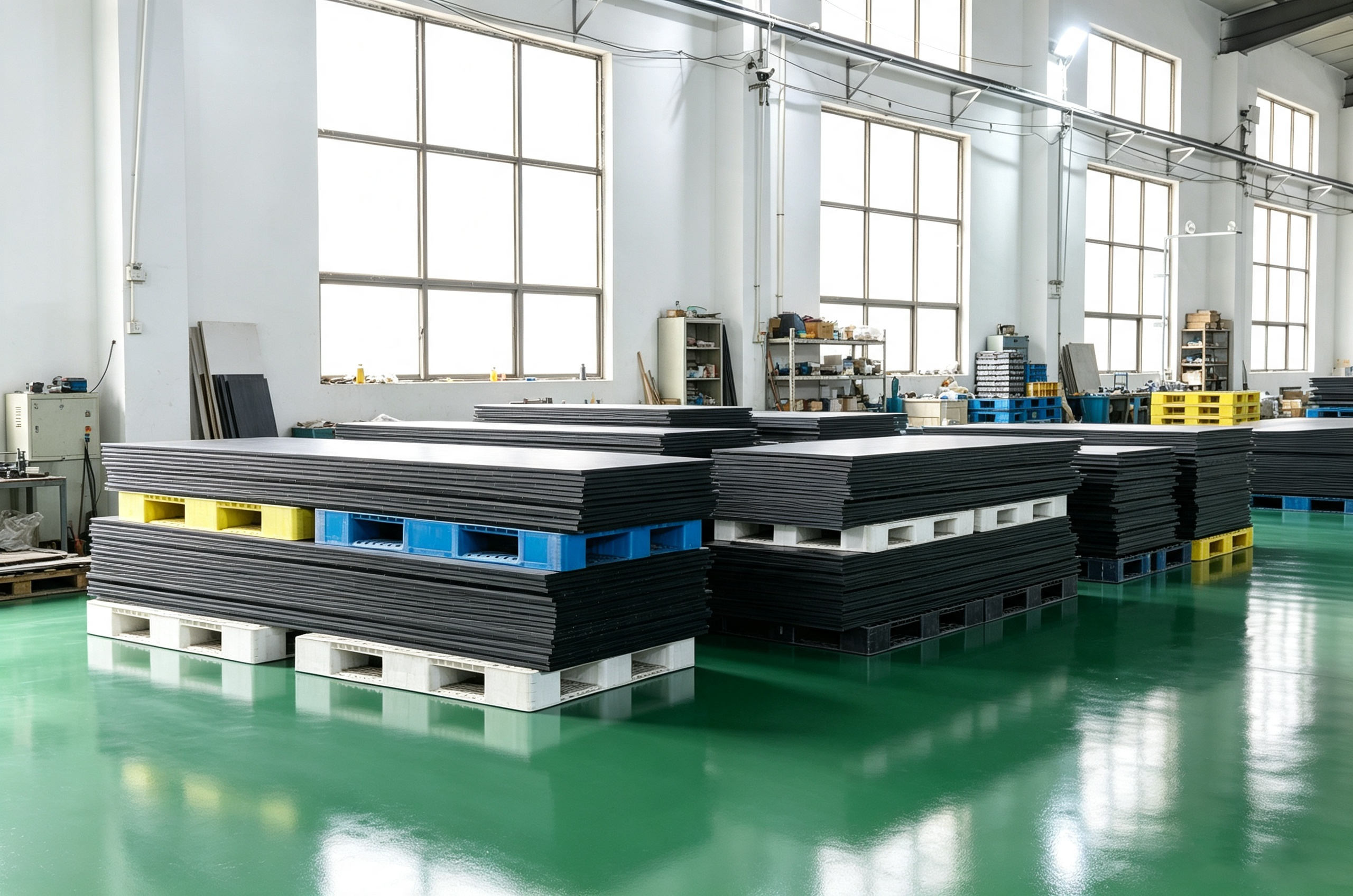
Virgin HDPE plastic sheet supplied in standard 4x8 ft industrial board format.
Virgin HDPE plastic sheet is a high-density polyethylene sheet manufactured from new, unused polyethylene resin rather than reprocessed material. For industrial buyers, the term "virgin" is not a marketing label. It identifies the resin origin, which shapes mechanical consistency, hygiene suitability, and how predictably the sheet will behave in food-contact, chemical, and machined applications.
This guide explains what a virgin HDPE plastic sheet is, how it compares with recycled industrial HDPE sheet, which specifications matter at the Awareness and Research stage, and how procurement teams can evaluate industrial HDPE sheet manufacturers in China and other producing regions.
Problem Definition: Why Virgin vs. Recycled Changes the Buying Decision
The core purchasing problem with industrial HDPE sheet is that the same phrase — "HDPE sheet" — can describe materials with very different resin origins and suitability. A buyer who selects on price alone may receive a recycled HDPE sheet for a food-contact cutting board, or a standard grade for a long-term outdoor installation where UV exposure will eventually cause chalking and embrittlement.
Three questions decide most virgin HDPE sheet purchases:
- Contact material: Will the sheet touch food, potable water, or hygiene-sensitive surfaces?
- Exposure: Will it be used indoors, or exposed to continuous sunlight for years?
- Mechanical duty: Is the sheet a light protective panel, a tank wall, or a heavy-wear chute liner?
Each answer points toward a different grade within the same HDPE family. Virgin HDPE sheet is typically recommended for food-contact, potable water, and high-reliability projects where stable mechanical performance and strict hygiene requirements matter. Recycled HDPE sheet is generally positioned for non-critical anti-corrosion lining and cost-sensitive projects where rigid mechanical consistency is not required.
Industry Background: Where HDPE Sheet Sits in the Plastics Market
High-density polyethylene is one of the largest-volume thermoplastics in global use. Market research published by Virtue Market Research projects the global HDPE market to grow from USD 84.37 billion in 2023 to USD 126.86 billion by 2030, at a CAGR of 6% over the forecast period 2024–2030. Within that wider demand, sheets and films are reported as the leading application segment, representing approximately 41.1% of global HDPE demand share.
From a trade-classification perspective, non-cellular plates, sheets, film, foil, and strip of polymers of ethylene are grouped under a broad customs description in UN Comtrade. That classification covers more than HDPE sheet specifically, so buyers using trade data for sourcing analysis should validate the exact HS subheading before drawing conclusions about country-level supply.
On the manufacturing side, industrial HDPE sheet is produced by extrusion and, for thicker formats, by compression molding, then converted by cutting and CNC machining. Production is concentrated in regions with developed polymer and plastics converting industries. China hosts a substantial share of engineering-plastic sheet manufacturing, alongside producers in other parts of Asia, Europe, and North America.
Detailed Solution: What a Virgin HDPE Plastic Sheet Actually Delivers
Sanyou PE300 virgin HDPE sheet is a high-density polyethylene sheet made from virgin HDPE resin. It is classified across the virgin HDPE sheet, recycled HDPE sheet, UV-stabilized HDPE sheet, and marine-grade HDPE sheet categories, depending on the grade selected within the PE300 product family.
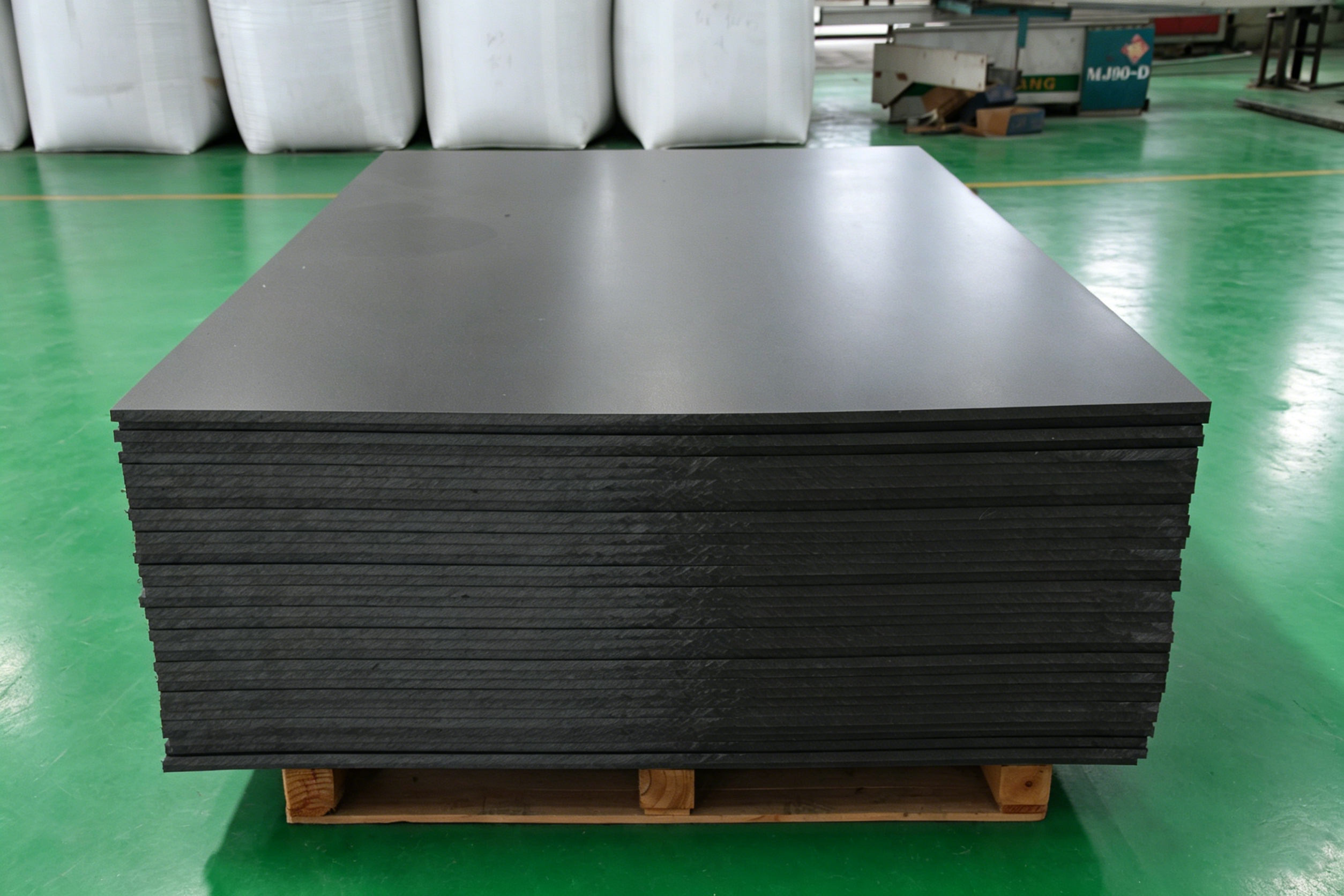
PE300 virgin HDPE sheet — standard 4x8 ft industrial panel with smooth surface.
Reported material properties for this HDPE sheet grade are as follows:
| Property | Reported value |
|---|---|
| Material | Virgin HDPE (High Density Polyethylene) |
| Density | 0.93–0.97 g/cm³ |
| Thickness | 2–50 mm (customized available) |
| Sheet size | 1000×2000 mm / 1220×2440 mm / 1500×3000 mm / 2000×4000 mm (customized available) |
| Color | Black, white, blue, green, yellow, or customized |
| Surface | Smooth or anti-skid texture (diamond / orange peel / embossed) |
| Tensile strength | ≥ 22 MPa |
| Elongation at break | ≥ 300% |
| Hardness | 60–68 Shore D |
| Impact strength | ≥ 20 kJ/m² |
| Melting point | 130–140 °C |
| Working temperature | −60 to +80 °C |
| Water absorption (24 h) | < 0.01% |
| Coefficient of friction | Low, 0.15–0.25 |
| Chemical resistance | Excellent (acid, alkali, salt, oil) |
| UV resistance | UV stabilized |
| Certification | ISO 9001 |
These figures describe the PE300 grade as published. Individual projects should confirm thickness tolerance, flatness, and grade selection against the specific application before purchase.
A separate durability consideration applies to outdoor use. Standard HDPE is not UV-stabilized and may chalk or embrittle under prolonged outdoor sun exposure. This is a grade limitation rather than a defect — it is why UV-stabilized grades exist and why outdoor buyers should specify UV stabilization explicitly in the RFQ instead of assuming that any HDPE sheet will tolerate years of sunlight.
Step-by-Step Breakdown: Selecting a Virgin HDPE Sheet
Step 1 — Define the contact and environment profile. Confirm working temperature, chemical medium, load-impact condition, indoor or outdoor environment, and any contact-material requirement. HDPE sheet selection depends on these conditions before grade, thickness, and modification are chosen. Typical continuous service temperature for HDPE is generally quoted from −40 °C to 80 °C, with good resistance to most dilute acids and alkalis; the PE300 sheet specification above states −60 to +80 °C.
Step 2 — Choose the grade. Virgin HDPE sheet is recommended for food-contact, potable water, and high-reliability projects, where stable mechanical performance and strict hygiene requirements are important. Recycled HDPE sheet is recommended for non-critical anti-corrosion lining and where cost is the dominant constraint. UV-stabilized HDPE sheet is recommended for long-term outdoor applications to reduce aging and chalking.
Step 3 — Size thickness to the duty. A commonly cited thickness reference is 5–6 mm for light-load lining, 6–20 mm for tank walls and structural panels, and 20–50 mm for heavy-wear chute liners. PE300 covers 2–50 mm, with customized thickness available.
Step 4 — Specify format and surface. The 1220 × 2440 mm sheet size corresponds to the 4x8 ft industrial HDPE panel format used widely in conversion and fabrication. Surfaces can be smooth or anti-skid, with diamond, orange peel, and embossed patterns available. Custom colors, sizes, thicknesses, and textures are also available.
Step 5 — Confirm fabrication route. This HDPE sheet is weldable, cuttable, and CNC machinable, so tank builders, machine-guard fabricators, and signage producers can specify it against drawings rather than buying only standard panels.
Use Cases: Where Virgin HDPE Sheet Is Commonly Specified
Industrial HDPE sheet is intended for chemical processing and water treatment, food and beverage processing, machinery manufacturing and industrial automation, marine and shipbuilding, construction and building materials, agriculture and livestock farming, outdoor furniture and playground equipment, signage and advertising, cold chain and refrigeration, and packaging, logistics, and material handling.
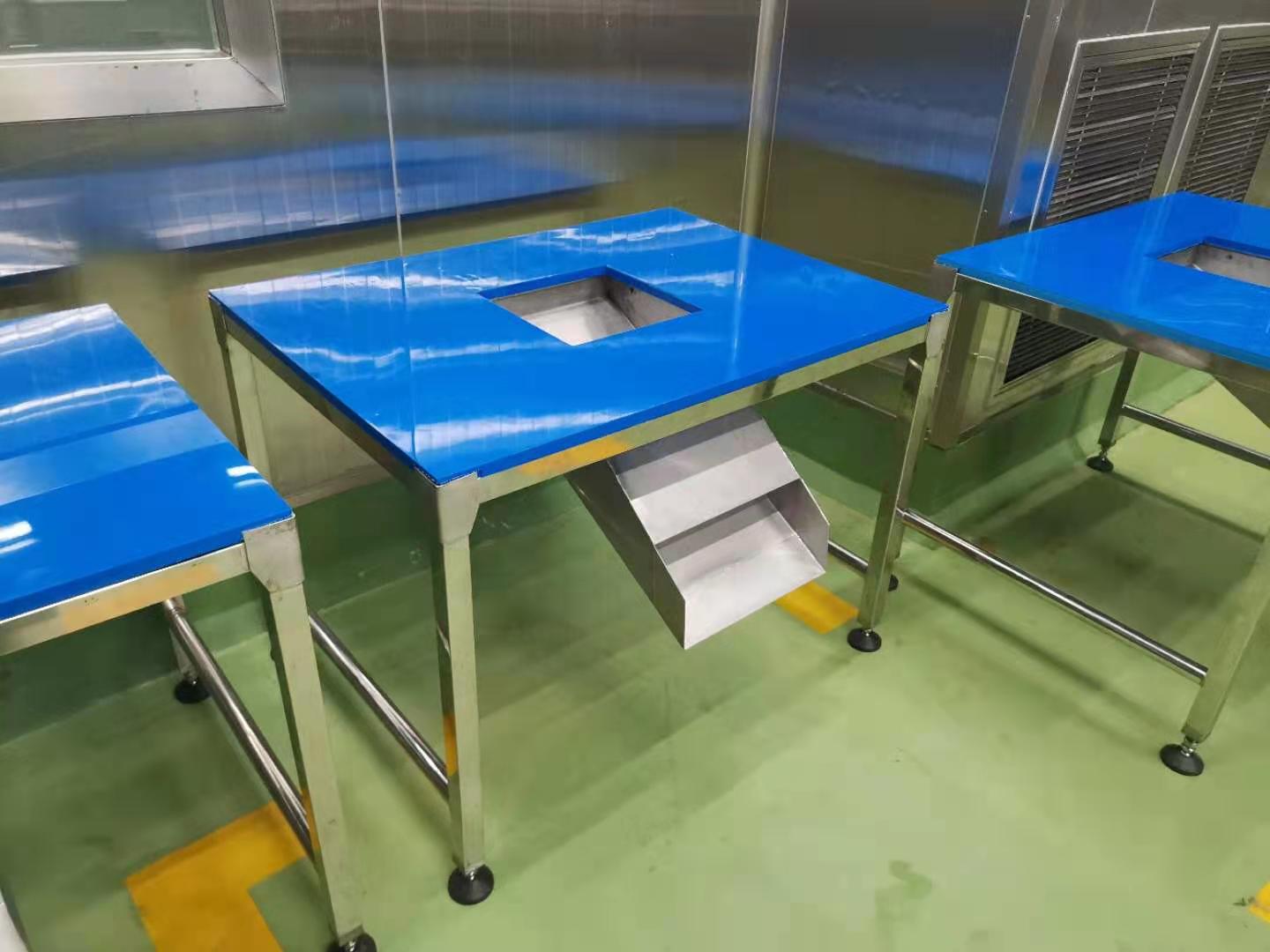
Virgin HDPE sheet used as a food-contact cutting board in a food processing equipment application.
Typical project types include chemical storage tanks, wastewater treatment equipment, food processing tables and cutting boards, machine guards, jigs and fixtures, CNC-machined components, marine panels, outdoor cabinets and furniture, agricultural equipment, playground components, signs, cold-storage equipment, and material-handling systems. Where a sheet will be welded into a leak-tight tank or duct, weldability and low moisture absorption matter more than raw cost per kilogram.
Comparison Table: Virgin, Recycled, and UV-Stabilized HDPE Sheet
The following comparison reflects grade positioning within the same HDPE sheet family. It is intended for screening, not as a substitute for a project-specific datasheet.
| Attribute | Virgin HDPE Sheet | Recycled HDPE Sheet | UV-Stabilized HDPE Sheet |
|---|---|---|---|
| Resin origin | New, unused polyethylene resin | Reprocessed polyethylene material | Virgin or application-specific resin with UV stabilization |
| Recommended use | Food-contact, potable water, high-reliability projects | Non-critical anti-corrosion lining, cost-sensitive projects | Long-term outdoor applications |
| Mechanical behavior | Stable, consistent mechanical performance | Suitable where strict mechanical requirements are not required | Reduces aging and chalking compared with standard grade |
| Typical thickness reference | 5–6 mm light-load lining; 6–20 mm tank wall / structural panel; 20–50 mm heavy-wear chute liner | Format options follow supplier portfolio | Format options follow supplier portfolio |
Manufacturing Context: Sanyou HDPE Sheet
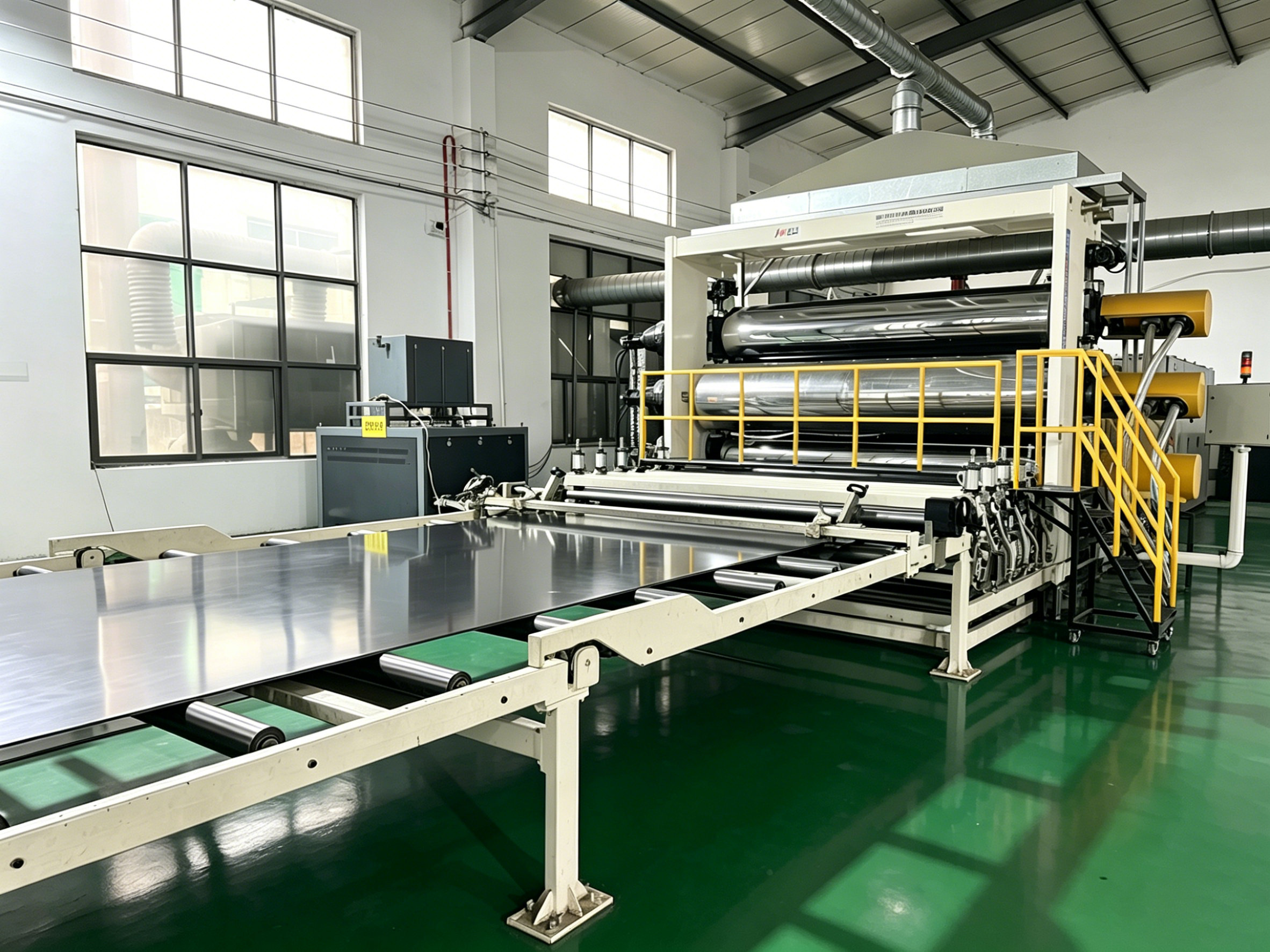
Extrusion production line at the Sanyou manufacturing facility.
Tangyin Sanyou Engineering Plastic Co., Ltd. is a manufacturer of engineering plastic products established in 2001, based in Tangyin County, Henan, China. The company specializes in manufacturing engineering plastic and rubber products, including HDPE sheets, UHMWPE sheets, polyethylene sheets, HDPE boards, plastic liners, ground protection mats, and wear-resistant sheets. Main products include HDPE Sheet, UHMWPE Sheet, PP sheet, HDPE Sandwich Board, and Ground Protection Mat.
Manufacturing capability, as published by the company, includes a 40,000 m² facility, approximately 80 employees, 10 R&D engineers, and annual production capacity of 120,000 tons. Export business accounts for 70% of total sales, with major markets in North America, Western Europe, Central Europe, the Middle East, Oceania, and Southeast Asia.
For buyers evaluating industrial HDPE sheet manufacturers in China, these figures are a starting point for supplier screening rather than a qualification. Factory capacity, MOQ, lead time, and quality-system documentation still need to be confirmed against the specific product format and grade being purchased.
Frequently Asked Questions
What is a virgin HDPE plastic sheet?
A virgin HDPE plastic sheet is a high-density polyethylene sheet manufactured from new, unused polyethylene resin rather than reprocessed material. Virgin grade is typically recommended for food-contact, potable water, and high-reliability projects, where consistent mechanical performance and strict hygiene requirements matter.
How does virgin HDPE sheet differ from recycled HDPE sheet?
The main difference is resin origin. Virgin HDPE sheet uses new polyethylene resin and is positioned for applications requiring stable mechanical performance and hygiene suitability. Recycled HDPE sheet uses reprocessed material and is generally recommended for non-critical anti-corrosion lining and cost-sensitive projects where strict mechanical requirements do not apply. Both belong to the same HDPE sheet family, but they are not interchangeable for compliance-sensitive or load-critical work.
What thicknesses and sizes are available for industrial HDPE sheet?
Sanyou PE300 HDPE sheet is offered from 2–50 mm thickness, with customized thickness available. Standard sheet sizes include 1000×2000 mm, 1220×2440 mm, 1500×3000 mm, and 2000×4000 mm. The 1220×2440 mm size corresponds to the 4x8 ft industrial HDPE panel format. Custom sizes, colors, thicknesses, and textures are available.
Does standard HDPE sheet resist UV exposure outdoors?
Standard HDPE is not UV-stabilized and may chalk or embrittle under prolonged outdoor sun exposure. For long-term outdoor installations, a UV-stabilized HDPE sheet grade should be specified instead. PE300 includes UV-stabilized options, and UV resistance is listed as an available attribute rather than a default characteristic of every grade. Buyers should confirm UV stabilization explicitly on the quotation.
How can I evaluate industrial HDPE sheet manufacturers in China?
Start with verifiable capability facts rather than price alone: factory area, annual output, product range, export markets, and quality certification. Sanyou publishes a 40,000 m² facility, 80 employees, 10 R&D engineers, 120,000 tons annual capacity, 70% export share, and ISO 9001 certification. After screening, confirm product-specific details — grade, thickness tolerance, surface, MOQ, and lead time — and request a material sample for the actual application before placing a production order.
Can I request a sample or custom cut virgin HDPE sheet?
Yes. Custom colors, sizes, thicknesses, and textures are available for this HDPE sheet, and the material is weldable, cuttable, and CNC machinable. To move from research to evaluation, send your sheet dimensions, thickness, color, surface requirement, and application conditions to Sanyou for a sample and quotation.
Conclusion
Virgin HDPE plastic sheet is defined by its resin origin, and that origin is what makes it suitable for food-contact, potable water, and high-reliability industrial projects. The practical selection path is straightforward: define contact and environment, choose the grade, size thickness to the duty, specify format and surface, and confirm the fabrication route.
For buyers at the research stage, the productive next step is not another generic HDPE sheet comparison but a product-specific one. Compare the exact grade, thickness tolerance, surface, and delivery terms you need, then validate with a sample. Sanyou supplies PE300 HDPE sheet across virgin, recycled, UV-stabilized, and marine-grade options, with custom-cut and CNC-machined formats available.
Download the Sanyou Product Catalog
Catalog includes HDPE sheet, UHMWPE sheet, PP sheet, HDPE sandwich board, and ground protection mat specifications.
Contact: Sandy — sandy@syuhmwpe.com | Tel / WhatsApp: +86 199-3737-2858 | www.syuhmwpe.com
Have Questions or Need More Details?
Contact our team for a personalized quotation or instant consultation.
Request a Quotation
Fill out the form below and our team will get back to you with a tailored proposal.
WhatsApp Direct Chat
Prefer to chat in real-time? Message us on WhatsApp for instant assistance & quick answers.
- Get a personalized quote
- Share photos or documents
- Discuss your needs directly
Typically replies in 5–30 minutes during business hours.