
Wear Resistant HDPE Plate: Specs, Certification & Lead Time
Wear Resistant HDPE Plate: Specs, Certification & Lead Time
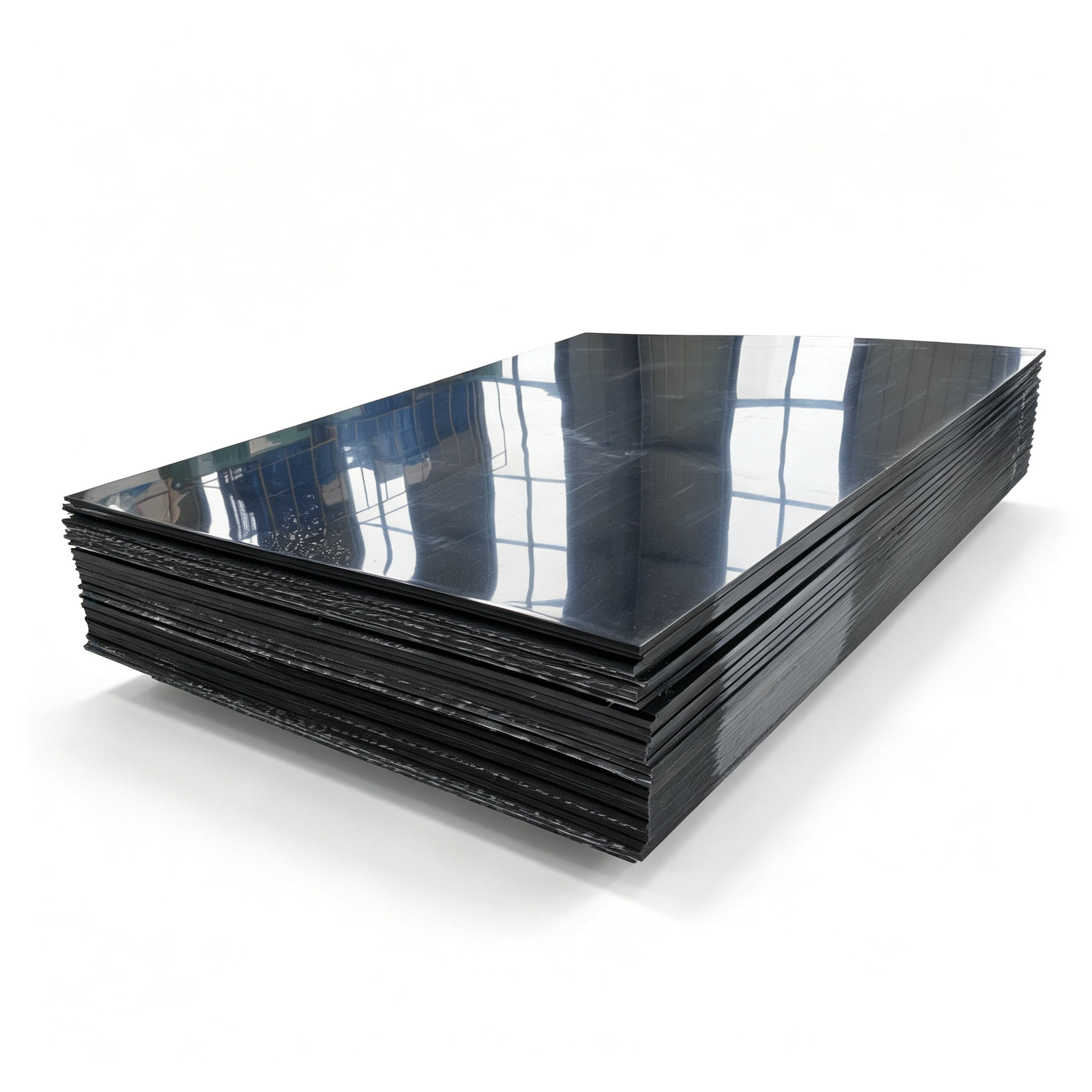
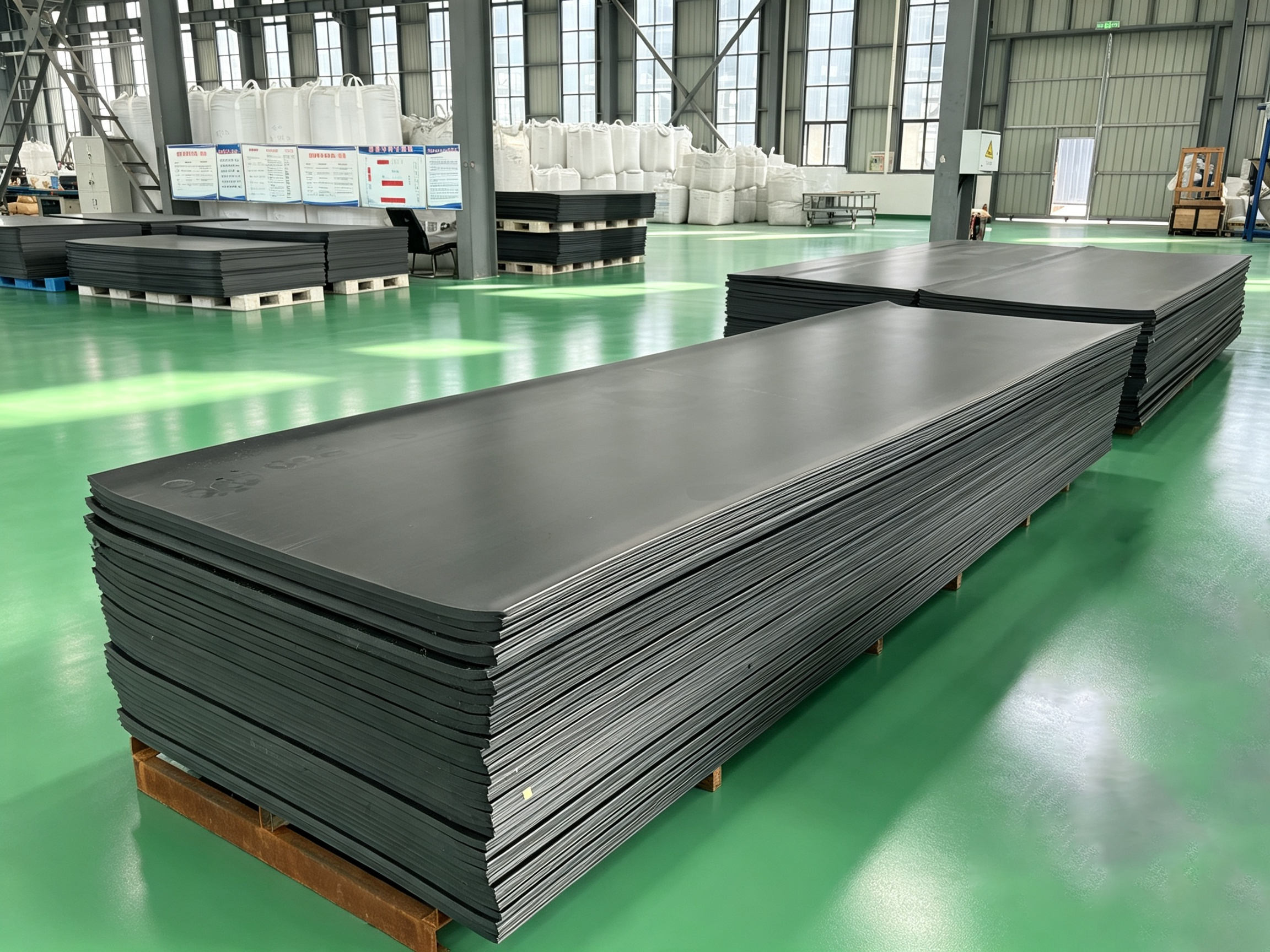
Wear resistant HDPE plate is not a single product with a single data sheet — it is a configuration of grade, thickness, surface and format. Sanyou (Tangyin Sanyou Engineering Plastic Co., Ltd.) supplies it within its HDPE Sheet PE300 range: virgin high-density polyethylene sheet from 2 mm to 50 mm thick, in standard formats up to 2000 × 4000 mm, with published tensile strength of at least 22 MPa, impact strength of at least 20 kJ/m², water absorption below 0.01% over 24 hours, and a coefficient of friction of 0.15–0.25.
Those figures matter because “wear resistant” behaves like a description rather than a specification. Two suppliers can both call a plate wear resistant and still deliver different thicknesses, different surfaces, different grades and different documentation. This guide sets out what is documented about the Sanyou industrial HDPE sheet range, what has to be decided before an order is placed, what each certificate actually covers, and how long supply takes.
Why “Wear Resistant” Cannot Be Ordered as a Single Word
A purchase order that says only “wear resistant HDPE plate” leaves four variables open, and each one changes the plate that arrives.
- Thickness. The HDPE Sheet PE300 range covers 2 mm to 50 mm. A 10 mm HDPE industrial sheet and a 30 mm plate are the same material but not the same component; stiffness, load spreading and the amount of sacrificial material available to wear away all change with thickness.
- Grade. Virgin HDPE, recycled industrial HDPE sheet, UV-stabilized sheet and specialty options behave differently outdoors, in food-contact areas and in chemically exposed service.
- Surface. Smooth, diamond, orange peel or embossed finishes produce different grip and different flow behaviour; an orange peel textured HDPE sheet is a different product from a smooth panel even when the thickness is identical.
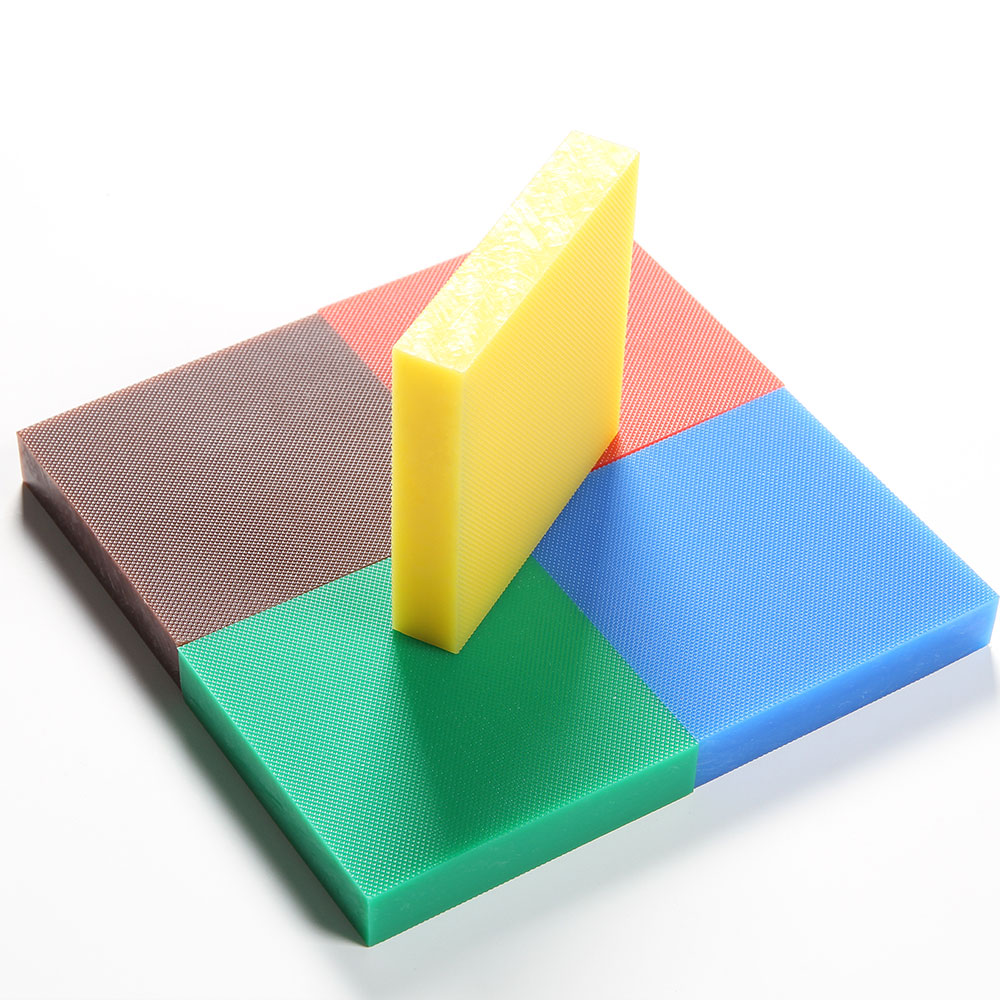
- Format and processing. A 1220 × 2440 mm sheet leaves the fabricator to cut; a custom cut HDPE sheet with drilled and countersunk fixing holes arrives ready to install.
Wear itself is not one property either. Sliding abrasion, impact loading and abrasive slurry service stress different material behaviours, and the outcome depends on load, speed, particle shape, temperature and chemical exposure. The published HDPE sheet data describes wear resistance, impact resistance and low friction as material features, but it does not contain a method-referenced abrasion test result for this HDPE grade. For severe sliding abrasion, buyers should request method-referenced test data or move to a UHMWPE (PE1000) grade, which Sanyou describes as offering exceptional abrasion and wear resistance. Settling this point is what separates a specification from a wish, and it is the first constraint to resolve before price or lead time is discussed.
Industry Background: A Sheet Business Inside a Resin Market
HDPE consumption is heavily weighted towards flat products. Analyst Viewpoint / Market.us reports that the sheets and films segment accounted for approximately 41.1% of global HDPE demand share. At the polymer level, Virtue Market Research projects the global HDPE market to grow from USD 84.37 billion in 2023 to USD 126.86 billion by 2030. Both figures describe the HDPE polymer market and its application split rather than the industrial sheet segment on its own, so they are directional context only — resin-level totals should not be read as sheet-level market sizing.
Feedstock pricing is the other visible signal. S&P Global Platts reported black recycled HDPE resin at approximately USD 520/mt FOB Southeast Asia in September 2026. That is a resin reference for one grade, not a sheet price: sheet cost is driven by the conversion step, thickness, format, colour, surface texture and secondary machining, all of which are configuration choices rather than commodity variables.
On the supply side, Sanyou is an engineering plastics manufacturer founded in 2001 and based in Tangyin County, Henan, China, producing HDPE sheet, UHMWPE sheet, PP sheet, HDPE sandwich board and ground protection mats. The company operates a 40,000 m² facility with 80 employees, including a 10-engineer technical team, and states an annual output of 120,000 tons across its product lines, with HDPE sheet manufacturing capability of approximately 800 metric tons per month. Around 70% of production is exported, with North America, Western Europe, Central Europe, the Middle East, Oceania and Southeast Asia listed as main markets — relevant for buyers who need the same specification repeated across several shipments.
Documented Specification of a Sanyou Wear Resistant HDPE Plate
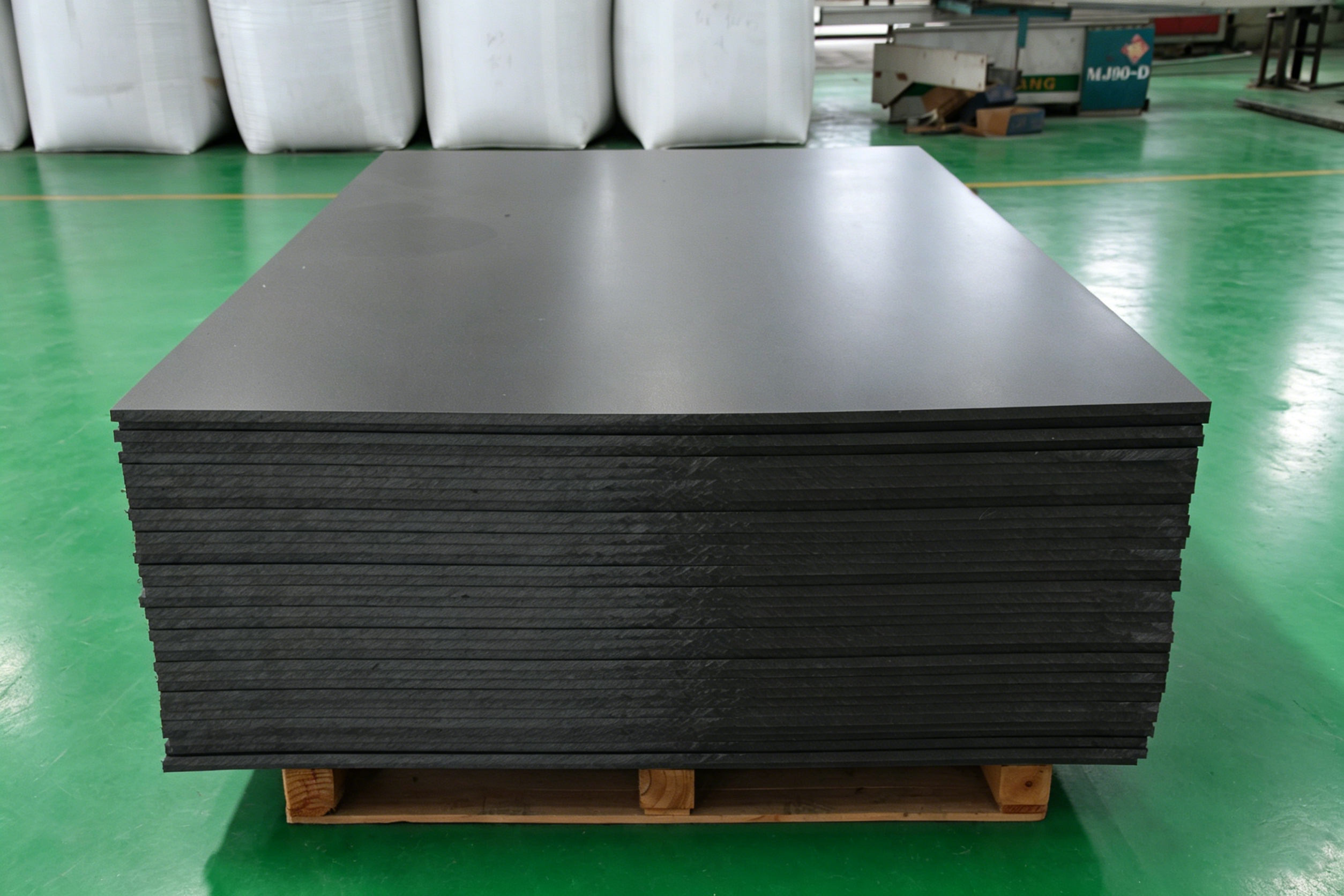
The HDPE Sheet PE300 specification is the reference document for this article. It is published by the manufacturer and applies to the standard HDPE sheet range.
| Parameter | Published value |
|---|---|
| Material | Virgin HDPE (high-density polyethylene) |
| Density | 0.93–0.97 g/cm³ |
| Thickness | 2–50 mm (custom thicknesses available) |
| Standard sizes | 1000 × 2000 mm; 1220 × 2440 mm (4 × 8 ft); 1500 × 3000 mm; 2000 × 4000 mm (custom sizes available) |
| Colours | Black, white, blue, green, yellow, custom |
| Surface | Smooth or anti-skid texture (diamond, orange peel, embossed) |
| Tensile strength | ≥ 22 MPa |
| Elongation at break | ≥ 300% |
| Hardness | 60–68 Shore D |
| Impact strength | ≥ 20 kJ/m² |
| Melting point | 130–140 °C |
| Working temperature | -60 °C to +80 °C |
| Water absorption (24 h) | < 0.01% |
| Coefficient of friction | Low, 0.15–0.25 |
| Chemical resistance | Excellent (acid, alkali, salt, oil) |
| UV resistance | UV-stabilized grades available |
| Processing features | Weldable, cuttable, CNC machinable, non-toxic |
| Certification | ISO 9001 |
Read as a purchasing document, the table settles several questions at once. A 1220 × 2440 mm sheet is the metric form of the familiar 4 × 8 ft board, so a “4x8 HDPE industrial board” enquiry maps to a listed size rather than a special order. A 10 mm plate sits inside the standard thickness range, which means cover panels, liners and moderate-duty wear surfaces can be specified without entering custom territory.
Two values are easily overlooked. The coefficient of friction of 0.15–0.25 is what allows the sheet to work as a low friction HDPE board in sliding contact service, where material is expected to travel across the surface rather than adhere to it. Water absorption below 0.01% over 24 hours is the basis for describing the material as moisture-proof and for using a waterproof HDPE sheet in washdown, wet-process and outdoor installations without expecting dimensional change.
Temperature and chemistry set the boundaries. The working range of -60 °C to +80 °C covers cold storage, winter outdoor installation and most wet-process environments, while the melting point of 130–140 °C marks the practical limit for welding and heat-related fabrication. Chemical resistance is stated as excellent against acid, alkali, salt and oil, which is why the same plate appears in anti-corrosion HDPE sheet work as well as in wear service.
Grade, Surface and Colour: Three Choices That Change the Plate
Virgin or recycled
Sanyou’s published grade guidance draws the line clearly. Virgin HDPE sheet is recommended for food-contact applications, potable water and high-reliability projects where mechanical performance must be stable and hygiene requirements are strict — the virgin HDPE plastic sheet is the default for regulated or high-duty work. Recycled HDPE sheet is recommended for non-critical anti-corrosion lining, where the project does not impose strict mechanical requirements and cost efficiency matters more. Because recycled industrial HDPE sheet is an available grade option within the range rather than a separate product, the choice belongs in the written specification, not in a verbal agreement.
UV resistance is an option, not a default
UV-stabilized grades are available for the HDPE sheet range, and the attribute is listed as an option, which means it has to be requested. Published distributor technical guidance in the plastics industry notes that standard HDPE is not UV-stabilized and can chalk or embrittle under prolonged exposure to sunlight. Any plate that will sit outdoors, on a marine structure or in a signage application should therefore be ordered as a UV resistant HDPE sheet grade, with the exposure environment stated in the enquiry. Colour is not evidence of UV performance; additive choice is.
Surface, colour and food contact
Surface finish is a functional decision. An orange peel textured HDPE sheet or a diamond-pattern plate increases grip for pedestrians, equipment and stacked material, while a smooth finish is used where cleanliness, sealing or sliding contact dominates. Available colours include black, white, blue, green, yellow and custom shades; black industrial HDPE sheet is a common choice for outdoor, heavy-use and visually neutral installations, and coloured HDPE plastic panel options serve signage, furniture and colour-coded work areas.
Where the plate touches food, the food grade HDPE sheet option applies. Sanyou states that the HDPE sheet is made from food-grade polyethylene resin and is suitable for food processing, cutting boards and sanitary applications, and the product specification describes the material as non-toxic. A material description is not the same document as a conformity declaration, however, so buyers in regulated markets should request the product-specific compliance paperwork required in their own market before the specification is released for production.
How to Specify and Order: A Seven-Step Breakdown
The sequence below follows the order in which the variables actually constrain each other. Following it avoids the common failure in which thickness is agreed first and the grade that suits the environment is discovered later.
- Define the duty. Record the abrasion type (sliding, impact or slurry), the load, the speed of the material or equipment in contact, the operating temperature, the chemical exposure and whether the installation is indoors or outdoors. This is the paragraph that later justifies the grade, thickness and surface.
- Fix the thickness. Use the manufacturer’s published selection reference as a starting point (table below), then adjust for actual load and wear severity.
- Choose the grade. Virgin HDPE for food contact, potable water and high-reliability work; recycled HDPE for non-critical lining; UV-stabilized where sunlight exposure is long; food-grade where the surface contacts food.
- Fix the format and secondary processing. Standard 1000 × 2000 mm, 1220 × 2440 mm, 1500 × 3000 mm and 2000 × 4000 mm formats are available, with custom sizes, cut-to-size panels, CNC machining, drilling, countersunk fixings and welding offered as OEM/ODM work.
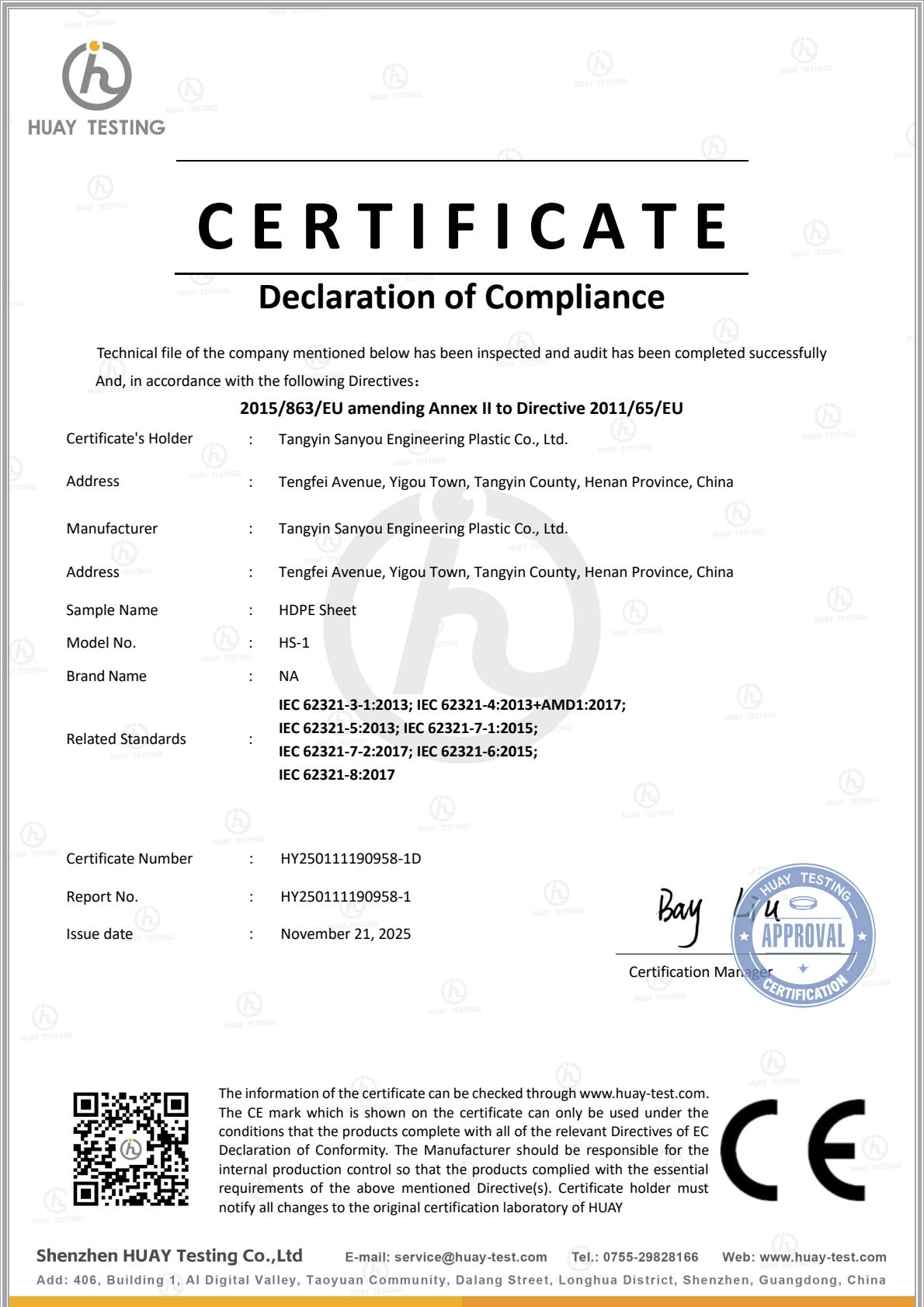
- Confirm the documentation. Ask for the certificate that matches the product and the market: ISO 9001 for the manufacturing system; CE certificate number HY250111190958-1D, issued by HUAY TESTING on 2025-11-21 for HDPE Sheet (model PE300) in the EU market; and RoHS certificate number DTIBW20222147C, issued by Shenzhen Deesev Testing International Corporation (DTI) for UHMWPE Sheet PE1000 in the EU and EEA markets. Inspection records from raw material through final pre-shipment inspection are available on request.
- Agree commercial terms. The minimum order quantity is 1,000 kg per specification and colour, with trial orders negotiable, and lead time is 15–20 days after order confirmation and deposit, subject to quantity and customization requirements.
- Verify on receipt. Sanyou’s quality control covers incoming raw material inspection, in-process thickness and dimension checks, surface inspection and final pre-shipment inspection, so the receiving check should mirror those points: thickness, flatness, colour, surface texture and hole positions.
| Application duty | Published HDPE sheet thickness reference |
|---|---|
| Light-load lining | 5–6 mm |
| Tank wall and structural panel | 6–20 mm |
| Heavy-wear chute liner | 20–50 mm |
The thickness reference is selection guidance published by the manufacturer. It is a starting point for discussion, not a performance guarantee: final thickness depends on the abrasion mechanism, load, fixing method and inspection interval of the specific installation.
Where Wear Resistant HDPE Plates Are Used
Because the same plate combines wear resistance, impact strength, chemical resistance and moisture resistance, it appears across industries rather than in a single application. The listed industries for the HDPE sheet range include chemical processing and water treatment, food and beverage processing, machinery manufacturing and industrial automation, marine and shipbuilding, construction and building materials, agriculture and livestock farming, outdoor furniture and playground equipment, signage and advertising, cold chain and refrigeration, and packaging, logistics and material handling.
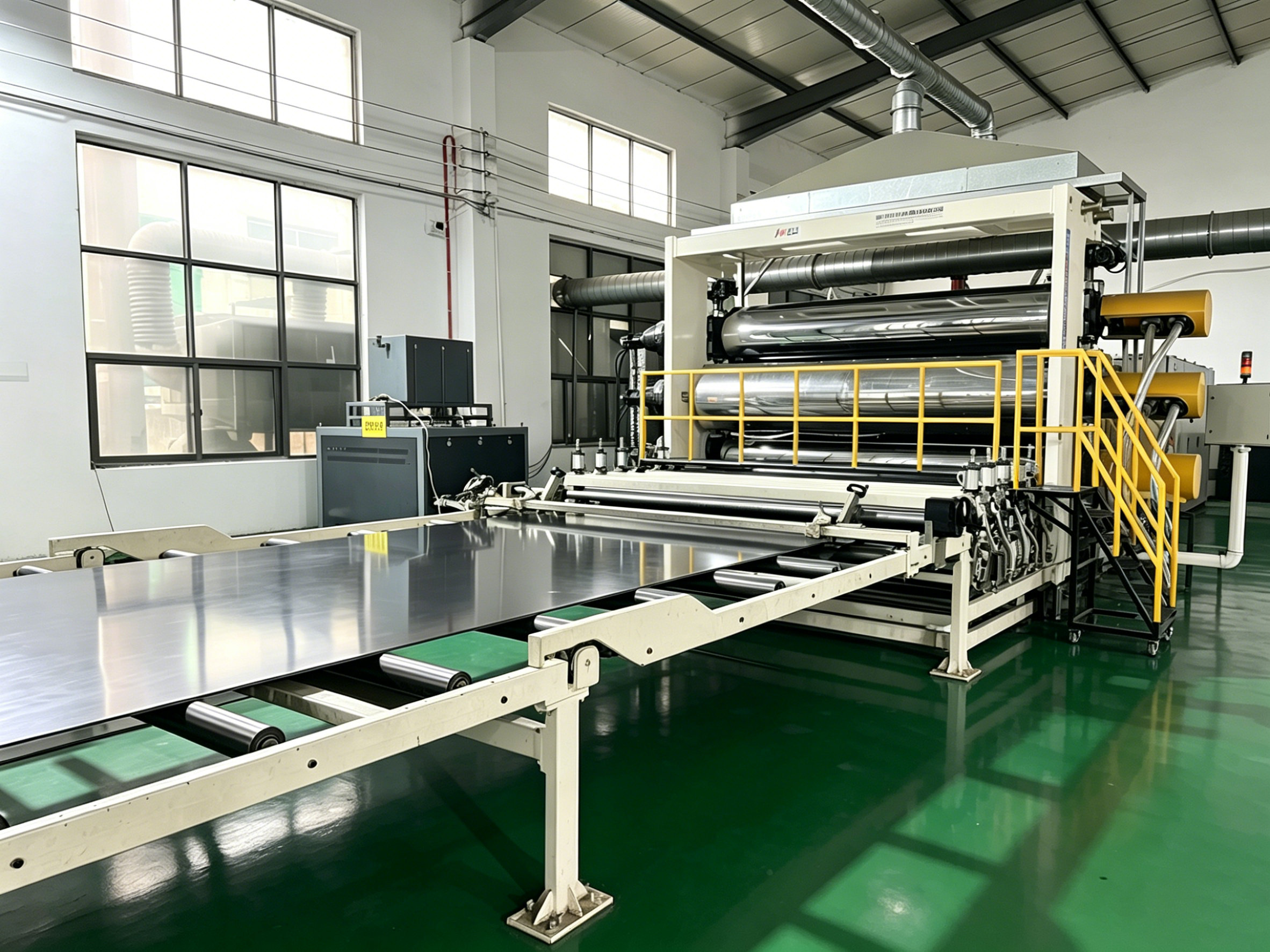
- Material handling and chute lining. An HDPE chute lining sheet uses the low coefficient of friction to keep bulk material moving and to reduce build-up on the plate surface. Where wear is moderate and the structure needs stiffness, HDPE is the practical choice; where sliding abrasion is severe, the same duty moves to a UHMWPE lining grade.
- Chemical processing and water treatment. Anti-corrosion HDPE sheet is used for tank walls, covers, splash guards, drip trays and equipment panels, taking advantage of the documented resistance to acid, alkali, salt and oil together with the sub-0.01% water absorption.
- Food and beverage processing. Cutting tables, machine guards, work surfaces and hygienic panels use the food grade HDPE sheet option and the non-toxic material description, with smooth or lightly textured surfaces chosen for cleanability.
- Marine, outdoor and signage. An HDPE marine board or outdoor panel requires the UV-stabilized grade, since the working temperature range of -60 °C to +80 °C alone does not protect against sunlight exposure.
- Cold chain and agriculture. Cold-storage panels, livestock dividers and agricultural equipment components use the low-temperature performance implied by the -60 °C lower limit and the moisture resistance of the material.
- Ground protection. A separate HDPE product line, the ground protection mat, uses the same base material in thicknesses of 12.7 mm, 15 mm and 20 mm with a load reference of up to 80–120 metric tons depending on thickness, ground conditions, vehicle type and installation. The mats do not rot, splinter or become waterlogged and are described as a recyclable alternative to plywood and steel plates.
A documented supply case shows how configuration work translates into an order. An industrial buyer in Australia purchased 20 tons of HDPE sheet with customized thickness, dimensions, colour and surface finish for chemical tanks, wastewater-treatment equipment, food-processing surfaces, machine guards, outdoor cabinets and fabricated components. Over a two-year service period the reported outcome was improved corrosion and moisture resistance, reduced maintenance requirements, and simpler fabrication and cleaning. The order was not a catalogue purchase; it was a specification exercise of exactly the kind described above.
HDPE Plate or UHMWPE Sheet? Deciding Between Documented Options
The most common specification question at the evaluation stage is not which brand, but which polymer. Both materials are manufactured by Sanyou, so the comparison can be made on published data rather than on sales claims.
| Attribute | HDPE Sheet (PE300) | UHMWPE Sheet (PE1000) |
|---|---|---|
| Material | Virgin HDPE | UHMWPE (PE1000) |
| Density | 0.93–0.97 g/cm³ | Not stated in the published product data |
| Thickness | 2–50 mm, custom available | Customizable |
| Formats | 1000 × 2000 mm, 1220 × 2440 mm, 1500 × 3000 mm, 2000 × 4000 mm, custom | Standard and custom sizes available |
| Surface | Smooth or anti-skid texture (diamond, orange peel, embossed) | Smooth or planed |
| Published wear positioning | Wear-resistant; impact strength ≥ 20 kJ/m² | Exceptional abrasion and wear resistance; extremely high impact strength |
| Friction behaviour | Low coefficient of friction, 0.15–0.25 | Low coefficient of friction; self-lubricating and non-stick surface |
| Chemical resistance | Excellent (acid, alkali, salt, oil) | Excellent chemical and corrosion resistance |
| Moisture | Water absorption < 0.01% over 24 h | Very low moisture absorption |
| Temperature | -60 °C to +80 °C working range; melting point 130–140 °C | Depends on material grade and working conditions |
| Processing | Weldable, cuttable, CNC machinable | Compression moulded, cut-to-size, CNC machined |
| Certification | ISO 9001; CE certificate HY250111190958-1D (EU market, HDPE Sheet PE300) | RoHS certificate DTIBW20222147C (EU and EEA markets, PE1000) |
| Typical fit | Structural panels, tanks, covers, food-contact surfaces, signage, outdoor panels, moderate-wear lining | Severe sliding abrasion and impact: chute, hopper and silo liners, conveyor components, wear strips, truck-bed liners, fender panels |
This comparison uses only attributes published in Sanyou’s own product data. Where a value is not published, it is shown as not stated rather than estimated. Performance figures relate to the stated product data and should be confirmed against the specific application duty.
The decision rule is straightforward. If the plate is part of a structure, a tank, a hygienic surface or an outdoor panel and the wear is moderate, HDPE sheet is the more economical, stiffer and more easily fabricated option, and it is available with UV stabilization and food-contact positioning. If the plate exists solely to absorb severe sliding abrasion or repeated impact and material flow is the constraint, UHMWPE PE1000 is the intended grade, with self-lubricating and non-stick behaviour and a broader specialty grade range covering anti-static, flame-retardant, marine and metal-detectable requirements.
Frequently Asked Questions
What material certificates are available for food grade industrial HDPE sheet, and what do they cover?
Three documents are relevant, and they cover different things. ISO 9001 covers the manufacturing system under which the HDPE sheet is produced. CE certificate number HY250111190958-1D, issued by HUAY TESTING on 2025-11-21, covers HDPE Sheet (model PE300) for the EU market. RoHS certificate number DTIBW20222147C, issued by Shenzhen Deesev Testing International Corporation (DTI), covers the UHMWPE Sheet PE1000 for the EU and EEA markets. Separately, food grade HDPE sheet is an available option: Sanyou states that the HDPE sheet is made from food-grade polyethylene resin and is suitable for food processing, cutting boards and sanitary applications, and the product specification describes the material as non-toxic. Because a food-grade material description and a market conformity declaration are different documents, buyers should request the specific compliance paperwork their own market requires — and batch inspection records, which are available on request — before releasing the specification.
Can a wear resistant HDPE plate be custom cut, machined and textured to a drawing?
Yes. Thickness, sheet size, colour, surface texture, material grade and UV stabilization can all be specified, and the sheet is weldable, cuttable and CNC machinable. Standard formats run from 1000 × 2000 mm and 1220 × 2440 mm up to 2000 × 4000 mm, with cut-to-size panels, drilling, countersunk fixings, welding and custom packaging available as OEM/ODM work. This capability is supported by a 10-engineer technical team and a 40,000 m² production site, with approximately 800 metric tons per month of HDPE sheet capacity.
What drives the price of a wear resistant HDPE plate?
Price is determined by configuration, not by the material name alone. The main drivers are thickness, sheet format, grade (virgin or recycled), colour, UV stabilization, surface texture, secondary processing such as CNC machining and drilling, order quantity and packaging. A 20 mm plate contains materially more material than a 10 mm plate of the same format, and a textured or machined panel carries processing that a plain sheet does not. Resin is only one input: S&P Global Platts reported black recycled HDPE resin at approximately USD 520/mt FOB Southeast Asia in September 2026, which is a feedstock reference for a single grade, not a sheet price, and it cannot be converted into a plate price without the conversion and machining steps. The minimum order quantity is 1,000 kg per specification and colour, and trial orders are negotiable.
Can the plate be validated before a full production run?
Trial orders are negotiable, which allows thickness, colour, surface texture and machining quality to be checked against the drawing before a full batch is produced. Sanyou’s after-sales support covers material selection guidance, fabrication advice and documentation support, so the validation stage is also the point at which grade, texture and fixing details can be confirmed. For wear-critical duties where no method-referenced abrasion data exists for the grade in question, this stage is the right place to agree what will be inspected and against which method.
What are the minimum order quantity and lead time for custom cut HDPE sheet?
The minimum order quantity is 1,000 kg per specification and colour, and trial orders are negotiable. Lead time is 15–20 days after order confirmation and deposit, subject to order quantity and customization requirements. To receive a specification-based quotation, send the drawing or dimensions, thickness, colour, surface texture and quantity to sandy@syuhmwpe.com or WhatsApp +86 199-3737-2858.
Conclusion: The Specification Is the Product
For a wear resistant HDPE plate, the difference between a successful installation and an early replacement is rarely the polymer — it is the specification discipline around it. The documented data on the Sanyou HDPE Sheet PE300 range gives buyers a solid starting point: thickness from 2 mm to 50 mm, formats up to 2000 × 4000 mm, tensile strength of at least 22 MPa, impact strength of at least 20 kJ/m², a friction coefficient of 0.15–0.25, water absorption below 0.01% over 24 hours and a working range of -60 °C to +80 °C, backed by ISO 9001 and a CE certificate covering HDPE Sheet PE300 in the EU market.
What the buyer must add is the duty description, the grade choice, the UV requirement where the plate faces the sun, the surface texture, the format and machining, and the compliance paperwork for the destination market. Where severe sliding abrasion dominates, the honest answer may be that the duty belongs on a UHMWPE PE1000 grade rather than on HDPE — a decision better made at the evaluation stage than after installation.
Request a specification-based quotation or a plate sample
Send your drawing, thickness, colour, surface texture and quantity, and Sanyou will confirm grade, MOQ, documentation and lead time against your application.
Email: sandy@syuhmwpe.com · Tel / WhatsApp: +86 199-3737-2858 · Website: www.syuhmwpe.com · Chat on WhatsApp · Download the Sanyou Product Catalog (PDF)
Tangyin Sanyou Engineering Plastic Co., Ltd. — Tengfei Avenue (Industrial Park), Yigou Town, Tangyin County, Henan, China.
Have Questions or Need More Details?
Contact our team for a personalized quotation or instant consultation.
Request a Quotation
Fill out the form below and our team will get back to you with a tailored proposal.
WhatsApp Direct Chat
Prefer to chat in real-time? Message us on WhatsApp for instant assistance & quick answers.
- Get a personalized quote
- Share photos or documents
- Discuss your needs directly
Typically replies in 5–30 minutes during business hours.