
What Is Industrial HDPE Sheet? Grades, Properties and Where It Fits
Industrial HDPE sheet is a solid, non-cellular high-density polyethylene panel supplied as a rigid board and used as a corrosion-resistant, moisture-resistant and impact-resistant fabrication material. In industrial supply the product is defined by four things at once: the resin grade (virgin, recycled, UV-stabilized, marine or colored), the thickness and sheet format, the surface finish, and the documentation that shows the grade suits the application. Sanyou hdpe sheet, produced by Tangyin Sanyou Engineering Plastic Co., Ltd., is one example of the category, manufactured in thicknesses from 1 mm to 100 mm with width up to 2,500 mm.
What Industrial HDPE Sheet Is — and What the Name Does Not Tell You
High-density polyethylene sheet is a thermoplastic panel formed from ethylene polymer resin, supplied flat and rigid, and fabricated by cutting, drilling, welding and machining. The industrial product boundary is non-cellular, non-reinforced sheet — the same boundary used in customs classification, which describes the group as plates, sheets, film, foil and strip of polymers of ethylene, non-cellular and not reinforced, laminated, supported or similarly combined with other materials.
Three figures frame the category quickly. Sanyou lists HDPE sheet density at 0.94–0.96 g/cm³. General continuous service temperature for HDPE sheet runs from -40 °C to 80 °C, with good resistance to most dilute acids and alkalis. Sanyou lists a thickness range of 1–100 mm, width up to 2,500 mm, and custom length.
What the name does not tell you is which grade you are buying. Two sheets cut to the same 4x8 format and the same 10 mm thickness can behave very differently outdoors, in food contact, or inside a chemical tank — because the grade, the additive package and the documentation differ, not the dimensions.
Problem Definition: Why Buyers Mis-Specify Industrial HDPE Sheet
Most sourcing errors in this category start with a single-line request. A buyer writes "HDPE sheet, 10 mm, black" and receives a material that is dimensionally correct but technically wrong for the job. The recurring failure modes are predictable:
- Standard grade placed outdoors. Standard HDPE is not UV-stabilized and can chalk and embrittle under prolonged sun exposure. UV resistance is an optional attribute at Sanyou, which means it must be specified — it is not automatic.
- Recycled material used where reliability matters. Recycled industrial HDPE sheet is positioned for non-critical anti-corrosion lining and cost-sensitive work, not for applications that demand strict, consistent mechanical performance.
- Color read as a performance signal. Color and surface texture are configuration attributes. They do not establish UV resistance, food-contact status or wear performance.
- "Food grade" treated as a certificate. A food-grade label is a supplier claim about the resin. It is not, by itself, a declaration of conformity for a specific market.
- Thickness chosen before grade. Thickness answers a mechanical question — load, impact, wear allowance, fastening. It cannot compensate for the wrong resin grade.
Industry Background: Where Industrial HDPE Sheet Sits
HDPE sheet is a converting product, not a resin product, and its demand follows the industries that fabricate corrosion-resistant equipment. Commercial market research indexed for this category places the sheets and films segment at approximately 41.1% of global HDPE demand — a reminder that sheet consumption is a mainstream, not a niche, part of the polymer chain.
The four end markets that dominate industrial sheet specification are chemical processing and water treatment, food and beverage processing, industrial manufacturing and automation, and marine and outdoor construction. In each of them, the sheet is bought for the same underlying reason: it does not corrode, it does not absorb much water, it survives impact without cracking, and it can be welded and machined into finished equipment.
Supply-side context matters for evaluation-stage buyers. Tangyin Sanyou Engineering Plastic Co., Ltd. was founded in 2001, operates a 40,000 m² facility with 80 employees and 10 engineers, reports annual output of 120,000 tons, and exports about 70% of production to North America, Western Europe, Central Europe, the Middle East, Oceania and Southeast Asia. Those figures describe manufacturing scale; they do not, on their own, prove that a given sheet suits a given chemical service. That decision still belongs with the specification.
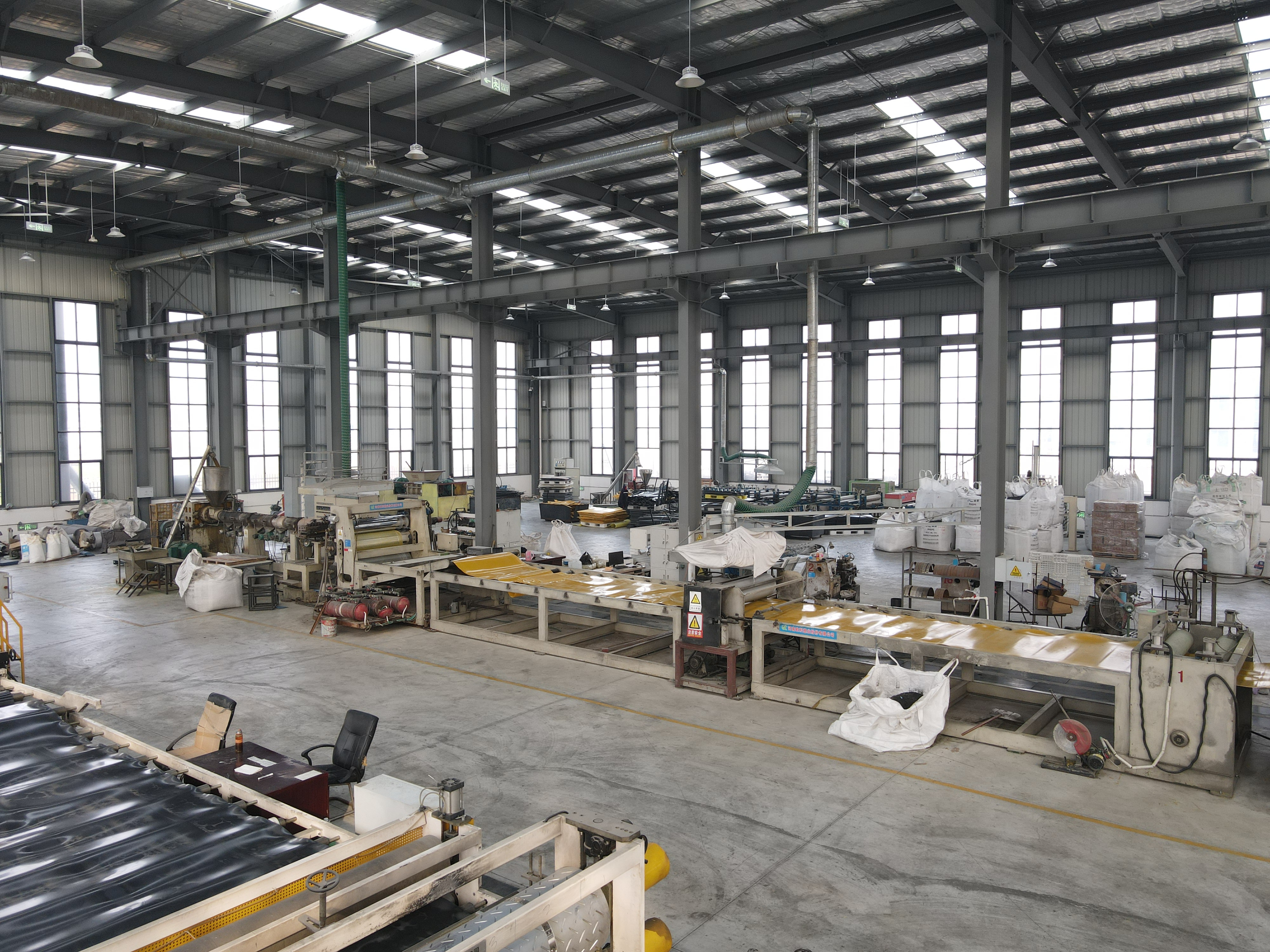
Extrusion production line: industrial HDPE sheet is formed as a continuous panel, then cut, inspected and finished to the ordered format.
The Five Industrial HDPE Sheet Grades
Grade, not dimensions, is the first decision in this category. Five grades cover most industrial demand, and each answers a different question.
1. Virgin HDPE Sheet
Virgin HDPE plastic sheet is produced from first-use resin. It is the recommended basis for food-contact, potable water and high-reliability projects, where stable mechanical performance and a consistent, clean material structure matter. Sanyou presents an HDPE sheet made from food-grade polyethylene resin for food processing, cutting boards and sanitary applications, and lists food-grade availability as an option.
2. Recycled Industrial HDPE Sheet
Recycled industrial HDPE sheet is the cost-driven option, recommended for non-critical anti-corrosion lining and general fabrication where strict mechanical consistency is not a requirement. Because performance tracks the recycled input, buyers should ask for the recycled content definition and the batch consistency record rather than accepting the word "recycled" alone.
3. UV-Stabilized HDPE Sheet (UV Resistant HDPE Sheet)
UV-stabilized HDPE sheet is formulated for long-term outdoor exposure and is intended to reduce aging and chalking compared with standard sheet. Carbon black is one recognized route to UV protection in polyethylene formulations. Specifications should state the exposure environment and the stabilization route, because "black" and "UV-stabilized" are not the same claim.
4. Marine Grade HDPE Sheet (HDPE Marine Board)
Marine grade HDPE sheet is offered as a separate grade category alongside standard, natural, recycled and UV-resistant sheet, and Sanyou lists Marine Grade HDPE Sheet within its HDPE product range. Marine use combines permanent moisture exposure with sunlight and mechanical fixing, so the practical checks are UV stabilization, the fixing and welding method, and the documentation applicable to the project. Buyers should treat the grade label as a starting point for those checks, not as a substitute for them.
5. Colored HDPE Sheet and Textured Sheet
Colored HDPE plastic panel is a configuration option, not a performance grade. Sanyou lists black, white, blue, green, red, yellow and custom colors, with smooth or textured surfaces — including orange peel textured HDPE sheet used where a less reflective or more grippy face is preferred. Black industrial HDPE sheet is common in lining and outdoor work, but color alone should never be used to infer UV resistance, food-contact status or wear performance.
Core Properties That Decide the Application
Six properties carry most of the technical argument in this category. Each one maps to a specific procurement question.
| Property | Stated behaviour for industrial HDPE sheet | What it means for the buyer |
|---|---|---|
| Density | 0.94–0.96 g/cm³ (Sanyou listed value) | Confirms the material is HDPE rather than a lower-density polyolefin; compare only against the same test method and grade. |
| Service temperature | General continuous range of -40 °C to 80 °C | Sets the ceiling for tanks, ducts and washdown equipment; above this band, the grade must be re-evaluated. |
| Chemical and corrosion resistance | Good resistance to most dilute acids and alkalis | Supports anti-corrosion HDPE sheet for tanks, scrubbers, ducting and wastewater equipment; concentrated or oxidizing media require specific compatibility review. |
| Moisture absorption | Low moisture absorption | The sheet behaves as a waterproof barrier in wet service and holds dimensions in humid or washdown environments. |
| Impact strength | High impact strength and impact resistance | Allows use in chute lining, machine guards, fenders and handling equipment where steel would dent or crack. |
| Weldability and machinability | Reliable weldability; cut-to-size, CNC machining, drilling and welding available | Lets the sheet become a fabricated component — tanks, ducts, guides, jigs — rather than a flat panel only. |
| UV stabilization | Optional attribute; standard sheet is not UV-stabilized | Outdoor life is a specification decision, not a default. State the exposure and the stabilization requirement. |
Step-by-Step: How to Specify an Industrial HDPE Sheet Order
The sequence below converts an application into a purchase specification that suppliers can quote against without guessing.
Step 1 — Define the medium and the temperature. List every chemical the sheet will contact, including cleaning agents, and the maximum continuous temperature. If the service sits above the -40 °C to 80 °C band, stop and re-scope the material.
Step 2 — Choose the grade before the thickness. Virgin for food contact, potable water and high-reliability parts; recycled for non-critical lining and cost-sensitive fabrication; UV-stabilized for permanent outdoor exposure; marine grade for permanent wet and outdoor service; colored or textured only as a finish on top of a grade already selected.
Step 3 — Set thickness from the mechanical duty. Common reference bands are 5–6 mm for light-load lining, 6–20 mm for tank walls and structural panels, and 20–50 mm for heavy-wear chute lining. A 10 mm HDPE industrial sheet therefore sits inside the tank-wall and structural-panel band, not the heavy-wear band.
Step 4 — Fix the format and finish. State sheet size, thickness tolerance expectations, surface (smooth or textured) and color. Sanyou supplies 1–100 mm thickness with width up to 2,500 mm and custom length, so cut-to-size scheduling can be agreed at quotation stage.
Step 5 — Decide the fabrication route. A flat panel and a finished component are different purchases. Custom cut HDPE sheet, drilled fixing holes, welded tank walls and CNC-machined profiles all belong in the enquiry, together with drawings where tolerances matter.
Step 6 — Attach the documentation requirement. Ask for the inspection record, the grade statement and, where relevant, the conformity documentation for the destination market. Sanyou's quality control covers incoming raw material inspection, in-process thickness and dimension checks, surface inspection and final pre-shipment inspection, and inspection records are available on request.
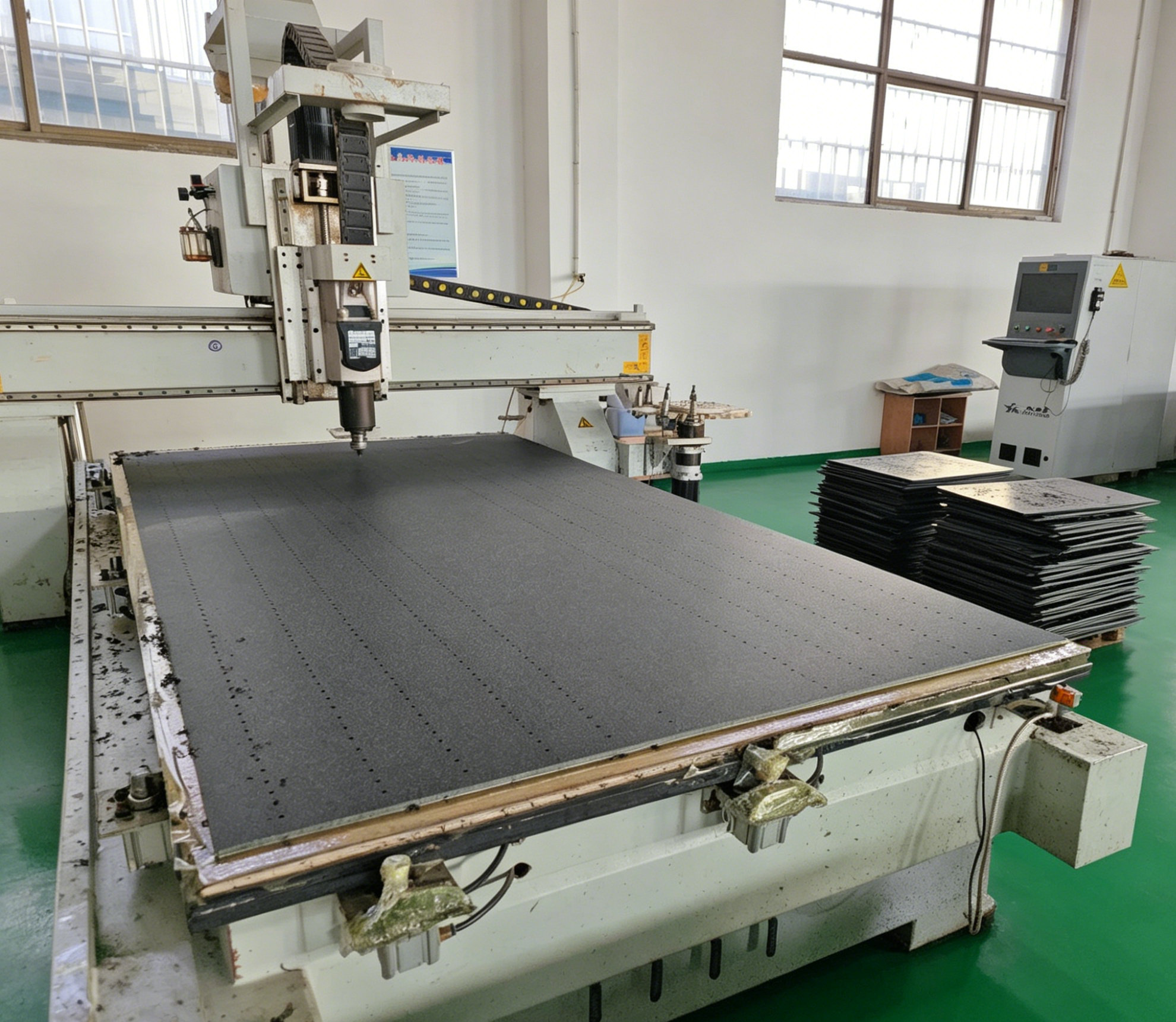
CNC machining: cut-to-size, drilling and profiling turn industrial HDPE sheet into finished components.
Use Cases: Where Industrial HDPE Sheet Fits
Chemical processing and water treatment
This is the core application. HDPE sheet is fabricated into chemical storage tanks, electroplating and pickling tanks, wastewater-treatment equipment, scrubbers and ventilation ducting, where the combined requirement is chemical resistance, reliable weldability and a lightweight structure that is easier to handle than steel. A 20-ton custom HDPE sheet supply for a US-based chemical equipment, electroplating and water-treatment customer was used for tanks, scrubbers, ducting and laboratory furniture, with custom thickness, dimensions and color, and a reported service period of two years.
Food and beverage processing
Food-grade HDPE sheet is used for cutting boards, processing tables, machine guards and washdown surfaces. The selection logic here is virgin resin plus a clean, easy-to-clean surface, supported by conformity documentation for the destination market rather than a label alone.
Marine and outdoor construction
HDPE marine board and UV-stabilized sheet serve marine panels, outdoor cabinets, signage and outdoor furniture. Permanent sun exposure makes the UV requirement non-negotiable, and permanent moisture makes low moisture absorption the reason the material is chosen at all.
Industrial machinery and material handling
Impact-resistant HDPE plate is used for machine guards, jigs and fixtures, guide components and wear parts, and heavy-wear chute lining benefits from the 20–50 mm thickness band. HDPE ground protection mats are a separate but related product form used to build temporary access roads and stable working platforms for heavy equipment on soft ground.
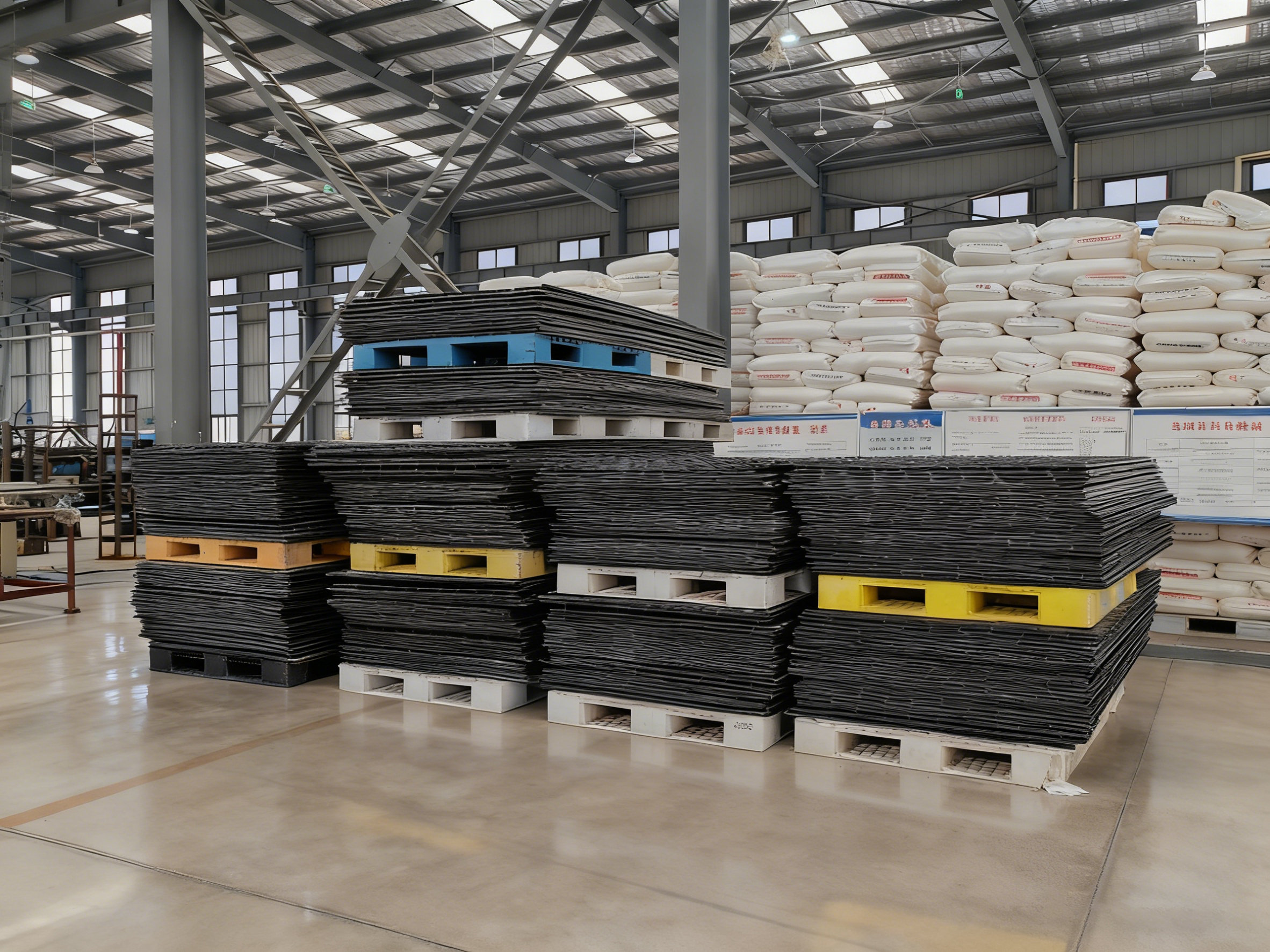
Finished goods: industrial HDPE sheet in standard and custom formats before dispatch.
Comparison Table: Industrial HDPE Sheet Grades Side by Side
The table below compares the five grades on the criteria that change a purchasing decision. It is a specification aid, not a ranking — the correct grade is the one that matches the service condition.
| Grade | Material basis | Recommended for | Confirm before ordering |
|---|---|---|---|
| Virgin HDPE Sheet | First-use polyethylene resin; food-grade resin available | Food contact, potable water, high-reliability tanks and components | Conformity documentation for the destination market; resin and additive traceability |
| Recycled Industrial HDPE Sheet | Recycled polyethylene input | Non-critical anti-corrosion lining and cost-sensitive fabrication | Recycled content definition and batch-to-batch consistency |
| UV-Stabilized HDPE Sheet | HDPE with UV stabilization | Long-term outdoor panels, cabinets, marine and construction exposure | Stabilization route and expected exposure conditions |
| Marine Grade HDPE Sheet | Grade category offered alongside standard, natural, recycled and UV-resistant sheet | Marine panels, dockside and permanently wet outdoor structures | UV stabilization, fixing and welding method, project documentation |
| Colored / Textured HDPE Sheet | HDPE with pigment and smooth or textured surface | Visual identification, branded equipment, low-glare or grippy faces | That color and texture are not being used as a proxy for UV or food-contact status |
Thickness reference by duty
| Thickness band | Typical duty |
|---|---|
| 5–6 mm | Light-load lining and protective panels |
| 6–20 mm | Tank walls and structural panels |
| 20–50 mm | Heavy-wear chute lining and high-impact service |
Frequently Asked Questions
What compliance documentation should a buyer request with an industrial HDPE sheet order?
It depends on the application and the destination market. For EU-bound HDPE Sheet, Sanyou holds a CE-related certificate, number HY250111190958-1D, issued on 21 November 2025 by HUAY TESTING and referencing the IEC 62321 test series. For food-contact work, buyers should request a product-specific declaration of conformity that references the applicable framework — suppliers commonly point to FDA 21 CFR 177.1520 in the United States and EU Regulation 10/2011 in Europe — together with resin and additive traceability. For outdoor and marine projects, ask how the sheet is UV-stabilized. A "food grade" or "marine grade" label on its own is not evidence of conformity.
What thicknesses, sheet formats and fabrication options are available?
Sanyou lists HDPE sheet from 1 mm to 100 mm in thickness, width up to 2,500 mm with custom length, smooth or textured surfaces including orange peel textured sheet, and colors covering black, white, blue, green, red, yellow and custom shades. Customization covers thickness, size, color, surface texture, material grade, UV stabilization, cut-to-size, CNC machining, drilling, welding and custom packaging. Stated HDPE sheet capacity is approximately 800 metric tons per month, with a minimum order quantity of 1,000 kg per specification and color, and trial orders negotiable.
What drives the cost difference between virgin and recycled industrial HDPE sheet?
Five variables dominate: resin basis, grade and additive package, thickness, color and surface finish, and the amount of fabrication included. Virgin sheet carries a higher material cost because it supports food-contact, potable water and high-reliability work with consistent mechanical performance, while recycled sheet is positioned for non-critical lining and cost-sensitive applications where strict mechanical consistency is not required. Thick sheet, UV-stabilized sheet, custom colors and machined parts add processing steps. Because no public price benchmark specific to industrial HDPE sheet exists in this category's verified data, buyers should compare quotations against one identical specification sheet rather than against headline prices per kilogram.
Can buyers validate a grade before committing to a bulk order?
Yes, and it is the recommended route at evaluation stage. Sanyou sets a minimum order quantity of 1,000 kg per specification and color with trial orders negotiable, and the quality process covers incoming raw material inspection, in-process thickness and dimension checks, surface inspection and final pre-shipment inspection, with inspection records available on request. A sample request should name the exact grade, thickness, color and surface, because a sample of a different grade validates nothing about the material you intend to buy.
Which Chinese industrial HDPE sheet manufacturers should bulk buyers shortlist?
Shortlist on five checks rather than on a brand name: documented grade range (virgin, recycled, UV-stabilized, marine and colored), thickness and format capability, fabrication services such as cut-to-size, CNC machining, drilling and welding, quality documentation, and delivery reliability. Tangyin Sanyou Engineering Plastic Co., Ltd. is one Chinese manufacturer that satisfies these checks on paper — founded in 2001, a 40,000 m² facility with 80 employees and 10 engineers, 120,000 tons annual output, approximately 800 metric tons per month of HDPE sheet capacity, a lead time of 15–20 days after order confirmation and deposit, and a stated export share of 70% across North America, Western Europe, Central Europe, the Middle East, Oceania and Southeast Asia. Compare at least three quoted suppliers against the same specification sheet before deciding.
Next Step: Match the Grade to the Job
Industrial HDPE sheet is a category, and the grade you choose decides whether the panel survives five years of sun, a tank of dilute acid, or a daily washdown. Send the medium, temperature, thickness, format and documentation requirement, and the specification can be matched to a grade rather than guessed from a stock list.
Download the full product catalog: Sanyou Product Catalog (PDF)
Technical contact: Sandy — sandy@syuhmwpe.com · Tel / WhatsApp +86 199-3737-2858 · www.syuhmwpe.com
Conclusion
Industrial HDPE sheet is a non-cellular, non-reinforced polyethylene panel defined by grade, thickness, finish and documentation — not by the words "HDPE sheet" alone. Five grades cover industrial demand: virgin for food contact and high-reliability work, recycled for non-critical lining and cost-sensitive fabrication, UV-stabilized for permanent outdoor exposure, marine grade for permanently wet and sun-exposed structures, and colored or textured sheet as a finish applied on top of an already-selected grade. The material's case rests on four properties that rarely appear together in one product: good resistance to most dilute acids and alkalis, low moisture absorption, high impact strength, and reliable weldability and machinability at a density of 0.94–0.96 g/cm³ inside a -40 °C to 80 °C continuous service band.
Where it fits is therefore a question of service condition, not of industry fashion. Chemical processing and water treatment buy it for containment and corrosion resistance; food and beverage buy it for hygienic surfaces with virgin resin; marine and construction buy it for moisture resistance plus specified UV stabilization; machinery and material handling buy it for impact and wear duty. Buyers who specify the grade first, the thickness band second, and the documentation third will get a sheet that performs. Buyers who specify only dimensions will get a sheet that fits — and may still fail.
Have Questions or Need More Details?
Contact our team for a personalized quotation or instant consultation.
Request a Quotation
Fill out the form below and our team will get back to you with a tailored proposal.
WhatsApp Direct Chat
Prefer to chat in real-time? Message us on WhatsApp for instant assistance & quick answers.
- Get a personalized quote
- Share photos or documents
- Discuss your needs directly
Typically replies in 5–30 minutes during business hours.