Beyond the First PO: Long-Term Supply Assurance for Organic Hemp Seed Buyers
Most organic hemp seed buyers do not lose money on their first purchase order. They lose it on the fourth, when volumes are larger, a retail listing is live, and the material that arrives no longer matches the specification approved a year earlier.
Long-term supply assurance is the answer to that problem, and it is a specific, checkable thing rather than a promise. It means a manufacturer can commit in writing to repeated volumes of the same specification across several harvests, with certification that stays in force, acceptance testing that follows identical rules every time, and a named team that responds when something goes wrong. Ningxia Senqi Food Industry Co., Ltd., which trades as Senqi Food, builds that commitment on an own order farming system, two factories, two planting farms, certification under EU organic, USDA, BRC, Kosher and Halal, and export experience to more than 20 countries.
This guide is written for importers, distributors and brand owners who have already bought organic hemp seed once and now need to know whether the second, third and tenth orders will behave the same way.
Problem Definition: Why the First PO Is the Easy Part
A trial order is designed to succeed. Volumes are small, the buyer inspects everything personally, and the supplier assigns its most experienced people. The failure modes only appear once the relationship becomes routine: three or four shipments a year, several formats running in parallel, and a purchasing team that no longer has time to re-check every document.
Four things typically break first.
Specification drift. A hulled hemp seed or hemp hearts lot approved in one season may differ in the next if the supplier changes field, harvest window or processing line without telling the buyer. In a retail pack that difference is visible to consumers. In a hemp seed protein powder blend it changes the formulation maths, and in organic hemp seed oil it changes the sensory result.
Certification lapse. Organic, Kosher and Halal certificates run on fixed renewal cycles. A copy sitting in a buyer file proves the status of one date only. When a renewal falls due between order confirmation and shipment, the paperwork gap becomes a commercial problem, not an administrative one.
Capacity allocation. Spot suppliers serve whoever booked first that season. A buyer who purchases hemp hearts once a year has no standing when harvest volume is short, and no visibility into whether the material they receive in a tight year came from the farm that originally supplied the approved lot.
Documentation and claims. When a shipment is held at customs or a customer rejects a lot on a foreign-material finding, the speed of the response depends entirely on whether the manufacturer is reachable directly or only through an intermediary.
The decision buyers actually face is not who quoted the lowest price on the first purchase order. It is who can repeat the same lot profile, with valid documents, on a fixed calendar, for the next three years — and who is accountable when they cannot.
Industry Background: Growing Demand, Tighter Organic Rules
The case for contracted supply is shaped by two forces moving in opposite directions. Demand for organic hemp seed is rising, and the compliance bar for imported organic material is rising faster.
On demand. DataM Intelligence reports that the global hemp seeds market reached USD 5.98 billion in 2025 and projects USD 10.84 billion by 2033, a CAGR of 7.8% across 2026 to 2033. Fortune Business Insights values the hemp seed oil segment at USD 3.26 billion in 2025, with Europe holding the largest share at 33.91%. Grand View Research places hemp protein powder at USD 217.3 million in 2025, with the organic segment forecast to grow at a 5.98% CAGR through 2031.
On supply. European Commission data show the EU hemp cultivation area rising to 37,740 hectares in 2024 from 28,830 hectares in 2023. More European growing area does not automatically mean more food-grade organic seed; it means more competition for processing and handling capacity inside a narrow harvest window.
On compliance. Regulation (EU) 2018/848 has applied since 1 January 2022 and has been fully enforced for third-country imports since 1 January 2025, requiring 100% compliance with EU organic standards for products such as organic hemp hearts. For a non-EU supplier, that moves the burden from paperwork equivalence to documented, continuous compliance. Even the customs layer rewards consistency: hemp seeds, whether or not broken and excluding seed for sowing, are classified under HS code 12079991 in the EU and UK, and inconsistent classification between shipments creates avoidable friction.
Taken together, these figures describe a market where demand for organic hemp seed protein powder, hulled hemp seeds and organic hemp seed oil keeps expanding, while tolerance for suppliers whose certificates are patched together shipment by shipment keeps shrinking.
What Long-Term Supply Assurance Actually Consists Of
Supply assurance is not a service tier that can be added at quotation. It is a set of structural facts about a supplier that either exist or do not. At Senqi Food, these are the ones that change what a repeat buyer can plan.
1. Control of the raw material pipeline
Ningxia Senqi Food Industry Co., Ltd. is a manufacturer founded in 2020 and based in Ningxia, China, with a stated annual output of 2,000 mt, an export share of around 90%, and the EU and USA as its main markets. The company states that it guarantees supply chain stability through three named mechanisms: its own order farming system, continuous order efficiency improvement, and a professional after-sales team.
The own order farming system is the most consequential of the three for a long-term buyer. Combined with two planting farms, it means the raw seed pipeline is planned against orders rather than improvised on the open market each season. That is the difference between a supplier who can confirm a volume in a short crop year and one who can only apologise in one.
2. Processing redundancy across two factories
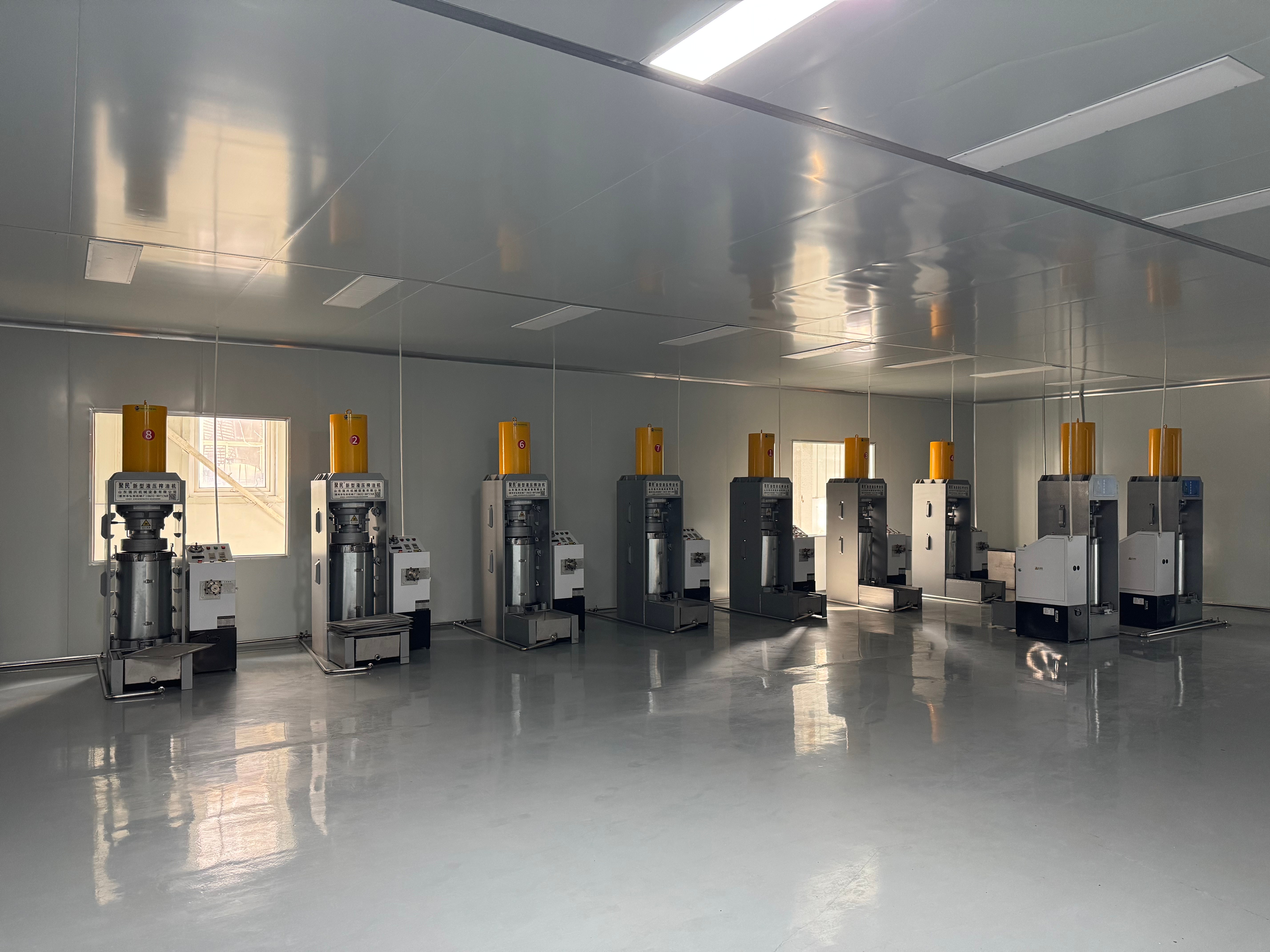
Senqi Food operates two factories and one sales center alongside the two planting farms. Redundancy matters for an unglamorous reason: a single-site supplier is one breakdown, one power interruption or one local harvest delay away from missing a shipment date. Two sites also allow different formats — organic hulled hemp seeds, organic hemp hearts, organic hemp seed kernels, organic hemp seed protein powder, organic hemp seed oil or roasted hemp seed — to be scheduled without every order queuing behind the same line.

3. Certification continuity, not a certificate PDF
The company is certified by EU organic, USDA, BRC, Kosher and Halal. Those five cover the checks an EU food importer is most often asked to produce: organic status for the EU market, USDA organic for US-bound lots, BRC for processing discipline, and Kosher and Halal for buyers whose own lines or end markets require them.
Validity is where buyers should look harder than they usually do. Certificate copies currently on file show Kosher valid until 2026-10-31 and Halal valid until 2026-10-30. Those dates are useful precisely because they are close: they demonstrate that a certificate is a rolling variable, not a permanent credential. Under a multi-year agreement, the right question is not whether the supplier holds Kosher and Halal certification, but what the renewal calendar looks like for the next 24 months and who is responsible for sending updated copies before the old ones lapse.
4. Commercial terms built for repeat orders
The published purchasing terms are short and concrete: MOQ 500 kg; delivery terms FOB, CIF or EXW; acceptance criteria based on pre-shipment testing; payment terms 30/70.
Read as a set, these terms describe a supplier set up for scheduled shipments rather than one-off deals. A 500 kg minimum is low enough to run a genuine validation lot on the exact grade the buyer intends to contract, which is what makes the step from first order to annual program credible on both sides. Pre-shipment testing as the acceptance basis moves quality confirmation to before dispatch, where it can still influence the shipment. And 30/70 payment splits risk in a way that repeat buyers can build into their own cash-flow planning.
5. People who answer after the container leaves
A professional after-sales team is listed as one of the three mechanisms behind supply chain stability — alongside farming control and order efficiency, not as an accessory to them. Export experience to more than 20 countries is the practical evidence: export documentation, inspection routines and claim handling have already been exercised across many customs environments, including the EU and USA markets that make up the company main trade.
Step-by-Step: Moving From a Trial PO to a Multi-Year Program
The sequence below is what turns a first shipment into a supply program without skipping the checks that protect the buyer.
- Freeze the specification before discussing volume. Put the format, grade, packing and test parameters into a single annex — organic hulled hemp seeds, organic hemp hearts, organic hemp seed kernels, organic hemp seed protein powder, organic hemp seed oil or roasted hemp seed, with the parameters your product actually needs. Every later conversation refers back to this document instead of a quotation email.
- Qualify the source, not the salesperson. Ask which plant will produce the lot and which farm supplies the raw seed. A manufacturer with two factories, two planting farms and its own order farming system can answer specifically. An intermediary usually cannot, and that gap is the first sign of what year three will look like.
- Use the first PO as a validation lot. Keep it at or just above the 500 kg MOQ on the exact grade you intend to contract. Confirm in writing that acceptance inspection includes pre-shipment testing and that you receive the test result before dispatch rather than after arrival.
- Map the certificate renewal calendar. List every certificate, its scope and its expiry date, then project each one forward 24 months. Where current copies show Kosher valid until 2026-10-31 or Halal valid until 2026-10-30, the follow-up question is what happens in November 2026. The answer belongs in the contract, not in an email thread.
- Agree an annual volume plan with rolling forecasts. Because the raw material side runs on an own order farming system, the earlier a season volume is visible to the supplier, the more precisely the farming plan can match it. A forecast shared in the harvest window is a request; a forecast shared a season ahead is a plan.
- Fix acceptance, payment and remedy in one document. Pre-shipment testing as the acceptance basis, 30/70 payment terms, and a named after-sales contact for claims. Written together, a quality dispute becomes a procedure instead of a negotiation.
- Review on a fixed cadence. A quarterly review covering delivered volume, test results, documentation and the next certificate expiry is what stops a program from quietly reverting to spot buying after the second year.
- Re-audit annually. Re-verify both plants and the current certificate scope once a year. Long-term supply is a maintained status, not a one-time qualification.
Use Cases: Which Buyers Need Which Kind of Assurance
EU importer or distributor
An EU importer reselling EU organic hemp seed to domestic food manufacturers needs certification that is valid at the moment of import, not at the moment of quotation. Under Regulation (EU) 2018/848, fully enforced for third-country imports since 1 January 2025, the compliance question is continuous. A supplier with a renewal calendar and two plants to draw from reduces the risk that a certificate renewal lands mid-shipment.
Private-label brand owner
A brand packing organic hulled hemp seeds or organic hemp hearts under its own label lives on specification consistency. The first production run sets consumer expectations; the fourth run either matches it or creates a complaint stream. Contracting one grade against a frozen annex, with pre-shipment testing at every order, is the cheapest form of brand protection available.
Plant protein and supplement manufacturer
Buyers of organic hemp seed protein powder formulate against tight parameters, so a change in the raw material is a change in the finished product. The organic segment of the protein powder market is forecast to grow at 5.98% CAGR through 2031, which means more competition for consistent organic input. A multi-year volume plan is what converts that growth into secured input rather than a recurring sourcing scramble.
Oil and ingredient processors
Organic hemp seed oil production is a harvest-window business: the seed has to be available when the press schedule is set. Europe holding 33.91% of a USD 3.26 billion global hemp seed oil market in 2025 signals strong regional demand against European cultivation of 37,740 hectares in 2024. Processors who plan raw seed volumes a season ahead through an order farming structure avoid competing for the same tonnes in the same six weeks as everyone else.
Bakery, snack and cereal producers
Roasted hemp seed, organic hemp seed kernels and organic hulled hemp seeds used as visible inclusions have a low tolerance for appearance variation. These are the formats where a repeat supply program pays for itself fastest, because a rejected lot is not an abstract quality issue — it is a stopped line and a repack.
Comparison Table: Spot Buying vs. an Annual Supply Program
The table contrasts the two sourcing models on the dimensions that decide whether year three looks like year one.
| Decision factor | Spot purchase through a trader | Annual program with Senqi Food |
|---|---|---|
| Supply base visibility | Lot by lot; origin and processing site can change between shipments and must be verified each time. | Own order farming system, two planting farms and two factories, so the same sites can be re-verified year after year. |
| Certification responsibility | Scope and expiry have to be re-checked per shipment; access to factory documents depends on the intermediary. | EU organic, USDA, BRC, Kosher and Halal held by the manufacturer; renewal dates can be written into the agreement. |
| Specification continuity | Parameters are renegotiated with each offer, so drift is discovered at goods-in. | One frozen specification annex carried across orders and formats. |
| Acceptance basis | Typically arranged by the buyer after arrival. | Acceptance inspection includes pre-shipment testing before dispatch. |
| Commercial terms | MOQ and payment terms follow each individual offer. | MOQ 500 kg; FOB, CIF or EXW; payment terms 30/70. |
| Export track record | Depends on the intermediary and on which factory is used. | Manufacturer export experience to more than 20 countries, with the EU and USA as main markets. |
| When something goes wrong | Handled through an intermediary, which adds a layer between the buyer and the plant. | Professional after-sales team engages directly on claims and documentation. |
| Planning horizon | Single shipment. | Multi-year, with rolling forecasts, quarterly reviews and certificate renewal checkpoints. |
| Best suited to | Genuinely one-off or urgent spot requirements. | Buyers whose listings, formulations or private label depend on repeatable material. |
Note: trader practices differ widely. The middle column describes the verification burden a buyer carries in a spot model, not the conduct of any specific company.
FAQ: Long-Term Organic Hemp Seed Supply
Which certifications should a long-term organic hemp seed supplier hold for EU food importers, and how do I keep them valid?
For EU-bound organic hemp seed, a supplier should hold EU organic certification, plus USDA organic for US-bound lots, BRC for processing, and Kosher and Halal where the buyer lines or end markets require them. Ningxia Senqi Food Industry Co., Ltd. is certified by EU organic, USDA, BRC, Kosher and Halal. Validity is the part buyers underestimate: a certificate copy proves status on one date only. Current copies on file show Kosher valid until 2026-10-31 and Halal valid until 2026-10-30, so the useful question is not whether the supplier holds the certificate but what the renewal calendar looks like for the next 24 months. Under Regulation (EU) 2018/848, fully enforced for third-country imports since 1 January 2025, organic lots must comply with EU organic rules at 100%, so an expired or out-of-scope certificate can stop a shipment at the border.
Can one supplier realistically cover multi-year organic hemp seed volumes?
A supplier can only answer that structurally. Senqi Food has long-term supply capability built on two factories, two planting farms and export experience to more than 20 countries, with a stated annual output of 2,000 mt and an export share of around 90% concentrated in the EU and USA. The mechanisms behind that capability are named explicitly: an own order farming system, continuous order efficiency improvement, and a professional after-sales team. For a buyer, the practical test is whether the supplier can tell you which farm and which plant will serve your volume in a given season — a question that a structure of this kind can answer.
What are the purchasing terms and acceptance criteria for a repeat program?
MOQ is 500 kg. Delivery terms are FOB, CIF or EXW. Acceptance criteria are based on pre-shipment testing, and payment terms are 30/70. For a repeat buyer, the combination matters more than any single line: a 500 kg minimum allows a validation lot on the exact grade being contracted, pre-shipment testing places quality confirmation before dispatch, and the 30/70 split can be built into purchasing cash-flow planning.
How should samples and pre-shipment acceptance work before I commit to a program?
Sample the exact format and grade you intend to contract — organic hulled hemp seeds, organic hemp hearts, organic hemp seed kernels, organic hemp seed protein powder, organic hemp seed oil or roasted hemp seed — rather than a neighbouring grade. Then confirm in writing that acceptance inspection includes pre-shipment testing and that the result reaches you before dispatch. Sampling and acceptance should follow the same specification annex; if they do not, the trial tells you less than it appears to.
How do I plan lead time and take the next step?
Order coverage is planned through the own order farming system, and continuous order efficiency improvement shortens the interval between confirmation and dispatch, but the confirmed lead time for a specific grade and quantity should always be taken from the quotation rather than from a general figure. The most direct next step is to send your specification annex and forecast directly to the supplier: WhatsApp or phone +86 152-2627-7687, email info@generalseeds.cn, or telephone +86-951 3812017. Buyers who are still at the evaluation stage can request a sample of the target grade first and treat it as the first step of a multi-year plan rather than a one-off purchase.
Conclusion: The Second Order Is the Real Test
The first purchase order proves that a supplier can ship. The second, third and fourth prove whether it can supply. Between those two words sits everything this guide has covered: raw material control through an own order farming system, processing redundancy across two factories and two planting farms, certificate renewals that are planned rather than discovered, an acceptance basis that tests before dispatch, and an after-sales team that answers directly.
For importers of organic hemp seed into the EU, the commercial logic is straightforward. Demand is expanding, as the market figures show, and organic compliance has been fully enforced for third-country imports since 1 January 2025. In that environment, a multi-year supply program is not a loyalty gesture toward a supplier. It is the cheapest available protection for your own product continuity — and the clearest way to guarantee that the lot arriving in three years looks like the lot you approved today.
Plan your second order with Senqi Food
Send your specification annex and 12-month forecast, or request a sample of the grade you intend to contract. Ningxia Senqi Food Industry Co., Ltd. — EU organic, USDA, BRC, Kosher and Halal certified manufacturer of organic hemp seed, exporting to more than 20 countries.
WhatsApp / Phone: +86 152-2627-7687 | Tel: +86-951 3812017 | Email: info@generalseeds.cn
Website: www.generalseeds.cn | Address: Road No.1 Tuanjie Village, Zhenbeipu Town, Xixia District, Yinchuan City, Ningxia, China
Download the full product and capability overview: Senqi Food Brochure (PDF)
Have Questions or Need More Details?
Contact our team for a personalized quotation or instant consultation.
Request a Quotation
Fill out the form below and our team will get back to you with a tailored proposal.
WhatsApp Direct Chat
Prefer to chat in real-time? Message us on WhatsApp for instant assistance & quick answers.
- Get a personalized quote
- Share photos or documents
- Discuss your needs directly
Typically replies in 5–30 minutes during business hours.