EU Organic Hemp Seed OEM & ODM: Private-Label Manufacturing Explained
EU Organic Hemp Seed OEM & ODM: Private-Label Manufacturing Explained
Updated: August 27, 2026
Private-label organic hemp seed products are a realistic sourcing option when the manufacturer combines certified organic production with OEM and ODM services. For food brands, importers, and wholesalers, the key is to evaluate certification scope, customization depth, quality control, and order terms before committing to a supplier.
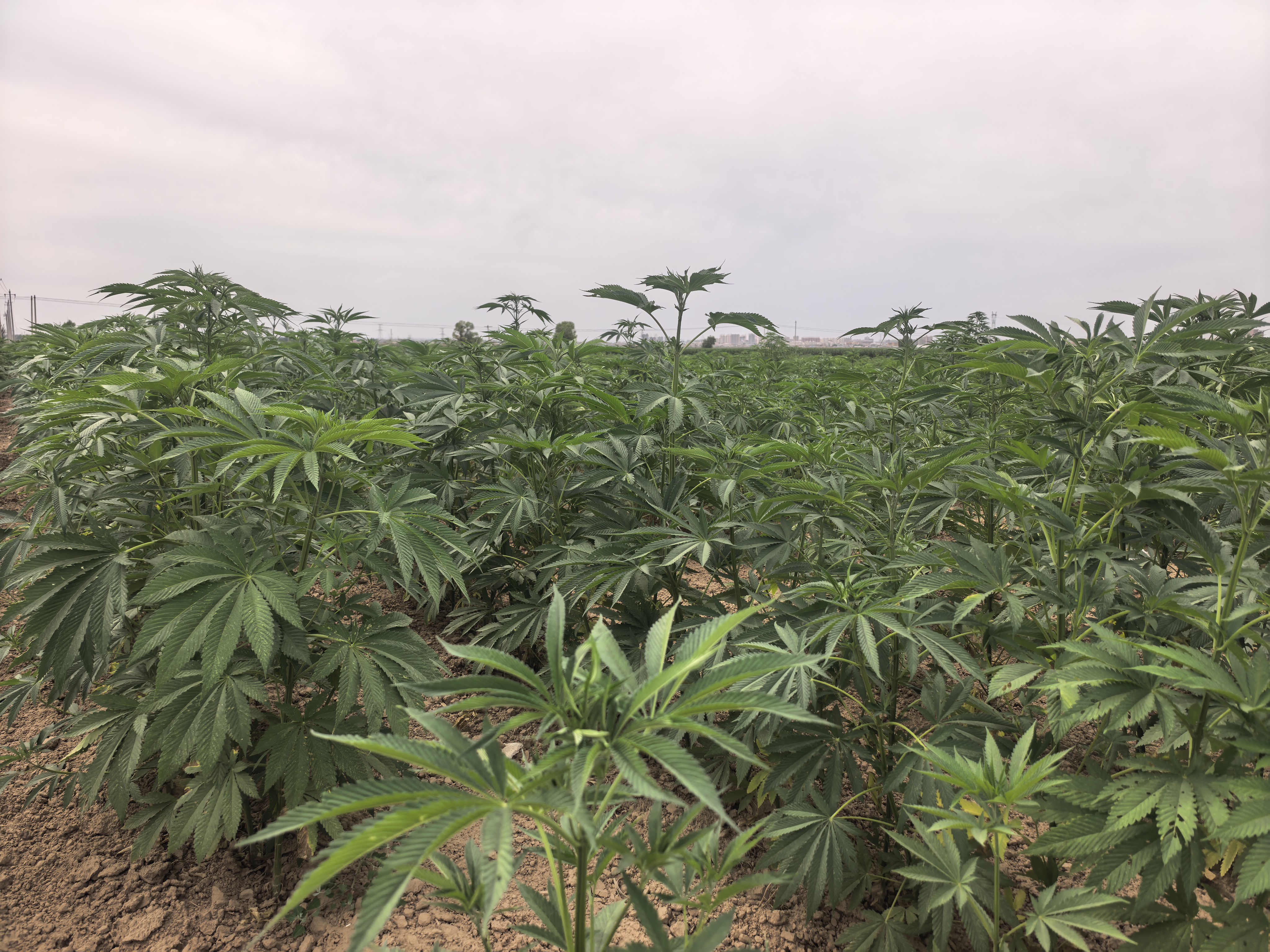
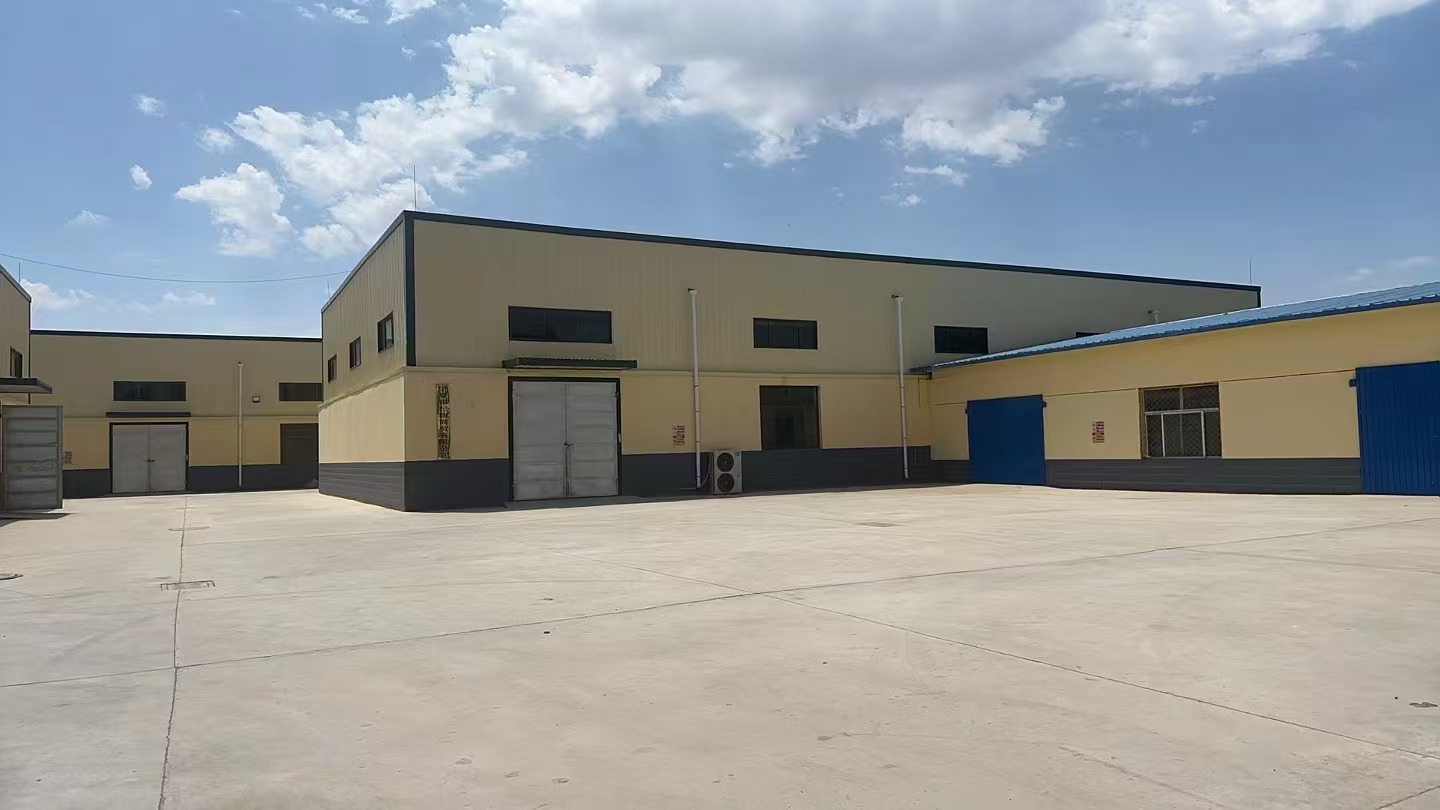
Senqi Food (Ningxia Senqi Food Industry Co., Ltd.) is a China-based producer and exporter of organic hemp seed products. The company operates two factories, one sales center, and two planting farms in Ningxia, and exports to more than 20 countries, primarily the EU and the USA. It offers OEM services (logo, product form, and packaging customization) and ODM services (custom formulation and packaging), with a minimum order quantity of 500 kg and a monthly production capacity of 200 metric tons.
This article covers the problems private-label buyers face, the supply and regulatory background, what to verify in a manufacturer's capability, a step-by-step sourcing process, and a buyer-facing FAQ.
Problem Definition: Why Private-Label Hemp Seed Sourcing Is Not a Simple Purchase
Launching a private-label hemp seed product means the buyer takes responsibility for product specification, compliance, and brand presentation. Several problems repeat across sourcing projects:
- Compliance risk. Since the EU organic import system moved to full compliance with Regulation (EU) 2018/848, third-country suppliers must meet EU organic standards for products like organic hemp hearts. A certificate name alone is not enough; the buyer must check the certificate scope, issuing authority, and validity.
- Specification mismatch. Private-label buyers need a specific form — whole, hulled (hemp hearts or kernels), or protein powder — with consistent processing such as dried and unroasted. Many suppliers only offer one standard form.
- Brand control. Private label requires logo and packaging customization. Without OEM services, the buyer cannot build a recognizable brand.
- Order term mismatch. MOQ, capacity, and lead time must fit the buyer's launch plan. A 500 kg MOQ and 10–20 day lead time suit different needs than a supplier with a 10-ton MOQ and long scheduling cycle.
- Traceability and documentation. Overseas food brands need batch-level testing, complete export documents, and stable internal quality control. Suppliers without these capabilities may fail overseas customs clearance or brand audits.
These problems are why capability assessment — not just price comparison — determines whether an OEM project succeeds.
Industry Background: Hemp Seed Demand and Regulatory Change
The global hemp seed market reached USD 5.98 billion in 2025 and is projected to reach USD 10.84 billion by 2033, growing at a CAGR of 7.8% during the forecast period, according to DataM Intelligence. This growth spans whole hemp seed, hulled hemp seed, hemp seed oil, and hemp protein powder.
Europe plays a central role. The European Commission reported that EU hemp cultivation area increased to 37,740 hectares in 2024, a significant recovery from 28,830 hectares in 2023. In hemp seed oil specifically, the global market was valued at USD 3.26 billion in 2025, with Europe holding the largest regional share at 33.91%, according to Fortune Business Insights. The global hemp protein powder market was valued at USD 217.3 million in 2025, with the organic segment projected to achieve a CAGR of 5.98% through 2031, according to Grand View Research.
For customs classification, hemp seeds not intended for sowing fall under HS code 12079991 in the EU and UK. For organic imports, Regulation (EU) 2018/848 — fully enforced for third-country imports since January 1, 2025 — requires 100% compliance with EU organic standards. For buyers, this means the manufacturer's EU organic certificate must be valid, issued by a recognized authority, and cover the specific products being supplied.
Detailed Solution: What an OEM/ODM Organic Hemp Seed Manufacturer Should Provide
For Evaluation-stage buyers, the practical question is not "does the factory exist" but "can this factory produce my private-label specification under certified organic conditions?" Based on Senqi Food's operating model, below are the capability areas to verify.
Certified production and export scope
Senqi Food holds internationally recognized certifications verified by third-party authorities:
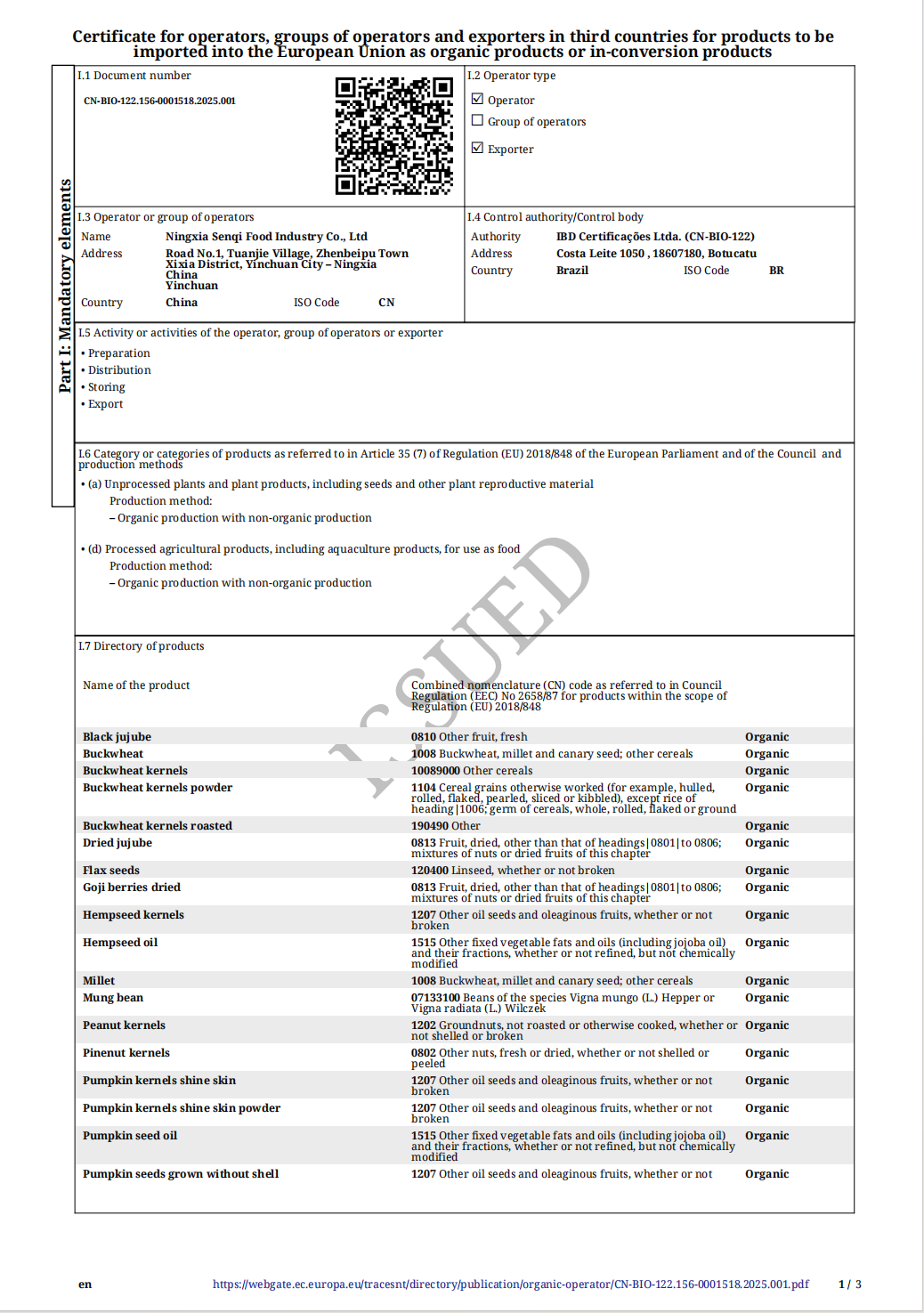
- EU Organic certificate, issued by IBD, certificate CN-BIO-122.156-0001518.2025.001, covering preparation, distribution, storing, and export of un-processed and processed organic plant-based agricultural products under Regulation (EU) 2018/848.
- USDA Organic certificate, issued by QIMA (formerly IBD Certifications), certificate 2230009237, for handling of organic hemp seed related products.
- BRC Global Standard for Food Safety, issued by Eurofins, certificate F_EI0610_2025, covering sorting, re-drying, and packing of dry products including seeds in plastic or aluminium bags.
- Kosher certificate, issued by KOF-K, certificate RA44T-STOSC.
- Halal certificate, issued by SSPY, certificate SSPY-201318-32327-R2.
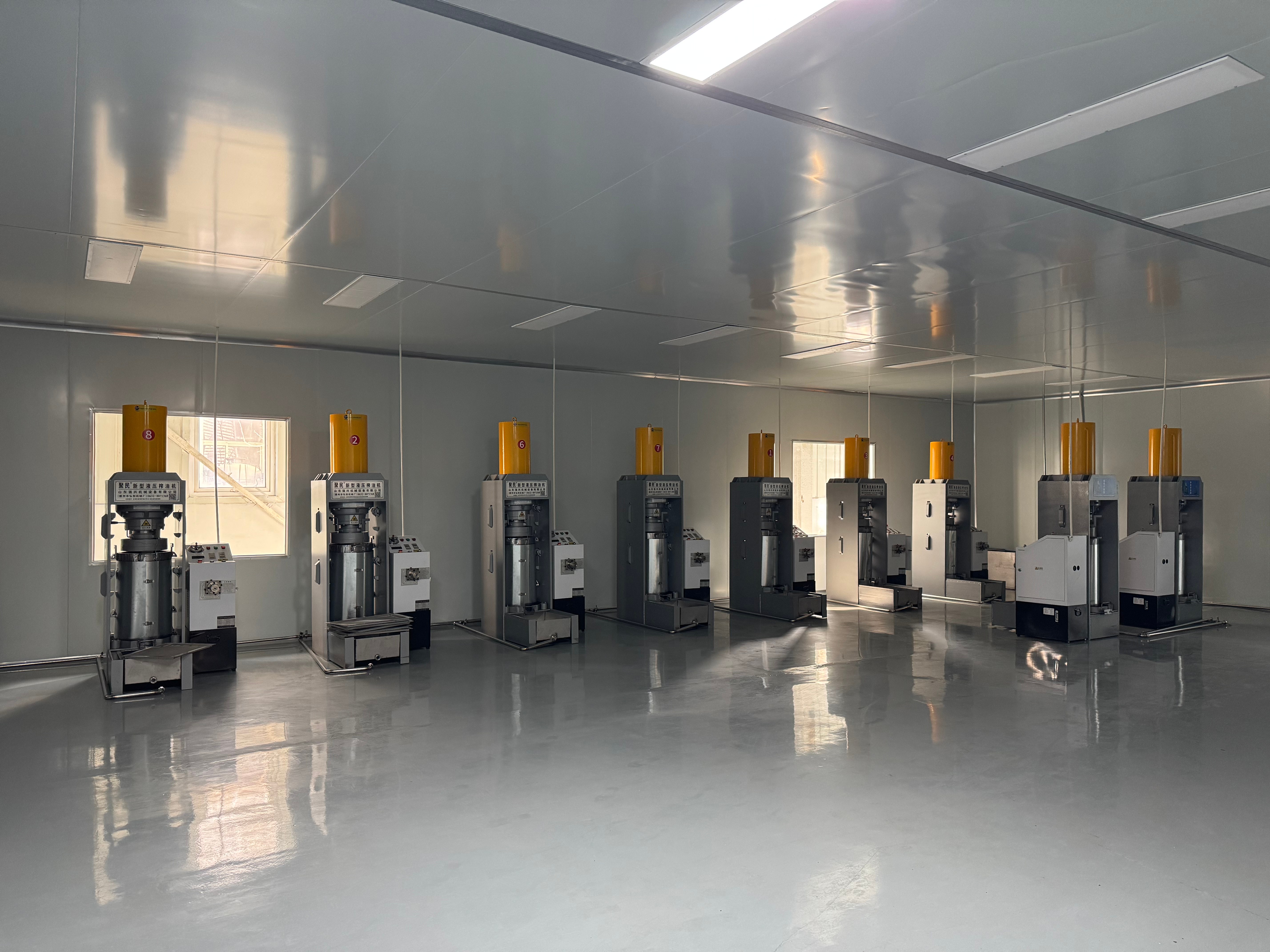
The workshops are GMP-standard, and processing steps are carried out in compliance with BRC requirements. For buyers, this certification stack reduces the risk of customs rejection and brand-client audits.
OEM and ODM service scope
The manufacturer provides OEM and ODM production services. OEM services include customization of logo, product forms (hulled/unhulled, dried, and unroasted), and packaging options. ODM services cover custom formulations and packaging.
For industrial hemp seeds, the product specification includes THC content below 0.3%, available in bulk or 25 kg woven bags. Available organic hemp seed product forms for private label include whole seed, hulled hemp seeds (hemp hearts or kernels), and hemp seed protein powder at 70% and 75% protein content.
Capacity, order terms, and quality control
From a procurement standpoint, the key parameters are:
- Monthly production capacity: 200 metric tons.
- Minimum order quantity: 500 kg for organic hemp seed products.
- Lead time: 10–20 days.
- Quality control: third-party laboratory testing; pre-shipment test acceptance.
- Incoterms: FOB, CIF, or EXW.
- Payment terms: 30/70 (30% deposit, 70% balance).
- After-sales support: remote support.
Step-by-Step Breakdown: How a Private-Label Hemp Seed OEM Order Works
For Execution-stage buyers, the following six steps describe a realistic sourcing workflow. They combine supplier evaluation with internal project planning.
- Define the product specification and compliance target. Choose the product form: organic whole hemp seed, hulled hemp seeds (hemp hearts/kernels), or hemp seed protein powder at 70% or 75%. Confirm the target market (e.g., EU) and the required certification status, including EU organic rules under Regulation (EU) 2018/848.
- Verify the supplier's certifications and scope. Request original certificate documents and check the issuing authority, certificate number, validity, and covered products. For EU-bound orders, confirm the EU organic certificate is valid for third-country imports and covers the specific product.
- Agree on OEM or ODM scope. If the buyer needs brand presentation, confirm logo customization and packaging. If the buyer needs a different formulation or product design, confirm ODM services.
- Plan the order against MOQ, capacity, and lead time. With a 500 kg MOQ and 200 metric tons monthly capacity, buyers can start with a test order and scale up. Lead time of 10–20 days supports launch planning.
- Lock quality control and pre-shipment testing. Confirm that third-party laboratory testing is part of production and that a pre-shipment test is included. Request batch-wise self-inspection reports to support customs clearance and downstream audits.
- Confirm incoterms, payment, and shipping documentation. Choose FOB, CIF, or EXW, agree on 30/70 payment terms, and confirm the export documentation package needed for the destination market.
Use Cases: Who Uses OEM/ODM Organic Hemp Seed Manufacturing
EU-brand private label for hemp hearts
An EU food brand sourcing organic hulled hemp seeds must show full compliance with Regulation (EU) 2018/848 as a third-country import. The brand's requirement is an EU organic certificate covering the exact product, a THC content below 0.3%, and clean labeling. OEM packaging with the brand's logo and artwork is required to create a retail-ready product under its own name.
Health food wholesale distribution
A wholesale client in Australia has purchased 50–80 metric tons of hemp seed products over a 24-month relationship, using them in the health food category. The client's reported result is stable product quality that meets local food safety standards, with high purity and stable batch consistency as key highlights. For wholesalers, batch consistency determines whether repeat orders are safe.
Branded protein powder with customized packaging
A food or supplement brand planning a hemp protein powder line can source organic hemp seed protein powder at 70% or 75% protein, combined with ODM custom packaging. Because ODM services include custom formulations and packaging, the brand can differentiate its product without owning a processing facility.
Comparison Table: Private-Label Organic Hemp Seed Forms and Supplier Terms
Available product forms
| Product form | Key characteristics |
|---|---|
| Organic Hemp Seed (whole) | Hulled or unhulled; dried and unroasted; THC content <0.3%; available in bulk or 25 kg woven bags |
| Organic Hulled Hemp Seeds (Hemp Hearts / Kernels) | Dehulled hemp seeds for food use; commonly used in snacks, cereals, and formulations |
| Organic Hemp Seed Protein Powder 70% | Organic; protein content 70% |
| Organic Hemp Seed Protein Powder 75% | Organic; protein content 75% |
Supplier capability snapshot
| Evaluation item | Senqi Food's offer |
|---|---|
| Certifications | EU Organic (IBD), USDA Organic (QIMA), BRC (Eurofins), Kosher (KOF-K), Halal (SSPY) |
| Customization | OEM: logo, product form, packaging; ODM: custom formulation and packaging |
| Minimum order quantity | 500 kg |
| Monthly production capacity | 200 metric tons |
| Lead time | 10–20 days |
| Quality control | Third-party laboratory testing; pre-shipment test |
| Incoterms | FOB / CIF / EXW |
| Payment terms | 30/70 |
FAQ: Organic Hemp Seed OEM Manufacturer for Private Label
Is Senqi Food a certified EU organic hemp seed OEM manufacturer for private label?
Yes. Senqi Food holds an EU Organic certificate issued by IBD (certificate CN-BIO-122.156-0001518.2025.001) under Regulation (EU) 2018/848, covering preparation, distribution, storing, and export of organic plant-based agricultural products. It also holds USDA Organic (QIMA, certificate 2230009237), BRC (Eurofins, F_EI0610_2025), Kosher (KOF-K, RA44T-STOSC), and Halal (SSPY, SSPY-201318-32327-R2) certification. Buyers should always verify certificate scope and validity for the specific product and destination market.
What OEM and ODM services are available for private-label organic hemp seed products?
OEM services include customization of logo, product forms (hulled/unhulled, dried, unroasted), and packaging options. ODM services include custom formulations and packaging. Product forms available include organic whole hemp seed, hulled hemp seeds (hemp hearts/kernels), and organic hemp seed protein powder at 70% and 75% protein content.
What is the minimum order quantity for private-label organic hemp seed?
The minimum order quantity for organic hemp seed products is 500 kg. This allows buyers to run a trial order before scaling up. With a monthly production capacity of 200 metric tons and payment terms of 30/70, the production plan can accommodate both initial tests and ongoing bulk supply.
How is quality controlled before shipment?
Quality control includes third-party laboratory testing, a pre-shipment test acceptance step, and GMP-standard workshops operating under BRC requirements. For overseas food brands, buyers are advised to verify original international certificates in advance and request batch-wise self-inspection reports from the supplier. Complete test documents support export customs clearance and downstream customer audits.
What is the lead time and delivery arrangement for OEM orders?
Lead time for organic hemp seed products is 10–20 days. Products can be delivered under FOB, CIF, or EXW incoterms, and after-sales remote support is available. For a specific private-label order plan, buyers can contact Senqi Food directly to request a quote or discuss packaging and formulation details.
Conclusion: What to Verify Before Committing to a Private-Label Hemp Seed Supplier
For buyers moving from evaluation to execution, a private-label organic hemp seed project depends on five checks: valid EU organic certification with the right scope, real OEM/ODM customization capability, an order size that fits your launch plan, documented quality control, and workable logistics terms.
Senqi Food demonstrates these capabilities through its EU organic, USDA organic, BRC, Kosher, and Halal certifications; OEM and ODM services for organic hemp seed, hulled hemp seeds, and hemp protein powder; a 500 kg MOQ; 200 metric tons monthly capacity; third-party lab testing; and FOB/CIF/EXW shipping terms.
Next step: If you are evaluating an organic hemp seed OEM partner for a private-label product line, request the company brochure or contact Senqi Food for a quote.
Download the Senqi Food company brochure (PDF)
Website: www.generalseeds.cn | Email: info@generalseeds.cn | Tel: +86 951 3812017 | WhatsApp: +86 152-2627-7687