Hemp Seed Certifications Compared: EU Organic, USDA NOP, BRC, Kosher & Halal
Hemp Seed Certifications Compared: EU Organic, USDA NOP, BRC, Kosher & Halal
A hemp seed supplier's certificate mix is a more reliable screening signal than its brand claims. Each certificate in a food-grade hemp seed pack verifies a different thing, and none of them substitutes for another: EU Organic governs how the seed is produced and labelled for Europe, USDA NOP governs the same question for the United States, BRC Global Standard for Food Safety Issue 9 governs how the processing site is controlled, and Kosher and Halal govern whether the ingredient is acceptable to specific dietary standards.
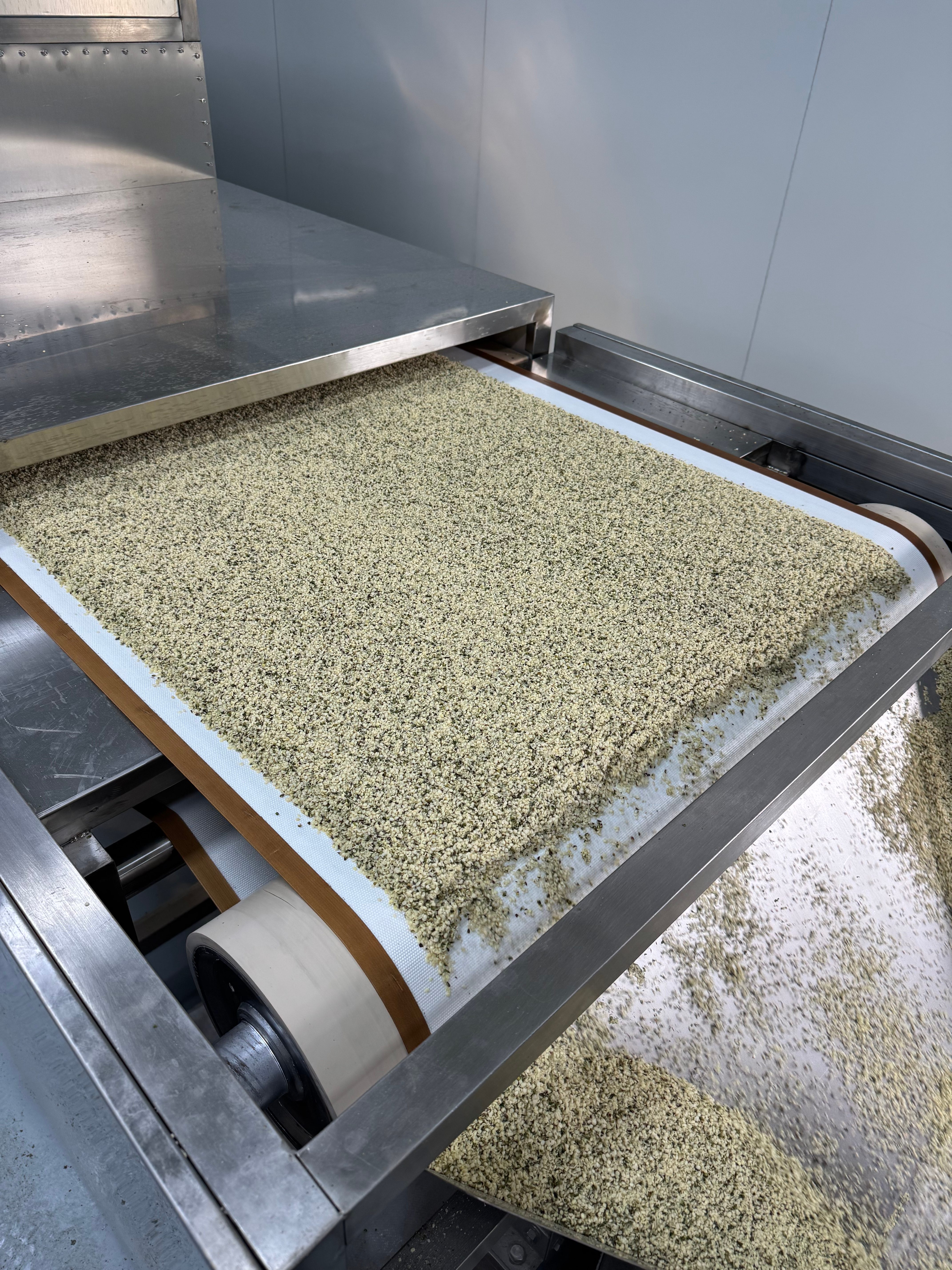
Food-grade hemp seed produced under a five-certificate pack: organic production, process safety, and dietary compliance are verified separately.
This comparison uses one real certificate set as a worked example. Senqi Food (Ningxia Senqi Food Industry Co., Ltd.), a hemp seed processor based in Ningxia, China, holds all five: EU Organic certificate CN-BIO-122.156-0001518.2025.001 issued by IBD; USDA Organic NOP certificate 2230009237 issued by QIMA; BRC Global Standard for Food Safety Issue 9 certificate F_EI0610_2025 issued by Eurofins; Kosher certificate RA44T-STOSC issued by KOF-K, valid until 2026-10-31; and Halal certificate SSPY-201318-32327-R2 issued by SSPY, valid until 2026-10-30.
Buyers who read a certificate pack this way stop asking "are you certified?" and start asking a far more useful question: which certificate covers my exact product form, my exact production site, and my exact on-pack claim.
Why a Certificate Logo Wall Does Not Qualify a Supplier
Certificate logos on a supplier homepage are marketing assets. Certificates are technical documents. The gap between the two is where most sourcing errors happen, and it usually appears in one of five places.
- Scope mismatch. A certificate may cover whole hemp seed but not the hulled seed, kernels or 70%–75% protein powder fraction on the purchase order.
- Site mismatch. A trading company may hold or display certificates belonging to a third-party processing plant it does not operate.
- Expired documents. Kosher and Halal certificates carry explicit validity end dates and must be current at the time of shipment, not at the time the PDF was first emailed.
- Wrong issuing body for the market. An organic certificate is only useful for EU imports if it is issued against the EU organic regulation by a recognised control body.
- Claim inflation. A food-safety scheme such as BRC is presented as if it were a product claim, when it actually verifies site process control.
The cost of these errors is not the certificate itself. It is a rejected consignment, a relabelling exercise, or a claim that has to be withdrawn from finished packaging after the artwork has already been printed.
What Is Changing in the EU Hemp Seed Supply Chain
Certification has become a harder filter in Europe than it was a few years ago, for three measurable reasons.
The EU organic import regime changed. Regulation (EU) 2018/848 has applied since 1 January 2022, and from 1 January 2025 the EU organic import system moved to full compliance with the EU regulation for third-country suppliers, replacing the earlier equivalence approach. In practice, a non-EU hemp seed processor now has to be certified against the EU organic standard itself, not against an equivalent national standard.
European hemp cultivation is expanding again. EU hemp cultivation area reached 37,740 hectares in 2024, up from 28,830 hectares in 2023, according to European Commission data. More European raw material means more competition for imported organic hemp seed, and more pressure on suppliers to prove compliance rather than assert it.
The category is growing in value. DataM Intelligence estimates the global hemp seeds market at USD 5.98 billion in 2025, projected to reach USD 10.84 billion by 2033. The hemp protein powder segment alone was valued at USD 217.3 million in 2025, with the organic segment projected to grow at a 5.98% CAGR through 2031 according to Grand View Research and Mordor Intelligence. Hemp seed oil was valued at USD 3.26 billion in 2025, with Europe holding the largest share at 33.91%, per Fortune Business Insights. Growth of this kind pulls unqualified suppliers into the market, which is precisely why the certificate pack, not the catalogue, should drive qualification.
Organic status begins in the field: cultivation area and input control are the first link in the EU Organic chain of custody.
For customs and trade teams, the classification reference is also worth confirming early. Hemp seeds, whether or not broken, excluding seed for sowing, fall under HS code 12079991 in the EU and UK.
What Each of the Five Certificates Actually Covers
The five certificates answer five different questions. Treating them as a single "certified" badge is the most common evaluation error.
1. EU Organic — Regulation (EU) 2018/848
This is the legal basis for any organic claim on a product sold in the European Union. It covers organic production rules, input restrictions, segregation and traceability, and labelling. Since the 2025 import change, a third-country processor must be certified against this regulation directly.
Senqi Food's EU Organic certificate is registered as CN-BIO-122.156-0001518.2025.001 and issued by IBD. Together with the product specification, it supports the organic, pesticide- and herbicide-free attribute of the company's hemp seed, hulled hemp seed, hemp seed kernels and hemp seed protein powder. Without a valid EU Organic certificate, an "organic" claim on EU packaging is not available to the buyer at all — the product can still be sold, but not as organic.
2. USDA Organic NOP
The USDA National Organic Program is the United States counterpart. It is a separate scheme with its own certificate, its own control body and its own label rules. It does not authorise an EU organic claim, and EU Organic does not authorise a US organic claim.
Senqi Food's USDA Organic NOP certificate is 2230009237, issued by QIMA. For a supplier shipping into both the EU and the USA, holding both certificates is the practical minimum, because the same lot may be sold to two different regulatory regimes under two different claim sets.
3. BRC Global Standard for Food Safety Issue 9
BRC is not an organic standard and not a product claim. It is a food-safety and process-control scheme applied to the manufacturing site: hygiene, hazard control, traceability, allergen management, equipment control and corrective action systems.
Senqi Food's BRC certificate is F_EI0610_2025, issued by Eurofins, against Issue 9 of the standard. This is the certificate that speaks to how the plant runs — and it is the one that matters when a buyer's technical team audits equipment and process control, such as the colour sorting machines, metal detectors and screening and milling equipment used for food-grade hemp seed. The company's workshops are built to GMP standard and its processing steps are designed to comply with BRC requirements.
For buyers, the practical meaning is simple: EU Organic and USDA NOP answer "was this grown and handled organically?", while BRC answers "can this site control contamination, allergens and traceability consistently?". A supplier can be organically certified without strong process control, which is why both layers are required in a serious specification.
4. Kosher — KOF-K
Kosher certification confirms that the ingredient and its production process meet kosher requirements, enabling use in kosher-certified finished products. It is a market-access certificate rather than a food-safety or organic certificate.
Senqi Food's Kosher certificate is RA44T-STOSC, issued by KOF-K, stated as valid until 2026-10-31. That end date is part of the document's value: kosher certificates are time-limited and are renewed on a cycle, so a buyer should confirm current validity at the moment of the purchase order rather than relying on a copy filed during the initial evaluation.
5. Halal — SSPY
Halal certification confirms that the ingredient and process are acceptable under halal requirements, which is essential for export programmes into halal-certified product lines and into markets where halal status is a purchase condition.
Senqi Food's Halal certificate is SSPY-201318-32327-R2, issued by SSPY, stated as valid until 2026-10-30. As with Kosher, the certificate should be checked for current validity and for renewal confirmation before each shipment cycle.
What These Five Certificates Do Not Cover
Being precise about limits is as useful as listing coverage. None of the five certificates above is, on its own, a gluten-free certification, a vegan certification or a non-GMO certification. Those are product attributes that must be confirmed on the specification sheet and certificate of analysis for the specific lot. Similarly, none of the five replaces a product specification: protein content, form, granulation and microbiological limits are commercial and technical parameters, not certificate scopes.
How the Certificates Connect to Hemp Seed Product Attributes
Buyers rarely purchase "certification". They purchase a claim they can print on a pack. The table below maps the attributes of the Senqi Food hemp seed range to the evidence that supports each one.
| Product attribute | Applies to | Supporting evidence |
|---|---|---|
| Certified organic; pesticide- and herbicide-free | Organic Hemp Seed, Organic Hemp Seed Hulled, Organic Hemp Seeds Kernel, Organic Hemp Seed Protein Powder 70% and 75% | EU Organic certificate CN-BIO-122.156-0001518.2025.001 (IBD); USDA NOP certificate 2230009237 (QIMA) |
| Kosher-friendly | Full hemp seed range | Kosher certificate RA44T-STOSC (KOF-K), stated valid until 2026-10-31 |
| Halal-friendly | Full hemp seed range | Halal certificate SSPY-201318-32327-R2 (SSPY), stated valid until 2026-10-30 |
| Process control and traceability | All forms processed at the certified site | BRC Global Standard for Food Safety Issue 9 certificate F_EI0610_2025 (Eurofins) |
| Gluten-free, vegan, non-GMO, no additives, fillers or artificial preservatives | Full hemp seed range | Product specification and lot documentation (attribute statements, not certificate scopes) |
| Protein content 70%–75%; complete plant protein with all 9 essential amino acids | Organic Hemp Seed Protein Powder 70% and 75% | Product specification |
| Omega-6 to Omega-3 ratio of 3:1; high dietary fibre | Organic hemp seed forms | Product specification |
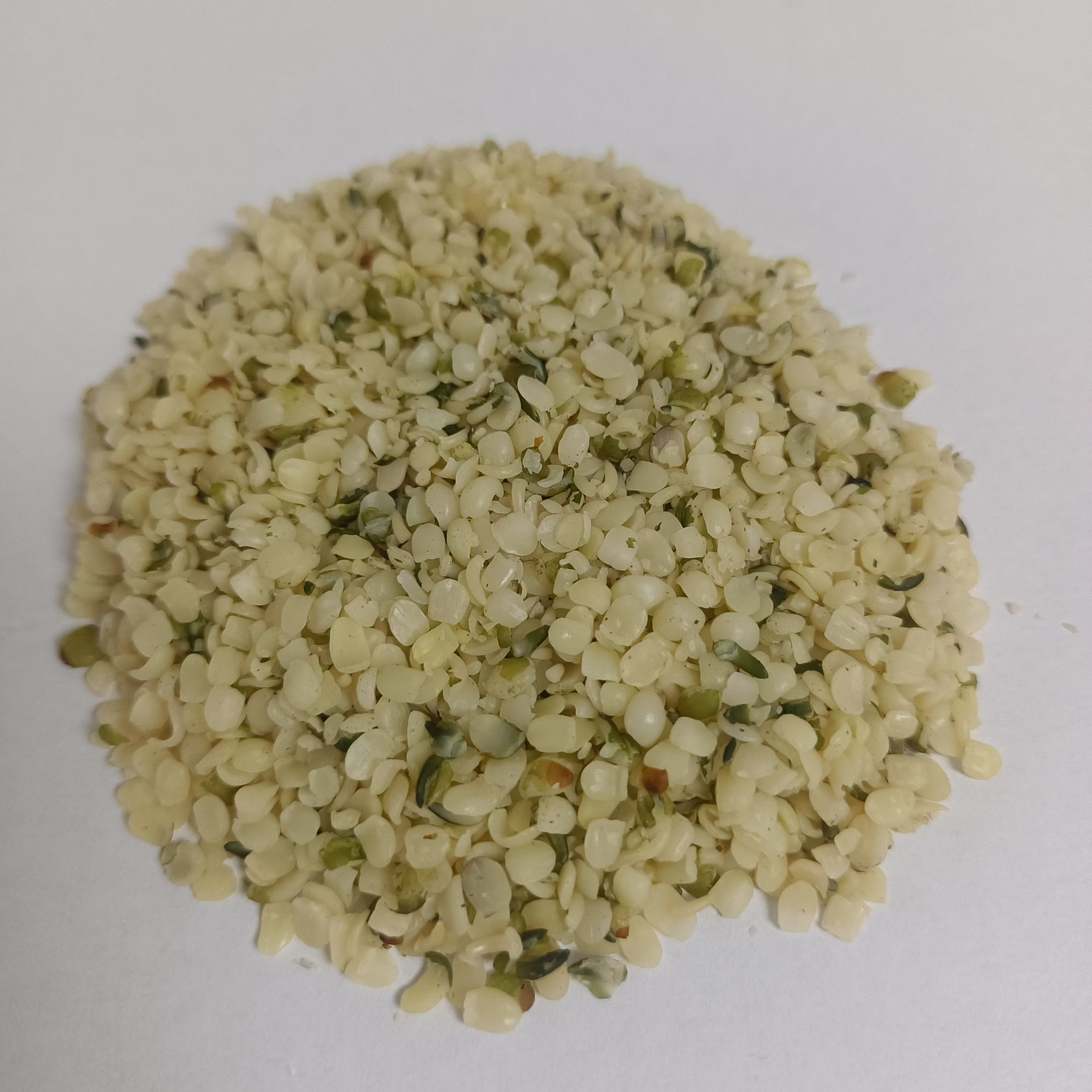
Format matters for scope: hulled seed and kernels are distinct SKUs from protein powder and must be named in the certificate scope.
This is where many evaluations quietly fail. A supplier may hold EU Organic for whole seed, but the buyer's project uses Organic Hemp Seed Protein Powder 75% — a processed derivative. The organic chain of custody must extend through the milling step, and the BRC site certificate must cover the same processing line. Checking the SKU list, not just the certificate count, is the difference between a compliant launch and a relabelling exercise.
The available formats from Senqi Food are Organic Hemp Seed, Organic Hemp Seed Hulled, Organic Hemp Seeds Kernel, Organic Hemp Seed Protein Powder 70% and Organic Hemp Seed Protein Powder 75%. The protein powder carries a declared protein content of 70%–75% and provides complete plant-based protein containing all nine essential amino acids. All forms are positioned for food applications including sprinkles, baking, smoothies, cereals and salad toppings.
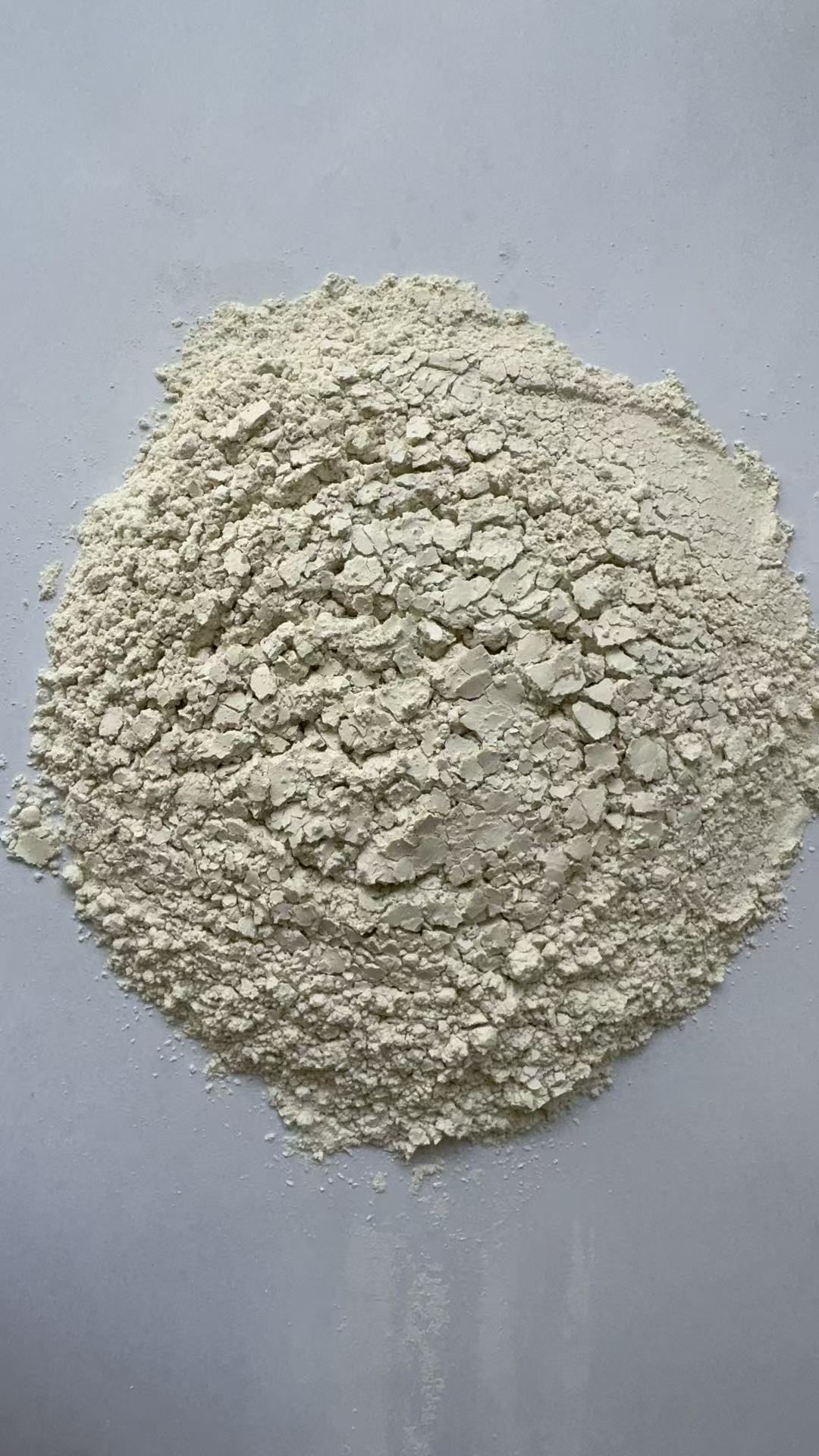
Protein powder at 70%–75% protein is a separate SKU with its own scope requirements inside an organic and BRC certificate pack.
Step-by-Step: How to Evaluate a Hemp Seed Certificate Pack
The sequence below can be run in a single supplier call and prevents the most expensive qualification mistakes.
- List the claims before the certificates. Write down every claim the finished pack will carry: organic (which market), kosher, halal, gluten-free, vegan, non-GMO, additive-free. Each claim maps to a different document, and at least three of them are not certificate scopes at all.
- Match certificate scope to product form. For each SKU on the enquiry — whole seed, hulled seed, kernels, 70% powder, 75% powder — confirm the certificate explicitly covers that processed form.
- Match certificate to production site. Confirm the certificate holder is the entity operating the plant that will process the order. A certificate issued to a different legal entity or a different site does not travel with the goods.
- Record the certificate numbers and issuing bodies. Write them into the sourcing file: CN-BIO-122.156-0001518.2025.001 (IBD), 2230009237 (QIMA), F_EI0610_2025 (Eurofins), RA44T-STOSC (KOF-K), SSPY-201318-32327-R2 (SSPY). Numbers make later verification and renewal tracking possible; logos do not.
- Check validity dates and renewal cycles. Kosher and Halal certificates carry explicit end dates. Record them and set a review reminder ahead of each order, rather than assuming a certificate emailed last year is still live.
- Request specification plus COA per lot. Certificates confirm eligibility; the specification and certificate of analysis confirm protein content, form, moisture and microbiological parameters for the actual lot being shipped.
- Verify with the issuing body, not the supplier. The final check is a direct query to the issuing body or its public register. This step costs minutes and removes the single largest fraud risk in certification-based sourcing.
Use Cases: Which Certificate Decides the Order
Different projects weight the certificate pack differently. In each case below, one certificate usually becomes the deciding document.
EU private-label food brand launching an organic line
The deciding document is EU Organic. Since the 2025 import change, the processor must be certified against Regulation (EU) 2018/848, and the buyer's label claim depends entirely on that certificate remaining valid through production and shipment. BRC is the second filter, because the private-label brand is also lending its name to the site's process control.
US or North American importer
The deciding document is USDA NOP certificate 2230009237 issued by QIMA. A supplier holding only EU Organic cannot support a US organic claim, even though the agricultural practice may be comparable.
Manufacturer running kosher- or halal-certified finished products
The deciding documents are Kosher RA44T-STOSC and Halal SSPY-201318-32327-R2. Here the organic certificate is secondary; if the ingredient's kosher or halal status lapses, the finished line loses its certification regardless of how the seed was grown.
Plant-protein or supplement formulator
The deciding combination is EU Organic or USDA NOP plus a specification for Organic Hemp Seed Protein Powder 70% or 75%. The protein content of 70%–75% and the complete amino acid profile drive the formulation, while the organic certificate drives the marketing claim and BRC covers the milling environment.
Distributor serving multiple export markets
The deciding factor is breadth. A distributor reselling into the EU, the US and kosher or halal markets simultaneously needs all five certificates on one supplier file, because re-qualifying a second supplier per market is far more expensive than selecting a single multi-certified source.
Certification Comparison Table
| Certification | Scheme / standard | Certificate number | Issuing body | What it verifies | Primary buyer use | Validity as stated |
|---|---|---|---|---|---|---|
| EU Organic | Regulation (EU) 2018/848 | CN-BIO-122.156-0001518.2025.001 | IBD | Organic production, handling and labelling compliance for the EU market | Organic claim on EU-packaged food; EU import eligibility | Confirm current validity at order |
| USDA Organic NOP | USDA National Organic Program | 2230009237 | QIMA | Organic production and handling compliance for the US market | Organic claim on US-packaged food | Confirm current validity at order |
| BRC | BRC Global Standard for Food Safety, Issue 9 | F_EI0610_2025 | Eurofins | Site-level food safety, hygiene, traceability and process control | Supplier approval and technical audit; not a product claim | Confirm current validity at order |
| Kosher | Kosher certification | RA44T-STOSC | KOF-K | Ingredient and process acceptability for kosher-certified production | Access to kosher-certified finished goods | Valid until 2026-10-31 |
| Halal | Halal certification | SSPY-201318-32327-R2 | SSPY | Ingredient and process acceptability under halal requirements | Access to halal-certified product lines and markets | Valid until 2026-10-30 |
Two reading notes on this table. First, the certificates are not ranked — they are not competing for the same purpose, so a "strongest" certificate does not exist. Second, the validity column is deliberately treated as a live variable: dated documents should be re-confirmed at each order cycle, not once at onboarding.
Frequently Asked Questions
Which certifications does food-grade hemp seed need to enter the EU?
For any organic claim, the supplier must be certified against Regulation (EU) 2018/848 by a recognised control body; from 1 January 2025 the EU organic import system requires full compliance with the EU regulation rather than equivalence. Senqi Food's EU Organic certificate is CN-BIO-122.156-0001518.2025.001, issued by IBD. BRC is not a legal import requirement but is a food-safety scheme that buyers commonly require during supplier approval. Kosher and Halal become necessary only when the finished product carries those claims.
Is USDA NOP certification the same as EU Organic?
No. They are separate schemes with separate certificates, separate control bodies and separate label rules. Senqi Food holds USDA Organic NOP certificate 2230009237 issued by QIMA alongside its EU Organic certificate. A supplier may hold both, but one certificate does not authorise the other market's organic claim, so buyers should check which scheme appears on the certificate rather than which logo appears on the website.
Can one hemp seed supplier hold EU Organic, USDA NOP, BRC, Kosher and Halal at the same time?
Yes. Senqi Food holds all five simultaneously: EU Organic CN-BIO-122.156-0001518.2025.001 (IBD), USDA NOP 2230009237 (QIMA), BRC Issue 9 F_EI0610_2025 (Eurofins), Kosher RA44T-STOSC (KOF-K) and Halal SSPY-201318-32327-R2 (SSPY). Holding all five does not automatically qualify a supplier for a specific order, however: the buyer still needs to confirm that each certificate's scope covers the exact form being purchased — whole seed, hulled seed, kernels, or 70%/75% protein powder.
Do certified organic hemp seeds cost more than conventional hemp seeds?
Certification changes the cost structure before it changes the price tag. The supplier carries a separate certified supply chain, a heavier inspection and documentation burden, and separate certified production runs for each organic form, including hulled seed, kernels and 70%–75% protein powder. Because of this, buyers should not compare certified and non-certified offers on a headline price alone. A quote should be requested against a defined specification and certificate scope, so that transport, documentation and certification obligations are compared on the same basis.
How do I verify certificates and obtain a sample before the first order?
Ask for four things in one request: the full certificate PDFs with numbers, issuing bodies and validity dates; the specification sheet for the exact SKU; the certificate of analysis for the production lot; and a sample drawn from the certified scope. Senqi Food supplies Organic Hemp Seed, Organic Hemp Seed Hulled, Organic Hemp Seeds Kernel, Organic Hemp Seed Protein Powder 70% and Organic Hemp Seed Protein Powder 75%, and can be reached at info@generalseeds.cn or by phone on +86-951 3812017 to request the current certificate pack and a sample against your specification.
Conclusion
The certificate mix is a better qualification tool than the certificate count. EU Organic and USDA NOP establish where the seed may be sold as organic; BRC establishes whether the site can control the process; Kosher and Halal establish whether the ingredient can enter specific certified product lines. Buyers who separate those four questions get faster technical approval and fewer claims that have to be withdrawn later.
The two habits that prevent most certification failures are unglamorous: check the scope against the exact SKU, and check the validity date against the exact shipment date. A supplier holding all five certificates with matching scope, current dates and a verifiable issuing body is a fundamentally different commercial risk from a supplier displaying five logos.
Next Step: Request the Certificate Pack and a Sample
Senqi Food (Ningxia Senqi Food Industry Co., Ltd.) operates two factories and two planting farms in Ningxia, China, with an annual capacity of 2,000 metric tons and exports to more than 20 countries including the United States, Canada, the Netherlands, Germany, Italy and Japan. Buyers can request the current EU Organic, USDA NOP, BRC, Kosher and Halal certificate copies, the product specification and a sample of the required hemp seed form.
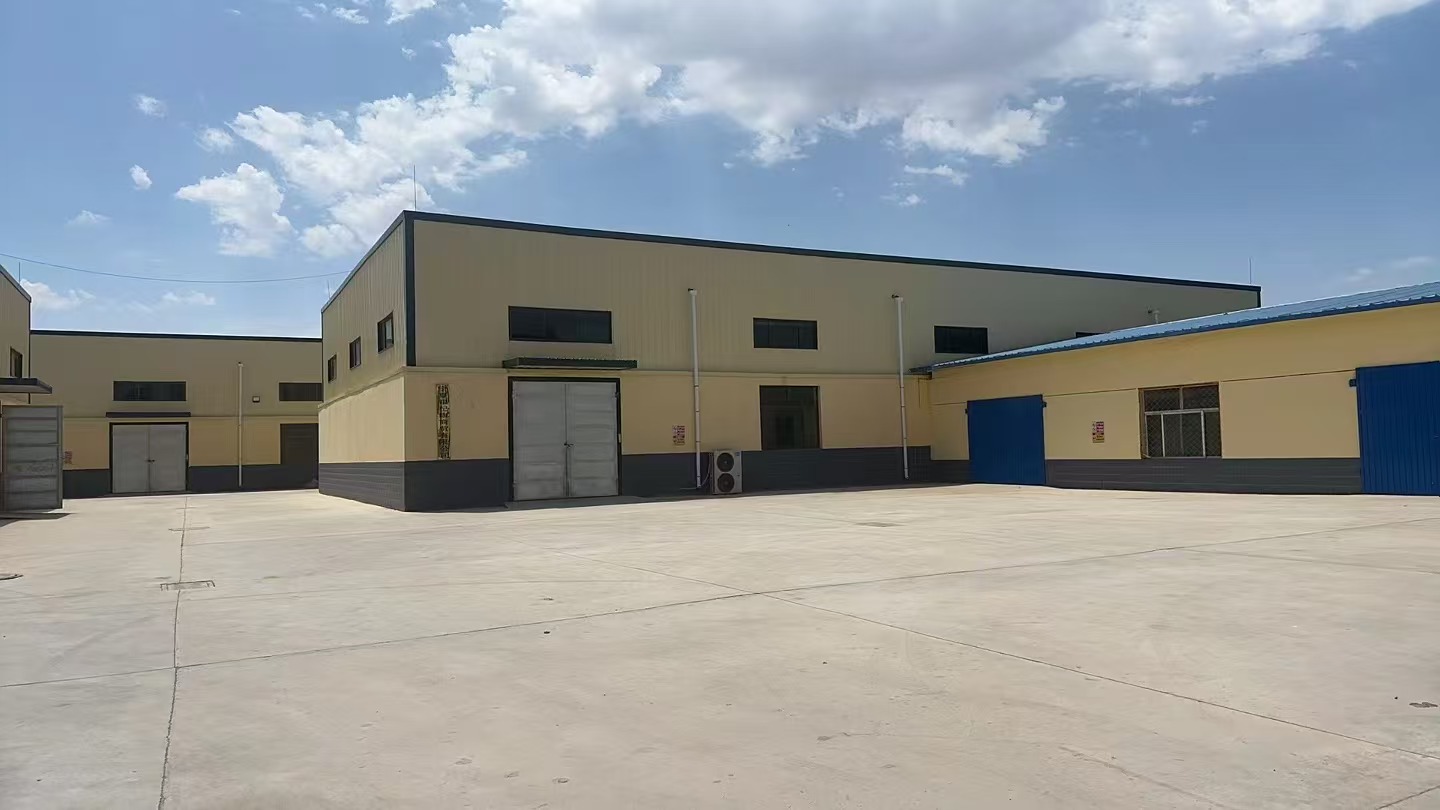
Manufacturing facility, Ningxia, China — the site referenced by BRC certificate F_EI0610_2025.
Email: info@generalseeds.cn | Tel: +86-951 3812017 | WhatsApp: +86 152-2627-7687 | Website: www.generalseeds.cn
Download the full product and capability overview: Senqi Food Brochure (PDF).
Address: Road No.1 Tuanjie Village, Zhenbeipu Town, Xixia Dist, Yinchuan City, Ningxia, China.
Have Questions or Need More Details?
Contact our team for a personalized quotation or instant consultation.
Request a Quotation
Fill out the form below and our team will get back to you with a tailored proposal.
WhatsApp Direct Chat
Prefer to chat in real-time? Message us on WhatsApp for instant assistance & quick answers.
- Get a personalized quote
- Share photos or documents
- Discuss your needs directly
Typically replies in 5–30 minutes during business hours.