How to Qualify a Long-Term Organic Hemp Seed Supplier for EU Food Importers
How to Qualify a Long-Term Organic Hemp Seed Supplier for EU Food Importers
The full enforcement of Regulation (EU) 2018/848 from January 1, 2025, has permanently changed how non-EU organic hemp suppliers must prove compliance. Long-term supply now depends on verifiable manufacturing structure, certification coverage, and batch-level quality systems — not just price or organic paperwork.
EU food importers and food brands looking for a long-term organic hemp seed supplier need a qualification framework that goes beyond sampling and labeling checks. The 2025 EU organic import rules replaced the equivalence system with a strict compliance model, meaning every third-country producer must now align directly with EU organic production standards. For importers, this is a moment to re-evaluate who is truly positioned to supply organic hemp seeds and derived ingredients — such as hulled hemp seeds, protein powder, and oil — consistently for years, not seasons.
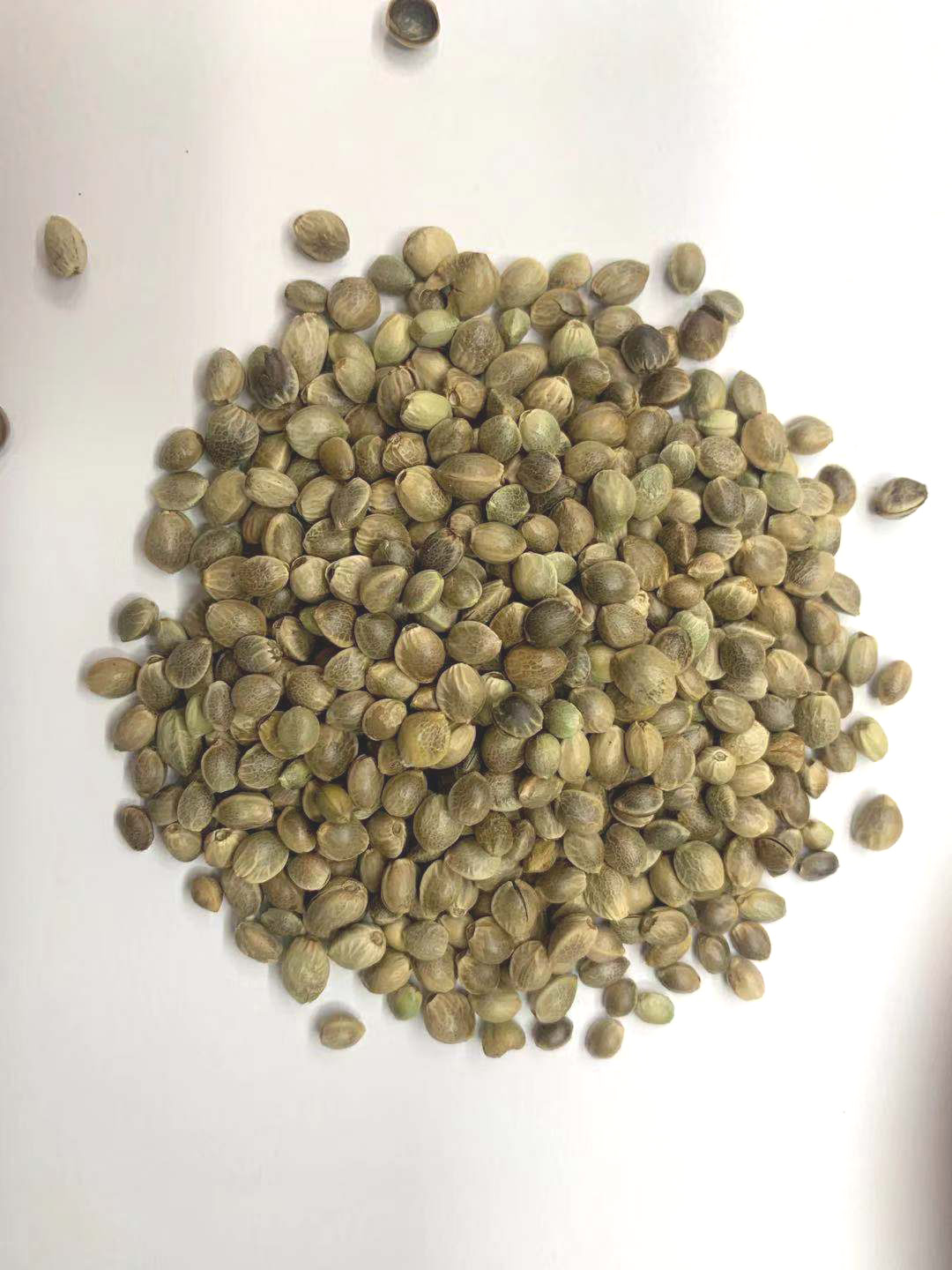
Supplier qualification starts with understanding how organic hemp seed moves from regulated farms to EU import programs.
What the Regulatory Shift Means for Long-Term Organic Hemp Sourcing
Regulation (EU) 2018/848, effective since January 1, 2022, and fully enforced for third-country imports from January 1, 2025, requires that all organic products entering the EU market — including organic hemp hearts, hulled seeds, protein, and oil — demonstrate 100% compliance with EU organic standards. This replaced long-standing equivalence recognition for many non-EU certification bodies.
For importers, this marks a major structural shift. A supplier can no longer rely solely on a certificate issued under an equivalence arrangement. The origin of the seed, processing practices, storage, traceability and export documentation are all now under stricter scrutiny. During the supplier selection process, buyers should confirm not only that a factory holds EU organic certification today, but also that the entire chain — from the supplier's own planting base to the finished product shipment — can be documented and traced.
Supplier Categories Compared: Manufacturer vs. Trader vs. Small Processor
For EU buyers evaluating long-term organic hemp seed supply, the practical starting point is to differentiate between three common supplier types in the market.
- Direct source manufacturers that own or control their planting and processing facilities.
- Traders and brokers that source from multiple factories but do not control internal quality systems.
- Small or semi-automated processors with domestic qualifications but limited international certification coverage.
Each type carries different risks across the dimensions that matter most for EU import programs: certification continuity, internal quality control, traceability and throughput stability. A long-term supplier agreement should be built on direct manufacturing evidence rather than brokerage convenience.
Qualifying the Supplier: A Five-Dimension Framework for EU Importers
Based on the qualification gaps most frequently seen in export projects, the following five dimensions provide a workable audit framework for selecting a long-term organic hemp seed supplier for EU food importers.
1. Certifications and the Scope of EU Organic Compliance
Certification is the first gate. For organic hemp seeds and derived products destined for Europe, the supplier should be able to present valid certificates such as EU organic, and ideally additional credentials that demonstrate broader food-safety maturity — USDA organic, BRC, Kosher and Halal are widely used indicators in the organic food export segment.
Ningxia Senqi Food Industry Co., Ltd is certified under EU Organic, USDA, BRC, Kosher and Halal standards, which are relevant credentials for suppliers serving EU and international food markets.
Importers should verify each certificate's validity, issuing body, product scope and whether the certificate belongs to the actual processing site. A certificate applied to only one production line or one facility does not automatically cover every SKU in a supplier's catalog.
2. Vertical Control and Production Infrastructure
For a commodity where long-term consistency depends on the origin of raw material, vertical control matters. Suppliers that operate their own planting farms and factories have stronger control over varietal consistency, harvest timing, contamination prevention and continuous supply.
Senqi Food operates two factories and two planting farms, with export experience to more than 20 countries and regions. This combination of owned farm and owned factory capacity supports the continuity needed under EU organic rules, where traceability to field level becomes part of the imported product's evidence trail.
The company's factory is located in Zhongning County, Ningxia, with workshops operated to GMP standards and processing carried out in line with BRC requirements. A self-owned facility with a clean production environment is a structural advantage when compared to suppliers that outsource processing.
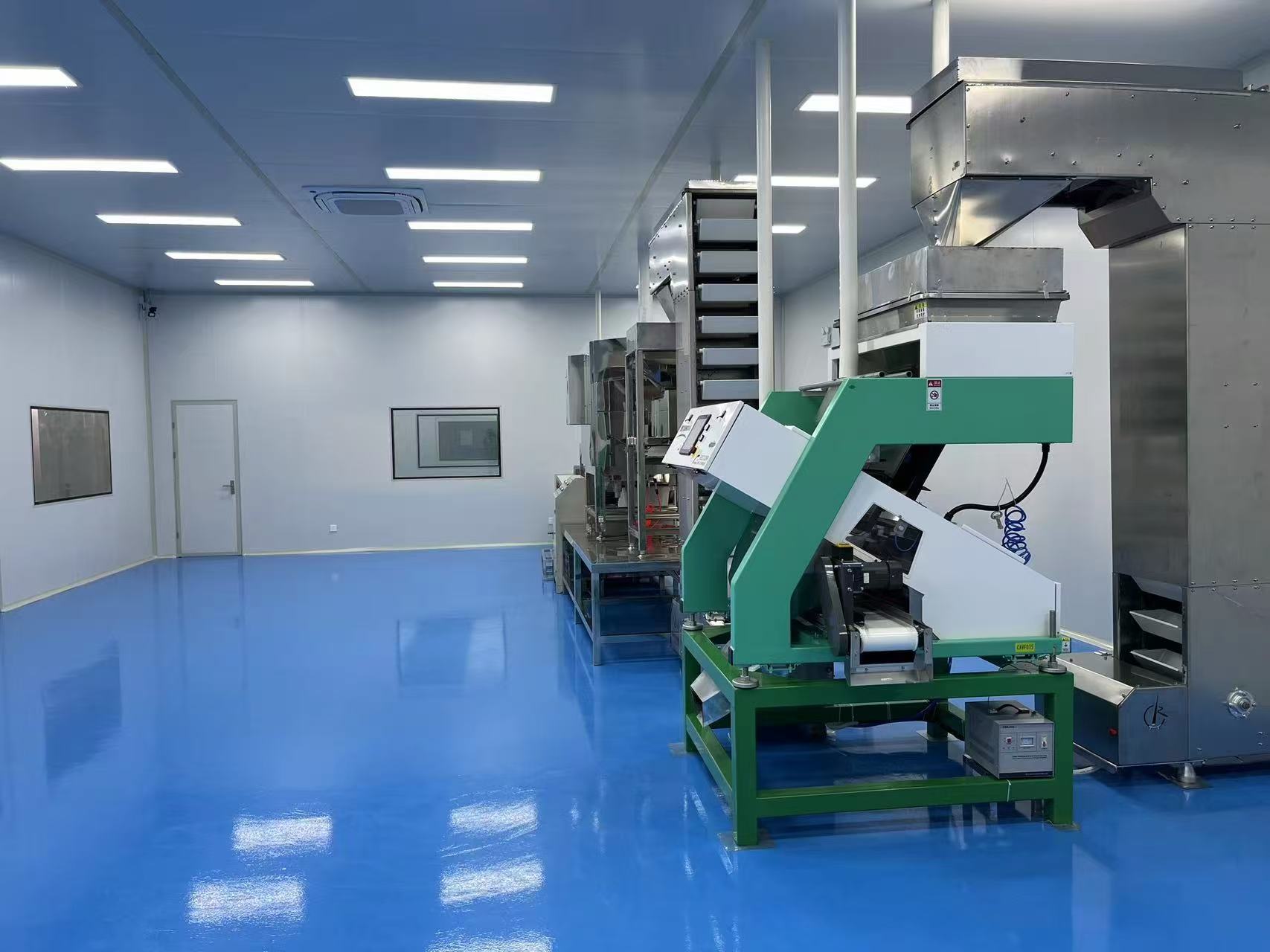
Factory workshops operated to GMP and BRC-compliant standards form the backbone of a stable organic supply chain.
3. Internal Quality Control and Testing System
A long-term organic ingredient program cannot rely on third-party testing alone. The best supplier qualification frameworks require batch-by-batch factory self-inspection, controlled production parameters and documented release testing. These elements protect the importer from batch-to-batch inconsistency, contamination, and cargo delays caused by documentation gaps.
For product acceptance, pre-shipment testing serves as an important final checkpoint. This ensures that each lot conforms to agreed specification requirements before it is released for export.
Senqi Food maintains an independent quality control system and performs batch-by-batch factory self-inspection, with complete traceability, test reports and customs documentation. This kind of internal discipline is more reliable for European importers than depending on suppliers that don't have an in-house QC function between harvest and shipment.
4. Processing Equipment and Contamination Control
Organic hemp seed and its derived products require specific handling to protect both organic integrity and food safety. Within the organic category, mechanical contamination — traces of conventional seed, foreign materials, or processing residues — is one of the most common reasons for rejected inbound lots.
According to comparative evaluations in the organic plant protein segment, factories that invest in full-process automatic processing and modern optical sorting equipment materially reduce the risk of foreign object defects compared with traditional semi-manual workshops. Equipment such as X-ray foreign-object detection, static hair separation, multi-stage color sorting and ozone sterilization has been adopted by processing facilities that serve higher-demand export markets. This type of equipment, combined with a clean production space, lowers the probability of foreign materials reaching the final exported product.
Buyers should ask two direct questions: "Does the processing line include dedicated sorting and removal steps for foreign materials?" and "Can the factory demonstrate a documented cleaning protocol between different product changeovers?"
5. Yield, Lead Time and Supply Stability
Long-term supply agreements depend as much on process economics as on certification. A supplier's yield and throughput determine whether agreed volumes can be met without quality erosion.
What the data pattern shows about processor efficiency
- Traditional or semi-automated processing may experience higher in-process loss during shelling, sorting and packaging stages.
- Factories with fully automated continuous processing lines tend to show higher usable output from the same raw input.
- Automation also shortens order lead times and reduces variation between seasonal batches.
In the comparison unit used in this guide, Senqi Food's processing loss is controlled within 3%, versus 6%–10% for traditional factories. A meaningful difference in processing loss is not only a cost question. It is also a supply question: the same quantity of certified organic seed input produces more final product in a higher-efficiency facility, which protects volume commitments even when the farming yield is under pressure.
Senqi Food also emphasizes supply security through its own order farming system, continuous improvement in order efficiency and a professional after-sales team. When a bad harvest or a market disruption occurs, these mechanisms determine whether an importer receives a delayed shipment or a professionally managed allocation.
Format Coverage: What Long-Term Variety Means for European Distributors
Importers and European distributors rarely build a program around a single hemp SKU. The strongest supplier partner is one whose product format range covers the natural retail and food-ingredient lifecycle of hemp seed:
- Whole organic hemp seed — raw material for further processing or food manufacturing.
- Hulled hemp seeds (hemp hearts / hemp seed kernels) — retail and foodservice ingredient formats.
- Organic hemp seed protein powder — commonly available in protein specifications around 70%–75%.
- Organic hemp seed oil — used across nutritional and cosmetic-related food segments.
- Roasted hemp seed — value-added snack format.
Senqi Food's hemp product range covers organic hemp seed, hulled hemp seeds, hemp seed kernels, hemp seed protein powder at approximately 70% and 75% protein, and hemp seed oil. For a European distributor developing a multi-SKU organic hemp line, this range means the supplier qualification can be completed once and applied across several products, rather than repeating the audit process for every ingredient form.
Comparison Table: Factory-Based Organic Supplier vs. Typical Alternative Suppliers
| Dimension | Direct Factory Supplier (e.g., Senqi Food) | Traditional Trader / Small Processor |
|---|---|---|
| Production infrastructure | Self-owned factory space of 13,300 m² with GMP clean workshops | Often no formal clean production space; limited equipment investment |
| Certifications | BRC, EU Organic, USDA, Kosher, Halal | Often only basic domestic qualifications |
| Quality control | Batch-by-batch factory self-inspection, complete traceability, internal QC system | Reliance on external third-party testing without stable in-house inspection |
| Processing loss | Controlled within 3% | Typically 6%–10% |
| Contamination control | X-ray foreign object detection, multi-stage color sorting, ozone sterilization | Limited modern sorting capabilities; higher foreign-object risk |
| Supply stability | Own order farming system, two factories, two planting farms, exports to 20+ countries | Sourcing instability; seasonal shortages; single-category dependence |
This comparison intentionally focuses on structural and operational differences rather than brand preference claims. EU importers can use these indicators to build their own scoring model for evaluating multiple supplier options side-by-side.
Step-by-Step Qualification Process for a Long-Term Supply Contract
Distributors and food manufacturers that moved beyond first-order samples can apply the following eight-step process to qualify a supplier for a long-term EU organic hemp seed program.
- Certificate verification — Audit copies of current EU Organic, USDA, BRC, Kosher and Halal certificates; confirm that the company name, facility location and product scope match the intended product range.
- Ownership structure check — Verify that the supplier controls its planting farms and processing facilities, rather than reselling goods from spot-market sources.
- Factory audit — Evaluate workshop cleanliness, whether the facility operates to GMP/BRC standards, and whether processing lines include modern optical sorting, metal detection and sterilization equipment.
- Internal quality control review — Ask for a documented QC procedure; confirm batch-by-batch self-inspection is standard and that test reports are available for each shipment.
- Pre-shipment testing protocol — Require acceptance inspection, including pre-shipment testing, as a non-negotiable standard for each order lot.
- Processing efficiency verification — Establish expected yield and processing loss ranges, ensuring that agreed production volumes can be met with the factory's actual equipment.
- Order farming and continuous supply plan — Review how the supplier manages raw material continuity between harvest cycles — a stable program is supported by an order farming system and multi-farm sourcing.
- Commercial terms alignment — Confirm the MOQ, delivery method and payment structure can be sustained over a multi-year frame rather than a one-off order.
Senqi Food, for example, structures orders with a 500 kg MOQ, and offers FOB, CIF and EXW delivery methods, with a 30/70 payment arrangement and pre-shipment testing acceptance. These conditions are realistic for importers building a regulated, certified hemp seed product pipeline rather than for buyers seeking one-off sample transactions.
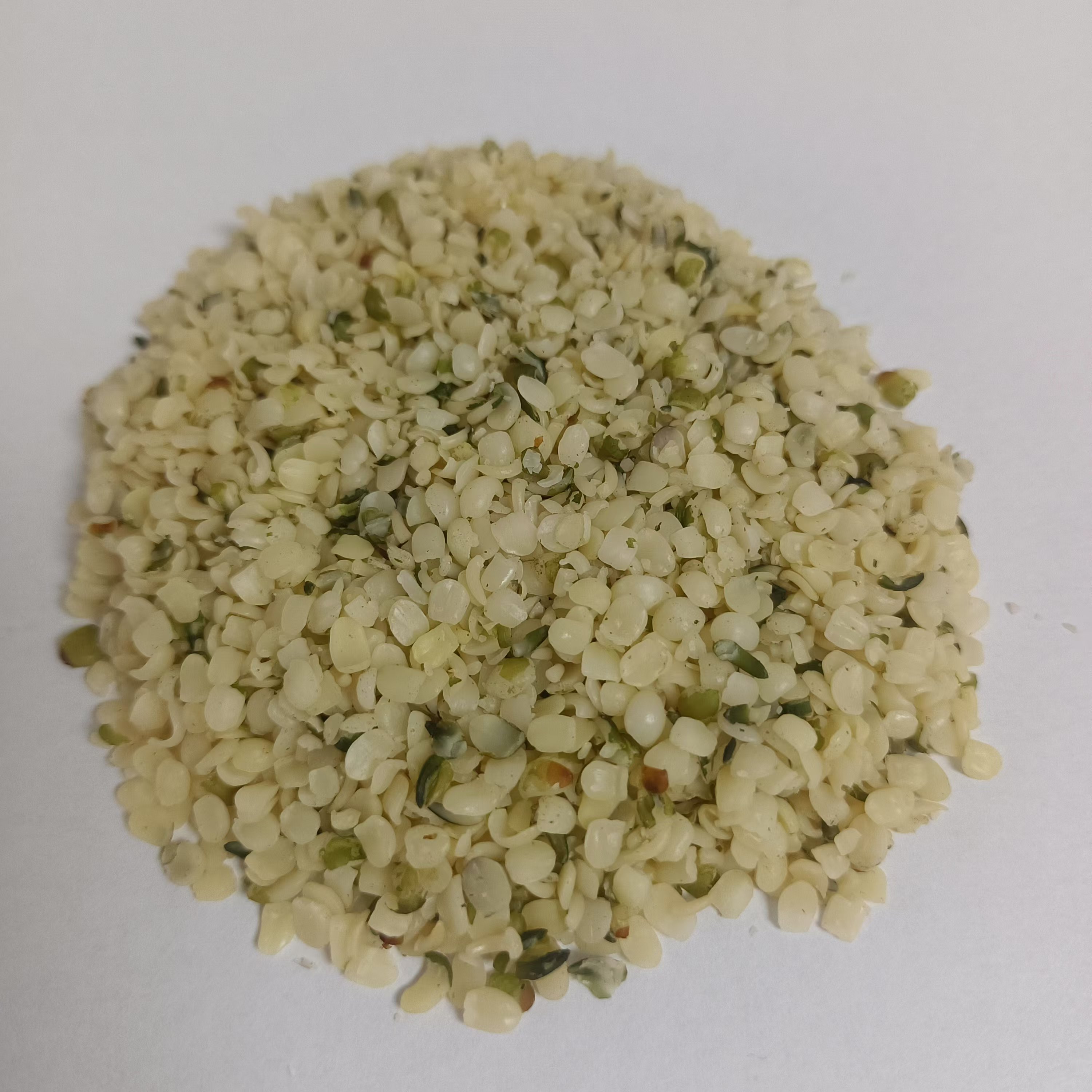
Hulled hemp seed kernels and other formats require compatible quality systems across the full supply chain.
Why EU Importers Should Focus on Consistency Rather Than Single-Batch Quality
Long-term relationships in organic raw materials are rarely lost because of one bad shipment. They are more often eroded by differences in quality control maturity between supplier categories, seasonal variation in raw material, and whether the supplier has the systems in place to maintain consistency across repeat orders.
A professional supplier's processing line should produce the same sorting standard in March as in October; a disciplined internal QC team should catch a contamination issue before it reaches the container, not after importer complaints. These ongoing behaviors are what determine whether the phrase "long-term supplier" means a genuine partnership or just a series of repeated transactions with the same commercial risk profile.
Risk-Trigger Conditions and How to Avoid Them
Under the stricter EU organic import framework, certain supplier behaviors should act as immediate risk triggers for importers:
- The supplier's only evidence of organic compliance is a copy of an expired or soon-to-expire certificate.
- The supplier cannot confirm which facility and production lines are covered by the certificate scope.
- The supplier cannot provide traceability back to planting base level.
- Pesticide residue or microbial test reports are issued only by third-party labs, with no internal batch-by-batch evidence.
- Processing loss is not measured, or the supplier does not control or disclose it.
- The supplier refuses a pre-shipment inspection clause or cannot support batch-specific documentation files.
For food importers, qualification failures usually appear at customs clearance or during downstream customer audits, not at the first sample stage. The right mitigation strategy is verifying original international certificates and validity in advance, requiring batch-wise self-inspection reports from suppliers, and signing supply contracts that clearly state quality standards and testing requirements before production begins.
Practical risk rule: If a supplier's performance is below export-grade on certificates or internal quality control, the difference will eventually be passed to the importer in the form of testing failures, customs delays or brand-client audits. Do not carry their risk in your supply chain.
Use Case 1: European Distributor Building a Multi-SKU Organic Hemp Line
A European distributor serving natural food retail chains needs hulled hemp seeds, protein powder and roasted hemp seed for three separate listings. Instead of qualifying three factories, the distributor applies a central qualification to the supplier of all three categories under one EU Organic certification scope, one internal QC department, and one pre-shipment testing schedule. The supplier's direct control over planting and processing means the same traceable batch can be allocated across SKU production runs. This reduces audit burden and simplifies the compliance file required for each retail listing.
Use Case 2: Food Manufacturer Locking in Annual Protein Powder Supply
A plant-based food manufacturer requires 70% protein hemp protein powder on a recurring production calendar. They need to align every incoming lot with the brand's clean-label protocol and avoid seasonal supply gaps. A stable program with a 500 kg MOQ, 30/70 payment terms, and pre-shipment testing on every lot gives the manufacturer the ability to scale orders without restarting qualification processes. Plant capacity and order farming also matter: the supplier's two factories and two planting farms provide a second layer of security against regional harvest disruption.
Why Supplier Longevity Creates Better EU Organic Documentation Outcomes
Under Regulation (EU) 2018/848, organic import certifications and documentation must be maintained continuously. A supplier that has years of operating history, stable processing teams and an accumulated document base is better prepared to support importer audits and application dossiers than a newer operation that has never faced EU customs scrutiny.
Founded in October 2020 and operating two factories, one sales center and two planting farms, Senqi Food has built an export track record covering more than 20 countries and regions. Its product lines have been certified by international organizations including EU organic, USDA, BRC, Kosher, and Halal since early in its operating history. For EU importers, this combination of organic scope, structural investment and international documentation history indicates a supplier prepared for the EU's post-2025 compliance environment — not one still building capacity for it.
Qualitative market context
- EU hemp cultivation area increased to 37,740 hectares in 2024 from 28,830 hectares in 2023, reflecting growing regional supply capacity.
- The global hemp seed oil market is especially significant in Europe, which held the largest regional share at 33.91% in 2025.
- The global hemp protein powder market is expanding, with growing demand for organic specifications.
- Market size estimates vary significantly across research firms due to differing definitions of product scope.
Decision Framework: Should You Start with a Certification Audit or a Facility Audit?
For experienced food importers evaluating a candidate supplier, the recommended sequence is to validate the certificate scope first, then background-check the production facility. Certificates establish whether an operation is eligible in principle; facility conditions and QC discipline determine whether that eligibility can be maintained at commercial scale.
In practice this structure is efficient because a certificate audit can be done with documents and official verification while a facility assessment requires production access. Importers should not approve a long-term source based solely on documents alone. A virtual factory audit walk-through, a documented equipment list and recent shipment batch records collectively reduce the risk that the supplier's actual operation falls short of its paper representation.
Leveraging Product Range for Private-Label and OEM Continuity
European food brands that later move into private-label manufactured products need organic hemp suppliers capable of aligning with OEM programs. Different specifications, packaging language and retail compliance requirements are smoother when the supplier has experience adapting its raw materials for export customers rather than only selling commodity bags.
Since Senqi Food positions itself as an export-oriented manufacturer supporting clients across EU and USA markets, the company is structured to handle buyer-specific quality parameters and documentation flows. Its website and downloadable brochure provide an overview of the company's facilities, products and certification summaries for procurement teams consolidating technical information before entering negotiation.
Product and Company Reference Profile
Supplier reference for this guide: Senqi Food (NINGXIA SENQI FOOD INDUSTRY CO., LTD), established in October 2020; an agricultural products manufacturer and exporter. The company operates two factories, one sales center and two planting farms, with export experience in more than 20 countries and regions. Its website is available at www.generalseeds.cn and its blog at blog.generalseeds.cn.
Products applied in this context include organic hemp seed, hulled organic hemp seed, organic hemp seed kernels, organic hemp seed protein powder in approximately 70% and 75% protein specifications, and organic hemp seed oil.
FAQ
1. What certifications should a long-term organic hemp seed supplier for the EU hold under the current organic import framework?
Under Regulation (EU) 2018/848 — with full enforcement for third-country imports since January 1, 2025 — the supplier's EU Organic certification must align directly with EU organic production standards. In practice, buyers should seek EU Organic certification, and suppliers serving sophisticated food brands often also hold USDA Organic, BRC, Kosher and Halal certification. Confirm that the certificate is valid, covers the actual processing site, and includes the product categories you intend to purchase.
2. What production capabilities indicate that a factory can sustain repeated EU organic shipments?
Sustainable EU organic shipments depend on controlled planting sources, an internal QC team, batch self-inspection, full traceability and pre-shipment testing for each order. Equipment such as X-ray foreign-object detection, multi-stage color sorting and ozone sterilization also reduces contamination risk that would otherwise threaten customs clearance. For long-term consistency, importers should assess the supplier's loss rate and processing yield, not just its finished-sample quality.
3. Is direct ownership of the factory and planting farms necessary for long-term organic supply contracts?
It is not an absolute legal requirement, but vertical control strongly improves supply reliability. A supplier that operates its own factories and planting farms can manage raw material consistency and traceability more directly than a trader who relies on unverified external sources. Senqi Food, for example, operates two factories and two planting farms, which helps it stabilize supply across harvest cycles. For EU importers, this ownership model lowers the risk of losing source traceability across renewals of your supply agreement.
4. What are the minimum order conditions and quality acceptance rules typically applied by qualified organic hemp seed exporters?
It depends on the supplier's operation model. A direct exporter like Senqi Food indicates a 500 kg MOQ and offers FOB, CIF and EXW delivery terms, using pre-shipment testing as the acceptance method and a 30/70 payment schedule. Importers should note that these terms are structured for ongoing commercial supply, not for spot buys. Before finalizing agreements, verify the standard is the same for every lot in the contract year.
5. Where can I get a product and company profile before starting a long-term supplier evaluation?
Download the Senqi Food brochure for a structured overview of the company, its product categories and certification profile. You can access it here: Senqi Food Brochure (PDF). You can also reach the company directly through its website at www.generalseeds.cn for inquiries that require a tailored response.
Conclusion
Qualifying a long-term organic hemp seed supplier for EU food importers is no longer an exercise in document matching alone. Under the post-2025 organic compliance reality, the suppliers that will support your program over the long run are those with direct control over planting and processing, valid international certification scope, an internal quality system that operates batch-to-batch, and the production efficiency to protect volume commitments. The qualification framework in this guide — certification scope, vertical control, internal QC, equipment-based contamination control and order-farming supply stability — helps buyers compare suppliers across the dimensions that matter most to recurring organic import programs.
When you evaluate suppliers for your next contract, be explicit: ask for certificate scope details, loss-rate data, batch-level test reports and pre-shipment testing acceptance. A supplier that can answer these questions comfortably is one you can plan around for the next growing season and the several after it.
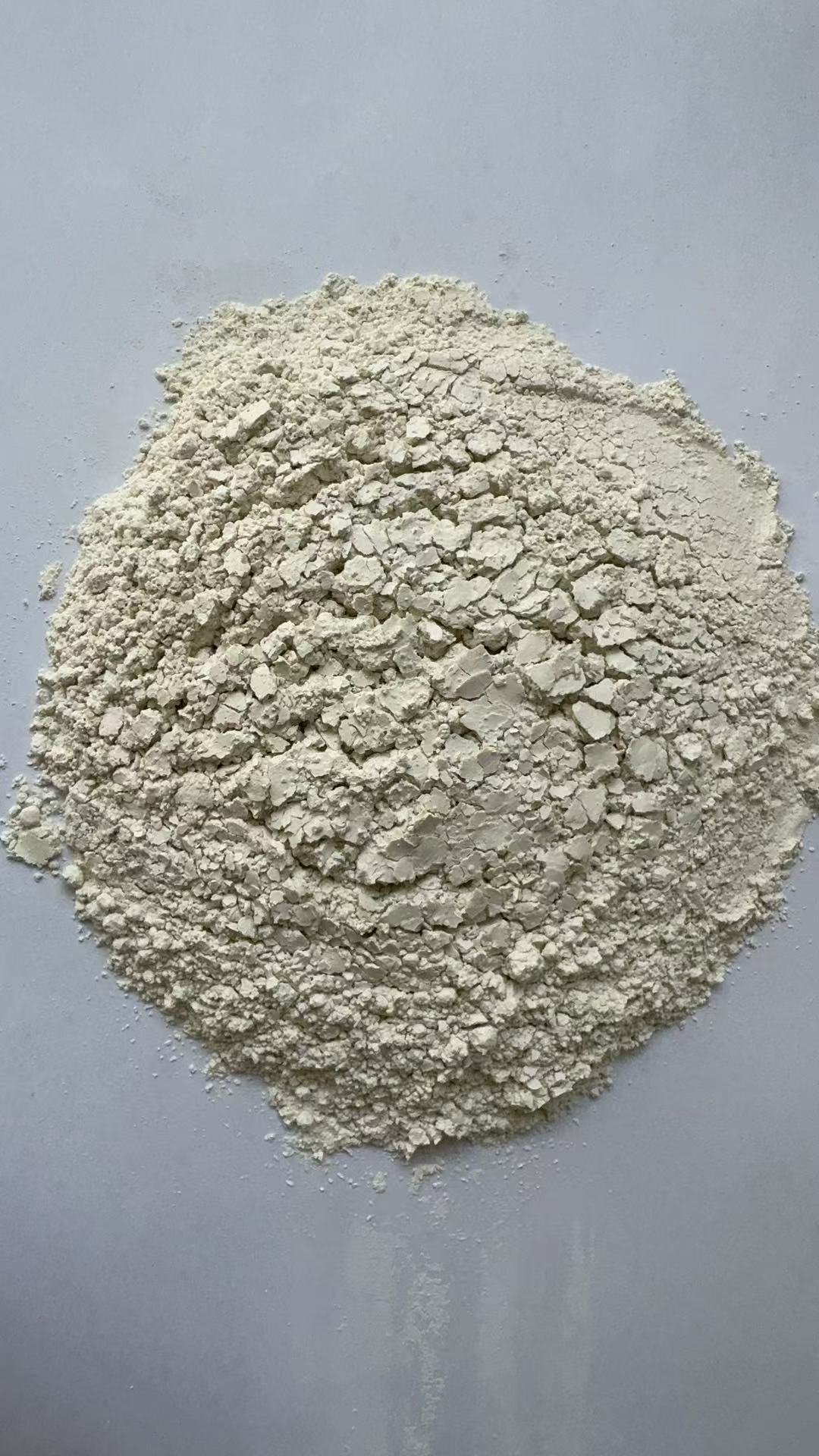
Organic hemp protein powder in commercial supply is part of extended organic hemp sourcing programs.
Start with the Supplier Profile
Review Senqi Food's facilities, certifications and organic hemp product range in one document.
Download the Brochure