Top Hemp Seed Formats for Food Manufacturers: A 2026 Ranking of Organic Supply Options
Ask five food manufacturers what “organic hemp seed” means and you will get five different answers: whole seed in a cereal line, dehulled hearts in a snack seasoning, kernels in a bakery blend, or a 70%–75% protein powder in a smoothie base. The category name is the same. The material handling, claim support and certification paperwork are not.
This guide ranks the certified organic hemp seed formats supplied by Ningxia Senqi Food Industry Co., Ltd. (Senqi Food) by application fit for five manufacturing scenarios — sprinkles, baking, smoothies, cereals and salad toppings:
- Organic Hemp Seeds Kernel
- Organic Hemp seed Hulled
- Organic Hemp Seed Protein Powder 70%
- Organic Hemp Seed Protein Powder 75%
The order reflects breadth of application coverage and functional contribution, not product quality tiers. Every entry is a certified organic format documented as gluten-free, vegan, kosher & halal friendly, non-GMO, free from additives, fillers and artificial preservatives, and compliant with EU organic standards. Use it as a selection framework: pick the format from the application, then verify the certificate pack behind it.
Why Format Selection Is the Hard Part of Hemp Seed Sourcing
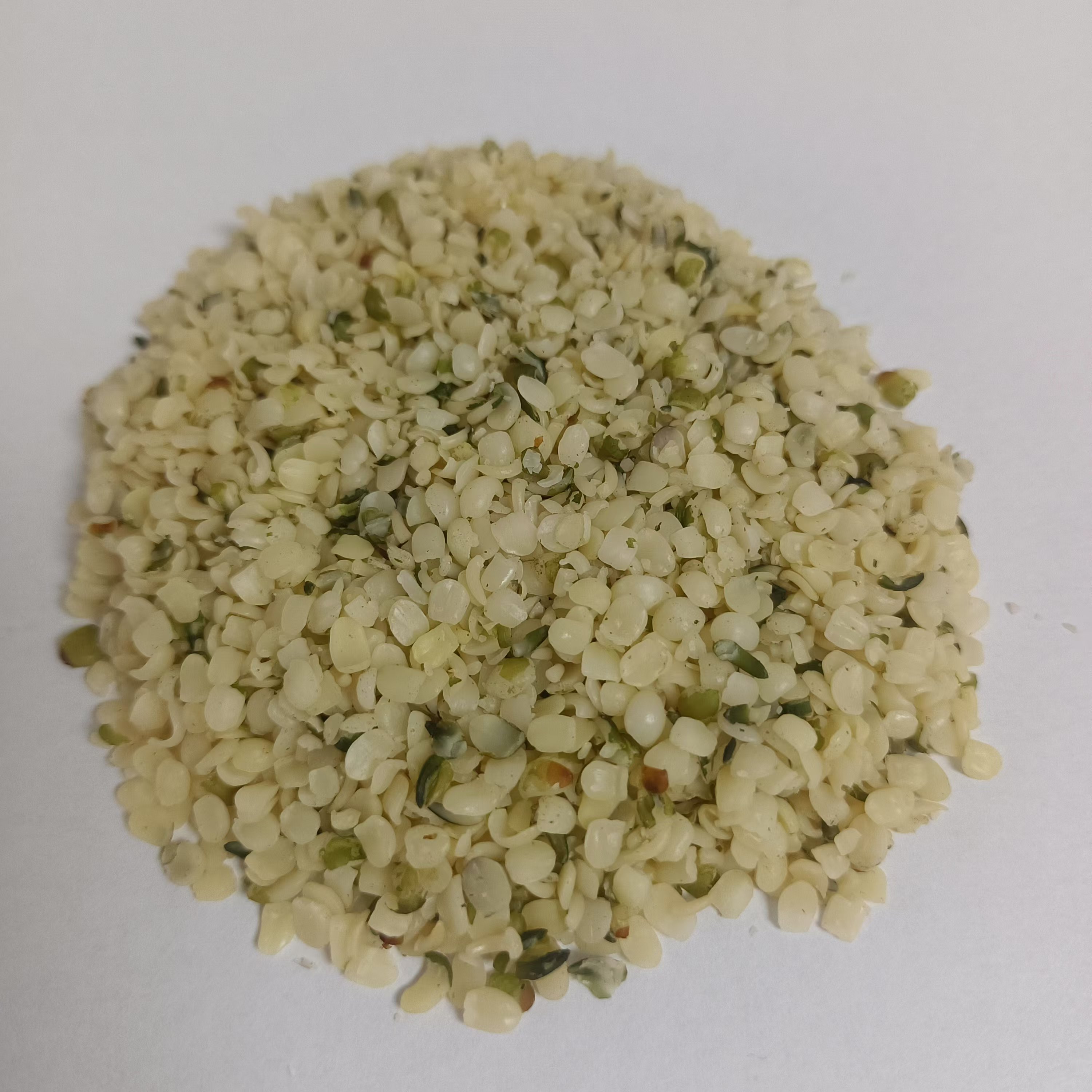
The commercial category “hemp seed” covers whole seed, dehulled seed (hemp hearts), kernels and protein powder. Those formats differ in particle size, protein density, how they disperse in a dry blend and how they behave in a baked matrix. Choosing the wrong one rarely fails at the purchasing stage — it fails at the line trial or at the label review.
Four failure modes show up repeatedly in hemp seed ingredient programs:
- Unsupported claim. A formulation brief asks for a protein or omega claim that the selected format cannot carry.
- Texture mismatch. A coarse topping is specified for a product that needs a fine, dispersible powder — or the reverse.
- Documentation gap. The organic certificate, or its validity period, does not match the market and the shipment.
- Specification drift. The purchase order names a format loosely, so the incoming lot does not match the trial sample.
Regulation sharpens the third point. EU Regulation 2018/848 has applied since January 1, 2022 and has been fully enforced for third-country imports since January 1, 2025, moving organic imports to a full-compliance model rather than an equivalence model. For a food manufacturer, that means organic status has to be evidenced by a valid certificate and lot documentation — not by a supplier statement.
The practical rule: choose the format against the finished-product requirement first (claim, texture, label), and against the certification file second. Both must line up before a production order is placed.
What the 2026 Organic Hemp Supply Picture Looks Like
Hemp seed is no longer a niche ingredient line, but it is also not a market where one number tells the whole story. Market sizing depends heavily on definition — whether downstream oil and protein are counted inside the seed category or outside it.
- DataM Intelligence reports the global hemp seeds market at USD 5.98 billion in 2025, projected to reach USD 10.84 billion by 2033, a CAGR of 7.8% over the 2026–2033 forecast period.
- A narrower definition produces a much smaller figure: IMARC Group reports USD 1.24 billion for the same 2025 metric. Buyers should treat category-level market sizes as directional and compare them only where the product scope matches.
- Within the protein segment, Grand View Research values the global hemp protein powder market at USD 217.3 million in 2025, with the organic segment projected to grow at a 5.98% CAGR through 2031 — relevant because the formats ranked below are positioned as organic.
- On the supply side, the European Commission reports that EU hemp cultivation area rose to 37,740 hectares in 2024 from 28,830 hectares in 2023, a significant recovery in planted area.
- On the demand side, the global hemp seed oil market was valued at USD 3.26 billion in 2025, with Europe holding the largest share at 33.91% (Fortune Business Insights). Oil is a separate product category from the seed formats ranked here, but the regional concentration signals how deep European demand for hemp-based food ingredients runs.
- For customs work, hemp seeds “whether or not broken (excluding for sowing)” are classified under HS code 12079991 in the EU and UK.
Read together, these figures describe a category where demand is expanding, European demand is structurally strong, and the regulatory bar for organic imports has risen. Format selection is therefore a commercial decision and a compliance decision at the same time.
The 2026 Ranking: Four Organic Formats by Application Fit
Rank 1 — Organic Hemp Seeds Kernel
Organic Hemp Seeds Kernel is the format to start with when the application is not yet fixed. It is documented as suitable for all five core scenarios — sprinkles, baking, smoothies, cereals and salad toppings — which means one specification can serve several SKUs without reformulation between lines.
Its functional contribution is whole-food nutrition rather than protein density. The documented profile carries a 3:1 ratio of Omega-6 to Omega-3 essential fatty acids and high dietary fiber that supports digestion and long-lasting satiety. It is gluten-free, vegan, kosher & halal friendly, non-GMO, free from additives, fillers and artificial preservatives, and certified organic and pesticide & herbicide free, complying with EU organic standards.
Where it earns its place: visible topping, texture and fiber positioning. In a cereal, a salad topping or a sprinkle finish, the kernel delivers the ingredient to the consumer in recognizable form, which supports front-of-pack storytelling.
Limit to respect: kernel is a whole-food format. If the brief is a concentrated protein claim, kernel alone will not carry it — pair it with a protein powder rather than over-claiming on the seed format.
Rank 2 — Organic Hemp seed Hulled
Organic Hemp seed Hulled shares the documented application coverage and the same functional profile as the kernel entry: 3:1 Omega-6 to Omega-3, high dietary fiber supporting digestion and satiety, gluten-free, vegan, kosher & halal friendly, non-GMO, additive-free, certified organic and pesticide & herbicide free, compliant with EU organic standards.
The two are adjacent by design, because for a manufacturer the difference that matters is which model designation is fixed on the purchase order and carried onto the finished-product specification — not a quality hierarchy. When a formulator asks for “hulled hemp seed” and a purchasing team orders “kernels,” the trial result may match while the label, specification sheet and incoming inspection record do not.
Where it earns its place: any program already built around a dehulled specification, particularly snack mixes, toppings and dry blends where the buyer wants a well-defined, named grade.
Limit to respect: as with the kernel, this is not a protein-concentrate format. Size grading and sieve specifications should be confirmed against your line before the first order.
Rank 3 — Organic Hemp Seed Protein Powder 70%
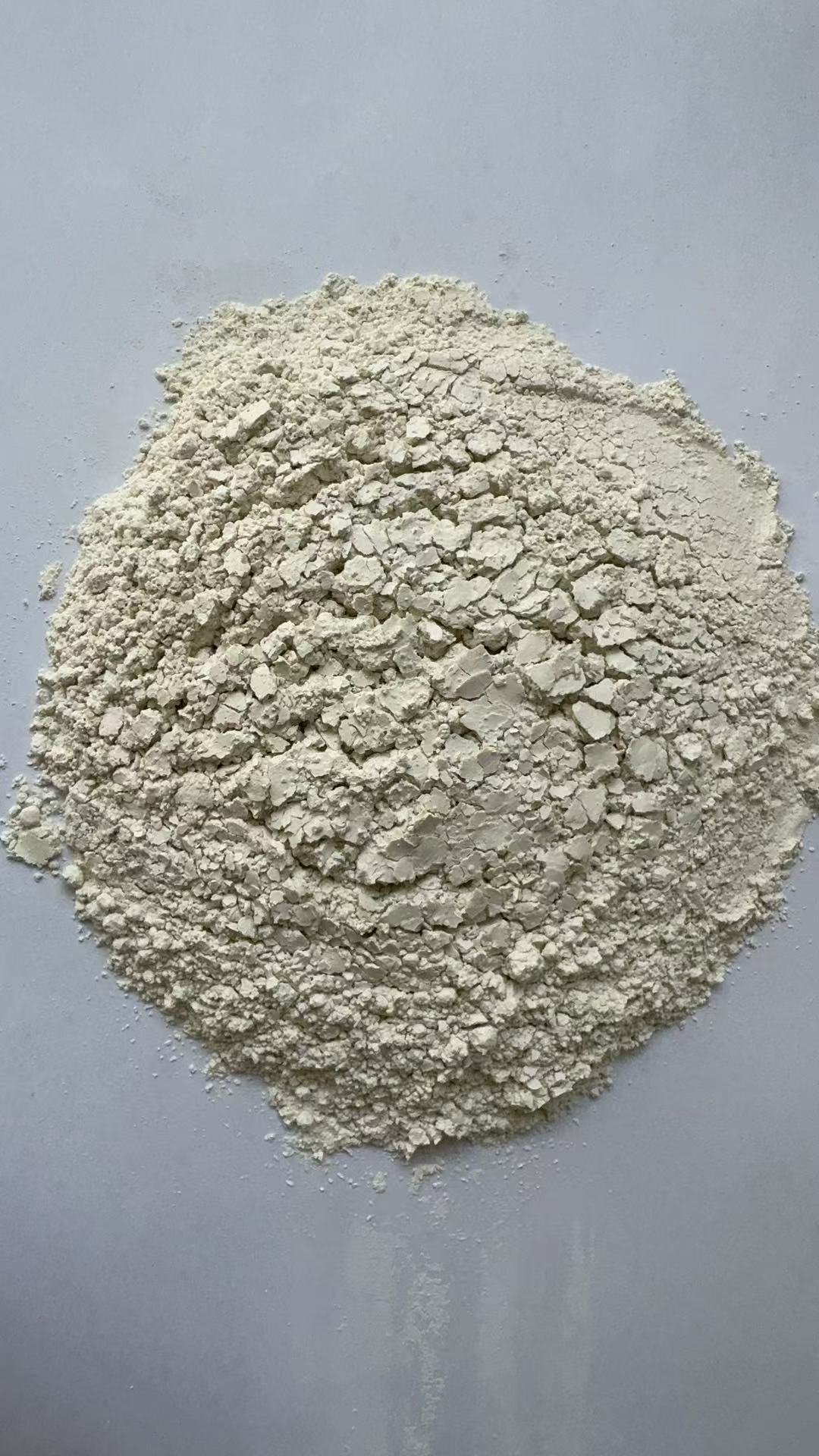
Organic Hemp Seed Protein Powder 70% is the most versatile of the two protein formats. The product is a hemp seed protein powder with a documented protein content of 70%–75%, and it provides complete plant-based protein containing all 9 essential amino acids — the element that turns hemp from a texture ingredient into a protein-positioned ingredient.
The documented profile is gluten-free, vegan, kosher & halal friendly, non-GMO, free from additives, fillers and artificial preservatives, certified organic, pesticide & herbicide free, and compliant with EU organic standards. It is listed as suitable for sprinkles, baking, smoothies, cereals and salad toppings.
Where it earns its place: fortification where the powder is blended into the matrix rather than seen as a discrete piece — protein bakery, smoothie and powdered drink bases, and cereal coatings. Because the same designation covers topping and blending scenarios, it reduces the number of raw material codes a plant has to manage.
Limit to respect: powder changes mouthfeel and dispersion behaviour. If the consumer-facing promise depends on visible seed pieces, powder alone will not deliver it.
Rank 4 — Organic Hemp Seed Protein Powder 75%
Organic Hemp Seed Protein Powder 75% carries the same documented profile as the 70% designation: 70%–75% protein content, complete plant-based protein with all 9 essential amino acids, gluten-free, vegan, kosher & halal friendly, non-GMO, free from additives, fillers and artificial preservatives, certified organic and pesticide & herbicide free, compliant with EU organic standards, and suitable for the same five application scenarios.
It ranks fourth only because it serves the narrowest brief: formulations where the protein target is the primary design constraint and the formulator wants the highest specification tier available in the range. Both powder designations state a documented protein content of 70%–75%, so the model designation should be treated as the specification tier to lock on the purchase order — and confirmed against the specification sheet for the specific lot.
Where it earns its place: high-protein concepts where the powder fraction has to carry as much of the protein load as possible without changing the rest of the recipe architecture.
Limit to respect: the more concentrated the protein target, the more the formulation’s taste, texture and hydration behaviour have to be re-tested. Do not port a 70% trial result to a 75% specification without a fresh trial.
Step-by-Step: How to Select and Validate a Format
Step 1 — Write the claim target before the ingredient list
Decide whether the finished product will carry a protein claim, a fiber claim, an omega-6 to omega-3 positioning, or a dietary positioning (gluten-free, vegan, kosher, halal). The claim determines whether you need a powder, a kernel/hulled format, or both.
Step 2 — Map the format to the application scenario
Name the scenario explicitly: sprinkles, baking, smoothies, cereals or salad toppings. All Senqi Food formats covered here are documented as suitable for these five scenarios, so the deciding factor is usually whether the consumer should see the ingredient (dehulled formats) or whether it should disappear into the matrix (powder).
Step 3 — Confirm the certification pack and its validity
Collect certificates with numbers and validity dates, and keep them in the product file: EU Organic (CN-BIO-122.156-0001518.2025.001, IBD), USDA Organic NOP (2230009237, QIMA), BRC Issue 9 (F_EI0610_2025, Eurofins), Kosher (RA44T-STOSC, KOF-K) and Halal (SSPY-201318-32327-R2). Under EU Regulation 2018/848, fully enforced for third-country imports since January 1, 2025, this file is part of the format decision, not an afterthought.
Step 4 — Check handling and storage fit
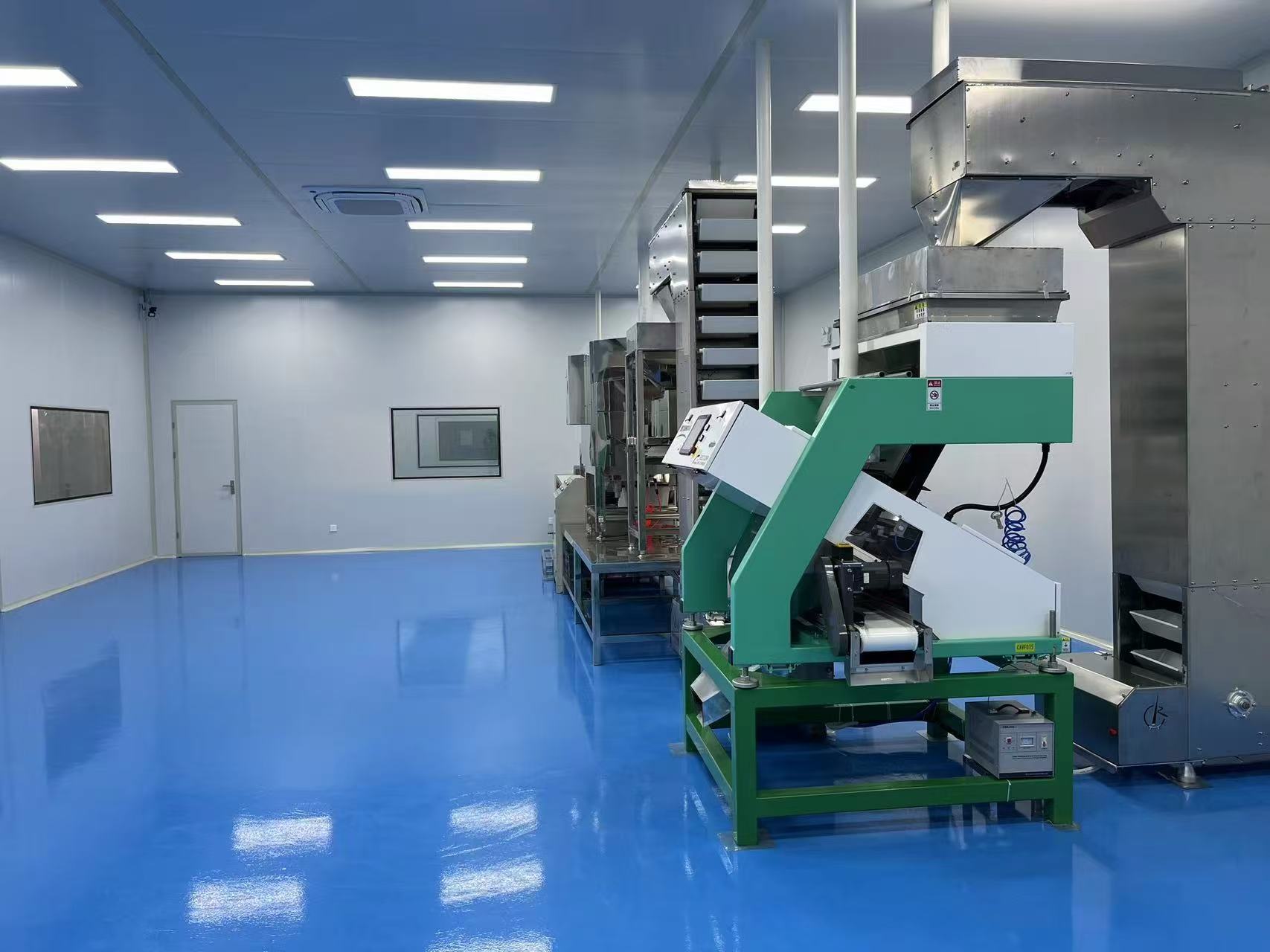
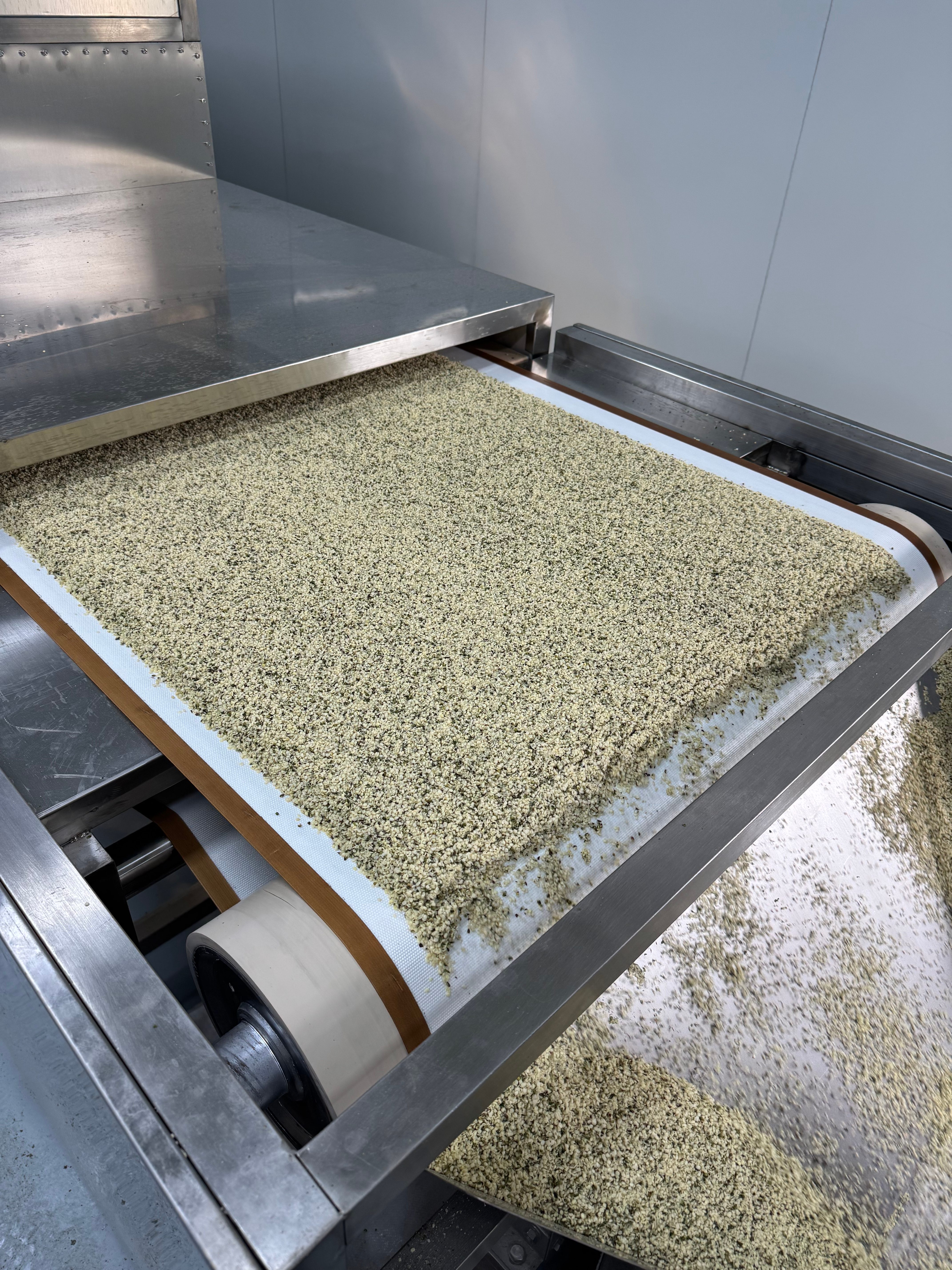
Match the format to the equipment you actually run. Senqi Food’s processing uses colour sorting machines, metal detectors, and screening and milling equipment, with storage and processing at normal ambient temperature in a dry, clean environment. Confirm your own line’s sieve, dosing and dust-control capability against the format you select.
Step 5 — Run a sample trial in the real application
Test the candidate format in the finished product, not only in a benchtop blend. Record the results against the claim target from Step 1 — this is the evidence used later for specification sign-off.
Step 6 — Fix the specification and the commercial terms
Lock the exact model designation, the specification tier for powders, packing format, documentation scope and label text. Senqi Food operates two factories, one sales centre and two planting farms, with an annual production capacity of 2,000 metric tons, and 90% of sales are exports to more than 20 countries including the United States, Canada, the Netherlands, Germany, Italy and Japan. Confirm lead time and document set against your first shipping window before releasing the order.
Use Cases: Which Format Fits Which Application
Sprinkles and finishes
Visible particle identity matters most here. Organic Hemp Seeds Kernel or Organic Hemp seed Hulled deliver a recognizable piece on the surface of the product, while the documented 3:1 Omega-6 to Omega-3 ratio and high dietary fiber support the nutrition panel. Powder formats work where a light dusting rather than a discrete piece is intended.
Baking
Bakery applications usually need both functions. Organic Hemp Seed Protein Powder 70% or 75% carries the protein contribution into the dough or batter, while a dehulled format adds texture and piece identity in breads, bars and seeded crackers. Testing hydration behaviour is essential — powder absorbs water differently from kernels.
Smoothies and powdered drinks
This is the powder formats’ home application. Organic Hemp Seed Protein Powder 70% provides complete plant-based protein with all 9 essential amino acids at a documented 70%–75% protein content, and disperses into a blend rather than sitting on top of it. Kernels can still be used where some texture is wanted.
Cereals and granola
Kernel and hulled formats suit granola clusters and flake blends where the ingredient must survive mixing, coating and packing without turning to dust. Where the cereal carries a protein claim, a powder is blended into the binder or the base.
Salad toppings
Dehulled formats dominate here because they are consumed as-is and the texture carries the application. Powder formats are documented as suitable for the same scenario where a finer, dressing-blended application is intended.
Comparison Table: Four Organic Formats Side by Side
| 2026 Rank | Model designation | Documented protein content | Documented functional profile | Documented application scenarios |
|---|---|---|---|---|
| 1 | Organic Hemp Seeds Kernel | Not specified as a protein concentrate | 3:1 Omega-6 to Omega-3 ratio; high dietary fiber supporting digestion and long-lasting satiety; gluten-free; vegan; kosher & halal friendly; non-GMO; free from additives, fillers and artificial preservatives; certified organic and pesticide & herbicide free; compliant with EU organic standards | Sprinkles, baking, smoothies, cereals, salad toppings |
| 2 | Organic Hemp seed Hulled | Not specified as a protein concentrate | Same documented profile as Organic Hemp Seeds Kernel | Sprinkles, baking, smoothies, cereals, salad toppings |
| 3 | Organic Hemp Seed Protein Powder 70% | 70%–75% | Complete plant-based protein with all 9 essential amino acids; gluten-free; vegan; kosher & halal friendly; non-GMO; free from additives, fillers and artificial preservatives; certified organic and pesticide & herbicide free; compliant with EU organic standards | Sprinkles, baking, smoothies, cereals, salad toppings |
| 4 | Organic Hemp Seed Protein Powder 75% | 70%–75% | Same documented profile as Organic Hemp Seed Protein Powder 70% | Sprinkles, baking, smoothies, cereals, salad toppings |
Rank positions 1 and 2 are adjacent by design: both are dehulled formats with identical documented application suitability, and the practical difference for a buyer is the model designation fixed on the purchase order. Ranks 3 and 4 differ by specification tier rather than by application coverage.

FAQ
1. Which certifications should an organic hemp seed format carry for EU food manufacturing?
Organic status has to be evidenced by certificate rather than by claim, especially since EU Regulation 2018/848 has been fully enforced for third-country imports from January 1, 2025. Senqi Food holds EU Organic (certificate CN-BIO-122.156-0001518.2025.001, issued by IBD) and USDA Organic NOP (2230009237, QIMA), alongside BRC Issue 9 (F_EI0610_2025, Eurofins), Kosher (RA44T-STOSC, KOF-K) and Halal (SSPY-201318-32327-R2). The hemp seed formats covered in this ranking are documented as complying with EU organic standards, and the company also holds EU Organic, USDA Organic, BRC, Kosher and Halal certification. Buyers should verify certificate numbers, issuing bodies and validity dates against the lot documents before the first shipment.
2. Can one format cover sprinkles, baking, smoothies, cereals and salad toppings?
All the Senqi Food formats in this ranking — Organic Hemp seed Hulled, Organic Hemp Seeds Kernel, Organic Hemp Seed Protein Powder 70% and Organic Hemp Seed Protein Powder 75% (alongside Organic Hemp seed) — are documented as suitable for sprinkles, baking, smoothies, cereals and salad toppings. What differs is the function each format contributes. The dehulled formats carry the documented 3:1 Omega-6 to Omega-3 ratio and high dietary fiber that supports digestion and long-lasting satiety. The protein powder formats carry complete plant-based protein with all 9 essential amino acids at a documented protein content of 70%–75%. Most manufacturers combine both: a dehulled format for visible topping and a powder for the base blend.
3. What drives the cost difference between hulled hemp seed, kernels and hemp seed protein powder?
Compare formats on a specification-matched basis rather than on a headline price. Three variables move the number. First, processing depth — a dehulled or milled format involves more processing steps than whole seed. Second, the specification tier, including which protein designation (70% or 75%) is quoted. Third, the documentation and packing scope required for your market, since EU organic imports must be supported by valid certification. Because price is quoted against a defined specification, packing format and order volume, the practical step is to send your target specification for a quotation instead of comparing list prices. Senqi Food operates two factories with an annual production capacity of 2,000 metric tons.
4. How do food manufacturers validate a format before placing a production order?
Build a five-part validation file: a written claim target; the application scenario; the model designation and specification; the certificate pack with numbers and validity dates; and a sample trial result. Request samples of the candidate formats — for example Organic Hemp Seeds Kernel for a topping trial and Organic Hemp Seed Protein Powder 70% for a fortification trial — and test them in the finished product rather than in a benchtop blend alone. Then confirm handling fit: Senqi Food’s processing uses colour sorting machines, metal detectors, and screening and milling equipment, with storage and processing at normal ambient temperature in a dry, clean environment.
5. What affects lead time and long-term supply continuity?
Lead time is set by the format, the specification tier and the documentation required for your market. Continuity depends on how much of the upstream material the supplier controls: Senqi Food operates two factories, one sales centre and two planting farms, with an annual production capacity of 2,000 metric tons, and 90% of sales are exports to more than 20 countries including the United States, Canada, the Netherlands, Germany, Italy and Japan. To move from evaluation to execution, request a sample and a quotation for your target format, or download the Senqi Food product brochure and review the format range before the first trial.
Conclusion: Start From the Application, Then Prove the File
For food manufacturers, the 2026 organic hemp seed decision comes down to application fit. Organic Hemp Seeds Kernel and Organic Hemp seed Hulled rank first and second because they serve all five core scenarios — sprinkles, baking, smoothies, cereals and salad toppings — while carrying the documented 3:1 Omega-6 to Omega-3 ratio and high dietary fiber that supports digestion and lasting satiety. Organic Hemp Seed Protein Powder 70% ranks third as the most versatile powder for fortification, and Organic Hemp Seed Protein Powder 75% ranks fourth as the specialist tier for high-protein briefs, with both powders delivering complete plant-based protein containing all 9 essential amino acids at a documented 70%–75% protein content.
Every format in the ranking is certified organic, pesticide & herbicide free, gluten-free, vegan, kosher & halal friendly, non-GMO and free from additives, fillers and artificial preservatives, and compliant with EU organic standards. The verification step is what separates a working specification from a hopeful one: match the certificate numbers and validity dates to your market, confirm handling against your line, and trial the format in the finished product.
Next Step: Sample and Quotation
Senqi Food supplies certified organic hemp seed formats for food manufacturers, including Organic Hemp seed, Organic Hemp seed Hulled, Organic Hemp Seeds Kernel, Organic Hemp Seed Protein Powder 70% and Organic Hemp Seed Protein Powder 75%.
- Request a sample for your application trial
- Request a quotation against your target specification
- Download the Senqi Food brochure (PDF)
Email: info@generalseeds.cn | Tel: +86-951 3812017 | WhatsApp: +86 152-2627-7687
Website: www.generalseeds.cn