
Sodium Hyaluronate Delivery Assurance: Plant & QA Checks
Sodium Hyaluronate Delivery Assurance: Plant & QA Checks
Sodium hyaluronate delivery assurance is a supplier's demonstrated ability to release the same specification, in the agreed quantity, on the promised date — order after order. It is not a grade name, a price, or a single certificate of analysis. Grade naming tells a buyer what a product is meant to be; delivery assurance tells a buyer whether the plant can reproducibly make it and whether the quality function can prove it, batch by batch.
This guide sets out the operating evidence and the quality evidence worth verifying before a purchase order, using the plant and quality arrangements of Shandong Habier Biopharma Co.,LTD as a worked reference. Habier is a sodium hyaluronate manufacturer established in 2015 in Qufu City, Shandong Province, operating a 50,000 m² facility with a stated annual output of 600–700 MT. Throughout, the article separates what a document proves from what only a plant visit or a batch record can establish.
Quick answer
Delivery assurance rests on two things a buyer can check: operating redundancy in the plant (two independent fermentation workshops, a multi-production line layout, 30 days of raw material safety stock, and phased production scheduling) and release discipline in quality assurance (an independent QC laboratory, full-item inspection on every batch, batch testing records, and traceability).
Certificates such as ISO 9001, ISO 22000, Kosher, Halal and Ecocert Cosmos validate a management system and a defined scope — not a specific drum. Each claim should be matched to the evidence type that can actually support it, then confirmed on a pilot order.
Why a certificate of analysis is not delivery assurance
A certificate of analysis is a per-batch statement. It describes the material in the drum being shipped and the methods used to test it. It does not describe what happens when the next fermentation campaign slips, when an incoming raw material shipment is held at port, or when a grade changeover forces an unplanned cleaning cycle. Delivery assurance is the part of supplier capability that sits behind the certificate: whether the plant can run the same product again, and whether QA can release it without shortcuts.
Buyers at the evaluation and execution stages are usually managing three risks at once:
- Specification risk — will the material match the agreed panel of identity, assay, molecular weight distribution, and microbial limits?
- Continuity risk — will the same specification be available on the next order, and the one after that?
- Evidence risk — if something goes wrong, can the supplier reconstruct what happened and respond?
Grade names and molecular weight tiers address the first risk only. The other two are decided by plant architecture and QA independence, which is why a plant-and-quality review belongs before the first purchase order rather than after the first late shipment.
Where delivery risk actually sits in sodium hyaluronate supply
Industrial hyaluronic acid production follows one of two routes: extraction from animal tissue, or large-scale bacterial fermentation with genetically modified strains, as described in a 2016 peer-reviewed review of industrial production methods. Microbial biosynthesis is a multi-step chain — fermentation followed by downstream processing — and that structure is what creates delivery risk in the first place.
Capacity in a fermentation plant is fixed by vessel volume and batch cycle time, not by how many orders are on the books. A 2022 review of fermentation research reported hyaluronic acid yields of 2.5–7.0 g/L from S. zooepidemicus across the studies it covered. That figure is a literature-reported range for process performance across differing fermentation modes and study conditions; it is not a vendor benchmark. The practical point is that output per litre is bounded, so a plant's monthly tonnage is a real physical constraint rather than a marketing figure.
Two further industry facts shape how much documentation a buyer should demand. Pharmaceutical-grade hyaluronic acid accounted for 69.3% of product segment share in 2026, according to Fortune Business Insights, meaning a large share of the market is bought under tighter documentation expectations than food or cosmetic material. In China, medical sodium hyaluronate products without pharmacological, metabolic or immunological action are managed as medical devices and classified no lower than Class II under NMPA Announcement No. 103 of 2022, so the same substance can carry a different verification burden depending on end use.
None of that tells you whether a specific supplier will deliver. It tells you what to look for: redundant fermentation capacity, a layout that separates grade campaigns, buffer stock upstream, and a schedule that can be committed to in writing.
Plant evidence to verify on site
Four plant-level arrangements carry most of the delivery-assurance signal. Each should be verified with a drawing, a record, or a walk-through rather than a verbal assurance.
Two independent fermentation workshops
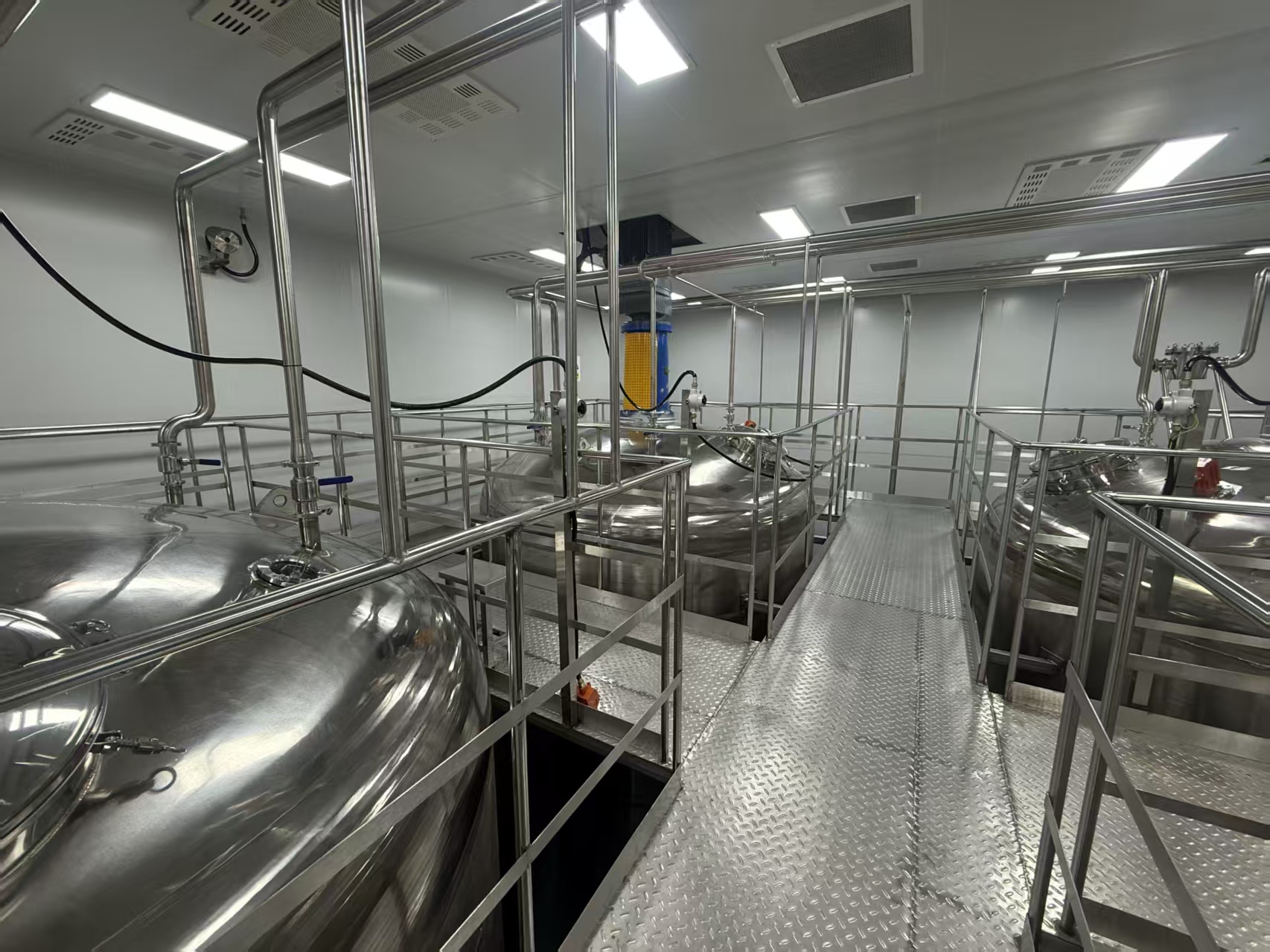
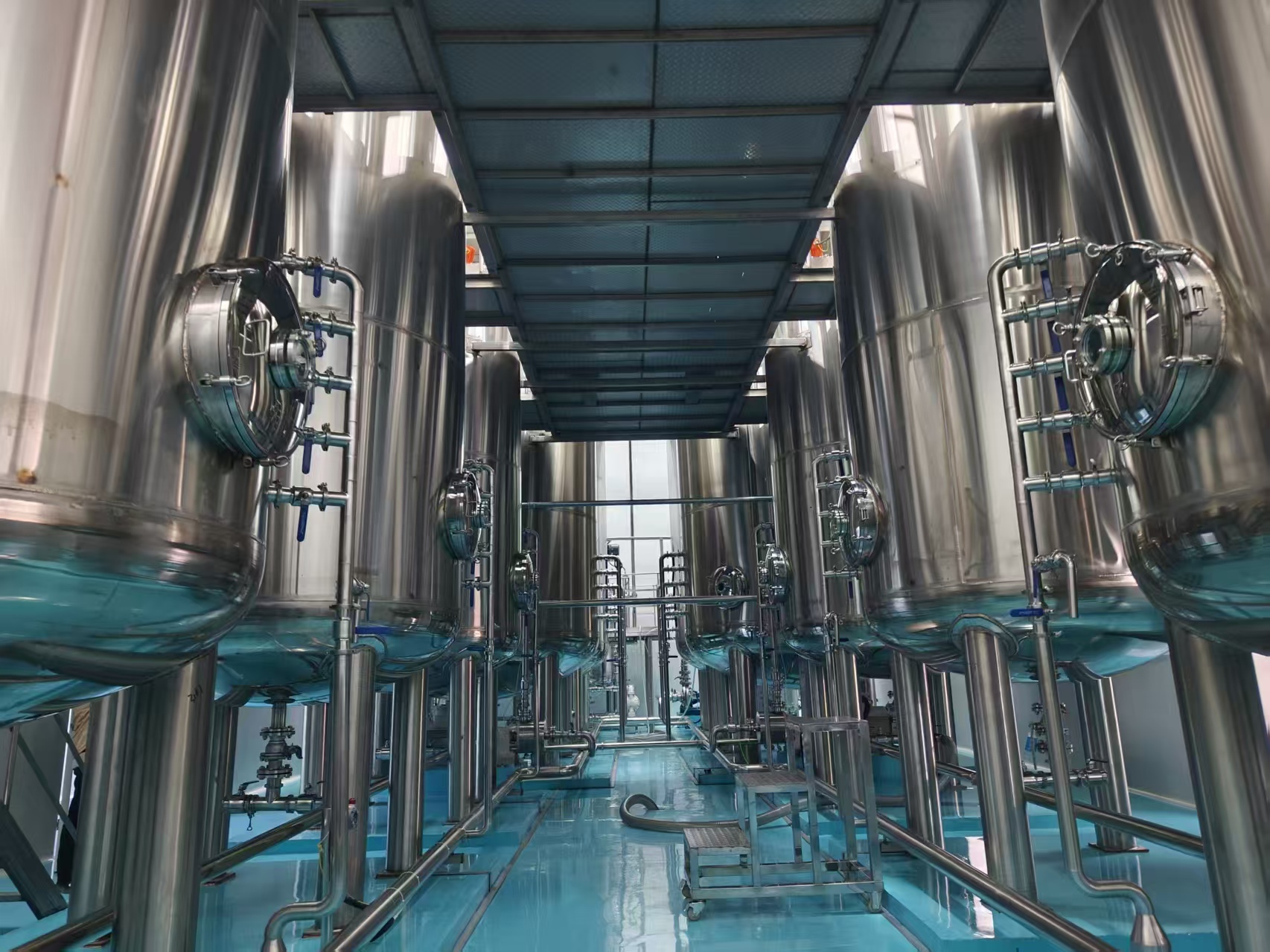
Habier operates two independent fermentation workshops. The value of that arrangement is not redundancy on paper but failure containment: when one workshop is in cleaning, sterilisation or maintenance, the other can keep running campaigns, so a single stoppage does not stop every grade at once.
“Independent” is the word to test. Ask for the plant layout and confirm what is genuinely separate — fermentation vessels and their inoculation steps, media preparation, and air handling — and what is shared. A shared upstream step is not automatically disqualifying, but it changes the failure mode you are buying: if both workshops draw from the same media preparation area, a problem there affects both.
The second question is allocation. Two workshops only help if the schedule uses them for different purposes — for example one running a long grade campaign while the other handles changeovers and smaller lots. Ask how the workshops are assigned across the product list, which for this supplier spans food grade sodium hyaluronate, cosmetic grade, pharma grade, and the high, low, ultra-low and hydrolyzed molecular weight variants.
Multi-production line layout
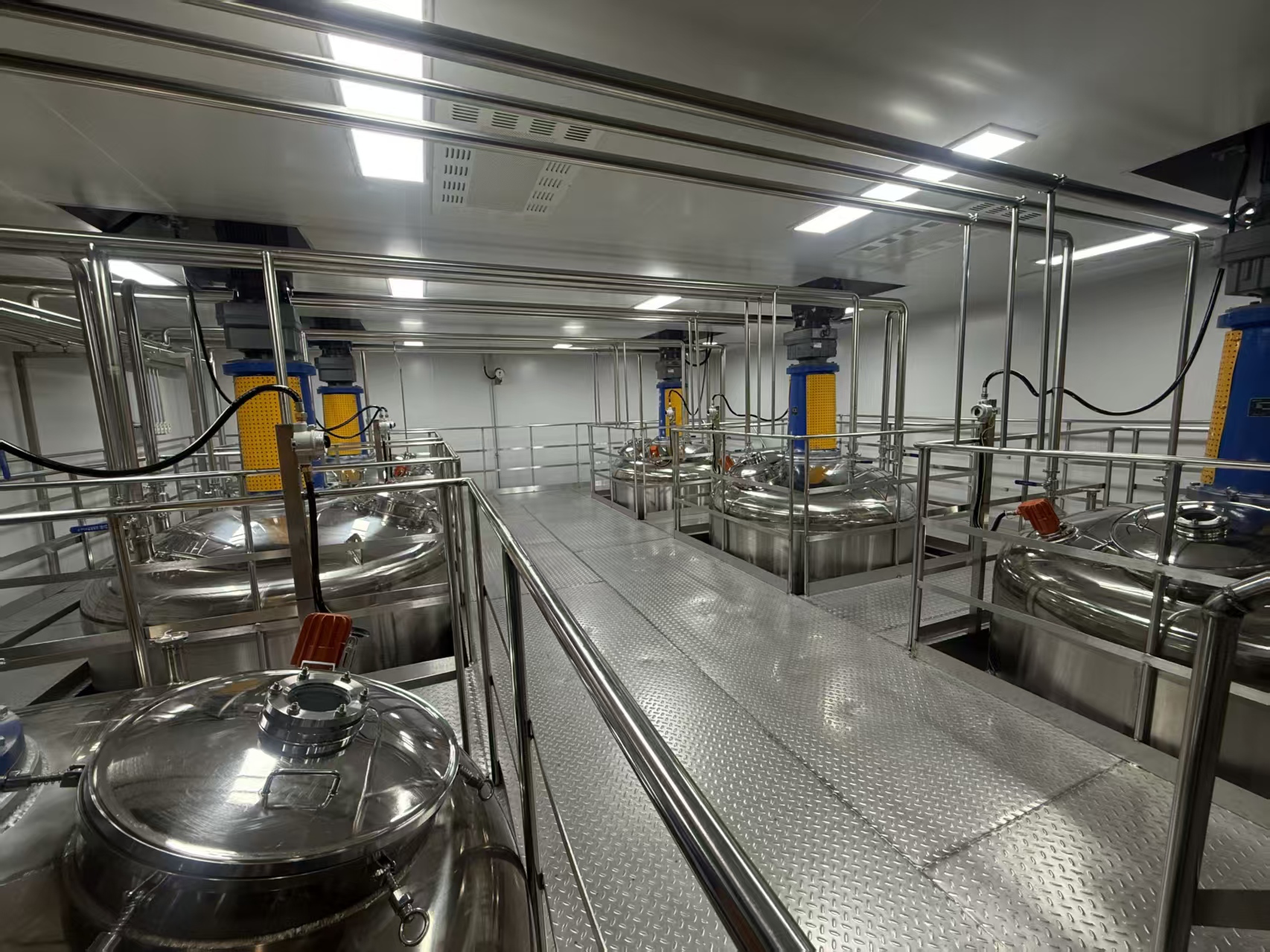
Production across multiple lines on one site does two things for a buyer. It lets different products or grades be processed in parallel instead of queueing behind each other, and it lowers the cost of a changeover, because a single line can be taken out of service for cleaning without idling the whole plant.
Layout also determines cross-contamination control, which matters when the product list runs from food-grade hyaluronic acid to pharma-grade sodium hyaluronate. Verify which lines are dedicated, how changeover cleaning is validated, and whether the same line can be scheduled for a food-grade campaign and then a pharma-grade campaign. Habier's 50,000 m² site houses the fermentation workshops, downstream processing and its own quality control laboratory, so an audit can follow the whole chain in one visit instead of relying on separate sites.
30-day raw material safety stock
A 30-day raw material safety stock is a buffer against upstream variability — a late delivery, a rejected incoming lot, a quality hold. It is the plant-side equivalent of a spare fermentation train: it absorbs a disruption instead of passing it to the customer as a delayed shipment.
The number needs qualifying before it is relied on. Ask which raw materials the 30 days covers, in what form they are held, where they are stored, and whether the stock is replenished on a rolling basis or rebuilt only at intervals. Thirty days of cover insulates a customer against interruptions shorter than thirty days; for longer disruptions, the question becomes how available stock is allocated between existing customers and new orders, and that should be a contractual answer rather than an informal one.
Phased production scheduling
Phased production scheduling is the discipline that ties the workshops, lines and stock together. Rather than running everything concurrently, production is sequenced in phases so each grade gets a defined window on a defined line, and the changeovers between them are planned rather than reactive.
For a buyer, the practical question is how a phase becomes a commitment. Ask for the order confirmation to name a booked production slot, ask what happens to that slot if a larger order arrives, and ask how repeat customers are treated in the schedule. Typical lead time for this supplier is stated as 5–8 days against a monthly capacity of 50–60 tons and a minimum order quantity of 1 kg — fast enough that scheduling discipline, not raw capacity, is usually what decides whether the date holds.
QA evidence to verify in the quality file
Plant arrangements determine whether material can be made. Quality assurance determines whether it can be released, and whether that release can be reconstructed later.
An independent QC laboratory
An independent QC laboratory sits outside the production reporting line, so a batch is not approved by the function that made it. Ask for the quality organisation chart rather than the company chart. Confirm that QC holds release authority, that an out-of-specification result triggers a documented investigation rather than a re-test until the result passes, and that retained samples are kept for a defined period so a later dispute can be settled against the actual material.
An on-site laboratory also shortens the loop between sampling and release, which is part of how short lead times are achievable at all: a testing queue outsourced to a third party adds days that a published lead time rarely accounts for.
Full-item inspection on every batch
Habier's stated quality control is 100% full inspection before delivery. Read that as two separate commitments. Full-item inspection means the complete specification panel is tested on the batch, not a reduced panel with the balance assumed. Before-delivery inspection means the check is a gate on shipment, not a retrospective review.
The panel itself should be the one you agreed. Ask for a redacted sample certificate of analysis and compare its item list against your own specification. If the certificate carries fewer items than your specification, the gap is either tested separately on request or not tested at all — and you need to know which before the order, not after.
Batch testing and traceability
Batch testing only produces assurance if the batch number means something. A defensible numbering scheme links the finished pack back through blending and packing to the fermentation lot, so a complaint or an out-of-specification result can be traced to a specific campaign rather than to a vague production period.
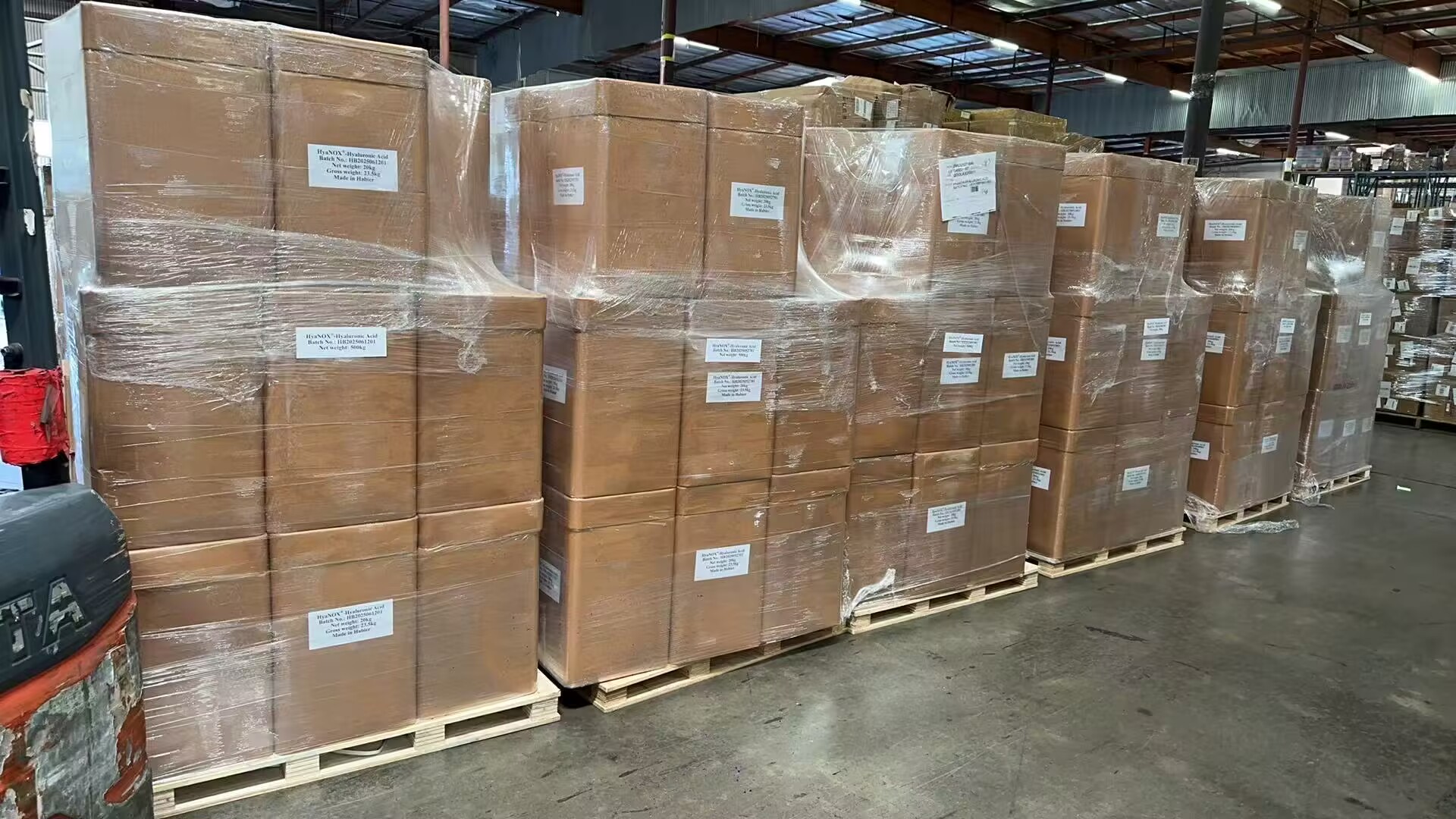
Test traceability rather than accepting it. Take a batch number from an earlier delivery and ask the supplier to reconstruct the production campaign, the QC results and the raw material lots used. Habier supports on-site factory inspection and third-party laboratory inspection as part of its acceptance terms, which lets a buyer verify the system at source instead of reading a description of it. The documented 4,733 kg shipment to a US natural cosmetic and health supplement importer shows what traceability has to cover in practice: avian-origin raw material with complete official veterinary heat treatment certification meeting US APHIS import standards, and clearance supported by a valid USDA import permit.
The certification file: what ISO 9001, ISO 22000, Kosher, Halal and Ecocert Cosmos establish
Certificates answer a narrow question: has an independent body assessed this management system, for this scope, and is the certificate still valid? They are necessary, they are not sufficient, and their value depends entirely on reading the scope and the dates rather than the logo.
Habier's certificate file includes:
- ISO 9001:2015 quality management system — certificate 1042Q00053R0S, issued 1 September 2024 and valid to 8 January 2027, scope “ALL”, certified by Shandong Seatone International Certification Co., Ltd. against GB/T 19001-2016 / ISO 9001:2015.
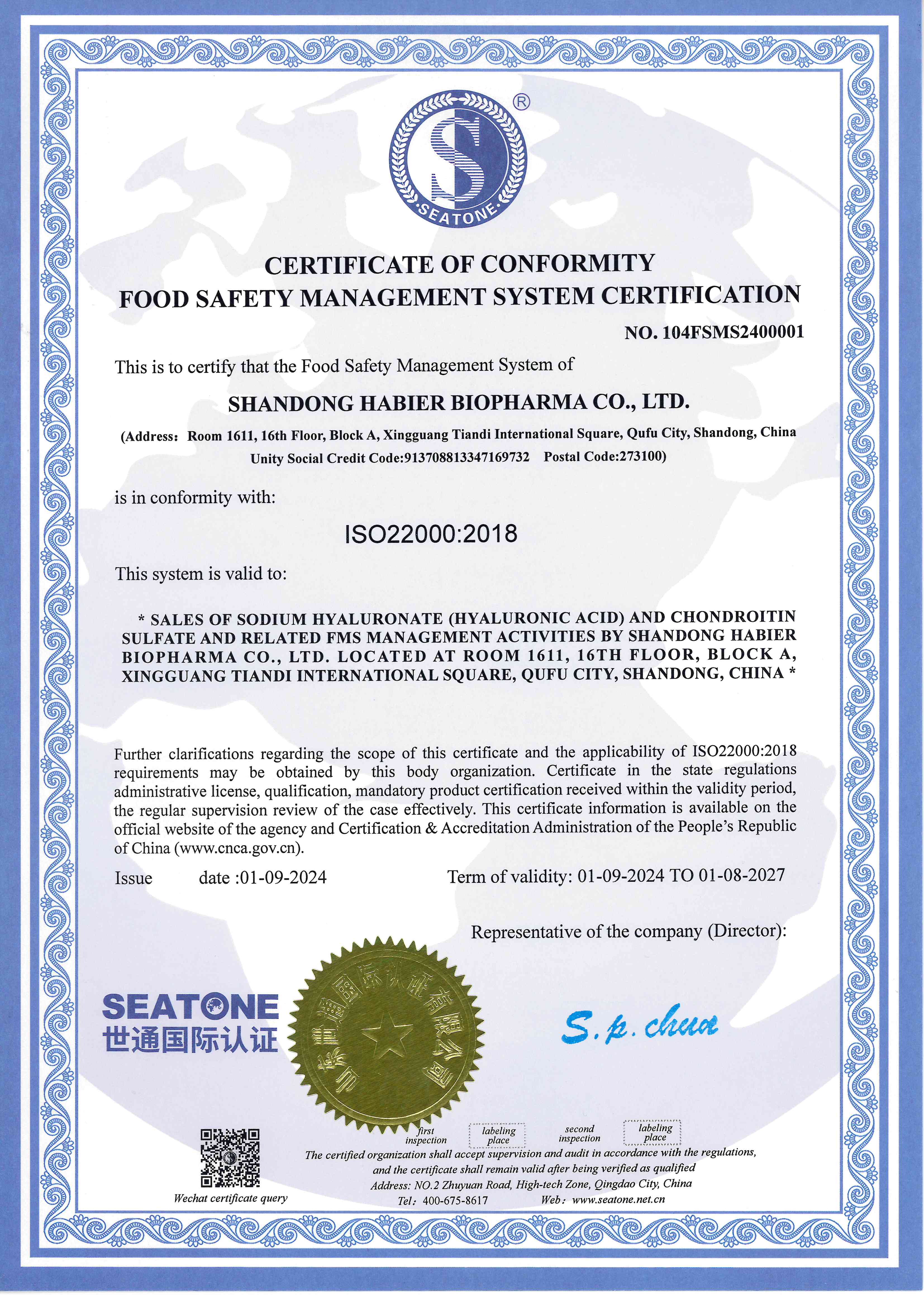
- ISO 22000:2018 food safety management system — certificate 104FSMS2400001, issued 1 September 2024 and valid to 8 January 2027 by the same body, with a scope covering the sales of sodium hyaluronate (hyaluronic acid) and chondroitin sulfate and related food safety management activities.
- Kosher, Halal and Ecocert Cosmos — held alongside ISO 16128 certification of the product, as stated in the company profile, which also lists HACCP in the wider qualification system.
The maintenance cycle matters as much as the certificate. These certificates are maintained through annual third-party recertification, so a certificate is current evidence only if the latest audit cycle has been completed. Ask for the current document rather than the brochure copy, check the scope line against the exact product you are buying, and ask when the next surveillance or recertification audit falls due. A scope that covers chondroitin sulfate and related food safety activities is not automatically a statement about your cosmetic-grade line — scope language is where most certificate misunderstandings begin.
Certificates also have a hard limit: none of them certifies a batch. Kosher, Halal and Cosmos status can be product- and process-specific, so confirm which of the listed grades — food grade sodium hyaluronate, cosmetic grade, pharma grade, or the low and high molecular weight variants — is actually covered.
Documented capability at a glance
| Verification item | Documented value |
|---|---|
| Company | Shandong Habier Biopharma Co.,LTD |
| Established / site | 2015; 50,000 m² facility in Qufu City, Shandong, China |
| Employees / R&D team | 123 employees; 6 engineers |
| Annual output / monthly capacity | 600–700 MT; 50–60 tons per month |
| MOQ / typical lead time | 1 kg; 5–8 days |
| Production services | OEM / ODM; purity adjustment customization |
| Quality control | 100% full inspection before delivery |
| Export markets | EU, USA, Korea; export ratio 20% |
| Certification | ISO 9001:2015 (1042Q00053R0S); ISO 22000:2018 (104FSMS2400001); Kosher; Halal; Ecocert Cosmos; ISO 16128 |
| Acceptance terms | Pre-shipment full test with COA report; third-party lab inspection supported; on-site factory inspection supported |
| Delivery terms / after-sales | FOB / CIF; free sample supply and after-sales quality tracking |
One useful cross-check: 50–60 tons per month implies roughly 600–720 tons a year, which is broadly consistent with the stated 600–700 MT annual output. Two capacity figures that reconcile are a better sign than either figure alone; if a supplier's monthly and annual numbers cannot be reconciled, ask which one describes finished product and which describes fermentation volume.
What each piece of evidence proves — and what it does not
| Evidence | Establishes | Does not establish |
|---|---|---|
| COA for one batch | That batch met the tested panel | Repeatability on the next campaign |
| ISO 9001:2015 certificate | A third party assessed the quality system for the stated scope | That a specific grade conforms |
| ISO 22000:2018 certificate | Food safety management within the listed scope and validity dates | Coverage of every product line on site |
| Kosher / Halal / Cosmos | Product- and process-specific certification, where granted | Automatic coverage of all MW variants |
| Two fermentation workshops | Reduced single-point failure in upstream production | Independence of every shared utility step |
| 30-day raw material stock | A buffer against short upstream interruptions | Protection against longer disruptions |
| Full-item batch inspection | The agreed panel is tested before dispatch | That the panel matches yours |
| Batch traceability | A finished pack can be linked back to its campaign | How quickly records can be retrieved |
| On-site or third-party audit | Observed conditions and sampled records | A guarantee of future performance |
A step-by-step verification sequence
- Fix the specification first. Name the grade and molecular weight tier, and write the full test panel before comparing suppliers. Without this, every later comparison drifts.
- Request the document pack. Current ISO 9001 and ISO 22000 certificates with numbers, scope and validity dates; Kosher, Halal and Cosmos documents; a redacted sample COA; the quality organisation chart; and a plant layout drawing.
- Sort claims by evidence type. Separate what a document can prove (certificate scope, test panel) from what needs a site visit (workshop independence, line dedication, stock practice).
- Reconcile capacity. Compare monthly capacity, annual output and your own forecast volume. Confirm that a specific production slot is named on the order confirmation.
- Walk the plant. See both fermentation workshops, the line layout and the raw material store; watch the sampling and release route through the QC laboratory.
- Test traceability. Ask for one earlier batch number to be reconstructed from finished pack back to fermentation lot and raw material lots.
- Run a pilot. Place an order at the 1 kg minimum, test it against your own panel, and compare your results with the accompanying COA.
- Convert to an agreement. Attach acceptance criteria — pre-shipment full test with COA, third-party inspection right, on-site inspection right — plus delivery terms, payment terms and the after-sales quality tracking arrangement.
Three buyer situations
A cosmetic brand moving from sample to series production
A brand scaling a serum usually needs cosmetic grade material in a defined molecular weight band; Habier's own published grade guidance places cosmetic grade sodium hyaluronate at 1.0–1.5 million Da, food grade at 0.8–1.5 million Da, pharma grade at ≥2.0 million Da, and low molecular weight material at ≤0.1 million Da. The delivery question is not which band to choose but whether the chosen band survives a scale-up. Verify the multi-line layout and changeover control, confirm that the cosmetic grade line is not shared in a way that puts your campaign behind a food-grade run, and lock the specification into the acceptance terms.
A supplement importer repeating a large order
Repeat importers carry the most delivery exposure, because a missed shipment hits a production plan already in motion. The documented 4,733 kg supply to a US natural cosmetic and health supplement importer — avian-origin material, US APHIS-compliant heat treatment certification, and clearance supported by a valid USDA import permit — illustrates the document set that has to be ready before dispatch, not after arrival. For this buyer type, the 30-day raw material safety stock and phased scheduling are the two plant facts worth confirming in person, and traceability is the control worth testing.
A pharma-grade evaluation
Pharma-grade sourcing carries the heaviest evidence burden, because the material feeds a regulated chain. The plant and QA questions stay the same, but the standard of proof rises: independent QC release authority, documented out-of-specification handling, retained samples, and record retrieval all become conditions rather than preferences. Where the end product is a medical device in China, the regulatory route itself adds requirements — medical sodium hyaluronate products without pharmacological, metabolic or immunological action are managed as medical devices and classified no lower than Class II under NMPA Announcement No. 103 of 2022 — so the supplier's documentation has to support the registration file, not just the purchase order.
FAQ
Which certificates should I verify before approving a sodium hyaluronate supplier?
Start with the management-system certificates and read the scope line, not just the logo. Habier holds ISO 9001:2015 (certificate 1042Q00053R0S) and ISO 22000:2018 (certificate 104FSMS2400001), both issued 1 September 2024 by Shandong Seatone International Certification Co., Ltd. and valid to 8 January 2027, alongside Kosher, Halal and Ecocert Cosmos certification and ISO 16128 certification of the product. Ask for the current document rather than a brochure copy, confirm the scope covers the grade you are buying, and request evidence of the latest annual third-party recertification.
How can a buyer confirm that a supplier really runs two independent fermentation workshops?
Ask for the plant layout and walk the route during an on-site audit. Check whether each workshop has separate fermentation vessels, separate inoculation and separate media preparation, then ask how the two are allocated across grades. Habier supports on-site factory inspection and third-party laboratory inspection within its acceptance terms, so the claim can be verified directly rather than through documents alone. A supplier that cannot show the layout or explain the allocation has not demonstrated redundancy, whatever the presentation says.
What does “full-item inspection every batch” cover in practice?
It means the complete specification panel is tested on each batch, and that the inspection gates delivery rather than following it — Habier's stated control is 100% full inspection before delivery. Request a redacted sample COA, compare its test items with your own specification, and confirm which methods are used. If an item on your specification is missing from the certificate, establish whether it is tested on request or not tested at all before placing the order.
What drives cost and commitment before the first order?
The commercial floor is low — minimum order quantity is 1 kg and delivery terms are FOB or CIF — so the real decision is about commitment rather than volume. Ask how payment terms change under a long-term agreement; Habier states that large long-term clients can negotiate terms separately, with a high advance payment mode as the main structure. Get the specification, test panel, packaging and acceptance criteria written into the quotation, because a unit price without those terms is not comparable between suppliers.
Can I test material before committing to a production order?
Yes. Habier provides free sample supply and after-sales quality tracking, with a 1 kg minimum order quantity, so a pilot can be run at small scale before a series order. Test the sample against the same panel you will use for acceptance, and where the application is regulated, commission a third-party laboratory inspection — a right the supplier's acceptance terms explicitly support. A sample confirms the material; a pilot order confirms the release process behind it.
What lead time is realistic, and what should be written into the order?
The stated typical lead time is 5–8 days against a monthly capacity of 50–60 tons, which is short enough that the constraint is usually scheduling rather than production. Write the delivery date as a booked production slot on the order confirmation, name the grade and molecular weight tier, and attach the acceptance criteria: pre-shipment full test with a COA report, third-party inspection right, and on-site factory inspection right. Buyers who want to confirm the plant and QA position before committing can request the current certificate pack, a sample, or a quotation against a defined specification, and can download the company brochure for the full capability summary.
Conclusion
Sodium hyaluronate delivery assurance is built from evidence a buyer can inspect, not from a grade name on a quotation. Two independent fermentation workshops, a multi-production line layout, a 30-day raw material safety stock and phased production scheduling together determine whether the same specification can be made again on schedule. An independent QC laboratory, full-item inspection on every batch, retained batch records and working traceability determine whether that material can be released and defended. ISO 9001, ISO 22000, Kosher, Halal and Ecocert Cosmos certificates, maintained through annual third-party recertification, confirm the system and its scope — and stop short of certifying any individual drum.
The verification sequence is straightforward even when the plant is not: fix the specification, request the document pack, sort claims by the evidence type that can support them, reconcile capacity, walk the plant, test one batch number end to end, run a pilot at the 1 kg minimum, then convert the findings into written acceptance terms. Buyers who do that arrive at the first purchase order knowing what the plant can repeat, what the quality file can prove, and which questions still need an answer.
Have Questions or Need More Details?
Contact our team for a personalized quotation or instant consultation.
Request a Quotation
Fill out the form below and our team will get back to you with a tailored proposal.
WhatsApp Direct Chat
Prefer to chat in real-time? Message us on WhatsApp for instant assistance & quick answers.
- Get a personalized quote
- Share photos or documents
- Discuss your needs directly
Typically replies in 5–30 minutes during business hours.