
Verifying Capacity Claims: A Sodium Hyaluronate Audit Checklist
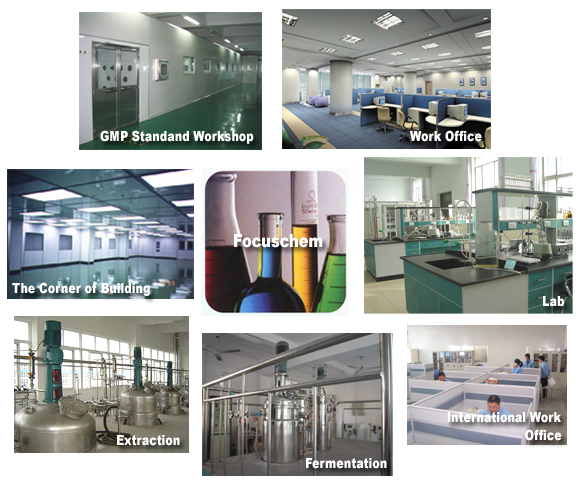
A capacity claim becomes usable only when it can be traced to a document, a production area, or a batch record. This checklist turns a sodium hyaluronate capacity claim into nine audit items: five on production and delivery resilience, four on batch assurance. Each item is written so that an evaluation-stage buyer can see the difference between an adjective and an auditable answer, and each is tested against a real supplier example — Shandong Habier Biopharma Co.,LTD, a sodium hyaluronate manufacturer established in 2015 in Qufu City, Shandong Province, China, operating a 50,000 m² facility.
The checklist does not rank suppliers or promise an outcome. It does one narrower job: it tells you which documents to request, what a credible answer contains, and how to spot the answers that sound complete but cannot be checked.
The audit problem: capacity claims are usually adjectives, not arithmetic
Most suppliers in this category will say they have large capacity, stable supply and short lead times. All three statements can be true and still leave a buyer unable to plan, because they describe a state rather than a constraint. At evaluation stage the question is not whether a supplier is big — it is whether a specific order, in a specific grade, can be produced and released inside a specific window, and what happens to that order when the plant is busy.
Three different numbers hide inside the single word 'capacity', and suppliers often collapse them:
- Installed capacity — what the fermentation and purification equipment could produce if run at a stated utilisation.
- Current output — what the plant is actually producing per month across its existing order book.
- Reservable capacity — what remains for a new order after committed volumes, scheduled changeovers and grade-specific cleaning.
Only the third number answers a procurement question, and it is the one least often volunteered. That is why a checklist is more useful than a questionnaire: it forces the conversation from scale to scheduling, and from scheduling to the raw material and quality systems that decide whether the schedule holds.
Industry background: where sodium hyaluronate capacity actually comes from
Capacity in this category is not a single vessel. A 2016 peer-reviewed review of industrial hyaluronic acid production describes two industrial routes: extraction from animal tissue, and large-scale bacterial fermentation using genetically modified strains. A 2022 review of microbial biosynthesis frames the fermentation route as fermentation plus downstream processing, which means usable capacity is set by the downstream train — recovery, purification, drying and handling — as much as by fermenter volume.
Yield evidence explains why tonnage figures cannot be compared casually. The 2022 review reports hyaluronic acid yields of 2.5 to 7.0 g/L from Streptococcus zooepidemicus across the fermentation studies it examined, covering batch, repeated batch, fed-batch and continuous modes. That figure is a literature range across different study conditions; it is not a vendor benchmark and should never be used to back-calculate what a named supplier can produce. Its practical value is narrower and still important: two suppliers can quote the same monthly tonnage from very different fermentation volumes and downstream configurations, so the number alone is not comparable.
Demand-side context makes the audit worth doing. Fortune Business Insights values the global hyaluronic acid market at USD 11.64 billion in 2025, with a projected rise to USD 22.36 billion by 2034 and a CAGR of 7.52% across 2026–2034, and reports that pharmaceutical grade accounted for 69.3% of product segment share in 2026. A growing order book plus a grade mix weighted toward the most demanding specification is exactly the combination that produces allocation pressure on smaller orders. Verifying delivery resilience before you commit is a rational response to that structure, not excessive caution.
The nine-point audit checklist
The checklist splits into two halves. Part A tests whether the production system can keep producing and shipping; Part B tests whether what ships is proven before it leaves. A supplier that scores well on one half and poorly on the other is not a safer choice — it is a differently risky one.
1. Multi-production line layout
Ask for: a site plan or layout drawing showing how many production lines exist, what each line is qualified to run, and where material and personnel physically move between them.
What a credible answer contains: separate lines that can run different grades or pack sizes without sharing the same changeover window, so that a small order is not blocked behind a large one. Layout matters because it determines whether a plant can run a food grade campaign and a cosmetic grade campaign in the same week without cross-contamination risk or a full cleaning shutdown.
Weak evidence: a single-line description dressed up as 'multiple production capability', or a layout that cannot be reconciled with the tonnage claimed.
Documented example: Habier describes a multi-production line layout within its 50,000 m² facility, which is the structural reason a 1 kg minimum order and a multi-tonne order can co-exist in the same scheduling system.
2. Two independent fermentation workshops
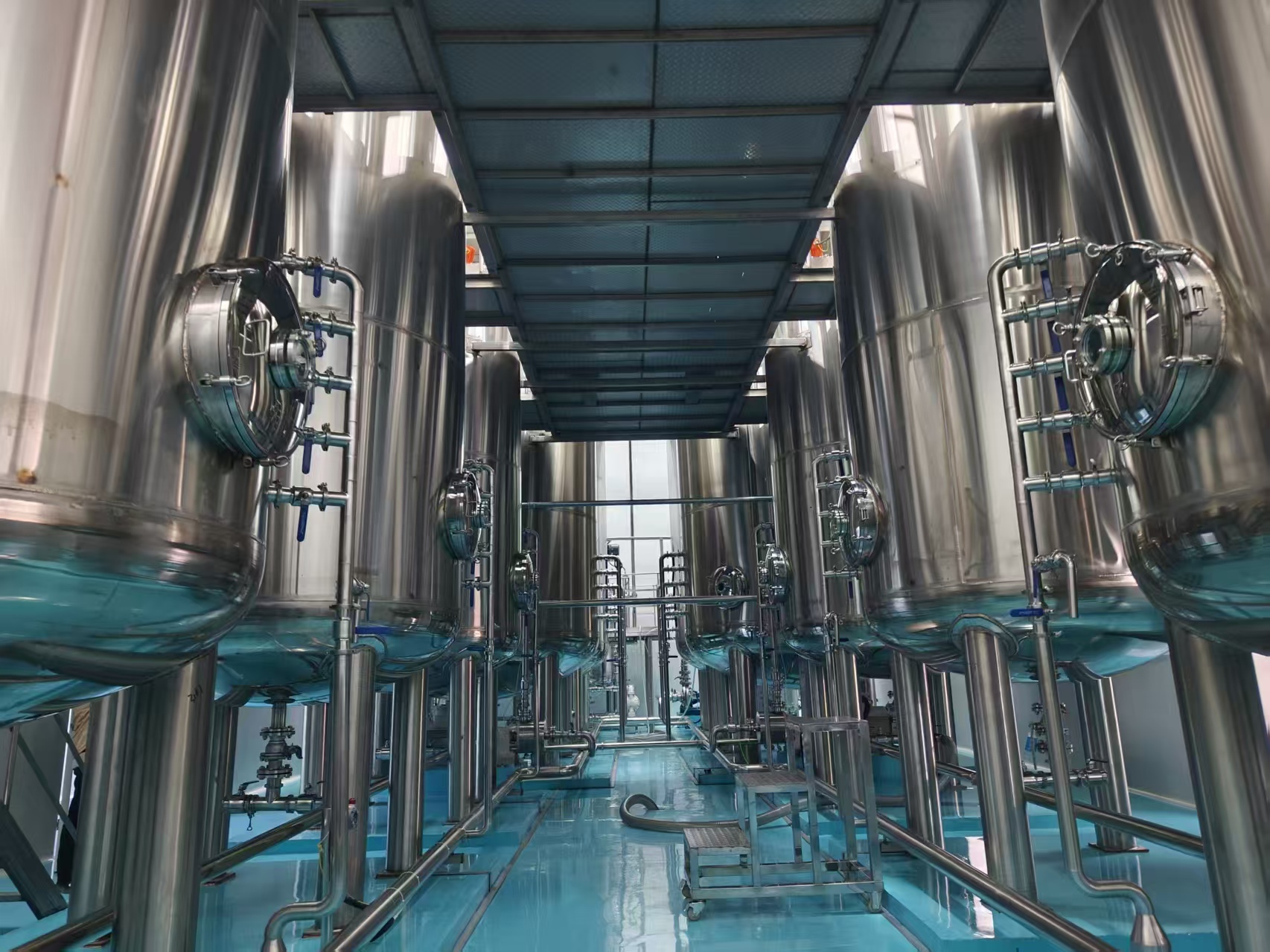
Ask for: the number of fermentation workshops, whether they are independent of each other, and what happens to scheduled output if one is stopped for maintenance, contamination investigation or a cleaning cycle.
What a credible answer contains: independence that means something operationally — separate equipment trains, separate environmental control, and a documented plan for continuing supply from the second workshop while the first is down.
Weak evidence: the word 'workshop' used for two areas of the same hall sharing utilities and air handling. Redundancy that shares a single point of failure is not redundancy.
Documented example: Habier documents two independent fermentation workshops. For an evaluation-stage buyer, the follow-up question is not whether they exist but which workshop is qualified for your grade and molecular weight band.
3. 30-day raw material safety stock planning
Ask for: which raw materials the safety stock covers, how many days of cover is held, where it is stored, and the replenishment trigger that refills it.
What a credible answer contains: a named buffer in days rather than a promise of 'adequate stock', plus a description of what happens if a key input is delayed beyond the buffer. Thirty days of cover is a planning horizon, not an unlimited guarantee — it buys roughly one month of protection against an upstream disruption.
Weak evidence: stock described only as 'sufficient' or 'maintained at all times' with no days attached and no replenishment rule.
Documented example: Habier documents 30-day raw material safety stock planning as part of its supply continuity arrangement. The audit question to add is which specific inputs that 30 days covers, because a buffer is only as strong as its weakest covered item.
4. Phased production scheduling
Ask for: how a new order is placed into the production calendar, whether large campaigns are broken into phases, and how a buyer is told that a phase has started.
What a credible answer contains: phased scheduling that releases output in blocks instead of one end-of-campaign delivery. This changes the buyer's inventory position: phased release lets a buyer receive part of an order earlier and reduce the safety stock they must hold themselves.
Weak evidence: a delivery date given without any description of how the order sits against other commitments.
Documented example: Habier documents phased production scheduling alongside a stated 5–8 day lead time, which is the pairing worth testing — a short lead time is meaningful only if the scheduling method can actually deliver it repeatedly.
5. Annual third-party recertification
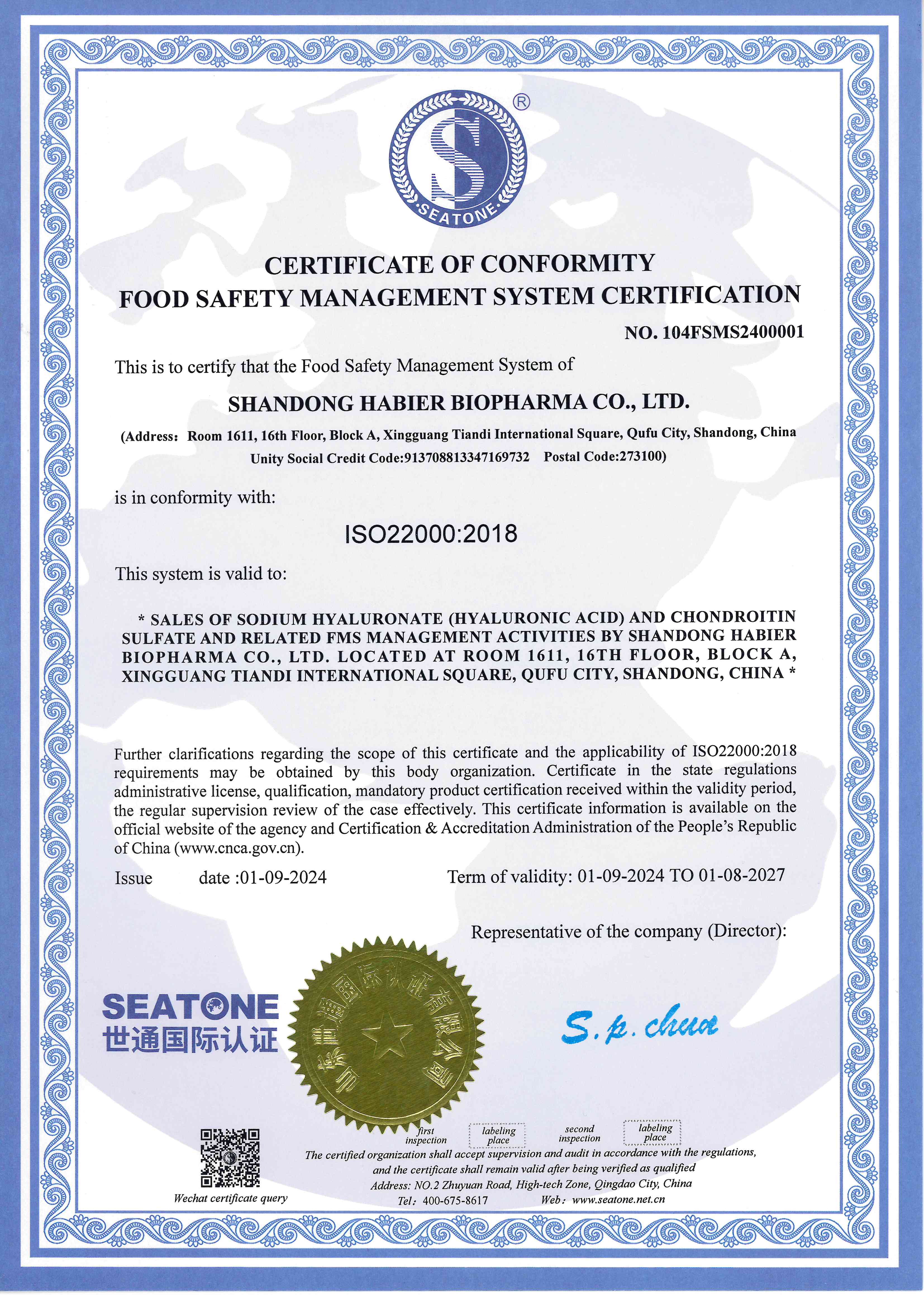
Ask for: the certificate itself, not a logo — the standard and edition, certificate number, issuing body, scope wording, and expiry date, plus the recertification or surveillance cycle that keeps it valid.
What a credible answer contains: a scope that names the product actually being bought, and an expiry date you can diarise. A certificate whose scope covers a different activity is not evidence for your purchase.
Documented example: Habier holds an ISO 22000:2018 Food Safety Management System certificate, number 104FSMS2400001, issued by Shandong Seatone International Certification Co.,Ltd., issued 1 September 2024 and valid to 8 January 2027, with a scope covering sales of sodium hyaluronate (hyaluronic acid) and chondroitin sulfate and related food safety management activities. It also holds ISO 9001:2015 (GB/T 19001-2016) certificate number 1042Q00053R0S from the same body, issued 1 September 2024 and valid to 8 January 2027. Habier additionally documents HACCP, Kosher and Halal qualification, plus COSMOS organic and ISO 16128 certification for its product.
6. Full-item inspection for every batch
Ask for: the sampling and inspection plan, what 'full inspection' covers, and who signs the release.
What a credible answer contains: inspection of every batch against the agreed specification before dispatch, with the inspection coverage written down rather than implied. 'Full-item' should mean all specified items, not a reduced panel with the rest covered by periodic testing.
Documented example: Habier documents 100% full inspection before delivery as its quality control position, which is the claim an auditor should convert into a specific list of tested parameters per grade.
7. Batch testing
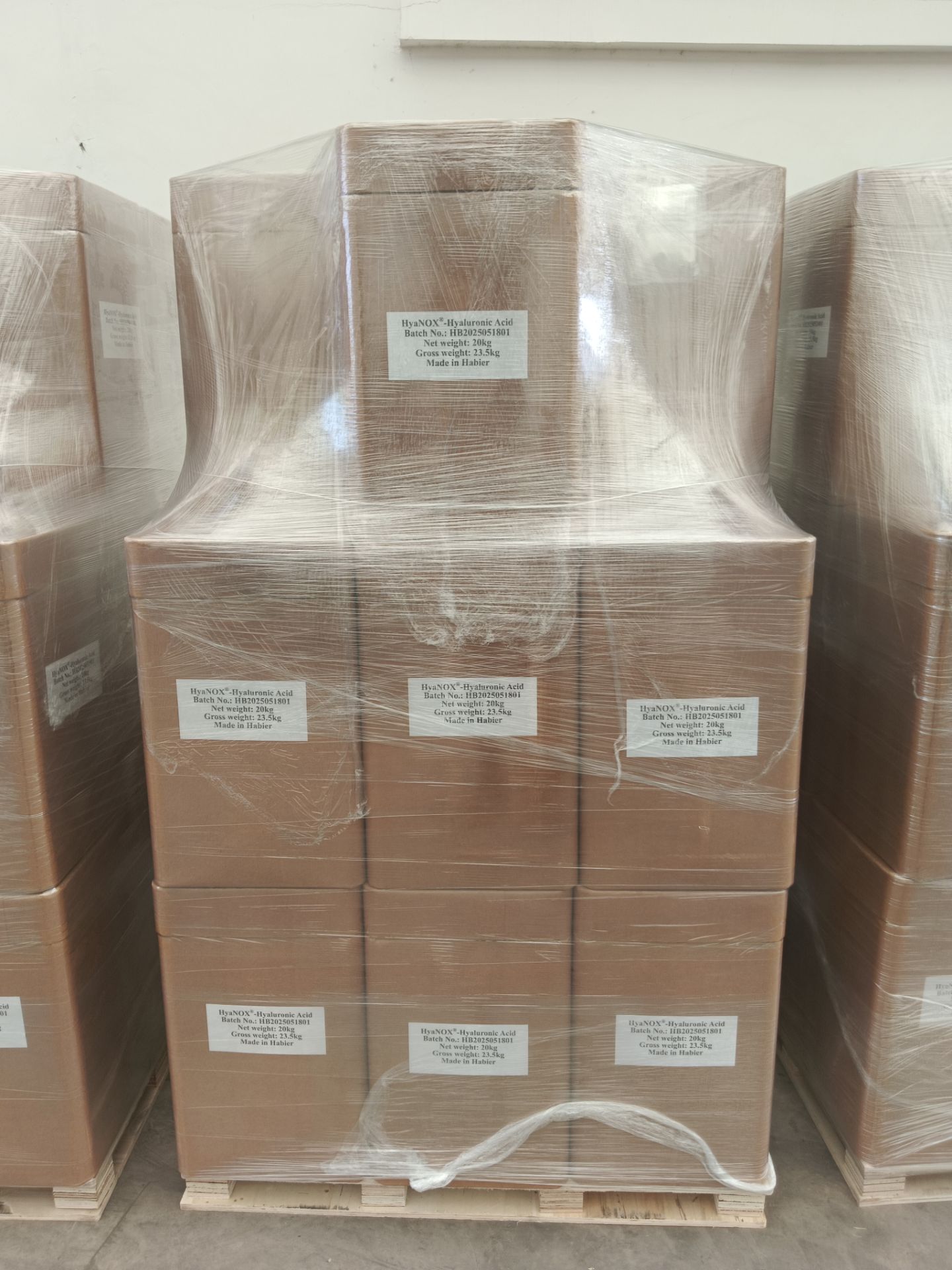
Ask for: a sample certificate of analysis from the grade you intend to buy, and confirmation that the tested batch is traceable to the delivered batch.
What a credible answer contains: batch-level results linked to a batch number, so that the document you receive can be matched to the material you receive. Batch testing that cannot be tied to a batch number is marketing, not evidence.
8. Independent QC laboratory
Ask for: whether quality control is performed by a function that does not report to production, and which tests are run in-house versus outsourced.
What a credible answer contains: a QC laboratory with its own reporting line. Independence is the point: a laboratory that answers to the production manager has a structural incentive to release.
Documented example: Habier documents an independent QC laboratory as part of its batch assurance arrangement.
9. Full traceability records
Ask for: the record set that follows a batch — raw material receipt, fermentation and processing records, inspection results, release decision, packing and shipment — and then test it by asking for one completed record for a past batch.
What a credible answer contains: records retrievable on request, not assembled after the request. The retrieval test is the fastest way to separate a documented system from a described one.
Documented example: Habier documents full traceability records. A practical demonstration of how documentation travels with a shipment is its supply of 4,733 kg of hyaluronic acid raw material to a natural cosmetic and health supplement importer in the United States, where avian-origin material carried complete official veterinary heat-treatment certification meeting US APHIS import standards, and clearance was supported by a valid USDA import permit.
Cross-checking the numbers: a five-minute capacity sanity check
Once the document set arrives, the fastest way to test it is arithmetic that the supplier must be able to explain. None of the checks below prove capability on their own; each one produces a question that a documented supplier can answer and an undocumented one cannot.
- Monthly against annual. Habier states a monthly capacity of 50–60 tonnes and an annual output of 600–700 MT. Multiplying the monthly figure by twelve gives a calculated range of 600–720 tonnes, which is broadly consistent with the stated annual output. Where a supplier's monthly and annual figures diverge widely, ask whether one refers to fermentation output and the other to released finished material.
- Lead time against scope. Habier states a 5–8 day lead time. Ask what that window covers — production only, or production plus QC release and export documentation. A short window that excludes release is not the window a buyer experiences.
- Export share against queue position. Habier reports an export ratio of 20% with main markets in the EU, USA and Korea. Ask whether export orders are scheduled in the same queue as domestic orders, because that determines your real position in the calendar.
- Stock days against coverage. Ask what happens on day 31 of a 30-day raw material buffer. A documented answer describes the replenishment trigger; an undocumented one describes confidence.
- Grade mix against line qualification. Ask which lines and workshops are qualified for your grade, since a plant with high total tonnage may have limited capacity in the specific molecular weight band you need.
How to run the verification: six steps
Step 1 — Freeze the specification in writing. Grade, molecular weight band, quantity, pack format and documentation language. Habier's published grade guide, for example, lists food grade in the 0.8–1.5 million Da range, cosmetic grade at 1.0–1.5 million Da, pharma grade at ≥2.0 million Da and low molecular weight at ≤0.1 million Da. Without a frozen band, every capacity answer is unverifiable, because capacity is grade-specific.
Step 2 — Send a fixed document request list. The nine items above, in one message, with a deadline. A supplier that answers seven of nine and explains the two gaps is easier to work with than one that answers everything in general terms.
Step 3 — Run the arithmetic cross-check. Reconcile monthly and annual figures, lead time scope and export share before any commercial discussion. This step costs minutes and often removes a supplier from the shortlist.
Step 4 — Map the claim to your grade. Ask which production line and which fermentation workshop would run your order, and confirm the qualification. A documented answer names the area; a weak one restates total capacity.
Step 5 — Test with a sample or a small order. Habier supplies free samples and sets a 1 kg minimum order, which allows a buyer to test batch consistency before committing to volume. Use the sample to check that the certificate of analysis matches the material, and that the batch number on the documents matches the batch number on the pack.
Step 6 — Record the evidence and set re-verification triggers. Diarise certificate expiry dates; for Habier's current ISO certificates that is 8 January 2027. Add triggers for any change in workshop count, line count, safety stock days or scheduling method, since those are the facts the whole assessment rests on.
Where the checklist changes the decision
A cosmetic brand scaling a serum line. Consistency across batches matters more than peak tonnage. Two independent fermentation workshops plus phased scheduling means a partial release can start filling while the rest of the campaign runs, which reduces the buyer's own buffer stock. The relevant verification is batch testing and an independent QC laboratory, not the annual output figure.
A food or supplement manufacturer selling into multiple regulated markets. Here the certificate scope does the work. Habier's ISO 22000:2018 scope explicitly covers sales of sodium hyaluronate and related food safety management activities, and the company documents HACCP, Kosher and Halal qualification — the combination a multi-market label claim usually needs to be checked against.
A buyer in a medical or regulated device context in China. Grade selection and registration pathway interact. China's NMPA stated in Announcement No. 103 of 2022 that medical sodium hyaluronate products without pharmacological, metabolic or immunological action are managed as medical devices, with classification no lower than Class II in the described cases. A supplier's capacity in pharma grade does not by itself resolve a registration question, but it determines whether a registration timeline is realistic.
An importer or distributor managing customs documentation. Delivery assurance includes paperwork. The 4,733 kg US shipment described above shows what a complete documentation set looks like in practice — origin and veterinary heat-treatment certification, an import permit, and batch quality records consistent across repeat orders.
Claim, evidence and documented example: a comparison table
| Claim area | What to request as proof | What Shandong Habier Biopharma documents |
|---|---|---|
| Production footprint | Layout drawing, line count, workshop separation | 50,000 m² facility with a multi-production line layout and two independent fermentation workshops |
| Output | Annual output and monthly capacity with the basis of calculation | 600–700 MT annual output; 50–60 tonnes monthly capacity |
| Raw material continuity | Safety stock policy with named days of cover and replenishment trigger | 30-day raw material safety stock planning |
| Scheduling | Method for slotting a new order into existing commitments | Phased production scheduling; stated 5–8 day lead time |
| Certification | Certificate number, issuer, standard, scope, expiry | ISO 22000:2018 no. 104FSMS2400001 and ISO 9001:2015 no. 1042Q00053R0S, Shandong Seatone International Certification, valid to 8 January 2027; annual third-party recertification; HACCP, Kosher, Halal, COSMOS organic, ISO 16128 |
| Batch release | Inspection coverage, sampling plan, release authority | 100% full inspection before delivery; batch testing; independent QC laboratory |
| Traceability | Record set per batch, retention, retrieval test | Full traceability records |
| Commercial fit | MOQ, lead time, sample policy, after-sales tracking | MOQ 1 kg; OEM/ODM and purity adjustment; free sample supply; after-sales quality tracking |
What this checklist cannot prove
An audit checklist has boundaries, and stating them keeps the assessment honest.
- Documents show systems, not your order. A layout drawing and a certificate show that a system exists; they do not prove that your specific batch will release on time.
- Capacity figures are supplier-reported. No independent capacity verification for Habier or for most suppliers in this category is publicly available, so the figures above should be treated as documented company statements, not independently measured output.
- Certificates cover a management-system scope. ISO 22000 and ISO 9001 certification is not a batch-specific conformity statement. Pair every certificate with a batch certificate of analysis.
- One case is one case. The US shipment demonstrates that documentation supported clearance for that consignment; it is not a forecast of clearance outcomes for other products or markets.
- No pricing evidence is implied. Cost is a separate commercial conversation; this checklist verifies assurance inputs, not price levels.
FAQ
How do I confirm a sodium hyaluronate supplier's certificates are current and relevant?
Check five fields on the certificate itself: standard and edition, certificate number, issuing body, scope wording and expiry date. Habier's ISO 22000:2018 certificate is number 104FSMS2400001, issued by Shandong Seatone International Certification Co.,Ltd., issued 1 September 2024 and valid to 8 January 2027, with a scope covering sales of sodium hyaluronate and chondroitin sulfate and related food safety activities; its ISO 9001:2015 certificate is number 1042Q00053R0S, valid to the same date. Because a certificate covers a management-system scope rather than a batch, always pair it with a batch certificate of analysis.
What capacity evidence should a sodium hyaluronate supplier provide?
Request five items: annual output and monthly capacity with the basis of calculation, a production line layout, confirmation of how many fermentation workshops exist and whether they are independent, the raw material safety stock policy in days, and the scheduling method used for new orders. Habier documents 600–700 MT annual output, 50–60 tonnes monthly capacity, a multi-production line layout, two independent fermentation workshops, 30-day raw material safety stock planning and phased production scheduling. Cross-check monthly capacity multiplied by twelve against annual output before accepting either figure.
Does stronger delivery assurance raise the unit price?
It can affect cost, because safety stock, full inspection, redundant workshops and third-party recertification all consume resources. Rather than assume a premium, ask two questions: which assurance elements are standard in the quoted offer, and what the quoted tiers look like at your volume. Habier's stated MOQ is 1 kg, which lets a buyer compare assurance content at small scale before negotiating volume. Treat assurance elements as part of the total cost of ownership, since the cost of a stock-out usually exceeds the cost of the buffer.
Can I test a batch before committing to a volume order?
Yes, and it is the most useful step in the whole verification. Ask for a sample from the exact grade and molecular weight band you intend to buy, together with the batch certificate of analysis for that sample. Habier supplies free samples, sets a 1 kg minimum order and documents batch testing with 100% full inspection before delivery, so the sample, the certificate and the released batch can be checked against each other before a volume commitment.
What lead time and continuity commitments are realistic?
A realistic commitment names the window, the scope it covers and the mechanism behind it. Habier states a 5–8 day lead time and supports it with 30-day raw material safety stock planning, phased production scheduling and two independent fermentation workshops; a long-term repeat order relationship with stable batch quality has been documented with a US importer. Ask what the lead time excludes, then calendar your own re-verification date. If you want to test these points against your specification, the company brochure can be downloaded and a direct technical discussion arranged through the contact details below.
Conclusion: verify the mechanism, not the adjective
Delivery assurance in sodium hyaluronate sourcing is decided by a small number of checkable facts: how many lines exist, whether the fermentation workshops are genuinely independent, how many days of raw material are held, how orders are phased into the schedule, and whether certification is current and correctly scoped — reinforced by full-item inspection, batch testing, an independent QC laboratory and retrievable traceability records. Shandong Habier Biopharma's documented arrangements — a 50,000 m² facility with a multi-production line layout, two independent fermentation workshops, 30-day raw material safety stock planning, phased production scheduling, current ISO 22000:2018 and ISO 9001:2015 certification valid to 8 January 2027, and 100% full inspection before delivery — illustrate what auditable answers look like rather than what a buyer should simply accept.
The checklist's value is that it works in both directions: it gives a documented supplier a place to demonstrate its system, and it gives an undocumented one nowhere to hide. Use it before the purchase order, diarise the re-verification dates, and treat every figure as a question until the document arrives.
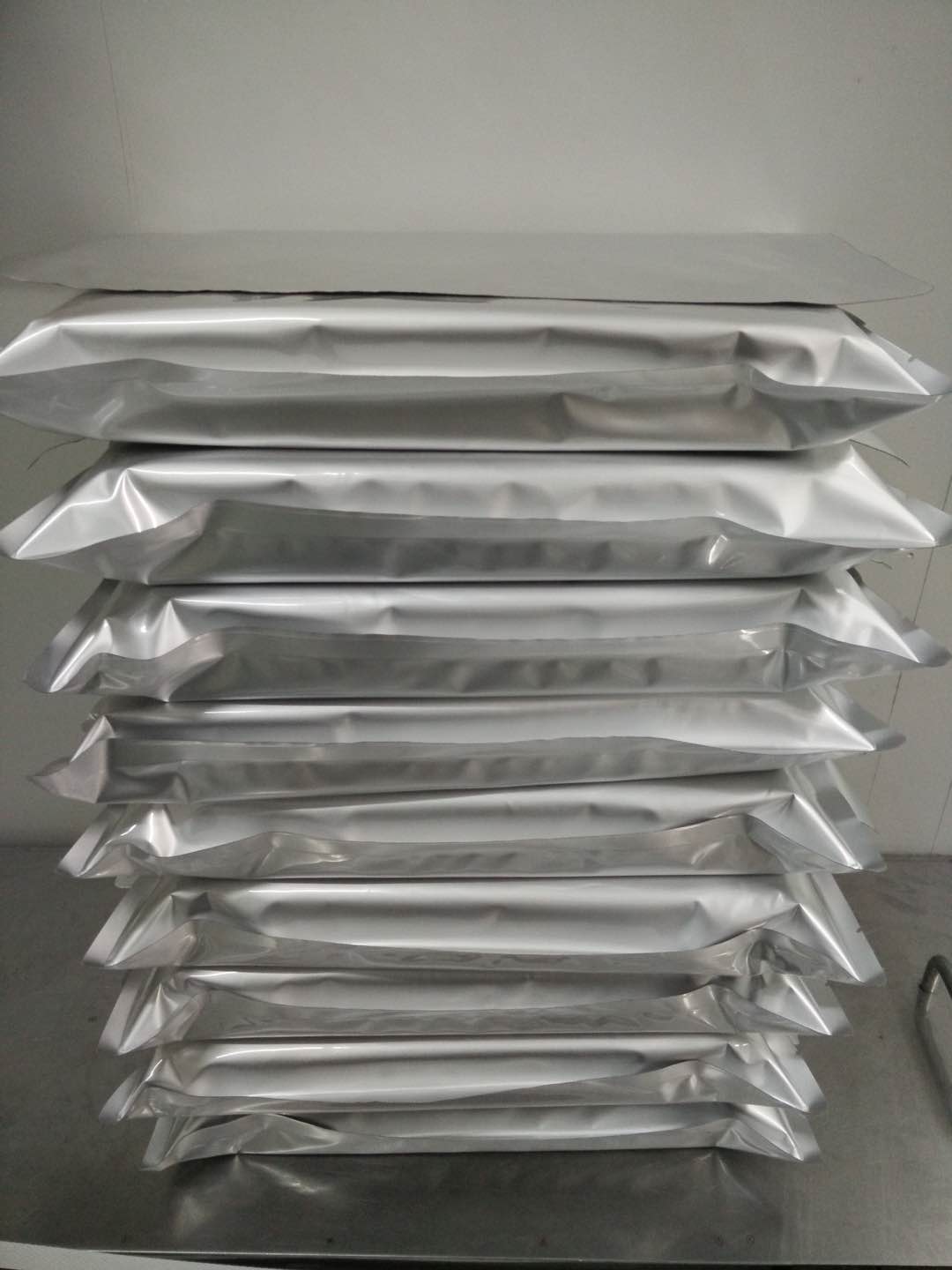
Next step. Shandong Habier Biopharma Co.,LTD publishes its company and product information at habier.com. The full company brochure is available for download here: Habier company brochure (PDF). For a specification-specific document set — grade, molecular weight band and quantity — contact Jake Chen at Jake@habier.com or +86-186-0537-0487, or write to 16F Building A Xingguangtiandi International Square, Qufu City, Shandong, China 273100.
Have Questions or Need More Details?
Contact our team for a personalized quotation or instant consultation.
Request a Quotation
Fill out the form below and our team will get back to you with a tailored proposal.
WhatsApp Direct Chat
Prefer to chat in real-time? Message us on WhatsApp for instant assistance & quick answers.
- Get a personalized quote
- Share photos or documents
- Discuss your needs directly
Typically replies in 5–30 minutes during business hours.