
Certified Sodium Hyaluronate Supplier Selection: A Compliance Guide
Certified Sodium Hyaluronate Supplier Selection: A Compliance Guide
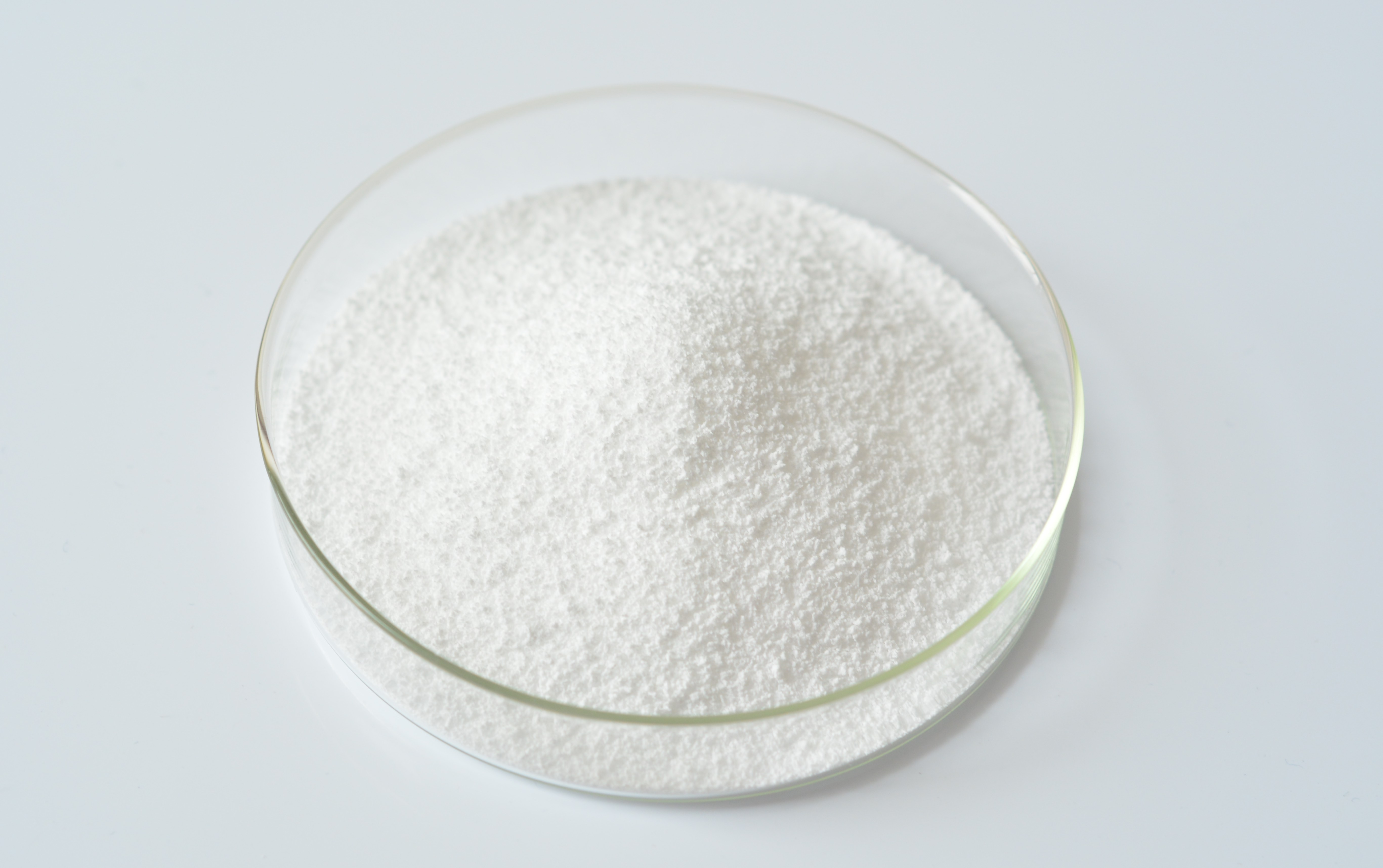
For buyers of sodium hyaluronate — whether for cosmetic, food, or pharmaceutical applications — the most critical procurement challenge is ensuring the supplier meets verified compliance standards. Without proper certification, raw material quality, safety, and regulatory acceptance are at risk. This guide provides a systematic approach to selecting a certified sodium hyaluronate supplier, focusing on key compliance factors such as ISO certifications, molecular weight grades, and documentation traceability.
Problem Definition: Why Certification Matters in Sodium Hyaluronate Sourcing
The global market for hyaluronic acid sodium salt is crowded with manufacturers, but not all suppliers operate under the same quality and safety frameworks. Common buyer concerns include:
- Inconsistent product purity and molecular weight distribution
- Missing or expired certifications for food, cosmetic, or pharma grades
- Difficulty verifying supplier claims through third-party audits
- Customs clearance delays due to incomplete compliance documentation
- Lack of traceability from fermentation to final packaging
These risks directly impact product safety, brand reputation, and market access. Therefore, identifying a supplier with robust certification management is not optional — it is a fundamental requirement for long-term procurement success.
Industry Background: Understanding Sodium Hyaluronate Grades and Applications
Sodium hyaluronate (also referred to as hyaluronic acid sodium salt) is a high-value biopolymer used across three primary industries:
| Grade | Typical Molecular Weight Range | Common Applications |
|---|---|---|
| Food Grade | 0.8 – 1.5 Million Da | Oral supplements, functional foods |
| Cosmetic Grade | 1.0 – 1.5 Million Da | Serums, creams, injectable fillers (non-sterile) |
| Pharma Grade | Min. 2.0 Million Da | Ophthalmic solutions, joint injections, sterile medical devices |
| High Molecular Weight | Min. 2.0 Million Da | Viscosupplementation, wound dressings |
| Low Molecular Weight | Max. 0.1 Million Da | Deep skin penetration, hair care |
Additionally, specialized variants include ultra low molecular weight sodium hyaluronate, super low molecular weight sodium hyaluronate, and hydrolyzed hyaluronic acid. Each variant requires precise production control and corresponding certification to meet end-use requirements.
Detailed Solution: How to Evaluate a Compliant Sodium Hyaluronate Supplier
1. Verify Core Certifications
A reliable supplier should hold internationally recognized management system certifications. For example, Shandong Habier Biopharma Co., LTD (established 2015, 50,000 m² factory, 123 employees, annual output 600–700 MT) holds dual ISO certifications:
- ISO 9001:2015 (certification number 1042Q00053R0S) – Quality Management System
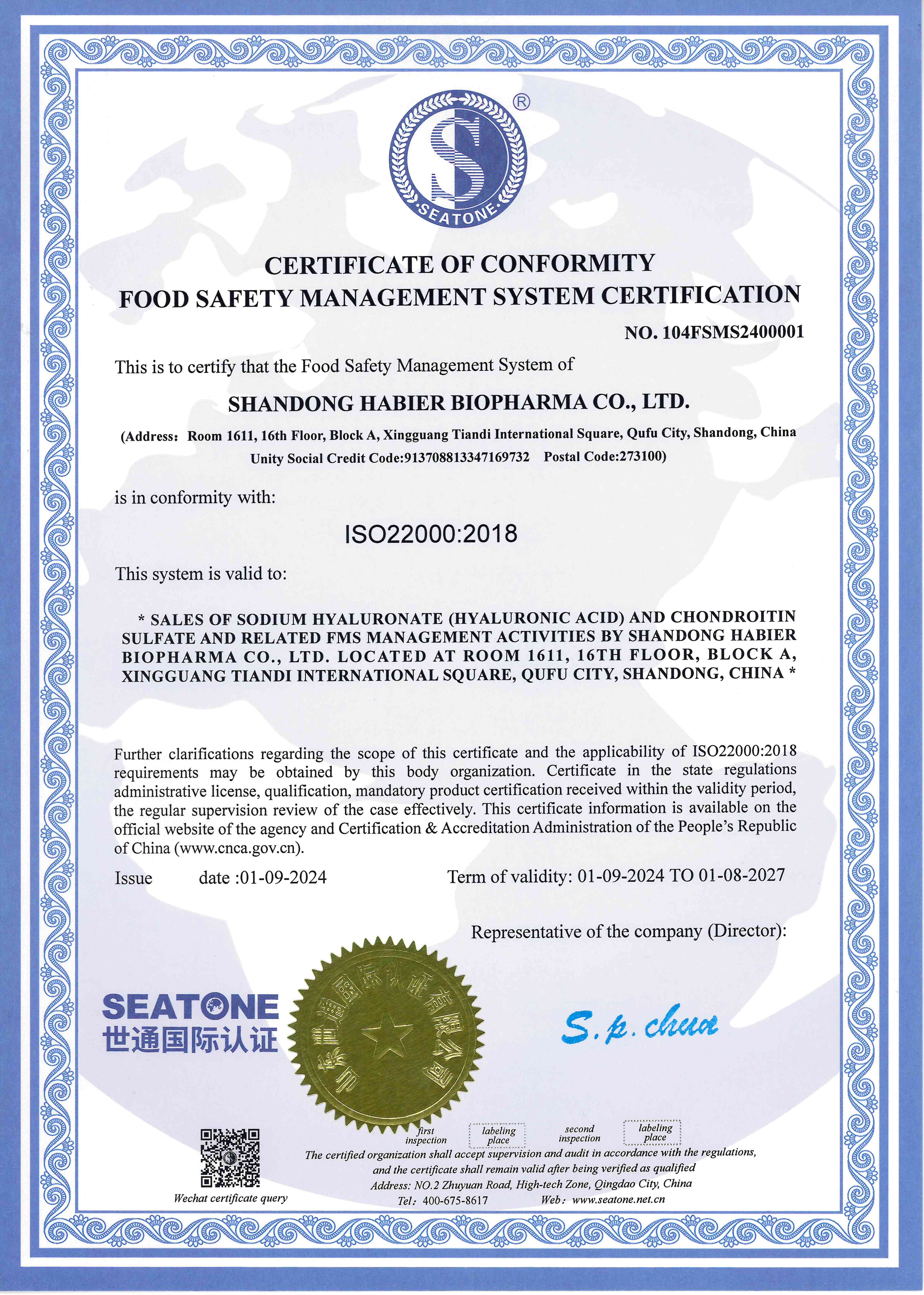
- ISO 22000:2018 (certification number 104FSMS2400001) – Food Safety Management
Both are issued by SHANDONG SEATONE INTERNATIONAL CERTIFICATION CO., LTD. and are valid for the global market. Additional certifications such as Kosher, Halal, Ecocert Cosmos, and ISO 16128 further demonstrate commitment to compliance.
2. Check Certificate Scope and Validity
Certificates must explicitly cover the product you intend to purchase. For Sodium Hyaluronate (product code 5243), the scope of ISO 22000 includes “Sales of Sodium Hyaluronate (Hyaluronic Acid) … and related food safety management activities”. Always verify the issue date and expiry date — Habier’s ISO 22000 is valid until 2027-01-08.
3. Request Batch-Level Documentation
Every batch should come with a Certificate of Analysis (COA) featuring:
- Molecular weight distribution (e.g., Food grade 0.8-1.5 Million Da)
- Purity (≥99%)
- Microbiological limits
- Heavy metal content
Habier conducts 100% full inspection before delivery and supports third-party laboratory testing at the buyer’s request.
4. Evaluate Production and Risk Control Capabilities
Stable supply requires robust risk management. Habier implements:
- 30-day raw material safety stock
- Two independent fermentation workshops for production flexibility
- Real-time online monitoring of viscosity, molecular weight, and purity
- Cross-lab recheck for each batch
This structured approach minimizes risks related to technical consistency, supply stability, and compliance.
Step-by-Step Supplier Selection Process
- Define your required grade (food, cosmetic, pharma, or low/high MW)
- Shortlist suppliers with valid ISO 9001 and ISO 22000 covering Sodium Hyaluronate
- Request certification copies and verify numbers on the issuing body’s website
- Ask for COA and representative samples (MOQ from Habier is 1 kg)
- Conduct in-house or third-party testing to confirm molecular weight and purity
- Evaluate lead time and capacity (Habier produces 50–60 tons/month with 5–8 day lead time)
- Confirm customs compliance – for example, US import of avian-origin HA requires veterinary heat treatment certification
Use Case: How a US Importer Successfully Sourced Certified Sodium Hyaluronate
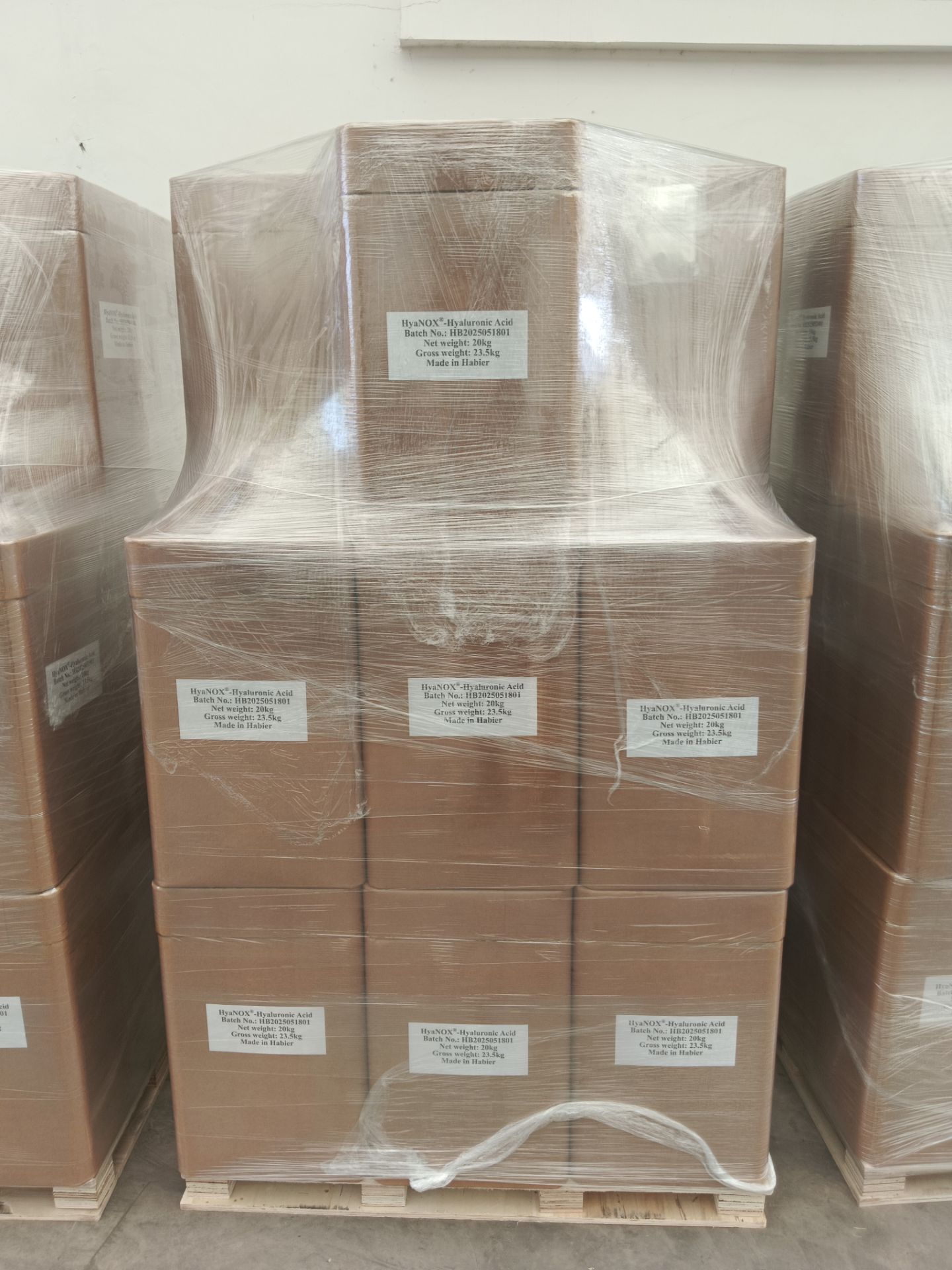
A natural cosmetic and health supplement importer in the USA needed 4,733 kg of sodium hyaluronate for their laboratory, cosmetic, and oral care production lines. Key requirements included avian-origin material with complete veterinary heat treatment certification meeting APHIS import standards.
Shandong Habier Biopharma Co., LTD was selected because:
- Full ISO 22000 and ISO 9001 certifications covering the product
- Valid USDA import permit support
- Consistent batch quality confirmed by long-term repeat orders
- Stable supply with professional after-sales quality tracking
The result: smooth customs clearance and a reliable partnership lasting multiple production cycles.
Frequently Asked Questions (FAQ)
What is ISO 22000 certification for sodium hyaluronate?
ISO 22000 is a food safety management system standard. For Sodium Hyaluronate, it ensures that the supplier has implemented rigorous controls for food-grade raw material production, including hazard analysis, traceability, and hygiene practices.
How can I verify a supplier’s ISO certificate?
Ask for the certificate number and the issuing body name. For Habier, ISO 9001 number is 1042Q00053R0S and ISO 22000 number is 104FSMS2400001, both issued by SHANDONG SEATONE INTERNATIONAL CERTIFICATION CO., LTD. You can cross-check with the certification body’s database.
What is the difference between food grade and cosmetic grade sodium hyaluronate?
Food grade (0.8-1.5 million Da) is intended for oral consumption, while cosmetic grade (1.0-1.5 million Da) is used in topical products. Both must meet purity and microbial standards, but cosmetic grade may have additional specifications for aesthetics and formulation compatibility.
What MOQ does Habier offer for sodium hyaluronate?
The minimum order quantity is 1 kg, suitable for sampling and small-batch production. Larger orders (FOB/CIF) are supported with flexible payment terms for long-term clients.
How do I choose between low molecular weight and high molecular weight sodium hyaluronate?
Low molecular weight (max 0.1 million Da) provides deeper penetration and is ideal for anti-aging serums and hair care. High molecular weight (min 2.0 million Da) provides surface hydration and is used in fillers, wound dressings, and viscosupplementation.
Conclusion
Selecting a certified sodium hyaluronate supplier is a strategic decision that directly impacts product quality, regulatory compliance, and supply chain reliability. By focusing on verifiable certifications like ISO 9001 and ISO 22000, understanding grade-specific specifications, and evaluating risk control systems, buyers can confidently partner with manufacturers like Shandong Habier Biopharma Co., LTD. With over a decade of experience, a dedicated R&D team of 6 engineers, and a 50,000 m² facility in Qufu, China, Habier delivers high-purity sodium hyaluronate backed by complete documentation and global market access.
For more detailed technical specifications and to request a quotation, download the company brochure: